






kostel svatého Antonína Paduánského (Panská Lhota) Church
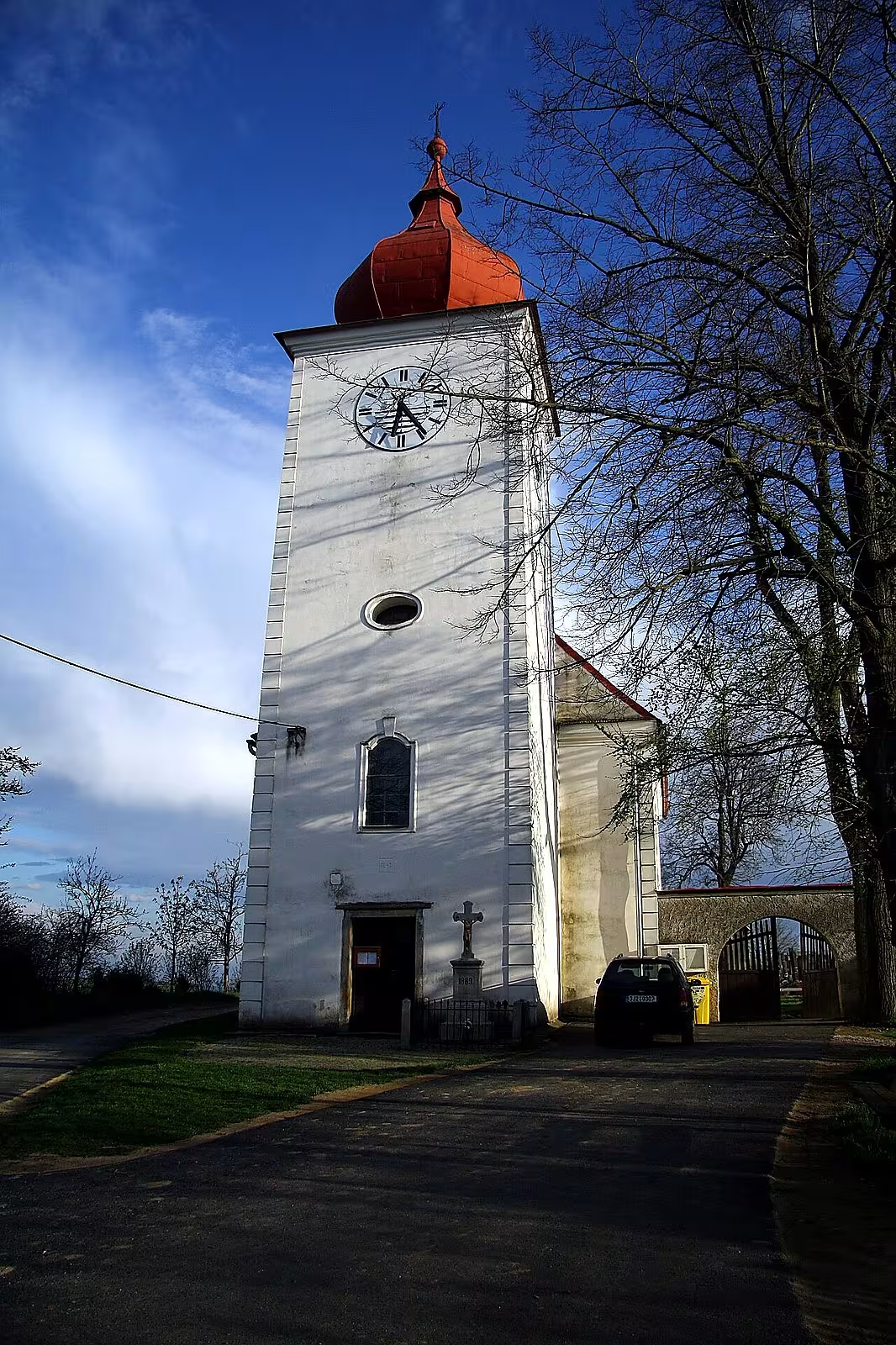
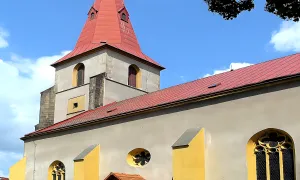
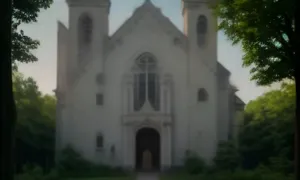
The Church of Saint Anthony of Padua in Panská Lhota is a notable cultural monument situated at the village's southern edge within a cemetery area. Built between 1830 and 1841, this rural single-nave structure features a concave-convex closure and a north-oriented tower on its front side. It serves as a filial church to the Roman Catholic parish in Brtnice and is distinguished by its rustic baroque style. The church's significance lies not only in its architectural beauty but also in its role within the local community, having been consecrated in 1842.
Constructed during a period when Bohemia was part of the Austrian Empire, the Church reflects broader cultural shifts following the Napoleonic Wars. This era saw a blend of neoclassical and romantic influences across Europe, evident in the church's late classicist style with rustic baroque elements. Its construction between 1830 and 1841 marked an important addition to Panská Lhota's religious landscape.
Architecturally, the Church stands out for its single-nave design and distinctive concave-convex closure. Its north-oriented tower adds a unique element to the building's profile. Originally housing an organ from 1817 relocated from Jihlava in 1955, it was later removed due to damage caused by a forestry company. In August 2000, new five-manual organs with a coupling pedal were installed by Jiří Vaculín.
Throughout its history, the church has undergone several changes and restorations. Notably, in February 2000, the existing organ was dismantled and removed due to damage caused by a forestry company. Later that year, new organs were installed, enhancing the church's musical capabilities. In December 2007, the facade of the church tower was repaired, and new satellite-controlled clock faces were installed.
The interior is adorned with several artistic elements. A zinc altar features a period painting of Saint Anthony of Padua, while a baroque copper engraving from 1736 depicting Our Lady of Svatotomská replaces a pilgrimage altar dedicated to this Madonna. The pulpit is decorated with relief carvings, adding an artistic touch to the church's interior. Additionally, two bells cast in 1970 in Žďárce u Tišnova bear reliefs of Christ the Good Shepherd and Our Lady Help of Christians.
Today, the Church of Saint Anthony of Padua remains a protected cultural monument of the Czech Republic. It continues as an active place of worship for the local community. Visitors can appreciate its historical architecture, artistic details, and serene setting within the village cemetery area. The church's blend of architectural styles and rich history make it a worthwhile destination for those interested in exploring the region's cultural heritage.
The Church stands as a testament to the enduring legacy of religious and cultural traditions in Panská Lhota. Its historical significance, combined with its architectural beauty, makes it an inviting place for visitors seeking to connect with the past while enjoying the tranquility of this rural setting.
Then and now
Drag the slider to compare how the landmark may have looked when it was built with the view today.
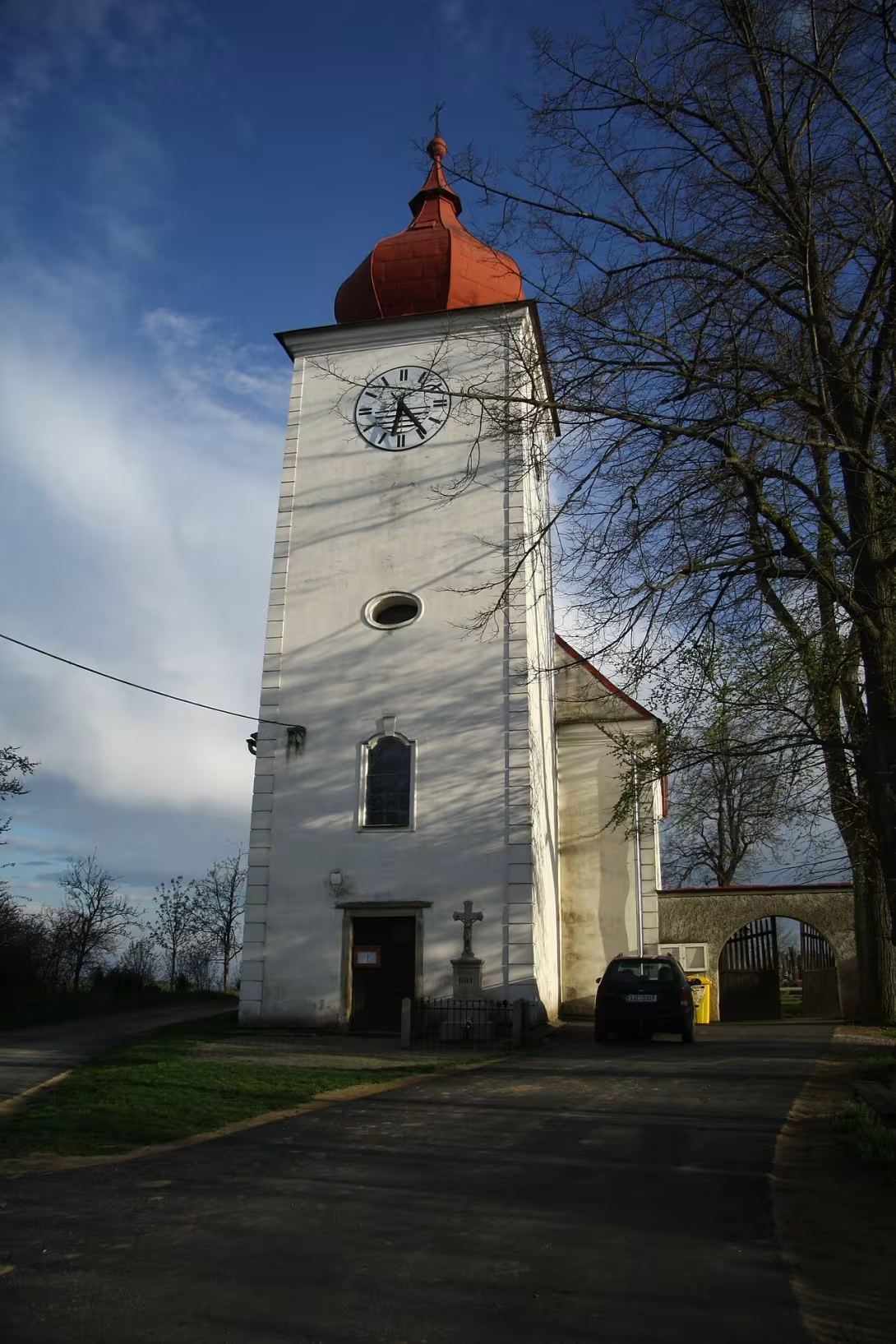
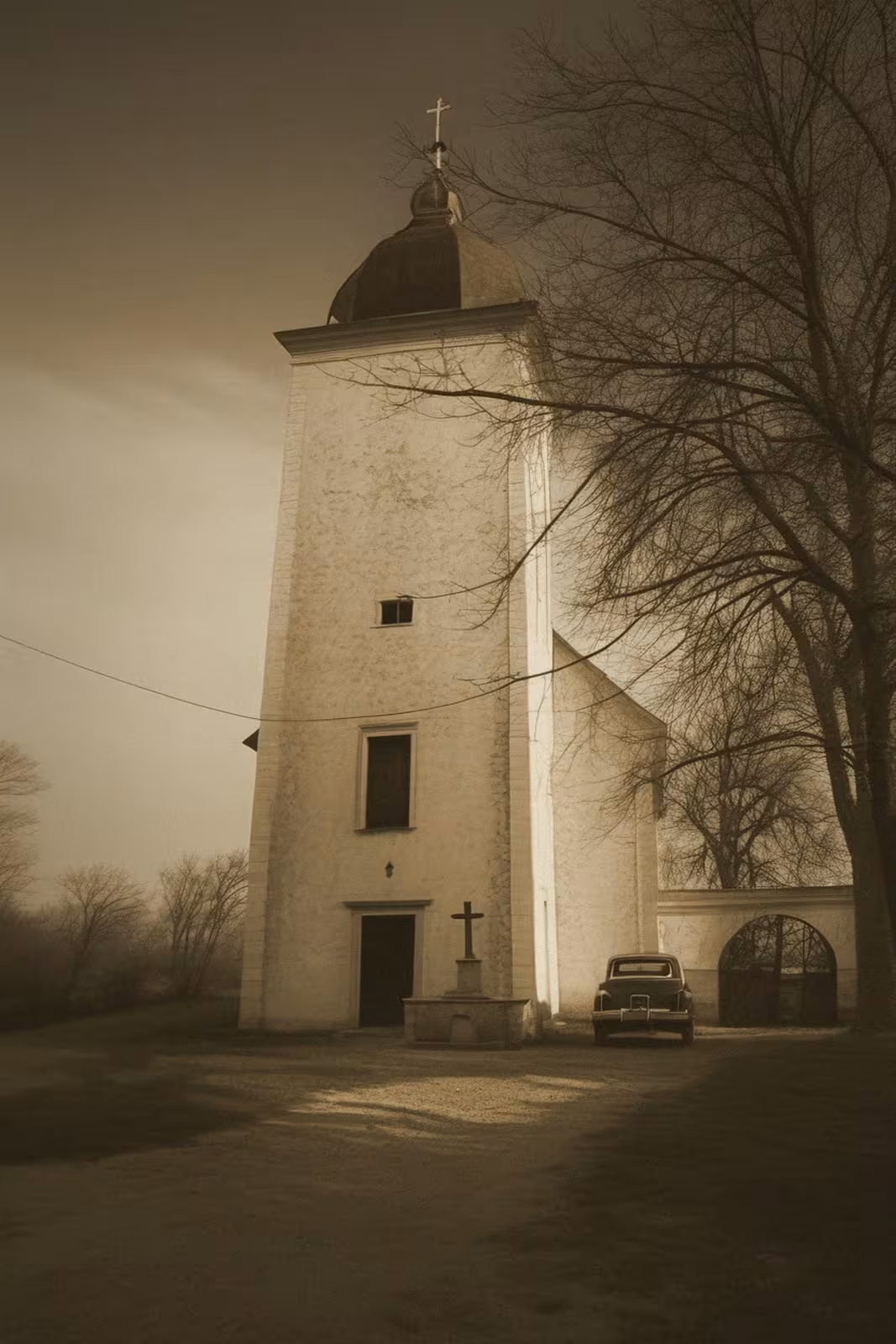
The historical appearance on the left is an AI-generated visualisation and serves as inspiration only.
Historical milestones
- 1842
- The church was consecrated.
- 1970
- Two bells with reliefs of Christ the Good Shepherd and Our Lady Help of Christians were cast in Žďárce u Tišnova.
Architectural development
The church is a late classicist style building constructed between 1830 and 1841, featuring rustic baroque elements. Originally, it housed an organ from 1817, which was relocated from Jihlava in 1955 but later removed due to damage. The current organ, installed in August 2000 by Jiří Vaculín, replaced the previous one.
Historical events
The church was consecrated in 1842, marking its completion and readiness for religious services.
In February 2000, the existing organ was dismantled and removed due to damage caused by a forestry company. New five-manual organs with a coupling pedal were installed later that year.
Points of interest
- The Church of Saint Anthony of Padua was constructed during a time when Bohemia was part of the Austrian Empire, reflecting the cultural influences following the Napoleonic Wars with its blend of neoclassical and romantic styles.
- Originally housing an organ from 1817 that was relocated here in 1955, it had to be removed due to damage caused by a forestry company, leading to the installation of new five-manual organs in August 2000.
Guide
This guide is narrated by a synthetic voice generated by artificial intelligence.
Show guide text
This text was created by artificial intelligence and has not been editorially reviewed. It may contain inaccuracies.
Welcome to the Church of Saint Anthony of Padua in Panská Lhota, a serene and historic gem nestled at the southern edge of this quaint village within its cemetery grounds. As you stand here, take a moment to absorb the peaceful ambiance surrounding you. The church's rustic baroque style is immediately apparent, with its single nave structure exuding simplicity yet elegance.
Constructed between 1830 and 1841 during a period when Bohemia was part of the Austrian Empire, this church emerged in an era rich with cultural shifts following the Napoleonic Wars. Architecturally, it reflects a blend of neoclassical and romantic styles prevalent at that time, though the architects remain unknown. This historical context adds depth to your visit as you explore further.
Look up now and appreciate the concave-convex closure of this rural building, with its distinctive tower on the front side, oriented towards the north. The church's design invites contemplation, encouraging visitors like yourself to pause and reflect on both its spiritual purpose and historical significance.
In 1842, just a year after its completion, this sacred space was consecrated, marking its readiness to serve as a filial church of the Roman Catholic parish in Brtnice. Fast forward to 1970, when two bells were cast in Žďárce u Tišnova, featuring reliefs of Christ the Good Shepherd and Our Lady Help of Christians—adding layers of devotion and artistry to your auditory experience.
While specific historical figures associated with this church remain unidentified, its presence has undoubtedly witnessed countless stories and moments of faith over the decades. The relocation of an organ from 1817 here adds a unique musical heritage, suggesting that melodies once filled these walls, enhancing worship and community gatherings.
As you continue your exploration, let yourself be drawn into the quiet mystery surrounding this place. Imagine the generations who have come before you, finding solace and inspiration within its walls. The church's enduring presence is a testament to both human creativity and spiritual devotion.
We invite you to wander around the cemetery grounds, allowing the atmosphere of history and nature to envelop you fully. Each step here offers an opportunity to connect with the past while appreciating the tranquility of the present.
Thank you for visiting this remarkable site. May your journey through Panská Lhota leave you enriched and inspired. As you move on, carry with you the memories of this peaceful sanctuary and its timeless charm.
Tips for visitors
The best time to visit the Church of Saint Anthony of Padua in Panská Lhota is during late spring or early autumn when the weather is mild, and the surrounding countryside is particularly beautiful with blooming flowers or vibrant fall colors. Visiting during these times allows you to enjoy outdoor activities comfortably while exploring the serene rural landscape around the church.
Parking and transport options are convenient for visitors coming by car, as there are parking spaces available nearby. For those preferring public transportation, it's advisable to check current bus routes that service the area, ensuring a smooth journey to Panská Lhota. Always verify the latest travel information before your visit to avoid any inconvenience.
When planning your visit, consider bringing comfortable walking shoes and weather-appropriate clothing, as you may wish to explore the surrounding countryside or walk around the church grounds. A camera is recommended for capturing the picturesque views of the church and its rural setting. Additionally, carrying a water bottle and some snacks can enhance your experience, especially if you plan on spending several hours exploring.
For photography enthusiasts, the best spots are likely to be at the entrance where the tower provides an impressive backdrop, or from the front side where natural light enhances the church's architectural features during sunrise or sunset. Be mindful of lighting conditions and try different angles for capturing the unique concave-convex closure of the building.
Families with children will find the area around the Church of Saint Anthony of Padua to be quite enjoyable, as there are no specific attractions within a 30-minute drive that cater exclusively to kids. However, the tranquil environment is perfect for leisurely walks or picnics in nature, allowing families to spend quality time together while exploring the peaceful countryside.
Businesses nearby
Do you run a restaurant, accommodation, shop, museum, rental, wellness or other visitor service near this monument? Show yourself directly to the people heading to it — this is how they will see you in the app and on the web:
Accommodation nearby
Trips and activities nearby
Guided tours, tickets and activities nearby from GetYourGuide
Affiliate link: if you buy from the partner, we may receive a commission. The price for you does not change.
Search tours and activities →Themed route
Thematic Vltour: Discovering the Charm of Panská Lhota
1. Church of Saint Anthony of Padua (Panská Lhota) *Type:* Historical Church *Why Visit:* Begin your journey at this stunning example of Baroque architecture, dedicated to Saint Anthony of Padua. The church is renowned for its intricate design and serene atmosphere, offering a glimpse into the region's rich religious heritage.
2. Local Village Square (Panská Lhota) *Type:* Cultural Site *Why Visit:* Just a short walk from the church, explore the charming village square that serves as the heart of Panská Lhota. This area is perfect for experiencing local life and culture, with its traditional architecture and community spirit.
3. Cemetery (Panská Lhota) *Type:* Historical Site *Why Visit:* Adjacent to the church, the cemetery offers a peaceful place to reflect on history and tradition. It features beautifully maintained gravestones that tell stories of past generations, providing insight into local customs and family histories.
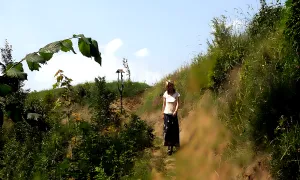
4. Village Trails (Panská Lhota) *Type:* Nature Walk *Why Visit:* Stroll through the scenic trails surrounding the village to enjoy the natural beauty of Vysočina. These paths offer a tranquil escape with picturesque views, ideal for nature lovers and those seeking a moment of quiet reflection.
5. Local Farmsteads (Panská Lhota) *Type:* Agricultural Heritage Site *Why Visit:* Conclude your tour by visiting nearby farmsteads that showcase the agricultural traditions of the region. These sites provide an authentic look at rural life and offer opportunities to learn about local farming practices and produce.
This thematic vltour offers a comprehensive exploration of Panská Lhota, highlighting its historical, cultural, and natural attractions within a compact area.
Seasonal recommendations
Spring: As spring unfolds, the Church of Saint Anthony of Padua in Panská Lhota is enveloped in a vibrant tapestry of blooming wildflowers and fresh greenery that frame its historic architecture beautifully. The soft, dappled sunlight filtering through budding trees creates an enchanting atmosphere ideal for photography or quiet reflection. Visitors during this season should anticipate occasional showers, so carrying a light waterproof jacket is advisable. Although the crowds are generally manageable, arriving early in the morning can help you enjoy the serene beauty of the church and its surroundings before more visitors arrive.
Summer: The summer months at the Church of Saint Anthony of Padua bring long days filled with warm sunshine that accentuates the intricate details of the church's architecture. This is a popular time for local festivals, which add to the lively atmosphere but also increase visitor numbers. To avoid the midday heat and larger crowds, it’s best to visit in the early morning or late afternoon. Comfortable walking shoes and light clothing are recommended, as well as staying hydrated. The surrounding nature trails offer additional opportunities for exploration.
Autumn: Autumn transforms Panská Lhota with a stunning display of fiery reds, oranges, and yellows as the leaves change color around the Church of Saint Anthony of Padua. This season offers a picturesque setting that is particularly appealing to photographers and nature lovers. The cooler temperatures make it an ideal time for longer visits without the discomfort of summer heat. Visitors should dress in layers to accommodate fluctuating weather conditions and consider bringing a hat or scarf as evenings can be brisk.
Winter: In winter, the Church of Saint Anthony of Padua is set against a backdrop of snow-covered landscapes that create a magical and serene atmosphere. The shorter days mean the church may close earlier, so planning your visit for midday allows you to make the most of daylight hours. It's essential to dress warmly in layers and wear waterproof boots due to potential icy conditions. Despite fewer visitors during this time, the charm of the church is enhanced by its peaceful surroundings, making it a perfect spot for quiet contemplation or capturing stunning winter scenes.
Visualizations and artistic views


The visualisations are generated by artificial intelligence and serve as inspiration.
Photos from the area
Real photos taken near the monument


Zdroj a licence jsou uvedeny u každého snímku.
Atmosphere of the place
This atmospheric visualisation of the place and period was generated by artificial intelligence. It is not real footage of the location.
Tips from visitors
No tips yet. Be the first!
Log in and add your tip.
Sources and literature
Fotografie: Jiří Sedláček / CC BY-SA 4.0 — Wikimedia Commons. The author and licence also appear when you hover over the image.
Faktickým podkladem tohoto textu byl článek na Wikipedii, jehož autory jsou přispěvatelé Wikipedie. Článek je dostupný pod licencí CC BY-SA 4.0.
Location on the map

Příběhy a pověsti
Legendy, pověsti a příběhy spjaté s touto památkou
Fotografie návštěvníků
Zatím žádné fotografie. Buďte první, kdo přidá fotografii z návštěvy!
Přihlaste se a přidejte svou fotografii nebo hodnoťte.
Za ověřenou návštěvu v aplikaci získáte víc bodů — poznáme podle GPS, že jste na místě.
Reviews and comments