



Rokštejn Ruin
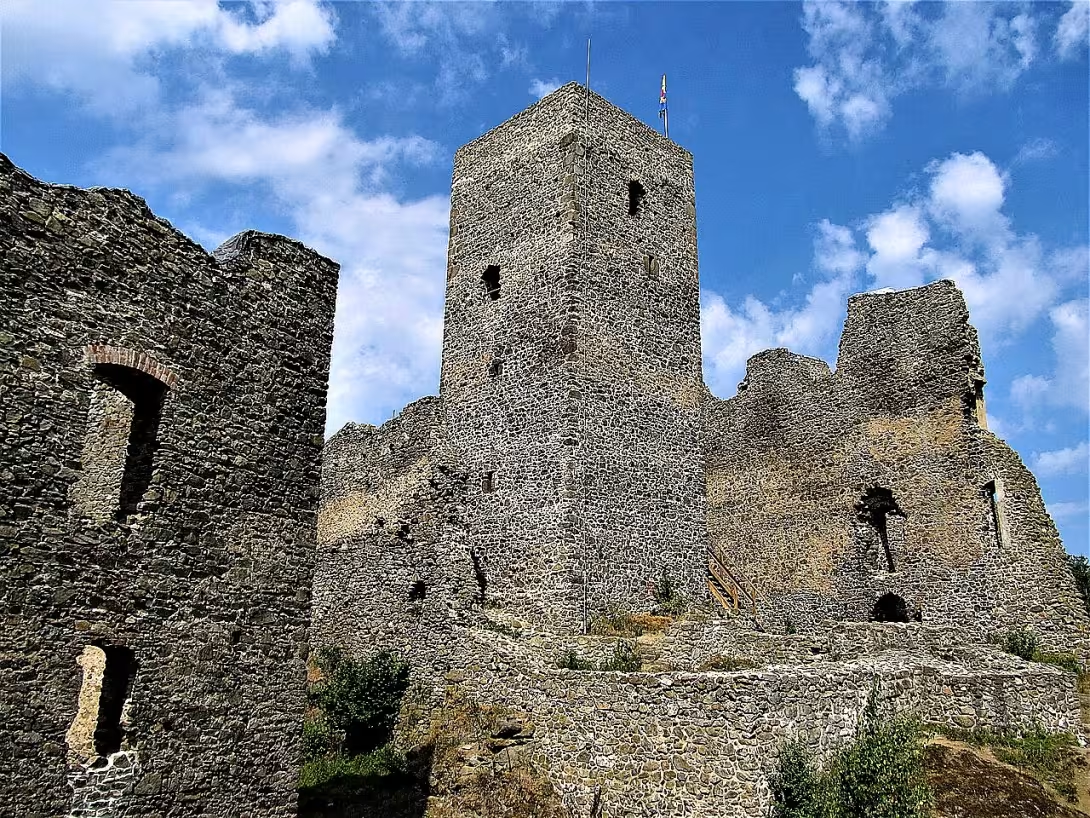
Rokštejn is the ruins of the chateau lying on a rocky hill above the valley of the Brtnice river in the cadastral territory of Panská Lhota in the Brtnic district of the Jihlava district. The remains of two palaces with a characteristic prism tower and farm buildings form one of the largest chateau ruins on the Bohemian Moravian Highlands. The chateau is situated in a landscape where the valley of Brtnice is still breaking into the rock hills, which gave it exceptionally strategic value in the past.
Rokštejn is among the oldest Moravian chateaux of the Danube type and comes from the 1980s of the 13th century. He was originally named Rutestýn and took his name from Ruth (Hruta) of the Hrutovic family, who probably founded it after 1270. The first mention in the written sources dates back to 1289 from the charter where Ruth is listed as the holder of the chateau. Around 1359 he seized the chateau of the Moravian Margrave Jan Jindřich, which made the chateau the centre of his local property and used it as a defense against the nearby Jihlava. In 1362 he had the chateau expanded and rebuilt.
The uniqueness of Rokštejna lies in its architecture - it was a so-called double chateau, or ganerbenburg, building unusual in the Czech territory. The upper chateau consisted of a tower and palace with a chapel and a large hall which heated tiled stove and fireplace. On the east side there was also a significantly smaller tower. The lower chateau contained a palace, kitchen and economic buildings. This architecture speaks of the complexity and wealth of the original horde.
After Jan Jindřich followed his son Margrave Jošt, later he moved the chateau to Prokop. It was in debt and was taken over in 1399 by Hynek z Valdštejna, which thus became the founder of the Waldstein line in the region. The Waldstein chateau was further expanded while buying up surrounding villages. During the Hussite wars, the chateau belonged to Zikmund of Valdštejn, who alienated the Catholic Jihlava. The Jihlava army surrounded the chateau and forced its defense to surrender. The chateau was demolished, by the mid-15th century the Valdstejns had already transferred it to Brtnice. Until the post-white mountain confiscation, Rokštejn remained owned by the Valdstejns, then controlled by the Colalts until 1945.
Since 1981, there has been systematic archaeological research on Rokštejn, which revealed the skeleton of the newborn child at the base of the tower - probably proof of pagan rituals believed in magical protection of the chateau. In the shaft of the gate to the upper chateau was found a unique set of more than 200 playing dice, the largest European collection that shows how the guards shortened their time during long guards. These findings bring valuable knowledge of life in the chateau over the centuries.
Today Rokštejn is the property of Brtnice city and remains freely accessible to visitors. Археологic research continues under the leadership of Jana Mazáček from the scientific research station Panská Lhota. The summer season includes guided tours and cultural events.
Then and now
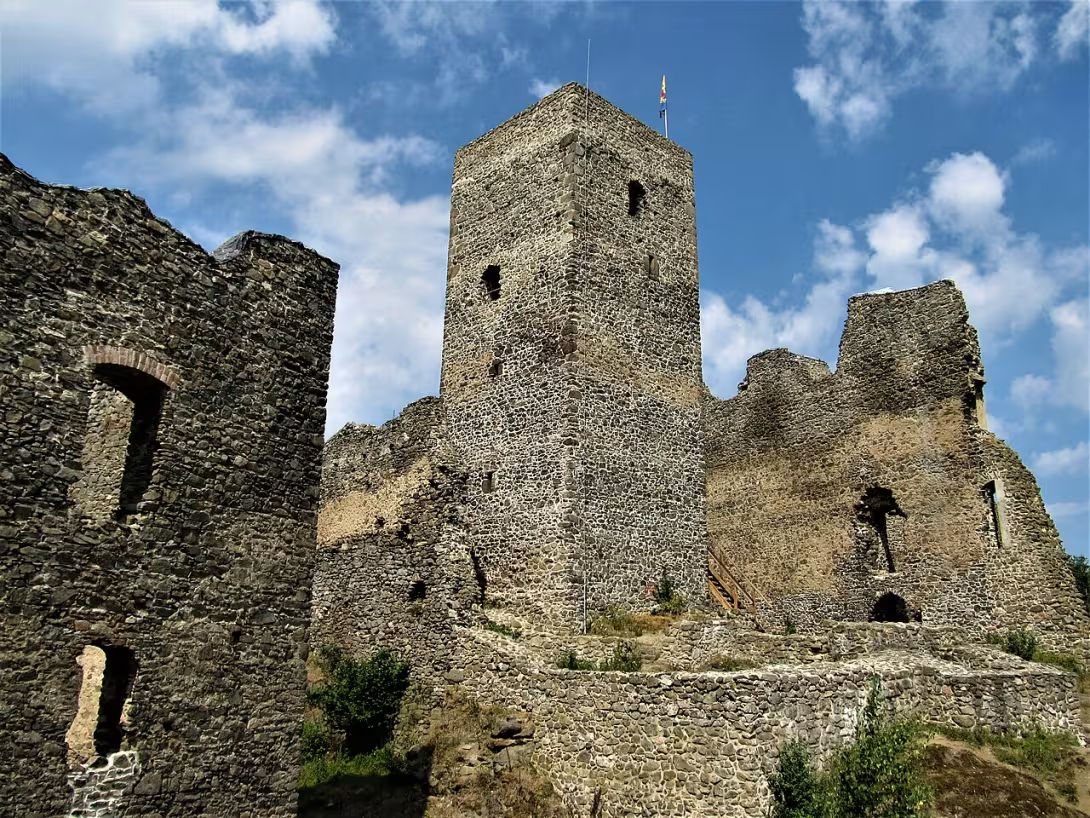
Drag the slider to compare how the landmark may have looked when it was built with the view today.
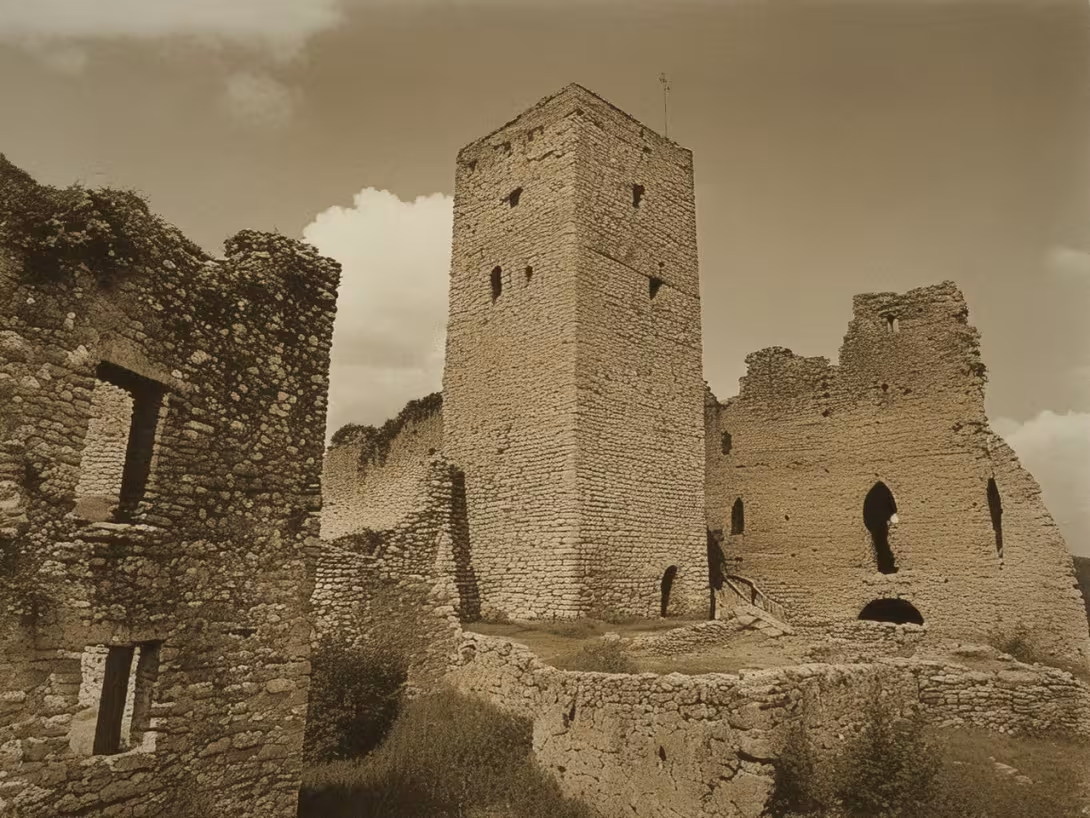
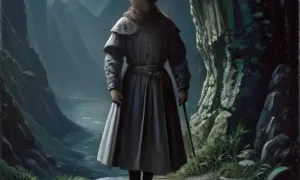
The historical appearance on the left is an AI-generated visualisation and serves as inspiration only.
Historical milestones
- 1289
- The first historical mention in the list of Děřka z Prižice.
- 1362
- Rebuilding the chateau to a unique double chateau.
- 1399
- Take over Hynem Chateau from Valdštejn.
- 1981
- The launch of systematic archaeological research.
Architectural development
The chateau was extended in the 14th century to a complex of double chateau with upper and lower chateau. The core of the upper chateau was a tower and palace with chapel and a large hall equipped with tiled stove. The whole complex had a massive fortification and a characteristic prism tower.
Historical events
1289 - the first historical mention in the list of Děřka z Knežice; 1362 - conversion of the chateau to a unique double chateau; 15th century - the chateau was taken during Hussite wars.
Owners
Hruta z rodu Hrutoviců (after 1270), Jan Jindřich (around 1359), Hynek z Valdštejna (from 1399), Zikmund z Valdštejna (15th century), Collalta family (until 1945).
Points of interest
- Rokštejn is one of the largest chateau ruins on the Bohemian Moravian Highlands. - The chateau was probably founded after 1270 by Ruth (Hrutem) of the Hrutovic family and had a strategic value in the past due to its location. - The Rokštejna architecture is unique because it was called a double chateau or ganerbenburg, which was an unusual building in Czech territory. - In the foundation of the Rokštejn tower, the skeleton of the newborn was found - possible evidence of pagan rituals associated with the magical protection of the chateau. - On the shaft of the gate to the upper chateau was discovered a unique set of more than 200 playing dice, which is the largest European collection of its kind.
Guide
This guide is narrated by a synthetic voice generated by artificial intelligence.
Show guide text
This text was created by artificial intelligence and has not been editorially reviewed. It may contain inaccuracies.
Rokštejn is a ruined castle on a rocky hilltop above the valley of the Brtnice River, in the cadastral area of Panská Lhota in the Jihlava district. The remains of two castle palaces with a prismatic tower and fragments of farm buildings rank among the largest castle ruins on the Českomoravská Highlands.
The castle was built in the eighteen eighties of the thirteenth century and is numbered among the oldest Moravian castles of the sub-Danubian type. It was originally called Ruteštejn, named after Ruth, also called Hrut, from the Hrutovic family. He probably founded it after twelve seventy. The castle first appears in records in twelve eighty-nine. On the document of Dětřich from Kněžic, the seal of Ruth from Rutenštejna also hung there.
Around thirteen fifty-nine, the Moravian margrave Jan Jindřich seized the castle under unclear circumstances. Rokštejn became the center of his estates in the surrounding area and was to protect the margrave's interests against nearby Jihlava. Around thirteen sixty-two, the still relatively small castle was rebuilt and expanded. According to archaeologists, it was a so-called double castle, a structure unique on Czech territory. The upper castle consisted of a tower and a palace with a chapel and a great hall, which was heated by tiled stoves and fireplaces. The lower castle had a palace, a kitchen, and farm buildings.
After Jan Jindřich, his son Jošt inherited the castle. But he quarreled with his brothers Prokop and Jan Soběslav over the property. Reconciliation came only at the end of the fourteenth century, and Rokštejn fell to Prokop. He was in debt, so in thirteen ninety-nine his main creditor Hynek from Valdštejna took over the castle. He further expanded the castle and purchased a number of surrounding villages. During the Hussite Wars, Rokštejn belonged to Zikmund from Valdštejna, who was in conflict with Catholic Jihlava. Jihlava's army besieged the castle, the defenders had to withdraw, and the castle was demolished. The Valdšteins then moved their seat to Brtnice. Rokštejn remained theirs until the post-White Mountain confiscations, and then until nineteen forty-five it belonged to the Collaltos.
In nineteen eighty-one, systematic archaeological research began here, due to the planned Střížov dam. It was led by historian Zdeněk Měřínský. After his death in two thousand sixteen, research continues under the leadership of Jana Mazáčková from the research station in Panská Lhotě. In the foundations of the tower, the skeleton of a newborn was found, evidence of surviving pagan customs. It was believed that such a sacrifice would ensure the castle's invulnerability. Then in the shaft of the gate to the upper castle, the largest collection of dice in Europe was discovered. The guards apparently passed the time playing games here.
Tips for visitors
Best time to visit Rokštejna is in the spring and autumn season when vegetation is best visible and the weather usually favourable. In these months you will also avoid extreme temperatures of summer sunlight, which means a more comfortable tour.
Parking is possible to find near Panska Lhota. Transport to Rokštejna can be effected either by car or by public transport. We recommend checking the current connection before travelling so that you can plan your visit program without undue delay.
When visiting Rokštejna it is advisable to take with you shoes on high sole, because the terrain around the chateau is irregular and rocky. Also remember the sun protection and plenty of drinking fresh drinks, especially in the summer months.
For photography is the best place on the west side of the chateau where the beautiful sun is captured as you leave the horizon. This time of day offers ideal conditions for photo with fine shadows and warm colors.
In the vicinity of Rokštejna there is a town Brtnice, which can be visited in 30 minutes. The city offers historic places and picturesque architecture which is interesting for all visitors. For families with children it can be fun to visit the Natural Park of the Brtnice Valley and its picturesque landscape.
Frequently asked questions
Can the monument be visited?
Yes. We verified the opening hours or admission on the official website (22. 9. 2026); you will find them in the visitor information on this page. Please double-check with the operator before you travel.
What are the opening hours and admission?
Details verified on the official website (22. 9. 2026) are listed in the visitor information on this page. Official website: https://www.brtnice.cz/hrad%2Drokstejn/ds-11207/p1=28460
Where is the monument?
Location: Panská Lhota, Kraj Vysočina. The map on this page shows the exact spot.
Why is the monument protected?
It is listed in the Central List of Cultural Monuments of the Czech Republic as a cultural monument (register no. 21329/7-5055).
For kids
All right, get ready for an adventure set up 726 years ago! If we could travel through time, we would jump to around 1300, where one of the most amazing buildings in the world - chateau Rokštejn. This place is like a great stone spirit lying on a rocky hill over the valley of the Brtnice River, waiting to tell its history.
Businesses nearby
Do you run a restaurant, accommodation, shop, museum, rental, wellness or other visitor service near this monument? Show yourself directly to the people heading to it — this is how they will see you in the app and on the web:
Nearby
The valley of the Brtnice River, the town of Brtnice, the Bohemian Moravian surface.
Accommodation nearby
Trips and activities nearby
Guided tours, tickets and activities nearby from GetYourGuide
Affiliate link: if you buy from the partner, we may receive a commission. The price for you does not change.
Search tours and activities →Themed route
1st town of Brtnice Type: City Why: It serves as an ideal place to start the entire route.
2. Valley of the River Brtnice Type: Valley Why: Offers a peaceful journey in nature towards the main monument.
3.Rokštejn Type: Ruins Why: The main destination of the trip, which represents the historical core of the route.
4. Czech-Moravian surface Type: Landscape Why: This vast area offers beautiful views of the surrounding terrain.
Seasonal recommendations
Spring: During the spring season Rokštejn is oddly attractive due to its quiet lighting, when the sun's rays penetrate through the mists and tree crown, creating beautiful flashes on the wall. Nature is awakening from its winter sleep, surrounding the chateau with flowers and new trees. At this time, it is recommended to visit the memory in the early afternoon, when the crowds can still rise inappropriately and the climate is welcoming. Enough warm clothes and shoes with a good sidewalk will be useful because the weather can be variable.
Summer: Summer at Rokštejn offers long days full of light and heat, creating a lively atmosphere. The masonry of the ruins dazzles the sun's rays, while the surrounding forests offer shadow shelters for the afternoon moment of relaxation. The main summer season may increase the number of visitors, so it is advisable to come early in the morning or later in the evening to avoid the top hours. Hot clothes and protective sunglasses are the basic escort for this time.
Autumn: In autumn, Rokštejn offers melancholic beauty when tree leaves go into red and yellow colors. This atmosphere is ideal for romantic walks or peaceful moments of reflection. Due to milder weather, smaller crowds of visitors may appear compared to the summer season, making the trip more comfortable. Hot clothes and umbrella are recommended due to variable autumn weather.
Winter: Winter brings Rokštejn in the astonishing light of ice and snow flashes, which gives the ruin a magical character. The atmosphere is quiet, with a smaller number of visitors, which allows an intimate exploration of historical monuments. This season the opening hours can be shortened and you need to take note of warm clothes, shoes with a good pavement and perhaps an umbrella for snow or rainy soil. The best time to visit is in the early afternoon when the sun still lights up the wall and the temperature is lighter.
Visualizations and artistic views


The visualisations are generated by artificial intelligence and serve as inspiration.
Photos from the area
Real photos taken near the monument


Zdroj a licence jsou uvedeny u každého snímku.
Tips from visitors
No tips yet. Be the first!
Log in and add your tip.
Sources and literature
Photos: Vlach Pavel / CC BY-SA 4.0 — Wikimedia Commons. The author and licence also appear when you hover over the image.
Faktickým podkladem tohoto textu byl článek na Wikipedii, jehož autory jsou přispěvatelé Wikipedie. Článek je dostupný pod licencí CC BY-SA 4.0.
Location on the map

Příběhy a pověsti
Legendy, pověsti a příběhy spjaté s touto památkou
Fotografie návštěvníků
Zatím žádné fotografie. Buďte první, kdo přidá fotografii z návštěvy!
Log in a přidejte svou fotografii nebo hodnoťte.
Za ověřenou návštěvu v aplikaci získáte víc bodů — poznáme podle GPS, že jste na místě.
Reviews and comments