






kostel svatého Antonína Velikého Church
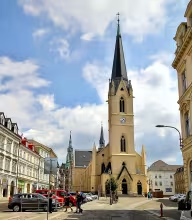
At the site of today's neo-gothic temple was the construction of a wooden character in the 14th century. The revolutionary change came on June 17, 1579, when the reconstruction began to be a permanent stone building under the leadership of the masonry George Leyphold. The base stone was laid on September 24 and the building became the first stone building in Liberec. The sculptures were dealt with by Christoph Brief and the artists Michel and George of Hodkovice. The Gothic-style tower was completed in September 1582, when it was mounted on top of the tower with a commemorative list. The original builder could not handle the encroachment of the temple space, the builder Mark Antonio Spazio, who strengthened the construction with supporting pillars. The work ended on November 30, 1587.
During the following centuries the church passed many examinations. The lightning repeatedly damaged the tower, it was plundered by the Swedes during the Thirty Years' War and destroyed by the organ. Until 1695, when the Church of the Holy Cross was built, it remained the only temple in Liberec. The increase in the number of believers led in 1733 to the decision of Count Philip Josef from Gallas kostел to extend. Johann Felgenhauser from New Town under Smrk extended the construction, supplied her with a transverse boat and renovated the tower; the reconstruction ended on 16 October 1735.
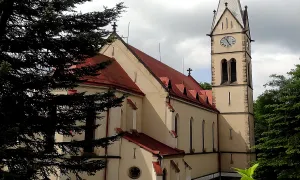
The nineteenth century brought about a fundamental change. After the renovation in 1859 they started replacing the original low tower (37.30 m). The project was developed by Ludwig Tischler from Vienna and the construction board Heinrich Ferstel. The construction companies Sachers and Gärtner worked from 27 October 1879 to 27 August 1880, when the new tower was 70.50 metres high and the headroof was built. The tower was the tallest building in the city for years.
At the same time, there was extensive interior renovation. The floor was reduced by 50 centimeters, three crypts cancelled. Otto Dresen painted the temple according to the Vienna design, the stained glass was supplied by Filip Pohl and the Zittau painter Türcke. The altar and pulpit was built by the Vienna stonework firm Leimer, the church bench of Ruprechtic carpenter Franz Schefler. The work lasted from March 1881 to January 1883. On 13 June 1883 he was ordained as Archdeacon Church by the Litomeric Bishop Jan Schöbel.
In the 20th century, maintenance continued - new organ in 1930, two new bells in 1957, electrical ringtone in 1976. More extensive repairs took place between 1969-1971, 1978, 1980, 1981 and 1994. The Church of St. Anthony the Great remains one of Liberec's dominant and witness architectural evolution from Gothic to Baroque to neo-gothic.
Then and now
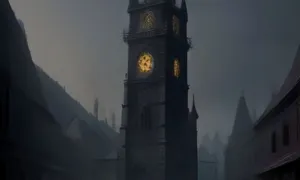
Drag the slider to compare how the landmark may have looked when it was built with the view today.
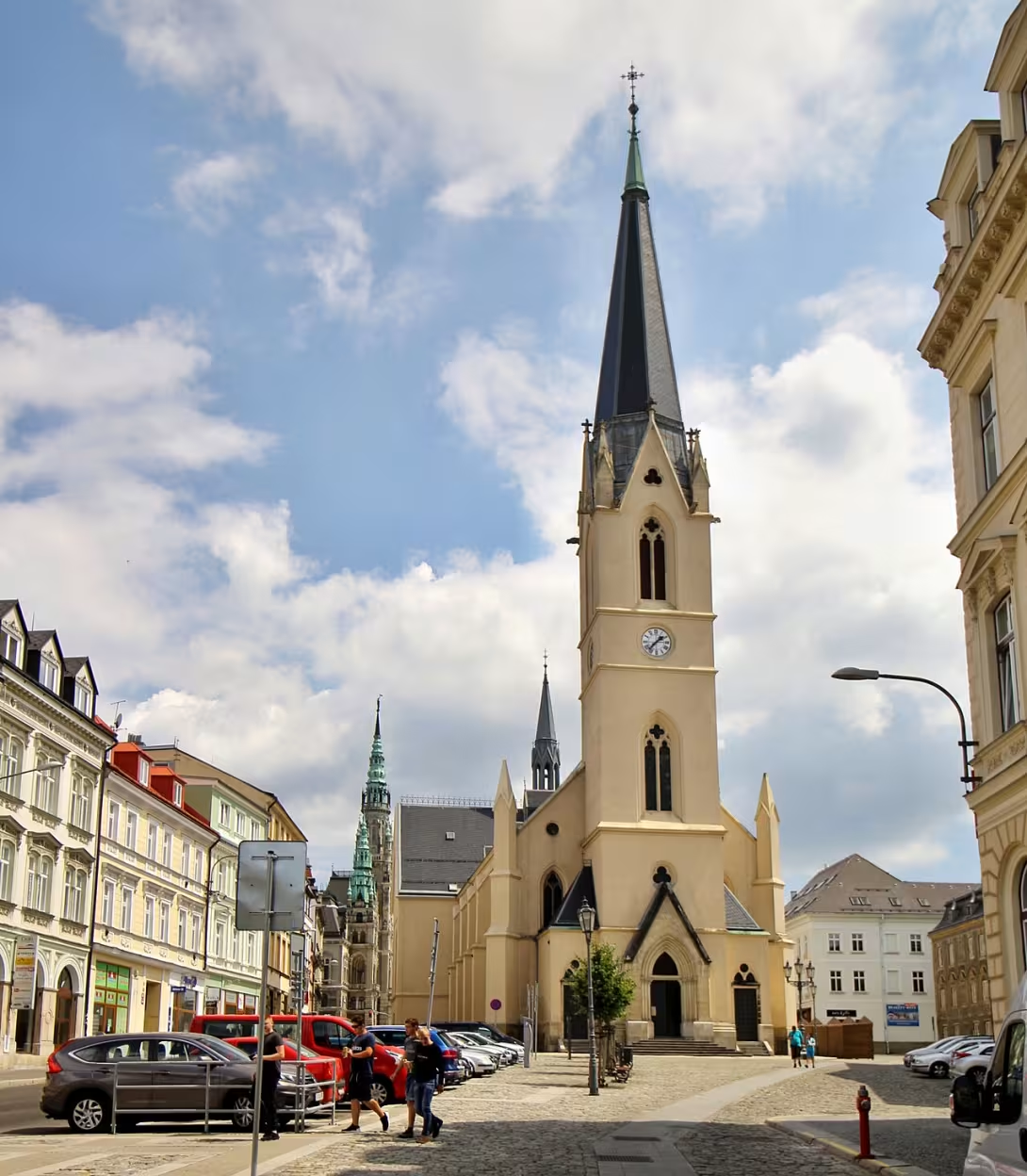

The historical appearance on the left is an AI-generated visualisation and serves as inspiration only.
Historical milestones
- 1579
- laying of the foundation stone of the first stone building in Liberec
- 1582
- planting of the poppy on top of the square tower
- 1587
- completion of construction by Mark Antonio Spazio
- 1735
- completion of baroque expansion of church
- 1880
- completion of new neo-gothic tower
Architectural development
Originally a wooden church was replaced in 1579 by a brick three-boat construction. In the 18th century there was a Baroque reconstruction leading to the extension of the temple and the addition of a transverse ship. At the end of the 19th century, the tower was replaced by a higher neo-gothic dominance reaching 70.5 meters.
Historical events
1579 construction of the first stone building in Liberec; 1733 extension of the church by Count Philip Joseph of Gallas; 1879 construction of a new neo-gothic tower; 1883 explaining the church in its new form.
Points of interest
- In the place of today's temple was the construction of a wooden character in the 14th century. - The reconstruction to the stone building began on 17 June 1579 under the guidance of the masonry George Leyphold, who laid the foundation stone on 24 September of the same year. - The tower was completed in September 1582 with a poppy and commemorative list on top. - The builder Mark Antonio Spazio strengthened the temple with pillars, the work ended on November 30, 1587. - In 1733 the church was extended by Count Philip Joseph of Gallas; The reconstruction ended on October 16, 1735 with the a
Guide
This guide is narrated by a synthetic voice generated by artificial intelligence.
Show guide text
This text was created by artificial intelligence and has not been editorially reviewed. It may contain inaccuracies.
Welcome to Liberec, the heart of North Bohemia. Stop for a moment, take a breath and fully sense the space around you. Right now, you're standing in front of one of the city's most important architectural dominant, the Archdeacon Church of St. Anthony the Great. It is a place that, both by its size and effect, controls the surrounding space and reminds us of how deep the roots of this city go. Take a look at the total silhouette of the building that rises above the roofs of the surrounding houses. It's more than just a stone building; It is basically an open book of the history of Liberec, in which each chapter is written in a different architectural style.
When you look at this monumental temple today, it may be hard to imagine that there was a completely different building in this very place where you are standing in the 14th century. Back then, there was a modest wooden church. Imagine the contrast. Instead of today's massive walls there were wooden beams and reeds roofs. It was a time of the early Middle Ages when the city grew gradually and with it the need for a more dignified place to pray and gather the people. But the wood was not enough over time, and the city decided to take a radical step that fundamentally changed the face of this place.
Let us now move in spirit to the year one thousand five hundred seventy-nine. It was this year that the era of stone began. The reconstruction to the stone building began on the 17th of June, under the leadership of the masonry George Leyphold. It was an ambitious project to mirror the city's boom. The foundation stone itself, which forms the basis of today's temple, was laid four months later, namely the 24th of September of that year. Imagine the noise, the dust and the enthusiasm of the people who watched their old wooden church form something permanent and monumental.
The construction progressed, but its completion required time and professional guidance. In a thousand and five hundred and eighty-seven he completed the entire construction of Marko Antoni Spazio. At that time, the church was a symbol of stability and faith. If you look up now, notice the tower. It has its own fascinating chronology. The first square tower was set with its poppy in September of the year a thousand five hundred eighty-two. This was the moment when the church finally became the most striking point in the landscape.
Now pay attention to how the building evolved over the next centuries. The history of this temple is not static, it is a constant process of transformation. In the year one thousand seven hundred thirty-five there was a significant baroque enlargement. The Baroque brought dynamism, light and new space available to architecture. The church thus adapted to the new religious needs and aesthetics of its time. But the changes didn't end there. The second half of the nineteenth century brought a new wave of renewal, this time in the spirit of neo-goths. It was during this period, namely in the year of a thousand eight hundred and eighty, that a new neo-gothic tower was completed, which provides the construction of its contemporary, noble character.
Today, when you're looking at the facade and the overall composition, feel the traces of many masters. The form of this temple was signed by architects and builders from different generations. In addition to George Leyphold and Mark Antoni Spazio, they left their tracks here Johann Felgenhauer, Ludwig Tischler and Heinrich Ferstel. Each brought a different view of space, a different feeling for detail and a different approach to material. It is fascinating to think that these men, separated for decades, together formed one single, harmonious dominance.
This place is also associated with the names of prominent personalities who at different times influenced the fate of the city and the church. These included Jáchym Oldřich z Rosenfeldu, Filip Josef z Gallasu or Jan Schöbel. It was people who, by their power, influence or faith, helped to maintain this temple as the center of spiritual and social life. Imagine them entering these spaces, looking for peace here, or planning the future of Liberec.
Now I want to impress you with one interesting thing that remains hidden from ordinary visitors. Let's go back to the year one thousand five hundred eighty-two when the original tower was completed. That's when the commemorative charter was placed on the top of her head, right under her head. It was customary at that time for future generations to know who picked up the building and what time it was created. It's a time bridge, a message from the past that was inserted into the structure of the building itself. It is a secret that the tower carries within itself for centuries, while the life of a modern city flows beneath it.
If you look at St. Anthony the Great's church again, you probably don't just see him as a beautiful building anymore. You see in it layers of time. You see a wooden church from the fourteenth century, you feel the courage of masons from a thousand five hundred seventy-ninth, you see a baroque expansion from the eighteenth century and a neo-gothic elegance from the late nineteenth century. All these epochs meet here at one point.
This temple witnessed everything Liberec has experienced in centuries. He saw the blooming of the textile industry, changes in regime, joy, and sadness of thousands of people passing through. It's where history connects to the present.
Thank you for stopping by for a moment to explore the history of this wonderful place together. Now I encourage you to take a closer look at the church from different angles. Feel the atmosphere of this place, explore the details of the facade and let yourself be carried away by the images of people who built and prayed here hundreds of years ago. When you are ready, continue your journey through the city and discover the other hidden treasures of Liberec. I wish you a pleasant rest of the day and an inspirational walk. Goodbye.
Tips for visitors
The best time to visit is in the morning or late afternoon, when the most distinctive light falls on the facade of the church, which is ideal for shooting architectural details. During the photo shoot we recommend focusing on the contrast between historical construction and surrounding urban space.
The church is accessible by car and public transport; The current connection and parking possibilities in the surrounding area are recommended in the current search engine or maps. Due to the location in the city centre, it is advisable to use nearby public parking lots.
In the interior we recommend taking with us a suitable, respectful garment matching the character of the sacral space. For families with children, the visit is suitable as a short stop within a walk of the city, and we recommend that children explain in advance the need for silence in the church.
Within a short walk in the surroundings, which will not take more than half an hour, visit the square of Dr. Edvard Beneš, Sokolovská Square and the parish building and the archdeacon, which complement the historical context of this place.
Frequently asked questions
Is kostel svatého Antonína Velikého open to the public?
Yes, the church is open to the public. The tour may be completed in specified hours.
How do I get to the place by car / public transport?
The best option is parking in the nearby parking lot and walking to the church. The public transport stop is 5 minutes away.
How much is the entrance fee and is it paid on the spot?
Admission is paid on site, the current price list can be found on the official site of the sights.
Is the tour suitable for children and seniors?
Yes, the tour is also suitable for families with children and seniors. The premises are well accessible and contain no difficult parts.
How long does the tour take?
The tour of the church takes about 30 minutes, but you can also just walk around it and take pictures.
What are the opening times and booking is required?
The church is open daily from 9: 00 to 17: 00. Reservation is not necessary, but it is recommended for larger groups.
What's interesting in the immediate vicinity?
In the vicinity you will find other historical monuments and cultural institutions of the city such as museums or galleries.
For kids
Imagine going back to the time when there was a forest in this place and there was no sign of a human residence. It was a wild place full of animals and trees that reached up to the sky.
But then there was a big change. People started expanding here and building the first wooden houses. It must have been like a game of "island residents," where everyone was trying to find a place for themselves and their families.
Businesses nearby
Do you run a restaurant, accommodation, shop, museum, rental, wellness or other visitor service near this monument? Show yourself directly to the people heading to it — this is how they will see you in the app and on the web:
Nearby
The square of Dr. Edvard Beneš, Sokolov Square, the parish building and the archdeacon.
Accommodation nearby
Trips and activities nearby
Guided tours, tickets and activities nearby from GetYourGuide
Affiliate link: if you buy from the partner, we may receive a commission. The price for you does not change.
Search tours and activities →Themed route
1. Sokolov Square Type: Square Why to visit: Serves as an important urban area in this location.
2. Dr. Edvard Beneš Square Type: Square Why to visit: This place represents an important point in the architecture of the surroundings.
3. Parish and Archdeacon Building Type: Building Why to visit: This object is closely connected with the spiritual centre of the area.
4. Church of St. Anthony the Great Type: Church Why to visit: The main destination of the trip, which represents the most important sacral monument in the place.
Seasonal recommendations
Spring brings freshness and awakening nature around the church. The sun's rays begin to penetrate through the windows at a softer angle, creating a pleasant and hopeful atmosphere in the interior. In the surroundings you can see the first flowers, which complement the historical view. We recommend visiting the morning hours when the air is the cleanest. Clothes should be layered, because morning cold can still smell.
In summer months, the most light is in Librec and the longest days are. The church can serve as a refreshing refuge from summer heat. Due to the increased number of visitors in the main summer season, it is advisable to come immediately after opening or in late afternoon hours to avoid the greatest excitement. Dress lightly and comfortably, but remember the appropriate behavior in the sacral space.
The autumn season offers a melancholy and quiet atmosphere that is perfectly suited to tour historical buildings. Colors of surrounding vegetation turn into orange and brown tones, which complement the dignified character of the place. The best time to visit is this afternoon when light becomes golden. Prepare warmer clothes, because it is colder and damp in the autumn days.
Zimą works the church in a very noble and quiet way, especially if the surrounding area is covered by snow. The light is weaker in this period and creates deep shadows in the interior, which deepens the feeling of history. In advent time, the atmosphere can be particularly spiritual. Due to shorter daily times and possible changes in opening hours, we recommend planning a visit in clear noon hours. Don't forget your warm jacket and shoes.
Visualizations and artistic views


The visualisations are generated by artificial intelligence and serve as inspiration.
Photos from the area
Real photos taken near the monument


Zdroj a licence jsou uvedeny u každého snímku.
Tips from visitors
No tips yet. Be the first!
Log in and add your tip.
Sources and literature
Fotografie: VitVit / CC BY-SA 4.0 — Wikimedia Commons. The author and licence also appear when you hover over the image.
Faktickým podkladem tohoto textu byl článek na Wikipedii, jehož autory jsou přispěvatelé Wikipedie. Článek je dostupný pod licencí CC BY-SA 4.0.
Location on the map
Příběhy a pověsti
Legendy, pověsti a příběhy spjaté s touto památkou
Fotografie návštěvníků
Zatím žádné fotografie. Buďte první, kdo přidá fotografii z návštěvy!
Přihlaste se a přidejte svou fotografii nebo hodnoťte.
Za ověřenou návštěvu v aplikaci získáte víc bodů — poznáme podle GPS, že jste na místě.
Reviews and comments