






Kostel svatého Bartoloměje (Bílence) Church
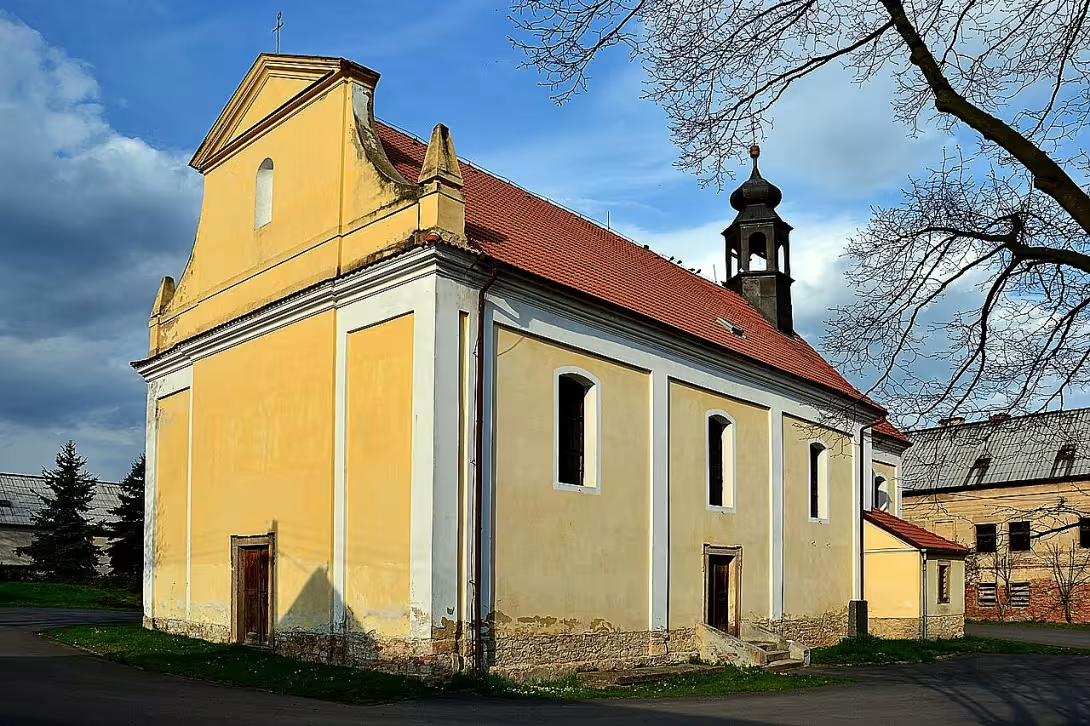
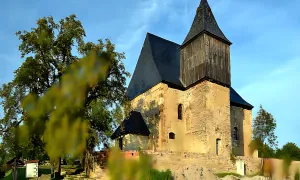
The church of St. Bartholomew is located in Bílence in the district of Chomutov, where it stands on a village village in the middle of the village. It is one of the few remaining proofs of the long development of the sacral building, which combines both medieval and modern architectural traditions.
The beginnings of the building dates back to the second half of the 15th century, when the burial chapel of the Hrobčický nobility from Hrobčice stood here. This medieval origin determined the nature of the site for centuries. The decisive transformation came in 1734, when on the instruction of Count Filip of Kolovrat the chapel was completely converted to a Baroque church as we know today. During the second half of the nineteenth century, the church then underwent further adjustments which altered his appearance in accordance with the requirements of his time. The only mention of dramatic events is the incident of the night of April 17, 1828, when a smaller bell was stolen from the church - an incident that recorded local memory.
The end of the twentieth century brought a massive revitalisation to the church. The necessary repairs were carried out in the second half of the 1990s. The year 1998 was dedicated to repairing the roof and on that occasion a box of commemorative items and papers intended for the future was inserted into the tower. The following year the work continued - the interior was renovated and on 29 August 1999 the ceremonial consecration of the church took place. From the following year, the reconstruction of the facades started, which gradually took place.
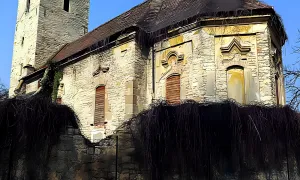
From an architectural point of view, the church is marked by its gradual development. It has one rectangular boat ended in the east by a polygonal presbytery, whose roof has a sanctus lid with an onion roof. The outer walls are broken down by lizene frames and ended by a graduated ledge. The western facade is supplemented with a slightly forward risalite with a niche in a rectangular shield. In the first half of the nineteenth century there used to be a second tower located in the middle of the roof of the ship, now no longer existing. The boat and presbytery contain flat ceilings, while the sacristy near the south wall is encapsulated by the Czech flat.
Church facilities tell us about his rich spiritual past. The most remarkable piece was the late Baroque altar with the painting of St. Bartholomew's apotheosis, which was painted by Adolf Weidlich in 1861. The altar included statues of St. Peter and Paul and painted antependium depicting the Last Supper of the mid-eighteenth century. However, this main altar was moved to the Bochi rectory where it burned down in 1994. The church remained the side altar of St. John Nepomuk and the Holy Family from the second half of the eighteenth century, among which there is no missing rococo pulpit. The late Gothic sandstone baptist from the second half of the 15th century, which represents one of the oldest elements of church equipment, deserves special attention. The altar of St. John Nepomuk is equipped with an acanto frame with the medal of the Virgin Mary from around 1700.
Today, the church is a protected cultural heritage of the Czech Republic and its existence reminds of the deeply rooted traditions of дуPreparation and Construction in Czech villages. The visitor here finds a layered history built literally in stone and plaster. / p >
Then and now
Drag the slider to compare how the landmark may have looked when it was built with the view today.
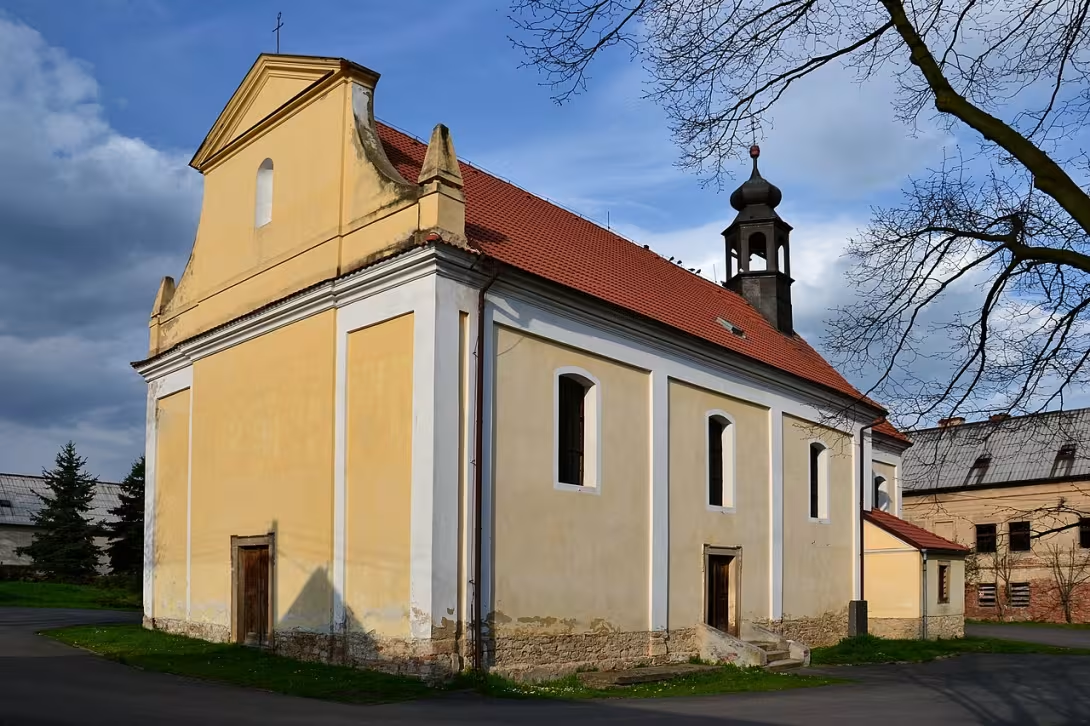
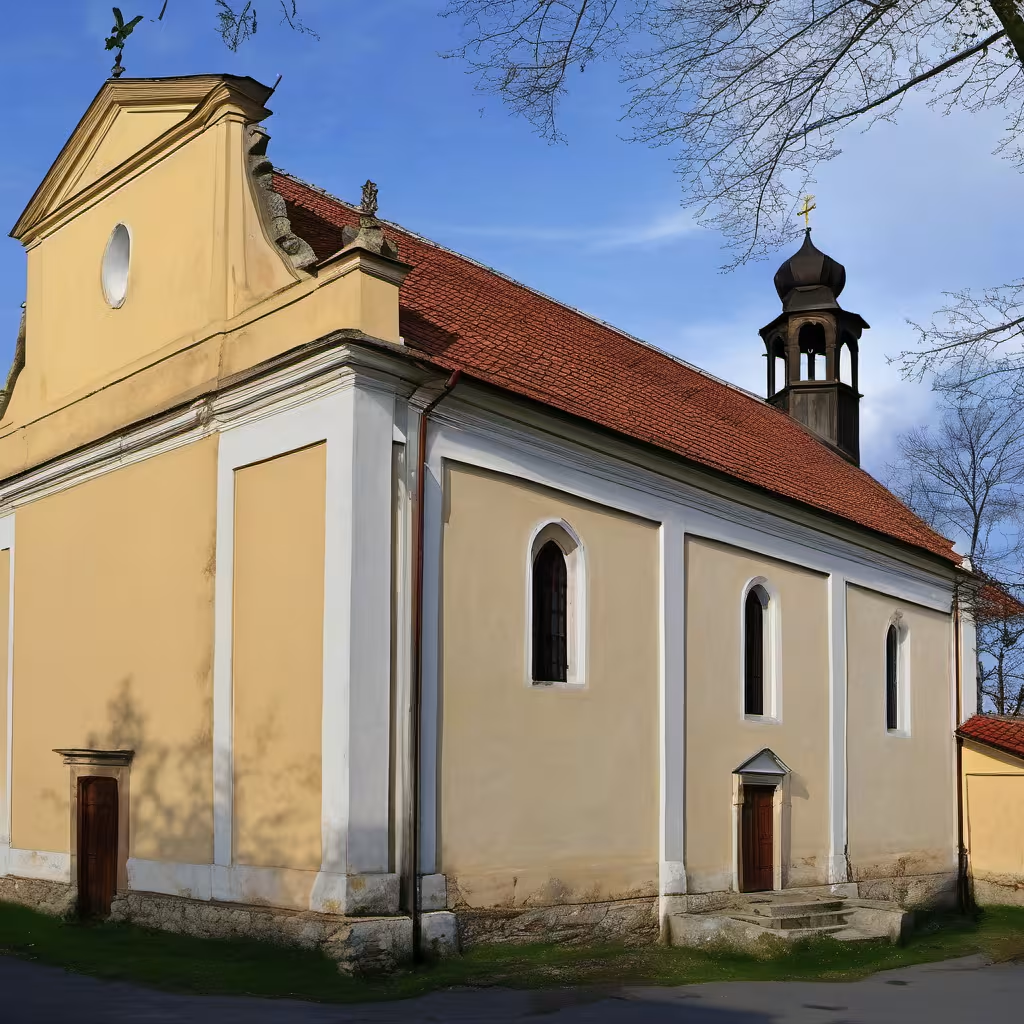
The historical appearance on the left is an AI-generated visualisation and serves as inspiration only.
Historical milestones
- 1450-1475
- The status of the original late Gothic or early Renaissance burial chapel of Hrobčický z Hrobčice
- 1734
- The beginning of the conversion of the chapel to the Baroque church on the instruction of Count Filip of Kolovrat
- 1828
- Stealing a smaller bell from the church
- 1998-1999
- Church reconstruction including roof and interior repair
Architectural development
The original chapel from the second half of the 15th century was rebuilt into a Baroque church in 1734. In the first half of the 19th century, the original tower on the roof of the ship was removed. In the 19th century there were minor modifications to the interior, including installation of the late Baroque altar. The roof (1998) and interior reconstruction (1999) were repaired in the 20th century.
Historical events
In 1734 the chapel was rebuilt to a Baroque church on the instruction of Count Filip of Kolovrat. A small bell was stolen from the church in 1828. In the years 1999-1999 there was extensive reconstruction of the interior and facades.
Owners
The Beneš of Rýzmburk
Hare
Points of interest
- St. Bartholomew's Church is one of the few preserved documents connecting medieval and modern sacral architecture.
- Originally, there was a funeral chapel of the Hrobčický nobility from the second half of the 15th century.
- In 1734 the chapel was converted to a Baroque church by order of Count Philip of Kolovrat.
In 1828, a small bell was stolen from the church, which recorded local memory.
- The church underwent extensive revitalisation in the 1990s, including the repair of the roof in 1998 and the ceremonial consecration of the interior on 29 August 1999.
Guide
This guide is narrated by a synthetic voice generated by artificial intelligence.
Show guide text
This text was created by artificial intelligence and has not been editorially reviewed. It may contain inaccuracies.
Welcome to the church of St. Bartholomew in Whitenice. You are standing in front of one of those rare monuments that seem to carry the breath of two worlds - the Middle Ages and the Baroque. In front of you, there is a simple but elegant structure whose walls tell us of the long life she has lived. Look at her facade - see how she is broken by thin, straight lizens as if someone carved a fine, regular line into a stone? And the ledge that surrounds the entire building in tiered sections? This is a typical Baroque detail that gives this construction its characteristic lightness.
But let's move back in time. Originally there was not a church, but a funeral chapel. It was built in the second half of the fifteenth century for a significant nobleman family - Hrobčický z Hrobčice. They wanted to have a place where their ancestors could rest, so they built a modest but dignified structure, probably still in the late Gothic style or early Renaissance style. The chapel served its purpose for centuries until 1734 when Count Philip of Kolovrat decided it was time for change. He wanted there to be a church that matches the modern needs and baroque taste of the time. So the reconstruction began - the chapel turned into a church that you see before you.
Now pay attention to the west facade. Here you will notice the risality - the rising frame that emphasizes entry. There's a niche in the middle that may have used to serve as a niche or as a place for a statue. The facades are simple but carefully processed, and the little sandbox tower above the presbytery - i.e. above the priesthood - gives the whole the right degree of elegance. The interior, although you can't see it now, was restored after reconstruction in the 1990s to preserve its original atmosphere.
Who was meeting here? Who prayed here? Unfortunately, the names of those who built or supported this building have not been preserved. All we know is that the chapel was originally the burial ground of Hrobčický, and that the Baroque reconstruction brought new life to the church. But one thing is certain - this church is one of the few preserved examples of how medieval sacral architecture turned into baroque. It's like a bridge between two ages standing right here in front of you.
Now imagine what the sound of bells sounded like? In 1828, a smaller bell was stolen, but imagine what the sound was like when it echoed over the village. The church stood and stood in a place where history intertwined - where people prayed centuries ago and where even today faith still meets history.
There's a place in front of you waiting to be discovered. Look at his lines, imagine those who once walked here, and get carried away by how this simple but expressive structure tells the story of time. Let the visit inspire you - let it be just by standing here listening to its silence, which is full of history.
Thank you for taking the time to look at this gem with us. May this monument bring you not only knowledge, but a moment of peace. Goodbye.
Tips for visitors
{'paragraph': 'The best time to visit the church of St. Bartholomew is in the morning after opening when there is a pleasant light in the interior and fewer visitors. The ideal time for a trip is in spring or autumn, when nature is the most beautiful in the vicinity of Bílenc and temperatures are pleasant for walks. The Baroque architecture of the church is best reflected in sunny weather, where shadows are played on the facade and inner paintings gain depth.'}
{'paragraph': 'Parking is possible near the church, a specific place is usually marked. If you arrive by car, it is recommended to use public transport to the village Bílence and to continue from there on foot because the parking area is limited. The current connection of public transport can be found in the transport search engine as the lines can change. It is not necessary to park directly at the church because it is available even after a short walk from the centre of the village.'}
{'paragraph': 'When visiting, wear comfortable clothes and shoes because the church is located in a historic village with uneven terrain. The interior of the church is cold, so bring a light sweater or coat. For convenience, also prepare a small notebook or photo block if you want to record details of architecture or painting. Don't forget your hat or hat if you are going to visit in winter.'}
{'paragraph': 'Photography is allowed in the church, but it is appropriate to ensure that other visitors are respected. The best places for photos are presbytery with polygonal finish and the sandbox tower above the roof, where it is possible to capture typical baroque architecture. For quality pictures is ideal light in the morning or afternoon hours, when the sun's rays illuminate the facade of the church without too many shadows. In the interior avoid flashing of lightning to avoid damage to the painting.'}
{'paragraph': 'In the vicinity of the Bílenc is worth visiting the church of St. Wenceslas in the Údlice, which is located about half an hour by car. This church offers another opportunity to explore the historical architecture and nature of the Chomutov region. For nature lovers is an interesting neighborhood with forests and ponds where you can make a relaxing walk or picnic. There are also other historical monuments that can be visited in one day.'}
{'paragraph': 'For families with children, a visit to the church of St. Bartholomew is interesting thanks to the possibility of exploring historical architecture and hearing stories associated with the church. Children can enjoy a walk around the village Bílence, where typical rural architecture is located. It is also possible to find small forest trails around the church where children can play and discover nature. It is also recommended to visit the church of St. Wenceslas in Sodlice, where children can see other interesting details and paintings.'}
Frequently asked questions
Is Kostel svatého Bartoloměje (Bílence) open to the public?
Yes, the church is open to the public all year round from 9: 00 to 5: 00. Admission is free.
How do I get to the place by car / public transport?
You can get by bus No. 43 from the center of Bílina, or you can come by car on Road II / 255. Parking is possible in the vicinity of the church.
How much is the entrance fee and is it paid on the spot?
Admission to St. Bartholomew's church is free.
Is the tour suitable for children and seniors?
Yes, a tour of St. Bartholomew's Church is suitable for both children and seniors. The church offers beautiful architectural elements and a quiet atmosphere.
How long does the tour take?
The duration of the tour depends on your speed and interest. We recommend to assign at least 30 minutes to tour the church interior and exterior.
What are the opening times and booking is required?
The church of St. Bartholomew is open to the public all year round from 9: 00 to 17: 00. Admission is free of charge, but no booking fee is required.
What's interesting in the immediate vicinity?
In the vicinity of the church you will find the Kingdom, which offers beautiful views of the Bílenská Highlands. We recommend visiting nearby forests where you can observe local fauna and flora.
For kids
Imagine going back to the past in the Middle Ages. Until the churches looked like massive chateaux and people lived in them like a hidden fortress. Here's where we'd like to return: St. Bartholomew's Church in Bílence.
How did it look here? Who lived here? What happened here? At that time, the church was still young, only a few centuries old. It was an era of goth when they built churches like massive towers to heaven. And that's how this church looks - like a huge wall with a high roof and long windows.
Businesses nearby
Do you run a restaurant, accommodation, shop, museum, rental, wellness or other visitor service near this monument? Show yourself directly to the people heading to it — this is how they will see you in the app and on the web:
Events nearby
Zdroj akcí: otevřená data měst a obcí ČR (Národní katalog otevřených dat) a kalendář akcí Národního památkového ústavu.
Nearby
The surrounding area is the village Bílence with typical rural architecture. There are other historical churches within 5 km, such as St. Wenceslas's Church in Dědlice, and a natural landscape typical of the Chomutov surroundings with forests and ponds.
Accommodation nearby
Themed route
Thematic cruise route: The history and calm of Chomutov rural landscape
This short and undemanding route will lead you to the heart of the village of Ústí, where sacral architecture is intersected with a typical atmosphere of quiet villages. The journey is designed to enjoy both cultural monuments and natural beauty without the need for long movements.
St. Bartholomew Church Type: Sacral monument This church is the main point of your journey and dominance of the village Bílence. It is worth visiting for its historical value and calm atmosphere, which allows you to think in the middle of rural development.
Vesnické zástavě Bílenec Type: Cultural landscape After visiting the church, take a walk around the village. It is worth looking at typical rural architecture, which retains the original character and characteristics of this part of the district of Chomutov.
Natural landscape of Chomutov surroundings Type: Natural environment In the immediate vicinity of the village there is a landscape typical of this area. It offers an ideal space for short walks between forests and ponds that provide a path of relaxation character and visual diversity.
Church of St. Wenceslas Type: Sacral monument The aim of the final part of the route is the village Údlice, which is located near Belenec. This church complements the picture of local history and offers another opportunity to explore the spiritual heritage of the region.
The route is designed to be clear and logical. You start at the main goal, continue by exploring the immediate surroundings and nature, and eventually you end up visiting another significant sacral building in the neighbouring village. The whole trip is suitable for lovers of history and nature who are looking for a quieter alternative to busier urban destinations.
Seasonal recommendations
Spring In March and April, Bílence awakens to life after the winter calm, when the church of St. Bartholomew is besieged in the soft light of the spring sun, which penetrates through the stained glass and creates on the stone walls a game of colored glare. The surrounding area of the church is still not entirely green, but the first flowers of spring plants and flowering trees around the village provide a clear, almost poetic atmosphere. The air is fresh, often with a hint of moisture, and in the morning a fine fog veil floats over the fields and vineyards. The ideal time for visiting is from mid-April when nature wakes up fully but before the main summer rush. It is recommended to come early in the morning to avoid possible rain showers that are common at this time. Clothes should be layered - warm top clothes for morning cold, but light T-shirts and sunglasses for sunny afternoon. The church is usually calm at this time, but on Sunday after mass, local visitors can gather, so it is a more suitable week for the tours themselves.
Summer In June and July, Bílence will turn into a lively village, where St. Bartholomew's Church stands as a dominant point in the green surroundings, surrounded by vineyards and fields that grow in intensity in the summer months. The sunlight falls directly on the stone wall, so the interior of the church can be almost dazzling in the morning - the visit in the morning is therefore the most pleasant. Summer also brings abundance of visitors, especially in the high season (July-August), when the village may seem busier than usual. It is recommended to come early in the morning to avoid crowds, and choose quieter moments like Mondays or Tuesdays. Clothes should be easy, but with the possibility of covering the shoulders when entering the church. In the summer months, it is also advisable to bring water and sun protection cream, as the shade around the church is not always sufficient. The atmosphere is cheerful and open at this time, but for those who seek peace, it is better to choose cooler days at the end of the summer.
Autumn Autumn Bílence offers a unique atmosphere where St. Bartholomew's Church acts as a darker silhouette against the golden and red background of surrounding forests and vineyards. In September and October the light changes - the morning clock is still warm, but the afternoon brings cooler air and often fog that hover over the fields. The church windows in this light gain deeper, almost mysterious shades, while the outdoor area is quiet, almost desolate, with fallen leaves rustling under their feet. Autumn is an ideal period for visiting, as crowds are minimal, and the church appears to be a place of meditation. It is recommended to visit it in October when nature is still beautiful, but temperatures are falling and the traffic is low. Clothes should be warm but not too massive - suitable are sweaters, jackets with hood and comfortable shoes, as the terrain around the church can be muddy after the rains. The best time is the afternoon, when light becomes softer and the landscape grows in melancholy beauty.
Winter In winter, the church of St. Bartholomew becomes the center of a quiet, almost fairy tale environment, when the white snow cover turns the surrounding landscape into a silvery region. The snow dampens the sounds, making the church's visit seem like an escape from the excitement of the world - the interior is warm and lit with candles or Christmas decorations (in advent time), while outside there is silence interrupted only by rustling snow. Freezing air and short days mean that the church is often the only source of heat and light around this time. It is recommended to visit it in December when the village is decorated and the atmosphere is even more Christmas, but also in January or February when the attendance is minimal. Clothes should be very warm - laminated sweaters, sweatpants, gloves and shoes for cold weather, as temperatures may fall below freezing. In winter it is also advisable to check the opening hours of the church, as in some months access may be restricted. The best time is the afternoon when light breaks through snowflakes and the church appears to be a magical shelter.
Visualizations and artistic views


The visualisations are generated by artificial intelligence and serve as inspiration.
Photos from the area
Real photos taken near the monument


Zdroj a licence jsou uvedeny u každého snímku.
Atmosphere of the place
This atmospheric visualisation of the place and period was generated by artificial intelligence. It is not real footage of the location.
Tips from visitors
No tips yet. Be the first!
Log in and add your tip.
Sources and literature
Fotografie: Petr Kinšt / CC BY-SA 3.0 — Wikimedia Commons. The author and licence also appear when you hover over the image.
Faktickým podkladem tohoto textu byl článek na Wikipedii, jehož autory jsou přispěvatelé Wikipedie. Článek je dostupný pod licencí CC BY-SA 4.0.
Location on the map
Příběhy a pověsti
Legendy, pověsti a příběhy spjaté s touto památkou
Fotografie návštěvníků
Zatím žádné fotografie. Buďte první, kdo přidá fotografii z návštěvy!
Přihlaste se a přidejte svou fotografii nebo hodnoťte.
Za ověřenou návštěvu v aplikaci získáte víc bodů — poznáme podle GPS, že jste na místě.
Reviews and comments