



Kostel svatého Jakuba Staršího (Bílence) Church
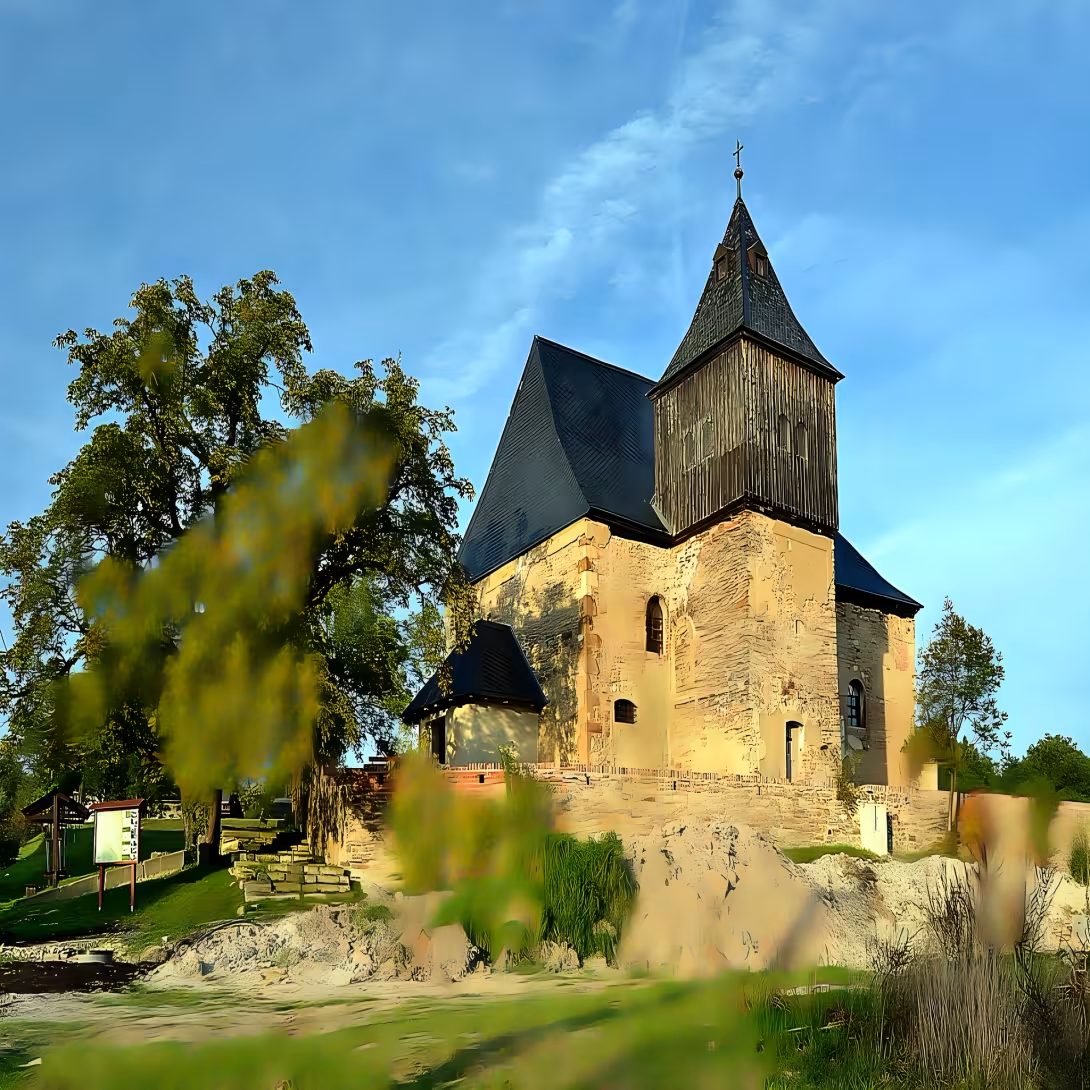
The Church of Saint James the Elder in Bílence stands as a testament to the region's rich cultural heritage. Located in Škrli within the Chomutov District, this Roman Catholic church is dedicated to Saint James the Elder and has been protected as a cultural monument since 1963. Its historical significance is highlighted by its architectural evolution and its role in the community over centuries.
The origins of the Church date back to at least the mid-14th century, with the first documented mention occurring in 1341 when King John of Luxembourg granted town rights to the village. This period saw significant cultural and architectural development across Europe, heavily influenced by Gothic styles under the Luxembourg dynasty's rule over Bohemia as part of the Holy Roman Empire.
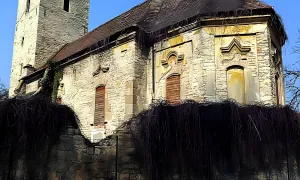
Architecturally, the church is a single-nave structure with a rectangular presbytery. It features corner reinforcements made from sandstone blocks and semi-circular arched windows. A distinctive late Gothic tower was added to the southern wall of the nave, featuring brickwork that aligns with the level of the nave's walls. Originally, the entrance had a late Gothic pointed arch portal, which has since been removed.
Over its history, the church underwent significant renovations in 1586 and again in 1840, reflecting changes in architectural styles and community needs. The 1980s brought challenges when plans for a landfill between Bílence and Škrlí led to construction restrictions that caused considerable damage to the structure. However, restoration efforts continued, culminating in the church being roofed with slate tiles in 2001.
Originally surrounded by a cemetery, which was abolished in the mid-19th century, the church also features a deep recess near its entrance where a beam once served as a door bar. These elements highlight the church's historical functionality and community role.
Today, the Church of Saint James the Elder stands as a preserved cultural monument, inviting visitors to explore its rich history and architectural beauty. Its enduring presence in Bílence offers a glimpse into the past while continuing to serve as a spiritual and cultural landmark for the community. Visitors are encouraged to experience this historical gem firsthand, appreciating its significance within the broader tapestry of European heritage.
Then and now
Drag the slider to compare how the landmark may have looked when it was built with the view today.
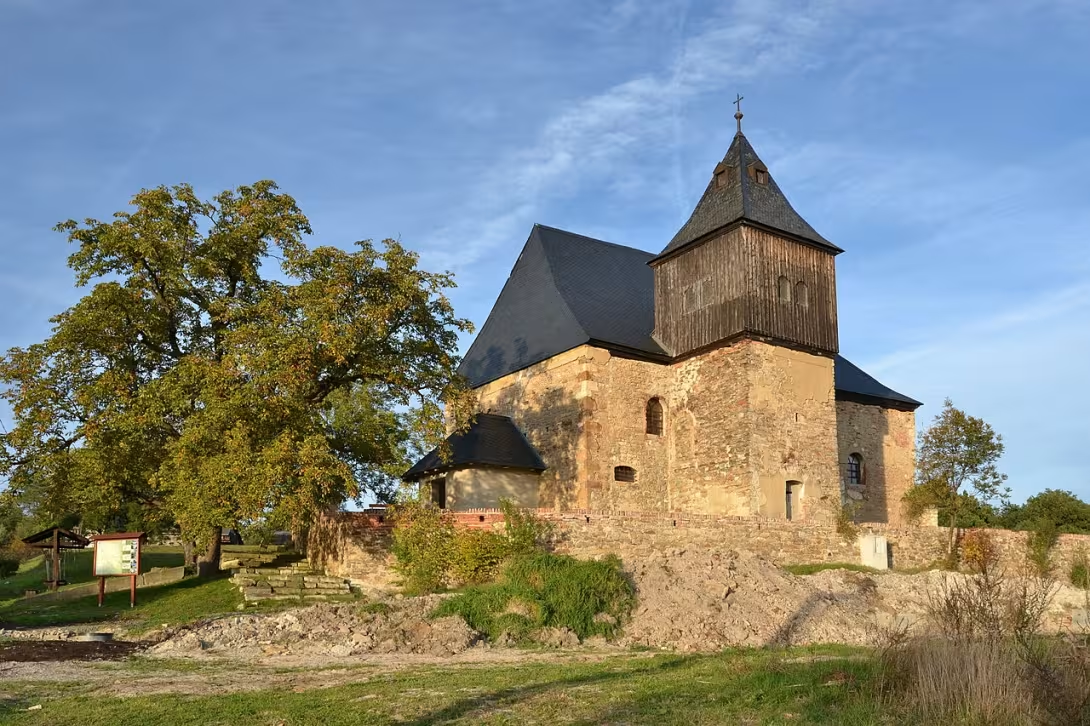

The historical appearance on the left is an AI-generated visualisation and serves as inspiration only.
Historical milestones
- 1341
- The church and village were first mentioned when King John of Luxembourg granted town rights.
- 1586
- A significant renovation took place.
- 1840
- Another major renovation occurred.
- 2001
- The church was roofed with slate tiles.
Architectural development
The church is a single-nave structure with a rectangular presbytery. Notable architectural features include corner reinforcements with sandstone blocks and semi-circular arched windows. A late Gothic tower was added to the southern wall of the nave, featuring brickwork up to the level of the nave's walls. The original entrance featured a late Gothic pointed arch portal, which has since been removed.
Historical events
First mentioned in 1341 when King John of Luxembourg granted town rights to the village.
Significant damage occurred in the 1980s due to plans for a landfill between Bílence and Škrlí, leading to construction restrictions.
Points of interest
- The Church of Saint James the Elder was granted town rights by King John of Luxembourg in 1341, linking its history to significant European political figures and events during the Gothic period.
- Originally surrounded by a cemetery that was abolished in the mid-19th century, the church's location once played a vital role in community rituals related to life and death, reflecting broader societal changes over time.
- A distinctive feature of the church is the deep recess near its entrance where a beam once served as a door bar, showcasing unique historical architectural functionality that has since been lost or altered.
- The late Gothic tower added to the southern wall of the nave demonstrates an evolution in architectural style and community needs, reflecting broader trends in 14th-century Bohemian architecture under Luxembourg rule.
- Despite facing significant damage due to construction restrictions during landfill plans in the 1980s, the church's restoration efforts culminated in a new slate-tiled roof by 2001, highlighting ongoing community commitment to preserving its historical and cultural significance.
Guide
This guide is narrated by a synthetic voice generated by artificial intelligence.
Show guide text
This text was created by artificial intelligence and has not been editorially reviewed. It may contain inaccuracies.
The Church of Saint James the Greater stands in the eastern part of the village of Škrle in the Chomutov district. You can find it approximately in the middle of a slope that descends southward into the valley of the Chomutovka River. Around the church there used to be a cemetery enclosed by a wall. It was abolished in the middle of the nineteenth century. Since 1963, the church has been protected as a cultural monument.
The church, like the village itself, is first mentioned in the year 1341. At that time, King John of Luxembourg granted Škrle city rights. The building was constructed no later than the middle of the fourteenth century. Further major reconstructions took place in 1586 and 1840.
The church experienced difficult times in the nineteen eighties. Between Bílenci and Škrle, the Velemyšlevská waste site was planned at that time, and both villages were subject to a building freeze. The church deteriorated significantly during that period. In 2001 it received a new slate roof and since then it has been gradually repaired.
The church has a single nave and a rectangular chancel. A sacristy adjoins the chancel from the north. Entrance to it used to be through an opening in the western wall, which is now bricked up. The corners of the nave and chancel are reinforced with sandstone blocks. Light enters inside through rectangular windows with semicircular tops.
The main entrance is in the western wall. It was decorated with a late Gothic portal with a broken arch, but it was torn out and removed. Behind the entrance, a deep pocket has been preserved in the wall. A beam was slid into it, which served as a bolt. A simple vestibule was added to the entrance only in 1814.
To the southern wall of the nave, a prismatic tower with a square floor plan was added during the late Gothic period. It is built to the same height as the walls of the nave. The ground floor and first floor were originally entered from outside, but both entrances are now bricked up. In the first floor, small rectangular loopholes remain. The second floor of the tower consists of a timber structure clad with boarding.
Tips for visitors
The best time to visit the Church of Saint James the Elder in Bílence is during late spring or early autumn when the weather is pleasant, and the surrounding nature is particularly beautiful. This period offers a comfortable climate for walking around the area and exploring nearby attractions without the crowds that might be present during summer holidays. Additionally, visiting outside peak tourist seasons allows for a more intimate experience of the church's serene atmosphere.
Public transportation is available, and it is advisable to look up current routes and schedules using a travel app or website before your trip. This ensures a smooth journey to the church without any last-minute inconveniences.
When planning your visit to the Church of Saint James the Elder, consider bringing comfortable walking shoes as you may want to explore the surrounding area on foot. Also, carrying a camera is recommended for capturing the architectural beauty of the church and its picturesque setting. Since weather conditions can change, packing layers or a light raincoat might be wise, ensuring your comfort throughout your visit.
Photography enthusiasts will find several spots around the Church of Saint James the Elder ideal for capturing stunning images, especially during golden hours—shortly after sunrise or before sunset—when the natural light enhances the church's architectural features. The surrounding landscape also offers a beautiful backdrop for photographs, making it worthwhile to explore different angles and perspectives.
For families with children visiting the Church of Saint James the Elder, nearby attractions within a 30-minute drive include various nature trails that are perfect for outdoor activities. These areas provide opportunities for family walks or picnics in scenic settings. While there may not be specific child-oriented facilities at the church itself, the tranquil environment and open spaces offer a peaceful setting for children to explore safely under supervision.
Frequently asked questions
Can the monument be visited?
Religious buildings are usually open mainly during services; at other times a visit is normally arranged with the parish or the operator. We have not verified specific times. According to the heritage register restoration is under way, so access may be restricted.
Where is the monument?
Location: Bílence, Ústecký kraj. The map on this page shows the exact spot.
Why is the monument protected?
It is listed in the Central List of Cultural Monuments of the Czech Republic as a cultural monument (register no. 32758/5-443).
Businesses nearby
Do you run a restaurant, accommodation, shop, museum, rental, wellness or other visitor service near this monument? Show yourself directly to the people heading to it — this is how they will see you in the app and on the web:
Events nearby

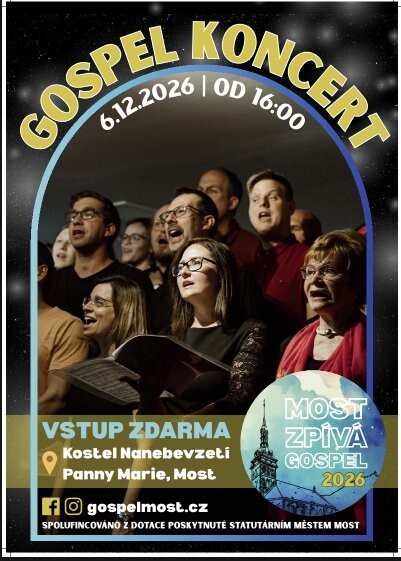
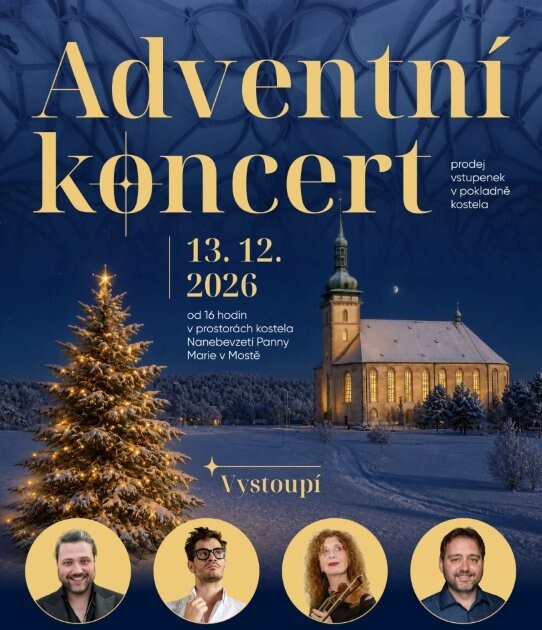
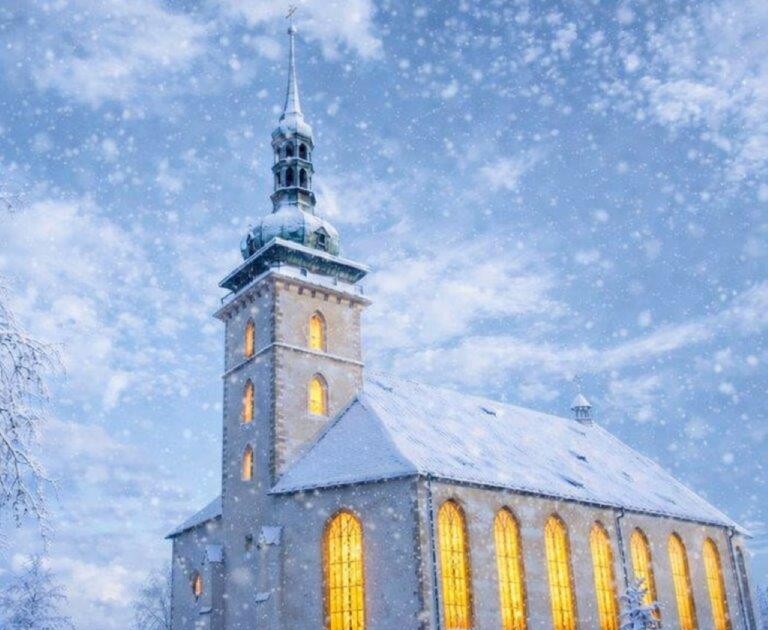
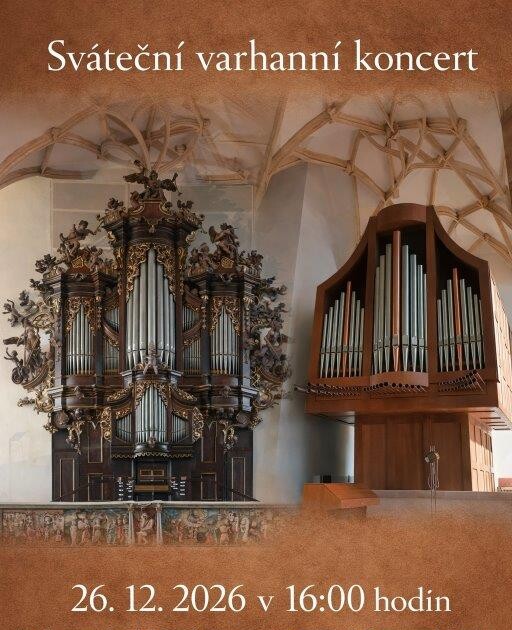
Zdroj akcí: otevřená data měst a obcí ČR (Národní katalog otevřených dat) a kalendář akcí Národního památkového ústavu.
Accommodation nearby
Themed route
Tematická výletní trasa: Kostel svatého Jakuba Staršího (Bílence)
1. Kostel svatého Jakuba Staršího (Bílence) - Hlavní cíl
Typ: Religiozní památka
Proč stojí za návštěvu: Tento barokní kostel je nejenom duchovním centrem obce Bílence, ale také architektonickou perli s bohatou historií. Jeho významná věž a krásné interiéry přitahují návštěvníky z celého regionu.
2. Nádvoří kostela svatého Jakuba Staršího
Typ: Historické nádvoří
Proč stojí za návštěvu: Nádvorí před kostelem nabízí klidnou atmosféru, kde si můžete užít pohledu na historický prostor a vychutnat si okamžik odpočinku. Je to ideální místo pro relaxaci po prohlídce kostela.
3. Okolní zelená zóna kolem kostela
Typ: Místní parkové plochy
Proč stojí za návštěvu: Okolo kostela se rozprostírá malebná zelená zóna, která je ideálním místem pro krátkou procházku. Zde si můžete užít přírodního prostředí a klidné okolí obce Bílence.
4. Obecní areál v Bílencích
Typ: Místní komunitní centrum
Proč stojí za návštěvu: Obecní areál nabízí možnost se dozvědět více o místní kultuře a historii obce. Zde můžete prozkoumat různé informační panely nebo se podívat na akce, které se zde konají.
Tato trasa vám umožňuje prozkoumat hlavní památku Bílencí a jejich okolí, nabízející kombinaci historie, kultury a přírody.
Seasonal recommendations
Spring: Visiting the Church of Saint Jacob the Elder during spring offers a unique experience as nature awakens around Bílence, with blooming flowers and vibrant greenery enhancing the church's historic charm. The mild weather provides comfortable conditions for exploring, though occasional showers can add to the pastoral atmosphere. It is advisable to wear layers that accommodate fluctuating temperatures and carry an umbrella or raincoat in case of unexpected rain. Early mornings are ideal for visiting as they tend to be quieter before larger crowds gather later in the day.
Summer: The summer months bring a lively atmosphere to the Church of Saint Jacob the Elder, with warm weather encouraging outdoor activities and longer daylight hours perfect for exploring the church's architecture and surroundings. This is peak tourist season, so expect larger visitor numbers, particularly during weekends and holidays. Arriving early in the morning can help avoid crowds, allowing for a more serene experience. Light, breathable clothing is recommended to stay comfortable under the sun, along with sunscreen and a hat.
Autumn: Autumn transforms Bílence into a picturesque setting with its warm hues of reds, oranges, and yellows, providing an enchanting backdrop for visiting the Church of Saint Jacob the Elder. The cooler temperatures are pleasant for walking around the area, and the reduced number of tourists compared to summer offers a more tranquil experience. It's wise to wear layers that can be adjusted as temperatures drop throughout the day. Carrying a light jacket or sweater is advisable, especially in the evenings when it gets chillier.
Winter: Winter at the Church of Saint Jacob the Elder offers a serene and magical atmosphere with snow-covered landscapes creating a picturesque scene around Bílence. The church may have a limited schedule due to shorter daylight hours, so checking opening times in advance is recommended. Visitors should dress warmly in layers, including thermal wear and waterproof outer garments, as temperatures can be quite low. Early visits are preferable not only for avoiding crowds but also to make the most of the available daylight.
Visualizations and artistic views


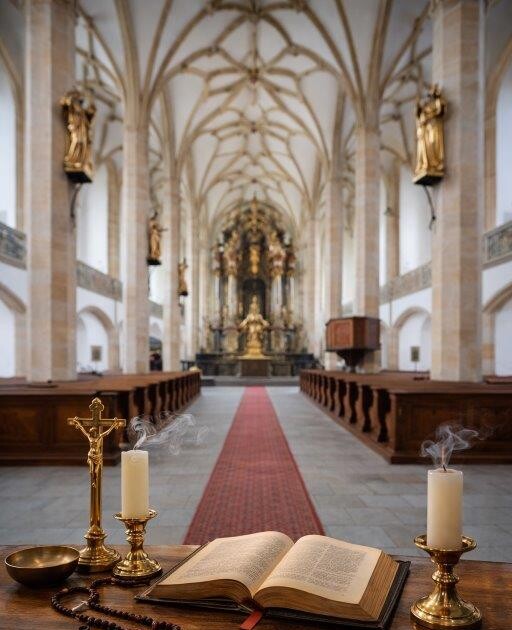
The visualisations are generated by artificial intelligence and serve as inspiration.
Photos from the area
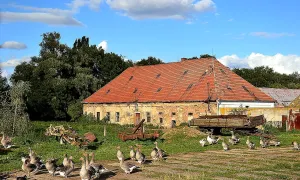
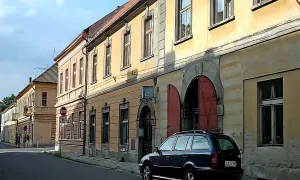
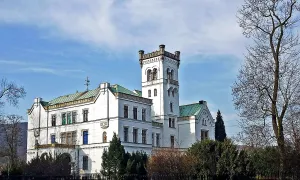
Real photos taken near the monument


Zdroj a licence jsou uvedeny u každého snímku.
Atmosphere of the place
This atmospheric visualisation of the place and period was generated by artificial intelligence. It is not real footage of the location.
Tips from visitors
No tips yet. Be the first!
Log in and add your tip.
Sources and literature
Photos: Salim2 / CC BY-SA 3.0, rozlišení zvýšeno umělou inteligencí — Wikimedia Commons. The author and licence also appear when you hover over the image.
Faktickým podkladem tohoto textu byl článek na Wikipedii, jehož autory jsou přispěvatelé Wikipedie. Článek je dostupný pod licencí CC BY-SA 4.0.
Location on the map

Příběhy a pověsti
Legendy, pověsti a příběhy spjaté s touto památkou
Fotografie návštěvníků
Zatím žádné fotografie. Buďte první, kdo přidá fotografii z návštěvy!
Log in a přidejte svou fotografii nebo hodnoťte.
Za ověřenou návštěvu v aplikaci získáte víc bodů — poznáme podle GPS, že jste na místě.
Reviews and comments