






Kostel svatého Bartoloměje (Radostín nad Oslavou) Church
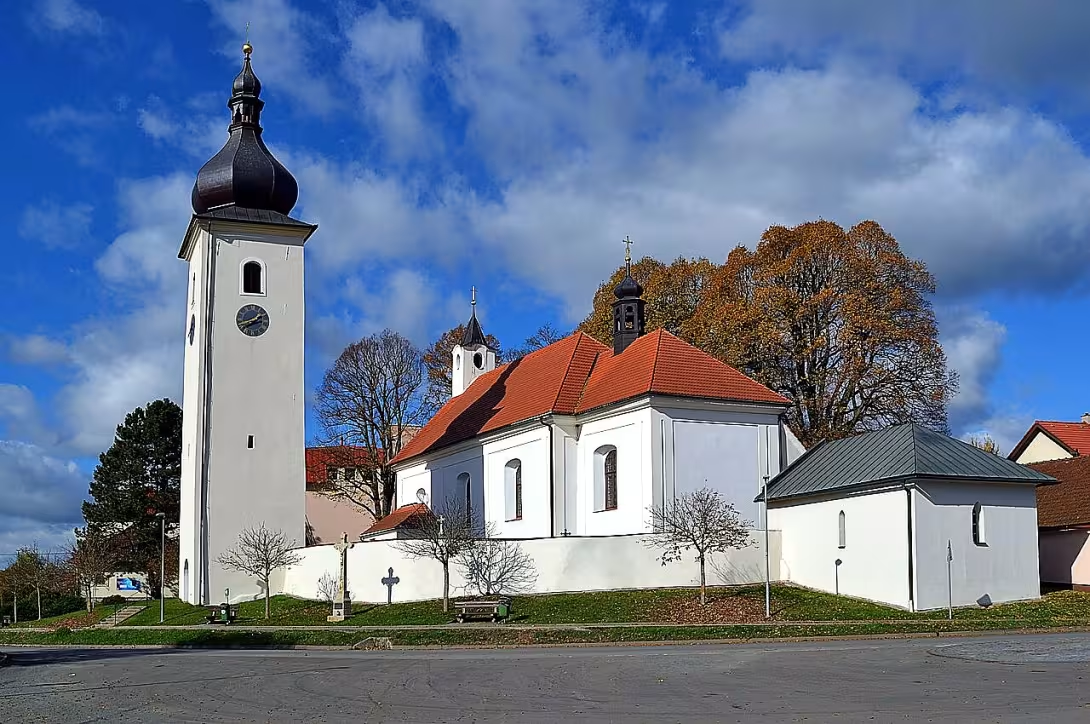
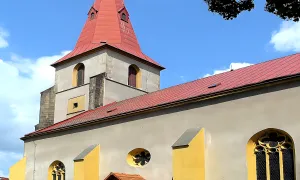
The Church of Saint Bartholomew in Radostín nad Oslavou is a testament to the rich cultural heritage of the Czech Republic. Located within the municipality, this Roman Catholic parish church is recognized as a cultural monument due to its historical and architectural significance. Originally built as a fortified Gothic structure, it underwent significant Baroque renovations between 1769 and 1771, shaping much of its current appearance.
The church's origins date back to at least 1365 when a fortified church and parish were mentioned in Radostín. During this period, Bohemia was part of the Holy Roman Empire, experiencing notable religious and cultural developments. The Gothic form persisted until the 18th century, reflecting architectural trends of that era. By the late 1700s, under Habsburg rule, the region embraced ornate Baroque styles, leading to the church's transformation.
Architecturally, the Church of Saint Bartholomew is a single-nave rectangular building with a narrowed presbytery ending at a right angle. A small tower adorns its roof, adding to its distinctive silhouette. The church stands within an oval cemetery enclosed by a defensive wall that once included a bell tower serving both fortification and later as the belfry. Access to the church area is through an archway in a high, standalone tower, which originally served dual purposes of fortification and housing bells.
Throughout its history, the church has seen various adaptations. The original sacristy, located within the defensive wall behind the presbytery, was converted into a chapel in the 19th century. Later, it became a parish library, reflecting changes in community needs over time. These modifications highlight the site's dynamic nature and ability to serve multiple functions throughout history.
The Church of Saint Bartholomew remains an important cultural landmark today. Centrally located within Radostín nad Oslavou, it is accessible for visitors interested in its historical and architectural significance. Its status as a protected cultural monument underscores its value not only to the local community but also to those who appreciate European history.
Visiting the Church of Saint Bartholomew offers a unique opportunity to delve into the past, experiencing firsthand the blend of Gothic and Baroque influences that define this remarkable structure. Its historical context and architectural evolution make it a must-see for anyone interested in the cultural heritage of the Czech Republic.
Then and now
Drag the slider to compare how the landmark may have looked when it was built with the view today.
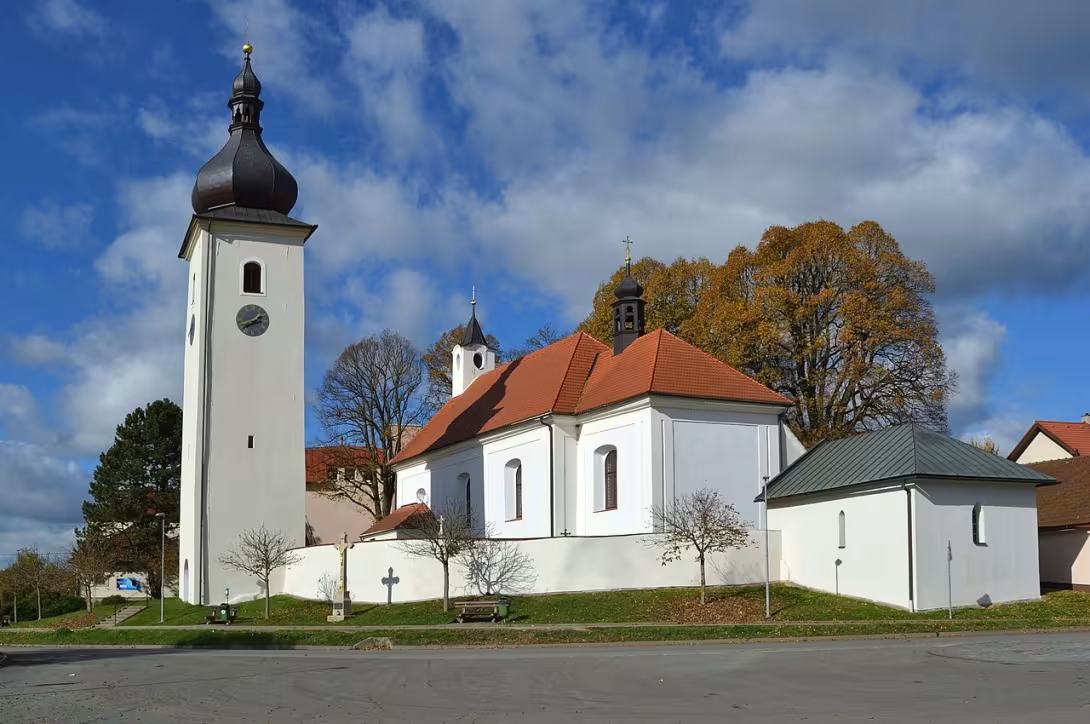

The historical appearance on the left is an AI-generated visualisation and serves as inspiration only.
Historical milestones
- 1365
- Mention of fortified church and parish in Radostín.
- kolem 1350
- Original construction as a Gothic structure, inferred from historical context.
- 18. století
- Gothic form persisted until the 18th century.
- 1769
- Start of significant Baroque renovations.
- 1771
- Completion of Baroque renovations shaping current appearance.
- 19. století
- Original sacristy converted into a chapel, later became parish library.
Architectural development
The Church of Saint Bartholomew began as a Gothic structure with fortifications that remained until the 18th century. It was then transformed into its current Baroque form during renovations from 1769 to 1771, which included modifications such as the addition of a small tower on top of the church's roof and the adaptation of an adjacent building for use as a parish library.
Historical events
In 1365, there was mention of a fortified church and parish in Radostín.
Between 1769 and 1771, the church underwent Baroque renovations.
Guide
This guide is narrated by a synthetic voice generated by artificial intelligence.
Show guide text
This text was created by artificial intelligence and has not been editorially reviewed. It may contain inaccuracies.
The Roman Catholic Church of Saint Bartholomew is the parish church of Radostín nad Oslavou parish. It is protected as a cultural monument of the Czech Republic.
Its history reaches far back into the Middle Ages. Already in the year 1365, a fortified church and presbytery, that is a rectory, are mentioned in Radostín. The entire complex retained its Gothic appearance until the eighteenth century. In the years 1769 to 1771, the church underwent a Baroque reconstruction, which essentially gave it its present-day appearance.
The church is a single-nave rectangular building. The narrower presbyter, that is the space around the main altar, adjoins the nave, and it is terminated with a right angle. A small bell tower rises above the church gable. The building stands roughly in the middle of a cemetery, which has the shape of an irregular oval.
Access to the complex from the village square is through a passage in a high detached tower. This tower originally also served for defense purposes and today functions as a bell tower.
The former charnel house has an interesting history. It is rectangular and projects from the enclosure wall behind the presbyter. In the nineteenth century, it was converted into a chapel. At the end of the twentieth century, when the priest Bohuslav Brabec was active in Radostín, it became a parish library.
Frequently asked questions
Can the monument be visited?
Religious buildings are usually open mainly during services; at other times a visit is normally arranged with the parish or the operator. We have not verified specific times.
Where is the monument?
Location: č.p. 193, Radostín nad Oslavou, Kraj Vysočina. The map on this page shows the exact spot.
Why is the monument protected?
It is listed in the Central List of Cultural Monuments of the Czech Republic as a cultural monument (register no. 30456/7-4379).
Businesses nearby
Do you run a restaurant, accommodation, shop, museum, rental, wellness or other visitor service near this monument? Show yourself directly to the people heading to it — this is how they will see you in the app and on the web:
Events nearby
Zdroj akcí: otevřená data měst a obcí ČR (Národní katalog otevřených dat) a kalendář akcí Národního památkového ústavu.
Accommodation nearby
Themed route
Tematická výletní trasa: Kostel svatého Bartoloměje a jeho okolí
1. Kostel svatého Bartoloměje (Radostín nad Oslavou)
Typ: Náboženská památka
Proč stojí za návštěvu: Tento barokní kostel, vysazený na vrcholu kopce, nabízí nejen architektonické krásy, ale také pohled na okolní krajinu. Jeho historie sahá do 13. století a je symbolem trvalosti a duchovnosti v regionu.
2. Kaple svaté Anny (Radostín nad Oslavou)
Typ: Kaple
Proč stojí za návštěvu: Tato malebná kaple, nacházející se nedaleko kostela svatého Bartoloměje, je známá pro svůj klasicistní design a mírumilovnou atmosféru. Je ideálním místem pro odpočinek a meditaci.
3. Kostel Nanebevzetí Panny Marie (Radostín nad Oslavou)
Typ: Kostel
Proč stojí za návštěvu: Tento kostel, postavený v barokním stylu, je dalším důležitým náboženským centrem obce. Jeho interiér se pyšní bohatou dekorací a historickými oltáři, které přitahují návštěvníky z celého regionu.
4. Staré městečko Radostín nad Oslavou
Typ: Historické centrum
Proč stojí za návštěvu: Procházka po ulicích starého městečka nabízí pohled na charakteristické venkovské domy a historickou architekturu. Je to skvělý způsob, jak prozkoumat každodenní život v minulosti a připomenout si tradice regionu.
Tato trasa nabízí kombinaci náboženských památek a historického centra, což umožňuje hluboký pohled do kulturního dědictví obce Radostín nad Oslavou.
Seasonal recommendations
Spring: Visiting the Church of Saint Bartholomew during spring offers a unique experience as nature awakens around Radostín nad Oslavou. The surrounding landscape is adorned with blooming flowers and lush greenery, creating a picturesque setting that enhances the church's historical charm. As daylight extends into the evening, visitors can enjoy the soft natural light illuminating both the interior of the church and its exterior architecture. Practical advice for spring includes wearing layers to accommodate fluctuating temperatures and arriving early in the day to avoid larger crowds as the weather improves.
Summer: The summer season is ideal for exploring the Church of Saint Bartholomew, with its warm, vibrant atmosphere complemented by long days that allow for extended visits. The surrounding countryside is lush and green, providing a perfect backdrop for outdoor exploration before or after visiting the church. However, this is also the peak tourist season, so it's advisable to arrive early in the morning to avoid crowds and ensure a more peaceful experience. Comfortable walking shoes and light clothing are recommended due to warmer temperatures.
Autumn: Autumn brings a stunning transformation to Radostín nad Oslavou as the foliage turns into vibrant shades of red, orange, and yellow, creating a breathtaking canvas around the Church of Saint Bartholomew. The cooler weather makes for pleasant walking conditions while exploring the area's natural beauty. This season is less crowded than summer, offering a more serene visit to the church. Visitors should wear warm layers and consider bringing an umbrella or raincoat, as autumn can bring unpredictable showers.
Winter: Winter transforms the Church of Saint Bartholomew into a magical setting with snow-covered landscapes that enhance its historical allure. Despite the cold, the crisp air and quiet surroundings offer a unique and peaceful experience. It is essential to dress warmly in layers, wear waterproof boots for snowy conditions, and check ahead for any seasonal closures or altered visiting times.
Visualizations and artistic views


The visualisations are generated by artificial intelligence and serve as inspiration.
Tips from visitors
No tips yet. Be the first!
Log in and add your tip.
Sources and literature
Photos: Roman Mifek / CC BY-SA 4.0 — Wikimedia Commons. The author and licence also appear when you hover over the image.
Faktickým podkladem tohoto textu byl článek na Wikipedii, jehož autory jsou přispěvatelé Wikipedie. Článek je dostupný pod licencí CC BY-SA 4.0.
Location on the map

Příběhy a pověsti
Legendy, pověsti a příběhy spjaté s touto památkou

Fotografie návštěvníků
Zatím žádné fotografie. Buďte první, kdo přidá fotografii z návštěvy!
Log in a přidejte svou fotografii nebo hodnoťte.
Za ověřenou návštěvu v aplikaci získáte víc bodů — poznáme podle GPS, že jste na místě.
Reviews and comments