






kostel svatého Dionýsia Church
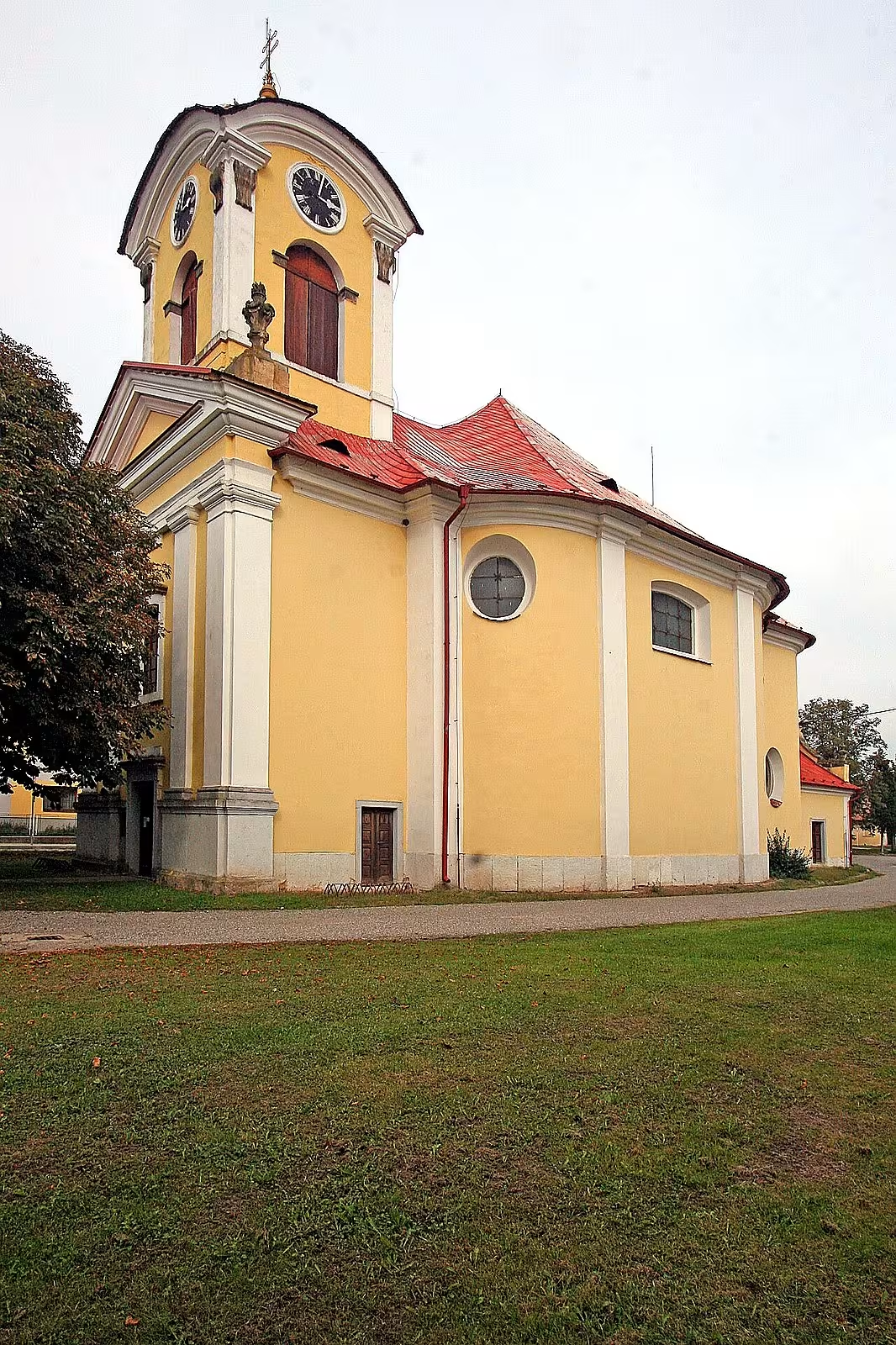
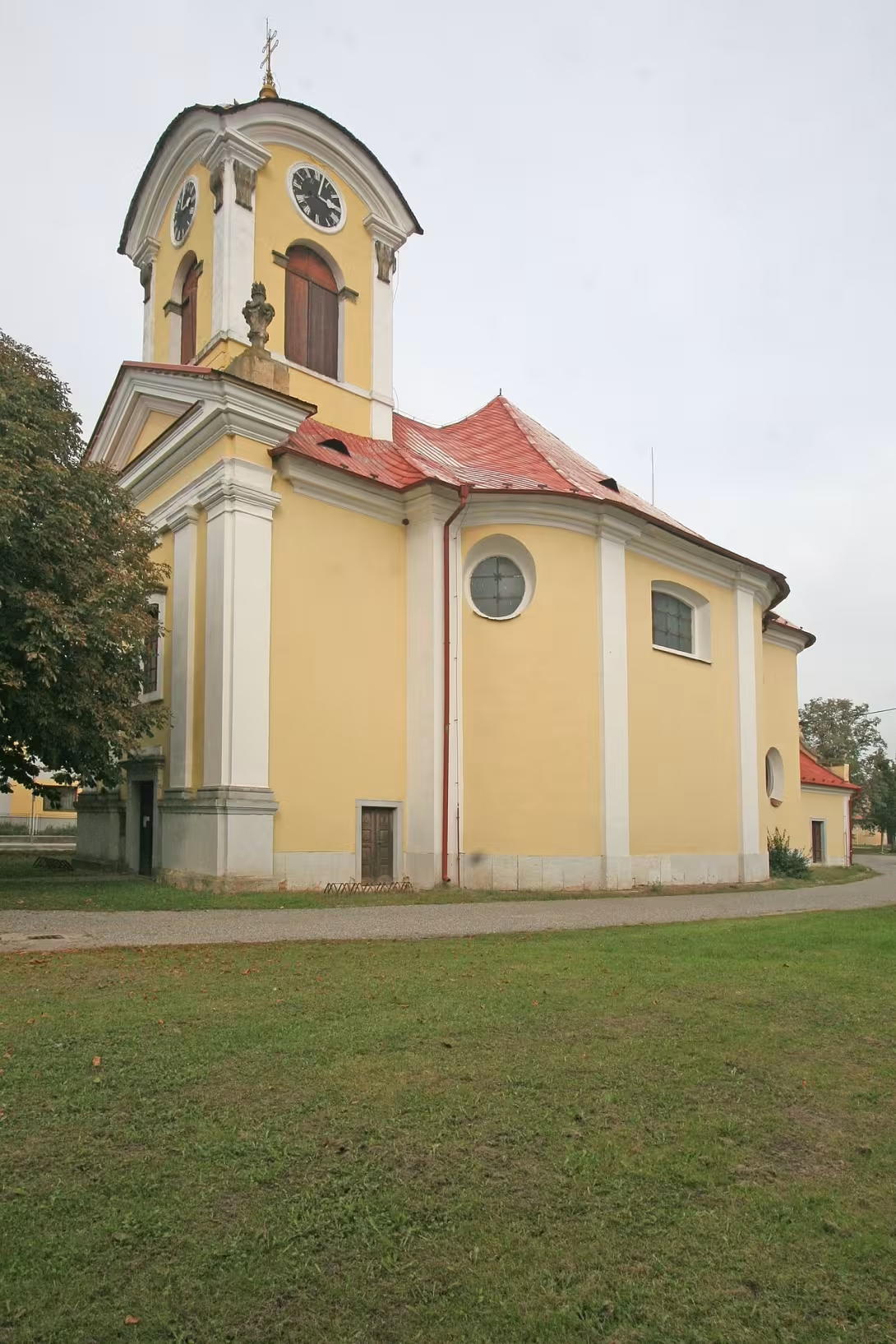
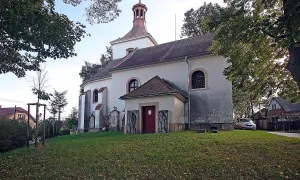
The Church of Saint Dionysius, also known as the Church of Saint Diviš, is located in Chomutice within the Jičín District of Královéhradecký kraj. Built in 1782 during Emperor Joseph II's reign, it is unique in the Czech Republic for its dedication to Saint Diviš. This architectural masterpiece blends late Baroque and Classical styles, featuring dynamic Baroque elements integrated with Classical motifs.
The church's origins date back to the 14th century when Přibyslav z Radče established a wooden church in Chomutice. The current structure replaced it under Emperor Joseph II's administration, funded by the imperial estates of the Pardubice domain and managed from Smrkovice. This era saw significant reforms across Bohemia as the Habsburgs modernized and centralized governance, affecting religious institutions.
Architecturally, the Church of Saint Dionysius is a single-nave building with square corners and an oblong presbytery, reflecting the "hradecký barok" style attributed to František Kermer. The western façade features a pyramidal tower, while its interior boasts exquisite frescoes by Kramolín on the ceiling, depicting the Czech Heaven—a testament to its artistic significance. Additionally, it includes a quadrangular sacristy aligned with the nave and combines Baroque dynamism with Classical symmetry.
Throughout history, the church has had various owners and administrators. Initially under the Obora estate holders' patronage, it later became associated with the Pardubice domain. Its artistic heritage was preserved through restorations in 1864 by academic painter Klemens and again in 1937 by R. Adámek, funded by charitable collections that included substantial contributions from local communities.
The Church of Saint Dionysius houses several historical artifacts, including a unique bell and a sandstone baptismal font dating back to the 14th century, commissioned by Václav z Radče, a canon of Prague. These elements highlight its rich heritage and connection to notable figures like Přibyslav, Václav, and Albrecht z Radče.
Today, the church remains accessible to visitors, offering insights into both its architectural beauty and historical significance. Its well-preserved frescoes and unique dedication make it a compelling destination for those interested in Czech religious history. The Church of Saint Dionysius stands as a testament to the cultural and artistic endeavors of its time, inviting visitors to appreciate its enduring legacy.
Then and now
Drag the slider to compare how the landmark may have looked when it was built with the view today.
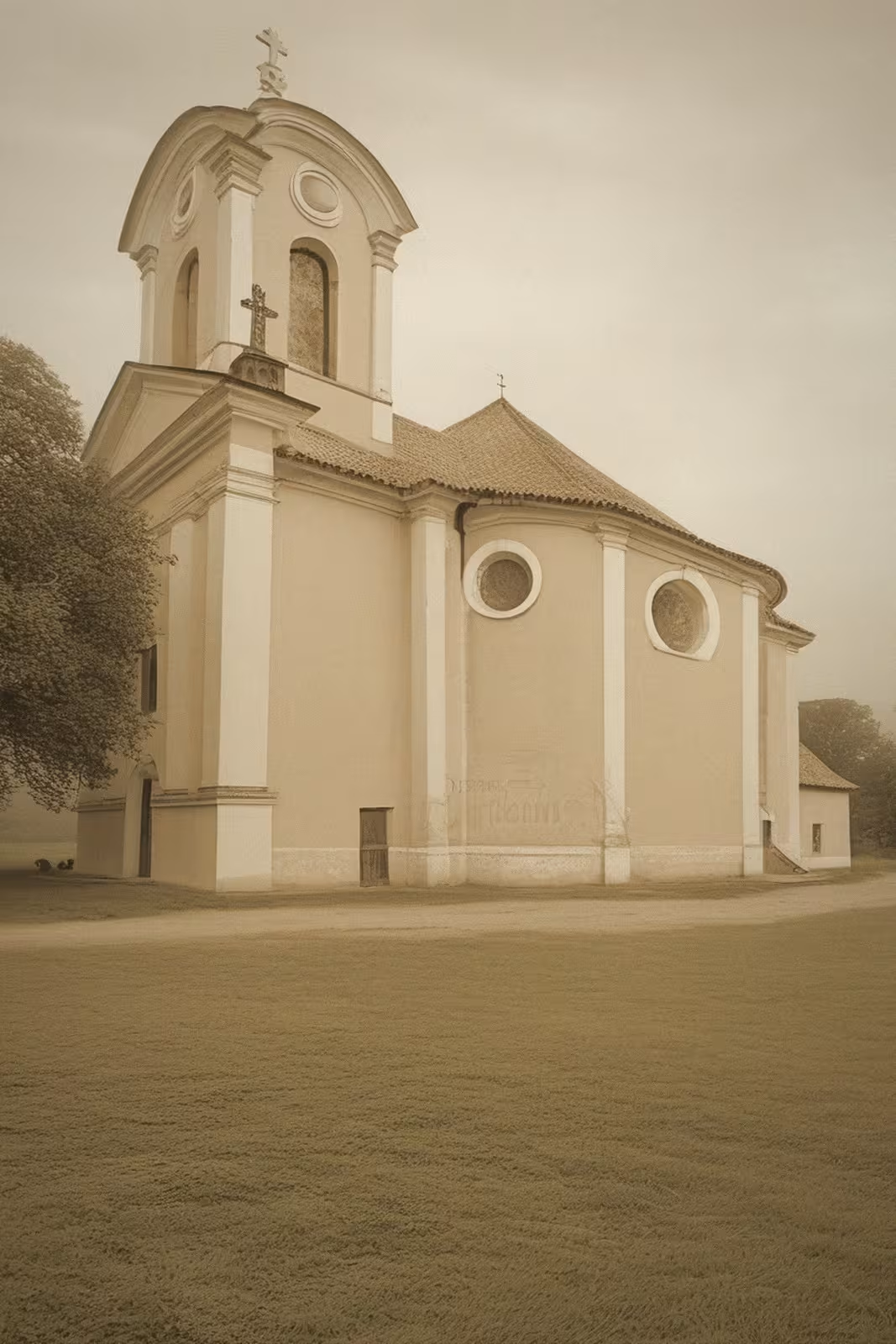
The historical appearance on the left is an AI-generated visualisation and serves as inspiration only.
Historical milestones
- 1782
- Construction of the Church under Emperor Joseph II's reign.
- 1864
- Restoration of Kramolín's frescoes by academic painter Klemens.
- 1937
- Further restoration of frescoes by academic painter R. Adámek.
Architectural development
The church was built in 1782, showcasing a blend of late Baroque and Classical architecture. It features a single-nave central structure with square corners and an oblong presbytery. The western façade includes a pyramidal tower, while the interior boasts frescoes by Kramolín, highlighting its artistic significance.
Historical events
1782: Construction of the Church under Emperor Joseph II's reign.
1864 and 1937: Restoration of Kramolín's frescoes by academic painters.
Points of interest
- The Church of Saint Dionysius is dedicated to Saint Diviš, a relatively obscure saint compared to more widely recognized figures in the Czech Republic, which makes its dedication unique within the country.
- Originally established as a wooden church by Přibyslav z Radče in the 14th century, the site has undergone significant transformations since then, illustrating how religious architecture evolved over centuries from modest beginnings to elaborate Baroque and Classical designs.
- The frescoes on the ceiling of the Church of Saint Dionysius are attributed to Kramolín, an artist whose work is celebrated for its depiction of "Czech Heaven," adding a distinctive artistic layer that enriches the church's cultural significance beyond its architectural beauty.
- During its history, the church was linked to several notable figures from the Radče family, such as Václav z Radče and Albrecht z Radče. These connections highlight how local nobility played crucial roles in shaping religious and community life in Chomutice over centuries.
- The unique bell housed within the Church of Saint Dionysius is one of its historical artifacts that underscores the church's rich heritage, serving as a tangible link to its storied past and the broader narrative of Czech ecclesiastical history.
Guide
This guide is narrated by a synthetic voice generated by artificial intelligence.
Show guide text
This text was created by artificial intelligence and has not been editorially reviewed. It may contain inaccuracies.
The Chomutický Church is dedicated to Saint Dionysius, or in Czech, Saint Diviš. It is the only church in the Czech Republic with this dedication. It stands on the village square and it took its present form in the year 1782, during the reign of Emperor Joseph II.
However, its history begins much earlier. In the middle of the 14th century, Přibyslav of Radče founded a wooden church in Chomutice. It stood where the present rectory is located and was surrounded by a cemetery that was used until the year 1900. According to tradition, the founder was buried directly in the church under a marble slab. In the year 1393, Přech of Radče was the parish priest. Together with his brother Václav and with Albrecht of Radče, he donated to the church a field, a courtyard, and the revenue from one village. The church also received bells and a stone baptismal font. These have survived to the present day, though only one of the bells remains. The sandstone baptismal font from the 14th century has a ten-sided rim with two shields. A reminder of the family is also a carved stone with an inscription, according to which the work was commissioned by Václav of Radče, a canon of Prague.
The new church built in the year 1782 is a late Baroque single-aisle central structure. It has a square nave with rounded corners, a rectangular presbytery, a pyramidal tower on the western façade, and a square sacristy behind the presbytery. The façade with a triangular gable is in the classical style. The nave is covered by a flat wooden cupola, the presbytery by a barrel vault.
The most precious feature is the painted ceiling with a scene of the Bohemian Heaven, with frescoes of all the saints and the crucifixion of Christ. According to experts, the paintings are the work of the painter Kramolín. They were restored in 1864 and again in the year 1937. At that time the restoration cost 18 thousand crowns and the money was raised from collections, both financial and in kind. During the work, 1,274 eggs and 78 liters of milk were used. A great patron was the surgeon and university professor Jan Levit, a native of Hořice.
The painting on the main altar was painted in the year 1831 by Jan Sucharda the Younger. The side altars bear paintings of the Assumption of the Virgin Mary by Anton Seifert of Vrchlabí and Saint Francis Xavier again by Sucharda. The altar of Saint John of Nepomuk comes from the Carthusian monastery in Valdice. The organ from the year 1811 was built by the Prague organ builder Josef Hubička. At the beginning of the 20th century, an avenue of linden and sycamore trees was planted around the church.
Tips for visitors
The Church of Saint Dionysius, also known as the Church of Saint Diviš, is best visited during late spring or early autumn when the weather is pleasant, and the surrounding landscape is particularly beautiful. These seasons offer comfortable temperatures for exploring both inside and outside the church. Additionally, visiting on weekdays can provide a more tranquil experience compared to weekends when there might be larger crowds.
For the most current schedules and routes, checking a local transport website or app is recommended.
When visiting the Church of Saint Dionysius, it's wise to bring comfortable walking shoes as there may be some walking involved if exploring the surrounding area. Additionally, consider bringing a camera for capturing the intricate architectural details of the church. A small bottle of water and snacks can also enhance your visit, especially during warmer months.
Photography enthusiasts will find several spots around the Church of Saint Dionysius ideal for capturing its late Baroque and Classical style architecture. The best light is typically in the early morning or late afternoon when the sun casts soft shadows that highlight the church's features. Inside, natural lighting through stained glass windows can create beautiful effects, so be prepared to adjust camera settings accordingly.
For those interested in exploring nearby attractions within a 30-minute drive from Chomutice, consider visiting local historical sites and nature trails that offer scenic views of the region. These excursions provide additional context and appreciation for the area's cultural heritage and natural beauty.
Frequently asked questions
Can the monument be visited?
Religious buildings are usually open mainly during services; at other times a visit is normally arranged with the parish or the operator. We have not verified specific times.
Where is the monument?
Location: Chomutice, Královéhradecký kraj. The map on this page shows the exact spot.
Why is the monument protected?
It is listed in the Central List of Cultural Monuments of the Czech Republic as a cultural monument (register no. 13896/6-1198).
Businesses nearby
Do you run a restaurant, accommodation, shop, museum, rental, wellness or other visitor service near this monument? Show yourself directly to the people heading to it — this is how they will see you in the app and on the web:
Accommodation nearby
Themed route
Tematická Výletní Trasa: Kostel svatého Dionýsia v Chomuticích
1. Kostel svatého Dionýsia
Typ: Náboženská památka
Proč stojí za návštěvu: Kostel svatého Dionýsia je klíčovou historickou a architektonickou památkou v Chomuticích. Jeho gotická stavba z 14. století nabízí poutavý pohled na duchovní dědictví obce, s bohatou historií zachycenou ve svých stěnách a interiéru.
2. Kaple Panny Marie
Typ: Náboženská kaple
Proč stojí za návštěvu: Kaple Panny Marie, nacházející se v blízkosti kostela svatého Dionýsia, je malou ale významnou památkou. Její jednoduchost a klidné prostředí nabízejí útočiště pro ty, kteří hledají klid a náboženské zamyšlení.
3. Nádvoří kostela
Typ: Historický areál
Proč stojí za návštěvu: Nádvoří před kostelem svatého Dionýsia je ideálním místem pro relaxaci a prohlídku. S jeho historickými prvky a klidnou atmosférou nabízí pohled na každodenní život obce v minulosti, což poskytuje cenné poznatky o místní kultuře.
4. Kostelní věž
Typ: Historická věž
Proč stojí za návštěvu: Výstup na kostelní věž nabízí jedinečnou perspektivu na obec Chomutice a okolní krajinu. Ze svého vrcholu můžete užít panoramatický pohled, který zahrnuje nejen historické budovy, ale i přírodní krásy regionu.
Tato trasa nabízí komplexní pohled na duchovní a kulturní bohatství Chomutic, zaměřujíc se na klíčové náboženské a historické prvky obce.
Seasonal recommendations
Spring: Visiting the Church of Saint Dionysius during spring offers a unique experience as nature awakens around Chomutice, with blooming flowers and lush greenery enhancing the church's historic charm. The soft light filtering through budding trees creates a serene atmosphere perfect for contemplation. As temperatures begin to rise, visitors should dress in layers to accommodate fluctuating weather conditions. Early mornings or late afternoons are ideal times to explore when the site is less crowded, allowing you to appreciate the details of this architectural gem.
Summer: The summer months bring vibrant life and activity to the Church of Saint Dionysius, with longer daylight hours providing ample time for exploration. The lush surroundings and warm weather create a lively atmosphere, making it an excellent period to enjoy outdoor events or gatherings that may take place nearby. However, be prepared for larger crowds, especially during peak tourist season in July and August. Arriving early can help avoid the busiest times, and wearing comfortable shoes is recommended as you stroll around the church grounds.
Autumn: Autumn at the Church of Saint Dionysius offers a picturesque setting with vibrant foliage painting the landscape in warm hues of red, orange, and gold. The cooler temperatures make for pleasant walking conditions, ideal for enjoying the natural beauty surrounding the historic site. This season also sees fewer visitors compared to summer, providing a more tranquil experience. Dressing warmly is advisable as days become shorter and chillier, and taking advantage of the softer light in late afternoon can enhance your visit with stunning views.
Winter: The winter months transform the Church of Saint Dionysius into a serene retreat amidst snow-covered landscapes, offering a magical atmosphere that highlights its architectural details against the stark beauty of the season. Shorter days mean limited visiting hours, so planning ahead is essential to make the most of your time. Visitors should dress warmly in layers and wear sturdy footwear for navigating potentially icy paths. The quietness of winter allows for an intimate experience with fewer crowds, making it a peaceful time to reflect on history and nature's beauty.
Visualizations and artistic views


The visualisations are generated by artificial intelligence and serve as inspiration.
Photos from the area
Real photos taken near the monument


Zdroj a licence jsou uvedeny u každého snímku.
Tips from visitors
No tips yet. Be the first!
Log in and add your tip.
Sources and literature
Photos: Petr1888 / CC BY-SA 3.0 — Wikimedia Commons. The author and licence also appear when you hover over the image.
Location on the map

Fotografie návštěvníků
Zatím žádné fotografie. Buďte první, kdo přidá fotografii z návštěvy!
Log in a přidejte svou fotografii nebo hodnoťte.
Za ověřenou návštěvu v aplikaci získáte víc bodů — poznáme podle GPS, že jste na místě.
Reviews and comments