



Kostel svatého Filipa a Jakuba (Smíchov) Church
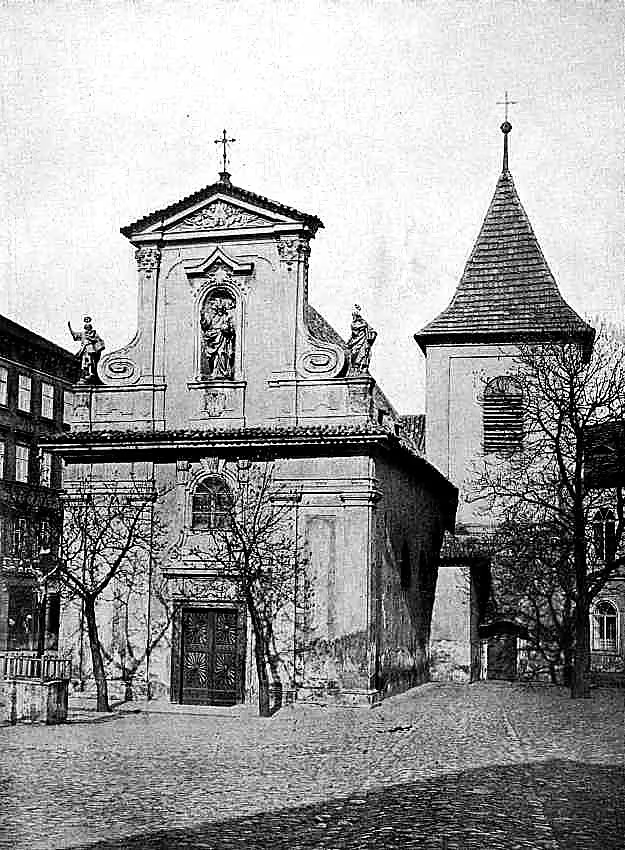
Objekt se nedochoval — na místě dnes nestojí. Následující text popisuje jeho historii, ne současnou návštěvu.
The Church of Saints Philip and James in Smíchov, Prague, was originally established as a Romanesque church likely in the late 12th or early 13th century. Over time, it underwent Gothic and Baroque renovations before being demolished in 1891 due to its deteriorated condition. The site is now Arbesovo náměstí, but remnants of its foundation were declared a cultural monument in 2003.
The church's origins trace back to the Romanesque period when Bohemia was part of the Holy Roman Empire, experiencing significant religious and architectural developments. Initially constructed as a parish church for Újezd, it became an independent parish by 1333. During the Hussite Wars, the church suffered damage and later served as a Utraquist church until 1619, when it returned to Catholic hands.
Architecturally, the original Romanesque structure featured a semi-circular apse and rectangular nave. It was later transformed into Gothic style with an expanded nave and a stone bell tower. The Baroque renovation in 1749 significantly altered its appearance, including new windows and a redesigned facade. This period also saw the addition of a new stone bell tower on the southern side, equipped with three larger bells and one smaller one.
Ownership and administration of the church changed over time. In 1594, Smíchov's patronage rights transferred to the Old Town community. After the Battle of White Mountain, it fell under the Malostranská farnost (St. Wenceslas and St. Nicholas). From 1702 until the re-establishment of its parish in 1749, Jesuits managed the church.
Key events include the establishment of an independent parish in 1333 and significant Baroque renovations completed in 1749. The church's role evolved over time, with services initially alternating between Czech and German, eventually becoming exclusively Czech after a notable incident involving Dr. Tersche in the late 19th century.
Today, while the original structure no longer stands, its historical significance endures through the preserved foundation remnants declared a cultural monument in 2003. Located in Smíchov, an area characterized by modern architecture and urban development, Arbesovo náměstí offers visitors a glimpse into Prague's rich architectural history. The site remains a testament to the city's evolving religious and cultural landscape, making it worth visiting for those interested in exploring Prague's historical depth.
Then and now
Drag the slider to compare how the landmark may have looked when it was built with the view today.
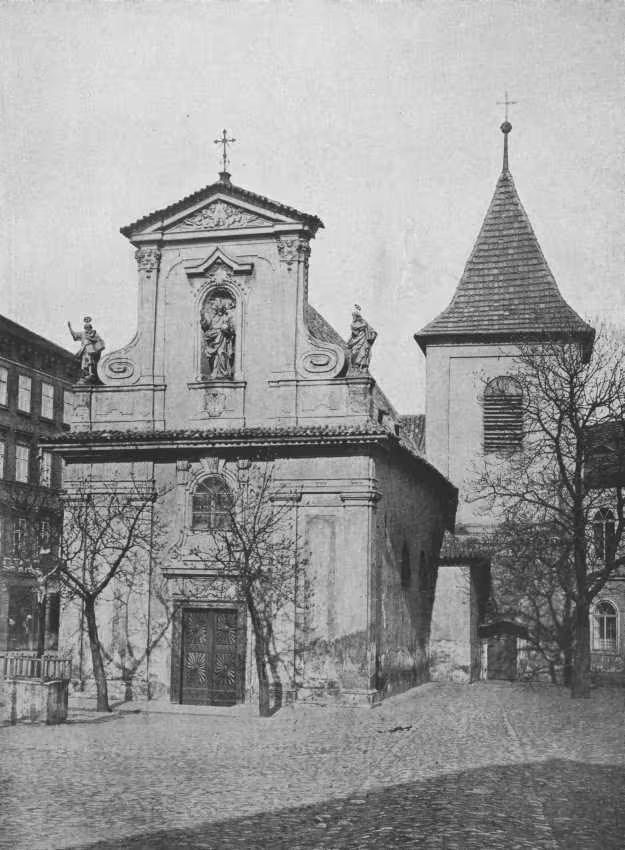

The historical appearance on the left is an AI-generated visualisation and serves as inspiration only.
Historical milestones
- 1333
- The church was established as an independent parish.
- 1749
- Baroque renovations were completed, significantly altering the church's structure.
Architectural development
The original Romanesque structure featured a semi-circular apse and rectangular nave. It was later transformed into a Gothic style with an expanded nave and a stone bell tower. The Baroque renovation in the mid-18th century further altered its appearance, including new windows and a redesigned facade.
Historical events
In the early 13th century, the church was established as a parish church for Újezd. In 1333, it became an independent parish.
During the Hussite Wars, the church suffered damage and later served as a Utraquist church until 1619 when it returned to Catholic hands.
In 1749, the church underwent significant Baroque renovations, expanding its nave and adding new architectural elements.
Points of interest
- The Church of Saints Philip and James served as an Utraquist church during the Hussite Wars before reverting to Catholicism in 1619, reflecting the turbulent religious shifts in Bohemia's history.
- In a notable late 19th-century incident involving Dr. Tersche, services at the church transitioned from alternating Czech and German languages to exclusively Czech, highlighting the cultural and linguistic tensions of the time.
- Despite its demolition in 1891, remnants of the church's foundation were declared a cultural monument in 2003, preserving its historical significance amidst modern urban development on Arbesovo náměstí.
- The site saw architectural evolution from Romanesque to Gothic and Baroque styles, including the addition of a stone bell tower with three larger bells and one smaller one during the Baroque period.
- After the Battle of White Mountain, the church fell under the administration of Malostranská farnost (St. Wenceslas and St. Nicholas), illustrating how political events influenced ecclesiastical control in Prague.
Guide
This guide is narrated by a synthetic voice generated by artificial intelligence.
Show guide text
This text was created by artificial intelligence and has not been editorially reviewed. It may contain inaccuracies.
Welcome to the site of what was once the Church of Saints Philip and James in Smíchov, Prague. As you stand here at Arbesovo náměstí, imagine the historical layers that have unfolded over this spot. Though the church itself is no longer standing, having been demolished in 1891 due to its deteriorated condition, remnants of its foundation still whisper tales from centuries past.
The origins of this sacred site trace back to a Romanesque church likely constructed in the late 12th or early 13th century. By 1333, it had become an independent parish, serving as a spiritual haven for many generations. Over time, the church underwent significant transformations, with Gothic and Baroque renovations altering its structure, particularly noted by 1749 when these changes were completed.
As you look around this open space, let your imagination wander to what once stood here. Picture the architecture that blended Romanesque beginnings with later Gothic and Baroque influences, creating a unique tapestry of styles. Though there's no physical structure left to examine, envision the intricate details that would have adorned its walls and facades.
The church wasn't just an architectural marvel; it was also a witness to significant historical shifts. During the Hussite Wars, it served as an Utraquist church before reverting to Catholicism in 1619—a reflection of Bohemia's turbulent religious history. These transitions highlight how this site has been more than just a place of worship but a symbol of change and resilience.
One intriguing aspect of its story involves Dr. Tersche, whose late 19th-century actions marked the end of an era for the church. As services transitioned away from this location, it closed a chapter in Smíchov's spiritual narrative.
As we conclude our journey here, I invite you to continue exploring the rich history and cultural tapestry that Prague offers. Each corner holds stories waiting to be discovered, just like the ones whispered by the remnants of Saints Philip and James Church. Thank you for joining me on this historical exploration, and may your curiosity lead you to many more fascinating discoveries in this enchanting city.
Businesses nearby
Do you run a restaurant, accommodation, shop, museum, rental, wellness or other visitor service near this monument? Show yourself directly to the people heading to it — this is how they will see you in the app and on the web:
Events nearby

Zdroj akcí: otevřená data měst a obcí ČR (Národní katalog otevřených dat) a kalendář akcí Národního památkového ústavu.
Nearby
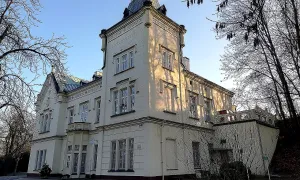
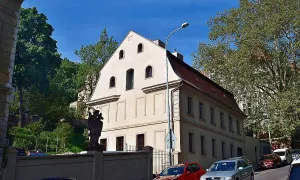
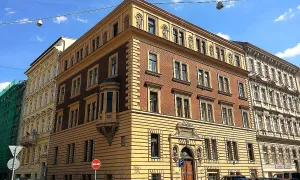
Arbesovo náměstí is located in Smíchov, a district of Prague. The area features modern architecture and urban development.
Visualizations and artistic views


The visualisations are generated by artificial intelligence and serve as inspiration.
Photos from the area
Real photos taken near the monument

Zdroj a licence jsou uvedeny u každého snímku.
Tips from visitors
No tips yet. Be the first!
Log in and add your tip.
Sources and literature
Photos: autor neuveden / Public domain — Wikimedia Commons. The author and licence also appear when you hover over the image.
Faktickým podkladem tohoto textu byl článek na Wikipedii, jehož autory jsou přispěvatelé Wikipedie. Článek je dostupný pod licencí CC BY-SA 4.0.
Location on the map

Příběhy a pověsti
Legendy, pověsti a příběhy spjaté s touto památkou
Příběh: Kostel svatého Filipa a Jakuba (Smíchov)
Bylo to v pondělí ráno, kdy Martin zjistil, že jeho srdce je vážně těžké jako ten starý kamenný kostel, který stál uvnitř náročného Smíchova. Vzduch byl chla…
Číst příběh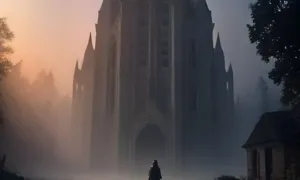
Pověst: Kostel svatého Filipa a Jakuba (Smíchov)
Staří obyvatelé smíchovských uliček vyprávějí, že kostel svatého Filipa a Jakuba nikdy docela nezmizel. Zbořili jej sice roku 1891, když jej radnice prohlási…
Číst příběhFotografie návštěvníků
Zatím žádné fotografie. Buďte první, kdo přidá fotografii z návštěvy!
Log in a přidejte svou fotografii nebo hodnoťte.
Za ověřenou návštěvu v aplikaci získáte víc bodů — poznáme podle GPS, že jste na místě.
Reviews and comments