






Kostel svatého Filipa a Jakuba (Všeň) Church
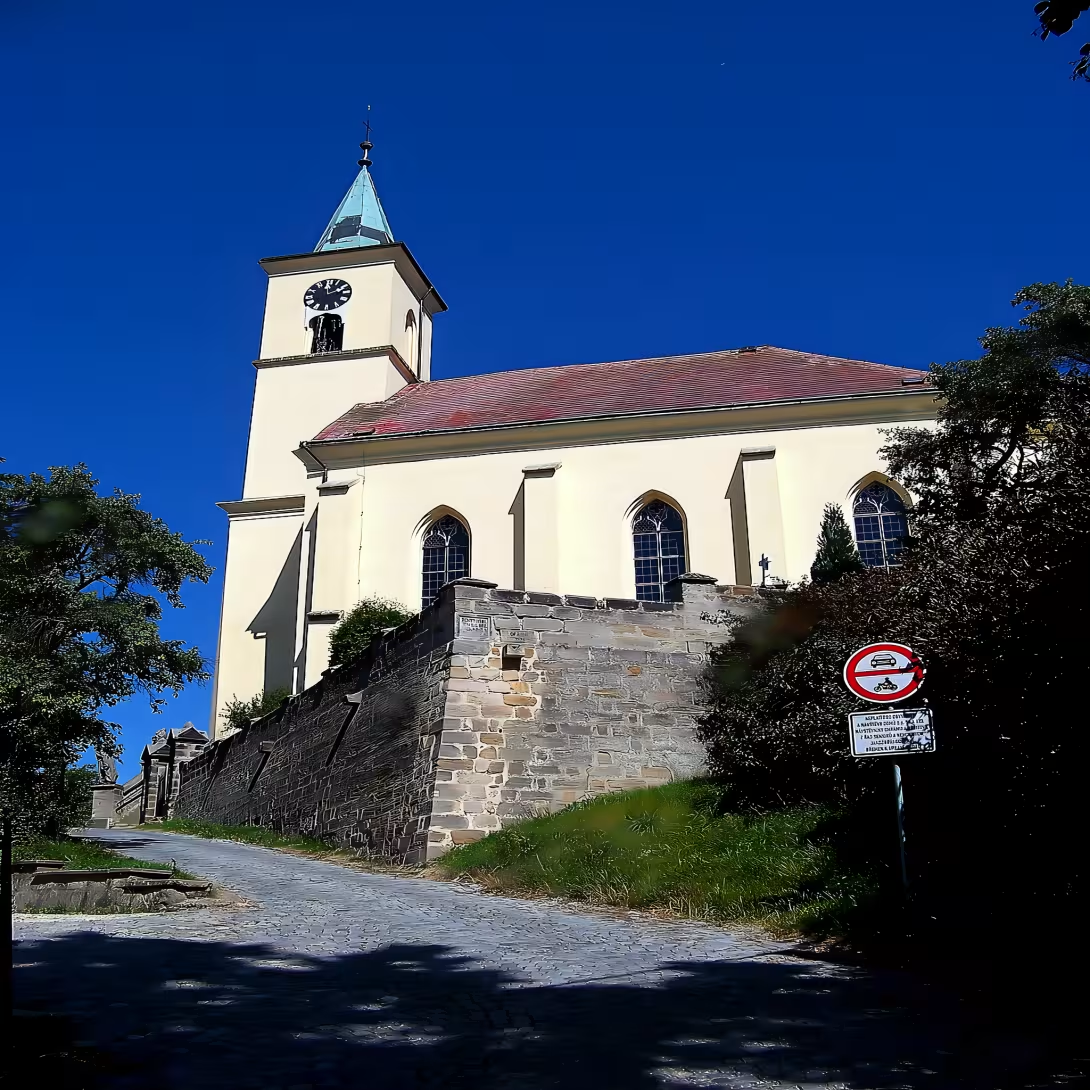
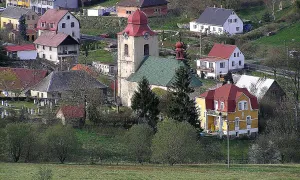
The Church of Saints Philip and James in Všeň is a prominent neo-Gothic landmark near Hrubá Skála. It dominates the landscape of Central Lusatia and Český ráj. Originally built around 1300 by the Markvartici family, it has undergone several renovations while preserving its original presbytery and sacristy. The current neo-Gothic structure is largely due to architect Bernhard Grueber's influence in 1836, making it a significant historical monument.
The church dates back to the early 14th century when Bohemia was part of the Holy Roman Empire under King John of Luxembourg. During this period, Gothic architecture flourished across Europe, reflecting religious fervor and cultural transformation. The original small church built by the Markvartici family was replaced with a new Gothic structure around 1300. It underwent significant renovations in 1595 under Jaroslav z Vartemberka and was rebuilt following a fire in 1832, influenced by the Rohan family.
Architecturally, the church began as a small Gothic structure that evolved into its current neo-Gothic form through various renovation phases. The original presbytery and sacristy from its early Gothic origins remain intact. In 1836, Bernhard Grueber designed the hall-style three-aisled nave, which is a defining feature today. This structure boasts polygonal early Gothic elements in the presbytery, a neo-Gothic spire on the western façade, and an octagonal base transitioning to a square upper section. The presbytery features five pointed Gothic windows, while the sacristy has a cross-ribbed vault with a profiled portal leading into it. The nave is adorned with neo-Gothic rib-vaulting supported by three pairs of pillars.
Throughout its history, the church experienced ownership and administrative changes that shaped its development. Initially built by the Markvartici family, significant renovations were carried out in 1595 under Jaroslav z Vartemberka. The Rohan family played a crucial role in rebuilding efforts after the fire of 1832. These events highlight the church's enduring significance through various historical periods.
The Church of Saints Philip and James is rich with artistic elements reflecting its long history. Its interior features predominantly 18th-century furnishings, including a baroque main altar from the early 1700s, adorned with statues of Saint Vojtěch and Saint Wenceslas. The altarpiece depicts the church's patrons, Saints Philip and James, while another image shows the Holy Trinity. A rococo tabernacle complements these elements. Additionally, two neo-Gothic side altars enhance the church’s interior, each featuring images within arcades. Notably preserved is a stone Gothic baptismal font, and the confessional houses an artistically crafted baroque sculpture of Saint John Nepomucene with angels.
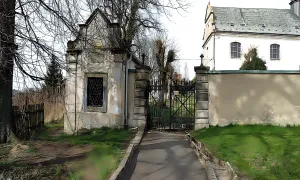
Surrounding the church is a cemetery enclosed by walls with two pointed arch gates leading up to a double-flight staircase adorned with baroque statues from the early 18th century. These sculptures, created by the Jelínků family from Kosmonosy, include figures of Saint Jude Thaddeus, Saint Wenceslas, Saint Adalbert, Saint Procopius, Saint Florian, and Saint Joseph.
Today, the Church of Saints Philip and James remains a site of historical and architectural interest. It underwent exterior restoration between 2001 and 2002, funded by benefactor Bohuslav Jan Horáček, with Archbishop Karel Otčenášek blessing its renewed façade on May 4, 2002. The church continues to be an active place of worship, managed by the Roman Catholic parish of Všeň.
Visitors are drawn to this monument not only for its architectural beauty and historical significance but also for its serene setting in Central Lusatia. Its blend of Gothic origins with neo-Gothic renovations offers a unique glimpse into the region's rich cultural heritage. The Church of Saints Philip and James invites exploration, promising an enriching experience for those interested in history, architecture, and spirituality.
Then and now
Drag the slider to compare how the landmark may have looked when it was built with the view today.
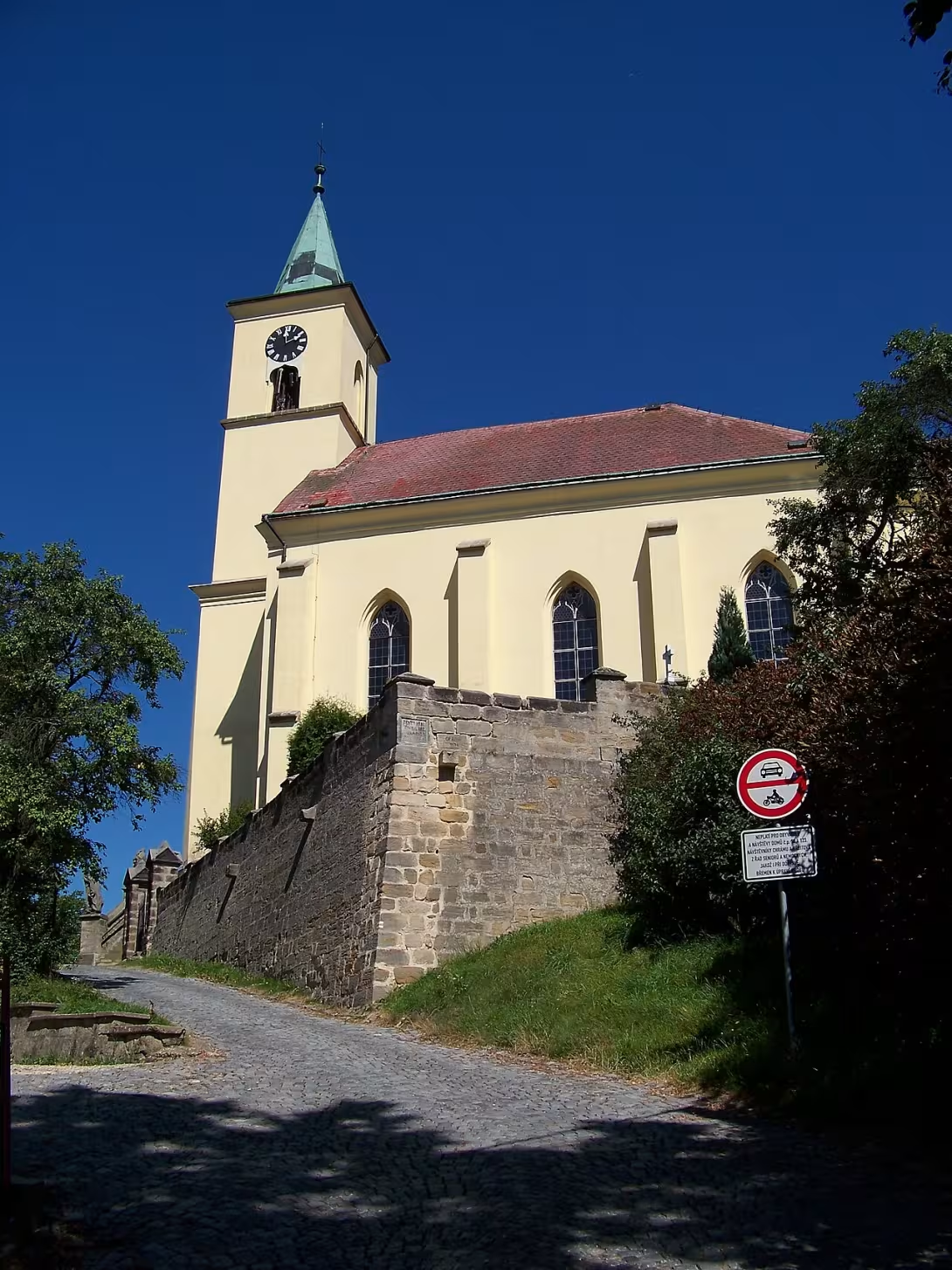

The historical appearance on the left is an AI-generated visualisation and serves as inspiration only.
Historical milestones
- 1300
- Construction of the original Gothic church.
- 1595
- Renovations by Jaroslav z Vartemberka.
- 1832
- Rebuilding after a fire, influenced by the Rohan family.
Architectural development
The church began as a small structure replaced in the early 14th century with a Gothic design. It underwent significant renovations in 1595 and was rebuilt following a fire in 1832. The current neo-Gothic form, designed by Bernhard Grueber, features a hall-style three-aisled nave added in 1836.
Historical events
- 1595
- Extensive renovations carried out under Jaroslav z Vartemberka.
- 1832
- Rebuilding after a fire, influenced by the Rohan family.
Points of interest
- The Church of Saints Philip and James is closely linked to the Markvartici family, who originally built it around 1300. This connection highlights their historical influence in the region during the early Gothic period.
- Despite numerous renovations over centuries, the church's original presbytery and sacristy have been preserved, offering a rare glimpse into its early architectural roots while showcasing the evolution to neo-Gothic style.
- The church underwent significant changes after a fire in 1832, with architect Bernhard Grueber playing a pivotal role in its reconstruction. His design introduced a hall-style three-aisled nave that defines the current structure's appearance.
- A unique blend of architectural styles is evident within the church, combining early Gothic elements like polygonal presbytery features and neo-Gothic components such as the spire on the western façade and rib-vaulting in the nave.
- The interior houses a baroque main altar from the early 18th century, adorned with statues of Saint Vojtěch and Saint Wenceslas. This altar reflects the artistic tastes of its time while honoring local saints important to Bohemian history.
Guide
This guide is narrated by a synthetic voice generated by artificial intelligence.
Show guide text
This text was created by artificial intelligence and has not been editorially reviewed. It may contain inaccuracies.
The Church of Saint Philip and James in Všeň stands on the edge of the Hruboská hillock. As a striking Neo-Gothic landmark, it can be seen far and wide across central Pojizeří and the Czech Paradise.
On the site of today's building originally stood a small church. Around the year 1300, the lords of Všeň from the Markvartice family replaced it with a new Gothic church. From this construction, the presbytery and sacristy have survived to this day. Both survived two major reconstructions. The first took place under Jaroslav z Vartmberka in the year 1595, the second under the Rohans following a fire in the year 1832. Then in 1836, the present triple nave was added according to designs by Bernhard Grueber. The old Gothic core thus became a permanent part of the Neo-Gothic church. In the years 2001 and 2002, the church underwent exterior renovation, which was funded by the patron Bohuslav Jan Horáček. Upon its completion on the fourth of May 2002, Archbishop Karel Otčenášek blessed the renovated exterior of the church.
The triple nave is hall-like and built of hewn ashlar blocks. In the western façade rises a prismatic tower, which is octagonal at the base and transitions to a square shape at the top. The façade is decorated with the arms of the Rohans. The oldest part is a many-sided early Gothic presbytery with five pointed windows. It is vaulted with two bays of cross vaulting and a radial vault, whose ribs converge towards the middle of the walls. The Gothic sacristy with cross ribbed vaulting is accessed through a pointed profiled portal. In the triple nave, six pillars in three pairs support Neo-Gothic ribbed vaulting, and the side aisles feature galleries.
Most of the furnishings date from the eighteenth century. The Baroque main altar from the beginning of that century bears sculptures of Saint Adalbert and Saint Wenceslaus in its superstructure. The main painting depicts the patrons of the church, Saint Philip and Saint James. On the painting in the superstructure is the Holy Trinity. The tabernacle is Rococo, and the two side altars are Neo-Gothic. A stone Gothic baptismal font has also been preserved. On the confessional stands an artistically successful Baroque sculpture of Saint John of Nepomuk with little angels.
The church is surrounded by a cemetery enclosed by a wall with two pointed gates. Two-branched staircases lead to them, lined with Baroque sculptures of Saint Jude Thaddeus, Wenceslaus, Adalbert, Prokop, Florian, and Joseph. They were created in the first half of the eighteenth century in the workshop of the Kosmonosy sculptors, the Jelíneks.
Tips for visitors
The best time to visit the Church of Saints Philip and James in Všeň is during late spring or early fall when the weather is pleasant, allowing for comfortable exploration of both the church grounds and surrounding cemetery. These seasons offer vibrant natural scenery that complements the neo-Gothic architecture beautifully. Additionally, visiting outside of peak tourist season can provide a more serene experience with fewer crowds.
When visiting the Church of Saints Philip and James, consider bringing comfortable walking shoes as you'll likely want to explore both the church interior and the surrounding cemetery. A light jacket is recommended due to variable weather conditions, especially if exploring during shoulder seasons. For those interested in photography or art history, a notebook for jotting down observations can be useful.
Photography enthusiasts will find several spots around the Church of Saints Philip and James ideal for capturing its neo-Gothic beauty. The best light is often found early in the morning or late afternoon when the sun casts soft shadows that accentuate the church's architectural details. Inside, natural lighting through stained glass windows can create stunning visuals, while outside, the baroque statues near the cemetery gates offer unique photo opportunities.
For those interested in exploring nearby attractions within a 30-minute drive from Všeň, Hrubá Skála is an excellent choice. This area offers scenic views and hiking trails that provide a glimpse into the natural beauty of Central Lusatia and Český ráj. The proximity to these landscapes makes it ideal for outdoor enthusiasts looking to extend their visit beyond the church.
Families with children will find the Church of Saints Philip and James an engaging site, especially due to its historical significance and architectural charm. Exploring the cemetery's baroque statues can be a fun scavenger hunt activity for kids. Additionally, the surrounding area offers opportunities for outdoor play and exploration, making it a family-friendly destination.
Frequently asked questions
Can the monument be visited?
Religious buildings are usually open mainly during services; at other times a visit is normally arranged with the parish or the operator. We have not verified specific times.
Where is the monument?
Location: Všeň, Liberecký kraj. The map on this page shows the exact spot.
Why is the monument protected?
It is listed in the Central List of Cultural Monuments of the Czech Republic as a cultural monument (register no. 16013/6-2854).
Businesses nearby
Do you run a restaurant, accommodation, shop, museum, rental, wellness or other visitor service near this monument? Show yourself directly to the people heading to it — this is how they will see you in the app and on the web:
Events nearby

Zdroj akcí: otevřená data měst a obcí ČR (Národní katalog otevřených dat) a kalendář akcí Národního památkového ústavu.
Nearby
Surrounding the church is a cemetery enclosed by walls featuring two pointed arch gates, leading up to a double-flight staircase adorned with baroque statues from the early 18th century.
Accommodation nearby
Trips and activities nearby
Guided tours, tickets and activities nearby from GetYourGuide
Affiliate link: if you buy from the partner, we may receive a commission. The price for you does not change.
Search tours and activities →Themed route
Tematická výletní trasa: Kostel svatého Filipa a Jakuba (Všeň)
1. Kostel svatého Filipa a Jakuba
- Typ: Historická památka
- Proč stojí za návštěvu: Tento barokní kostel je centrem historie a kultury obce Všeň. Jeho architektura a interiér nabízejí pohled na bohatou duchovní tradici této oblasti, zatímco výhledy z okolních věží poskytují úchvatný pohled na místní krajinu.
2. Hřbitov
- Typ: Historická památka
- Proč stojí za návštěvu: Hřbitov, ohraničený zdmi s dvěma výklenkovými branami, je klíčovou součástí areálu kostela. Nabízí pohled na historické epitafie a náhrobní desky, které vyprávějí příběhy minulých generací obyvatel Všene.
3. Dvojdílný schodiště s barokními sochami
- Typ: Umělecká památka
- Proč stojí za návštěvu: Schodiště vedoucí k kostelu je zdobeno sochami z počátku 18. století, které představují barokní umělecký styl té doby. Tyto díla jsou skvělým příkladem historického umění a dodávají kostelu jeho majestátní vzhled.
Tato trasa nabízí návštěvníkům kompaktní zážitek zaměřený na hluboké pochopení historických a kulturních aspektů kostela svatého Filipa a Jakuba v Všene.
Seasonal recommendations
Jaro: In the spring season, St. Philip and Jacob Church in Všenice transforms into an exciting mix of newly bloomed flowers and warm sunlight that highlights its ancient architecture. The atmosphere is full of renewal and hope, attracting both locals and tourists who want to enjoy a peaceful moment after winter rest. Visitors should come dressed for mild temperatures and the possibility of sudden rain showers, as spring weather can be unpredictable. The best times to visit are early morning or late afternoon to avoid potential crowds looking to take advantage of the warm days.
Léto: Summer brings long sunny days and warm nights around St. Philip and Jacob Church, making it an ideal place for relaxation. The sun illuminates the church more vividly, revealing its historical beauty, while the surrounding nature is in full bloom and greenery. Higher visitor numbers are expected during the peak summer months, so visitors should come early morning or late afternoon for a quieter experience. It's important to wear light clothing and bring sun protection like hats and sunscreen.
Podzim: In autumn, St. Philip and Jacob Church takes on a melancholic yet attractive atmosphere with the colors of falling leaves and smoke drifting into the church from the cooler air. This season offers quiet moments for enjoyment as attendance begins to decline and local views become more intimate. Despite warmer days, it's advisable to come dressed in layered clothing, as the weather changes quickly. The best times to visit are early morning or late afternoon when temperatures are pleasant and there are fewer crowds.
Zima: The winter season transforms St. Philip and Jacob Church into a place full of peace and quiet, with frost patterns on windows and cold light filtering through the church doors. The atmosphere is often enhanced by Advent celebrations or Christmas preparations, adding melancholic beauty to the site. The best times to visit are early morning or late afternoon when temperatures are milder and there are fewer crowds.
Visualizations and artistic views


The visualisations are generated by artificial intelligence and serve as inspiration.
Photos from the area
Real photos taken near the monument


Zdroj a licence jsou uvedeny u každého snímku.
Tips from visitors
No tips yet. Be the first!
Log in and add your tip.
Sources and literature
Photos: ŠJů (cs:ŠJů) / CC BY-SA 3.0, rozlišení zvýšeno umělou inteligencí — Wikimedia Commons. The author and licence also appear when you hover over the image.
Faktickým podkladem tohoto textu byl článek na Wikipedii, jehož autory jsou přispěvatelé Wikipedie. Článek je dostupný pod licencí CC BY-SA 4.0.
Location on the map
Příběhy a pověsti
Legendy, pověsti a příběhy spjaté s touto památkou
Fotografie návštěvníků
Zatím žádné fotografie. Buďte první, kdo přidá fotografii z návštěvy!
Log in a přidejte svou fotografii nebo hodnoťte.
Za ověřenou návštěvu v aplikaci získáte víc bodů — poznáme podle GPS, že jste na místě.
Reviews and comments