






Kostel svatého Jakuba apoštola v Cítolibech Church
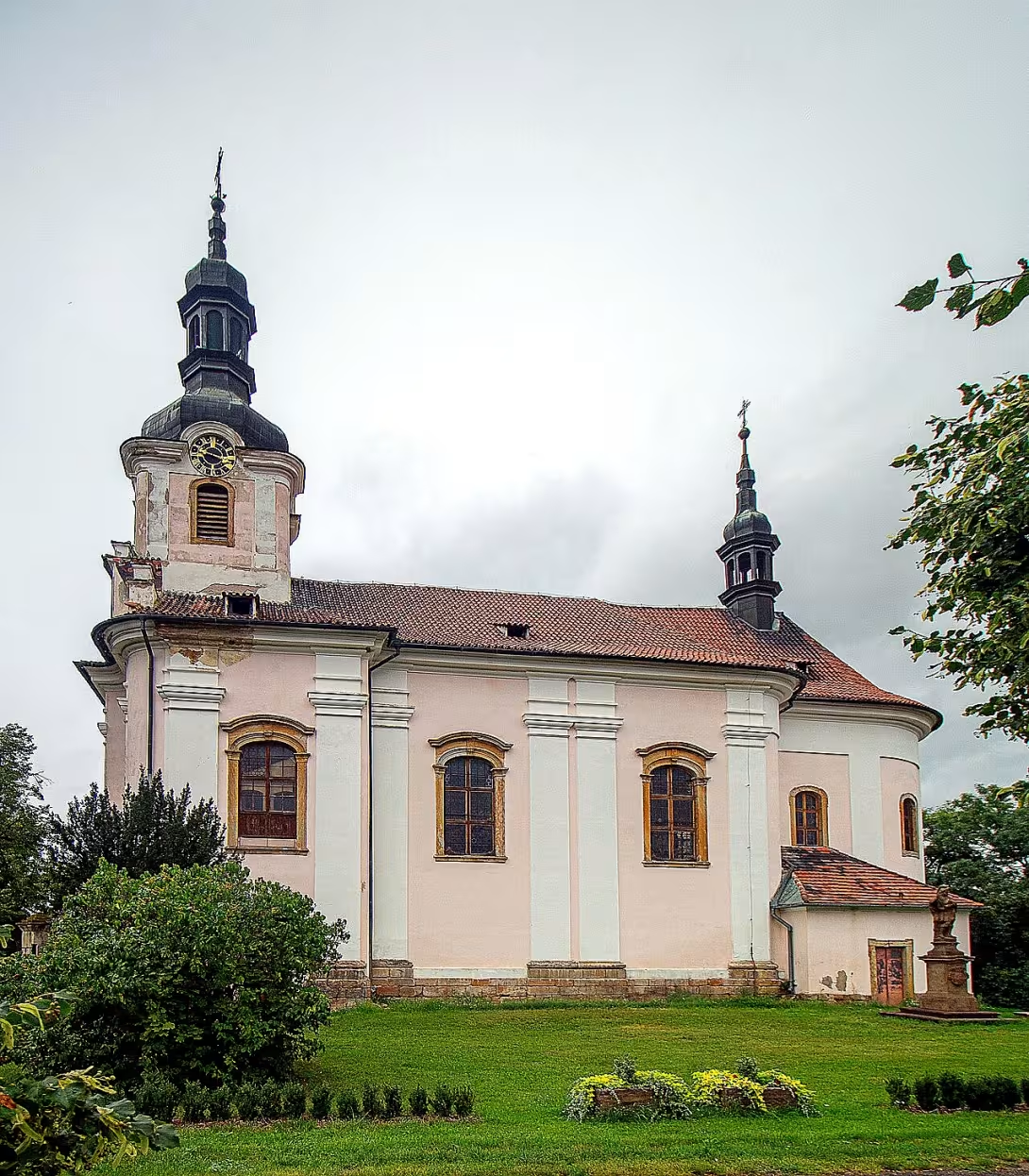
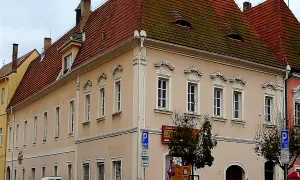
The Church of Saint James the Greater in Cítoliby is a prominent Baroque structure located at Tyršovo Square. This Roman Catholic parish church is recognized as a cultural monument for its architectural significance and historical context within the region. Constructed between 1606 and 1715, it serves both as a place of worship and as evidence of artistic and religious developments in Bohemia during the Baroque period.
The origins of this church date back to an earlier structure dedicated to Saint Hugh, located in a castle garden. Historical records indicate that before building the current edifice, the original church was demolished. The initiative for a new parish church began with Karel Hruška z Března in the early 17th century, who included provisions for its establishment in his will made in 1606. By 1715, Arnošt Bohumír Schütz z Leipoldsheimu completed the construction of the present Baroque church, although he did not live to see its consecration.
Architecturally, the Church of Saint James the Greater features an oriented, rectangular layout with a semi-circular presbytery and a four-sided space on its southern side. The western façade includes a tower adorned with pilasters and a segmental arch. Inside, the church showcases a single-nave design supported by vaulted ceilings with pilasters and lunettes. Notably, the presbytery is decorated with sculptures by M. B. Braun, completed in 1718, enhancing its artistic appeal.
Throughout its history, the church has had various administrators and owners. After Karel Hruška z Března's initial plans, Arnošt Bohumír Schütz z Leipoldsheimu played a crucial role as the builder of the current structure. The church was later administered by Augustinians from the nearby Dolní Ročov monastery starting in the 1660s.
Key events associated with this site include its completion in 1715 and subsequent artistic contributions, such as sculptures by M. B. Braun and a painting of Saint James' Sermon. Initially attributed to Peter Brandl, the painting is now credited to V. V. Reiner. These elements underscore the church's cultural and historical importance.
Today, the Church of Saint James the Greater remains accessible to visitors, offering insights into Baroque architecture and religious history in Bohemia. Its preservation as a cultural monument ensures it continues to be an intriguing site for those exploring the region's rich heritage. Visitors are invited to experience this remarkable church, which stands as a testament to the artistic and spiritual endeavors of its time.
Then and now
Drag the slider to compare how the landmark may have looked when it was built with the view today.
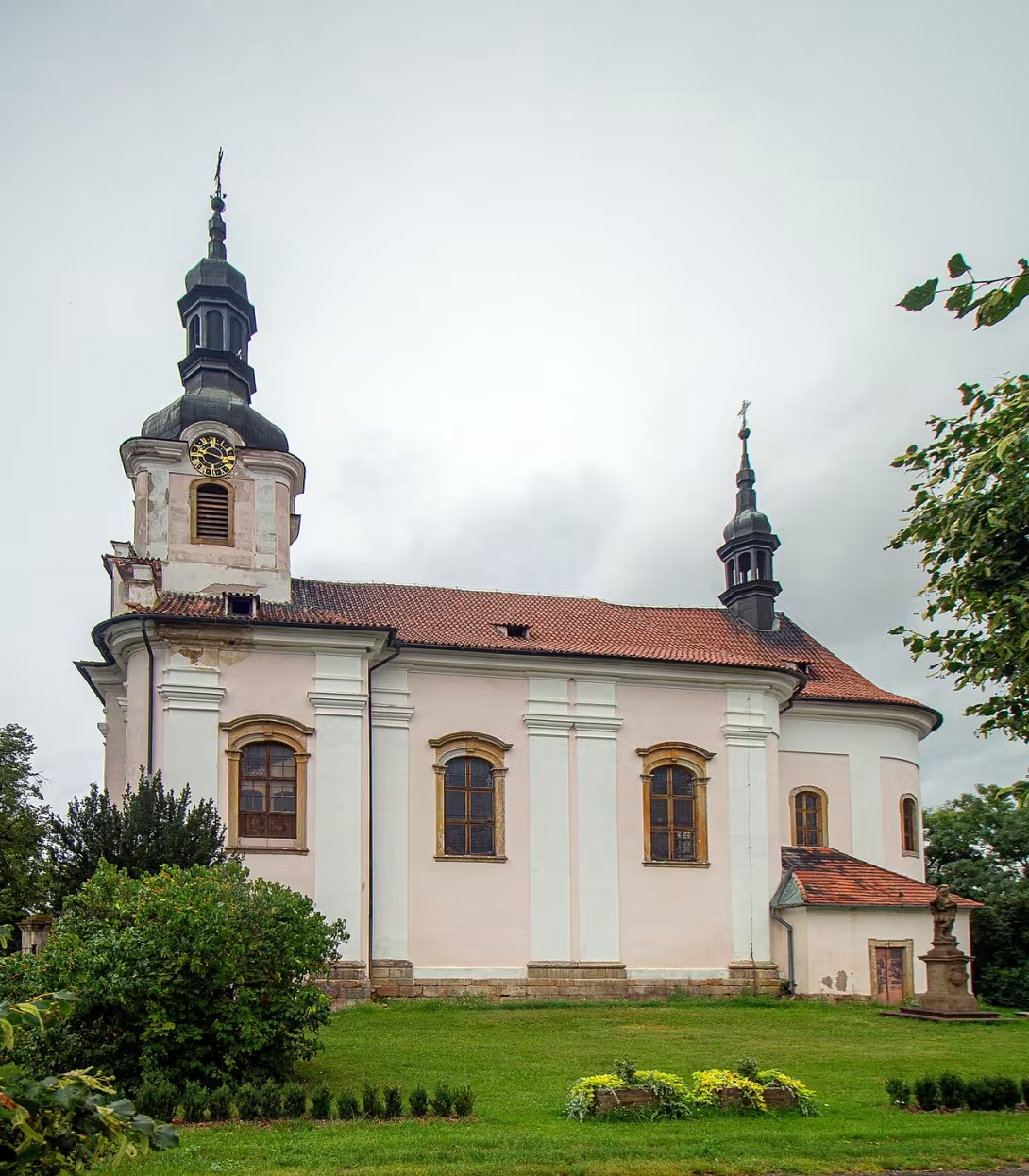
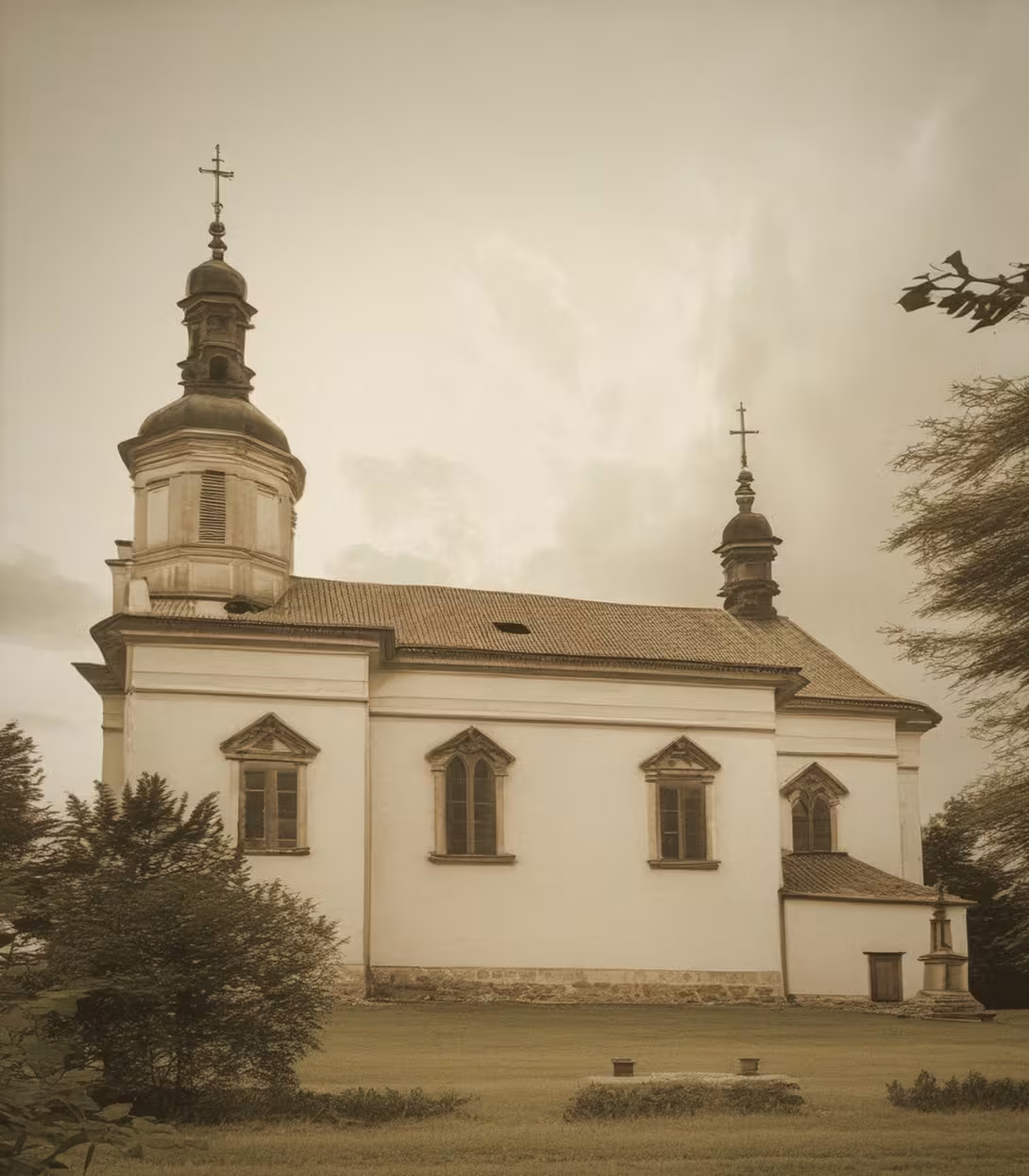
The historical appearance on the left is an AI-generated visualisation and serves as inspiration only.
Historical milestones
- 1358
- First documented mention of the church.
- 1379
- Cítolibský farář Hanek řečený Herink lent money to the town council in Rakovník.
- 1606
- Karel Hruška z Března made a will including provisions for building a new parish church.
- 1715
- Completion of the current Baroque church by Arnošt Bohumír Schütz z Leipoldsheimu.
Architectural development
The original church, dedicated to Saint Hugh and located in a castle garden, was demolished before the new construction. The current Baroque structure features a single-nave layout with vaulted ceilings supported by pilasters and lunettes. The presbytery is adorned with sculptures by M. B. Braun, completed in 1718.
Historical events
In the early 17th century, Karel Hruška z Března initiated plans for a new parish church in Cítoliby.
The construction of the current Baroque church was completed in 1715 by Arnošt Bohumír Schütz z Leipoldsheimu.
Points of interest
- The Church of Saint James the Greater was initially planned to replace a church dedicated to Saint Hugh, which stood in a castle garden, highlighting an interesting transition from one religious site to another within Cítoliby.
- Karel Hruška z Března's will of 1606 not only initiated the construction of the new church but also marked an early example of using personal testamentary provisions for community and religious development in Bohemia.
Guide
This guide is narrated by a synthetic voice generated by artificial intelligence.
Show guide text
This text was created by artificial intelligence and has not been editorially reviewed. It may contain inaccuracies.
Welcome to the Church of Saint James the Greater in Cítoliby, a remarkable testament to Baroque architecture nestled within the charming Tyršovo Square. As you stand here, let your eyes take in the grandeur of its western façade, where a tower adorned with pilasters rises majestically into the sky. This church is not just an architectural marvel; it's a beacon of history and spirituality that has stood the test of time.
The story of this sacred site begins as far back as 1358 when the first documented mention of the church appeared in historical records. Over the centuries, it evolved to meet the spiritual needs of its community. By 1606, Karel Hruška z Března's will marked a pivotal moment; he envisioned and funded the construction of a new parish church, setting the stage for what would eventually become this Baroque masterpiece.
Fast forward to 1715, when the current form of the church was completed under the guidance of Arnošt Bohumír Schütz z Leipoldsheimu. His architectural vision brought together elements that define its unique character today—a rectangular layout with a semi-circular presbytery and an intriguing four-sided space on its southern side.
As you explore further, notice how the church's orientation and structure invite contemplation and reverence. The harmonious blend of form and function speaks volumes about the era in which it was built. Imagine the artisans who meticulously crafted each detail, their hands shaping history with every stone placed.
This site is also steeped in intriguing historical narratives. One such tale involves Cítolibský farář Hanek řečený Herink, who, back in 1379, lent money to the town council of Rakovník—an act that underscores the interconnectedness of this community with its neighbors.
Another fascinating aspect is the church's evolution from a site dedicated to Saint Hugh within a castle garden to its present form. This transition highlights an interesting chapter in Cítoliby's religious and cultural journey, reflecting broader shifts over time.
As you continue your exploration, feel free to immerse yourself in the atmosphere of this sacred space. Let it inspire reflection on the layers of history that converge here, each telling a story of faith, community, and resilience.
Thank you for joining us at the Church of Saint James the Greater. We invite you to delve deeper into its many stories and perhaps discover something new with every visit. Until next time, may your journey through Cítoliby be filled with wonder and insight.
Businesses nearby
Do you run a restaurant, accommodation, shop, museum, rental, wellness or other visitor service near this monument? Show yourself directly to the people heading to it — this is how they will see you in the app and on the web:
Accommodation nearby
Themed route
Tematická výletní trasa: Kostel svatého Jakuba apoštola v Cítolibech
1. Kostel svatého Jakuba apoštola *Typ:* Historická památka *Proč stojí za návštěvu:* Tento barokní kostel, postavený na počátku 18. století, je nejen architektonickou perli v Cítolibech, ale také svědectvím bohaté historie a duchovního života obce. Jeho interiér nabízí nádherné fresky a sochy, které přitahují jak cestující zasvěcené v umění, tak ty, kteří hledají klidné místo pro meditaci.
2. Náves Cítoliby *Typ:* Místní centrum *Proč stojí za návštěvu:* Náves v Cítolibech je srdcem obce, kde se setkávají historie a současnost. Zde můžete procházet kolem tradičních domů a užívat si klidného prostředí, které nabízí příležitost k odpojení od ruchu. Náves je také ideálním místem pro krátkou pauzu po návštěvě kostela.
3. Památník válečných obětí *Typ:* Památník *Proč stojí za návštěvu:* Tento památník je významnou místní památkou, která uctívá paměť těch, kteří ztratili život během válek. Je to místo pro reflexi a poznání historických událostí, které formovaly současný obraz Cítolib. Jeho umístění na návsi dodává mu významnou roli ve společenském životě obce.
4. Zastavěné náměstí *Typ:* Místní parkové prostranství *Proč stojí za návštěvu:* Toto místo nabízí příležitost k odpojení a relaxaci v zeleni. Zastavěné náměstí je ideálním místem pro rodiny s dětmi, kteří hledají místo na volný čas, nebo pro ty, kdo chtějí užít si klid a přírodu v bezprostřední blízkosti historických památek.
Tato trasa nabízí kombinaci duchovního zážitku, historie a relaxace, což ji činí ideální pro ty, kdo chtějí poznat Cítoliby v hloubce.
Seasonal recommendations
Jaro: In the spring, St. Jacob's Church in Čítoliby offers stunning views of blooming landscapes enlivened by the colors of spring flowers. Sunlight illuminating the church walls adds magic and a peaceful atmosphere, making it ideal for quiet moments of contemplation or poetry. During this time, opening hours may be slightly shorter due to transitional weather, so it's best to visit early in the day and have a warm coat handy for sudden showers. Despite fewer crowds, the garden around the church can be an attraction for nature lovers.
Léto: Summer in Čítoliby is when the historical beauty of St. Jacob's Church meets the lively atmosphere of the main summer season. With long days and sunny lighting, a visit to the church offers unforgettable experiences as the shade under awnings becomes a friendly refuge from the sun. Despite its attractive setting, visitor numbers can be high, so it's advisable to visit early in the morning or later in the evening to avoid crowds. Warm clothing and plenty of refreshments are key for comfort during your visit.
Podzim: In autumn, St. Jacob's Church in Čítoliby takes on a melancholic beauty as leaves change to fiery colors and fall. This season offers a unique atmosphere of calm and reflection celebrated during the Advent period. While opening hours may be shorter due to cooler days, this time provides ideal conditions for peaceful strolls around the church. Visitors should dress warmly with a scarf or umbrella, as sudden winter storms are possible.
Zima: The winter season brings a quiet and serene atmosphere to St. Jacob's Church in Čítoliby, where lighting is softened by frosty clouds or sunlight. This time offers a sense of peace often coinciding with nearby Christmas markets, providing an opportunity for a visit without large crowds. Opening hours may be limited to the calmest weather days, so it's best to check information beforehand. Warm clothing such as scarves and snow umbrellas is essential for comfort during winter visits to the church.
Visualizations and artistic views


The visualisations are generated by artificial intelligence and serve as inspiration.
Photos from the area
Real photos taken near the monument


Zdroj a licence jsou uvedeny u každého snímku.
Tips from visitors
No tips yet. Be the first!
Log in and add your tip.
Sources and literature
Fotografie: VitVit / CC BY-SA 4.0 — Wikimedia Commons. The author and licence also appear when you hover over the image.
Faktickým podkladem tohoto textu byl článek na Wikipedii, jehož autory jsou přispěvatelé Wikipedie. Článek je dostupný pod licencí CC BY-SA 4.0.
Location on the map
More monuments – Cítoliby
Show all in the municipality
Příběhy a pověsti
Legendy, pověsti a příběhy spjaté s touto památkou

Příběh: Kostel svatého Jakuba apoštola v Cítolibech
Bylo to v pondělí ráno, kdy Vilém z Rokycan se ocitl na samotné hranici lesa u Cítolib, obklopen svým vlastním soužením. Dýchajíc do zima naneseného vzduchu …
Číst příběh
Pověst: Kostel svatého Jakuba apoštola v Cítolibech
Traduje se v Cítolibech, že stavebník nového kostela, šlechtic Arnošt Bohumír Schütz z Leopoldsheimu, celý svůj pozemský majetek vsadil na jedinou stavbu — n…
Číst příběhFotografie návštěvníků
Zatím žádné fotografie. Buďte první, kdo přidá fotografii z návštěvy!
Přihlaste se a přidejte svou fotografii nebo hodnoťte.
Za ověřenou návštěvu v aplikaci získáte víc bodů — poznáme podle GPS, že jste na místě.
Reviews and comments