






Kostel svatého Jakuba Většího (Žebnice) Church
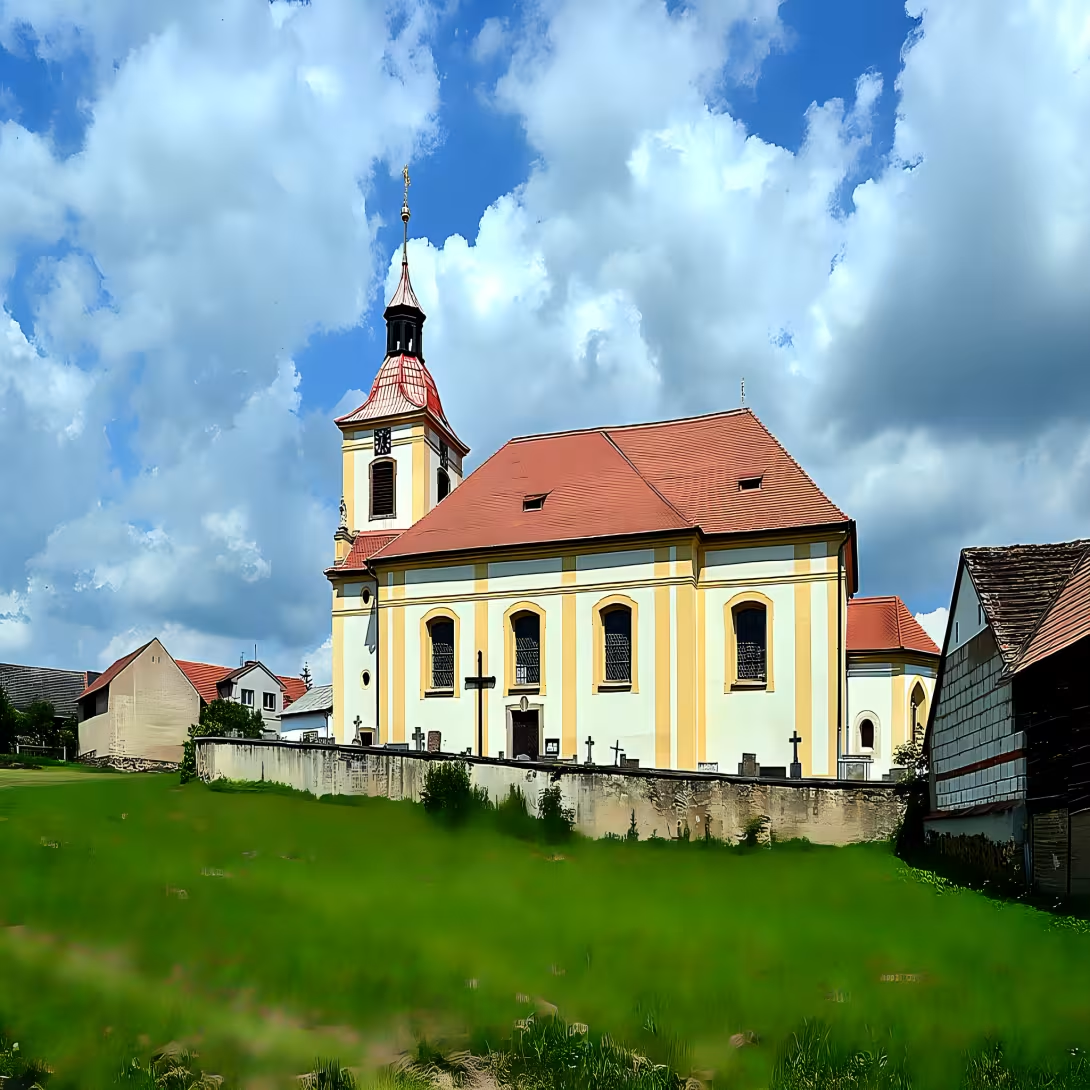
The Church of St. Jacob the Greater in Žebnice is a testament to historical resistance and architectural evolution. This Roman Catholic church is located near Plase in the Plzeňský kraj region since 1964 as a cultural monument. His importance lies not only in his religious function but also in his embodiment of the transition from Gothic architecture to Baroque during the transformation period of Czech history.
The church was originally built in the 14th century and by the end of the 18th century it underwent significant changes when it was largely destroyed and rebuilt in 1784-1785. This reconstruction meant a shift from its original Gothic design to its baroque style, characterized by a single-boat construction with a rectangular presbytery and a distinctive pyramid tower on the western facade. It is assumed that the renewal efforts were influenced by proposals that could be attributed to Jan Blažej Santini Aichl, although it remains unconfirmed.
Despite its transformation, the church retains the elements of its Gothic origin. In particular, a three-sided presbytery with a ribbed vault and fragments of wall paintings from the 14th century survive inside the structure. These remains offer a view of medieval art, which once decorated the entire presbytery. The triumphal arch represents positions of biblical characters such as Adam, Eve, Cain, Abel and God, while the vault shows the image of the Lord. In addition, creative works of art from the 16th century depict local nobility and add a layer of historical story to the interior of the church.
The Baroque era brought more artistic ornaments with illusionist frescos created in 1785, which decorate all three altars. These frescoes contribute to the rich visual tapestry church and reflect the stylistic preferences of this period. The main altar was once a late Gothic wooden statue of St. James as a pilgrim, now preserved in the Western Museum in Pilsen. The side altars are dedicated to St. John Nepomucen and the Virgin Mary of Lourdes, and further strengthen the spiritual importance of the church.
In recent history, in the years 2003-2010, the Church of St. Jacob the Greater has undergone a comprehensive restoration financed partly by the European Union. These efforts were conducted by the local civic association Jakub Vetší, which ensured that the church would remain in good condition for future generations to appreciate its historical and architectural value.
Today the church is accessible to visitors who want to explore rich history and artistic heritage. Its preservation as a cultural monument underlines its importance not only within the local community but also as part of a wider story of Czech architecture. The Church of St. Jacob the Greater invites interested people to experience history and art first hand and the lasting legacy of Gothic and baroque influences, making it a valuable destination for anyone who visits the region.
Then and now
Drag the slider to compare how the landmark may have looked when it was built with the view today.
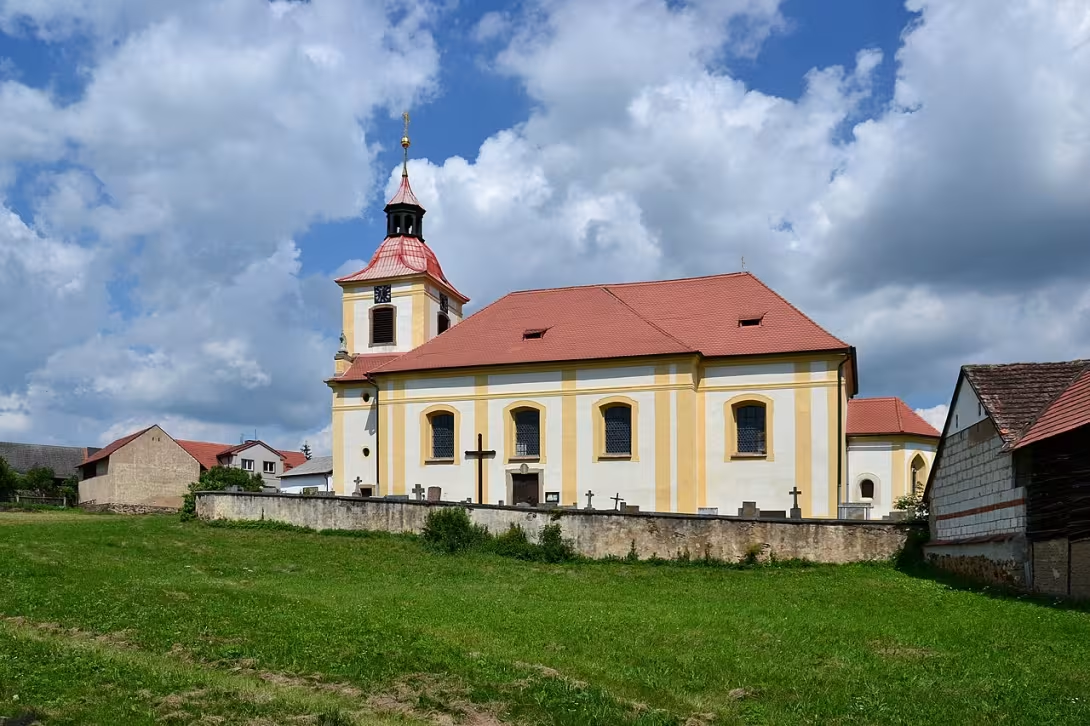

The historical appearance on the left is an AI-generated visualisation and serves as inspiration only.
Historical milestones
- 14th Century
- Original construction of St. Jacob's Church.
- 1784
- The reconstruction began, the transition from Gothic to Baroque style.
- 1785
- Completion of reconstruction with Baroque elements and frescoes.
- 1964
- Recognized as a cultural monument in Czechoslovakia.
- 2003
- A comprehensive recovery has begun, partly financed by the EU.
- 2010
- Church renewal complete.
Architectural development
The church of St. Jacob the Greater has undergone a significant transformation from Gothic origin to the present Baroque form. The original Gothic church from the 14th century was largely destroyed and replaced by a single baroque building with a rectangular presbytery and a pyramid tower. Important remains include a triangular presbytery with a ribbed vault and fragments of medieval wall paintings.
Historical events
1784-1785: The original church was largely destroyed and replaced by a Baroque structure.
2003-2010: Comprehensive renewal financed partly by the European Union.
Points of interest
- The church of St. Jacob the Greater was probably influenced by a design which was possibly attributed to Jan Blažej Santini Aichl during reconstruction in 1784-1785, although this connection remains unconfirmed.
- Despite its transformation into a Baroque style, the church retains fragments of 14th-century picture wall paintings within its structure which offer a view of medieval Czech art, which once covered the entire presbytery.
- The main altar was originally a late Gothic wooden statue of St. James as a pilgrim, which is now preserved in the West Bohemian Museum in Pilsen, where the rich historical artifacts of the church are presented.
- During its baroque era of decorating the illusionist fresco created in 1785 decorated all three altars within the Church of St. James the Greater, which reflect the stylistic preferences and artistic trends of this period.
- Comprehensive renewal in 2003-2010 was partly financed by the European Union and led by the local civic association Jakub Votí, highlighting the importance of the church and ensuring its preservation for future generations.
Guide
This guide is narrated by a synthetic voice generated by artificial intelligence.
Show guide text
This text was created by artificial intelligence and has not been editorially reviewed. It may contain inaccuracies.
Welcome to the Church of St. Jacob the Greater in Žebnice, a remarkable proof of architectural evolution and historical resistance nestled in the picturesque area of Plzeňský kraj. As you stand here, take a moment to absorb the size of the baroque facade, with its remarkable pyramid tower reaching the sky - a transformation from its original Gothic roots.
the church story begins in the 14th century when it was first built as a Roman Catholic place of worship. There have been significant changes over time, especially between 1784 and 1785, when it underwent extensive reconstruction. This period meant a transition from the original Gothic style to the elegant baroque style that we see today - proof of the architectural trends of the era.
As you look around, notice how rectangular presbytery church contrasts with decorative details typical of Baroque architecture. Despite its transformation, fragments of its Gothic origin remain inconspicuous within the structure and offer a view of its history.
Throughout history, this site has been intertwined with various cultural and historical stories. In 1964 it was recognised as a cultural monument in Czechoslovakia, which underlines its importance. A comprehensive reconstruction project was launched in 2003, partly supported by EU funding, which culminated in 2010. These efforts have ensured that the beauty and heritage of the church will last for future generations.
An interesting aspect of this church is the suggestion that Jan Blažej Santini Aichl could influence it during reconstruction. Although unconfirmed, this connection adds a layer of mystery and attraction to its history.
As you continue your research, let yourself be drawn into the atmosphere of this historic place. Consider the stories inside these walls and the countless individuals who have passed through here for centuries.
We invite you to dive deeper into the rich tapestry of history and architecture church. Thank you for joining us on this journey; Let it inspire the lasting recognition of the cultural treasures surrounding us.
Tips for visitors
The best time to visit St. Jacob's Church in Žebnice is at the end of spring or early autumn. These seasons offer pleasant weather that increases your experience as you explore the historical architecture church and quiet surroundings. In addition, a visit outside the top tourist season means fewer crowds, allowing a more intimate appreciation of this Roman Catholic site.
Alternatively, public transport options are available, and you should check the latest routes and plans using the application or website travel planner for the most efficient route.
When visiting the church, consider bringing comfortable walking shoes, especially if you plan to explore the surroundings of Žebnice. The camera is also recommended to capture unique architectural details of the church. Since light conditions can vary all day, early morning or late afternoon visits are ideal for photography, because soft light increases the texture and color of the building.
For families with children, St. James Church offers a more peaceful environment that is ideal for educational trips. The historical importance of the site provides an opportunity to discuss the history of architecture and religious heritage with the young. Near attractions within 30 minutes include natural landscapes ideal for family walks or picnics that offer the opportunity to relax and enjoy outside after exploring the church.
Frequently asked questions
Can the monument be visited?
Religious buildings are usually open mainly during services; at other times a visit is normally arranged with the parish or the operator. We have not verified specific times.
Where is the monument?
Location: Žebnice, Plzeňský kraj. The map on this page shows the exact spot.
Why is the monument protected?
It is listed in the Central List of Cultural Monuments of the Czech Republic as a cultural monument (register no. 42283/4-1642).
Businesses nearby
Do you run a restaurant, accommodation, shop, museum, rental, wellness or other visitor service near this monument? Show yourself directly to the people heading to it — this is how they will see you in the app and on the web:
Nearby
ITEX Show interactive overview of the surroundings - restaurants, accommodation, rentals and other places within a 15 km radius.
Data: OpenStreetMap contributors, 15 km radius.
‡ Historical monuments
- sv Jan Nepomucký (1.9 km)
- U Gandalfa (5.2 km)
- Oto Zeman (6.5 km)
- St. Jan Nepomucký (7.6 km)
- Memorial to death transport victims 1945 (9.9 km)
- Dolní Belá (10.6 km)
- Memorial to the victims of World War I (11.0 km)
- Monuments fallen (11.0 km)
Restaurant and catering
- Na Barandov (1.9 km)
- Chateau (2.4 km)
- Brewery Court Plasy (2.6 km - Plzeňská 37)
- Refreshments Under Lípu (3.8 km)
- Tahoda u Pashků (5.2 km - 32)
- Hradec pub (10.0 km)
- Paríkolna (10.8 km)
- U Rajchod (10.8 km)
Accommodation
- Brewery Court Plasy (2.6 km - Plzeňská 37)
- Castle Forrtovna (5.8 km)
- Sport-kemp (6.4 km - Manitine 911)
- Jubilit (7.0 km - Narká 481)
- Penzion Na zumen (7.3 km - Na zumení 940)
- Katherine (7.4 km)
- Levande Ranč (7.9 km)
- Stanley (8.1 km)
› Rental and sports
- Swimming pool Kralovice (6.3 km)
- Koupalist (6.3 km)
- Children's Pool (6.3 km)
- FK Bohemia Kaznej (6.4 km)
- TK Kaznej (6.4 km)
- Orange plays (6.7 km)
- Sokol Obora (7.5 km)
- Cemos (7.6 km)
© Tourism and nature
- Study Preláka (2.3 km)
- U Štafiusa (9.6 km)
- Dvozu Běkov (11.0 km)
- Under count crosses (11.6 km)
- Upper birch (11.8 km)
- Liblin (11.8 km)
- Rabstejn above the Bullet (bus) (12.0 km)
- U Jewish Cemetery (12.0 km)
Accommodation nearby
Trips and activities nearby
Guided tours, tickets and activities nearby from GetYourGuide
Affiliate link: if you buy from the partner, we may receive a commission. The price for you does not change.
Search tours and activities →Themed route
Thematic cruise route: Kostel svatého Jakuba Většího (Žebnice)
1. Church of St. Jacob the Greater, Žebnice - * Type: * Historical church - * Why is it worth a visit: * This 18th century Baroque school is an architectural pearl of the Pilsen Region, which has its rich interiors and historical significance for the village Žebnice.
2. Parish House - * Type: * Historical building - * Why is it worth visiting: * Located in the same location as the church and served as a center of parish innocence for centuries. Its architecture represents a loophole element of a smaller history.
3. Memorial of war pieces - * Type: * Memorial - * Why is it worth visiting: * This memorial at the church pays tribute to those that arrange in war conflicts. It is an important bridge for memories and reflections of historical events.
4. Church marking - * Type: * Historical designation - * Why is it worth a visit: * The square transferred through the bone is an ideal bridge for relaxation and profile where you can use a quiet space overlooking the church and its surroundings.
5. Church Garden - * Type: * Historical country - * Why is it worth a visit: * This garden offers instrumentation for the toothless and accompanying space, which has a historical and spiritual atmosphere of the church.
This route allows you to explore the cultural and historical rich object Žebnice, focusing on determining the most icerescence of the pa.
Seasonal recommendations
Spring: A visit to St. Jacob's Church during spring offers a unique experience as nature awakens around Žebnice. Blossoming flowers and fresh greenery provide a picturesque background that enhances the historical charm of the church with vibrant colors and delicate smells in the air. This time it is ideal for those who appreciate peaceful walks blooming landscape. While the crowds are usually mild, arriving soon can provide a peaceful visit before more visitors. Light layers are recommended thanks to fluctuating temperatures, and comfortable walking shoes will help you explore both the church land and surrounding nature.
Summer: The summer at the Church of St. Jacob the Greater is characterized by long days filled with warm sun, ideal for discovering a historic place in daylight. Fresh greenery around Žebnice creates a lively atmosphere, although it is wise to visit early in the morning or later in the afternoon to avoid peak tourist hours and noon heat. Sun protection is necessary - wear hats, sunglasses and apply sunscreen to make your time comfortable. This season also offers an opportunity for picnics near the church area if you are looking for a comfortable day out.
Autumn: Autumn brings a stunning display of colors because the leaves around Žebnice turn into shades of orange, red and gold, creating a picturesque setting to visit the Church of St. Jacob the Greater. Colder temperatures make it an ideal time to explore without summer heat, although wearing a light jacket is suitable in case of a cool breeze. This season often sees fewer visitors compared to summer, allowing more intimate examination of architectural details of the church and surrounding landscapes.
Winter: Winter at the Church of St. Jacob the Greater offers a calm and calm atmosphere like Žebnice snow blankets, which changes the area in winter wonderland. Soft glow from the church of light against the snowy background creates a charming scene, ideal for photographers enthusiasts or those looking for peaceful reflection. Keep in mind that opening times may be reduced, it is therefore recommended to check ahead to ensure access.
Visualizations and artistic views


The visualisations are generated by artificial intelligence and serve as inspiration.
Photos from the area
Real photos taken near the monument


Zdroj a licence jsou uvedeny u každého snímku.
Tips from visitors
No tips yet. Be the first!
Log in and add your tip.
Sources and literature
Photos: Petr Kinšt / CC BY-SA 3.0, rozlišení zvýšeno umělou inteligencí — Wikimedia Commons. The author and licence also appear when you hover over the image.
Faktickým podkladem tohoto textu byl článek na Wikipedii, jehož autory jsou přispěvatelé Wikipedie. Článek je dostupný pod licencí CC BY-SA 4.0.
Location on the map
More monuments – Žebnice
Show all in the municipality

Příběhy a pověsti
Legendy, pověsti a příběhy spjaté s touto památkou
Fotografie návštěvníků
Zatím žádné fotografie. Buďte první, kdo přidá fotografii z návštěvy!
Log in a přidejte svou fotografii nebo hodnoťte.
Za ověřenou návštěvu v aplikaci získáte víc bodů — poznáme podle GPS, že jste na místě.
Reviews and comments