






kostel svatého Jana Křtitele (Kněževes) Church
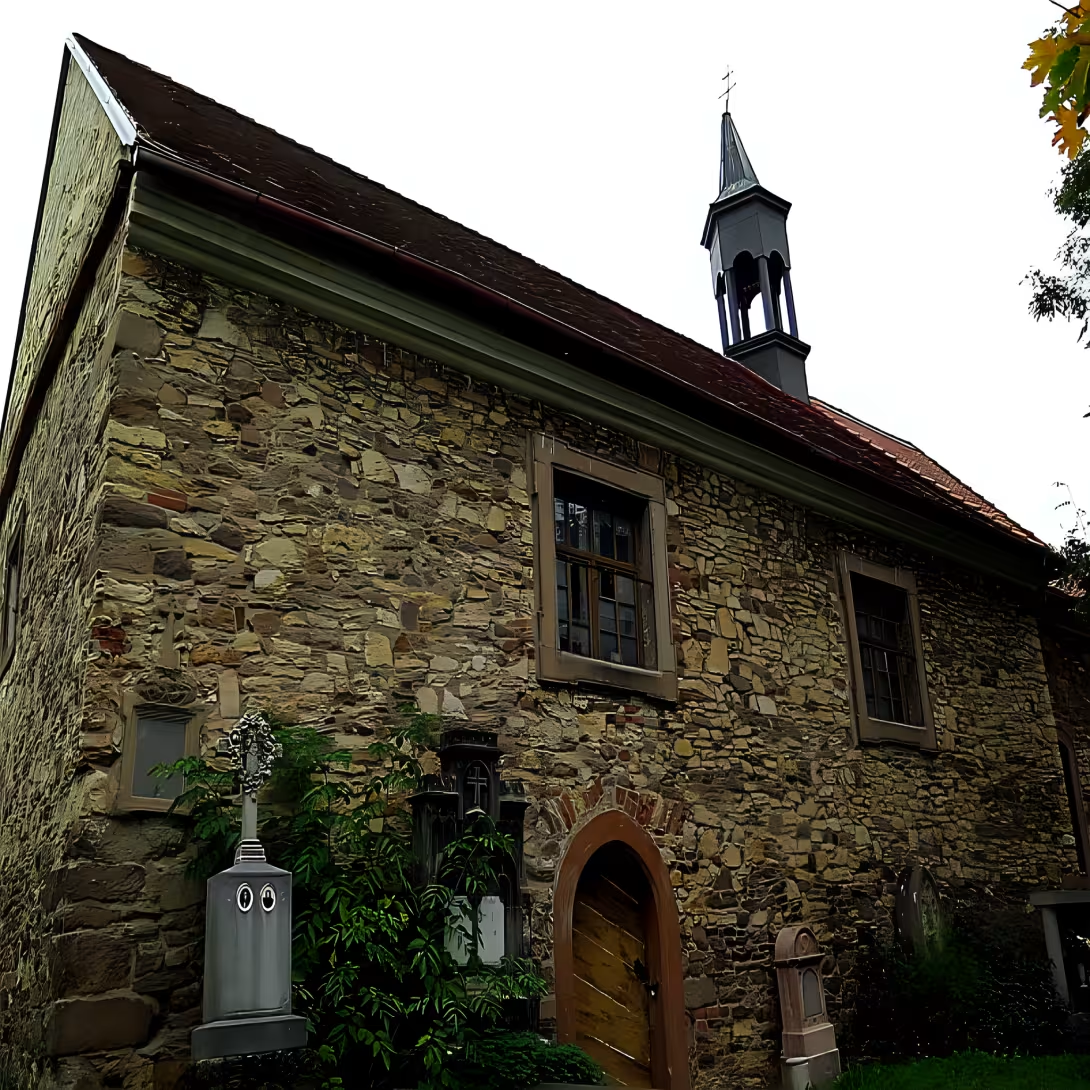
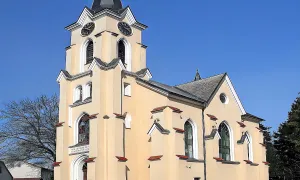
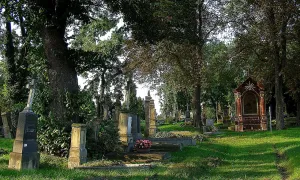
The Church of Saint John the Baptist in Kněževes is a notable cultural monument. It serves as a cemetery chapel located one kilometer northeast of the village within Středočeský kraj. First documented in 1651, this church features baroque style elements over a Gothic layout, indicating it likely stands on an older structure's site. Its historical significance stems from its role during a period marked by religious and political changes following the Thirty Years' War.
The origins of the Church date back to the mid-17th century when Bohemia was part of the Habsburg Monarchy undergoing significant transformations. The church was first mentioned in 1651 as dilapidated, used only once annually for services at a pilgrimage event. By 1674, it underwent substantial reconstruction that gave it an early baroque appearance while retaining its Gothic layout.
Architecturally, the church has a single-nave structure with a rectangular floor plan measuring 13.4 by 7.38 meters. The nave ends in a semicircular triumphal arch leading to the presbytery, which features a vaulted ceiling supported by Tuscan pilasters. The entrance is on the southern wall, and both windows and walls are framed in sandstone. Constructed mainly from limestone blocks, its exterior was rendered at the beginning of the 20th century. A distinctive feature is its gable roof with an octagonal belfry that was modified to a hexagonal form after recent repairs.
Ownership and administration details highlight Georgia Carola Siebert, who served as křivoklátský hejtman, and his wife Marie Agnes Siebertová z Germersheimu. They played a significant role in the church's history, with Antonín Cechner noting that the main altar from 1679 bore their family insignia.
Throughout its history, the church has witnessed key events, including its transformation during the 1674 reconstruction and subsequent structural changes in the 20th century. These included replacing the original nave ceiling with an iron structure due to deterioration and updating the roof design in the 1990s.
Today, the Church of Saint John the Baptist remains a protected cultural monument, accessible for visitors interested in its historical and architectural significance. Its preservation as a cemetery chapel adds charm, offering insights into religious practices and regional history. The church's enduring legacy makes it a worthwhile destination for those exploring Czech heritage.
Visitors are invited to explore this remarkable site, where the blend of baroque elegance and Gothic foundations tells a story of resilience and transformation across centuries.
Then and now
Drag the slider to compare how the landmark may have looked when it was built with the view today.
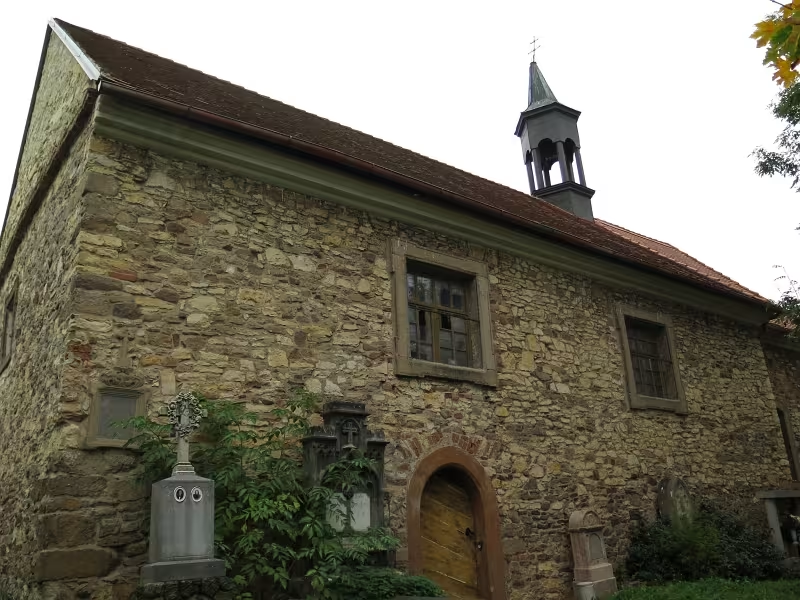
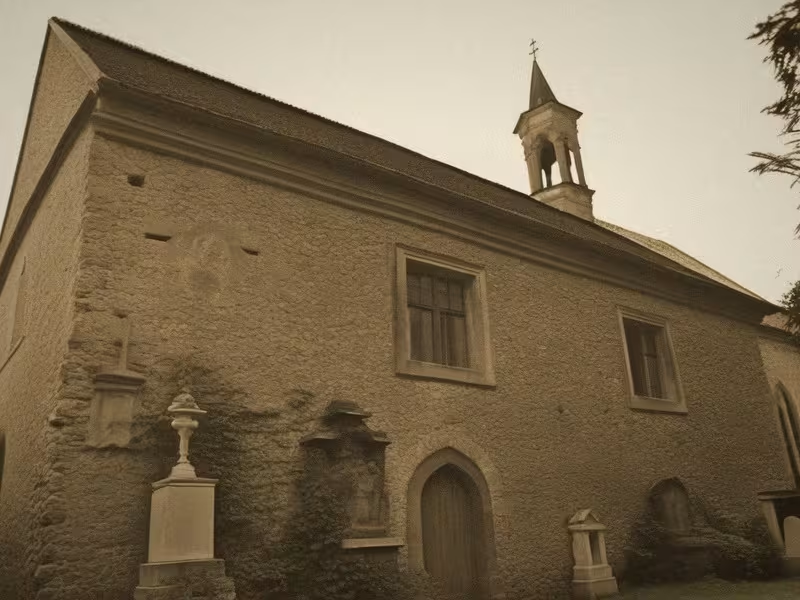
The historical appearance on the left is an AI-generated visualisation and serves as inspiration only.
Historical milestones
- 1651
- First documented mention of the church.
- 1674
- Reconstruction to early baroque style.
Architectural development
Originally built with a Gothic layout, the church was reconstructed in 1674 into an early baroque style. It features a single-nave structure with rectangular floor plan dimensions of 13.4 by 7.38 meters. The nave ends with a semicircular triumphal arch leading to the presbytery, which is vaulted and supported by Tuscan pilasters.
Historical events
- 1651
- First documented mention of the church.
- 1674
- The church underwent a transformation to its early baroque form during reconstruction.
Points of interest
- The Church of Saint John the Baptist was originally mentioned as dilapidated in 1651, suggesting it may have been a site of religious significance long before its documented history. - Despite being rebuilt with baroque elements in 1674, the church retained its Gothic layout, indicating an attempt to preserve its historical architectural roots while adapting to contemporary styles. - The main altar from 1679 features the family insignia of Georgia Carola Siebert and Marie Agnes Siebertová z Germersheimu, highlighting their influence on the church's history and possibly reflecting their social status within the community. - In the early 20th century, the church underwent exterior rendering, a process that may have been part of broader efforts to preserve or modernize historical buildings in Středočeský kraj during that period. - The church’s octagonal belfry was altered to a hexagonal form after recent repairs, showcasing how architectural modifications over time can reflect both practical needs and aesthetic choices.
Guide
This guide is narrated by a synthetic voice generated by artificial intelligence.
Show guide text
This text was created by artificial intelligence and has not been editorially reviewed. It may contain inaccuracies.
Welcome to the Church of Saint John the Baptist in Kněževes, a serene sanctuary nestled one kilometer northeast of this charming village. As you stand here, enveloped by the tranquility of its surroundings, take a moment to absorb the sight before you—a testament to both history and architectural evolution.
This church, serving as a cemetery chapel, is more than just a structure; it's a cultural monument that whispers tales from centuries past. Its first mention dates back to 1651, described then as dilapidated—hinting at its probable significance long before this recorded time. Imagine the stories embedded in these stones, possibly standing on grounds sacred since medieval times.
As you gaze upon the church, notice its baroque style, a result of reconstruction efforts completed in 1674. Yet, beneath the ornate facades, it holds onto its Gothic roots—a layout that speaks to an era when such designs dominated spiritual architecture. It's this blend of styles that gives the church its unique character, inviting you to explore further.
Let’s delve into some intriguing stories tied to this place. Georgia Carola Siebert and Marie Agnes Siebertové z Germersheimu are names etched in history here, their legacies intertwined with the church’s past. These figures remind us of the personal connections that have shaped this site over time.
Now, consider a fascinating aspect: despite its baroque transformation, the church retained its Gothic layout. This decision to preserve its original structure while embracing new elements is a testament to the reverence held for its historical essence—a delicate balance between honoring the past and embracing change.
As you continue your exploration, let the atmosphere envelop you. Feel free to wander around, soaking in every detail—the way light dances across the stone, or how the air carries echoes of prayers once spoken within these walls.
Thank you for joining us on this journey through time at the Church of Saint John the Baptist. We invite you to continue discovering its stories and secrets as you explore further. May your visit here be both enlightening and inspiring. Safe travels on your next adventure!
Businesses nearby
Do you run a restaurant, accommodation, shop, museum, rental, wellness or other visitor service near this monument? Show yourself directly to the people heading to it — this is how they will see you in the app and on the web:
Accommodation nearby
Themed route
Thematic Walking Tour: Kněževes and the Church of St. John the Baptist
1. Church of St. John the Baptist (Kněževes) *Type:* Historical Landmark *Why Visit:* Begin your journey at this stunning example of Baroque architecture, renowned for its intricate design and historical significance in Kněževes. The church stands as a testament to the rich cultural heritage of the region, offering visitors a glimpse into the past with its beautifully preserved interiors.
2. Kněževes Village Square *Type:* Historical Site *Why Visit:* Just a short walk from the church, explore the charming village square that serves as the heart of Kněževes. This area is perfect for soaking in the local atmosphere and appreciating traditional Czech architecture, with its quaint houses and cobblestone streets that tell stories of centuries past.
3. Kněževes Historical Museum *Type:* Cultural Site *Why Visit:* Located near the village square, this museum provides an insightful look into the history and culture of Kněževes. Exhibits focus on local traditions, historical events, and artifacts that have shaped the community over time, making it a must-visit for anyone interested in regional heritage.
4. Kněževes Cemetery *Type:* Historical Site *Why Visit:* A short stroll from the village square will take you to the historic cemetery of Kněževes. This serene site offers not only a place of reflection but also an opportunity to appreciate the artistry and craftsmanship of its tombstones, many of which date back several centuries.
5. Kněževes Local Park *Type:* Natural Site *Why Visit:* Conclude your tour in the nearby local park, where you can relax amidst nature after exploring Kněževes' rich history. The park provides a peaceful setting with walking paths and greenery, ideal for enjoying the tranquil surroundings and reflecting on your journey through this historic village.
This thematic walking tour offers a comprehensive exploration of Kněževes, highlighting its cultural and historical significance while providing opportunities to appreciate both architectural beauty and natural tranquility.
Seasonal recommendations
Spring: Visiting the Church of St. John the Baptist in Kněževes during spring offers a unique experience as nature awakens around this historic site. The surrounding landscape is adorned with vibrant wildflowers and budding trees, creating an enchanting atmosphere that complements the architectural beauty of the church. As daylight extends into the evening, visitors can enjoy softer lighting conditions that highlight the intricate details of the building’s façade. To make the most of your visit, consider arriving in the late morning when temperatures are pleasant, allowing you to explore comfortably without large crowds.
Summer: The summer season is ideal for exploring Kněževes and its Church of St. John the Baptist due to longer daylight hours and warm weather that enhances outdoor activities. During this time, the lush greenery around the church provides a picturesque backdrop, perfect for photography or leisurely walks in the vicinity. However, it's advisable to visit early in the morning or later in the afternoon to avoid peak tourist times, ensuring a more relaxed experience. Dressing in light, breathable clothing and wearing comfortable shoes is recommended as you explore this vibrant season.
Autumn: Autumn brings a unique charm to Kněževes with its warm hues of reds, oranges, and yellows blanketing the landscape around the Church of St. John the Baptist. The cooler temperatures make for an ideal time to appreciate the historical architecture without the summer heat, while the shorter days create a cozy atmosphere as the sun sets earlier in the evening. This season is perfect for those who enjoy quieter visits; arriving mid-week can help avoid larger crowds. Layered clothing is advisable to accommodate fluctuating temperatures throughout your visit.
Winter: Visiting the Church of St. John the Baptist during winter offers a serene and tranquil experience, as snow often blankets Kněževes in a peaceful white cover, transforming the landscape into a picturesque scene reminiscent of postcard imagery. The church itself takes on an ethereal quality under soft winter lighting, with fewer visitors allowing for more intimate exploration. Due to shorter daylight hours, it's best to plan your visit earlier in the day. Dress warmly in layers and wear comfortable footwear suitable for walking on potentially icy paths to fully enjoy this serene season.
Visualizations and artistic views


The visualisations are generated by artificial intelligence and serve as inspiration.
Tips from visitors
No tips yet. Be the first!
Log in and add your tip.
Sources and literature
Fotografie: Sovicka169 / CC BY-SA 4.0, rozlišení zvýšeno umělou inteligencí — Wikimedia Commons. The author and licence also appear when you hover over the image.
Faktickým podkladem tohoto textu byl článek na Wikipedii, jehož autory jsou přispěvatelé Wikipedie. Článek je dostupný pod licencí CC BY-SA 4.0.
Location on the map
Příběhy a pověsti
Legendy, pověsti a příběhy spjaté s touto památkou
Fotografie návštěvníků
Zatím žádné fotografie. Buďte první, kdo přidá fotografii z návštěvy!
Přihlaste se a přidejte svou fotografii nebo hodnoťte.
Za ověřenou návštěvu v aplikaci získáte víc bodů — poznáme podle GPS, že jste na místě.
Reviews and comments