






Kostel svatého Jana Křtitele (Mýto) Church
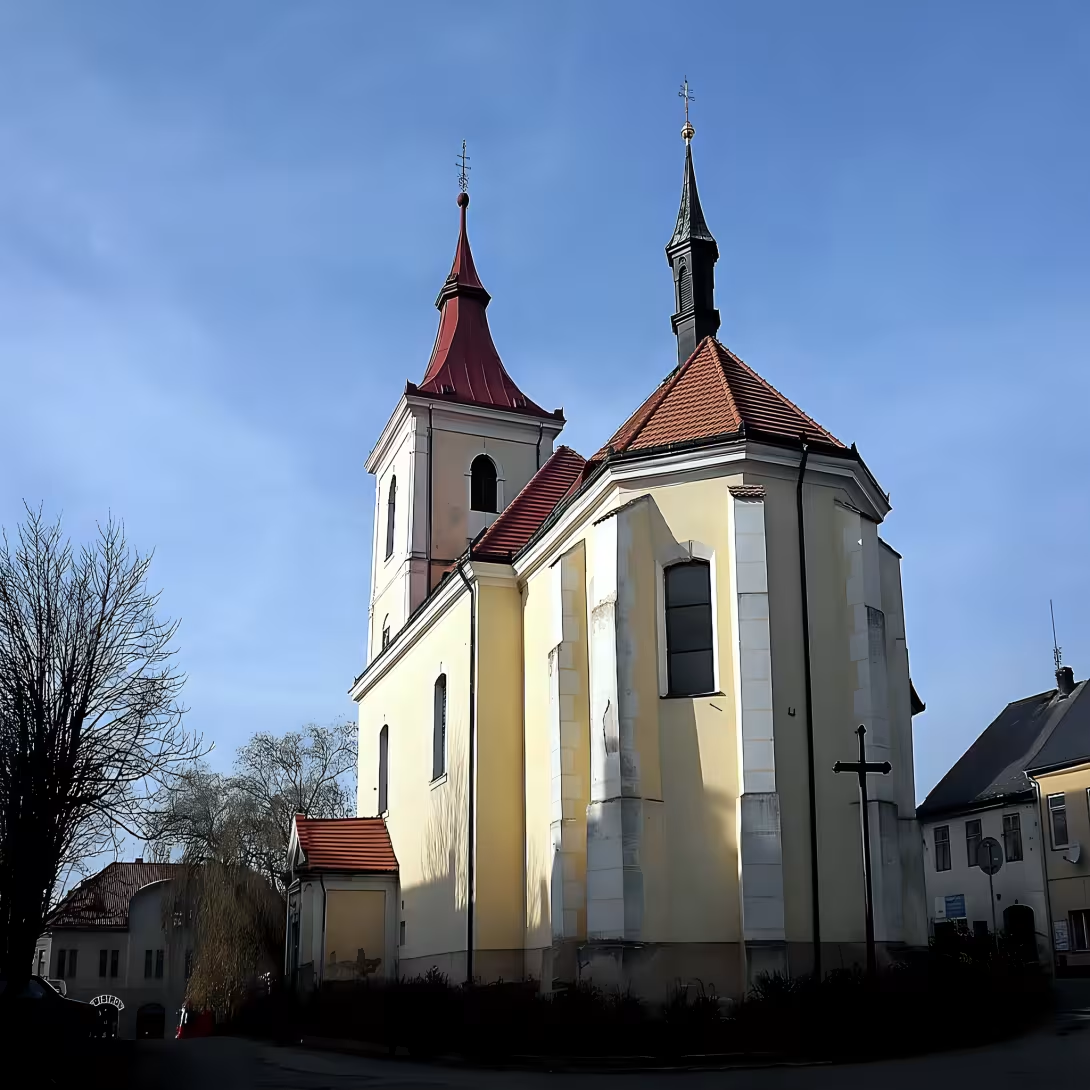
The Church of Saint John the Baptist in Mýto is a significant Baroque monument with deep historical roots. Originally constructed in the Gothic style around 1350, it stands on the town square within the Rokycany district of Plzeňský kraj. Recognized for its cultural heritage status, the church showcases an architectural evolution from Gothic to Baroque styles.
Notable features include an oblong nave with four Baroque windows, a distinctive four-sided tower on the western side, and a six-sided belfry atop the roof. The origins of the church trace back to the mid-14th century when members of the Rožmberk family—Petr II., Jošt I., Oldřich I., and Jan I.—initiated its construction. This period marked stability and prosperity in Bohemia under the Luxembourg dynasty, influencing the decision to build such an imposing structure.
The church underwent significant transformations during the Thirty Years' War when it was destroyed and rebuilt between 1680 and 1682. This reconstruction transitioned its style from Gothic to Baroque, aligning with broader European trends that emphasized grandeur and religious expression. In 1720, the original Gothic windows were replaced with Baroque ones.
In 1721, architect Tomáš Haffenecker designed a new tower for the church. Repairs to the nave occurred between 1735 and 1736, ensuring its longevity as a place of worship. The church houses architectural treasures such as a sandstone Gothic portal and a fresco depicting Saints Bartholomew and Andrew from around 1490.
A notable event in 1891 involved vicar František Ehrenberger having a bell weighing 520kg recast and installed. After his death, he bequeathed his estate to the church for further renovations, including repairing the tower and installing new vane clocks from Karl Adamce's workshop.
Today, the Church of Saint John the Baptist remains an urbanistical highlight in Mýto, attracting visitors with its rich history and architectural significance. Its preservation as a cultural monument ensures continued access to those interested in exploring its historical and artistic value. The church stands not only as a testament to architectural transitions from Gothic to Baroque but also as a symbol of the community's enduring heritage.
Visitors are encouraged to explore this remarkable site, where history and architecture converge, offering insights into the region's cultural and religious evolution.
Then and now
Drag the slider to compare how the landmark may have looked when it was built with the view today.
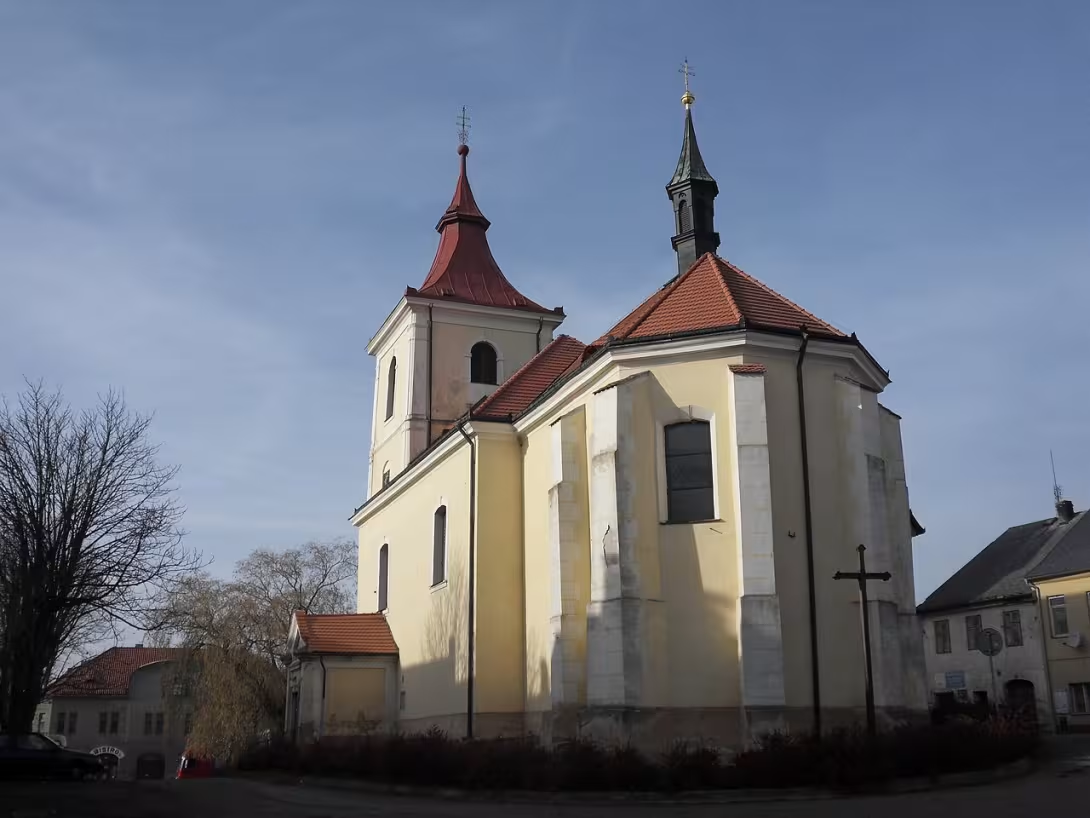

The historical appearance on the left is an AI-generated visualisation and serves as inspiration only.
Historical milestones
- 1350
- Construction of the original Gothic church began.
- 1680
- Rebuilding of the church after destruction in the Thirty Years' War commenced.
- 1720
- Original Gothic windows were replaced with baroque ones.
- 1721
- A new tower was added to the church's design by Tomáš Haffenecker.
Architectural development
The church initially constructed in the Gothic style underwent significant Baroque renovations. The original Gothic windows were replaced with baroque ones in 1720, and a new tower designed by Tomáš Haffenecker was added in 1721. Further repairs to the nave occurred between 1735 and 1736.
Historical events
The original Gothic church began construction around 1350 by members of the Rožmberk family.
Rebuilt between 1680 and 1682 after being destroyed during the Thirty Years' War.
In 1721, a tower was added to the design by architect Tomáš Haffenecker.
Points of interest
- The Church of Saint John the Baptist was initially built in the Gothic style around 1350 but underwent a significant transformation to Baroque during its reconstruction between 1680 and 1682, reflecting broader European architectural trends.
- A unique feature of the church is its six-sided belfry atop the roof, which adds an unusual visual element compared to more traditional four-sided towers commonly found in other churches from that era.
- The sandstone Gothic portal remains one of the church's oldest architectural treasures, dating back to around 1490, and provides a glimpse into the medieval craftsmanship that has been preserved through centuries.
- In 1891, vicar František Ehrenberger had a bell weighing 520kg recast and installed in the church tower, demonstrating his dedication to maintaining the church's historical and auditory presence in the community.
- After his death, František Ehrenberger left his estate to the church, which funded renovations including repairs to the tower and installation of new vane clocks from Karl Adamce’s workshop, showcasing a legacy of personal commitment to the church's upkeep.
Guide
This guide is narrated by a synthetic voice generated by artificial intelligence.
Show guide text
This text was created by artificial intelligence and has not been editorially reviewed. It may contain inaccuracies.
The Church of Saint John the Baptist is a Baroque church on the square in Mýto. It is protected as a cultural monument.
Its origins are Gothic. Four brothers from the Rožmberk family contributed to its founding: Petr the Second, Jošt the First, Oldřich the First, and Jan the First. Construction began around 1350. During the Thirty Years' War, the church burned down and was restored only in the years 1680 to 1682. In 1720, the original Gothic windows were converted into Baroque ones. A year later, the tower was completed according to the design of architect Tomáš Haffenecker. The nave was then repaired again in the years 1735 to 1736.
The church has one rectangular nave with four Baroque windows. From the west, a four-sided tower with three stories adjoins it, with the bell hanging in the third story. In the east, a rectangular presbytery with a three-sided apse follows the nave, also with four Baroque windows. A rectangular sacristy adjoins its northern wall, with its northeastern corner distinctly beveled. The nave is entered through two vestibules, a square one from the south and a rectangular one from the north. The roof is covered with beaver tile and has a six-sided sanctus bell turret, that is, a small tower with a bell.
Connected to the church is the story of the vicar František Ehrenberger. At the end of the nineteenth century, he had a bell cast weighing 520 kilograms, and in the autumn of 1891 he still managed to have it hung. Five weeks later, he died and left all his wealth to the church, valued at 8,000 guilders. With this money, the tower was repaired and new tower clocks were obtained from the workshop of Karel Adamec. However, Ehrenberger's bell did not remain in the church for long. In 1917, it was requisitioned for war purposes.
Beneath the Baroque appearance, traces of Gothic style are preserved. A sandstone Gothic portal was discovered in the church. In the presbytery, a fresco was found with Saint Bartholomew and Saint Andrew, dating from around 1490.
Tips for visitors
The best time to visit the Church of Saint John the Baptist in Mýto is during late spring or early autumn. During these months, you can enjoy mild weather that enhances your experience as you explore the church's baroque and gothic architecture without the discomfort of summer heat or winter cold. The lighting at this time also accentuates the intricate details of the interior and exterior decorations.
Public transport is available, with buses connecting Mýto to larger towns and cities; check online resources or local information centers for current schedules. This makes it easy to plan your visit whether you're driving or using public transit.
When visiting the Church of Saint John the Baptist, consider bringing comfortable walking shoes as there may be some uneven paths around the area. A camera is recommended to capture the stunning architecture and interior details; early morning or late afternoon light provides the best conditions for photography. Don't forget a hat and sunscreen if you're visiting in warmer months.
For those traveling with children, Mýto offers a pleasant environment to explore. The church itself can be fascinating for kids interested in history and architecture. After your visit, consider exploring nearby areas within a 30-minute drive or walk. While specific attractions aren't listed here, the surrounding countryside may offer scenic spots perfect for family walks or picnics.
Photography enthusiasts will find several great spots around the Church of Saint John the Baptist. The best light for capturing the church's facade is during the golden hours—just after sunrise or before sunset. Inside, try to visit when there are fewer people to avoid reflections and capture clear images of the baroque windows and other interior features.
Frequently asked questions
Can the monument be visited?
Religious buildings are usually open mainly during services; at other times a visit is normally arranged with the parish or the operator. We have not verified specific times.
Where is the monument?
Location: Náměstí, Mýto, Plzeňský kraj. The map on this page shows the exact spot.
Why is the monument protected?
It is listed in the Central List of Cultural Monuments of the Czech Republic as a cultural monument (register no. 22826/4-2540).
Businesses nearby
Do you run a restaurant, accommodation, shop, museum, rental, wellness or other visitor service near this monument? Show yourself directly to the people heading to it — this is how they will see you in the app and on the web:
Accommodation nearby
Trips and activities nearby
Guided tours, tickets and activities nearby from GetYourGuide
Affiliate link: if you buy from the partner, we may receive a commission. The price for you does not change.
Search tours and activities →Themed route
Tematická Výletní Trasa: Kostel svatého Jana Křtitele v Mýtě
1. Kostel svatého Jana Křtitele (Mýto) - Hlavní Cíl - Typ: Historická památka - Proč stojí za návštěvu: Tento barokní kostel, postavený v 18. století, je architektonickou perli obce Mýto. Jeho bohaté historie a jedinečná interiérní dekorace přitahují návštěvníky z celého regionu Plzeňského kraje.
2. Nádvoří kostela svatého Jana Křtitele - Typ: Historický areál - Proč stojí za návštěvu: Nádvoří nabízí klidné prostory, kde si můžete užít krásy venkovního prostředí a pozorovat detaily kostela z různých úhlů. Je to ideální místo pro odpočinek po prozkoumání interiéru.
3. Věž kostela svatého Jana Křtitele - Typ: Historická věž - Proč stojí za návštěvu: Výhled z věže nabízí pohled na okolní krajinu a obec Mýto. Je to skvělá příležitost pro fotografování a pochopení historického kontextu kostela ve vztahu k jeho prostředí.
4. Expozice v kostele svatého Jana Křtitele - Typ: Historická expozice - Proč stojí za návštěvu: Expozice poskytuje hlubší vhled do historie a kulturního dědictví kostela. Zde si můžete prohlédnout artefakty, umělecké prvky a dokumenty, které osvětlují jeho význam v regionu.
5. Parková zóna u kostela svatého Jana Křtitele - Typ: Zelená plocha - Proč stojí za návštěvu: Parková zóna je ideálním místem pro relaxaci a promlčení. Je to místo, kde si můžete užít klidu a přírody v bezprostřední blízkosti kostela.
Tato trasa nabízí návštěvníkům komplexní pohled na Kostel svatého Jana Křtitele, jeho historii a kulturní dědictví, zatímco také umožňuje užít si klidné okolí obce Mýto.
Seasonal recommendations
Spring: Visiting the Church of Saint John the Baptist in Mýto during spring offers a refreshing experience as nature awakens around this historic site. The surrounding greenery is lush with new growth, and wildflowers begin to dot the landscape, creating a picturesque backdrop for your visit. The soft light of early spring enhances the architectural details of the church, making it an ideal time for photography enthusiasts. As temperatures start to rise, visitors should dress in layers to accommodate fluctuating weather conditions. While crowds are generally manageable, arriving earlier in the day can help avoid any potential increase in visitors enjoying the pleasant outdoors.
Summer: Summer brings vibrant life and activity to Mýto, with the Church of Saint John the Baptist bathed in warm sunlight that accentuates its historical features. The lush surroundings provide a serene environment for exploration, although it's wise to plan your visit during cooler morning hours or later in the afternoon to avoid peak heat. Light, breathable clothing is recommended, along with sun protection such as hats and sunscreen. The church grounds are perfect for a leisurely stroll after exploring the interior.
Autumn: Autumn transforms Mýto into a tapestry of warm colors, offering an enchanting setting to visit the Church of Saint John the Baptist. The changing leaves create a stunning visual contrast against the historic architecture, making it a photographer's delight. Cooler temperatures are ideal for comfortable exploration without the summer heat, but visitors should bring a light jacket or sweater as evenings can be brisk. While crowds thin out compared to summer, weekends might still see more visitors enjoying the fall scenery, so weekdays could offer a quieter experience.
Winter: The Church of Saint John the Baptist in Mýto takes on a serene and mystical atmosphere during winter months. Snow-covered landscapes provide a magical setting that enhances the church's historic charm, while shorter daylight hours add to its quiet allure. Visitors should dress warmly with layers to combat the cold and ensure comfort during their visit. It's advisable to check opening times as they may be reduced in winter. The colder weather typically means fewer visitors, allowing for a more intimate experience of this historical site.
Visualizations and artistic views


The visualisations are generated by artificial intelligence and serve as inspiration.
Photos from the area
Real photos taken near the monument


Zdroj a licence jsou uvedeny u každého snímku.
Atmosphere of the place
This atmospheric visualisation of the place and period was generated by artificial intelligence. It is not real footage of the location.
Tips from visitors
No tips yet. Be the first!
Log in and add your tip.
Sources and literature
Photos: Jik jik / CC BY-SA 3.0, rozlišení zvýšeno umělou inteligencí — Wikimedia Commons. The author and licence also appear when you hover over the image.
Location on the map



Příběhy a pověsti
Legendy, pověsti a příběhy spjaté s touto památkou

Fotografie návštěvníků
Zatím žádné fotografie. Buďte první, kdo přidá fotografii z návštěvy!
Log in a přidejte svou fotografii nebo hodnoťte.
Za ověřenou návštěvu v aplikaci získáte víc bodů — poznáme podle GPS, že jste na místě.
Reviews and comments