






Kostel svatého Jana Křtitele (Rtyně v Podkrkonoší) Church
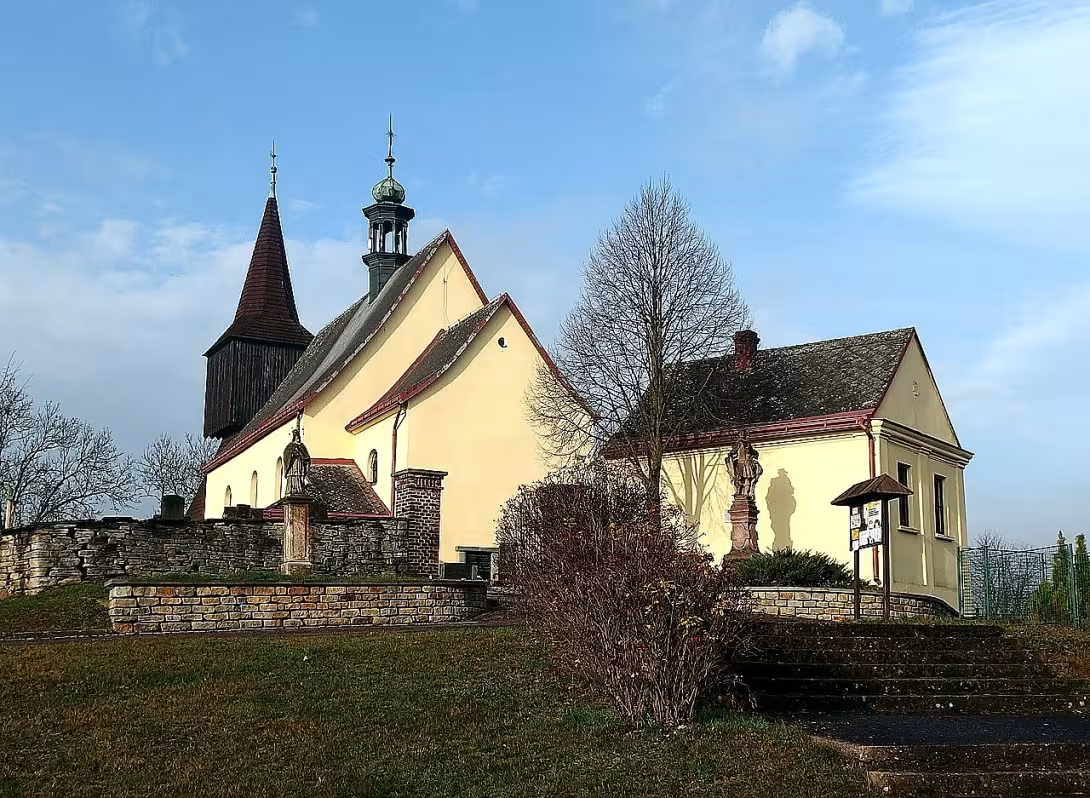
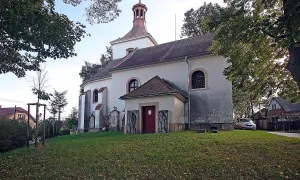
The Church of Saint John the Baptist in Rtyně v Podkrkonoší is a prominent Roman Catholic parish church perched atop a hill overlooking the town square. Originally built as a wooden Gothic chapel in the early 14th century, it was replaced by its current baroque structure in 1679 due to structural concerns. This change reflects both historical significance and architectural evolution over centuries.
The site's origins trace back to the early 14th century when a wooden Gothic chapel was established, likely under the patronage of local nobility from Vízmburk. By 1350, it served as a plebánie, and by 1367, it fell under the jurisdiction of the Boušín parish. The original structure was destroyed in 1421 when Silesians burned it down during turbulent times. After the Hussite Wars, it was restored as a wooden chapel but eventually succumbed to decay. In 1679, thanks to the patronage of Náchod's noblewoman Marie Benigna Piccolomini, the dilapidated structure was replaced by the baroque church that stands today.
Architecturally, the Church is a single-nave stone building with a rectangular presbytery. It features side sacristies on both its southern and northern sides, as well as an entrance vestibule on the western front. A small bell tower adorns the gable roof, while the presbytery boasts a cross-ribbed vault spanning one field. The sacristies are covered with barrel vaults featuring lunettes, and the nave is flat-roofed. Above, a wooden loft supported by two columns adds to its structural elegance.
Throughout its history, the church has undergone several renovations and expansions that have shaped its current form. In 1768, it was enhanced with the addition of a choir equipped with an organ. Further modifications in the first half of the 19th century expanded its dimensions. General repairs were conducted between 1974-1975 and again from 1999-2002 to preserve its integrity.
The interior is adorned with significant artistic elements. The main altar, dating back to the late 17th century, was restored in 1908. It features paintings of Saint John the Baptist, the Virgin Mary, and Saint John Nepomuk by Gustav Vacek from 1864. A baroque pulpit from the end of the 17th century, adorned with four evangelist statues painted by Z. Nývlt, stands prominently beneath a Renaissance-style copper baptismal font. The nave walls display a modern wooden Stations of the Cross created by Jiří Prouza between 1981 and 1982. A large chandelier made from crystal glass hangs in the center of the nave.
The church's surroundings include a cemetery with a polygonal wooden bell tower built on a stone base between 1592 and 1594, which houses three bells, including an umíráček from 1471. Near the cemetery entrance stands a replica of King David’s sculpture, modeled after Matyáš Bernard Braun's original from 1730. Other notable sculptures include Saint John Nepomucene from 1862 and crosses with reliefs dating to 1797 and 1794.
Today, the Church of Saint John the Baptist remains an active parish church, hosting services on Sundays at 8:30 AM, Wednesdays at 6 PM, and Fridays at 6 PM. Its historical significance, architectural beauty, and rich artistic heritage make it a compelling destination for visitors interested in exploring Bohemia's cultural and religious history.
The Church of Saint John the Baptist stands as a testament to the resilience and evolution of faith through centuries. It invites visitors to delve into its storied past while appreciating its enduring presence in Rtyně v Podkrkonoší, offering a unique glimpse into the region’s baroque architectural legacy.
Then and now
Drag the slider to compare how the landmark may have looked when it was built with the view today.
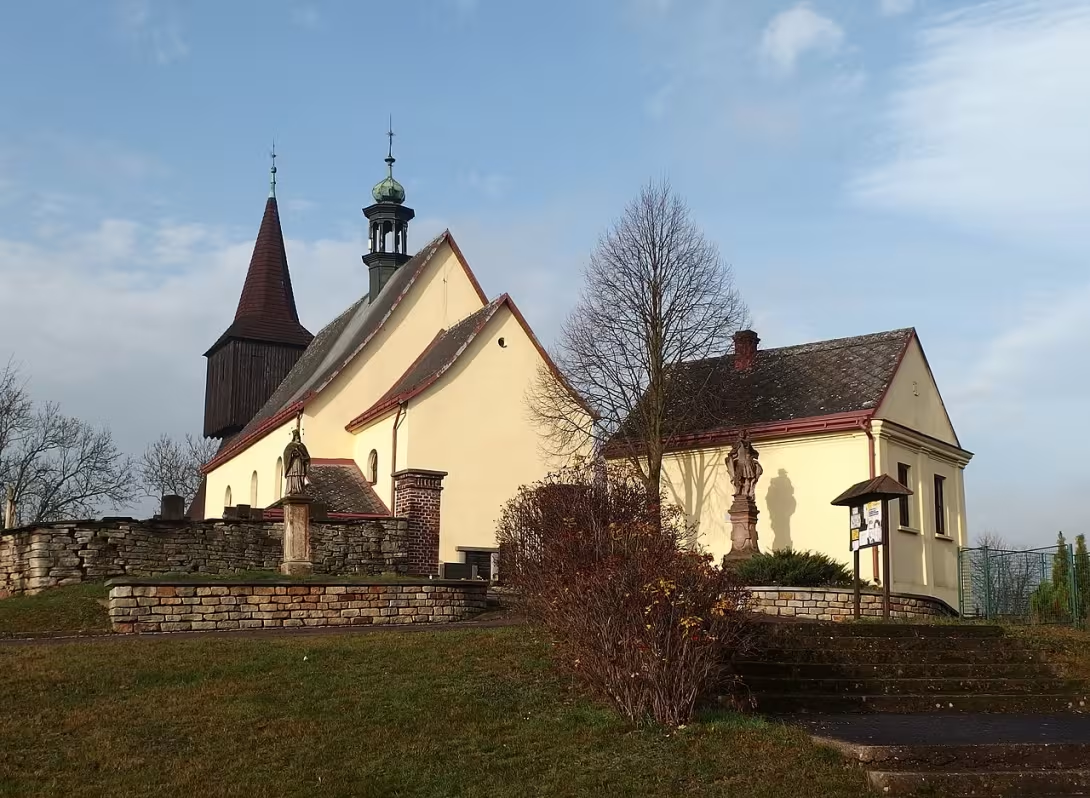
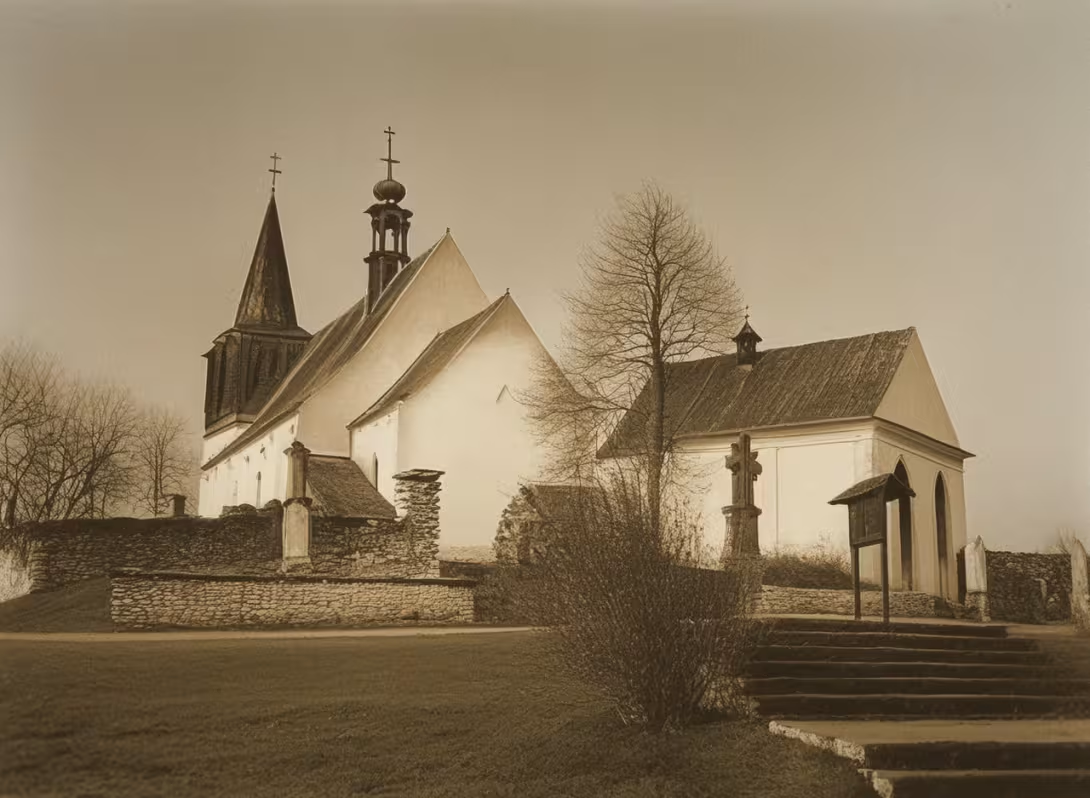
The historical appearance on the left is an AI-generated visualisation and serves as inspiration only.
Historical milestones
- 1679
- Construction of the current baroque structure began.
Architectural development
Initially constructed as a wooden Gothic chapel in the early 14th century, the Church of Saint John the Baptist was rebuilt in baroque style in 1679. Over time, it underwent several renovations including the addition of a choir with an organ in 1768 and further expansions in the first half of the 19th century. The church has been preserved through general repairs conducted between 1974-1975 and again from 1999-2002.
Historical events
- 1421
- The original wooden chapel was burned down by Silesians.
- 1679
- Construction of the current baroque church began, replacing a dilapidated structure.
Points of interest
- The Church of Saint John the Baptist was initially a wooden Gothic chapel built in the early 14th century under the patronage of local nobility from Vízmburk, reflecting the influence and support of regional aristocracy during its inception.
- In 1421, the original structure was destroyed by Silesians during turbulent times, highlighting the region's historical conflicts and the church's vulnerability to political upheaval.
- The transformation from a wooden chapel to a baroque stone building in 1679 was made possible through the patronage of Náchod's noblewoman Marie Benigna Piccolomini, showcasing how individual patrons played crucial roles in architectural evolution and preservation.
- A notable feature of the church is its main altar, which dates back to the late 17th century and features paintings by Gustav Vacek from 1864, illustrating a blend of artistic styles and contributions over centuries.
- The cemetery's polygonal wooden bell tower, built between 1592 and 1594 on a stone base, houses an umíráček bell from 1471, reflecting the historical significance and continuity of religious practices in the area.
Guide
This guide is narrated by a synthetic voice generated by artificial intelligence.
Show guide text
This text was created by artificial intelligence and has not been editorially reviewed. It may contain inaccuracies.
The Church of Saint John the Baptist stands on a hill above the square in Rtyn v Podkrkonoší and is the dominant feature of the town. It is a Roman Catholic parish church of the local parish. Its heritage-protected grounds also include a separately standing polygonal wooden bell tower.
The first church on this site was made of wood and built in the Gothic style. It was probably founded in the early fourteenth century by one of the lords of Vízmberk. In 1350 it is mentioned as a parish church, and in 1367 it fell under the Boušín parish. In 1421 the wooden chapel was burned down by Silesians. After the Hussite wars it was repaired, again made of wood. In 1624 it was a subsidiary church of Náchod.
When in 1679 it threatened to collapse, it was replaced by the present Baroque building. The patroness of Náchod, Princess Marie Benigna Piccolomini, helped bring it about. From 1709 the church was a subsidiary of Červený Kostelec. In 1768 it underwent repairs and a choir with an organ was added. In 1786 a chaplaincy was established there, and the church became a parish church in 1854. It was expanded to its present form in the first half of the nineteenth century. A general overhaul took place in 1974 and 1975, with further repairs in 1999 to 2002.
It is a single-nave stone structure with a presbytery ending at right angles. On its sides are southern and northern sacristies, and at the west is an entrance vestibule. On the gabled roof stands a sanctus bell turret. The presbytery has a cross-ribbed vault, the sacristies have barrel vaults with segments, and the nave has a flat ceiling. A wooden gallery rests on two columns.
The main altar dates from the second half of the seventeenth century and was restored in 1908. The altar paintings of Saint John the Baptist, the Virgin Mary, and Saint John of Nepomuk were painted by Gustav Vacek in 1864. An early Baroque wooden pulpit with four statuettes of the evangelists dates from the end of the seventeenth century. Below it stands a Renaissance tin baptismal font. The statues of the Virgin Mary and Jesus Christ were created by Břetislav Kafka. On the walls of the nave hangs a modern Stations of the Cross made of linden wood by Jiří Prouza from 1981 to 1982. Suspended in the middle of the nave is a large chandelier made of crystal glass.
In the cemetery behind the church stands a wooden bell tower on a stone foundation from 1592 to 1594. Not a single metal nail was used in its construction. Three bells hang in it, the oldest of them, called the passing bell, dates from 1471. At the entrance to the cemetery stands a copy of a statue of King David. The original from 1730 comes from the workshop of Matyáš Bernard Braun and is housed in the lapidarium in Jaroměř. In the vicinity of the church there is also a statue of Saint John of Nepomuk from 1862, a folk cross with a relief of the Virgin Mary from 1797, and a cross near the Krákorka forest from 1794.
Tips for visitors
The best time to visit the Church of Saint John the Baptist in Rtyně v Podkrkonoší is during late spring or early autumn when the weather is pleasant, allowing for comfortable exploration of both the church and its surrounding cemetery. These seasons offer mild temperatures and beautiful natural scenery, enhancing your experience as you walk through the historic site.
Public transport is also an option; check local travel resources for current routes and schedules that connect to Rtyně v Podkrkonoší. This flexibility allows you to choose the most suitable mode of transportation based on your preferences.
When visiting, consider bringing comfortable walking shoes as there are several points of interest within a short walk from each other, including the church, cemetery, and nearby sculptures. A camera is recommended for capturing the picturesque views and historic details, particularly around sunrise or sunset when the lighting is optimal for photography. Additionally, carrying water and wearing layers can help you adapt to changing weather conditions.
For those interested in exploring beyond the church, consider visiting the surrounding cemetery with its polygonal wooden bell tower from 1592-1594, which offers a unique historical perspective. Nearby sculptures such as Saint John Nepomucene from 1862 and crosses featuring reliefs of the Virgin Mary provide additional cultural insights. These sites are all within walking distance and enrich your understanding of the area's heritage.
Families with children will find the site engaging due to its rich history and serene environment. The churchyard offers a peaceful setting for a leisurely stroll, while the sculptures can spark curiosity about local legends and historical figures. Exploring these sites together can be both educational and enjoyable, providing an opportunity for family bonding amidst cultural exploration.
Frequently asked questions
Can the monument be visited?
Religious buildings are usually open mainly during services; at other times a visit is normally arranged with the parish or the operator. We have not verified specific times.
Where is the monument?
Location: Kostelecká, Rtyně v Podkrkonoší, Královéhradecký kraj. The map on this page shows the exact spot.
Why is the monument protected?
It is listed in the Central List of Cultural Monuments of the Czech Republic as a cultural monument (register no. 47084/6-3653).
Businesses nearby
Do you run a restaurant, accommodation, shop, museum, rental, wellness or other visitor service near this monument? Show yourself directly to the people heading to it — this is how they will see you in the app and on the web:
Events nearby
Zdroj akcí: otevřená data měst a obcí ČR (Národní katalog otevřených dat) a kalendář akcí Národního památkového ústavu.
Nearby
Surrounding the church is a cemetery featuring a polygonal wooden bell tower built between 1592 and 1594. Nearby are sculptures including one of Saint John Nepomucene from 1862, a cross with a relief of the Virgin Mary from 1797, and another cross near Krákorky forest dating to 1794.
Accommodation nearby
Themed route
Thematic Walking Tour: Rtyně v Podkrkonoší
1. Kostel svatého Jana Křtitele (Church of St. John the Baptist) - Type: Historical Church - Why Visit: This stunning Baroque church, dating back to 1732-1736, is a centerpiece of Rtyně v Podkrkonoší's cultural heritage. Its architecture and history offer insights into the region's religious past.
2. Cemetery with Polygonal Wooden Bell Tower - Type: Historical Cemetery - Why Visit: Adjacent to the church lies this serene cemetery, featuring a unique polygonal wooden bell tower constructed between 1592 and 1594. It provides a glimpse into historical burial practices and architectural styles.
3. Sculpture of Saint John Nepomucene - Type: Historical Sculpture - Why Visit: This sculpture from 1862 honors St. John Nepomucene, celebrated for his martyrdom in defense of the sanctity of confession. It offers a rich narrative about faith and sacrifice.
4. Cross with Relief of the Virgin Mary (1797) - Type: Historical Monument - Why Visit: This cross features an exquisite relief of the Virgin Mary, crafted in 1797. It serves as a testament to the region's deep-rooted Marian devotion and artistic heritage.
5. Cross near Krákorky Forest (1794) - Type: Historical Cross - Why Visit: Situated near the tranquil Krákorky forest, this cross from 1794 stands as a historical marker that connects visitors with the spiritual landscape of the area. Its location offers both cultural and natural beauty.
This tour provides an enriching exploration of Rtyně v Podkrkonoší's religious history and artistic legacy through its significant landmarks.
Seasonal recommendations
Spring: Visiting the Church of St. John the Baptist during spring offers a serene experience as nature awakens around Rtyně v Podkrkonoší. The surrounding landscape is painted with vibrant wildflowers and budding trees, creating a picturesque setting that enhances the historical charm of the church. This season typically sees fewer visitors than summer, allowing for a more tranquil exploration of the site. To fully enjoy this period, it's advisable to wear comfortable walking shoes as paths may be muddy from spring rains. Early morning visits are recommended to avoid any lingering dew and capture the soft light that beautifully illuminates the architecture.
Summer: Summer is an ideal time to visit the Church of St. John the Baptist due to its long daylight hours and pleasant weather, making it perfect for exploring both indoors and outdoors. The lush greenery surrounding the church provides a vibrant backdrop, while the warm atmosphere invites visitors to linger and appreciate the historical site at a leisurely pace. However, this is also the peak tourist season, so expect larger crowds, especially during weekends and holidays. Arriving early in the day can help avoid the midday heat and the busiest times. Light clothing and sun protection are recommended for comfort.
Autumn: The autumn months bring a stunning display of fall foliage to the area around the Church of St. John the Baptist, with vibrant reds, oranges, and yellows creating a breathtaking backdrop for visitors. This season offers a unique opportunity to experience the church in a more subdued yet equally enchanting atmosphere as summer crowds dwindle. The cooler temperatures make it ideal for walking and exploring the surrounding countryside. It's wise to dress in layers, as mornings can be chilly while afternoons remain mild. A visit during this time provides a peaceful setting to appreciate the historical architecture without the bustle of peak tourist seasons.
Winter: Winter transforms the Church of St. John the Baptist into a magical destination with its snow-covered surroundings and crisp air, offering a quiet and reflective atmosphere that contrasts sharply with busier times of the year. The church's architectural details are highlighted by the soft glow of winter light, creating an ethereal experience for visitors. Dress warmly in layers, wear waterproof boots, and consider carrying a scarf or hat to stay comfortable during your visit. Early morning visits can provide the best lighting and quieter moments before any potential snowfall or crowds arrive later in the day.
Visualizations and artistic views


The visualisations are generated by artificial intelligence and serve as inspiration.
Photos from the area
Real photos taken near the monument


Zdroj a licence jsou uvedeny u každého snímku.
Tips from visitors
No tips yet. Be the first!
Log in and add your tip.
Sources and literature
Photos: Palickap / CC BY-SA 4.0 — Wikimedia Commons. The author and licence also appear when you hover over the image.
Faktickým podkladem tohoto textu byl článek na Wikipedii, jehož autory jsou přispěvatelé Wikipedie. Článek je dostupný pod licencí CC BY-SA 4.0.
Location on the map

Příběhy a pověsti
Legendy, pověsti a příběhy spjaté s touto památkou
Fotografie návštěvníků
Zatím žádné fotografie. Buďte první, kdo přidá fotografii z návštěvy!
Log in a přidejte svou fotografii nebo hodnoťte.
Za ověřenou návštěvu v aplikaci získáte víc bodů — poznáme podle GPS, že jste na místě.
Reviews and comments