



kostel svatého Jana Křtitele v Manětíně Church
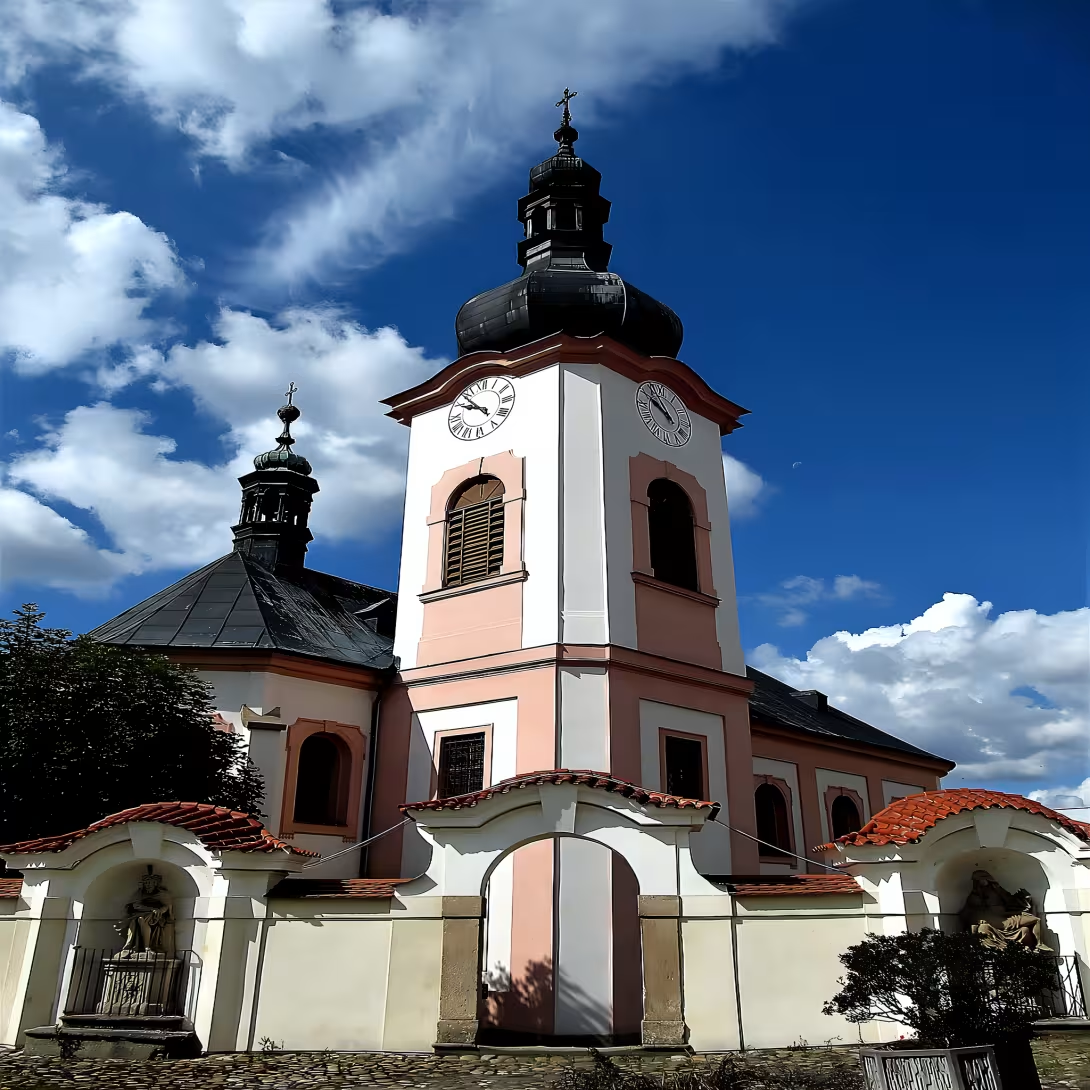
The Church of St. John the Baptist in Manětín is a notable Baroque parish church situated in the town square of Manětín, Plzeňský kraj. Built between 1712 and 1717 after a devastating fire destroyed half of the town, including its original church structure, this single-nave building is an integral part of the region's cultural heritage. Listed as a national cultural monument since 1964, it connects architecturally to the adjacent castle via a corridor, enhancing its historical significance.
The origins of Manětín and its church date back to the Order of Knights Hospitaller in 1182, with documented existence by 1325. The order maintained control until 1483 when the Švamberk family acquired it. A significant event was the major fire in 1712 that led to the reconstruction of the church in its current Baroque form. This new structure was consecrated on St. John’s Day in 1717 by Bishop Daniel Josef Mayer, marking an important milestone.
Architecturally, the Church of St. John the Baptist showcases a transition from Gothic to Baroque styles. The remnants of the original Gothic construction are preserved in the presbytery, while the main structure reflects Baroque influences likely based on plans by imperial architect Thomas Haffenecker and executed under Tyrolean polisher Jan Jiří Hess. Over the years, the church has undergone several renovations, with significant updates to its façade completed between 2013 and 2014.
Ownership of Manětín transitioned from the Knights Hospitaller to the Švamberk family in 1483. The Lažanský z Bukové family, particularly Václav Josef Lažanský and his wife Mariá Gabriel Černínová, played a crucial role in the church's reconstruction after the 1712 fire. Under their guidance, the new Baroque church was built, reflecting both architectural innovation and cultural significance.
The church is not only an architectural marvel but also a site of ecological importance. In 2009, it was designated as an important European locality due to hosting Europe’s largest colony of Greater Noctule bats in the Plzeňský region. This unique feature adds another layer of interest for visitors and conservationists alike.
Today, the Church of St. John the Baptist remains a prominent landmark in Manětín. Its rich history, architectural beauty, and ecological significance make it a compelling destination for those interested in cultural heritage and natural wonders. Visitors can explore its intricate Baroque interiors, admire artworks by Peter Brandl, and learn about its historical context within Bohemia's broader cultural landscape. The church continues to be an essential part of the community, inviting exploration and appreciation from all who visit.
Then and now
Drag the slider to compare how the landmark may have looked when it was built with the view today.
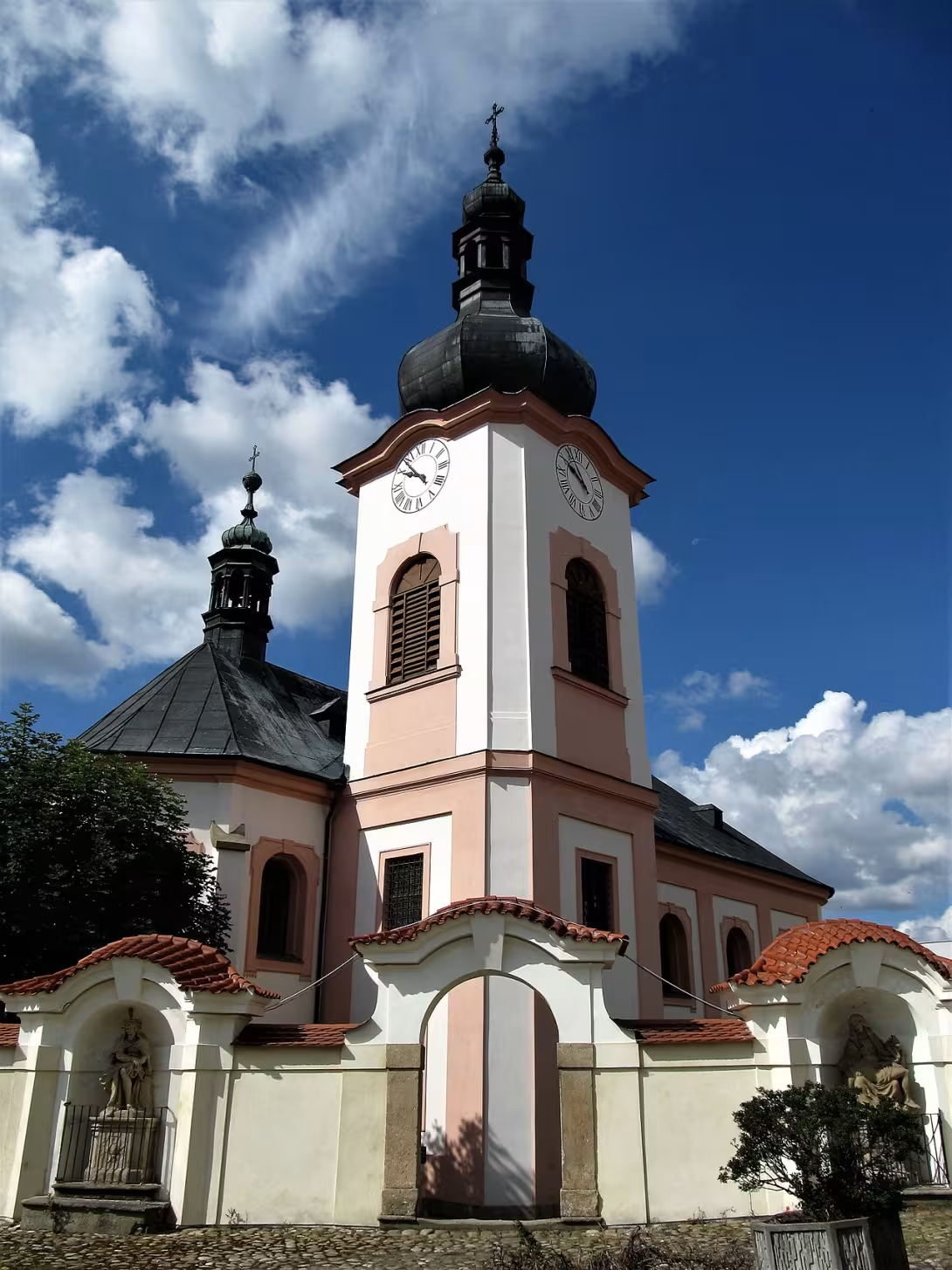

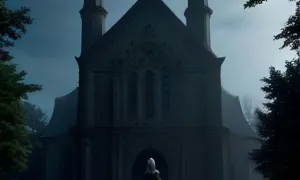
The historical appearance on the left is an AI-generated visualisation and serves as inspiration only.
Historical milestones
- 1712
- A major fire destroyed half of Manětín, including the original church.
- 1717
- The new Baroque church was consecrated on St. John's Day by Bishop Daniel Josef Mayer.
Architectural development
Originally a Gothic structure with remnants preserved in the presbytery, the church underwent significant Baroque reconstruction after the fire of 1712. The new design likely followed plans by imperial architect Thomas Haffenecker and was executed under the supervision of Tyrolean polisher Jan Jiří Hess. Further renovations occurred in 1787, 1875, and during the 1970s, with façade restoration completed between 2013 and 2014.
Historical events
A major fire in 1712 destroyed half of Manětín, including the original church.
The church was consecrated on St. John's Day in 1717 by Bishop Daniel Josef Mayer.
Owners
Order of Knights Hospitaller (1182-1483)
Švamberk family (from 1483)
Points of interest
- The Church of St. John the Baptist was reconstructed in Baroque style after a fire that destroyed half of Manětín, including its original church structure, showcasing an architectural transition from Gothic to Baroque.
- The church's connection to the adjacent castle via a corridor is not just functional but also enhances its historical significance, illustrating how architecture can serve as a bridge between different eras and structures.
- In 1717, Bishop Daniel Josef Mayer consecrated the newly built Baroque church on St. John’s Day, marking an important religious and cultural milestone for Manětín and highlighting the importance of religious figures in community rebuilding efforts.
- The church hosts Europe's largest colony of Greater Noctule bats within its structure, making it a unique site of ecological as well as architectural interest, blending natural history with cultural heritage.
- Architect Thomas Haffenecker is believed to have designed the plans for the Baroque reconstruction, while Tyrolean polisher Jan Jiří Hess executed them, illustrating the collaboration between architects and craftsmen across regions in the early 18th century.
Guide
This guide is narrated by a synthetic voice generated by artificial intelligence.
Show guide text
This text was created by artificial intelligence and has not been editorially reviewed. It may contain inaccuracies.
The Church of Saint John the Baptist is a Baroque single-nave deanery church on the square in Manětín. It is connected to the adjacent castle by a covered corridor. Since 2001, it has been listed together with the castle and the statues in the square as national cultural monuments.
A church has stood here since the Middle Ages. Manětín, together with the church, belonged to the Order of Saint John and is mentioned in a papal document from 1182. The Knights Hospitaller had a commandery here, documented in writing in 1325, and remained until 1483, when Manětín was acquired by the Švamberks. The Gothic church is preserved in its presbytery walls.
The church's present appearance is a result of a major fire in 1712. Half the town was destroyed in the fire, including the church. The estate owners, Václav Josef Lažanský z Bukové and his wife Marie Gabriela, née Černínová, therefore focused mainly on building a new church. It was built between 1712 and 1717, probably according to a design by imperial master builder Thomas Haffenecker. The construction was led by Tyrolean master mason Jan Jiří Hess. The church was consecrated in 1717 on the feast day of its patron saint.
In 1729 the parsonage was elevated to a deanery and several surrounding villages came under the church. During the reign of Joseph II, the cemetery was abolished. Only the perimeter wall remains from it. Between 1925 and 1967, the deanery was served by František Wonka, a teacher and regional historian who became known for his research into Manětín Baroque.
The church's nave is enclosed by a three-sided presbytery. On the north side is a prismatic tower with an onion dome. On the south side is a lords' oratory, which is accessed from the castle via a covered corridor above the alley.
The most precious work in the interior is the painting of the Baptism of Christ on the main altar by Petr Brandl. Since 2006 it has been protected as a national cultural monument. Brandl stayed in Manětín in 1715 and 1716. For the side altars he also painted images of Saint Anthony of Padua with the Christ Child and the Teaching of the Virgin Mary. Other paintings of saints were created by the Manětín dean Jan František Händl. The sculptures are the work of the local sculptor Štěpán Borovce. The organ from 1716 was built by the Loket organ builder Jan Leopold Burkhardt.
In the attic of the church lives the largest colony of large mouse-eared bats in the Plzeň region. Therefore, the attic was declared a site of European importance in 2009. The colony at that time numbered around a thousand animals, of which about six hundred were females, the rest were young. The second-largest colony in the region, in the Church of the Holy Spirit in Všeruby, had only about 150 individuals.
Tips for visitors
The best time to visit the Church of St. John the Baptist in Manětín is during late spring or early autumn, when the weather is pleasant for exploring both the church and its surrounding historical structures. These seasons offer a comfortable climate that allows you to fully appreciate the architectural beauty without the crowds often found in peak tourist months like summer.
For those preferring public transport, it's advisable to check current routes online as Manětín can be reached via regional buses. This makes the site easily accessible whether you're driving or using public transportation.
When visiting, consider bringing comfortable walking shoes and a camera to capture the intricate Baroque details of the church and its surroundings. The area is walkable, so being prepared for some exploration on foot will enhance your experience. Additionally, carrying a light jacket might be wise as temperatures can vary throughout the day.
Photography enthusiasts will find several spots around the church offering beautiful lighting, especially during sunrise or sunset when the Baroque architecture is illuminated in warm tones. The church's position on the town square provides a picturesque backdrop with the nearby castle and statues adding to the composition. Early morning light often offers soft shadows that highlight architectural details.
For families with children, the Church of St. John the Baptist and its surroundings offer a rich historical experience. Nearby, within 30 minutes, you can explore the Manětín Castle, which provides interactive exhibits suitable for all ages. The castle's grounds are spacious, allowing kids to run around while learning about local history.
Frequently asked questions
Can the monument be visited?
Religious buildings are usually open mainly during services; at other times a visit is normally arranged with the parish or the operator. We have not verified specific times.
Where is the monument?
Location: Manětín, Plzeňský kraj. The map on this page shows the exact spot.
Why is the monument protected?
It is listed in the Central List of Cultural Monuments of the Czech Republic as a national cultural monument (register no. 37001/4-1393). It is protected as part of a larger listed ensemble.
Businesses nearby
Do you run a restaurant, accommodation, shop, museum, rental, wellness or other visitor service near this monument? Show yourself directly to the people heading to it — this is how they will see you in the app and on the web:
Nearby
The church is located on the town square in Manětín and is architecturally connected to the nearby castle. The surrounding area includes other historical structures such as the castle itself and statues on the square.
Accommodation nearby
Trips and activities nearby
Guided tours, tickets and activities nearby from GetYourGuide
Affiliate link: if you buy from the partner, we may receive a commission. The price for you does not change.
Search tours and activities →Themed route
Thematic Walking Tour: Historical Manětín
1. Kostel svatého Jana Křtitele (Church) Begin your journey at the heart of Manětín, where the Church of St. John the Baptist stands majestically on the town square. This architectural gem is not only a spiritual center but also an integral part of the town's historical fabric. Its connection to the nearby castle adds layers of history and intrigue, making it a must-visit for those interested in religious architecture and local heritage.
2. Manětín Castle (Castle) A short walk from the church will lead you to the Manětín Castle, which is architecturally linked with the church. Explore this historical structure that has witnessed centuries of history unfold. The castle offers a glimpse into the past and provides stunning views of the surrounding area, making it an essential stop for anyone interested in medieval architecture and local legends.
3. Statues on the Town Square (Statues) Return to the town square to admire the statues that grace this historic site. These sculptures add artistic charm and historical context to the area, reflecting the cultural heritage of Manětín. Each statue tells a story, inviting visitors to pause and reflect on the rich tapestry of history that has shaped this charming town.
This tour offers an immersive experience into Manětín's historical heart, connecting you with its architectural beauty and storied past through just a few key locations.
Seasonal recommendations
Spring: Visiting the Church of St. John the Baptist in Manětín during spring offers a vibrant atmosphere as nature awakens. The surrounding landscape is adorned with blooming flowers and lush greenery, providing a picturesque backdrop for exploring this historic site. Soft morning light enhances the intricate details of the church's architecture, making it an ideal time to appreciate its beauty without the harsh glare of summer sun. Visitors should be prepared for occasional showers by wearing layers and bringing an umbrella or raincoat. Early mornings are often quieter, offering a peaceful experience before larger crowds arrive.
Summer: The summer season is perfect for exploring the Church of St. John the Baptist in Manětín due to its long days and warm weather, which allows visitors to fully enjoy both the church's interior and its beautiful surroundings. However, this period also attracts more tourists, so it’s advisable to visit early in the morning or later in the afternoon to avoid crowds. Comfortable walking shoes and light clothing are recommended, along with sunscreen and a hat to protect from the sun. The lush greenery around the church is at its peak during summer, making it an ideal time for nature walks.
Autumn: Autumn brings a stunning display of colors to Manětín as the leaves turn vibrant shades of red, orange, and yellow, creating a magical atmosphere around the Church of St. John the Baptist. The cooler temperatures make for pleasant strolls through the historic town and surrounding countryside. Visitors should dress in layers to accommodate changing weather conditions throughout the day. This season is less crowded than summer, providing a more serene experience while still enjoying the beauty of fall foliage.
Winter: Winter transforms Manětín into a charming winter wonderland, with snow often blanketing the area around the Church of St. John the Baptist. The church's architecture takes on an ethereal quality under soft winter light and against the backdrop of snowy landscapes. It’s important to dress warmly in layers, including thermal wear, gloves, and a hat, as temperatures can be quite cold. Despite fewer tourists, the quiet ambiance offers an intimate experience with the historic site.
Visualizations and artistic views


The visualisations are generated by artificial intelligence and serve as inspiration.
Photos from the area
Real photos taken near the monument


Zdroj a licence jsou uvedeny u každého snímku.
Tips from visitors
No tips yet. Be the first!
Log in and add your tip.
Sources and literature
Photos: Vlach Pavel / CC BY-SA 4.0, rozlišení zvýšeno umělou inteligencí — Wikimedia Commons. The author and licence also appear when you hover over the image.
Faktickým podkladem tohoto textu byl článek na Wikipedii, jehož autory jsou přispěvatelé Wikipedie. Článek je dostupný pod licencí CC BY-SA 4.0.
Location on the map




Příběhy a pověsti
Legendy, pověsti a příběhy spjaté s touto památkou
Fotografie návštěvníků
Zatím žádné fotografie. Buďte první, kdo přidá fotografii z návštěvy!
Log in a přidejte svou fotografii nebo hodnoťte.
Za ověřenou návštěvu v aplikaci získáte víc bodů — poznáme podle GPS, že jste na místě.
Reviews and comments