






Kostel svatého Jana Nepomuckého (Hluboká nad Vltavou) Church
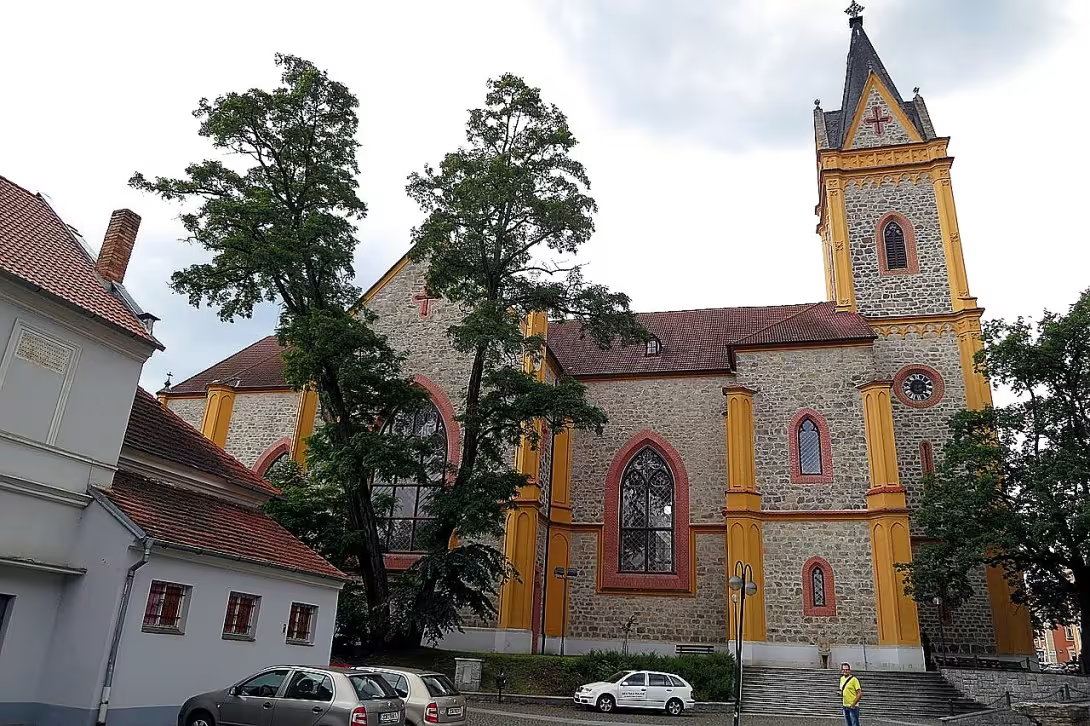
The Church of Saint John of Nepomuk in Hluboká nad Vltavou is a remarkable Neo-Gothic structure. It stands as a testament to mid-19th century architectural and cultural influences. Located in the town of Hluboká nad Vltavou, this church was constructed on the site of an older sanctuary between 1844 and 1847 under Franz Beer's direction. Its consecration by Cardinal Bedřich ze Schwarzenbergu underscores its significance within both the local community and the broader legacy of the Schwarzenberg family.
The origins of the Church of Saint John of Nepomuk are rooted in a period of cultural and architectural development in Bohemia during the mid-19th century. The Neo-Gothic style, popular across Europe at that time, reflects a revival of medieval forms and an interest in national history. Construction began under Franz Beer's direction in 1844, with the cornerstone laid in 1845. By September 2, 1846, the first bells were hung in the church tower, originally sourced from the castle's chapel. The church was consecrated on May 16, 1847, by Cardinal Bedřich ze Schwarzenbergu, marking its completion and dedication to Saint John of Nepomuk.
Architecturally, the Church of Saint John of Nepomuk showcases Neo-Gothic elements typical of the period. Although specific architectural details are not extensively documented in the source, it is known that the church underwent significant reconstruction in the late 20th century to preserve its historical integrity. This reconstruction ensured that the church maintained its original stylistic features while adapting to modern preservation needs.
Throughout its history, the church has been closely associated with the Schwarzenberg family. Jan Adolf II. ze Schwarzenbergu played a notable role by relocating one of the original bells from 1729 from the castle to the church tower in 1846. The church's connection to this influential family highlights its importance as both a religious and cultural landmark.
Several key events and curiosities mark the history of the Church of Saint John of Nepomuk. In 1893, one of the bells was recast by Antonín Perner, preserving its historical inscriptions while updating its structure. By 2005, as part of a reconstruction project, three new bells were installed, further enhancing the church's auditory presence in Hluboká nad Vltavou.
Today, the Church of Saint John of Nepomuk stands as an accessible and significant site for visitors interested in Neo-Gothic architecture and regional history. Its rich past, marked by notable events and figures such as the Schwarzenberg family, makes it a compelling destination. The church's ongoing preservation efforts ensure that its historical and architectural value continues to be appreciated by future generations.
Visitors are invited to explore this remarkable monument, where the echoes of history blend with the serene beauty of Neo-Gothic design, offering a unique glimpse into the cultural heritage of Hluboká nad Vltavou.
Then and now
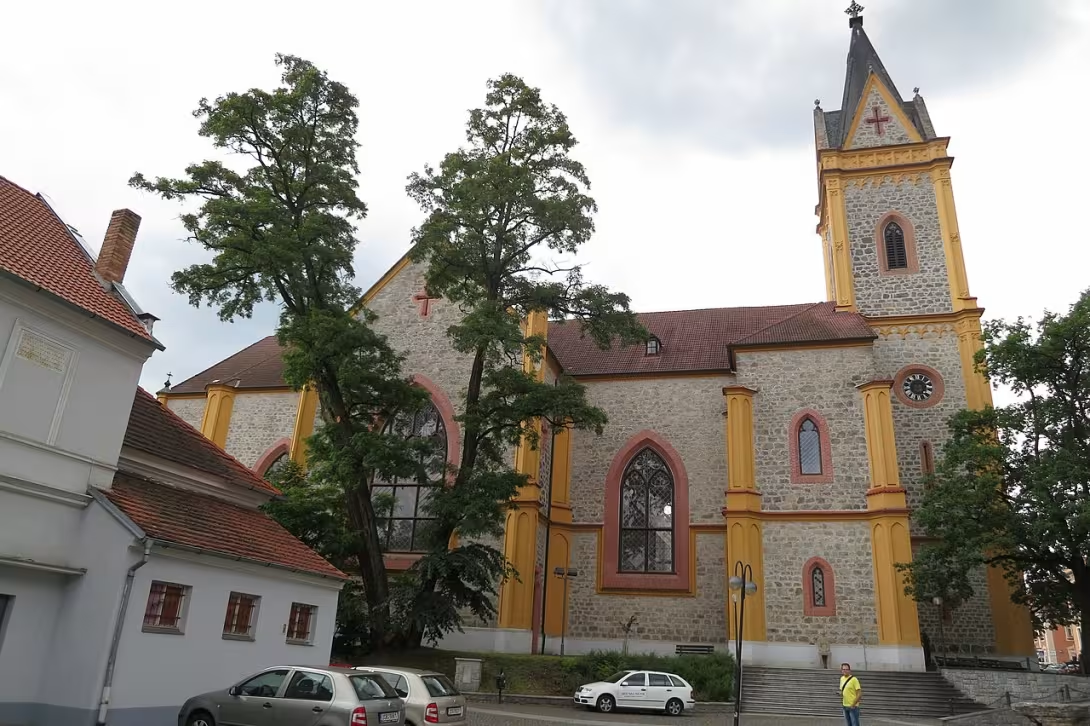
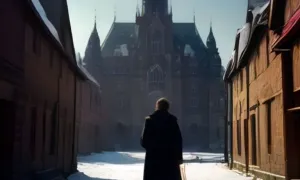
Drag the slider to compare how the landmark may have looked when it was built with the view today.
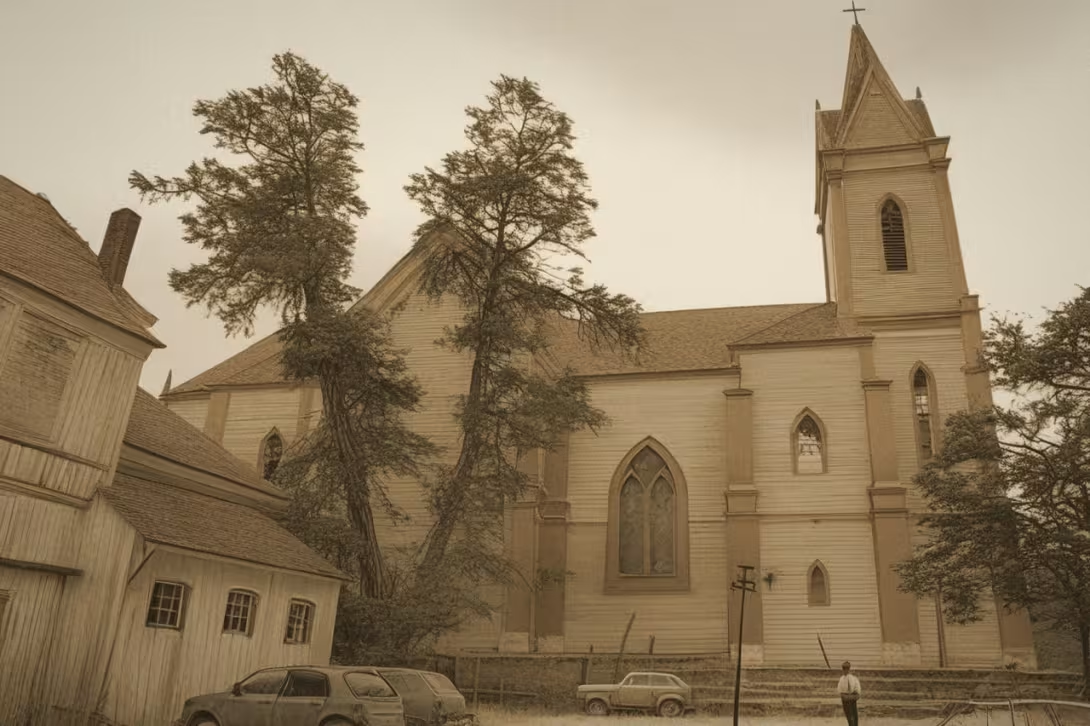
The historical appearance on the left is an AI-generated visualisation and serves as inspiration only.
Historical milestones
- 1846
- The first bells were hung on September 2, 1846.
- 1893
- A bell was recast by Antonín Perner in 1893.
Architectural development
Initiated in 1844 and completed in 1847, the Church of Saint John of Nepomuk showcases Neo-Gothic architectural elements. The church underwent significant reconstruction in the late 20th century to preserve its historical integrity.
Historical events
Construction began under the direction of Franz Beer in 1844, with the cornerstone laid in 1845.
The church was consecrated on May 16, 1847, by Cardinal Bedřich ze Schwarzenbergu.
Points of interest
- The Church of Saint John of Nepomuk was constructed on the site of an older sanctuary, suggesting a long-standing religious significance in Hluboká nad Vltavou that predates the Neo-Gothic structure.
- One of the original bells from 1729 was relocated to the church tower by Jan Adolf II. ze Schwarzenbergu in 1846, indicating the personal involvement and influence of the Schwarzenberg family in the church's history.
- In 1893, a bell was recast by Antonín Perner, which preserved its historical inscriptions while updating its structure, reflecting an early effort to maintain the church’s auditory heritage amidst changing times.
- The church underwent significant reconstruction in the late 20th century, ensuring that it maintained its original stylistic features while adapting to modern preservation needs, a testament to ongoing efforts to preserve cultural landmarks.
- During its consecration by Cardinal Bedřich ze Schwarzenbergu on May 16, 1847, the church was not only dedicated to Saint John of Nepomuk but also marked as an important site within the legacy of the influential Schwarzenberg family.
Guide
This guide is narrated by a synthetic voice generated by artificial intelligence.
Show guide text
This text was created by artificial intelligence and has not been editorially reviewed. It may contain inaccuracies.
Welcome to the Church of Saint John of Nepomuk in Hluboká nad Vltavou, a stunning example of Neo-Gothic architecture that has stood as a testament to both faith and artistry since its construction in the mid-19th century. As you stand here, take a moment to absorb the intricate details of the church's façade, which immediately transports you back to an era where architectural grandeur was intertwined with spiritual devotion.
The story of this remarkable church begins on the site of an older sanctuary, hinting at a rich tapestry of religious history that predates its current form. Commissioned by Jan Adolf II. ze Schwarzenbergu and brought to life under the skilled hands of architect Franz Beer, this sacred structure replaced its predecessor in a quest for both modernity and homage to tradition. Its consecration by Cardinal Bedřich ze Schwarzenbergu further cemented its significance within the community and beyond.
As you gaze upon the church's exterior, notice how it embodies the Neo-Gothic style that was prevalent during its time of construction. The attention to detail in the stonework invites you to explore every corner, revealing stories etched into each stone. Inside, although we cannot delve into specifics not documented here, the atmosphere is one of reverence and awe, encouraging contemplation.
The church's history is punctuated by significant events that add layers to its narrative. In 1846, on September 2nd, the first bells were hung in the tower, marking a momentous occasion for the local community. These bells have since become an integral part of the church’s identity. Another notable event occurred in 1893 when one of the original bells was recast by Antonín Perner, ensuring their continued resonance through time.
One intriguing aspect of this church is its connection to Jan Adolf II. ze Schwarzenbergu, who played a pivotal role not only in its construction but also in enriching its heritage by relocating an older bell from 1729 into the new tower. This act symbolizes a bridge between past and present, honoring history while embracing progress.
As you continue your visit, let the Church of Saint John of Nepomuk inspire you with its blend of architectural beauty and historical depth. Each element tells a story, inviting you to ponder the lives and legacies of those who walked these grounds before you. We encourage you to explore further, discovering more about this remarkable site that continues to captivate visitors from around the world.
Thank you for joining us on this journey through time and faith. May your exploration be filled with wonder and insight as you delve deeper into the rich tapestry of Hluboká nad Vltavou's heritage. Safe travels, and we hope to see you again soon!
Tips for visitors
The best time to visit the Church of Saint John of Nepomuk in Hluboká nad Vltavou is during late spring or early autumn. During these seasons, the weather is typically mild and pleasant, making it ideal for exploring both the church's interior and its surrounding landscape. Additionally, visiting outside of peak tourist season can provide a more serene experience, allowing you to appreciate the Neo-Gothic architecture without large crowds. The lighting during this time also enhances the picturesque views of the area.
Parking is available near Hluboká nad Vltavou, and the church can be accessed by both car and public transportation. For those driving, there are parking facilities in the vicinity, though it's advisable to check for any restrictions or availability before your visit. Public transport options include buses that connect to nearby towns and cities; however, specific routes and schedules should be verified through a local travel planner or online search. Walking is also an option if you're staying within the town.
When planning your visit, consider bringing comfortable walking shoes as there may be some distance between parking areas and the church itself. A camera is recommended to capture the stunning architecture of the Neo-Gothic structure, especially during golden hour when the light enhances its intricate details. Additionally, bring a water bottle and perhaps a small snack if you plan on spending several hours exploring the area.
For photography enthusiasts, some of the best spots for capturing images of the Church of Saint John of Nepomuk are from the front entrance or along the pathways that offer views of the church against the backdrop of Hluboká nad Vltavou's natural scenery. Early morning light can provide a soft glow on the building’s façade, while late afternoon light creates dramatic shadows and highlights.
In the vicinity of the church, within about 30 minutes' travel, you'll find several attractions worth exploring. The Hluboká Castle is a must-see for its stunning architecture and beautiful gardens. Additionally, the nearby village offers quaint streetscapes that are perfect for leisurely walks or photo opportunities. For families with children, these areas provide ample space to explore and enjoy outdoor activities.
Businesses nearby
Do you run a restaurant, accommodation, shop, museum, rental, wellness or other visitor service near this monument? Show yourself directly to the people heading to it — this is how they will see you in the app and on the web:
Events nearby

Zdroj akcí: otevřená data měst a obcí ČR (Národní katalog otevřených dat) a kalendář akcí Národního památkového ústavu.
Accommodation nearby
Trips and activities nearby
Guided tours, tickets and activities nearby from GetYourGuide
Affiliate link: if you buy from the partner, we may receive a commission. The price for you does not change.
Search tours and activities →Themed route
Thematic Vltava River Valley Exploration
1. Kostel svatého Jana Nepomuckého (Hluboká nad Vltavou) - Church Begin your journey at the iconic Church of Saint John of Nepomuk, a stunning example of Baroque architecture nestled in Hluboká nad Vltavou. This church is renowned for its ornate design and historical significance, making it a must-visit for those interested in religious art and history.
2. Hlubocký zámek - Castle Just a short walk from the church, explore the majestic Hluboká Castle. Although not listed explicitly as part of the immediate surroundings, this castle is intrinsically linked to the area's cultural heritage. Its beautiful gardens and intricate interiors offer insights into the region’s aristocratic past.
3. Náměstí T.G. Masaryka - Town Square Stroll through the charming Masaryk Square, located in the heart of Hluboká nad Vltavou. This area is perfect for experiencing local life, with its quaint shops and cafes offering a taste of regional cuisine and crafts.
4. Zámekpark (Castle Park) - Park Conclude your visit at the serene Castle Park, adjacent to Hluboká Castle. This beautifully landscaped park provides a peaceful retreat where you can enjoy nature, relax by the ponds, or simply take in the stunning views of the surrounding landscape.
This thematic route offers a comprehensive exploration of Hluboká nad Vltavou’s cultural and historical treasures, providing an enriching experience for visitors interested in architecture, history, and local traditions.
```Seasonal recommendations
Spring: Visiting the Church of Saint John Nepomucene during spring offers a unique experience as nature begins to awaken around Hluboká nad Vltavou. The surrounding landscape is adorned with vibrant wildflowers and lush greenery, creating a picturesque setting that enhances the historical charm of the church. During this time, the play of light through budding trees can cast enchanting patterns inside the church, adding an ethereal quality to your visit. To make the most of your spring outing, it’s advisable to wear comfortable layers as temperatures can vary throughout the day. Early mornings or late afternoons are ideal for avoiding larger crowds, allowing you to appreciate the serene atmosphere and detailed architecture in peace.
Summer: Summer is a popular time to explore the Church of Saint John Nepomucene due to its favorable weather conditions and longer daylight hours. The lush surroundings of Hluboká nad Vltavou are at their peak during this season, providing a vibrant backdrop for your visit. However, with increased tourist activity in the main summer months, it’s wise to plan your trip early in the morning or later in the afternoon to avoid crowds and enjoy a more intimate experience. Comfortable walking shoes and light clothing are recommended as you explore both the church and its surroundings, taking advantage of the warm weather to stroll through nearby gardens or parks.
Autumn: Autumn brings a stunning transformation to the area around the Church of Saint John Nepomucene, with vibrant foliage creating a breathtaking backdrop for your visit. The golden hues of fall leaves contrast beautifully against the historic architecture, offering a unique and picturesque setting that is particularly appealing during this season. As temperatures begin to drop, it’s advisable to dress in layers and bring a light jacket for comfort as you explore. Visiting in late autumn can be especially rewarding, with fewer tourists around and the opportunity to experience the church in a more tranquil atmosphere.
Winter: Winter offers a magical setting for visiting the Church of Saint John Nepomucene, with snow-covered landscapes providing a serene and enchanting backdrop. The play of light through frosted windows inside the church creates an intimate and reflective ambiance that is unique to this season. However, it’s important to note that opening hours may be shorter due to weather conditions, so checking in advance is recommended. Dress warmly in layers and wear sturdy boots for navigating snowy paths. Visiting during weekdays can help you avoid larger crowds, allowing for a more peaceful exploration of the church's intricate details amidst the winter wonderland.
Visualizations and artistic views


The visualisations are generated by artificial intelligence and serve as inspiration.
Photos from the area
Real photos taken near the monument


Zdroj a licence jsou uvedeny u každého snímku.
Tips from visitors
No tips yet. Be the first!
Log in and add your tip.
Sources and literature
Fotografie: Jiří Sedláček / CC BY-SA 3.0 — Wikimedia Commons. The author and licence also appear when you hover over the image.
Faktickým podkladem tohoto textu byl článek na Wikipedii, jehož autory jsou přispěvatelé Wikipedie. Článek je dostupný pod licencí CC BY-SA 4.0.
Location on the map


Příběhy a pověsti
Legendy, pověsti a příběhy spjaté s touto památkou
Fotografie návštěvníků
Zatím žádné fotografie. Buďte první, kdo přidá fotografii z návštěvy!
Přihlaste se a přidejte svou fotografii nebo hodnoťte.
Za ověřenou návštěvu v aplikaci získáte víc bodů — poznáme podle GPS, že jste na místě.
Reviews and comments