






Kostel svatého Jana Nepomuckého (Nové Město nad Metují) Church
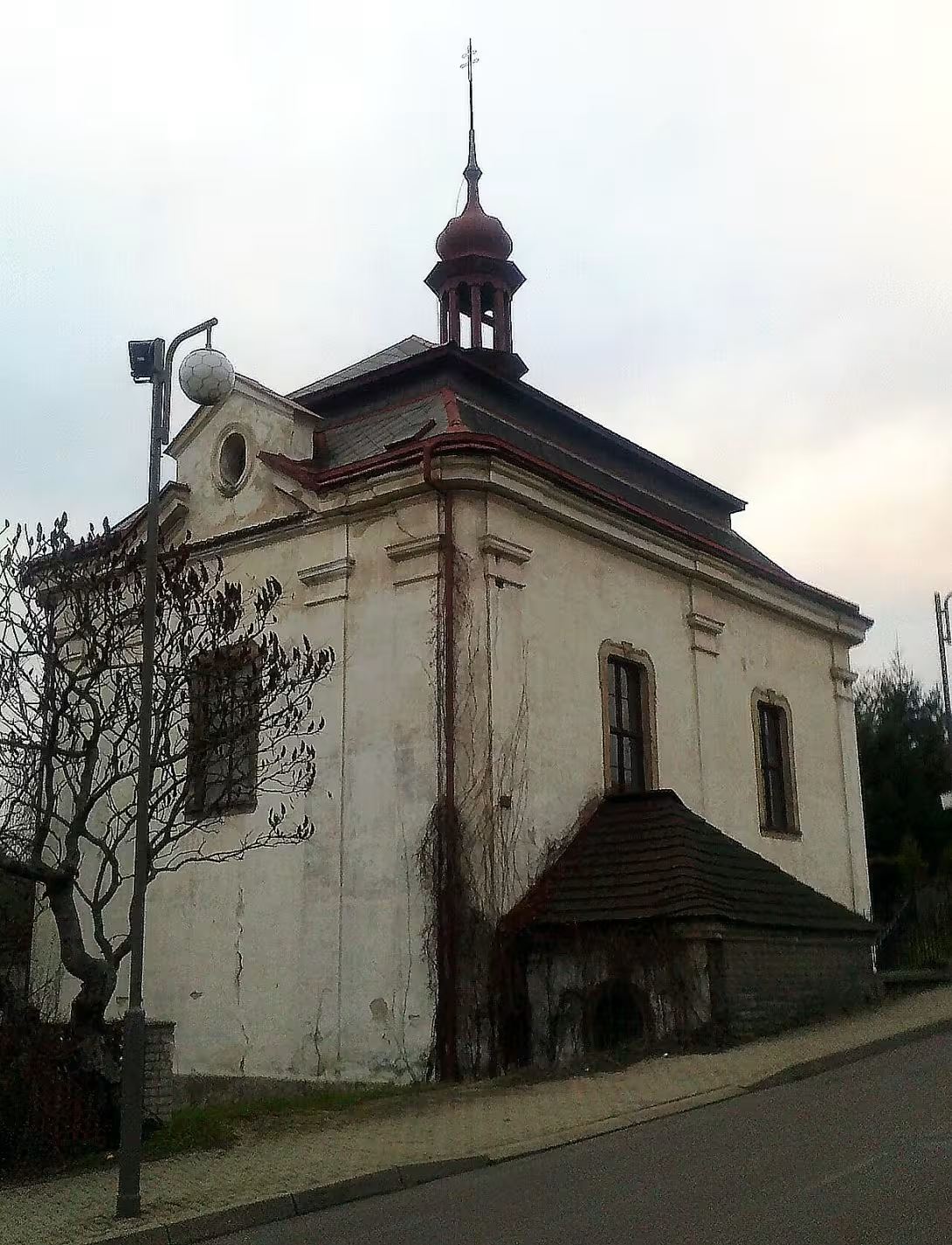
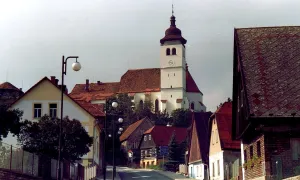
The church of St. John Nepomuk in New Town nad Metují is a Baroque filial church initiated by Dean Jan J. Venclík. The construction took place between 1736 and 1738; We don't know the builder by name, but it's supposed to be the same as the builder of St. Barbara's chapel on Rezka. The church is situated in the property of the owner of the New Town Chateau.
The history of construction is not without dramatic moments. During the Prussian-Austrian war burned down in 1745, and when it seemed to be restored, the disaster struck him again in 1775. The fateful moment came for the reign of Emperor Joseph II when the church was abolished in 1787 by state order. It would have been forgotten if it had not been purchased by the business manager Václav Gottwald, who saved the construction from further decay. Systematic repairs followed only in the 19th and 20th centuries - 1819, then again in 1945-1946, roof covers were restored in 1961 and 1976.
The construction is characterised by a slightly above-square ground plan with two low side attachments. The facade of the Pillastra, the main entrance is decorated with a sandstone editorial with a stylized vault above which the decorative biret with five stars is turned off. The windows have sandstone lining. The Mansard roof is divided by small skylights - on the south side through an oval window, on the north side through a larger rectangular window. The original wooden roofing shingles partially replaced modern templates, but the ports kept the historic shingles. Due to the increase in the surrounding level, the church's nivelties are situated below the pavement level.
The main altar dedicated to St. John Nepomuk is dominated in the interior, whose Baroque form is inspired by acantic development. The central place is occupied by the oval image of the patron of the painter Emil Zeman, above which the Leslie coats of arms are spread in the cartouche frame, under the main picture the painting of the Virgin Mary Snow. Under the altar plate, the craftsman prepared a remarkable embossed scene depicting the drop of the body of St. John Nepomuk to Vltava. The side altars tell the cult of Our Lady of Chenstochovská (so-called Black Madonna) on the left and St. Francis Xaversky on the right. A small empirical cortex accessible by a spiral staircase remains without an organ. The special feature is simply carved pulpit, decorated in the upper part with statues of St. John Nepomuk and angels.
Currently the church serves mainly during May celebrations and especially during the traditional evening pilgrimage of Podskalák, which usually takes place three days around 16 May. Religious services in the church are held at these times, which gives him the character of a lively but guarded monument. The Association for the Rescue of St. John of Nepomuk Chapel initiative was awarded in 2021 by the Regional Prize of Memorial Care in the category of innovative approach to the rescue of the building, confirming the value of this inconspicuous yet architecturally interesting Baroque building.
Then and now
Drag the slider to compare how the landmark may have looked when it was built with the view today.
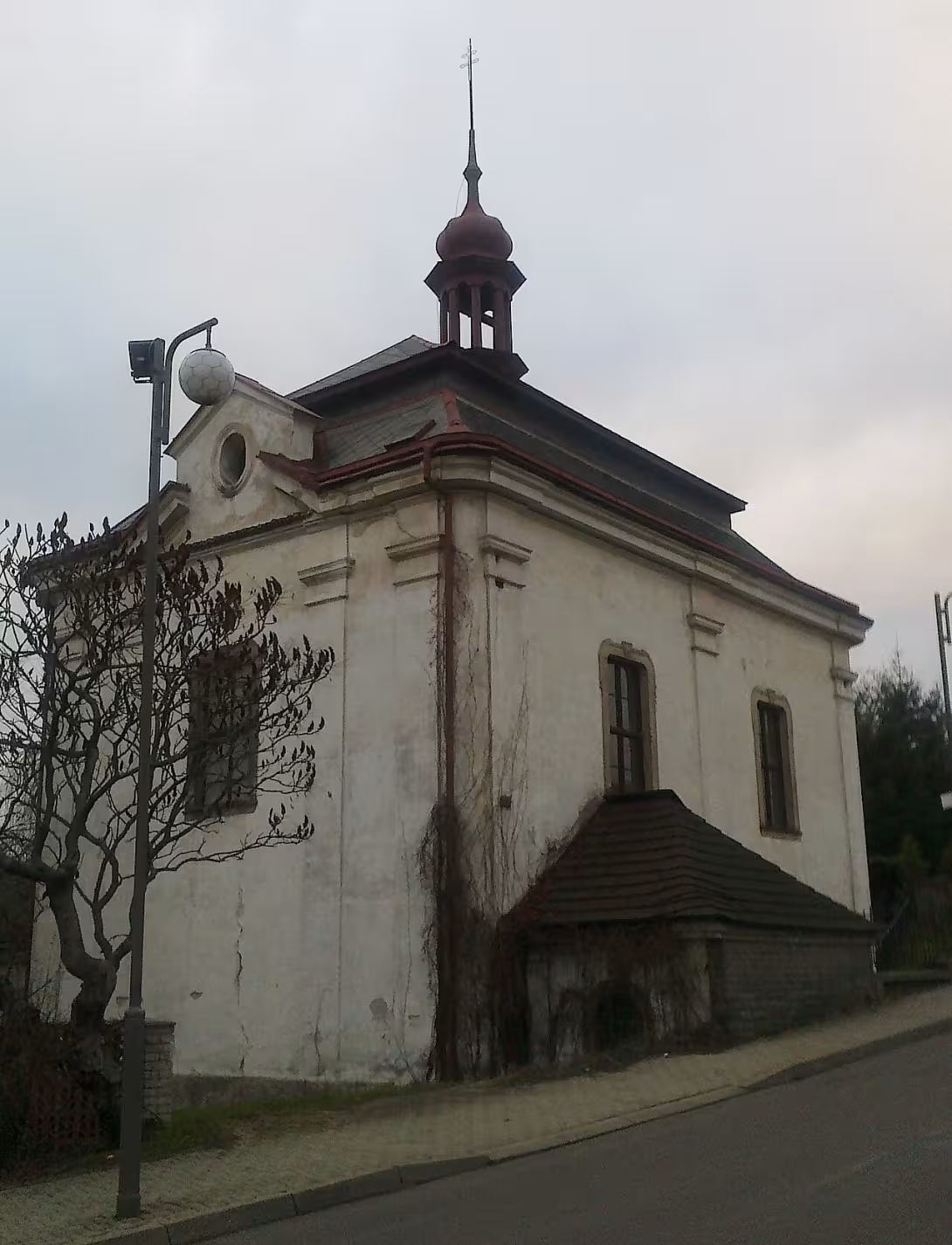
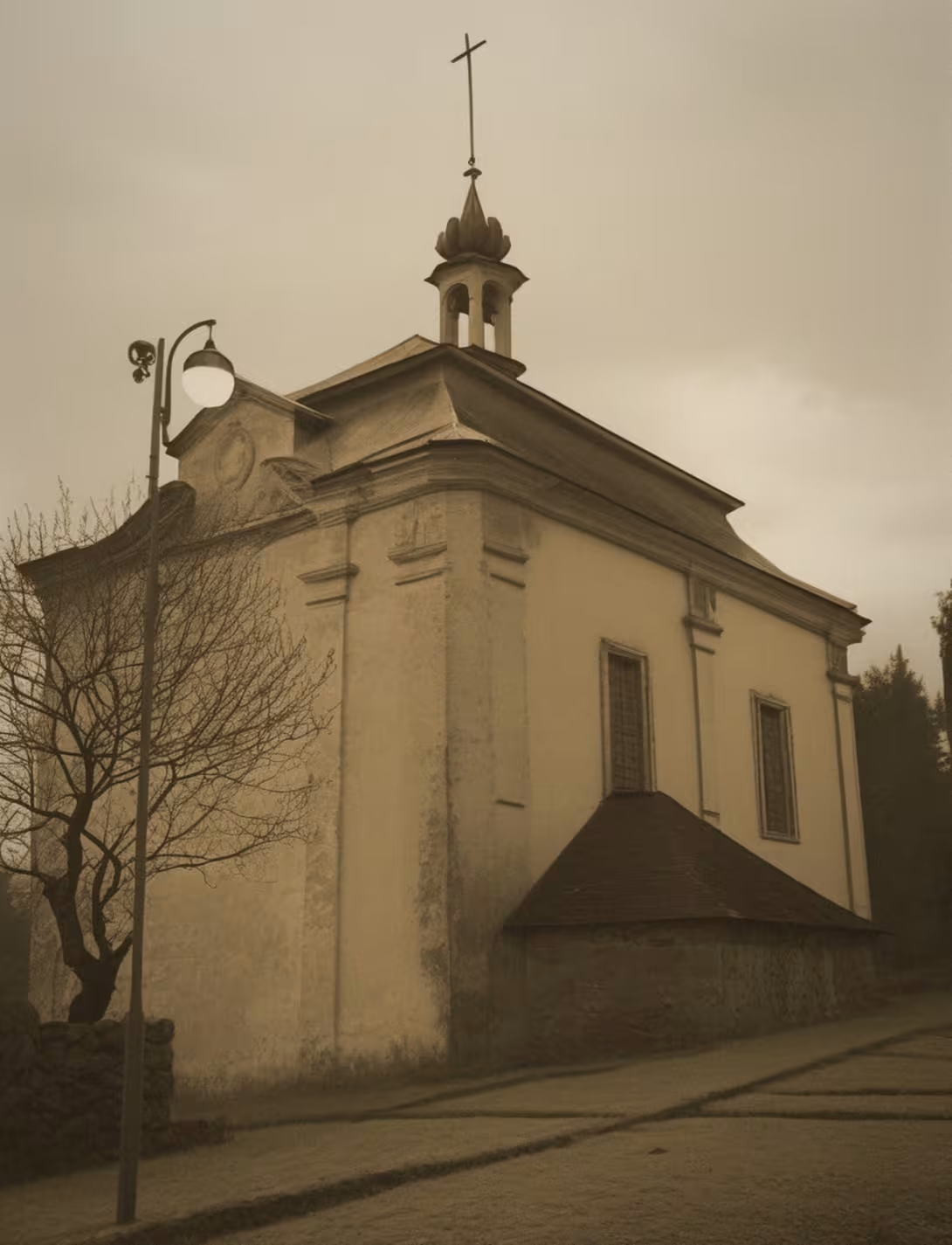
The historical appearance on the left is an AI-generated visualisation and serves as inspiration only.
Historical milestones
- 1736
- Exposure to the church
- 1745
- War with Prussia
- 1775
- War with Prussia
- 1787
- Repeal of church
- 1819
- Corrections
- 1945
- Corrections
- 1961
- Roof repair
- 1976
- Replacement of roof coverings
Architectural development
The church has a slightly larger plan with two low side sides. The facade is decorated with sawdust. The decorated sandstone edition of the main entrance has a biret with five stars on the stylized jeweler.
Historical events
War with Prussia in 1745
War with Prussia in 1775
Corrections in 1819
Corrections in 1945-1946
Owners
Josef M. Barton - Dovenínek
Points of interest
- The church of St. John Nepomuk in New Town nad Metájí is a Baroque filial church. - The construction took place between 1736 and 1738. - The church is situated in the property of the owner of the New Town Chateau. During the Prussian-Austrian war, he burned down in 1745. - In 1787 the church was abolished on the basis of a state order of emperor Joseph II.
Guide
This guide is narrated by a synthetic voice generated by artificial intelligence.
Show guide text
This text was created by artificial intelligence and has not been editorially reviewed. It may contain inaccuracies.
Welcome to the New Town of Metují. You have just stopped in front of one of the most attractive rooms in the history of this city, the church of St. John Nepomuk. Before you go any further, I suggest you close your eyes for a moment, soak up the air and realize that right now you're standing in a place where human science, religious devotion and the relentless movement of history have been clashed. Now, if you open them again, try to view this building not as a mere object of stone and mortar, but as a living witness of the centuries that has survived fires, wars and state bans.
Now look directly at the building itself. What you see is a baroque filial church whose face was shaped in the 1930s. Although at first glance the church may seem to be trying to fit into its surroundings, you will immediately feel its inner strength when you observe it. It's a building that we could call modest, yet there's an incredible artistic richness in it. This duality, this contrast between humility and artistic expression, is typical of Baroque architecture, but here you will find it in a particularly delicate form.
Now let's go back deeper into the past to understand why this temple is standing right here where you're standing. The whole history of this construction began from 1736 to 1738. At that time, architecture was the way people expressed their faith and social position. It is important to know that this church was not just an ordinary residence for the prayers of the people, but belonged directly to the property of the owner of the local chateau. That gave him some weight and importance, even though it was a filial temple. The construction was created in a period when the Baroque style was in its best form, full of dynamics and efforts for beauty to excite a person.
Now pay attention to what's right in front of your eyes. Focus your view on the church facade. Notice its rich ramifications. The Baroque style does not rely only on the surface, but works with light and shadow through the depth and rhythm of architectural elements. The facade is not flat, it is alive, it has its exits and depths that create a game of light as the sun moves through the sky during the day. This complexity gives the building character and playfulness, which breaks the thickness of its dimensions. And when you decide to enter, prepare for something completely different. The interior of this temple will surprise you with its unusual details. Although space is perceived as modest, it is precisely the small, unexpected elements in its inner outlook that make up its artistic value. These details are like whispers from the past that make you stop and examine every line and every shape.
But the history of this place was not just a way of beauty and art. It was also a journey through trials and suffering. Imagine 1745. The atmosphere in the county was tense, echoes of war with Prussia echoed in every corner. This tragic year, the church burned down. Imagine the moment the fire attacked this place, which was supposed to be a safe haven for souls. It was a test the community had to pass. But that's not all. Another difficult period came in 1787. According to a state order, the church was abolished. That was the moment when it seemed that this history could end, that a place that was built with such effort would simply disappear from the map of spiritual life.
Yet the church didn't collapse. His story is a story of incredible resistance. Even though it was canceled, the building survived to go through repairs in later years, namely 1819, which gave her her life back. And again, in 1945, the temple had to be repaired to serve generations to come. This ability to survive various epochs, wars and political changes makes it more than just a memory. It makes him a symbol of endurance.
In connection with this place, the names of the people who were connected to it appear in history. The characters that deserve your attention include Jan J. Venclík, for example. Although it is briefly written in the general texts, his name is closely linked to the history of this place and reminds us that every building is responsible for human destinies, efforts and personal stories.
If you're looking for something that would really interest you, think about how this church changes over the course of the year. It has a specific period where its atmosphere changes completely. St. John Nepomuk's church is not just a static monument. He's alive. And its greatest bloom occurs during May celebrations. In these days, the modest building will turn into an active centre, the heart of local life, when its Baroque details and spiritual importance once again fully manifest themselves. It's a fascinating idea that a place that has gone through fire and state cancellations can bring people back to life in regular cycles.
Now that you've met his face and his pain, I suggest you continue your search. Take a look at the facade from other angles, try to find the shadows that create its ramifications, and if possible, step inside and let yourself be absorbed by the unusual details we talked about. Just let yourself pass through the atmosphere of this place.
Thank you for spending this moment with us and paying attention to St. John Nepomuk's Church. We wish you a beautiful and inspiring next part of your trip to New Town over Metuji. Goodbye.
Tips for visitors
Best visiting time
St. John Nepomuk's Church is accessible all day, but the best time to visit is in the morning or late afternoon when the light is ideal for photography.
Parking and transport
Place is available by car and public transport. Check the bus connection in the search engine.
What to take with you
It is advisable to bring a camera to photograph the interior and exterior of the church.
Photography
Best places for photography are in front of the church and the courtyard. Ideal light is morning or late afternoon.
What to visit around
In the vicinity of the church is worth visiting castle Nové Město nad Metují and castle Castle near Náchoda.
Tips for families with children
For families with children it is advisable to visit the church during the daily program so that children can perceive the atmosphere and observe statues and paintings.
Frequently asked questions
Is Kostel svatého Jana Nepomuckého (Nové Město nad Metují) open to the public?
Yes, the church is open to visitors. We recommend checking up-to-date information on entry and operating times on the official website or in telephone query.
How do I get to the place by car / public transport?
It is possible to park near the church by car, but due to the limited capacity we recommend to use public transport. The nearest station is Nové Město nad Metují, from which the church is easily accessible by foot.
How much is the entrance fee and is it paid on the spot?
Admission fees are usually paid on the spot. The current prices and ticket purchase options can be found on the official website of the church or in a telephone question.
Is the tour suitable for children and seniors?
Yes, the tour is also suitable for children and seniors. The church interior offers beautiful sound effects and color architecture that can be interesting for all visitors.
How long does the tour take?
A church tour usually takes approximately 30 minutes. However, time may depend on the number of visitors and how carefully you look at the site.
What are the opening times and booking is required?
Opening hours may vary depending on the season. We recommend checking up-to-date information about operating times and pre-visit booking options.
What's interesting in the immediate vicinity?
In the immediate vicinity of the church you can visit Castle Nové Město nad Metují, which offers historical tours and is suitable for families with children. It's the perfect place to have fun and explore the region.
For kids
About 296 years ago, something very exciting began to appear in the small town of Nové Město nad Metují. It was like boys and girls finding a new chateau on their garden adventure map. To help you imagine what was going on at the time, let's dive into this fascinating history.
Businesses nearby
Do you run a restaurant, accommodation, shop, museum, rental, wellness or other visitor service near this monument? Show yourself directly to the people heading to it — this is how they will see you in the app and on the web:
Events nearby

Zdroj akcí: otevřená data měst a obcí ČR (Národní katalog otevřených dat) a kalendář akcí Národního památkového ústavu.
Nearby
Nové Město nad Metují
Accommodation nearby
Themed route
Church of St. John Nepomuk - Baroque church, main destination of the trip. This impressive 18th century temple dominates the village and represents an exceptional example of Baroque architecture with rich decoration and historical significance.
Main altar - interior decoration, placed in presbytery. The altar is decorated with beautiful statues and paintings that reveal religious motives and artistic craft at the time.
Baroque bell tower, part of the church. The bell tower offers a view of the Nové Město nad Metují and its bells provide the city with characteristic sound accompaniment during daily mass.
Church courtyard - exterior, space in front of the temple. A quiet courtyard surrounded by historic stone walls offers the possibility of relaxing and observing the local atmosphere in close proximity to the main temple.
Seasonal recommendations
In spring, the church surrounds the awakening nature and fresh green, which contrasts beautifully with the facade. The atmosphere is full of hope and the light is fine, which is ideal for walking around the temple. We recommend wearing layered clothes because the weather is variable, and visit the place in the morning when it is quiet.
The summer season brings sharp sun and rich colors surrounding the countryside. The temple acts majestically in full brightness of the day, while in the interior you will find pleasant cold. Because of the high season and more visitors, it's best to come first thing in the morning. Don't forget light summer clothes and sun protection.
Autumn in the New Town of Metuji is characterized by golden leaves and frequent fog, which give the monument a mysterious touch. The lighting is warm and soft at this time, which highlights the details of architecture. Moisture resistant shoes and late afternoon visit are suitable when mood is most nostalgic.
In winter, the church operates calmly and soberly, especially when the landscape is covered with snow. The atmosphere is quiet and in advent time there is a sense of expectation. It is necessary to wear warm winter clothes and tight shoes. We recommend monitoring the opening hours, which are usually shorter during this period, and planning a visit until noon.
Visualizations and artistic views


The visualisations are generated by artificial intelligence and serve as inspiration.
Photos from the area
Real photos taken near the monument


Zdroj a licence jsou uvedeny u každého snímku.
Atmosphere of the place
This atmospheric visualisation of the place and period was generated by artificial intelligence. It is not real footage of the location.
Tips from visitors
No tips yet. Be the first!
Log in and add your tip.
Sources and literature
Photos: Addvisor / CC BY-SA 3.0 — Wikimedia Commons. The author and licence also appear when you hover over the image.
Faktickým podkladem tohoto textu byl článek na Wikipedii, jehož autory jsou přispěvatelé Wikipedie. Článek je dostupný pod licencí CC BY-SA 4.0.
Location on the map


Příběhy a pověsti
Legendy, pověsti a příběhy spjaté s touto památkou
Fotografie návštěvníků
Zatím žádné fotografie. Buďte první, kdo přidá fotografii z návštěvy!
Log in a přidejte svou fotografii nebo hodnoťte.
Za ověřenou návštěvu v aplikaci získáte víc bodů — poznáme podle GPS, že jste na místě.
Reviews and comments