



Nové Město nad Metují (hradiště) Archaeological site
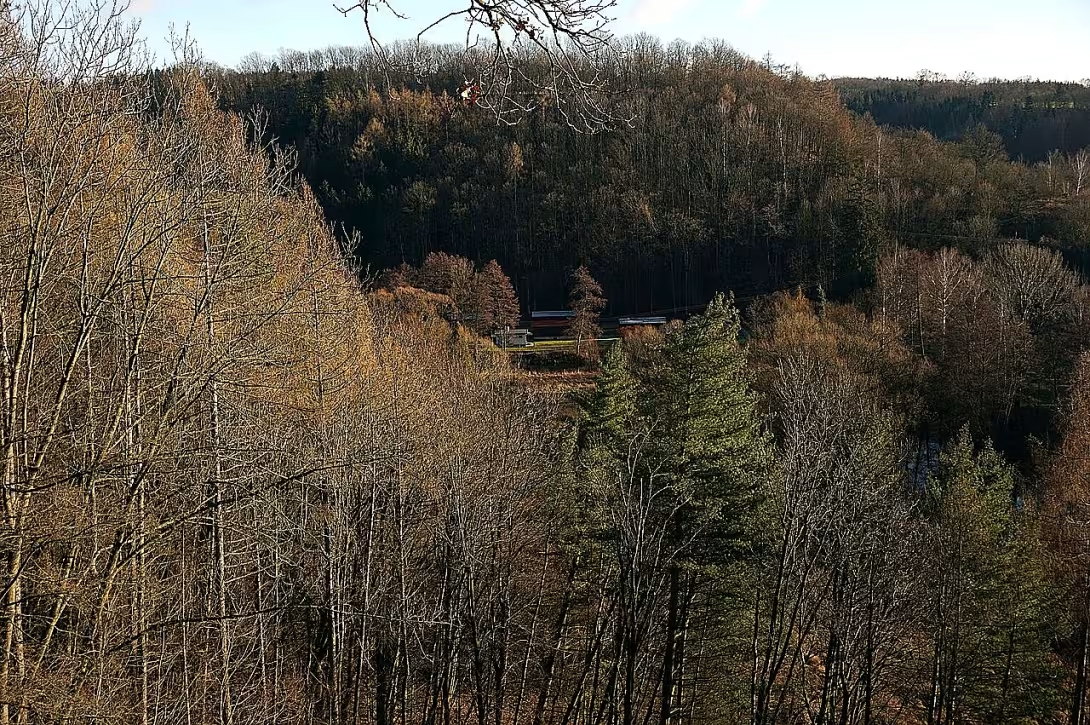
Nové Město nad Metují is a prehistoric fortification located in the Bradla area on the left bank of the Metuje River near the town of Nové Město nad Metují. Dating back to the late Bronze Age, this site has been recognized as a cultural monument due to its historical significance and strategic positioning within the Podorlické uplands. The fortification features an oval layout with dimensions approximately 300 by 75 meters, covering around 1.8 hectares. Its natural defenses were enhanced by surrounding valleys, making it a notable example of Bronze Age settlement in Bohemia.
The site has been known since 1875, although no extensive archaeological research has been conducted to precisely date its construction. A small-scale investigation in 1981 led by Vít Vokolek uncovered ceramic fragments dating back to the late Bronze Age, specifically linked to the Silesian-Polabian culture. These findings suggest that the fortification was occupied during a period marked by significant cultural and technological advancements across Europe. The discovery of these artifacts provides valuable insights into the life and trade networks of communities in Bohemia during this era.
Architecturally, Nové Město nad Metují features an oval layout with defensive structures such as a ditch and rampart on its eastern side. It is assumed that original defenses included a stone wall reinforced by wooden constructions, although no detailed architectural phases or rebuilds are documented. The fortification's strategic position on a promontory within the Podorlické uplands offered natural defenses from surrounding valleys, with steep slopes providing protection on three sides and man-made structures on the fourth.
Throughout its history, there have been no recorded dramatic changes in ownership or administration of this site. Its significance lies primarily in its archaeological value rather than any historical events associated with it. The fortification is believed to have been destroyed by a significant fire, after which it was later occupied during the Latène period. This transition reflects broader patterns of settlement and cultural change in the region.
Today, Nové Město nad Metují stands as an important archaeological site that offers insights into prehistoric life in Bohemia. While no extensive excavations have been conducted, its status as a protected cultural monument highlights its value for historical research and education. Visitors interested in exploring remnants of ancient fortifications can appreciate the strategic ingenuity of Bronze Age communities through this well-preserved site.
Nové Město nad Metují serves as a testament to the complex social structures and technological advancements of prehistoric Bohemia. Its preservation allows modern audiences to connect with the past, offering a tangible link to the lives of those who once inhabited these lands. For history enthusiasts and curious travelers alike, this site is well worth visiting for its unique glimpse into ancient European history.
Then and now
Drag the slider to compare how the landmark may have looked when it was built with the view today.
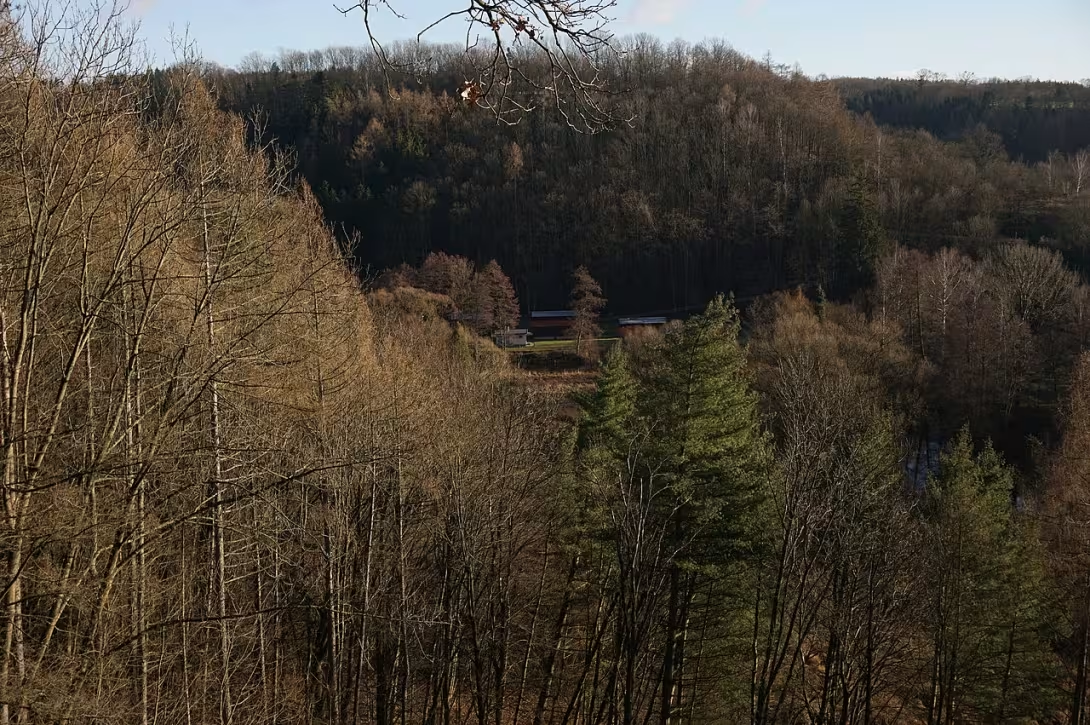

The historical appearance on the left is an AI-generated visualisation and serves as inspiration only.
Historical milestones
- konec bronzové doby
- Nalezení keramických fragmentů spojených s kulturou Slezsko-Polabská.
- 1875
- Místo bylo poprvé uznáno a známé.
- 1981
- Maloskalní vykopávka vedena Vítěm Vokolekem.
- Laténový období
- Obnova osídlení po zničení ohněm.
Architectural development
The fortification was constructed with an oval layout and featured defensive structures such as a ditch and rampart on its eastern side. The original defenses likely included a stone wall reinforced by wooden constructions, although no detailed architectural phases or rebuilds are documented.
Historical events
The site has been known since 1875, although no extensive archaeological research has been conducted to date its construction precisely.
A small-scale investigation in 1981 by Vít Vokolek uncovered ceramic fragments dating back to the late Bronze Age, specifically linked to the Silesian-Polabian culture.
Points of interest
- Despite its recognition as a cultural monument since 1875, Nové Město nad Metují has not undergone extensive archaeological research, leaving many aspects of its history and construction still shrouded in mystery.
- The fortification's connection to the Silesian-Polabian culture during the late Bronze Age highlights a period of significant trade networks and cultural exchanges across Europe, suggesting that this site was part of broader regional interactions.
- It is believed that Nové Město nad Metují was destroyed by fire before being reoccupied in the Latène period, indicating a dramatic shift in its use and reflecting wider patterns of settlement change during prehistoric times.
- The strategic positioning on a promontory with natural defenses from surrounding valleys suggests advanced understanding of military architecture by Bronze Age communities, who enhanced these features with man-made structures like ditches and ramparts.
- Although no detailed records exist about dramatic changes in ownership or administration, the site's continuous significance lies primarily in its archaeological value, offering insights into prehistoric life rather than historical events.
Guide
This guide is narrated by a synthetic voice generated by artificial intelligence.
Show guide text
This text was created by artificial intelligence and has not been editorially reviewed. It may contain inaccuracies.
On the left bank of the Metuje River, in an area called Bradla, lies a prehistoric hillfort that bears the name of the neighboring Nové Město nad Metují. It was settled during the Late Bronze Age and its remains are today protected as a cultural monument.
The hillfort has been known since 1875. However, a thorough archaeological examination that would allow us to determine when the fortification was built has not yet taken place. The only minor excavation was conducted in 1981 by Vít Vokolek. He found ceramic sherds which he dated to the Late Bronze Age, to the period of the Silesian-Platenicea culture. The monument catalog does list them as belonging to the same culture, but already places them in the Hallstatt period. It is assumed that the hillfort perished in a mighty fire. Later, people returned to the site and resettled it during the La Tène period.
The hillfort had an oval ground plan, roughly 300 meters long and about 75 meters wide. It covered an area of around 1.8 hectares. The builders chose a promontory for it, which belongs to the Podorlická upland and is bounded on two sides by the valleys of the Metuje River and the Libchyňský stream. To the north, west, and south, the hillfort was thus protected by steep slopes alone.
The only open side was to the east, and it was precisely there that fortification was built. To this day, a ditch and rampart have been preserved from it. The ditch is about six meters wide and roughly 70 centimeters deep. The rampart measures about thirty meters in length. On its outer side, its summit rises above the surrounding terrain by as much as six meters, while from inside the elevation is only around one and a half meters. The original fortification wall apparently consisted of an opukal stone wall together with a rampart, which was reinforced by a wooden structure.
Frequently asked questions
Can the monument be visited?
This is an archaeological site. Often there is little to see on the ground and the land may be private. We have not verified access.
Where is the monument?
Location: Nové Město nad Metují, Královéhradecký kraj. The map on this page shows the exact spot.
Why is the monument protected?
It is listed in the Central List of Cultural Monuments of the Czech Republic as a cultural monument (register no. 1000144792).
Businesses nearby
Do you run a restaurant, accommodation, shop, museum, rental, wellness or other visitor service near this monument? Show yourself directly to the people heading to it — this is how they will see you in the app and on the web:
Events nearby



Zdroj akcí: otevřená data měst a obcí ČR (Národní katalog otevřených dat) a kalendář akcí Národního památkového ústavu.
Nearby
The fortification is situated on a promontory within the Podorlické uplands, bordered by the valleys of the Metuje River and Libchyňský stream. The natural landscape provided strategic defensive advantages.
Accommodation nearby
Themed route
Thematic Exploration Trail: Nové Město nad Metují (Hradiště) and Surroundings
1. Nové Město nad Metují Hradiště
- Type: Archaeological Site
- Why Visit: This ancient fortification, perched on a promontory within the Podorlické uplands, offers visitors a glimpse into early medieval life and strategic military planning. The site's location between the valleys of the Metuje River and Libchyňský stream highlights its historical significance as a defensive stronghold.
2. Metuje River Valley
- Type: Natural Landscape
- Why Visit: Explore the serene valley of the Metuje River, which provided natural defense benefits to the fortification above. The river's meandering path and lush surroundings offer a peaceful contrast to the historical site, allowing visitors to appreciate the strategic importance of this landscape in ancient times.
3. Libchyňský Stream
- Type: Natural Landscape
- Why Visit: Adjacent to the Metuje River Valley, the Libchyňský stream further defines the natural boundaries that once protected the fortification. Walking along its banks offers a unique perspective on how waterways were integral to the site's defense and daily life.
4. Podorlické Uplands
- Type: Natural Landscape
- Why Visit: The elevated terrain of the Podorlické uplands not only provided a strategic vantage point for ancient defenders but also offers stunning panoramic views today. Visitors can explore this area to understand how geography influenced settlement and defense strategies in historical times.
This thematic trail combines historical exploration with natural beauty, providing an immersive experience into the past while enjoying the scenic landscapes of Nové Město nad Metují.
Seasonal recommendations
Spring: Visiting Nové Město nad Metují during springtime offers a picturesque setting as the surrounding landscape bursts into life with blooming flowers and fresh greenery, creating an enchanting atmosphere around the archaeological site of the fortress. The gentle warmth of the sun enhances visibility at the site, allowing for clear views of its historical contours. This is an ideal time to explore the area when it's less crowded than in summer, making for a more peaceful experience. Visitors should wear comfortable layers as temperatures can vary, and early morning visits are recommended to enjoy the serene ambiance before any crowds gather.
Summer: Summer at Nové Město nad Metují provides vibrant daylight that highlights the fortress ruins against a backdrop of lush greenery, offering an idyllic setting for exploration. However, it also brings larger crowds and higher temperatures, so planning ahead is essential. Arriving early in the day can help avoid the midday heat and peak visitor times. Wearing light, breathable clothing and carrying a hat or sunscreen are practical tips for ensuring comfort during your visit.
Autumn: The autumn season at Nové Město nad Metují transforms the site into a stunning tapestry of warm colors as leaves change hues, creating a magical atmosphere that enhances the historical allure of the fortress. Cooler temperatures make it an ideal time to explore without the summer heat, and the reduced number of visitors allows for a more intimate experience with the site's history. Layered clothing is advisable to adapt to varying temperatures throughout the day, and visiting in late morning or early afternoon can provide the best balance between light and comfort.
Winter: Winter visits to Nové Město nad Metují offer a unique perspective as snow blankets the fortress ruins, adding a mystical quality to its ancient structures. The colder months bring shorter daylight hours and reduced opening times, so planning is crucial for maximizing your visit. While the site may appear quieter with fewer visitors, it's important to dress warmly in layers, including thermal wear and waterproof outer garments, to handle the chilly conditions. Early visits are recommended to make the most of the available daylight and enjoy a tranquil exploration of the historical landscape.
Visualizations and artistic views


The visualisations are generated by artificial intelligence and serve as inspiration.
Photos from the area
Real photos taken near the monument


Zdroj a licence jsou uvedeny u každého snímku.
Atmosphere of the place
This atmospheric visualisation of the place and period was generated by artificial intelligence. It is not real footage of the location.
Tips from visitors
No tips yet. Be the first!
Log in and add your tip.
Sources and literature
Faktickým podkladem tohoto textu byl článek na Wikipedii, jehož autory jsou přispěvatelé Wikipedie. Článek je dostupný pod licencí CC BY-SA 4.0.
Location on the map



Příběhy a pověsti
Legendy, pověsti a příběhy spjaté s touto památkou

Fotografie návštěvníků
Zatím žádné fotografie. Buďte první, kdo přidá fotografii z návštěvy!
Log in a přidejte svou fotografii nebo hodnoťte.
Za ověřenou návštěvu v aplikaci získáte víc bodů — poznáme podle GPS, že jste na místě.
Reviews and comments