






Městské opevnění (Nové Město nad Metují) Fortifications
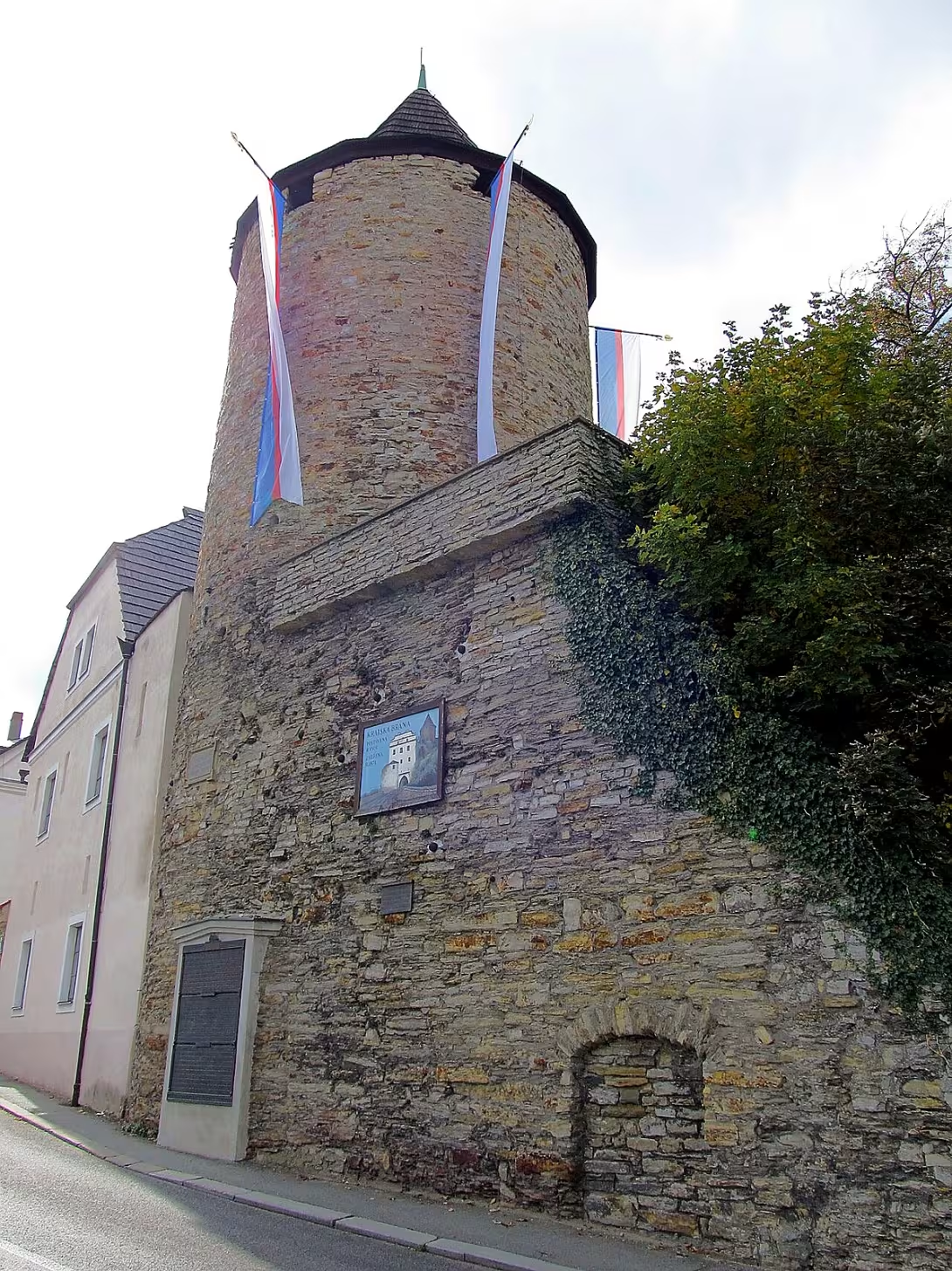
The Městské opevnění of Nové Město nad Metují is a remarkable example of late Gothic fortification surrounding the town's historical core. Located in the Náchod district, within the Královéhradecký region, these fortifications were constructed in the early 16th century. They are notable for their cultural significance and well-preserved state, forming an integral part of a larger urban heritage reserve.
The walls, built from locally quarried opus stone, follow the natural contours of the terrain with varying heights up to six meters. This design reflects both defensive needs and architectural ingenuity of the period.
The origins trace back to 1501 when Jan Černčický z Kácova laid the foundation stone for his future seat. As heitman of Hradeckého kraje, he had acquired the Krčínské panství in 1484 and was relieved from feudal obligations by King Vladislav Jagellonský in 1497. This likely facilitated his ambitious construction projects aimed at enhancing the town's defense capabilities.
Architecturally, the fortifications feature five bastions—two semi-cylindrical and three cylindrical—strategically placed on a hill to maximize defensive capabilities. One of these bastions was later converted into a water tower, demonstrating adaptive reuse over time. The fortification included two gates: the Horská brána, a simple Gothic structure erected in 1501, and the Krajská brána, which underwent Renaissance-style modifications before its demolition in 1874 due to traffic obstructions.
Throughout history, these structures have witnessed significant events that shaped their current state. The Horská brána was demolished in 1905, while the Krajská brána met a similar fate in 1874. Despite these changes, much of the original structure remains intact, with some sections having been modified or reduced over time. Notably, the Věž Zázvorka, originally part of the Krajské brány, now serves as a city gallery, housing cultural exhibits and adding to the site's historical narrative.
Today, visitors can explore the rich history and architectural beauty of the Městské opevnění. The fortifications offer insights into early 16th-century urban defense strategies while being surrounded by vineyard terraces and park systems that enhance their appeal. A sculpture titled "Alegorie Metuje" by Olbram Zoubek, unveiled in 2006 near the former site of the Krajské brány, adds an artistic dimension to this historical landmark.
The Městské opevnění is not only a testament to the architectural and strategic vision of its time but also a cultural treasure that continues to captivate visitors. Its preservation allows for an immersive experience into the past, making it a must-visit destination for those interested in history and architecture.
Then and now
Drag the slider to compare how the landmark may have looked when it was built with the view today.
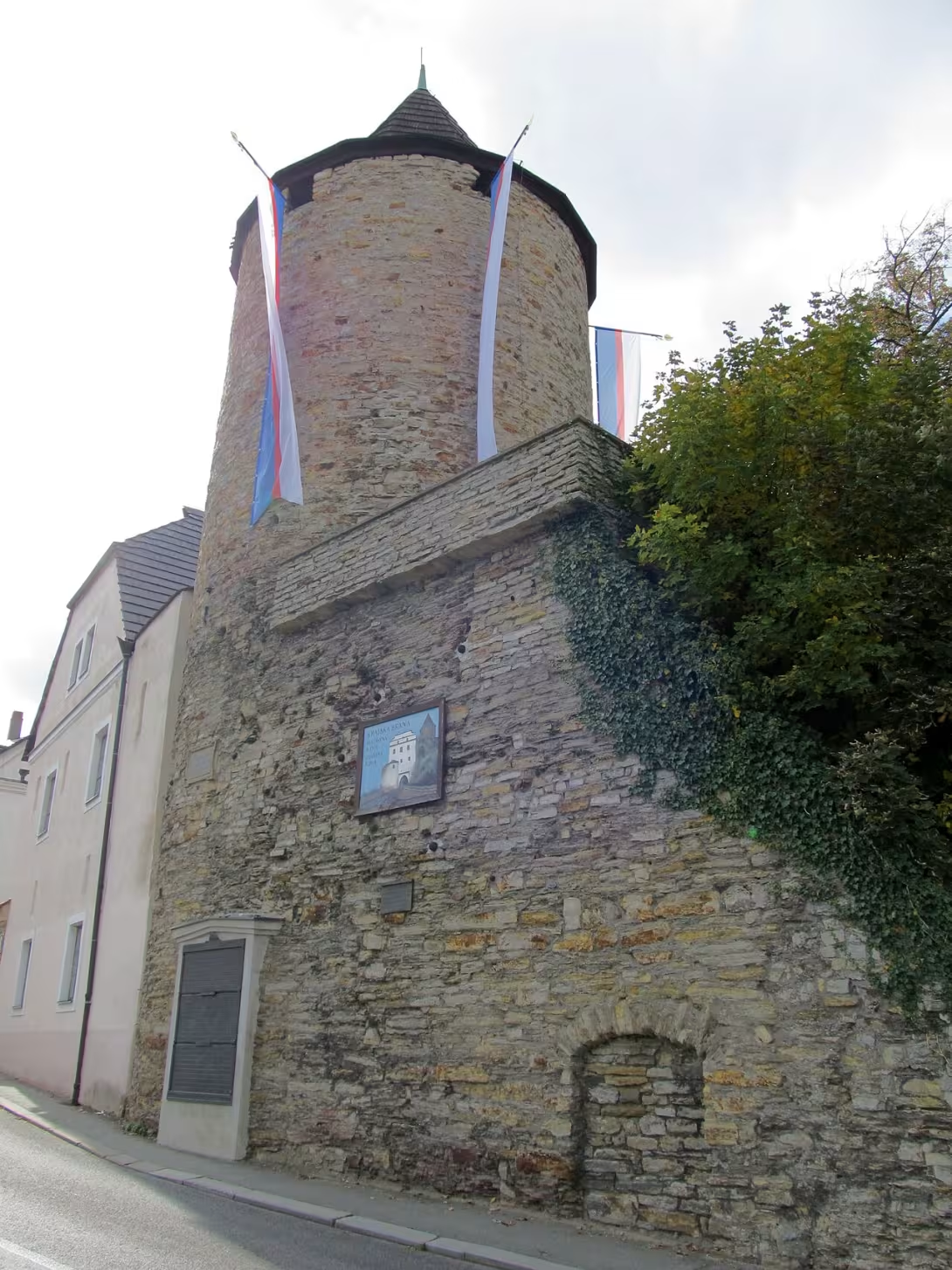

The historical appearance on the left is an AI-generated visualisation and serves as inspiration only.
Historical milestones
- 1501
- Foundation stone laid by Jan Černčický z Kácova.
- 1905
- Demolition of the Horská brána.
- 1874
- Demolition of the Krajské brány due to traffic issues.
Architectural development
The fortifications were constructed using opus stone, with the walls adapting to the terrain's natural contours. Originally featuring five semi-cylindrical and cylindrical bastions for enhanced defense, one of these bastions was later converted into a water tower. The gates underwent architectural changes over time; the Horská brána was simple Gothic in design, while the Krajská brána was later Renaissance-styled.
Historical events
1501: Jan Černčický z Kácova laid the foundation stone for his future seat, marking the beginning of the fortifications' construction.
1905: The Horská brána (Mountain Gate) was demolished.
1874: The Krajská brána (District Gate) was demolished due to its obstruction to traffic.
Points of interest
- The Městské opevnění of Nové Město nad Metují is a remarkable example of late Gothic fortification constructed in the early 16th century. – These fortifications were built from locally quarried opus stone and follow the natural contours of the terrain, with heights up to six meters. – The origins trace back to 1501 when Jan Černčický z Kácova laid the foundation stone for his future seat after being relieved from feudal obligations by King Vladislav Jagellonský in 1497. – Architecturally, the fortifications feature five bastions—two semi-cylindrical and three cylindrical—and include two gates: the Horská brána (erected in 1501) and the Krajská brána (demolished in 1874). – The Věž Zázvorka, originally part of the Krajské brány, now serves as a city gallery housing cultural exhibits.
Guide
This guide is narrated by a synthetic voice generated by artificial intelligence.
Show guide text
This text was created by artificial intelligence and has not been editorially reviewed. It may contain inaccuracies.
Welcome to Nové Město nad Metují! You are standing before the Town Fortifications, an impressive example of late Gothic fortification that encircles the historic heart of the city. These walls were built in the early 16th century and were an integral part of the town's defense and development.
Let's move on to the historical context. The cornerstone for these fortifications was laid in 1501 by Jan Černčický z Kácova. Come take a look at the chronology of events that influenced the construction and development of these walls.
Now, pay attention to the architecture. The walls were built using local opus stones and follow the natural terrain. Here you can see how the walls vary in height up to six meters.
Note that the walls are constructed from local materials and are thus an integral part of the town's history.
Let's move on to the personalities who made their mark in the city's history. Jan Černčický z Kácova became the founder of these fortifications.
Come take a look at a feature that will captivate you. The Town Fortifications of Nové Město nad Metují are an impressive example of late Gothic fortification built in the early 16th century.
Here is the end of our tour. We invite you to further explore this beautiful city and its history.
Tips for visitors
The best time to visit the Městské opevnění of Nové Město nad Metují is during late spring or early autumn when the weather is pleasant and the park system around the fortifications is in full bloom. These seasons offer comfortable temperatures for walking along the ramparts, and the surrounding vineyard terraces provide a picturesque backdrop. Additionally, visiting outside peak summer months can help avoid larger crowds, allowing for a more serene experience.
For the most accurate and up-to-date travel options, consult a local transport website or app.
When planning your visit, consider bringing comfortable walking shoes, as exploring the fortifications involves some walking on uneven surfaces. A hat and sunscreen are recommended if visiting in warmer months due to limited shade along the ramparts. Additionally, carrying water is advisable, especially during summer, to stay hydrated while enjoying the site.
For photography enthusiasts, the best spots for capturing the fortifications include the higher points of the ramparts where you can get a panoramic view of Nové Město nad Metují and the surrounding landscape. Early morning or late afternoon light provides soft shadows that enhance the textures of the stone walls. The park system nearby offers beautiful natural settings for additional photo opportunities.
Nearby attractions within 30 minutes include the Church of Nejsvětější Trojice, a notable structure in the town's historical center. This church is an excellent example of late Gothic architecture and provides insight into the region's religious history. For families with children, consider exploring the park system around the fortifications, which offers open spaces for picnics and leisurely walks.
Frequently asked questions
Can the monument be visited?
This is a structure in a public space that can usually be seen from outside free of charge. We have not verified that this particular one is freely accessible.
Where is the monument?
Location: Nové Město nad Metují, Královéhradecký kraj. The map on this page shows the exact spot.
Why is the monument protected?
It is listed in the Central List of Cultural Monuments of the Czech Republic as a cultural monument (register no. 1000158225).
Businesses nearby
Do you run a restaurant, accommodation, shop, museum, rental, wellness or other visitor service near this monument? Show yourself directly to the people heading to it — this is how they will see you in the app and on the web:
Events nearby



Zdroj akcí: otevřená data měst a obcí ČR (Národní katalog otevřených dat) a kalendář akcí Národního památkového ústavu.
Nearby
The fortifications are situated on an opus hill overlooking the Metuje River, with a park system and vineyard terraces nearby. The town's historical center includes notable structures like the Church of Nejsvětější Trojice.
Accommodation nearby
Themed route
Historické Nové Město nad Metují
1. Městské opevnění (Nové Město nad Metují): Hlavní cíl trasy. Stojí za návštěvu pro svou jedinečnou kombinaci historické architektury a přírodní krásy. 2. Park: Nachází se nedaleko opevnění a nabízí příjemné procházky a výhledy na město a řeku Metují. 3. Vinné sklepy: Nacházejí se v blízkosti parku a umožňují návštěvníkům seznámit se s místní vinařskou tradicí a ochutnat místní víno. 4. Kostel Nejsvětější Trojice: Nachází se v historickém centru města a stojí za návštěvu pro svou krásnou architekturu a bohatou historii. 5. Vineyard terraces: Nacházejí se v blízkosti parku a nabízí krásné výhledy na město a řeku Metují.
Seasonal recommendations
Jaro
In the spring, the City Fortifications of Nové Město nad Metují are surrounded by greenery and flowers, creating a pleasant atmosphere. The sunny weather also allows for exploring the ramparts without raincoats. The best time to visit is in the morning or late afternoon when there are fewer crowds, allowing you to better acquaint yourself with the history and architecture.
Léto
The main summer season brings larger crowds, so it's a good idea to arrive early to avoid long lines. Summer is also an ideal time for walking along the ramparts and exploring the interior spaces. The fortifications are open on weekends during peak summer, but if you want to avoid the crowds, we recommend visiting on weekdays.
Podzim
In autumn, the City Fortifications are surrounded by beautiful natural colors, creating a pleasant atmosphere for exploration. The mild weather also allows for walking along the ramparts without concern for rain. The best time to visit is in the morning or late afternoon when there are fewer crowds and you can better acquaint yourself with the history and architecture.
Zima
In winter, the City Fortifications are surrounded by snow and ice, creating a unique atmosphere. Fewer visitors also allow for a more relaxed exploration. We recommend visiting on quieter days when it is open only for shorter periods, and dressing warmly to avoid the cold.
Visualizations and artistic views


The visualisations are generated by artificial intelligence and serve as inspiration.
Photos from the area
Real photos taken near the monument


Zdroj a licence jsou uvedeny u každého snímku.
Tips from visitors
No tips yet. Be the first!
Log in and add your tip.
Sources and literature
Photos: Ewwwa / CC BY-SA 3.0 — Wikimedia Commons. The author and licence also appear when you hover over the image.
Faktickým podkladem tohoto textu byl článek na Wikipedii, jehož autory jsou přispěvatelé Wikipedie. Článek je dostupný pod licencí CC BY-SA 4.0.
Location on the map


Příběhy a pověsti
Legendy, pověsti a příběhy spjaté s touto památkou

Fotografie návštěvníků
Zatím žádné fotografie. Buďte první, kdo přidá fotografii z návštěvy!
Log in a přidejte svou fotografii nebo hodnoťte.
Za ověřenou návštěvu v aplikaci získáte víc bodů — poznáme podle GPS, že jste na místě.
Reviews and comments