






Nové Město nad Metují Chateau
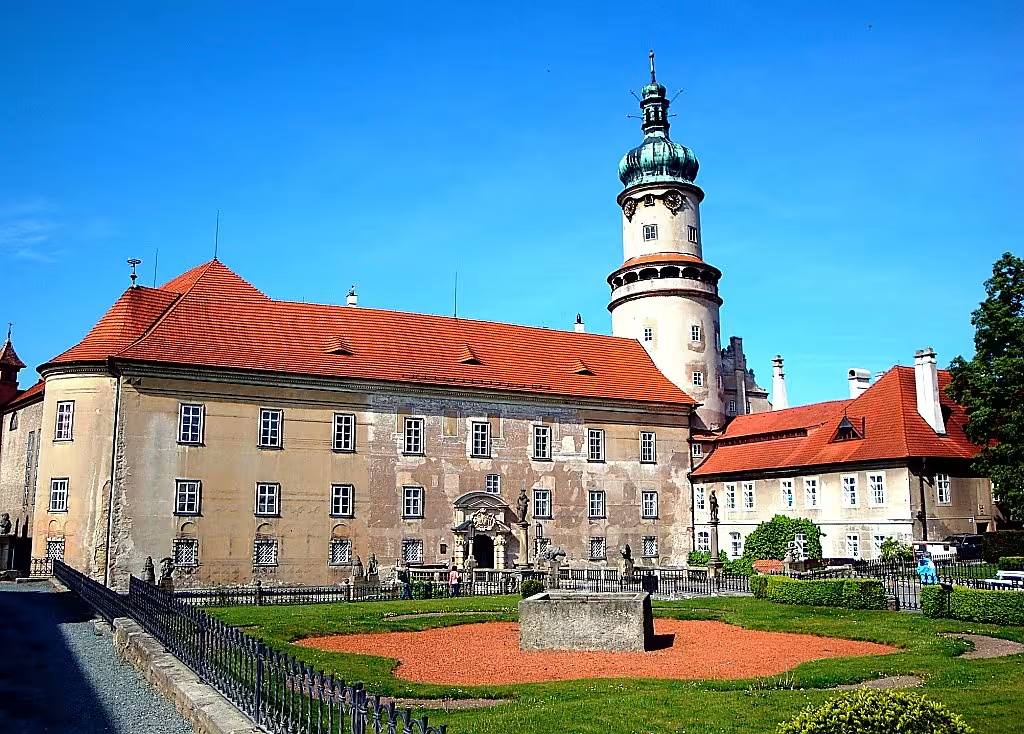
The chateau grew gradually. In 1501 here Jan Černčický z Kácova built a chateau which was included in the fortification of the city but separated from it by a significant moat. After the city burned down during the 16th century the chateau went through a transformation - Pernštejn and Stubenberk converted it into a Renaissance chateau. Subsequently, under Walter Leslie, it was rebuilt baroque in 1655-1661 according to Carl Luraga's plans.
The turning point was the reconstruction in 1909-1913, which was realized by architect Dušan Jurkovič for new owners - industrialists Josef and Cyril Bartona from Dobenin. Jurkovic didn't just stay at the construction site - he also designed an original chateau garden of Italian style with a distinctive wooden covered bridge which became an architectural dominant. The bridge was divided into two parts of towers with three floors and was inspired by Jurkovic by folk buildings from Slovak Čičman. In the 1920s and 1930s, some rooms were additionally furnished in art deco styles and functionalism under the guidance of architect Pavel Janák.
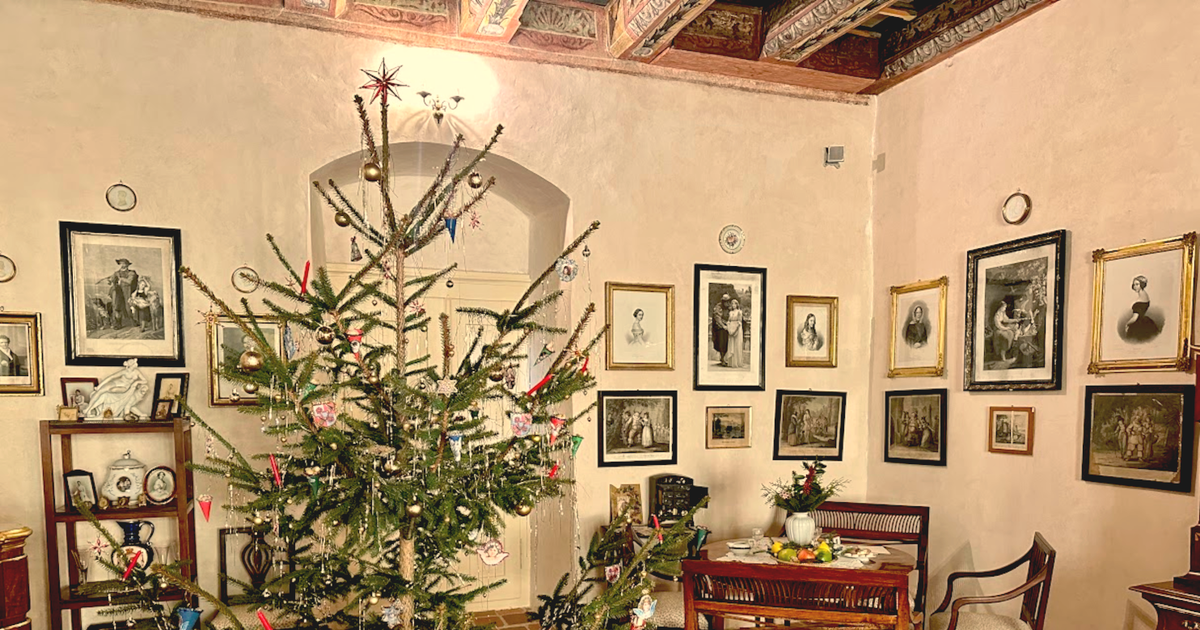
The chateau forms a quadrilateral around an irregular courtyard. Its characteristic element is the Renaissance round tower in the northern corner, which they call the butter plant - the name was obtained according to its appearance with the butter plant. The facade and courtyard are decorated with Renaissance grisaille decoration, which was unveiled during Jurkovic's reconstruction. The main entrance leads over the bridge through the moat and is completed by a stone baroque portal. The interiors are decorated with a number of remarkable spaces with Baroque ribbon and modern decoration. The sculptors Josef Václav Mysbek, Jan Štursa, Ladislav Šalouna and František Bílka left their tracks, as well as František Kyla and Max Švabinský. In the garden and in front of the chateau are 23 dwarfs from Matyas Bernard Braun's workshop from around 1713, which were located here in 1929 after transfer from Venice to Jizerou. The park also includes a monolithic stone fountain.
An interesting part of the historical record is also Bedřich Smetana. His father František came here in 1818 as a tenant to a fixed chateau brewery. The family then moved to Litomyšl, where Bedřich was born in 1824. Later, the famous composer came back here to see his relatives, especially his cousin Luisa, who he fell in love with and wrote Luisa's polka for.
In 1948 the chateau was confiscated from the Bartonians and remained in the administration. In 1992 it was returned to Josef Bartona Dobenin in restitution and has since been made available to the public. Since 2008 it has been protected as a national cultural monument. Since June 2020, the chateau is for sale with the state law of the buy-in. The visitor will find a unique combination of several building styles and a rich architectural legacy of one of the most important Czech architects of modern.
Then and now
Drag the slider to compare how the landmark may have looked when it was built with the view today.
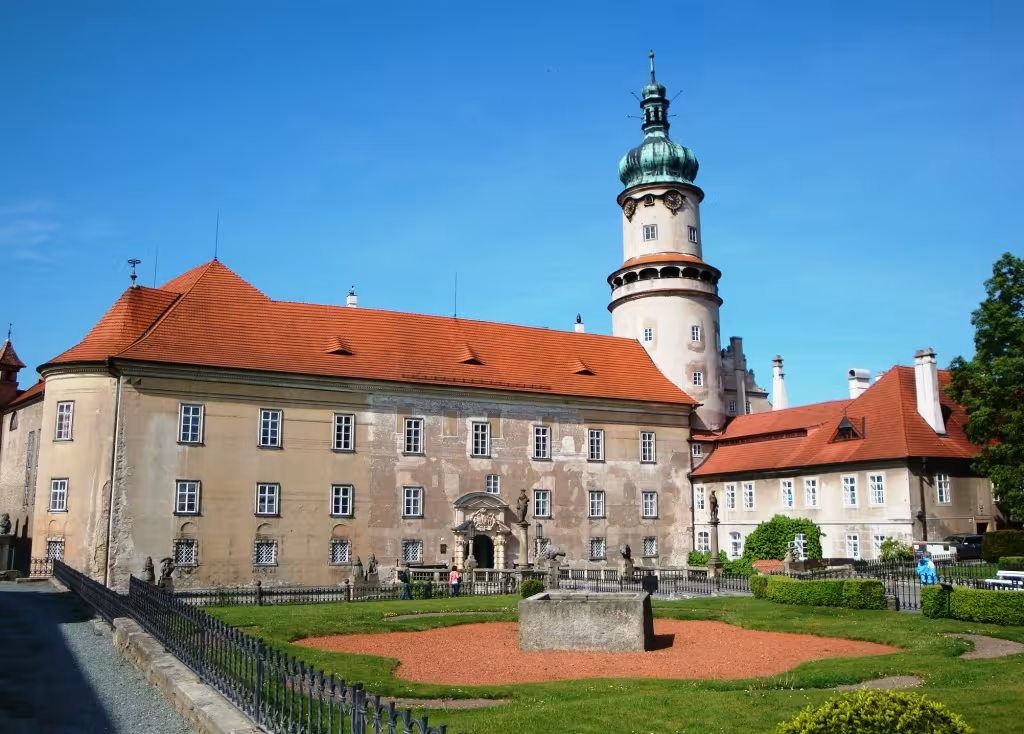

The historical appearance on the left is an AI-generated visualisation and serves as inspiration only.
Historical milestones
- 1501
- Jan Černčický z Kácova builds chateau
- 1655
- Beginning of Baroque reconstruction of the chateau
- 1909
- Beginning of Jurkovic changes of the lock
- 2008
- The chateau is declared a national cultural monument
Architectural development
The Renaissance chateau was originally rebuilt in the 17th century. In the early 20th century the chateau underwent modernization in national style, secession and functionalism. The architecture also includes Renaissance grisaille decoration and Baroque portal.
Historical events
1501: construction of Jan Černčický's original chateau from Kacov; 1655-1661: Baroque reconstruction of the chateau according to Carl Luraga; 1909-1913: modification of the chateau according to the plans of Dusan Jurkovic; 2008: Declaration of the chateau as a national cultural monument.
Owners
1501-1527: Jan Černčický z Kácova; 1527-1547: Pernštejné; 1548-1623: Stubenberg; 1623-1624: Albrecht of Valdštejn; 1624-1634: Lípa tracky; 1634-1802: Lesli; 1802-1858: Ditrichtejn; 1858-1908: Lamberg; 1908-1948: Bartoni of Dobenin; 1948-1992: Czechoslovak State; Since 1992: Bartoni of Dobenin.
Points of interest
- Architect Dušan Jurkovič designed original garden with wooden covered bridge, which is inspired by folk buildings from Slovak Čičman. - In the northern corner there is a Renaissance round tower called Máselnice, whose name comes from its appearance with a butter plant. - In the garden and in front of the chateau are 23 dwarfs from Matyas Bernard Braun's workshop, which were transferred from Venice to Jizera in 1929. - The composer Bedřich Smetana returned to his relatives and wrote Luis' polka for his cousin Luis. - The interior of the chateau is decorated with a number of spaces with Baroque ribbon and modern decoration.
Guide
This guide is narrated by a synthetic voice generated by artificial intelligence.
Show guide text
This text was created by artificial intelligence and has not been editorially reviewed. It may contain inaccuracies.
Welcome to the New Town of Metují. You are standing in front of one of the most important and interesting architectural units in the entire Hradec Králové region. Before you take your first step towards the building itself, stop for a moment and feel the atmosphere of this place. In front of your eyes is a chateau that is not just an ordinary building, but a fascinating chronicle that carries traces of centuries. Look at his extensive courtyard and the diverse shapes that intertwine here. At first glance, you may feel a strange discrepancy, but that is what its greatest strength lies in. This object is not the result of one single thought, but it is a living organism that has constantly changed, expanded and adapted to the needs of its owners and the times that came. Feel the harmony that arose from the contrasts between the old and the new, between the strict history and the modern imagination.
To understand why this chateau looks like this, we have to go back deep in our minds to the beginning of the 16th century. The whole story of this place begins in 1500. At that time Jan Černčický z Kácova had the original chateau built here. Imagine then needs - the chateau had to be a safe haven, a fixed and functional one. This original Renaissance essence is still felt in the foundations and in a certain spirit of the entire complex. Over time, however, the needs of the nobles have changed. The chateau was gradually transformed into a representative mansion, a chateau to reflect the power and grandeur of its inhabitants. The big break came in 16,000, when the major Baroque reconstruction began. That's when the chateau began to turn into what we see today as its noble, baroque character. This transformation was key to how we now perceive the overall elegance and dimension of this place.
Now that you know its roots, pay attention to the architecture itself, which is right in front of you. If you look at the building now, notice how different architectural directions intersect here. It's like reading a book where every chapter has a different style. You can see here the Renaissance foundations, which form the skeleton of the entire building, and then the Baroque adaptations are attached to them, which gave the construction its fluidity and richness. If you look towards the north corner now, you can see one of the most interesting elements of this area. It's a Renaissance round tower, which has a very specific name, Butterfly. Its name tells us directly about its historical use. The shape of this tower and its facilities tell us a story about how butter was produced here once, which shows that even such a noble place was closely linked to practical life and management.
The architecture of this chateau is also the result of the work of several brilliant artists. In his history, there have been major changes designed by important creators. We can talk about the influence of characters like Carlo Lurago or Matyáš Bernard Braun whose work defined the baroque face of the place. But the biggest and perhaps most surprising transformation came only at the beginning of the twentieth century. In nineteen hundred and nine, work began, which breathed into a completely new, modern dimension. At this time, traces of architects like Pavel Janák and above all Dušan Jurkovič were imprinted in the history of the chateau. This is the moment when history meets modern imagination and creates something absolutely unique.
This chateau was not just an ordinary mansion, it was a place where people who changed the world met. There have been stories in his history associated with prominent personalities. We see here the legacy of people like the famous musician Bedřich Smetana, whose name is associated with the highest art in our minds. Although various guests and owners moved here, their presence left an invisible mark in the atmosphere of this place. The chateau has always been seen as a cultural centre, a place where nobility meets art. It is this ability to attract important personalities and culture that has made him a place that we now consider to be a national cultural monument in two thousand eight. It's proof of his immortality and the value he has for our entire country.
But now I want to invite you to something that is a real treasure and perhaps the greatest mystery of this complex. If you go towards the gardens, prepare yourself for an experience that takes you completely out of the context of the classical chateau. The architect Dušan Jurkovič, who worked here, created something that has no parallel around it. Notice the original garden in which there is a wooden covered bridge. If you look at him, you might feel that you suddenly teleported to another country. This bridge and the whole garden are deeply inspired by folk architecture from Slovak villages Čičmany. It is a fascinating combination of high architecture of the chateau and a simple but extremely rich folk tradition. This contrast between monumental construction and wooden, folk aesthetics of the bridge is what makes this chateau absolutely extraordinary. It's like a dialogue between two worlds that meet here in harmony.
Now that you have immersed yourself in its history, architecture and the most interesting details, I suggest you continue your next walk. Get carried away by the atmosphere that still hangs in every corner. Explore the gardens, see the details of the Renaissance towers and baroque lines, and try to find a connection between all those times that left their mark. Every step can lead you to a new discovery. I wish you that your visit would be full of experiences and that this unique chateau in New Town over Metamite would really charm you. Thank you for your attention and I wish you a wonderful continuation in exploring this wonderful monument.
Tips for visitors
The best time to visit is spring and autumn months, when the surrounding landscape offers the most beautiful colours and milder temperatures. For photography I recommend the morning clock, when natural light best highlights the Renaissance details of the facade and the depth of the inner beauty.
The monument is easily accessible by car and public transport. We recommend checking the current connection and parking options near the chateau in the current search engines or on the information boards at the site.
Take comfortable shoes to the chateau suitable for walking on historical surfaces and walking through the city. Families with children will appreciate the space of the outside areas and the opportunity to explore the architectural layouts of the building, which can be an interesting educational experience.
After the tour of the chateau we recommend to walk with the city Nové Město nad Metují itself and admire the surrounding landscape, which forms the natural background of this historical complex.
Frequently asked questions
Is Nové Město nad Metují open to the public?
The new chateau is open to the public and offers a tour of the interior. Admission fee is payable on site.
How do I get to the place by car / public transport?
The city lies in the Metuje Valley, near the border with Poland. The nearest railway station is in NáchodA (about 20 km). The bus line from Náchoda runs regularly.
How much is the entrance fee and is it paid on the spot?
Payment takes place at the cash register.
Is the tour suitable for children and seniors?
The tour is also suitable for families with children. The chateau also offers a children's section where children can have fun and education.
How long does the tour take?
The total length of the tour is approximately 1 hour. Access to the chateau is possible after prior booking.
What are the opening times and booking is required?
Opening hours for the public: Tuesday - Sunday 9:00 - 17:00 In advance you can buy a ticket on the chateau website or at the ticket desk.
What's interesting in the immediate vicinity?
In the vicinity of the city there are several other historical monuments such as the castle Kostelec nad Orlicí or the church of St. John Nepomucký in New Town nad Metují.
For kids
Imagine going back to a time when there was only a small wall in this place. It was an era of princes and lords of the House of Lepa. They had their chateau in New Town over Metátií and were very rich.
Who lived here? There lived mainly members of the House of Trček, who took care of their estate and also the defence of the chateau against enemies. They were strong warriors and good land managers.
Businesses nearby
Do you run a restaurant, accommodation, shop, museum, rental, wellness or other visitor service near this monument? Show yourself directly to the people heading to it — this is how they will see you in the app and on the web:
Events nearby

Zdroj akcí: otevřená data měst a obcí ČR (Národní katalog otevřených dat) a kalendář akcí Národního památkového ústavu.
Nearby
City Nové Město nad Metují and surrounding landscape.
Accommodation nearby
Themed route
1. City Nové Město nad Metují (City) - Walk through the streets of the city allows you to soak up the local atmosphere. 2. Nové Město nad Metují (Chateau) (Memorial) - The main destination of the trip, which will impress you with its history and beautiful interiors. 3. Ambient Landscape (Natural Environment) - An ideal place to relax and observe the beauty of the local surroundings.
Seasonal recommendations
In spring, the chateau wakes up with nature. Around the walls and the surrounding gardens, trees begin to bloom and everything turns green. Lighting is delicate and ideal for shooting details of architecture. It is advisable for visitors to carry layered clothes because the morning cold can be present while the afternoon will be pleasant. It's the perfect time for a quieter tour without big groups of people.
Summer months bring to the chateau the greatest burden of visitors and full of sun. The gardens are in full bloom and the atmosphere is cheerful and lively. Due to high temperatures and larger crowds, I recommend arriving at the beginning of the operating time to ensure a more peaceful passage through the monument. Dress lightly and don't forget to protect yourself from the sun. It is a period of the longest days when you can use the beautiful weather to walk around after the tour.
Autumn season offers the most impressive visual experiences thanks to the golden and brown shades of leaves. The morning fog in the valley Metuvá provides a mysterious and romantic atmosphere. The light is low at this time and very interesting for art lovers. It is practically necessary to count on the changing weather, so prepare for rain and wind. Hot jacket and waterproof shoes are essential. The number of visitors is falling, allowing deeper perception of history.
In winter, the chateau is very peaceful and majestic, especially if snow covers the surroundings. Short days and cooler air create a quiet, nostalgic mood. It is necessary to verify in advance the opening times which are shorter in that period. Clothes must be very warm and sufficiently laminated to protect you from freezing while moving between buildings. This season is best suited for those who seek peace and do not want to share space with a large number of people.
Visualizations and artistic views


The visualisations are generated by artificial intelligence and serve as inspiration.
Photos from the area
Real photos taken near the monument


Zdroj a licence jsou uvedeny u každého snímku.
Atmosphere of the place
This atmospheric visualisation of the place and period was generated by artificial intelligence. It is not real footage of the location.
Tips from visitors
No tips yet. Be the first!
Log in and add your tip.
Sources and literature
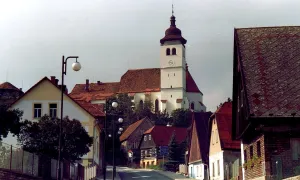
Photos: Sokoljan / Public domain — Wikimedia Commons. The author and licence also appear when you hover over the image.
Faktickým podkladem tohoto textu byl článek na Wikipedii, jehož autory jsou přispěvatelé Wikipedie. Článek je dostupný pod licencí CC BY-SA 4.0.
Location on the map
More monuments – Nové Město nad Metují
Show all in the municipality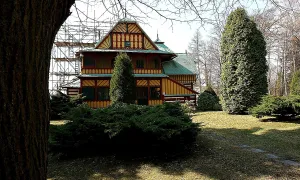


Příběhy a pověsti
Legendy, pověsti a příběhy spjaté s touto památkou
Fotografie návštěvníků
Zatím žádné fotografie. Buďte první, kdo přidá fotografii z návštěvy!
Log in a přidejte svou fotografii nebo hodnoťte.
Za ověřenou návštěvu v aplikaci získáte víc bodů — poznáme podle GPS, že jste na místě.
Reviews and comments