



Kostel svatého Jiljí Church
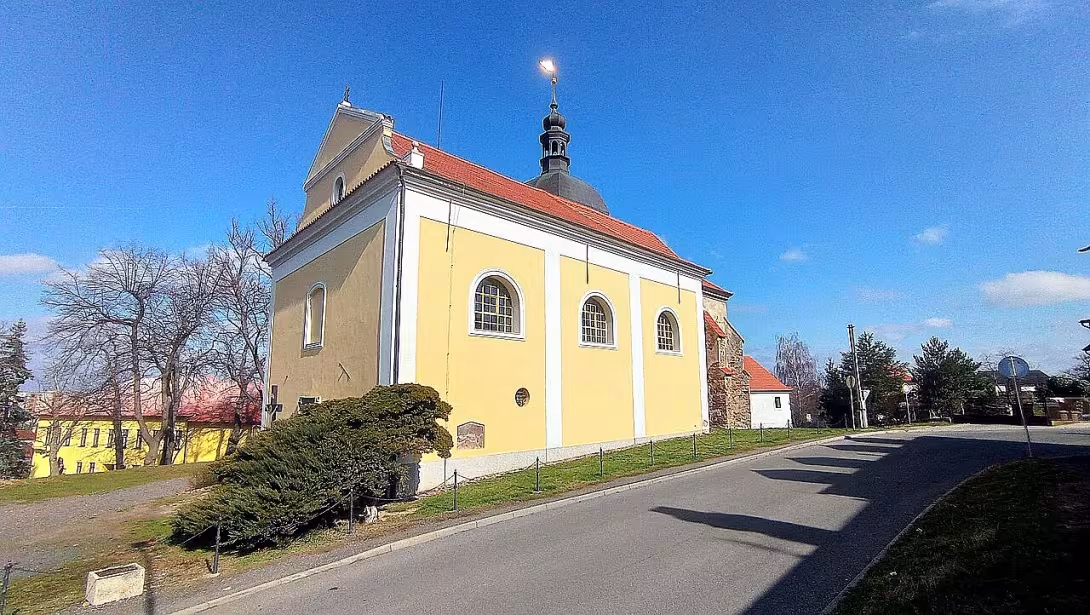
Kostel svatého Jiljí in Hořovice is a historic temple from the first half of the 13th century, which has enriched itself with Baroque and rococo elements over the centuries. It dominates the southeast part of the city in Visecký Square and is included in the list of cultural monuments in the Beroun district. This monument is important for its building development and cultural value, and protection includes a cemetery chapel and surrounding grounds.
The establishment of the church and rectory dates back to the period when Hořovice took over Plichta ze Žerotína together with the brothers Jark and Habart. Probably the original building was wooden. The church was dedicated to the French Christian hermit to St. Jilji. During the Gothic period, the temple ship was built without pillars and vaults, while the Gothic core itself probably came from the third quarter of the 14th century. In writing, the object is documented by 1321.
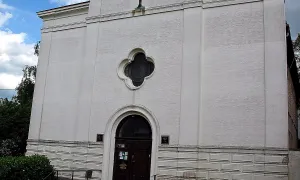
The present appearance of the church is the result of several reconstructions. It consists of a rectangular hall tripod with a narrower polygonally completed presbytery, circles and northern sacristy. On the north side of the ship lies the tower with baroque dancing and a foyer with rococo-style shield. On the roof there is a sanctus tower. The facade of the ship is divided by smooth lizens, semi-circular windows and a profiled ledge. The presbytery amplifies graduated support pillars with broken windows and a simple lining.
The interior is equipped with a pillar main altar with a statue of St. Gilya under a plastic canopy attachment. The side altar of the Holy Cross comes from the second quarter of the 18th century, while the altar of St. John Nepomuk and the Painful Mother of God are from the middle of this century. On the north wall of the presbytery lies the relief of Immaculata and the altar of Saint Anne. There is a reliquary made of mosquito cast iron in the south wall of the ship. The organ from 1896 was created by Prague organist Petr Emanuel Štěpán.
The church has undergone major changes under different owners. In 1687 the Baroque reconstruction was completed during the time of Bernard Ignác Jan of Martinique. Later, during the period of Count Eugene Václav Bruntal of Vrbno between 1736 and 1749, a rococo reconstruction took place. The church obtained a typical rococo pit similar to the New Chateau and a new interior.
The history of the building is marked by two fires in 1624 and 1639. In 1583, a circle was built that turned the inner space into a tripod. Before 1651, thanks to George Adam, Martinique became a dean's church. Until 1783 he served as the family tomb of the masters of the Roman and their friends; Most of their tombstones were moved to the morgue. The plate of the wealthy township Regina Myslářka remained in the outside part of the south wall. Of the original five bells remained only one from 1571, two new bells dedicated to the Virgin Mary and the Saint Jilji were sanctified in 2002.
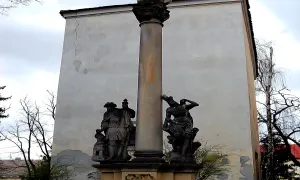
The church is surrounded by a parchment with linden, which was planted on November 12, 1857 as a gift of Genovsky. Stone steps rise from the north and on the west side there is an old paved road with cast iron railing. In the vicinity is a protected statue of St. Roch, which probably comes from Matthias Bernard Braun. East behind the presbytery is a morgue with a detailed baroque shield, built either at the time of church formation or during a martini repair in 1674- 1687.
Kostel svatého Jiljí represents a valuable architectural record of style changes from goth to rococo. It is an important cultural symbol of Hořovice, which is worth visiting thanks to its history and artistic equipment.
Historical milestones
- 1321
- Written proof of the church.
- 1651
- He became a dean's church.
Architectural development
Originally the Gothic core of the church was rebuilt and modified in the Baroque style of 1687, followed by a rococo reconstruction around 1736 to 1749. During these phases, the church acquired characteristic architectural elements such as the Baroque pit on the tower, the rococo pit and the new interior.
Historical events
- 1321
- Written proof of the church.
- 1583
- Building a circle, turning into a tripod.
- 1624 and 1639
- The church burned down twice.
- 1651
- He became a dean's church.
Points of interest
- Kostel svatého Jiljí in Horovice is a historical temple from the first half of the 13th century.
- Dominating the southeast parts of the city in the Visecký Square and is listed in the list of cultural monuments in the Beroun district.
- The establishment of the church and rectory dates back to the period when Hořovice took over Plichta ze Žerotína together with the Jark and Habart brothers.
- The church underwent major changes under various owners, including Baroque reconstruction for Bernard Ignác Jan of Martinique in 1687 and rococo reconstruction during the period of Count Eugene Václav Bruntal of Vrbno between 1736 and 1749.
- The history of the building is marked by two fires in 1624 and 1639.
Guide
Show guide text
This text was created by artificial intelligence and has not been editorially reviewed. It may contain inaccuracies.
Welcome to Horovice. Stop for a moment, take a breath and fully perceive the space you are in right now. You are standing in front of the church of St. Jilje, which stands in the southeast part of the city in the Square of Visec. It's where time stops and where every layer of stone tells its own story from centuries. Look at the overall shape of this temple. Even though we see it today as a harmonious whole, it is actually a fascinating record of architectural development that lasted hundreds of years. This church is not only a religious building but a real witness to history, which survived the storm of history and became an integral part of the cultural identity of the entire Beroun district.
Let us now return together in time, deep into the Middle Ages, to understand how this journey began. Imagine the landscape of Horovic in the first half of the 13th century. It was during this period that the first foundations of this temple were laid. It was a time of great change and construction. The establishment of the church and adjacent parish is closely linked to the period when the administration of Horovice took up Plichta ze Žerotína together with their brothers, Jark and Habart. It is these men who have put their energy and resources in the development of the place. Although the first traces of the building are older, in writing, the existence of the church is documented in 1321. Imagine how many generations of people were already going through the same paths you were walking. In the third quarter of the 14th century, the Gothic core of the church was created, which forms an invisible but solid foundation for everything you see today. Gothic was a time of reconciliation with the heavens, a time of ascension and spiritual search, and it is this atmosphere that still persists in the foundations of the building.
Now pay attention to the appearance of the building and let's try to decipher its architectural layers together. When you look at the facade and the total silhouette, you see not only one style, but rather a layered pie history. As I mentioned, the basis is goth, but time has brought new visions and new needs. In 1687 the church went through an important Baroque reconstruction. The Baroque was a period of grandeur, emotion and dynamics, which was reflected in the adjustments to this temple. But that wasn't all. In the eighteenth century, namely around 1736 and 1749, a rococo recovery came. Rococo brought ease, playfulness and finer details to architecture. This is why I recommend that you slowly go around the building and see how these different epochs intersect. Notice how the rigor of the Middle Ages turns into a baroque boom and then into rococo softness. It's like watching the dreams and preferences of the people who built and maintained this church change.
Each such change was associated with specific people, personalities who left their mark in Horovice. In addition to the already mentioned brothers of Žerotín, who started here, important representatives of the nobility and the church met with the church of St. Gilja. These included Bernard Ignác Jan z Martinic or Eugen Václav Bruntálský z Vrbna. These men were not only property managers but often patrons who influenced the shape of the temple and its importance in the region. An important milestone in the history of the monument was 1651, when the church became a dean's church. This meant that his position within the church hierarchy grew and became a centre for nearby farms. Imagine the excitement that must have been here at that time when priests from all over came together to address important issues of faith and governance.
If you're standing in front of this building, you might wonder why this church is so special. In addition to its architectural value, its continuity is fascinating. Nowadays, when things change so quickly, it's incredible to see a building that serves people continuously since the 13th century. Kostel svatého Jiljí is not just a dead museum, but a living cultural record. It is listed in the list of cultural monuments of the district of Beroun, which is the recognition of its irreplaceable nature. The interesting thing is that although regimes, dynasties and architectural fashion have changed over the centuries, this temple has remained the dominant part of the southeast of the city. It stands here as a silent witness to everything that happened in Horovice, from medieval markets to baroque festivals to modern times. It's a place where the spiritual sphere connects to the human struggle for beauty and durability.
Now that you know the story of this place, I suggest you just stand there for a while and feel the atmosphere of the square. Look up, watch the roof lines and imagine how the sky changed over this place after 800 years. Feel the silence that often prevails around the historical temple, even in the middle of the urban rush. It's a space to think about what we leave behind for future generations.
I hope this short trip to history has helped you to see the church of St. Gilji in a new light. It is a building that carries the secrets of many centuries and which still offers what to discover when we look at it with attention. Now I invite you to explore the beauty of Horovic. Go through the surrounding alleys, look for more clues of history, and let yourself be guided by curiosity. Thank you for joining me in this brief historical conversation. I wish you a pleasant rest of the day and many inspirational experiences in your further discovery. Goodbye.
Tips for visitors
For the best experience we recommend a visit in the morning, when natural light best highlights Gothic elements and interior architecture. If you are looking for a quieter atmosphere, we recommend visiting outside the main holiday days.
When shooting, focus on places where natural daylight penetrates, which gives the images depth. Take water with you and change for maintenance allowances.
In the vicinity of the church within 30 minutes you can visit the highest Baroque sculpture of St. Rocha or the New Chateau with similar rococo fighting. For families with children we recommend you prepare a short story about the history of the place to make the tour for the smallest attractive and educational.
Frequently asked questions
Can the monument be visited?
Religious buildings are usually open mainly during services; at other times a visit is normally arranged with the parish or the operator. We have not verified specific times.
Where is the monument?
Location: Hořovice, Středočeský kraj. The map on this page shows the exact spot.
Why is the monument protected?
It is listed in the Central List of Cultural Monuments of the Czech Republic as a cultural monument (register no. 1000135867).
Businesses nearby
Do you run a restaurant, accommodation, shop, museum, rental, wellness or other visitor service near this monument? Show yourself directly to the people heading to it — this is how they will see you in the app and on the web:
Events nearby
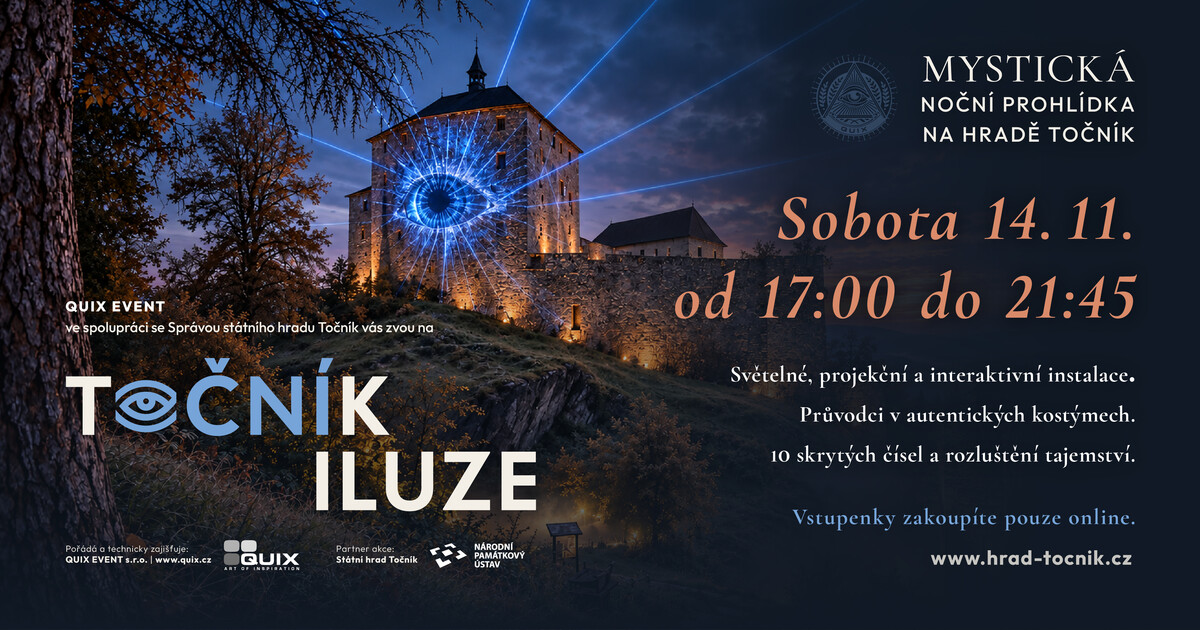
Zdroj akcí: otevřená data měst a obcí ČR (Národní katalog otevřených dat) a kalendář akcí Národního památkového ústavu.
Nearby
The supreme Baroque sculpture of St. Rocha.
New lock with similar rococo fighting.
Accommodation nearby
Themed route
Thematic cruise route from Hořovice
1.Kostel svatého Jiljí * Type: * Church This church is the most prominent spiritual centre of the village Hořovice. Its history dates back to the 13th century, making it one of the most important sacral monuments in the region. Visiting the church, you can look at rich history and architecture that goes beyond centuries.
2. Highly baroque sculpture of St. Roch * Type: * Skulpture This extraordinary statue is located near the church and represents the ultimate masterpiece of baroque art. It is a great example of the rich artistic expression of that time, which is behind the attention of every traveler in love with history and art.
3. New lock * Type: * Lock This chateau is known for its rococo fighting, which attracts attention with its elegance and architectural beauty. While walking around you can enjoy a quiet moment in the chateau park and appreciate the historical and aesthetic aspects of this monument.
4. Rococo Singing * Type: * Architectural element The poem is part of a new chateau and represents one of the most characteristic parts of Rococo architecture. It is a place where you can enjoy the quiet moments and explore the elegant design that is typical of this style.
5. Park at the chateau * Type: * Park The park around the new chateau offers beautiful walks between the trees and cozy places to relax. It is an ideal room for relaxation after exploring historical monuments where you can enjoy natural beauty and a quiet environment.
This route allows you to dive deeply into the rich history and architecture of the village Hořovice.
Seasonal recommendations
Spring in Hořovice brings a fine light to the church of St. Jilji, which penetrates through blooming trees and highlights the colour of stone facades. In this period the surrounding garden is full of first greenery and birds, creating a calm atmosphere suitable for contemplation. We recommend arriving early in the morning, when visitors are still in the minority, and dressing in a light top even with the possibility to switch, because the weather can be variable.
Summer offers sun rays that illuminate the stained glass and create a color game in the interior. The surrounding meadows are in full bloom and smell of grass, which underlines the joyful and open nature of the place. A larger number of tourists may appear in the main summer season, therefore it is convenient to arrive before noon or after the afternoon, and remember the comfortable shoes and sun cap.
Autumn leaves surround the church with golden tones, and when the sun falls, the inner spaces gain a warm, almost intimate touch. Colder weather brings fewer people, so you can enjoy a quieter tour. We recommend dressing up in layered clothes, carrying an umbrella for possible showers and planning a visit to the late afternoon when the light is most pleasant.
Winter covers the church of St. Gilji in a quiet snow coat; The low angle of the sun creates dramatic shadows and the inner lighting seems even more pronounced. It is convenient to come in the morning when the crowds are the smallest, and dress warm - sweater, coat, hat and gloves - to keep the visit comfortable even at low temperatures.
Visualizations and artistic views


The visualisations are generated by artificial intelligence and serve as inspiration.
Photos from the area
Real photos taken near the monument


Zdroj a licence jsou uvedeny u každého snímku.
Tips from visitors
No tips yet. Be the first!
Log in and add your tip.
Sources and literature
Photos: IrenaKol / CC BY-SA 4.0 — Wikimedia Commons. The author and licence also appear when you hover over the image.
Faktickým podkladem tohoto textu byl článek na Wikipedii, jehož autory jsou přispěvatelé Wikipedie. Článek je dostupný pod licencí CC BY-SA 4.0.
Location on the map


Příběhy a pověsti
Legendy, pověsti a příběhy spjaté s touto památkou
Fotografie návštěvníků
Zatím žádné fotografie. Buďte první, kdo přidá fotografii z návštěvy!
Log in a přidejte svou fotografii nebo hodnoťte.
Za ověřenou návštěvu v aplikaci získáte víc bodů — poznáme podle GPS, že jste na místě.
Reviews and comments