






kostel svatého Jiljí (Ruda) Church
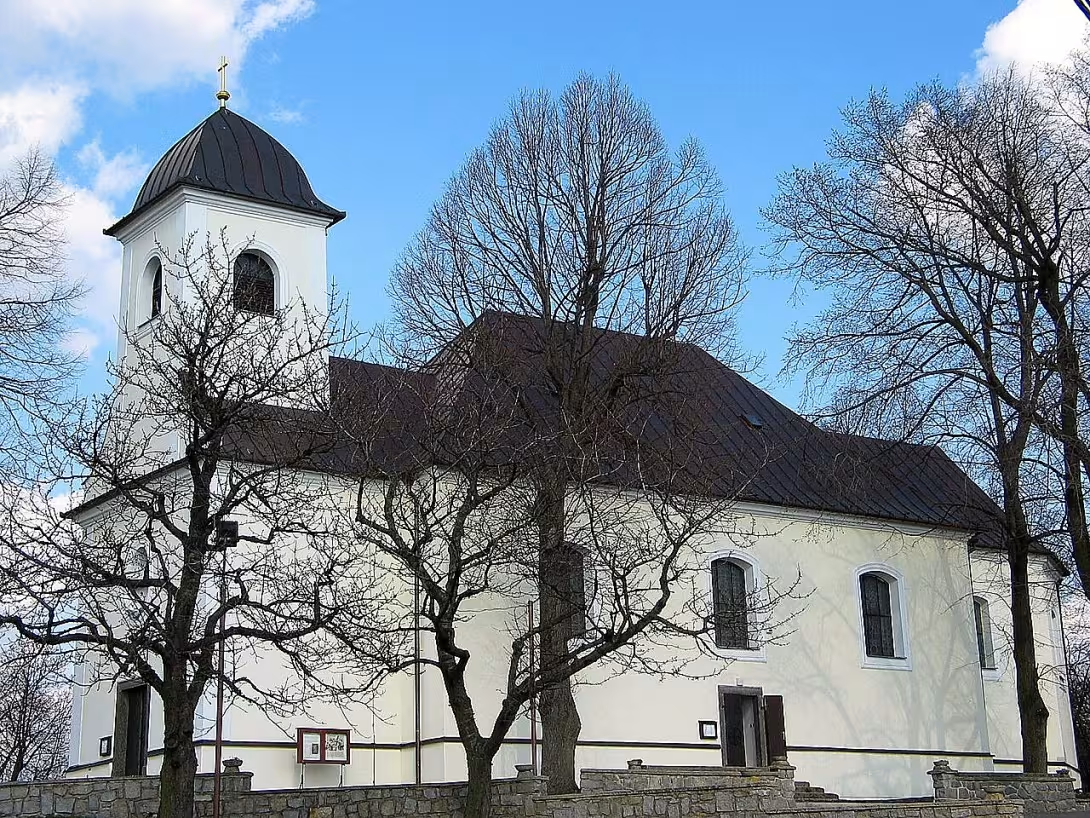
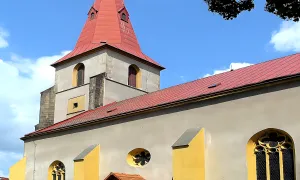
The Church of Saint Giles in Ruda is a Roman Catholic parish church located at the village's heart, serving as a central spiritual hub for the community. Constructed between 1792 and 1795, this church features a late 18th-century architectural style marked by simplicity and functionality. Its vaulted presbytery reflects Enlightenment influences prevalent in Bohemia during the Habsburg Monarchy era. The church holds historical significance as it replaced an earlier structure demolished in 1784 to make way for a school building.
The origins of the Church of Saint Giles date back to when Ruda was part of the Habsburg Monarchy, a period characterized by cultural and architectural shifts influenced by Enlightenment ideas. Construction began with the laying of its foundation stone on May 25, 1792, and it was consecrated on September 4, 1795, by Josef Karol Pahnost. This era saw a trend towards simpler church designs, aligning with broader European movements.
Architecturally, the Church of Saint Giles features a straightforward design typical of its time, emphasizing functionality over ornate decoration. The interior includes notable artistic elements such as an altar painting by Josef Škoda and wood carvings by Heřman Kotrba, enhancing its cultural richness. Originally, the church had three bells; however, two were requisitioned during World War II on March 26, 1942. One was melted down for use by the German army, while the other was recovered in military storage in 1945. In response, new bells were acquired and consecrated on October 4, 1970, bringing the total to four: two original and two new ones.
Throughout its history, the Church of Saint Giles has witnessed significant events that have shaped its legacy. It houses a bell from 1709 originally dedicated to Saint Wenceslas, relocated from Tasov, and another dating back to 1516 dedicated to Saint Giles. The new bells acquired in 1970 are dedicated to the Virgin Mary and Saint Joseph, reflecting ongoing traditions of reverence and community involvement.
Today, the Church of Saint Giles remains an accessible site for visitors interested in its historical and architectural significance. Its enduring presence as a parish church underscores its importance within the local community, offering insights into Ruda's cultural and spiritual life over centuries. The church's blend of historical artifacts and artistic elements makes it a worthwhile destination for those keen to explore Czech heritage. Visitors are invited to experience this remarkable monument firsthand, appreciating its role in both past and present contexts.
Then and now
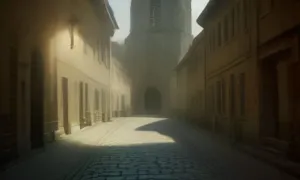
Drag the slider to compare how the landmark may have looked when it was built with the view today.
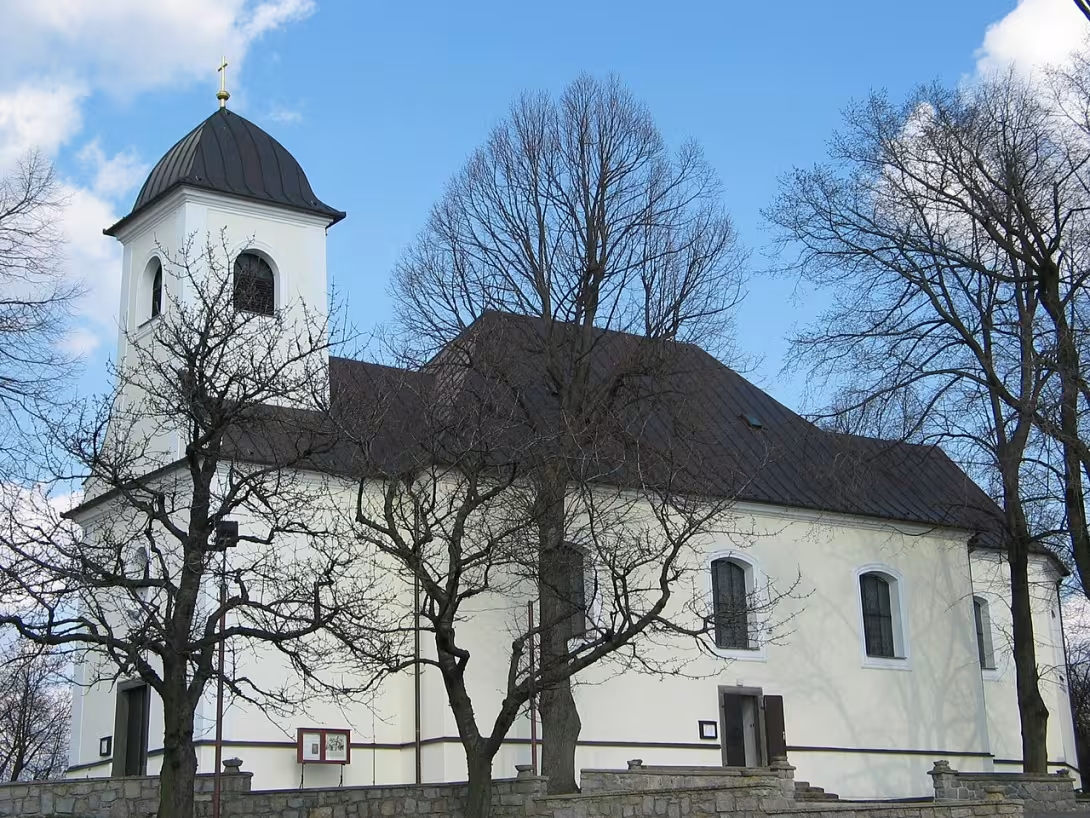
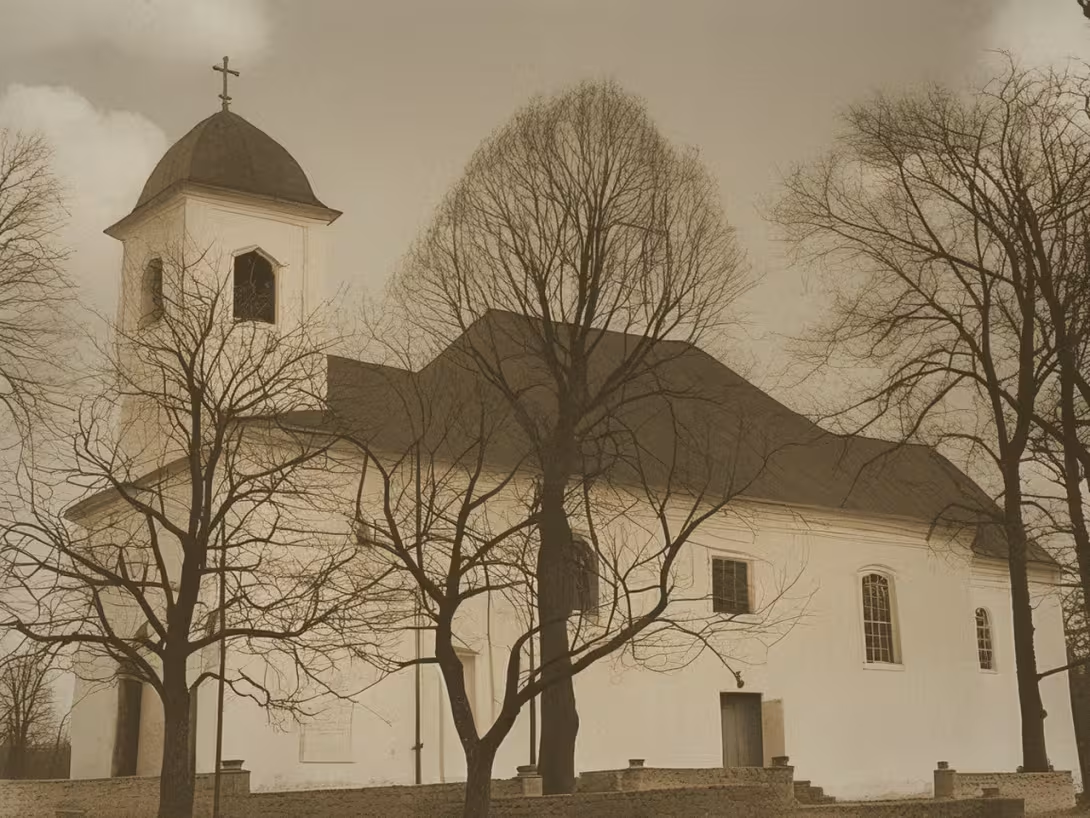
The historical appearance on the left is an AI-generated visualisation and serves as inspiration only.
Historical milestones
- 1784
- Demolice původní struktury kostela pro školu.
- 1792
- Založení základního kamene kostela svatého Jiljí.
- 1795
- Konzekrace kostela svatého Jiljí Josefovem Karolem Pahnostem.
- 1942
- Zapojení dvou zvonů během druhé světové války.
- 1945
- Návrat jednoho zvonu z vojenského skladu.
- 1970
- Konzekrace nových zvonů, včetně těch věnovaných Panně Marii a svatému Josefovi.
Architectural development
The Church of Saint Giles was built between 1792 and 1795 in a simple architectural style with a vaulted presbytery. Initially featuring three bells, two were requisitioned during World War II, leading to the acquisition of new ones in 1970. The church's interior includes an altar painting by Josef Škoda and wood carvings by Heřman Kotrba.
Historical events
- 1792
- The foundation stone of the new Church of Saint Giles was laid on May 25, 1792.
- 1795
- The church was consecrated on September 4, 1795, by Josef Karol Pahnost.
- 1942
- Two of the original bells were requisitioned during World War II on March 26, 1942.
- 1970
- New bells were acquired and consecrated on October 4, 1970.
Points of interest
- The Church of Saint Giles replaced an earlier structure that was demolished in 1784 to make room for a school building, reflecting the era's prioritization of education and progress.
- During World War II, two of the church’s original bells were requisitioned by the German army on March 26, 1942; one was melted down while the other was later recovered from military storage in 1945.
- The church houses a bell originally dedicated to Saint Wenceslas, dating back to 1709 and relocated from Tasov, showcasing its connection with broader regional religious traditions.
- Architecturally, the Church of Saint Giles reflects Enlightenment influences through its simplicity and functionality, mirroring cultural shifts during the Habsburg Monarchy era in Bohemia.
- The new bells acquired in 1970 are dedicated to the Virgin Mary and Saint Joseph, illustrating the community's ongoing commitment to honoring traditional religious figures.
Guide
This guide is narrated by a synthetic voice generated by artificial intelligence.
Show guide text
This text was created by artificial intelligence and has not been editorially reviewed. It may contain inaccuracies.
Welcome to the Church of Saint Giles in Ruda, a cherished Roman Catholic parish church nestled at the heart of this quaint village. As you stand here, take a moment to absorb the serene ambiance surrounding this historic edifice. The simplicity and elegance of its design speak volumes about its late 18th-century origins.
The story of this church begins with an intriguing chapter in Ruda's history. In 1784, the original structure was demolished to make way for a school building, reflecting the era’s emphasis on education and progress. This decision set the stage for what would become a central pillar of the community—the Church of Saint Giles.
Construction commenced in 1792, marking a new chapter with the laying of its foundation stone. By 1795, the church was consecrated by Josef Karol Pahnost, an important historical figure whose influence is still felt today. As you look around, notice the vaulted presbytery that exemplifies the architectural style of that period.
The church has witnessed significant events throughout history. During World War II, on March 26, 1942, two of its original bells were requisitioned by the German army—a poignant reminder of the times. However, in 1945, one bell was returned from a military warehouse, symbolizing resilience and hope.
Fast forward to 1970, when new bells dedicated to Our Lady and Saint Joseph were consecrated, adding another layer to this church's rich tapestry of stories. These moments are etched into the very fabric of the building, inviting you to reflect on its enduring legacy.
As we conclude our tour, I invite you to explore further. Imagine the footsteps of those who have walked these grounds before us and consider the countless stories yet untold. Thank you for joining me in this journey through history at the Church of Saint Giles in Ruda.
Tips for visitors
The best time to visit the Church of Saint Giles in Ruda is during late spring or early autumn when the weather is mild, and the village is less crowded. This period offers pleasant temperatures for walking around and exploring the surrounding area. Additionally, visiting outside of peak tourist seasons allows you to appreciate the church's serene atmosphere without large crowds.
When visiting the Church of Saint Giles, it's advisable to bring comfortable walking shoes, especially if you plan to explore the nearby area. A camera is recommended for capturing the church’s architectural details and the picturesque village landscape. Since lighting inside historic buildings can be dim, a portable light source or using your phone’s flashlight might enhance your photography experience.
For photography enthusiasts, the best spots around the Church of Saint Giles are during the golden hours—shortly after sunrise or before sunset—when the natural light enhances the church's features and the surrounding village. The vaulted presbytery offers a unique interior perspective that is particularly striking in soft lighting conditions. Additionally, capturing the church from various angles within the village can provide diverse photographic opportunities.
Within 30 minutes of Ruda, visitors can explore other historical sites such as the nearby castles or nature trails for those interested in both history and outdoor activities. These locations offer a chance to see more of the region's heritage and natural beauty. For families with children, these areas often have open spaces suitable for picnics and leisurely walks, making them ideal for a day trip from Ruda.
Families visiting the Church of Saint Giles can enjoy a peaceful walk through the village afterward. There are no specific family-oriented attractions within immediate proximity to the church, but the tranquil setting is perfect for children to explore at their own pace. Bringing snacks and water is advisable, as there may not be many dining options nearby. Engaging with local history or participating in any available guided tours can also make the visit more educational and enjoyable for all ages.
Frequently asked questions
Can the monument be visited?
Religious buildings are usually open mainly during services; at other times a visit is normally arranged with the parish or the operator. We have not verified specific times.
Where is the monument?
Location: Ruda, Kraj Vysočina. The map on this page shows the exact spot.
Businesses nearby
Do you run a restaurant, accommodation, shop, museum, rental, wellness or other visitor service near this monument? Show yourself directly to the people heading to it — this is how they will see you in the app and on the web:
Events nearby
Zdroj akcí: otevřená data měst a obcí ČR (Národní katalog otevřených dat) a kalendář akcí Národního památkového ústavu.
Accommodation nearby
Themed route
Tematická výletní trasa: Kostel svatého Jiljí (Ruda)
1. Kostel svatého Jiljí (Ruda) - Typ: Náboženská památka - Proč stojí za návštěvu: Tento kostel je architektonickým skvostem, který přitahuje svou historií a jedinečnou stavbou. Je to centrum místního duchovního života a nabízí pohled na bohaté umělecké prvky z minulých století.
2. Místní muzejní expozice (Ruda) - Typ: Muzeum - Proč stojí za návštěvu: Tato expozice poskytuje vhled do historie a kultury obce Ruda. Zde si můžete prohlédnout různé artefakty, které dokumentují životní způsob a tradice místních obyvatel.
3. Nádvoří kostela svatého Jiljí (Ruda) - Typ: Historický areál - Proč stojí za návštěvu: Nádvoří je klidným místem, kde si můžete užít pohledu na kostel a okolní zelenou přírodu. Je to ideální místo pro odpočinek a reflektaci po návštěvě samotného kostela.
4. Kulturní centrum (Ruda) - Typ: Kulturní instituce - Proč stojí za návštěvu: Centrum nabízí různé kulturní akce a výstavy, které odrážejí místní uměleckou scénu. Je to skvělý způsob, jak se dozvědět více o současném kulturním životě obce.
5. Tradiční tržiště (Ruda) - Typ: Trh - Proč stojí za návštěvu: Toto místo je ideální pro ty, kdo chtějí objevit místní produkty a gastronomii. Je to také příležitost setkat se s obyvateli a získat autentický pohled na život v Rude.
Tato trasa nabízí kombinaci historie, kultury a každodenního života v Rude, což umožňuje návštěvníkům získat komplexní dojem o této malebné obci.
Seasonal recommendations
Spring: Visiting the Church of Saint Giles (Ruda) during spring offers a unique experience as nature awakens around this historical site. The surrounding landscape is adorned with blooming flowers and lush greenery, creating a picturesque setting that enhances the church's architectural beauty. Visitors can enjoy the gentle warmth of the sun filtering through the trees, casting dappled light on the cobblestone paths leading to the church. This season often sees fewer crowds compared to summer, making it an ideal time for those seeking a more tranquil visit. It is advisable to wear comfortable walking shoes and layers that can be adjusted as temperatures fluctuate throughout the day.
Summer: The summer months bring vibrant life to the Church of Saint Giles (Ruda), with long daylight hours allowing ample time to explore both the church's interior and its scenic surroundings. This period often sees an increase in visitors, especially during peak tourist season, so arriving early can help avoid larger crowds. The warm weather is perfect for a leisurely stroll through nearby nature trails or enjoying outdoor activities in the vicinity. Visitors should dress in light clothing, wear sunscreen, and carry water to stay hydrated while appreciating the church's serene atmosphere amidst summer's lively backdrop.
Autumn: Autumn transforms the Church of Saint Giles (Ruda) into an enchanting destination with its rich tapestry of warm colors as leaves change from green to shades of orange, red, and gold. The cooler temperatures provide a comfortable environment for exploring the church and enjoying outdoor activities like hiking or photography in this picturesque setting. This season is ideal for those who appreciate the beauty of nature's transition and wish to experience the church with fewer visitors than during summer. Layered clothing is recommended to accommodate varying weather conditions, ensuring comfort throughout your visit.
Winter: Winter offers a magical atmosphere at the Church of Saint Giles (Ruda), as snow blankets the landscape, creating a serene and tranquil setting that enhances the historical charm of the site. The shorter daylight hours mean visits are best planned for mornings when the light is most favorable for photography and exploration. While the church may have reduced opening times during this season, it still provides a peaceful retreat from the bustling holiday activities nearby. Visitors should dress warmly in layers to combat the cold, and consider bringing gloves and hats for added comfort while exploring the winter wonderland that surrounds the church.
Visualizations and artistic views


The visualisations are generated by artificial intelligence and serve as inspiration.
Photos from the area
Real photos taken near the monument


Zdroj a licence jsou uvedeny u každého snímku.
Tips from visitors
No tips yet. Be the first!
Log in and add your tip.
Sources and literature
Photos: Silvestr Dvořák / CC BY-SA 3.0 — Wikimedia Commons. The author and licence also appear when you hover over the image.
Faktickým podkladem tohoto textu byl článek na Wikipedii, jehož autory jsou přispěvatelé Wikipedie. Článek je dostupný pod licencí CC BY-SA 4.0.
Location on the map


Příběhy a pověsti
Legendy, pověsti a příběhy spjaté s touto památkou
Fotografie návštěvníků
Zatím žádné fotografie. Buďte první, kdo přidá fotografii z návštěvy!
Log in a přidejte svou fotografii nebo hodnoťte.
Za ověřenou návštěvu v aplikaci získáte víc bodů — poznáme podle GPS, že jste na místě.
Reviews and comments