



Kostel svatého Klementa (Lštění) Church
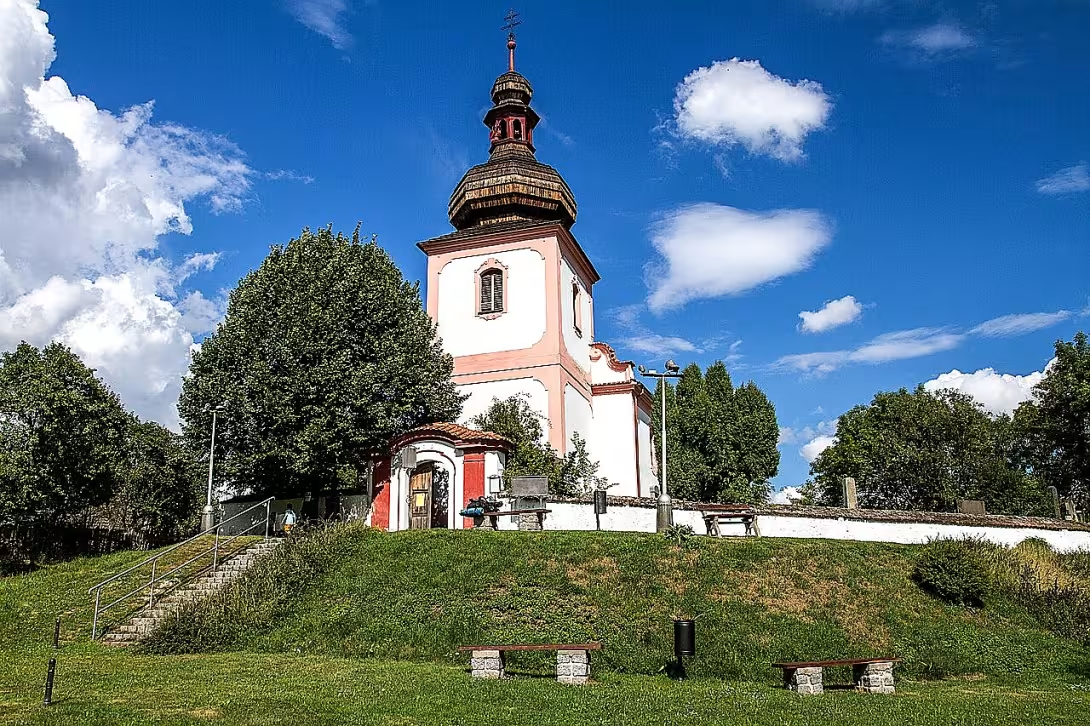
The Church of Saint Clement in Lštění is a remarkable testament to the architectural evolution and historical significance of medieval Bohemia. Situated on a rocky outcrop above the Sázava River within the former fortress area, this Roman Catholic church blends Romanesque, Gothic, and Baroque styles. Its history dates back to at least the 11th century, linked with significant political events involving the Přemyslid dynasty.
The origins of the Church are intertwined with Lštění's fortress history, which peaked during the Přemyslids' rule. The earliest mention is in Kosmas' Chronicle from 1055, when Duke Spytihněv II imprisoned his niece there. This period marks the beginning of the church's documented history, suggesting it likely originated as a Romanesque structure during this time of regional prominence.
Architecturally, the church underwent significant transformations over the centuries. Initially built in the Romanesque style, it was Gothic-rebuilt at the start of the 14th century and became a parish church by 1352. The Baroque transformation occurred in 1730 under Jan Josef hrabě z Vrtby, who owned the Konopiště estate. This period marked a significant stylistic shift that defined its current appearance.
Throughout its history, the Church of Saint Clement has witnessed key events and endured natural calamities. In 1970, a lightning strike severely damaged the roof and tower, necessitating major repairs in subsequent years. During these renovations, a Gothic portal was uncovered by hailstorm damage in 1974, adding to the church's historical intrigue.
Today, the Church of Saint Clement remains an active site for worship, with services held every other Saturday. It is surrounded by a cemetery where notable figures such as Eduard Grégr, a prominent Czech politician, are buried. The church and its surrounding area are protected as cultural heritage sites, underscoring their historical importance.
Visitors can appreciate not only the architectural beauty of the Church but also its rich history that reflects broader European trends over several centuries. Its location offers stunning views of the Sázava River and remnants of the ancient fortress, making it a worthwhile destination for those interested in exploring Bohemia's medieval past.
Then and now
Drag the slider to compare how the landmark may have looked when it was built with the view today.
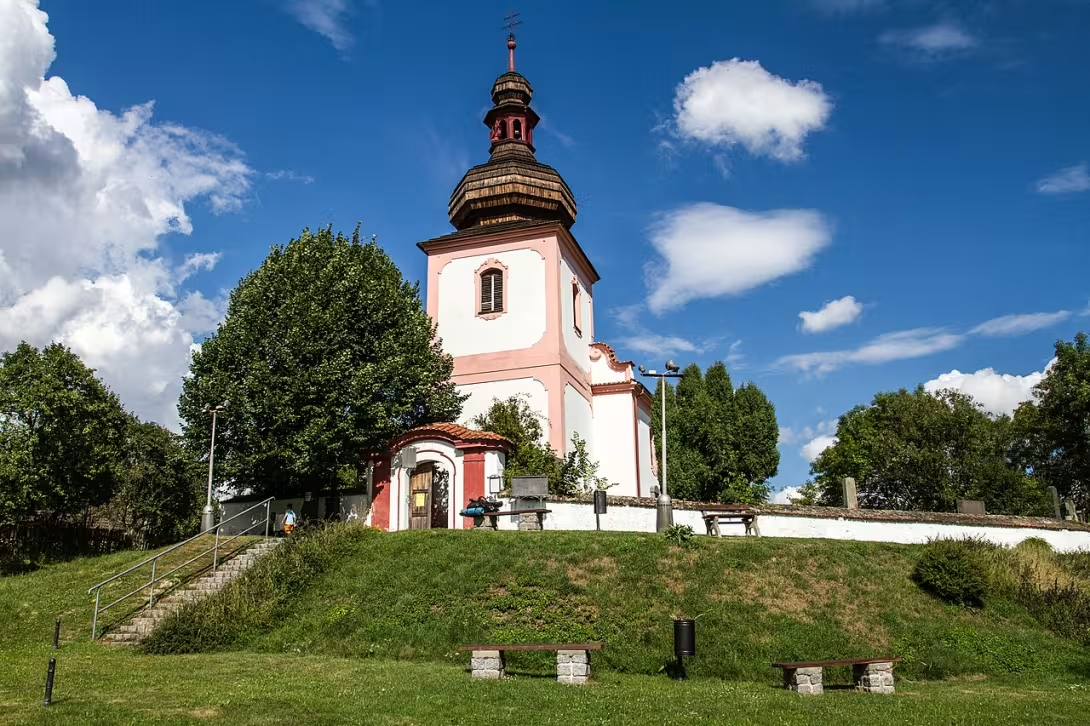

The historical appearance on the left is an AI-generated visualisation and serves as inspiration only.
Historical milestones
- 1055
- Oldest mention of the church in Kronice Kosmy.
- c. 11th century
- Predicted establishment as a Romanesque church during the reign of the Přemyslids.
- beginning of the 14th century
- Gothic reconstruction of the church.
- 1352
- The church became a parish church.
- 1730
- Baroque renovation under Jan Josef, Count of Vrtby.
- 1970
- The church was damaged by lightning, prompting repairs.
Architectural development
The Church of Saint Clement likely originated during the peak period of the fortress, with an early Romanesque predecessor. It was Gothic-rebuilt in the early 14th century and became a parish church by 1352. The Baroque transformation occurred in 1730 under Jan Josef hrabè z Vrtby's direction.
Historical events
1055: Spytihněv II imprisoned his niece on the fortress at Lštění.
14th century: The original Romanesque church was Gothic-rebuilt.
1352: Church recorded as a parish.
1730: Baroque reconstruction by Jan Josef hrabè z Vrtby.
Points of interest
- The Church of Saint Clement is believed to have been originally built as a Romanesque structure during the 11th century, coinciding with Lštění's prominence under the Přemyslid dynasty. This suggests that its architectural roots are deeply entwined with Bohemia’s medieval political landscape.
- A Gothic portal was unexpectedly uncovered in 1974 due to hailstorm damage, revealing a layer of history previously hidden beneath Baroque renovations. This discovery highlights the church's complex architectural evolution and adds depth to its historical narrative.
- The lightning strike in 1970 that severely damaged the Church’s roof and tower is an example of how natural events have shaped the building's preservation journey. The subsequent repairs not only restored but also preserved these significant architectural elements for future generations.
- Eduard Grégr, a prominent Czech politician known for his contributions to journalism and politics, is buried in the church's cemetery. His resting place adds a layer of political history to the site, connecting it with modern Czech national identity.
- The church’s location on a rocky outcrop above the Sázava River not only provided strategic advantages during its fortress days but also offers visitors today stunning panoramic views that enhance its historical allure and appeal as a tourist destination.
Guide
This guide is narrated by a synthetic voice generated by artificial intelligence.
Show guide text
This text was created by artificial intelligence and has not been editorially reviewed. It may contain inaccuracies.
The Church of Saint Clement, sometimes also called the Church of Saint Kliment, stands on a rocky promontory above the village of Lštění in the Benešov district. It lies in the area of a former fortified settlement, high above the Sázava River.
Lštění was a fortified settlement above the floodplain forests on the lower Sázava and belonged to the ruling Přemyslid dynasty. It is mentioned in Cosmas's Chronicle for the year 1055. At that time, Prince Spytihněv the Second had his sister-in-law, the wife of the future Czech King Vratislav the Second, imprisoned here.
The church probably emerged during the heyday of the fortified settlement. However, it is assumed that it had an even older, early medieval predecessor. The originally Romanesque building was converted to Gothic style at the beginning of the 14th century, and in 1352 it is recorded as a parish church. The church acquired its present Baroque appearance in 1730, when Jan Josef, Count of Vrtba, the owner of the Konopiště estate, had it rebuilt.
In the twentieth century, nature damaged the church twice. On April 28, 1970, a ball lightning struck the building and significantly damaged the roof and tower. This was followed by a general renovation from 1972 to 1973. On August 18, 1974, a hailstorm occurred that destroyed mainly the external plaster. However, during its repair, a Gothic portal was uncovered.
The church is single-naved with a flat ceiling. On the western side it is crowned by a tower with a square ground plan and a bulbous roof covered with shingles. Inside are an organ from 1889 by organ builder Ferdinand Langenauer.
The church is surrounded by a cemetery covering an area of nine ares. Among those buried there is also the Young Czech politician Eduard Grégr. North of the church stands a farmstead that belongs to the local part of Zlenice. The church, together with the fortified settlement area, is protected as a cultural monument.
Tips for visitors
The best time to visit the Church of Saint Clement in Lštění is during late spring or early autumn. During these seasons, the weather is typically mild, making it ideal for exploring both the church and its surrounding natural landscape. Additionally, visiting outside of peak tourist seasons can provide a more serene experience, allowing you to appreciate the historical architecture without large crowds.
Public transport is also accessible, with buses serving routes in the region. For the most current travel information, consider checking a transportation app or website.
When visiting, it’s recommended to bring comfortable walking shoes as there may be uneven paths leading up to and around the church. Additionally, carrying a light rain jacket can be useful due to unpredictable weather changes. A camera is also advisable for capturing the stunning views of the Sázava River and the layered architectural styles of the church.
For photography enthusiasts, the best spots are at sunrise or sunset when the lighting accentuates the textures of the Romanesque, Gothic, and Baroque elements of the church. The rocky outcrop provides a dramatic backdrop for photos. Early morning light can cast beautiful shadows across the structure, while evening light offers warm hues that highlight its historical features.
Nearby attractions within 30 minutes include other historical sites in the Středočeský kraj region. Visitors might explore remnants of the former fortress area or take a scenic walk along the Sázava River to appreciate the natural beauty and tranquility of the landscape. These nearby locations offer additional context to the history and culture surrounding Lštění.
Frequently asked questions
Can the monument be visited?
Religious buildings are usually open mainly during services; at other times a visit is normally arranged with the parish or the operator. We have not verified specific times.
Where is the monument?
Location: Lštění, Středočeský kraj. The map on this page shows the exact spot.
Why is the monument protected?
It is listed in the Central List of Cultural Monuments of the Czech Republic as a cultural monument. It is protected as part of a larger listed ensemble.
Businesses nearby
Do you run a restaurant, accommodation, shop, museum, rental, wellness or other visitor service near this monument? Show yourself directly to the people heading to it — this is how they will see you in the app and on the web:
Events nearby
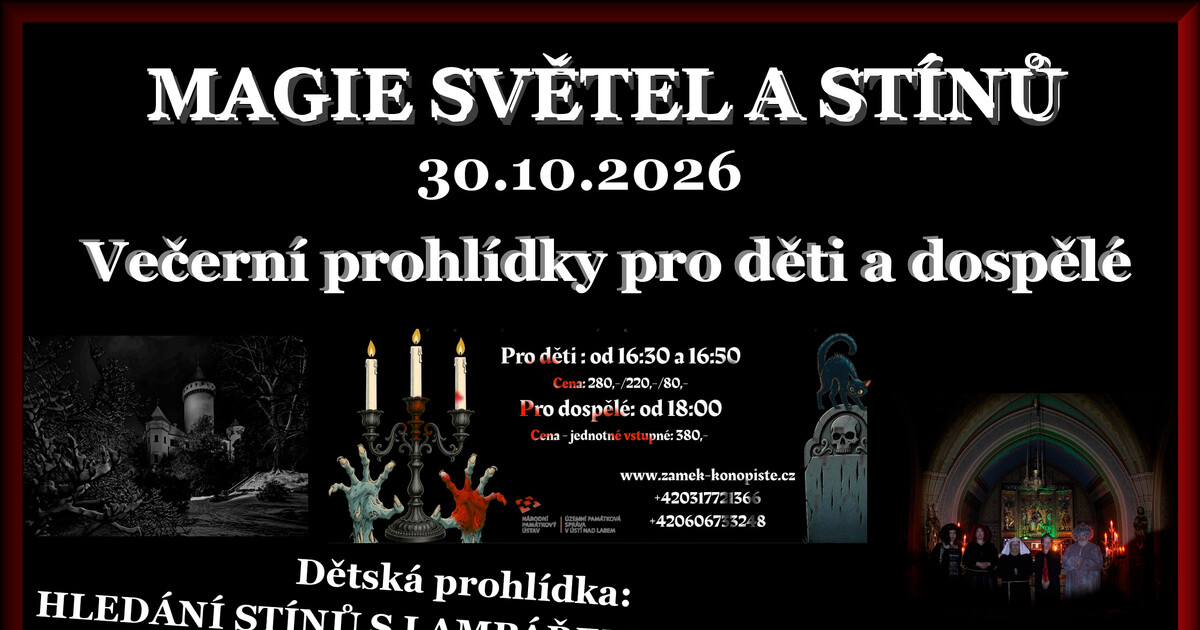
Zdroj akcí: otevřená data měst a obcí ČR (Národní katalog otevřených dat) a kalendář akcí Národního památkového ústavu.
Nearby
The church is located on a rocky island within the former fortress area, overlooking the Sázava River. The surrounding landscape includes historical remnants and natural features typical of the region.
Accommodation nearby
Themed route
Thematic Tour Itinerary: Lštění and the Church of Saint Clement
1. Church of Saint Clement (Lštění)
Type: Historical Landmark
Why Visit: The Church of Saint Clement is a remarkable example of Romanesque architecture, perched on a rocky island within the former fortress area. Its strategic location overlooking the Sázava River offers breathtaking views and insight into medieval fortifications. Visitors can explore its rich history and architectural beauty.
2. Former Fortress Area
Type: Historical Site
Why Visit: Surrounding the Church of Saint Clement, the remnants of the former fortress area provide a glimpse into the region's defensive past. Walking through this site allows visitors to imagine life in medieval times and appreciate the strategic importance of Lštění due to its position by the Sázava River.
3. Sázava River
Type: Natural Feature
Why Visit: The river itself is a serene natural feature that enhances the beauty of the Church of Saint Clement's location. A stroll along the banks offers peaceful views and an opportunity to reflect on the historical significance of this waterway, which has been central to the area for centuries.
This itinerary provides a cohesive exploration of Lštění’s most significant features, focusing on its historical and natural elements as highlighted in the provided context.
Seasonal recommendations
Spring: Visiting the Church of Saint Clement during spring offers a serene experience as nature awakens around Lštění. The surrounding landscape bursts with vibrant colors from blooming flowers and fresh greenery, creating an enchanting atmosphere perfect for photography or quiet reflection. This season sees fewer visitors compared to summer, allowing for more intimate exploration of the church's historical details. It’s advisable to wear comfortable layers as temperatures can vary, and carrying a light jacket is wise in case it gets chilly. Early morning visits are recommended to enjoy the soft sunlight filtering through the foliage.
Summer: The Church of Saint Clement shines under the bright summer sun, with lush greenery framing its historic architecture beautifully. This season attracts more visitors due to the pleasant weather, so arriving early can help avoid crowds and ensure a peaceful experience. It's ideal for outdoor activities like picnics in nearby parks or taking leisurely walks along the countryside trails. Light clothing is recommended to stay comfortable during the warmer days, and don't forget sunscreen and a hat for sun protection. Exploring the church in the late afternoon can offer softer lighting and cooler temperatures.
Autumn: Autumn brings a magical transformation to Lštění with its picturesque display of golden leaves and crisp air, enhancing the historical charm of the Church of Saint Clement. The changing foliage provides stunning backdrops for photography enthusiasts, while the cooler weather makes it an ideal time for longer visits without the summer heat. As visitor numbers decrease towards late autumn, it's a great opportunity to enjoy the church in relative tranquility. Dressing warmly with layers is advisable, and carrying a scarf or hat can help combat the chill as temperatures drop.
Winter: The Church of Saint Clement takes on a mystical appearance during winter, surrounded by snow-covered landscapes that create a serene and contemplative atmosphere. Shorter daylight hours mean planning your visit to make the most of the available light, with early mornings offering a peaceful experience before crowds gather. Winter weather can be unpredictable, so dressing warmly in layers is essential, along with wearing waterproof boots for any snowy paths.
Visualizations and artistic views


The visualisations are generated by artificial intelligence and serve as inspiration.
Photos from the area
Real photos taken near the monument


Zdroj a licence jsou uvedeny u každého snímku.
Tips from visitors
No tips yet. Be the first!
Log in and add your tip.
Sources and literature
Photos: Ondřej Kořínek / CC BY-SA 4.0 — Wikimedia Commons. The author and licence also appear when you hover over the image.
Faktickým podkladem tohoto textu byl článek na Wikipedii, jehož autory jsou přispěvatelé Wikipedie. Článek je dostupný pod licencí CC BY-SA 4.0.
Location on the map





Příběhy a pověsti
Legendy, pověsti a příběhy spjaté s touto památkou
Fotografie návštěvníků
Zatím žádné fotografie. Buďte první, kdo přidá fotografii z návštěvy!
Log in a přidejte svou fotografii nebo hodnoťte.
Za ověřenou návštěvu v aplikaci získáte víc bodů — poznáme podle GPS, že jste na místě.
Reviews and comments