






kostel svatého Martina (Javorník) Church
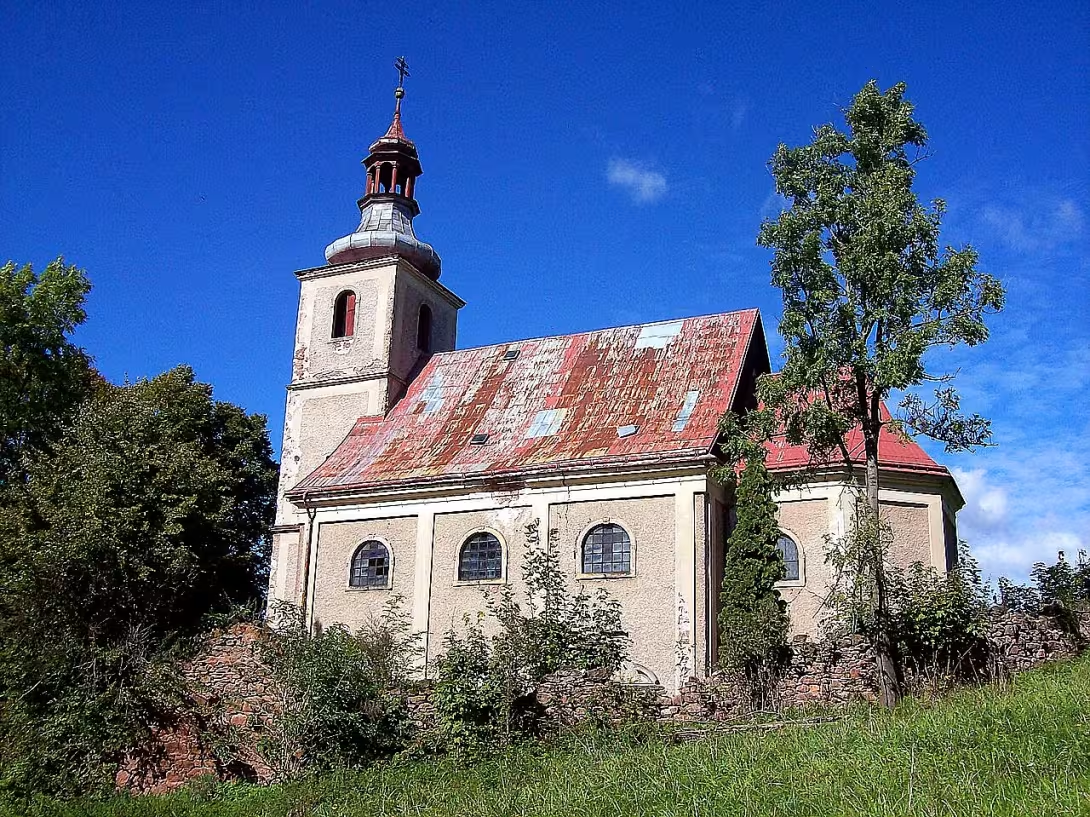
The Church of Saint Martin in Javorník is a Roman Catholic filial church which once served as a parish church. This architectural gem is located in the village Javorník in the village Rudík, in part of the region, between 1707 and 1708. It is an example of Baroque architecture in the village of the sacred area. The historical importance of the church is highlighted by its designation as a cultural monument of the Czech Republic on 4 October 1993.
At a time when the Czechs were part of the Habsburg monarchy, the Church of St. Martin reflects significant cultural development influenced by Catholicism. This time saw the flourishing religious architecture as part of the anti-reform movement. Architect A. Parma of the Guesthouse designed and constructed the church between 1707 and 1708, which contributes to this rich architectural heritage.
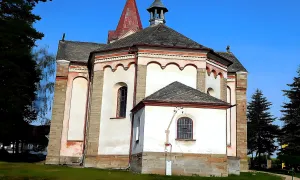
Architecturally, St. Martin's Church is characterized by its Baroque style, which is visible in its one-ship structure with a rectangular presbytery, which ends in polygonal style. On the north side of the building is a square sacristy and above the western facade is a tall, robust pyramid tower. While the main portal is simple and undecorated, the secondary entrance in the south wall is decorated with the relief of Christ, adding to its artistic attraction.
Property and administration have seen significant changes over time. In August 2017, Omnium acquired the property, which has since worked to preserve this cultural monument. Despite these efforts, the church is currently facing challenges as a result of structural damage and neglect, missing parts of the roof and threatened with building statics.
The Church of Saint Martin has several historical curiosities that add to its charm. One time, an unusual three-storey pulpit was placed on Tuscan columns, which was dismantled before the collapse in 2004. Baroque inventory church includes an altar made by Master Tobias of Lánov and stone pulpit created by K. Parma, both contributing to its historical and artistic value.
The Church of St. Martin is not today used for regular transport due to deteriorating condition. Yet it remains a place worth visiting for those interested in Baroque architecture and cultural history. Marking the church as a cultural monument underlines its importance and continuing efforts to preserve it is aimed at protecting its legacy for future generations.
Visitors are invited to explore St. Martin's church in Javorník, where they can witness firsthand architectural beauty and historical importance of this remarkable place. His story is proof of the rich cultural tapestry of the region and offers a unique view of the past.
Then and now
Drag the slider to compare how the landmark may have looked when it was built with the view today.
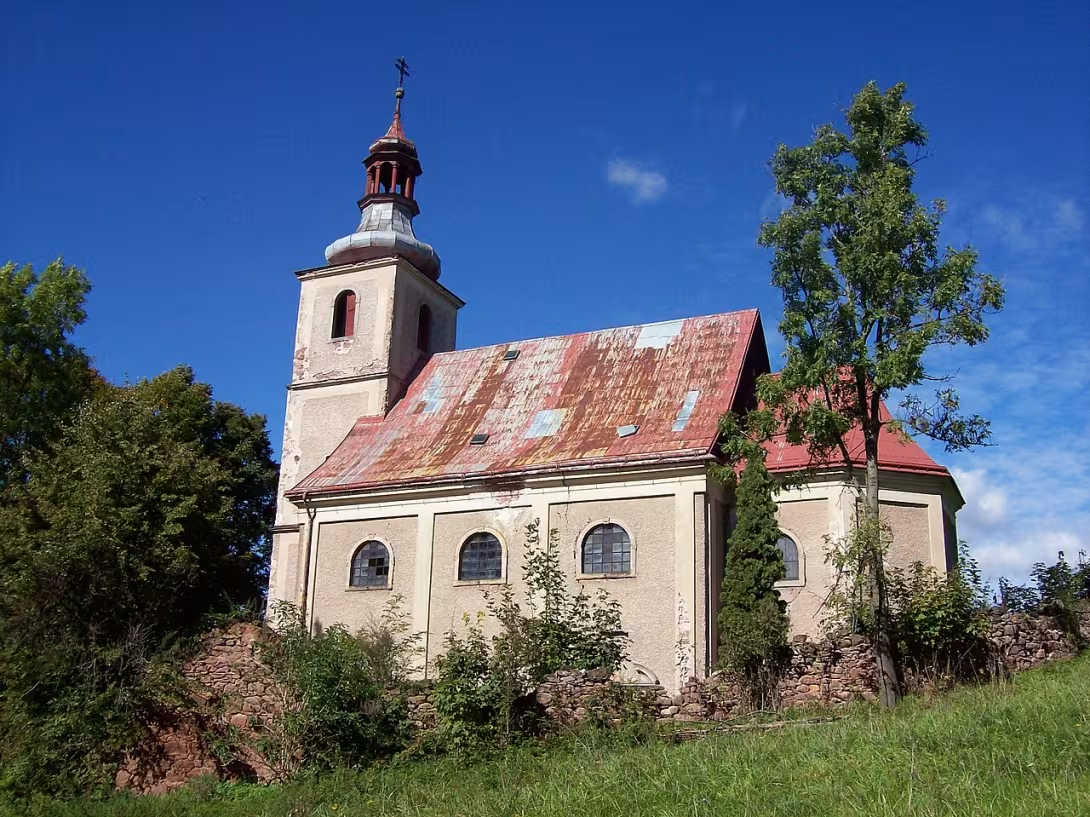
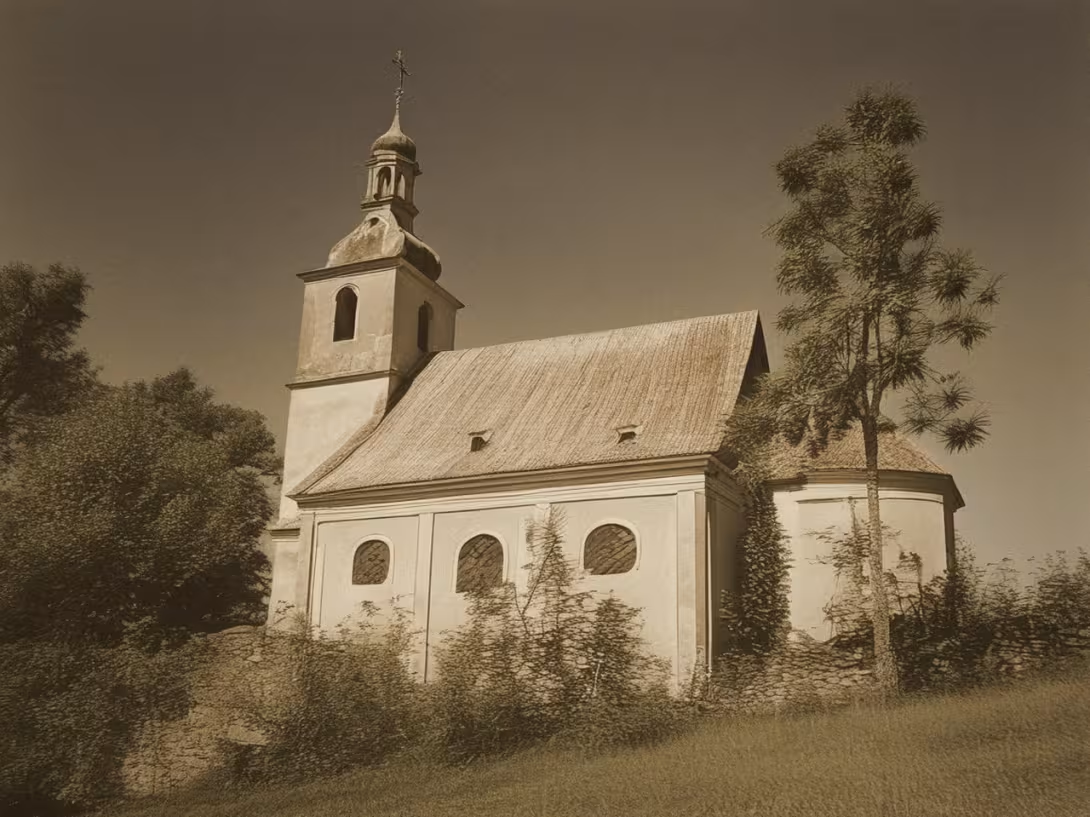
The historical appearance on the left is an AI-generated visualisation and serves as inspiration only.
Historical milestones
- 1707-1708
- Construction of St. Martin's Church in Javorník.
- 1993
- Designed as a cultural monument of the Czech Republic.
- 2004
- Dismantling the three-dimensional counter before it collapses.
- 2017
- Acquisition by Omnium for preservation purposes.
Architectural development
the church is built in Baroque style in 1707-1708 and has a single-boat structure with an elongated presbytery ending in polygonal style. It contains square sacristy on the north side and a tall, robust pyramid tower above the western facade. The main portal is simple and undecorated, while the second entrance in the south wall is decorated with relief from Christ.
Historical events
the church was built between 1707 and 1708 by architect A. Parma from the Guesthouse.
It was declared a cultural monument of the Czech Republic on 4 October 1993.
Points of interest
- The Church of Saint Martin once represented a unique three-story pulpit supported by Tuscan columns, which was dismantled before its collapse in 2004. This unusual feature highlights the rich Baroque heritage church.
- Architect A. Parma of Hostinný designed the church during the period of the marked anti-Reformation movement, which reflects significant cultural and religious influences in the Czech Republic under the rule of Habsburg.
Guide
This guide is narrated by a synthetic voice generated by artificial intelligence.
Show guide text
This text was created by artificial intelligence and has not been editorially reviewed. It may contain inaccuracies.
Welcome to the Church of St. Martin in Javorník, a remarkable law of Baroque architecture nestled in this historical environment of the village. As you stand here, take a moment to appreciate the calm but radiant atmosphere surrounding this once living place of worship.
The Church of Saint Martin was built between 1707 and 1708, at a time when architectural grandeur was expressed by elaborate designs and complex details characteristic of the Baroque period. This church has served for many years not only as a spiritual sanctuary, but also as a community cornerstone. His work was supervised by architect A. Parma from the Innkeeper who breathed into this sacred space artistic talent and structural ingenuity.
As you look at his facade, notice how the design of the building reflects his historical roots in Baroque architecture. Although time has not been kind to this structure, it leaves it in a state of disorder with visible structural damage and missing roof elements, the undeniable charm of contemplation remains. The church was recognized as of cultural importance when it was designated as a monument of the Czech Republic in 1993.
One of the most interesting features of this church was its unique three-storey pulpit, which once stood proudly supported by Tuscan columns. This remarkable piece was dismantled in 2004 before it could collapse and highlight both the rich heritage of the church and the persistent challenges of preservation. The pulpit is a proof of the creative spirit that defined baroque architecture, with its layers and decorative details that offer a view of the artistic priorities of the time.
While many historical figures associated with this site remain unnamed, their contributions left an indelible mark on this sacred space. In 2017 Omnium took over the ownership of the company church, which went on a mission to preserve what remained of its architectural beauty and cultural heritage.
As you continue your research, let yourself be drawn into the stories inside these walls. Consider how every stone and beam could echo the lives that once intertwined with this sacred place. The Church of Saint Martin invites us not only to witness history, but also to actively engage and think about its past while considering its future.
Thank you for joining me on this journey through time at St. Martin's Church in Javorník. I suggest you continue to explore and discover more about this fascinating place and the rich tapestries of the stories it has. Safe ways to dive deeper into the history and beauty that surrounds us.
Businesses nearby
Do you run a restaurant, accommodation, shop, museum, rental, wellness or other visitor service near this monument? Show yourself directly to the people heading to it — this is how they will see you in the app and on the web:
Nearby
ITEX Show interactive overview of the surroundings - restaurants, accommodation, rentals and other places within a 15 km radius.
Data: OpenStreetMap contributors, 15 km radius.
‡ Historical monuments
- Museum Underground Krkonoš (6.2 km)
- bridge Railway street over the river Clean in the Guesthouse [v okolí] (6.7 km)
- bridge Railway street over the river Clean in the Guesthouse [v okolí] (6.7 km)
- bridge Railway street over the river Clean in the Guesthouse [v okolí] (6.7 km)
- bridge Railway street over the river Clean in the Guesthouse [v okolí] (6.7 km)
- Aichelburg (8.3 km)
- Kashparka (8.7 km)
- Ruins of the castle Rechenburg (9.8 km)
Restaurant and catering
- Mountain service Black Důl (6.6 km)
- Big Pardubice Shacks (7.1 km)
- Cologne bouda (8.8 km - 319)
- Helena (8.9 km)
- Krakonoš (10.5 km - Color 41)
- La Piazza (10.6 km)
- Coffee & Bar Bruno (10.6 km - Havlickova 110)
- Ozon (10.8 km)
Accommodation
- chata Lawyer (4.1 km - Luční 188)
- B & B Judith (4.7 km - 5 May 428)
- VegZion (4.8 km - Mountain 464)
- Apartments Over the river (5.9 km - Under the Riesboras 22)
- Chata Kabrtova Bouda (6.2 km - Mountain 190)
- VrchlabixZ3ZX (9.8 km)
- Green Mill (11.0 km)
- Guesthouse Karkulka (11.0 km - 185)
› Rental and sports
- Hotel pool Omnia (4.1 km)
- K + K HOFMANKY (4.4 km)
- K + K Ski School (4.6 km - Sport 324)
- Karhan sport (6.2 km)
- Ski- center Smejdír (6.3 km)
- Skiing - "Ski rental Kos" / Ski- Verleih (8.0 km - Josef II class. 92)
- Sportisimo (8.7 km)
- Hervis (8.9 km)
© Tourism and nature
- Black Hora (6.9 km)
- Light (7.2 km)
- Špičás (8.0 km)
- Jelení vr (8.6 km)
- Slatins (9.1 km)
- Vlašský vr (9.8 km)
- Ant
- Tourist information centre (10.7 km)
Accommodation nearby
Themed route
Thematic tour of St. Martin's Church (Javorník)
1. St. Martin's Church - Type: Historical landmark - Why Visit: Start your journey in the heart of Javorník with this amazing example of Baroque architecture. The church dedicated to St. Martin is famous for its complex design and historical importance in the region.
2. Local Natural Path - Type: Walking Path - Why Visit: Just a short walk from St. Martin's Church, this trail offers visitors the opportunity to immerse themselves in the natural beauty surrounding Javorník. The journey is ideal for those who appreciate quiet landscapes and local flora.
3. Javorník Village Square - Type: Cultural pages - Why Visit: Located in a short distance from the church, this charming village square provides insight into the daily life of Javorník residents. It's an ideal place to observe traditional architecture and maybe interact with locals.
4. Community Centre Javorník - Type: Cultural place - Why Visit: Near the center of the village, this community centre is the central point for local events and meetings. Visitors can about Javorník's cultural heritage learn through exhibitions or can participate in social activities if their visit coincides with the event.
This tour offers a mixture of historical exploration and cultural immersion, providing a comprehensive experience of what makes Javorník unique.
Seasonal recommendations
The spring in St. Martin's Cube on Javorník offers a surviving combination of vibrating colours and warm sunlight, which are its historic architectural appearance. When the green shrubs and trees turn green, it reaches the pod for quality photos with a position of this romantic character. In this case, it is appropriate to provide for a church in early detours in order to proceed with the possible development of tourists intended to preserve their beauty. Thanks to the temperature, it is custom to wear a lying suit with a possible overview of the deposit to protect against the cold wind, which must deal with being able to be raised.
Summer: Summer is an ideal time for St. Martin's Church on Javorník, when the sun lights them up and adorns them in the best world. The atmosphere is full of life with which fields and green mountains are provided with beautiful backgrounds for the utility history and culture of the city. A request for data transfer shall be submitted in order to minimise the crowd settings. Hot rounded and sun protection are key, especially if you want to get a simple profit along the surrounding paths.
Autumn: Autumn on Javorník transforming the remains of St. Martin's challenging look when trees and shrubs turn into pink, granite and orange shades. This seasonal change brings melancholy beauty to the church, which is the ideal bridge for relaxation and reflective moment. Visiting this historic project at this point is a quiet experience because the crowd is decreasing. THE REASONS SHOULD BE IMPLEMENTED ON THE NOTICE OF HEALTH GOODS AND ISSUED BOTS FOR POTENTIAL DURING CONDITIONS THAT ARE KIND OF UNDERTAKING.
Winter: Winter passes to St. Martin on Javorník, which is one and quiet character. Witness ratios can be built with architectural details that should be modified and mild mystical products. By having a real market share, which will have a market share, it will have its own market share. The warm round, incl. leather shoes and insulated pocket shoes, is a quiet place to visit while the edge against possible snow or frost should also be taken into account.
Visualizations and artistic views


The visualisations are generated by artificial intelligence and serve as inspiration.
Tips from visitors
No tips yet. Be the first!
Log in and add your tip.
Sources and literature
Fotografie: Věra Beránková / CC BY-SA 3.0 — Wikimedia Commons. The author and licence also appear when you hover over the image.
Faktickým podkladem tohoto textu byl článek na Wikipedii, jehož autory jsou přispěvatelé Wikipedie. Článek je dostupný pod licencí CC BY-SA 4.0.
Location on the map

Příběhy a pověsti
Legendy, pověsti a příběhy spjaté s touto památkou

Fotografie návštěvníků
Zatím žádné fotografie. Buďte první, kdo přidá fotografii z návštěvy!
Přihlaste se a přidejte svou fotografii nebo hodnoťte.
Za ověřenou návštěvu v aplikaci získáte víc bodů — poznáme podle GPS, že jste na místě.
Reviews and comments