






Kostel svatého Martina se zaniklou vsí Church
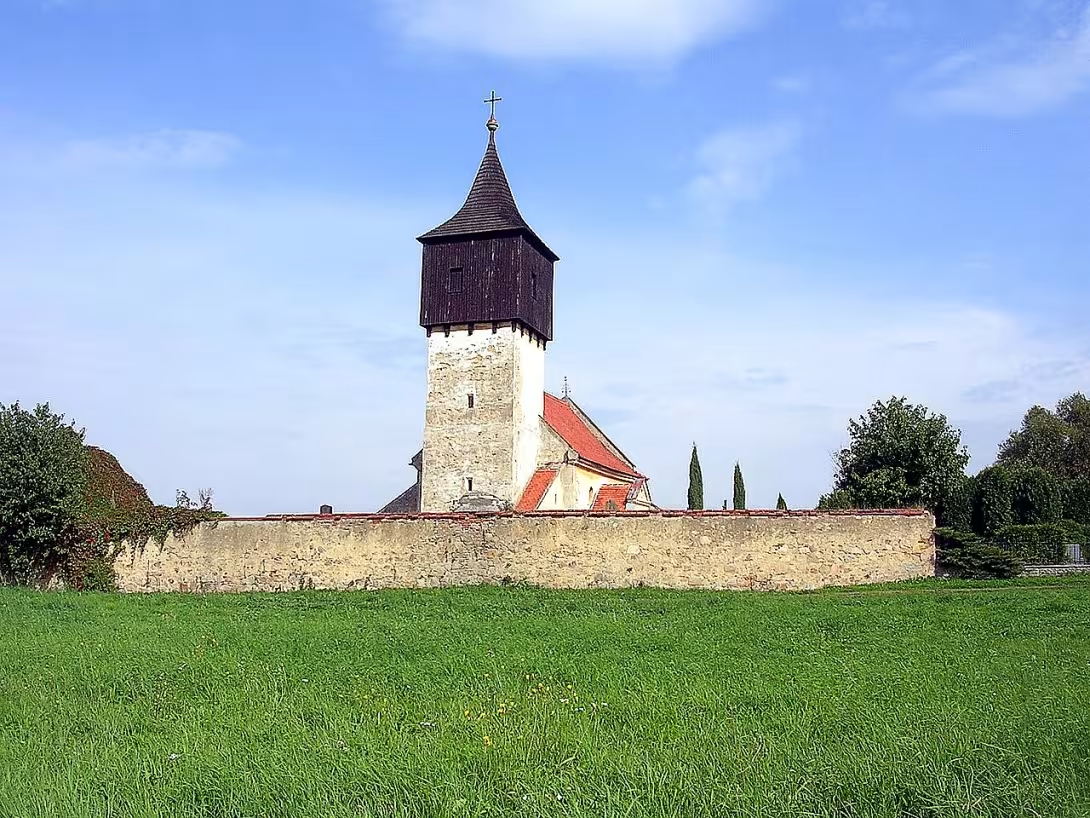
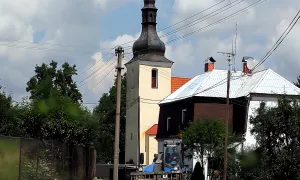
The Church of Saint Martin in Kozojedy is a remarkable historical monument located about 1 km north of the village on a cemetery site. This Romanesque-style filial church is the only visible remnant of an early medieval village that no longer exists and is protected as a cultural monument of the Czech Republic. Its significance lies not only in its architectural features but also in its historical context, having been established by 1220 on what was once a pagan burial ground.
The origins of this church date back to at least 1220, during a period when Bohemia experienced significant religious and political changes under the influence of the Holy Roman Empire. The early 13th century marked a time of consolidation for the Catholic Church's power in Central Europe. Initially serving as a parish, the church became a filial church following the Hussite Wars. By 1352, a plebánie (parish) was recorded at the site, with Pertold being noted as the first known priest from 1392.
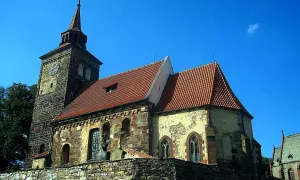
Architecturally, the Church of Saint Martin is distinguished by its Romanesque style, though it underwent significant modifications in the 16th century. The church features a single-nave structure oriented eastward, with a protruding apse supported by buttresses and a bell tower at its western façade. Constructed from lomové (quarry) stone, the nave's vaulted ceiling was added in 1769, replacing an earlier flat truss roof from 1673. The baroque sacristy on the north side, originally a chapel, features large semicircular windows and dates to renovations in the late 17th century. Additionally, a southern porch with a simple volute cornice and triangular pediment likely originates from the 19th century.
Throughout its history, the church has seen various administrative changes. Initially under the parish of Mukařov until 1757, it was later administered by Kostelec nad Černými lesy. These shifts reflect broader ecclesiastical and regional developments over time.
The Church of Saint Martin is notable for being one of four churches in the Černokostelec region mentioned in historical records. Its construction on a former pagan burial site adds to its historical intrigue, highlighting the transition from pre-Christian practices to established Christian worship in the area.
Today, the church remains accessible and continues to be an important cultural monument. Visitors can explore its architectural elements and reflect on its rich history. The Church of Saint Martin offers a unique glimpse into the past, making it a worthwhile destination for those interested in historical architecture and medieval history. Its preservation as a cultural monument ensures that future generations will continue to appreciate its significance and beauty.
Then and now
Drag the slider to compare how the landmark may have looked when it was built with the view today.
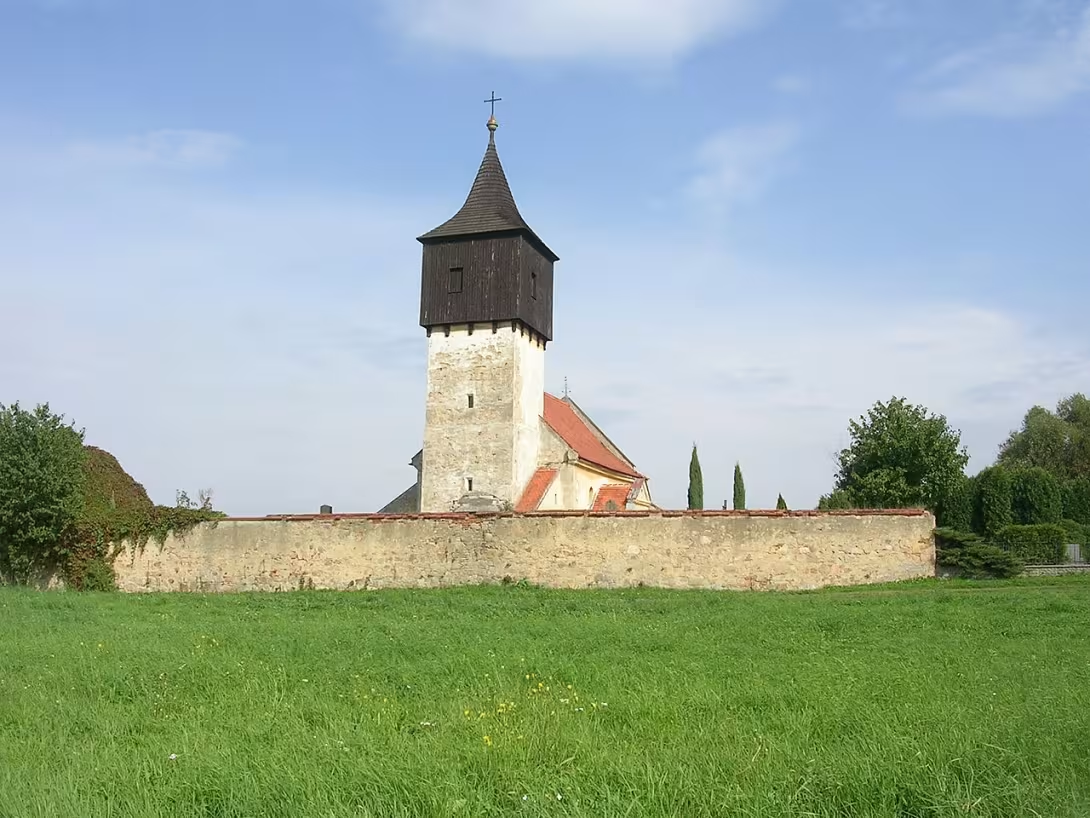
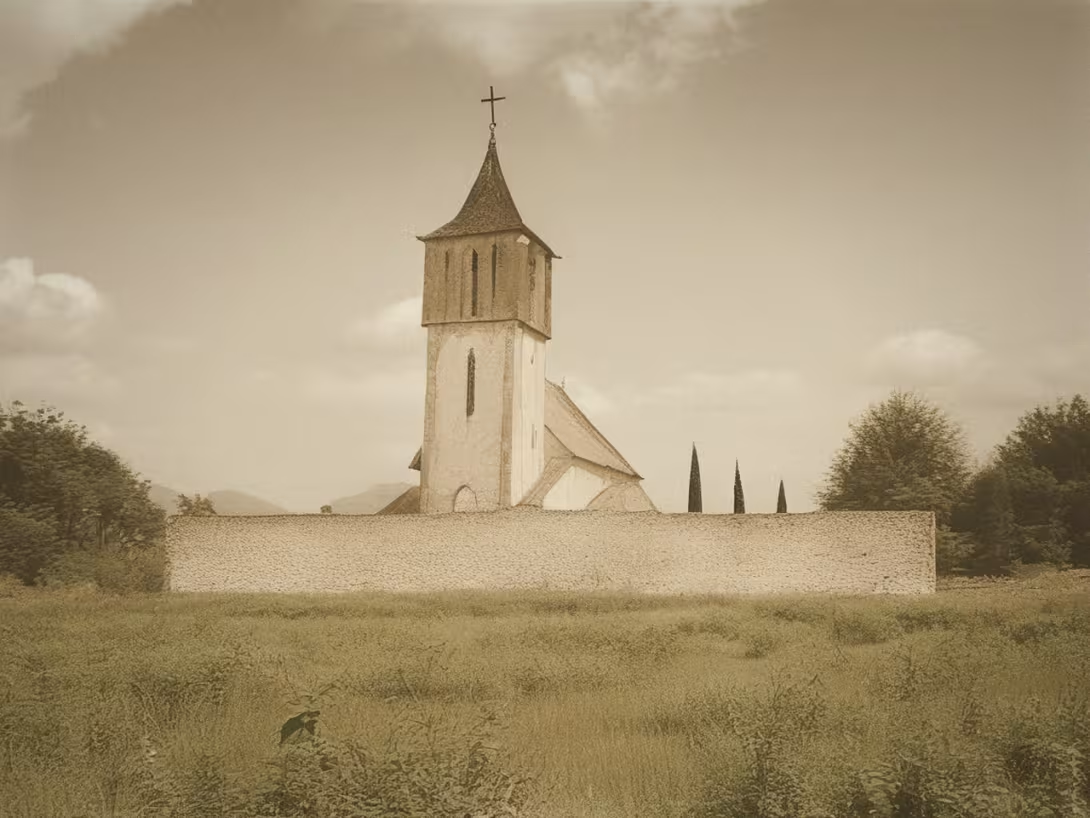
The historical appearance on the left is an AI-generated visualisation and serves as inspiration only.
Historical milestones
- 1220
- The church was established on a former pagan burial site.
- 1352
- A plebánie is recorded at the site.
- 1392
- Pertold served as the first known priest.
Architectural development
Originally Romanesque, the church underwent significant modifications in the 16th century. The nave's vaulted ceiling, divided by bands on pilasters and dating to 1769, replaced an earlier flat truss roof from 1673. A baroque sacristy was added to the north side during renovations in the late 17th century, featuring large semicircular windows.
Historical events
The church was established by 1220 and served as a parish until the Hussite Wars, after which it became a filial church.
In 1352, a plebánie (parish) is recorded at the site, with Pertold serving as the first known priest from 1392.
Points of interest
- The Church of Saint Martin is the only visible remnant of an early medieval village that no longer exists. - It was established by 1220 on what was once a pagan burial ground. - Initially serving as a parish, it became a filial church following the Hussite Wars. - Architecturally distinguished by its Romanesque style, it underwent significant modifications in the 16th century and features a baroque sacristy from late 17th-century renovations. - It is one of four churches in the Černokostelec region mentioned in historical records.
Guide
This guide is narrated by a synthetic voice generated by artificial intelligence.
Show guide text
This text was created by artificial intelligence and has not been editorially reviewed. It may contain inaccuracies.
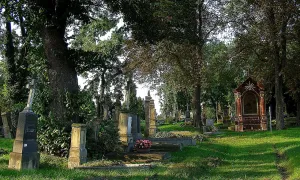
The Church of Saint Martin stands in a cemetery about one kilometre north of Kozojed, in a place where an early medieval village once spread out. That village disappeared, and the church is today its only visible remnant. However, archaeological traces of the original settlement have been preserved in its surroundings. The church is protected as a cultural monument, including the enclosure wall with a gate and the grounds of the entire area.
The church stood here already in the year 1220, and according to records it was built on a former pagan burial ground. It belongs to four churches in the Černokostelec area that are mentioned in the tithe register. In the year 1352, a parish, that is to say a rectory, is mentioned here, and from the year 1392 the rector Pertold. During the Hussite Wars, the church ceased to be a parish church, and from that time on it has served as a subsidiary church.
The originally Romanesque building was reconstructed in the sixteenth century. Still at the beginning of the seventeenth century, two small houses stood near the little church. According to records, however, there was a lack of water here, so the local people began to build new dwellings around a spring, where the centre of the village is today. The first mention of that spring comes from the year 1526. Until the year 1757, the church fell under Mukařov, then it was assigned to Kostelec nad Černými lesy.
It is a single-nave structure made of quarried stone with a rectangular ground plan, oriented towards the east. On the east side, the nave is enclosed by an extended apse supported by buttresses. On the opposite, western side, stands a prismatic tower, whose highest bell storey is lined with wood. On the northern side of the nave adjoins a rectangular sacristy, on the southern side an entrance hall.
The nave today is covered by a barrel vault from the year 1769, divided by bands on pilasters. Before that, the nave had a flat wooden ceiling made in the year 1673. The Baroque sacristy was originally a chapel. Its barrel vault was created probably in the second half of the seventeenth century, as were the large semicircular windows. The southern entrance hall with a simple scroll gable and a triangular superstructure probably dates from the nineteenth century. All the interior furnishings of the church are from the year 1872.
Frequently asked questions
Can the monument be visited?
Religious buildings are usually open mainly during services; at other times a visit is normally arranged with the parish or the operator. We have not verified specific times.
Where is the monument?
Location: Středočeský kraj. The map on this page shows the exact spot.
Why is the monument protected?
It is listed in the Central List of Cultural Monuments of the Czech Republic as a cultural monument (register no. 1000137891).
Businesses nearby
Do you run a restaurant, accommodation, shop, museum, rental, wellness or other visitor service near this monument? Show yourself directly to the people heading to it — this is how they will see you in the app and on the web:
Accommodation nearby
Trips and activities nearby
Guided tours, tickets and activities nearby from GetYourGuide
Affiliate link: if you buy from the partner, we may receive a commission. The price for you does not change.
Search tours and activities →Themed route
Trasa: Okolí Kostela svatého Martina se zaniklou vsí
1. Kostel svatého Martina se zaniklou vsí (hlavní cíl) - tento kostel je unikátní památkou, která nabízí pohled do historie zaniklé vesnice. Jeho stavba je pozoruhodná a stojí za návštěvu pro svou jedinečnou architekturu.
2. Hrad Veliš - ležící v blízkosti kostela, je středověkou památkou, která nabízí pohled do historie regionu. Jeho stavba je pozoruhodná a stojí za návštěvu pro svou jedinečnou architekturu a bohatou historií.
3. Kaple svatého Jana Nepomuckého - tato kaple leží nedaleko kostela a je pozoruhodnou památkou, která nabízí pohled do duchovní historie regionu. Její stavba je jedinečná a stojí za návštěvu pro svou jedinečnou architekturu.
4. Památník padlým - tento památník leží nedaleko kostela a je pozoruhodnou památkou, která připomíná historii regionu. Jejich stavba je jedinečná a stojí za návštěvu pro svou jedinečnou architekturu.
Seasonal recommendations
Jaro Spring is the ideal time to visit St. Martin's Church with the vanished village, as nature is in full bloom. The woods and surroundings of the church are covered in bright green leaves and flowers, creating a pleasant atmosphere. Practical tips: the best time to visit the church is between 10 and 15 o'clock when it is open and not too crowded. We recommend bringing appropriate clothing for a walk in nature.
Summer The main summer season is the busiest time for visitors to St. Martin's Church with the vanished village. The crowds are large, so it’s best to arrive early to avoid lines. The atmosphere is relaxed and sunny, perfect for strolling around the church and its surroundings. Practical tips: come before 10 o'clock to avoid the crowds.
Autumn The autumn season is ideal for visiting St. Martin's Church with the vanished village, as nature is beautifully colored. The woods and surroundings of the church are covered in brightly colored leaves, creating a pleasant atmosphere. Practical tips: the best time to visit the church is between 2 and 5 o'clock when it is open and not too crowded. We recommend bringing appropriate clothing for a walk in nature.
Winter Winter is a quiet time to visit St. Martin's Church with the vanished village. The atmosphere is calm and snow adds mystique to the church. We recommend bringing warm clothing for a walk in winter.
Visualizations and artistic views


The visualisations are generated by artificial intelligence and serve as inspiration.
Photos from the area
Real photos taken near the monument


Zdroj a licence jsou uvedeny u každého snímku.
Tips from visitors
No tips yet. Be the first!
Log in and add your tip.
Sources and literature
Photos: ŠJů / Public domain — Wikimedia Commons. The author and licence also appear when you hover over the image.
Faktickým podkladem tohoto textu byl článek na Wikipedii, jehož autory jsou přispěvatelé Wikipedie. Článek je dostupný pod licencí CC BY-SA 4.0.
Location on the map
Příběhy a pověsti
Legendy, pověsti a příběhy spjaté s touto památkou
Fotografie návštěvníků
Zatím žádné fotografie. Buďte první, kdo přidá fotografii z návštěvy!
Log in a přidejte svou fotografii nebo hodnoťte.
Za ověřenou návštěvu v aplikaci získáte víc bodů — poznáme podle GPS, že jste na místě.
Reviews and comments