






Kostel svatého Martina (Strážiště) Church
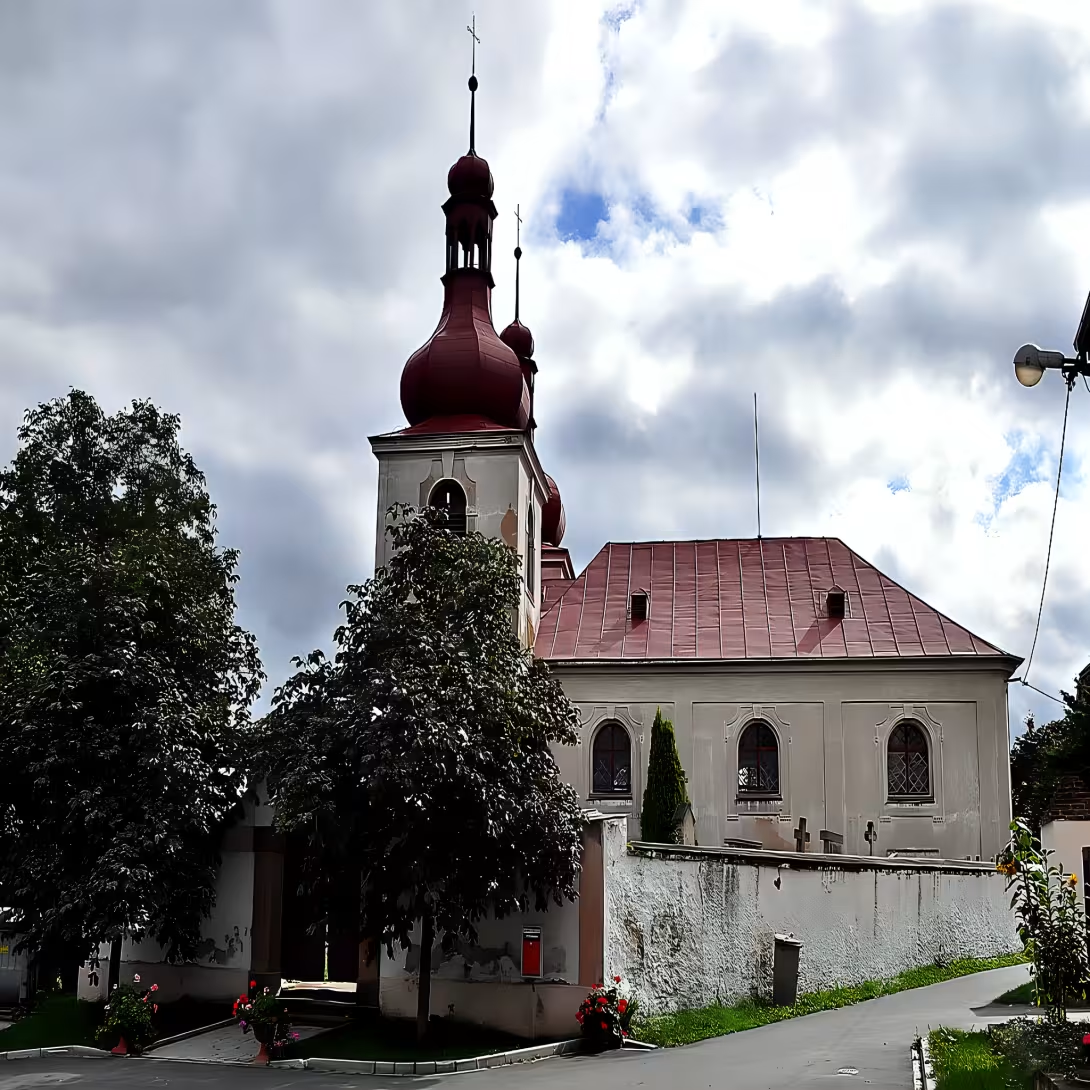
The Saint Martin's Church in Strážiště is a remarkable example of a church that has undergone significant transformations over the centuries. Located in the Plzeňský kraj region, this church has a rich history dating back to the 13th century. Originally a Gothic structure, it was rebuilt and expanded in the 16th century, adopting a Baroque style in the 17th and 18th centuries. The church's current appearance dates back to the 18th century, when it was renovated and expanded under the supervision of architect Tomáš Haffenecker.
The church's history is a fascinating blend of local and regional events. The first written record of a small church dates back to 1250, and it was first mentioned as a parish church in 1356. The church was rebuilt and expanded in the 16th century, and later purchased by the Lažanský family and incorporated into their Manětínský panství in 1672. The church underwent significant renovations and expansions in the 17th and 18th centuries, adopting a Baroque style. The church's twin bell tower is a notable feature of the building's architecture, and the interior is adorned with polychromed wooden reliefs of Saint John Nepomuk and the Immaculate Conception.
The church features two rare Renaissance bells from 1525 and 1529, located in a hand-carved bell stand. The interior boasts a main altar with a painting of Saint Martin from around 1730, created by Manětínský děkan Jan František Händl. The church's history is also marked by the establishment of a local parish in 1786, and its elevation to a separate parish in 1856. The church was renovated in 1967 and completed in 1971.
Today, the Saint Martin's Church is a significant cultural and historical landmark in the region, attracting visitors with its unique blend of Gothic and Baroque styles. The church is situated in the village of Strážiště, surrounded by rolling hills and picturesque countryside. The church's twin bell tower and richly decorated interior invite visitors into a space filled with history, reflecting both local heritage and broader European artistic trends.
Then and now
Drag the slider to compare how the landmark may have looked when it was built with the view today.
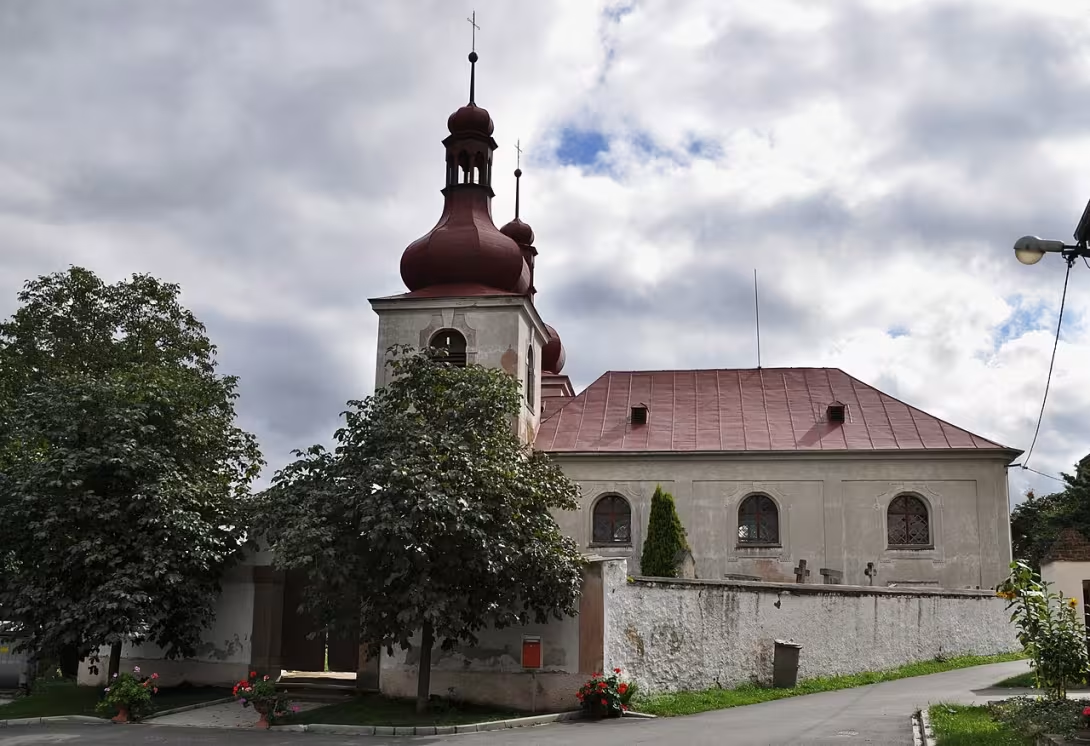

The historical appearance on the left is an AI-generated visualisation and serves as inspiration only.
Historical milestones
- 1250
- First written record of a small church
- 1356
- First mentioned as a parish church
- 1512
- Rebuilt and expanded in the Gothic style
- 1672
- Purchased by the Lažanský family and incorporated into their Manětínský panství
- 1727
- Renovated and expanded in the Baroque style
- 1786
- Establishment of a local parish
- 1856
- Elevation to a separate parish
- 1967
- Renovation of the church
- 1971
- Completion of the renovation
Architectural development
The church was originally a Gothic structure, later rebuilt and expanded in the 16th century. In the 17th century, it underwent significant renovations and expansions, adopting a Baroque style. The church's current appearance dates back to the 18th century, when it was renovated and expanded under the supervision of architect Tomáš Haffenecker.
Historical events
First written record of a small church dates back to 1250
The church was rebuilt and expanded in the 16th century
The church was renovated and expanded in the 17th century
The church was renovated and expanded in the 18th century
Owners
Plaský klášter, Lažanští, Karel Maxmilián Lažanský, hraběnka Marie Gabriele Lažanská
Points of interest
– The church's interior features a rare polychromed wooden relief of Saint John Nepomuk, which is a unique example of Baroque art in the region.
– The church's twin bell tower was built in the 18th century and is a notable feature of the building's architecture, offering a glimpse into the region's rich cultural heritage.
– The church's main altar features a painting of Saint Martin created by Manětínský děkan Jan František Händl in around 1730, which is a rare example of a Baroque painting in the region.
– The church's bell stand is hand-carved and features two rare Renaissance bells from 1525 and 1529, which are a testament to the region's rich history and cultural heritage.
– The church was renovated in 1967 and completed in 1971, but its current appearance dates back to the 18th century, when it was renovated and expanded under the supervision of architect Tomáš Haffenecker.
Guide
This guide is narrated by a synthetic voice generated by artificial intelligence.
Show guide text
This text was created by artificial intelligence and has not been editorially reviewed. It may contain inaccuracies.
On the village square of Strážiště in the Plzeň-sever district stands the Church of Saint Martin. It is originally Gothic, later rebuilt in the Baroque style, and has been protected as a cultural monument since 1958.
The first written mention of the small church, sometimes referred to only as a chapel, dates from 1250. The fact that it was built as early as the thirteenth century is documented by remnants of the presbytery preserved in the masonry. In 1356 it is mentioned as a parish church. During the Hussite Wars it was destroyed. Its late Gothic form was given to it between 1512 and 1529 by the Plasy abbot Linhart, because the village then belonged to the Plasy monastery.
In 1672 the Lažanský family bought Strážiště and annexed it to the Manětín estate. Karel Maxmilián Lažanský had the church rebuilt and enlarged. It acquired its Baroque appearance after 1727, when the Prague consistory granted permission to Countess Maria Gabriela Lažanská for its repair and renovation. The plans were drawn up by architect Tomáš Haffenecker.
The medieval rectory apparently disappeared after the Battle of White Mountain and the church fell under the administration of Manětín, and later Křečov. In 1786 a curacy was established here, which was elevated to an independent parish in 1856. It ceased to exist after the Second World War. Today the church belongs to the parish in Kralovice.
It is a single-nave rectangular structure with a flat ceiling and a three-sided presbytery. On its sides rise two symmetrical prism-shaped towers thirty-eight metres high. Between them stands an octagonal sacrament house. The towers are topped with sheet metal onion domes with lanterns. A bricked-up Gothic window has been preserved in the rear wall. The church is adjacent to a cemetery with a Baroque gate. In the wall behind the presbytery is a tombstone of the Plasy abbot Fortunatus Hartmann from 1765.
The interior furnishings date from the eighteenth century. On the main altar is a painting of Saint Martin from around 1730. It was painted by the Manětín dean Jan František Händl. The side altars are decorated with painted wooden carvings of Saint John of Nepomuc and the Immaculate Virgin Mary from the workshop of the Manětín sculptor Josef Herscher.
A rarity are two Renaissance bells from 1525 and 1529, hung in a hand-hewn bell frame. The organ from 1790 was brought here from Dolní Bělá. In 1902 it was replaced by an instrument from the workshop of Heinrich Schiffner.
Frequently asked questions
Can the monument be visited?
Religious buildings are usually open mainly during services; at other times a visit is normally arranged with the parish or the operator. We have not verified specific times.
Where is the monument?
Location: Strážiště, Plzeňský kraj. The map on this page shows the exact spot.
Why is the monument protected?
It is listed in the Central List of Cultural Monuments of the Czech Republic as a cultural monument (register no. 33207/4-1439).
Businesses nearby
Do you run a restaurant, accommodation, shop, museum, rental, wellness or other visitor service near this monument? Show yourself directly to the people heading to it — this is how they will see you in the app and on the web:
Nearby
The church is situated in the village of Strážiště, surrounded by rolling hills and picturesque countryside.
Accommodation nearby
Trips and activities nearby
Guided tours, tickets and activities nearby from GetYourGuide
Affiliate link: if you buy from the partner, we may receive a commission. The price for you does not change.
Search tours and activities →Themed route
Here's a suggested thematic tour around the Kostel svatého Martina (Strážiště) in Strážiště, Plzeňský kraj:
1. Kostel svatého Martina (Strážiště): This is the main attraction of the tour, a beautiful church situated in the heart of the village of Strážiště. The church is surrounded by rolling hills and picturesque countryside, making it a serene and peaceful destination. 2. Památník padlým: A short walk from the church, this memorial commemorates the fallen soldiers of World War I and II. It's a poignant reminder of the region's history and a great place to reflect on the sacrifices made by those who fought for their country. 3. Hřbitov: The local cemetery is a short stroll from the church and offers a glimpse into the lives of the villagers who have lived and passed away in Strážiště. Take a moment to appreciate the simple yet beautiful headstones and the peaceful atmosphere of the cemetery. 4. Nadstrážiště: This picturesque village square is surrounded by traditional Czech houses and offers a glimpse into the region's rural charm. Take a moment to admire the architecture and soak up the local atmosphere. 5. Kamenný most: A short walk from the village square, this old stone bridge spans the nearby stream and offers a beautiful view of the surrounding countryside. It's a great place to take a moment to appreciate the natural beauty of the area.
Seasonal recommendations
Jaro
In the spring season, St. Martin's Church is surrounded by blooming trees and flowers that add another dimension to its historic atmosphere. The specific spring lighting creates a pleasant and warm light that illuminates the interior of the church. We recommend visiting the church in early spring when crowds are smaller, allowing you to enjoy the calm and quiet environment. The best time to visit the church is between 9:00 and 11:00, when it's still relatively peaceful, and you can explore the details of the church without a disruptive crowd.
Summer
In the main summer season, St. Martin's Church is a popular destination for tourists and locals alike. The specific summer lighting creates a pleasant and bright environment that illuminates the interior of the church. We recommend visiting the church early in the morning or late afternoon when crowds are smaller, allowing you to explore the church without disruption.
Autumn
In autumn, St. Martin's Church is surrounded by beautiful fall colors that add another dimension to its historic atmosphere. The specific autumn lighting creates a pleasant and warm light that illuminates the interior of the church. We recommend visiting the church during the autumn season when crowds are smaller, allowing you to explore the church in peace. The best time to visit the church is between 10:00 and 12:00, when it's still relatively peaceful, and you can explore the details of the church without a disruptive crowd.
Winter
In winter, St. Martin's Church is surrounded by snow and tranquility that adds another dimension to its historic atmosphere. The specific winter lighting creates a pleasant and warm light that illuminates the interior of the church. We recommend visiting the church during the winter season when crowds are smaller, allowing you to explore the church in peace.
Visualizations and artistic views


The visualisations are generated by artificial intelligence and serve as inspiration.
Photos from the area
Real photos taken near the monument


Zdroj a licence jsou uvedeny u každého snímku.
Tips from visitors
No tips yet. Be the first!
Log in and add your tip.
Sources and literature
Photos: Zdeňka Bušková / CC BY-SA 3.0, rozlišení zvýšeno umělou inteligencí — Wikimedia Commons. The author and licence also appear when you hover over the image.
Faktickým podkladem tohoto textu byl článek na Wikipedii, jehož autory jsou přispěvatelé Wikipedie. Článek je dostupný pod licencí CC BY-SA 4.0.
Location on the map
More monuments – Strážiště
Show all in the municipality

Příběhy a pověsti
Legendy, pověsti a příběhy spjaté s touto památkou

Fotografie návštěvníků
Zatím žádné fotografie. Buďte první, kdo přidá fotografii z návštěvy!
Log in a přidejte svou fotografii nebo hodnoťte.
Za ověřenou návštěvu v aplikaci získáte víc bodů — poznáme podle GPS, že jste na místě.
Reviews and comments