






kostel svatého Michaela archanděla (Horní Záhoří) Church
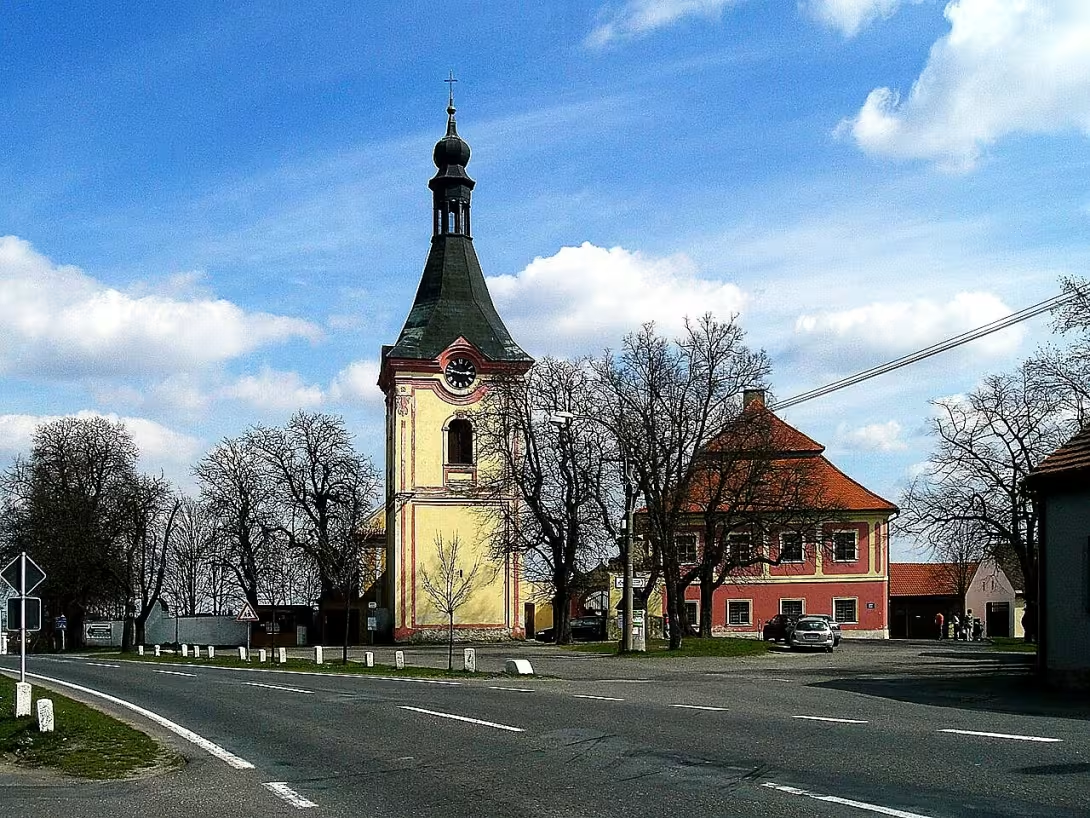
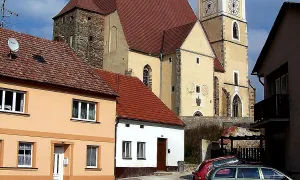
The Church of Saint Michael the Archangel in Horní Záhoří is a prominent Roman Catholic parish church that dominates the village landscape. Originally built on the site of an earlier chapel, it was reconstructed into a fortified structure in 1352. Over time, it has undergone several transformations due to historical events such as the Hussite Wars and the Thirty Years' War. Its current baroque architecture incorporates elements from its Gothic origins, making it a significant cultural monument listed in the Central List of Cultural Monuments of the Czech Republic.
The church's origin dates back to 1352 when an existing chapel was transformed into a fortified church during Bohemia's turbulent religious and political upheaval. The Hussite Wars led to its destruction, but Vilém ze Švamberka rebuilt it after the Thirty Years' War in 1639. A fire in 1689 necessitated further reconstruction, integrating parts of the original Gothic structure into its baroque form.
Architecturally, the church is a single-nave building with valuable structural elements made from quarry stone. The nave features an oblong plan measuring 8.3 by 13.6 meters and has a flat ceiling. A semi-circular triumphal arch connects the nave to the presbytery, which is vaulted in two fields of cross-ribbed vaulting with chamfered keystone ribs adorned with ten-petaled roses. The sacristy, located on the north side of the presbytery, leads into a barrel-vaulted choir supported by two pillars. Notable artistic works include altarpieces and sculptures from the rococo period, crafted by Leopold Hueber and František Jakub Prokyš.
Throughout its history, the church has seen significant changes in ownership and administration, notably under Vilém ze Švamberka during its reconstruction after the Thirty Years' War. The churchyard is enclosed by a wall and includes a bell tower that forms part of the cultural heritage site. A rococo baptismal font from 1755 stands at 27 cm high, adding to the church's artistic significance.
Today, the Church of Saint Michael the Archangel remains an active parish church and a testament to resilience and architectural evolution over centuries. Visitors can explore its rich history, admire its baroque architecture, and appreciate the valuable art pieces within. Its inclusion in the Central List of Cultural Monuments underscores its importance as a cultural heritage site worth visiting for those interested in history and architecture.
Then and now
Drag the slider to compare how the landmark may have looked when it was built with the view today.
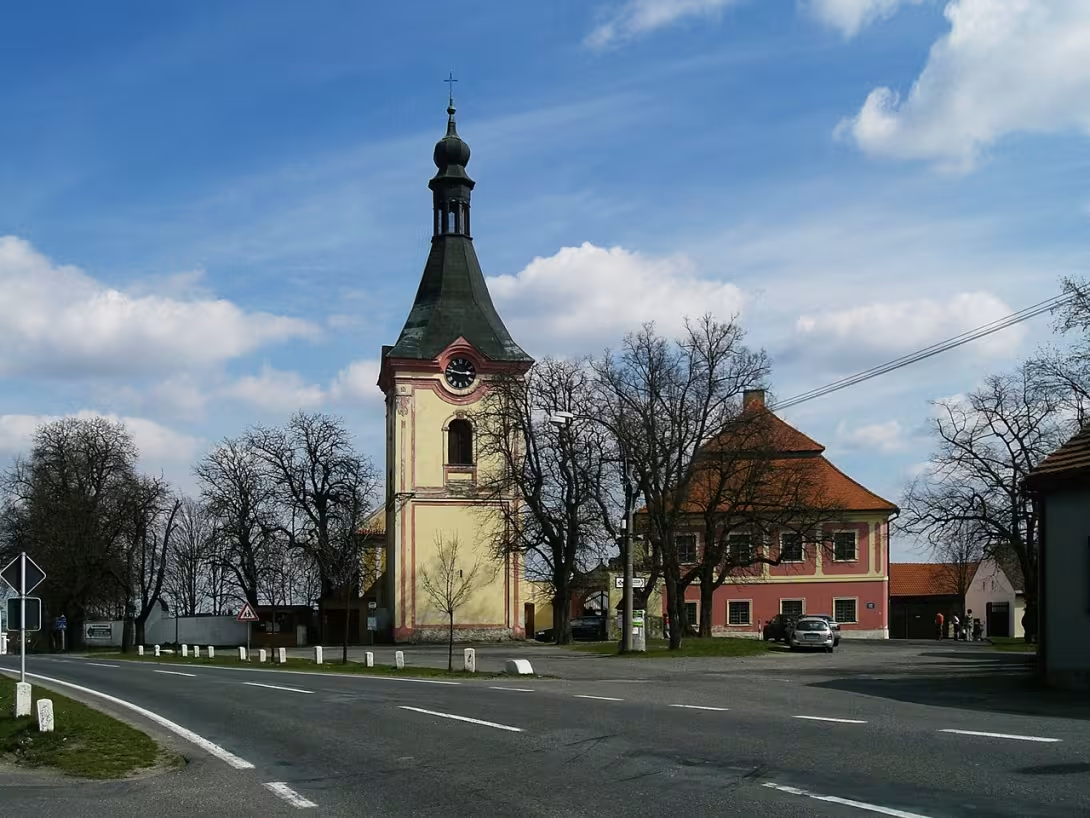

The historical appearance on the left is an AI-generated visualisation and serves as inspiration only.
Historical milestones
- 1352
- The chapel was reconstructed into a fortified church.
- 1639
- Rebuilt by Vilém ze Švamberka after the Thirty Years' War.
- 1689
- Reconstruction following a fire, incorporating Gothic elements.
Architectural development
The church's architecture evolved from a fortified medieval structure into its current baroque form. The nave and presbytery are built with quarry stone, while the interior features rook vaults and rococo art pieces. Notable works include altarpieces by Leopold Hueber and sculptures by František Jakub Prokyš.
Historical events
The original chapel was reconstructed into a fortified church in 1352.
The church was destroyed during the Hussite Wars and later rebuilt by Vilém ze Švamberka after the Thirty Years' War in 1639.
A fire in 1689 led to further reconstruction, incorporating parts of the original Gothic structure.
Points of interest
- Despite its current baroque architecture, the Church of Saint Michael the Archangel retains elements from its original Gothic structure, such as cross-ribbed vaulting with chamfered keystone ribs adorned by ten-petaled roses, reflecting a unique blend of architectural styles.
- The church's resilience is highlighted by its survival and reconstruction following multiple destructive events: it was rebuilt after being damaged in the Hussite Wars, again after the Thirty Years' War by Vilém ze Švamberka, and once more after a fire in 1689, each time integrating parts of its earlier forms.
- A notable artistic feature within the church is the rococo baptismal font from 1755, standing at just 27 cm high. This small yet significant piece adds to the church's rich collection of artistry and exemplifies the detailed craftsmanship of the period.
- The Church of Saint Michael the Archangel not only serves as a place of worship but also stands as an active testament to the historical and cultural evolution of Horní Záhoří, maintaining its role through centuries of political and religious upheaval in Bohemia.
- Despite being listed in the Central List of Cultural Monuments of the Czech Republic for its architectural significance, the church's history includes a fascinating narrative of ownership changes, notably under Vilém ze Švamberka during its reconstruction after the Thirty Years' War.
Guide
This guide is narrated by a synthetic voice generated by artificial intelligence.
Show guide text
This text was created by artificial intelligence and has not been editorially reviewed. It may contain inaccuracies.
Welcome to the Church of Saint Michael the Archangel in Horní Záhoří, a majestic beacon that commands attention amidst the village's landscape. As you stand before this historic structure, take a moment to absorb its grandeur and imagine the stories it holds within its walls.
The origins of this church trace back to an earlier chapel, which was reconstructed into a fortified church in 1352. Its strategic fortification highlights its importance as both a spiritual center and a defensive stronghold during turbulent times. Over the centuries, the church has witnessed significant transformations, including rebuilding efforts following destruction during the Hussite Wars and the Thirty Years' War.
Now, let your gaze wander across the architectural tapestry that blends various historical influences. Despite its current Baroque appearance, elements of its original Gothic structure remain intact. Notice the cross-ribbed vaulting with chamfered keystone ribs adorned by ten-petaled roses—a unique feature reflecting a fascinating blend of styles.
The church's resilience is further exemplified by its reconstruction in 1639 under the guidance of Vilém ze Švamberka, who restored it after the ravages of the Thirty Years' War. Later, in 1689, it underwent another transformation following a fire, incorporating Gothic elements that have stood the test of time.
Among the intriguing aspects of this church is its ability to seamlessly integrate these diverse architectural styles while retaining its historical essence. This blend not only enhances its aesthetic appeal but also serves as a testament to the enduring spirit and adaptability of Horní Záhoří's community through centuries of change.
As you continue your exploration, consider delving deeper into the church’s rich history and the stories of those who have shaped it. Discover how each stone tells a tale of faith, resilience, and transformation. We invite you to wander around its perimeter, appreciate its architectural nuances, and perhaps even venture inside to experience its serene atmosphere.
Thank you for joining us on this journey through time at the Church of Saint Michael the Archangel. May your visit inspire reflection and curiosity as you explore more about this remarkable landmark and its place in history. Safe travels and enjoy every moment of discovery!
Frequently asked questions
Can the monument be visited?
Religious buildings are usually open mainly during services; at other times a visit is normally arranged with the parish or the operator. We have not verified specific times.
Where is the monument?
Location: Horní Záhoří, Jihočeský kraj. The map on this page shows the exact spot.
Why is the monument protected?
It is listed in the Central List of Cultural Monuments of the Czech Republic as a cultural monument (register no. 26606/3-2823).
Businesses nearby
Do you run a restaurant, accommodation, shop, museum, rental, wellness or other visitor service near this monument? Show yourself directly to the people heading to it — this is how they will see you in the app and on the web:
Events nearby
Zdroj akcí: otevřená data měst a obcí ČR (Národní katalog otevřených dat) a kalendář akcí Národního památkového ústavu.
Accommodation nearby
Themed route
Tematická výletní trasa: Kostel svatého Michaela archanděla (Horní Záhoří)
1. Kostel svatého Michaela archanděla (Horní Záhoří) - Kostel Začněte svůj výlet na hlavním cíli, kostele svatého Michaela archanděla, který je ikonickou památkou obce Horní Záhoří. Tento barokní kostel se pyšní bohatou historií a architektonickými detaily, které ho činí nezbytným místem pro návštěvu. Jeho výhled z věže nabízí impozantní pohled na okolní krajinu.
2. Obecní úřad Horní Záhoří - Historické budovy Přibližně 5 minut chůze od kostela se nachází obecní úřad, který je umístěn v historickém domě s bohatou architektonickou minulostí. Návštěva tohoto místa poskytuje vhled do místní správy a důležitých událostí obce, což je zajímavé pro ty, kteří se zajímají o historii Horního Záhoří.
3. Dětský hřiště v centru Horního Záhoří - Sociální prostor Krátce od obecního úřadu, přibližně 10 minut chůze, se nachází dětské hřiště. Tento prostor je živým místem setkávání pro rodiny a děti, což nabízí návštěvníkům příležitost zhlédnout každodenní život obce a interakci jejích obyvatel.
4. Kaplička svatého Jana Nepomuckého - Religiozní památka Přibližně 10 minut chůze od dětského hřiště se nachází kaplička svatého Jana Nepomuckého. Toto místo je klidným útočištěm pro modlitbu a reflexi, nabízejícím pohled na přírodní krásy okolní oblasti. Kaplička je důležitá pro místní náboženskou tradici.
Tato trasa vám umožní prozkoumat nejen hlavní kostel, ale i další zajímavosti Horního Záhoří a jejich kulturní a historický kontext.
Seasonal recommendations
Spring: The arrival of spring at the Church of St. Michael Archangel brings a rejuvenating atmosphere, with nature awakening around Horní Záhoří. Blossoming trees and vibrant wildflowers create a picturesque backdrop for visitors exploring this historic site. The soft morning light enhances the intricate details of the church's architecture, making it an ideal time for photography enthusiasts. As temperatures begin to rise, comfortable layers are recommended, allowing you to enjoy both the cool mornings and warmer afternoons. While crowds are generally manageable during this season, arriving early can provide a more serene experience before larger groups gather.
Summer: Summer at St. Michael's Church is marked by long daylight hours that illuminate the historic structure in warm hues, offering an inviting atmosphere for exploration. The lush greenery surrounding the church provides a refreshing contrast to the stone architecture, creating a harmonious blend of nature and history. This season often sees higher visitor numbers due to its popularity among tourists, so planning your visit early in the day can help avoid larger crowds. Dressing in light clothing is advisable, along with comfortable shoes for walking through the scenic area. Additionally, carrying water and sun protection will enhance your comfort during this vibrant period.
Autumn: The autumn season transforms St. Michael's Church into a serene haven of warm colors as the leaves change from green to shades of red, orange, and yellow. This natural spectacle creates an enchanting atmosphere that complements the historic charm of the church. As temperatures cool, it becomes a perfect time for leisurely strolls around the area, with fewer visitors compared to summer months. Layered clothing is recommended to adapt to the fluctuating weather conditions, ensuring warmth during cooler parts of the day. The gentle autumn light provides an ideal setting for capturing the beauty of this historic site.
Winter: Winter at St. Michael's Church offers a unique and tranquil experience as snow blankets the surrounding landscape, casting a serene and almost ethereal glow over the historic structure. The quietness of the season allows visitors to appreciate the church in solitude, with fewer crowds enhancing the peaceful atmosphere. However, it is important to dress warmly, as temperatures can be quite low, and ensure comfortable footwear for navigating potentially icy paths. Due to shorter daylight hours, planning your visit during midday will maximize exposure to natural light, allowing you to fully enjoy the winter wonderland setting of this historic site.
Visualizations and artistic views


The visualisations are generated by artificial intelligence and serve as inspiration.
Photos from the area
Real photos taken near the monument


Zdroj a licence jsou uvedeny u každého snímku.
Atmosphere of the place
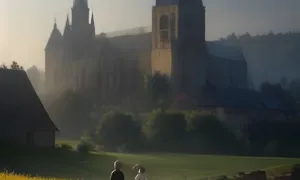
This atmospheric visualisation of the place and period was generated by artificial intelligence. It is not real footage of the location.
Tips from visitors
No tips yet. Be the first!
Log in and add your tip.
Sources and literature
Photos: Chmee2, colors enhanced by User:Aktron, 25th August 2007 / CC BY-SA 3.0 — Wikimedia Commons. The author and licence also appear when you hover over the image.
Faktickým podkladem tohoto textu byl článek na Wikipedii, jehož autory jsou přispěvatelé Wikipedie. Článek je dostupný pod licencí CC BY-SA 4.0.
Location on the map

Příběhy a pověsti
Legendy, pověsti a příběhy spjaté s touto památkou
Fotografie návštěvníků
Zatím žádné fotografie. Buďte první, kdo přidá fotografii z návštěvy!
Log in a přidejte svou fotografii nebo hodnoťte.
Za ověřenou návštěvu v aplikaci získáte víc bodů — poznáme podle GPS, že jste na místě.
Reviews and comments