






kostel svatého Michala (Horní Dvořiště) Church
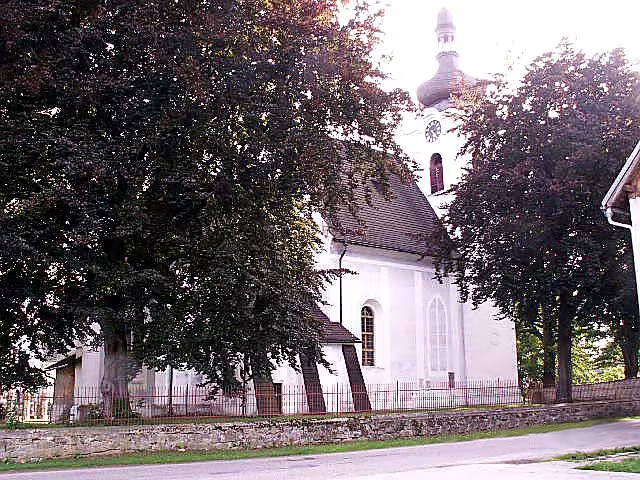
The Church of Saint Michael in Horní Dvořiště is a remarkable ecclesiastical structure with origins dating back to the early Gothic period. First documented in 1252, it initially served as a filial church before becoming a parish church in 1384. This historical monument showcases architectural evolution from early Gothic to late Gothic and Baroque styles, reflecting broader European trends.
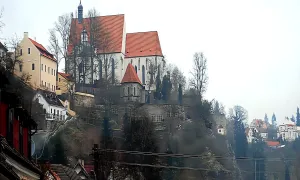
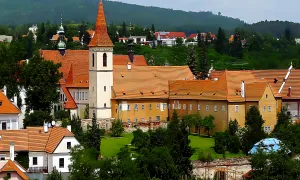
Located at a crossroads connecting nearby towns across the Czech-Austrian border, the church significantly contributes to Horní Dvořiště's distinctive panorama and urban character.
The Church of Saint Michael was first documented in 1252 as a filial church of Saint Nicholas in Rožmberk nad Vltavou. By 1384, it had become a parish church, marking its growing importance within the community. Major transformations occurred at the turn of the 15th and 16th centuries, with the late Gothic renovation completed by 1511. These changes were part of broader architectural developments in Bohemia during the early Gothic period, characterized by pointed arches, ribbed vaults, and flying buttresses.
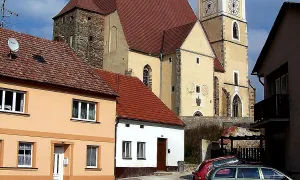
Architecturally, the Church of Saint Michael features a single-nave structure with a five-sided presbytery supported by buttresses, reflecting the influence of the Rožmberk construction workshop around 1500. The sacristy, added in the second half of the 14th century, is the oldest part of the building. A significant late Gothic renovation between 1511 and 1517 included a shift in the presbytery's axis towards the south. The church also features a bell tower in the northwest corner, with its common foundation indicating simultaneous construction with the nave at the beginning of the 16th century. Following a fire in 1738, Baroque modifications were made, including a new vault for the nave while preserving the Gothic vaulting of the presbytery.
Throughout its history, the Church of Saint Michael has undergone various transformations and restorations, reflecting changes in architectural styles and community needs. Its architecture serves as a significant example of the Rožmberk construction workshop's output around 1500, highlighting its historical and cultural importance.
Today, the Church of Saint Michael is maintained as a filial church under the Roman Catholic parish of Vyšší Brod since January 1, 2020. It remains an accessible site for visitors interested in exploring its rich history and architectural beauty. The church's prominent position in Horní Dvořiště makes it a key element of the village's landscape, offering a glimpse into the region's historical development and cultural heritage.
Visiting the Church of Saint Michael provides an opportunity to appreciate its architectural evolution and historical significance. Its enduring presence as a cultural monument invites exploration and reflection on the rich tapestry of history that has shaped this unique site.
Then and now
Drag the slider to compare how the landmark may have looked when it was built with the view today.
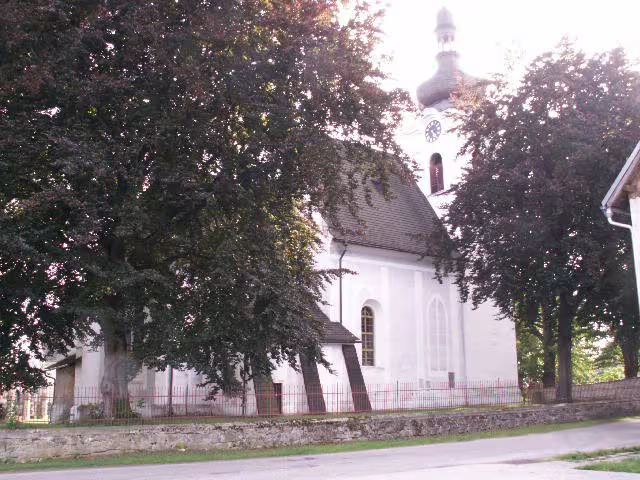

The historical appearance on the left is an AI-generated visualisation and serves as inspiration only.
Historical milestones
- 1252
- Church first documented.
- 1384
- Became a parish church.
- 1511
- Completion of late Gothic transformation and expansion.
- 1738
- Fire led to Baroque modifications.
Architectural development
The Church of Saint Michael showcases architectural evolution from early Gothic origins, through significant late Gothic renovations between 1511 and 1517, to Baroque alterations post-1738 fire. The church's design includes a single-nave structure with a five-sided presbytery supported by buttresses, and a bell tower in the northwest corner. Its architecture reflects the influence of the Rožmberk construction workshop around 1500.
Historical events
1252: Church first documented as a filial church of Saint Nicholas in Rožmberk nad Vltavou.
1384: Became a parish church.
1511: Completion of the late Gothic transformation and expansion.
1738: Fire led to Baroque modifications.
Points of interest
- The Church of Saint Michael features a unique architectural shift in the presbytery's axis towards the south during its late Gothic renovation between 1511 and 1517, an uncommon alteration that reflects specific historical influences or requirements.
- Despite being associated with the Rožmberk construction workshop around 1500, known for its distinctive style, the Church of Saint Michael showcases a blend of architectural styles from early Gothic to Baroque, making it a rare example of such diverse stylistic transitions in one structure.
- The church's bell tower shares a common foundation with the nave, indicating that both were constructed simultaneously at the start of the 16th century—a detail highlighting the integrated planning and construction techniques of the era.
- After suffering damage from a fire in 1738, the Church underwent Baroque modifications, including a new vault for the nave. This adaptation preserved the Gothic vaulting of the presbytery, illustrating an intriguing balance between maintaining historical elements while introducing contemporary changes.
- Despite its long history and architectural evolution, the Church of Saint Michael has been maintained as a filial church under the Roman Catholic parish of Vyšší Brod since January 1, 2020, showcasing its continued relevance in modern religious practices.
Guide
This guide is narrated by a synthetic voice generated by artificial intelligence.
Show guide text
This text was created by artificial intelligence and has not been editorially reviewed. It may contain inaccuracies.
Welcome to the Church of Saint Michael in Horní Dvořiště—a remarkable testament to architectural evolution and historical significance nestled in the heart of Jihočeský kraj. As you stand before this venerable structure, take a moment to absorb its grandeur, with its walls whispering stories from centuries past.
The origins of this church trace back to the early Gothic period, first documented in 1252 as a filial church. By 1384, it had risen to prominence as a parish church, marking a pivotal moment in its history. The turn of the 15th and 16th centuries brought transformative changes, culminating in its completion in 1511. A significant event occurred in 1738 when a fire necessitated Baroque modifications, adding layers to its architectural narrative.
As you gaze upon the Church of Saint Michael, notice how it harmoniously blends elements from different eras. The late Gothic transformation between 1511 and 1517 introduced an intriguing shift: the presbytery's axis was realigned towards the south. This unique alteration is a testament to the historical influences that shaped its design.
While specific architects remain unknown, the church stands as a silent witness to the lives and stories of those who have passed through its doors over the centuries. Its connection to the Rožmberk family hints at the broader tapestry of regional history it is part of.
One fascinating aspect of this church is its architectural shift during the late Gothic renovation—a rarity that reflects specific historical requirements or influences. This detail invites you to ponder the forces and decisions that led to such a distinctive design choice.
As your visit draws to a close, I encourage you to explore further, to uncover more layers of history and beauty within this sacred space. Thank you for joining me on this journey through time at the Church of Saint Michael. May its stories inspire you long after today's exploration.
Tips for visitors
The best time to visit the Church of Saint Michael in Horní Dvořiště is during late spring or early autumn when the weather is mild, and the foliage adds a picturesque backdrop to your visit. This period also tends to have fewer tourists, allowing for a more serene experience. The lighting conditions are ideal for photography, especially around mid-morning or late afternoon when the sunlight casts soft shadows that highlight the church's Gothic features.
Public transport options may include buses connecting nearby towns across the Czech-Austrian border.
When visiting the Church of Saint Michael, consider bringing comfortable walking shoes as you'll likely explore the village and its surroundings. A camera is advisable for capturing the church’s architectural details and the scenic panorama it offers. Additionally, carrying a light rain jacket could be useful if weather conditions change unexpectedly during your visit.
For photography enthusiasts, the best spots to capture the Church of Saint Michael are from the main village square or along the historical routes that converge near the church. Early morning or late afternoon provides the most favorable lighting for photographs, with soft golden hues enhancing the Gothic architecture. Be mindful of respecting any posted signs regarding photography restrictions within the church itself.
Nearby attractions within a 30-minute drive include other historical sites and natural landscapes in the Jihočeský kraj region. Exploring these areas can provide a broader understanding of the local history and culture, complementing your visit to the Church of Saint Michael. Always check for any visitor information or updates on opening times before planning your trip.
For families with children, Horní Dvořiště offers a relaxed village atmosphere that is conducive to exploration. The church itself can be an educational experience, introducing young visitors to Gothic architecture and local history. Consider bringing along some snacks or a picnic for a leisurely break during your visit. Engaging children in the stories behind the church and its significance might also enhance their interest and enjoyment.
Frequently asked questions
Can the monument be visited?
Religious buildings are usually open mainly during services; at other times a visit is normally arranged with the parish or the operator. We have not verified specific times.
Where is the monument?
Location: Horní Dvořiště, Jihočeský kraj. The map on this page shows the exact spot.
Why is the monument protected?
It is listed in the Central List of Cultural Monuments of the Czech Republic as a cultural monument (register no. 24655/3-1253).
Businesses nearby
Do you run a restaurant, accommodation, shop, museum, rental, wellness or other visitor service near this monument? Show yourself directly to the people heading to it — this is how they will see you in the app and on the web:
Events nearby
Zdroj akcí: otevřená data měst a obcí ČR (Národní katalog otevřených dat) a kalendář akcí Národního památkového ústavu.
Nearby
Horní Dvořiště is situated at a crossroads of several historical routes connecting nearby towns across the Czech-Austrian border. The church stands prominently in the village, contributing to its distinctive panorama and urban character.
Accommodation nearby
Trips and activities nearby
Guided tours, tickets and activities nearby from GetYourGuide
Affiliate link: if you buy from the partner, we may receive a commission. The price for you does not change.
Search tours and activities →Themed route
Thematic Walking Tour: Horní Dvořiště and the Church of St. Michael
1. Church of St. Michael (Horní Dvořiště) - Type: Historical Religious Site - Why Visit: The Church of St. Michael is a prominent landmark in Horní Dvořiště, known for its distinctive architectural style and historical significance. As you explore the church, take note of its unique features that contribute to the village's urban character and enjoy panoramic views from its vicinity.
2. Historical Crossroads - Type: Historical Route Intersection - Why Visit: Located at a crossroads where several historical routes intersect, this area connects Horní Dvořiště with nearby towns across the Czech-Austrian border. Walking through these paths offers insight into the village's strategic importance and its role in regional connectivity throughout history.
3. Village Center of Horní Dvořiště - Type: Urban Area - Why Visit: The heart of Horní Dvořiště is a charming area that showcases traditional Czech architecture and vibrant village life. Stroll through the streets to experience local culture, visit small shops, and enjoy the quaint atmosphere that defines this picturesque community.
4. Church Vicinity - Type: Surrounding Area - Why Visit: The area surrounding the Church of St. Michael is ideal for a leisurely walk or sit-down to appreciate the serene environment. This space offers a peaceful retreat, allowing visitors to reflect on their journey and enjoy the natural beauty that complements the historical architecture.
This walking tour provides an immersive experience into the rich history and cultural landscape of Horní Dvořiště, centered around its most iconic landmark, the Church of St. Michael.
Seasonal recommendations
Spring: The arrival of spring at the Church of St. Michael in Horní Dvořiště brings a rejuvenating atmosphere as nature awakens around this historic site. The surrounding landscape is adorned with blooming flowers and lush greenery, creating a picturesque setting for visitors. This season offers softer lighting that enhances the intricate details of the church’s architecture. To fully enjoy your visit during springtime, consider wearing comfortable walking shoes to explore the nearby trails. While crowds are moderate, arriving early in the day can provide a more tranquil experience before larger groups gather.
Summer: Summer at the Church of St. Michael is characterized by long daylight hours and vibrant natural surroundings, making it an ideal time for exploration. The lush greenery and warm weather create a lively atmosphere that complements the historic charm of the church. However, this is also the peak tourist season, so expect larger crowds. To make the most of your visit, plan to arrive early in the morning or later in the afternoon when temperatures are cooler and visitor numbers dwindle. Dressing in light layers will help you stay comfortable throughout your exploration.
Autumn: Autumn transforms the Church of St. Michael with a warm, golden glow as leaves turn vibrant shades of red, orange, and yellow. This season offers a serene atmosphere that is perfect for photography enthusiasts eager to capture the church against its autumnal backdrop. The cooler temperatures make it an ideal time for walking tours around the area without the summer heat. Since this period sees fewer visitors than summer, you can enjoy a more peaceful visit. Dress in layers to accommodate fluctuating temperatures throughout your exploration.
Winter: Winter at the Church of St. Michael presents a unique and enchanting experience as snow blankets the surrounding landscape, creating a magical atmosphere around the historic church. The shorter days mean that lighting conditions are different, often casting soft shadows that highlight architectural details. This season tends to attract fewer visitors, allowing for a more intimate exploration. It is advisable to wear warm clothing, including hats and gloves, to stay comfortable during your visit.
Visualizations and artistic views


The visualisations are generated by artificial intelligence and serve as inspiration.
Photos from the area
Real photos taken near the monument


Zdroj a licence jsou uvedeny u každého snímku.
Tips from visitors
No tips yet. Be the first!
Log in and add your tip.
Sources and literature
Photos: Janom e / CC BY-SA 3.0 — Wikimedia Commons. The author and licence also appear when you hover over the image.
Faktickým podkladem tohoto textu byl článek na Wikipedii, jehož autory jsou přispěvatelé Wikipedie. Článek je dostupný pod licencí CC BY-SA 4.0.
Location on the map

Příběhy a pověsti
Legendy, pověsti a příběhy spjaté s touto památkou
Fotografie návštěvníků
Zatím žádné fotografie. Buďte první, kdo přidá fotografii z návštěvy!
Log in a přidejte svou fotografii nebo hodnoťte.
Za ověřenou návštěvu v aplikaci získáte víc bodů — poznáme podle GPS, že jste na místě.
Reviews and comments