



Kostel svatého Mikuláše (Mikulov) Church
Mikulov appeared in the heart of Teplick in the 14th century as a settlement of miners from Saxony. Until 1595 he was called Neuschellenberg in German. In 1597, Mikulov received the right of a free city from Rudolf II and the right to a weekly and annual market - a privilege that significantly increased its importance. However, from the mid-18th century (from 1740), mining gradually fell, until 1870 there were only two workers mining silver.
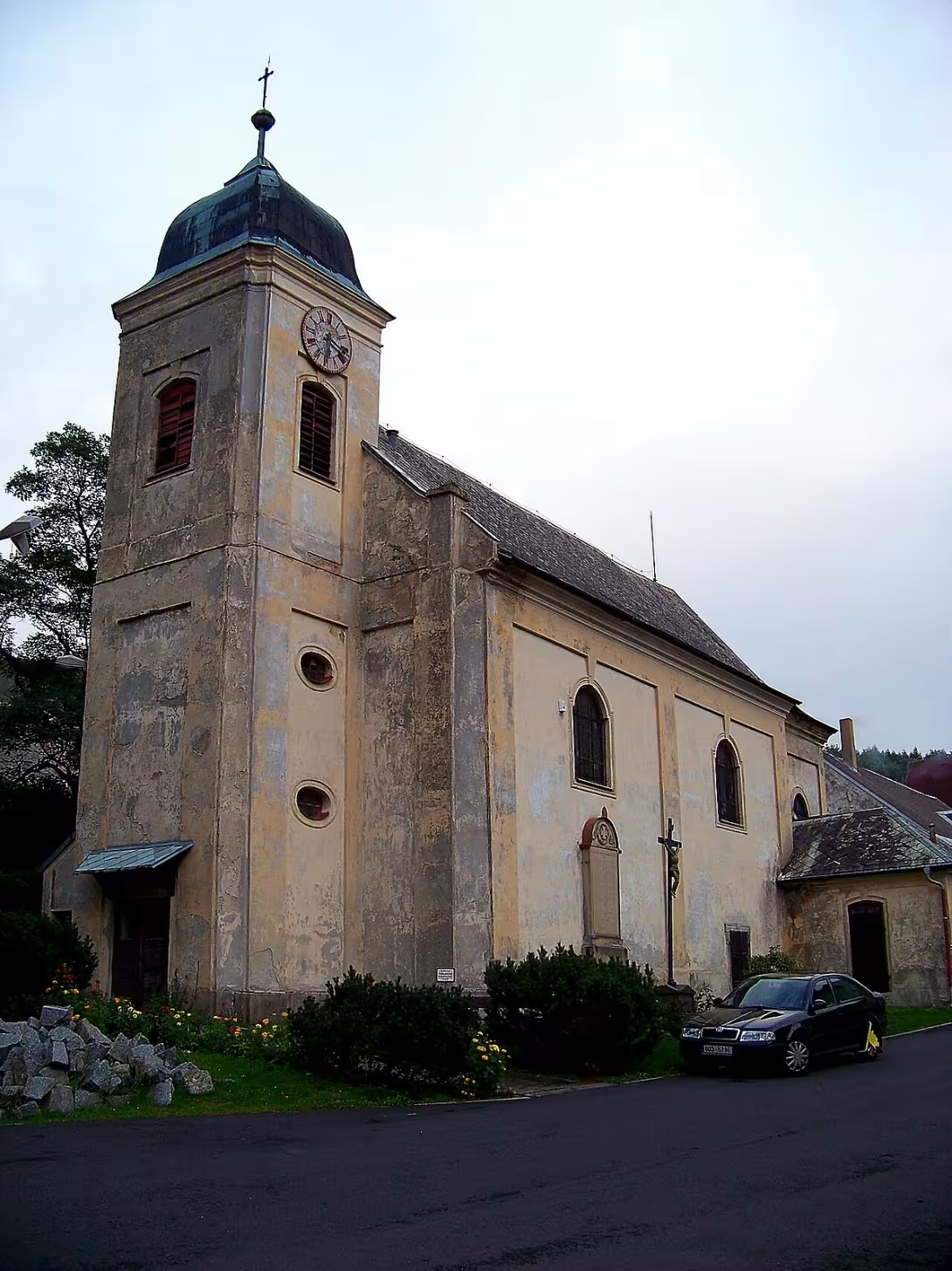
The exact origin of the original church in this place is unknown, but it is expected to occur in the 16th century. The construction probably suffered during the Thirty Years' War and was repaired in 1709. The current form dates back to 1770 when the construction was rebuilt, partly taking over the older construction. Another repair followed in 1809. In 1918, a memorial dedicated to the citizens of the fallen and disappeared on the battlefield of the First World War was placed on the southern wall of the ship. Since 1945, however, when the original German-speaking population was displaced, the church gradually fades.
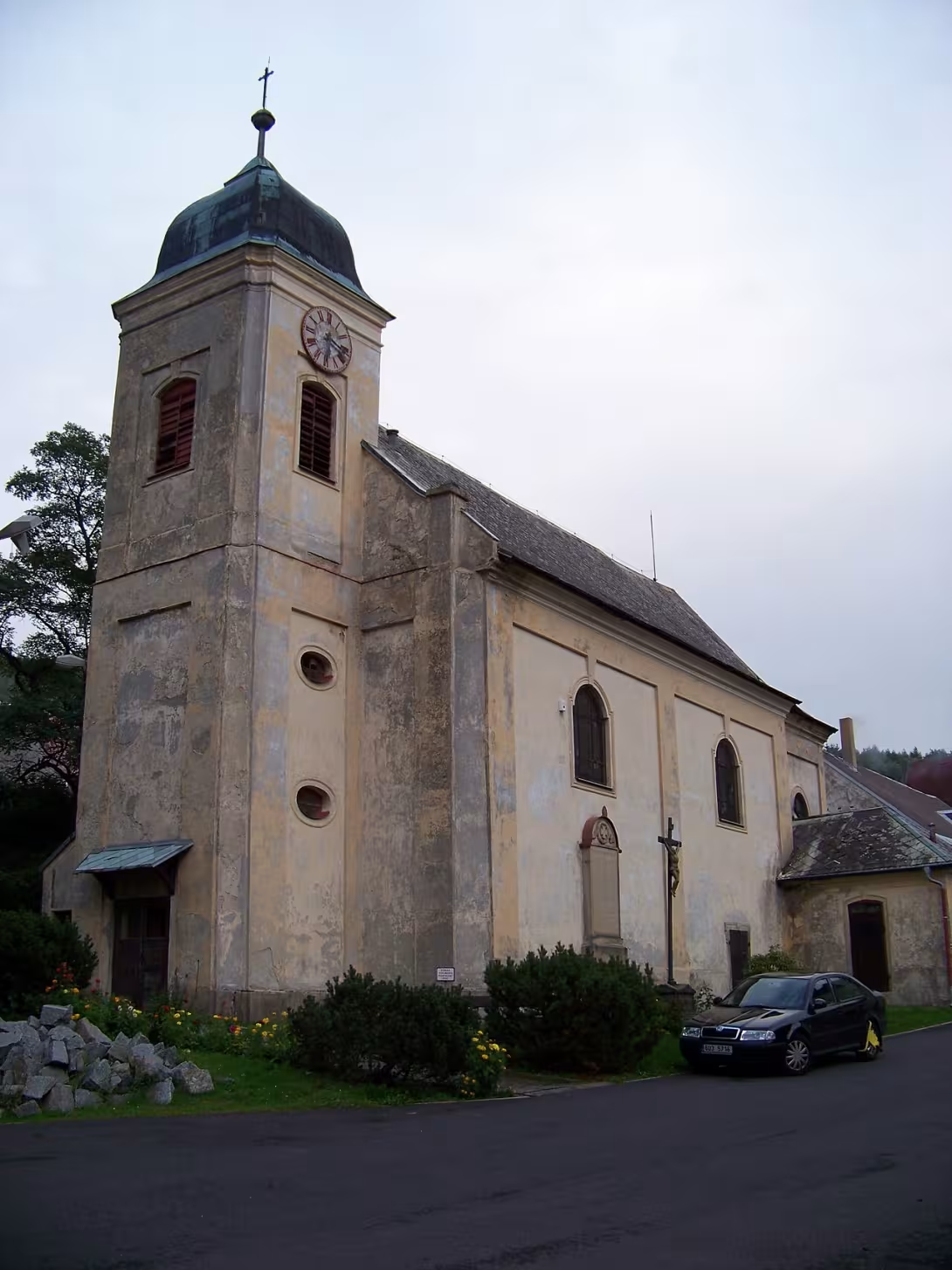
Architecturally, it is a one-ship rectangular building with a tower on the west side - a prism tower covered by a helmet. The presbytery is a tripod closed with a sacristy on the south side. The facades have Lizzy frames, the windows are semi-circular (in the segmental tower). The presbytery has a valentine vault with lunettes, while the ship has a flat ceiling with a rococo painting and a two-story circle.
The art exception is the late Gothic statues of St. Peter and St. Paul from around 1520, located in the presbytery. However, their polychromia is not original - they were unsparingly pre-painted by intervening later times. Other church equipment is not of particularly high artistic value. In the north tower is the bell of Charles from 1919 by Richard Herold; The original bells from Gabriel Hilger from 1630 and from František Pitschmann from 1806 were restored during the First World War. Also interesting is the bell cymbal with bell machine, which has a diameter of 30 centimetres and has long been stored in the soil.
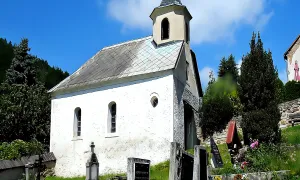
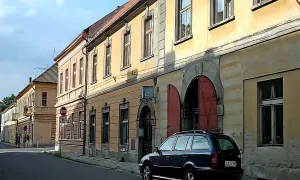
The surrounding area of the church is complemented by buildings that show a local tradition. The cemetery surrounded by a wall with shingles cover belongs to a typical landscape. There is a chapel from the beginning of the 19th century - a brick rectangular building with an occipital bell. In the park on the square itself there is a statue of St. Joseph from the first half of the 19th century. The church is thus situated in the middle of a corps of buildings that resemble the wealth and importance that mining once brought to this area.
Then and now
Drag the slider to compare how the landmark may have looked when it was built with the view today.
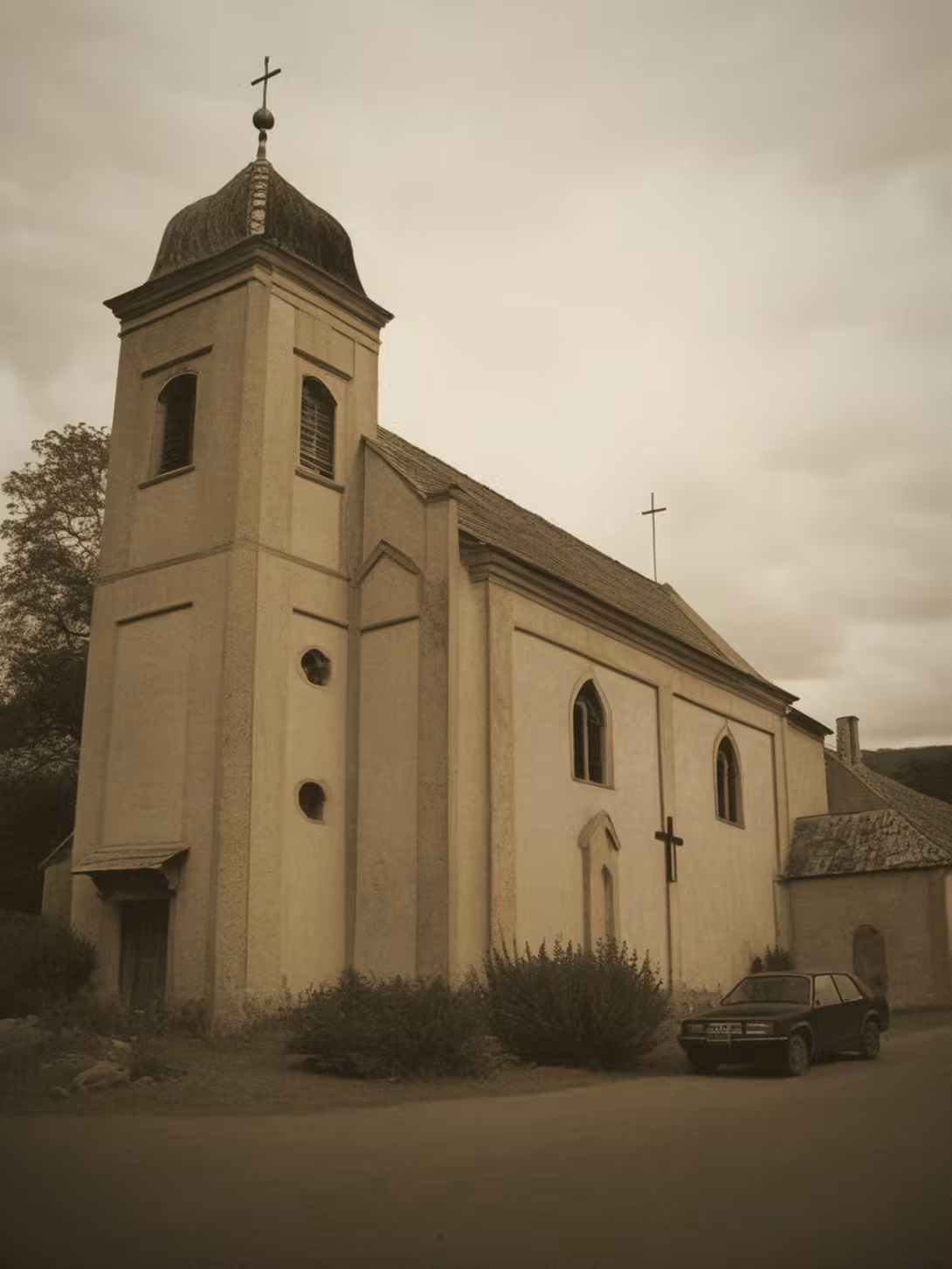
The historical appearance on the left is an AI-generated visualisation and serves as inspiration only.
Historical milestones
- 16th Century
- The supposed formation of the original church in the conversion of the settlement into a small town, probably damaged during the 30-year war.
- 1709
- Repairing the church after damage.
- 1770
- The emergence of the present Baroque form of the church.
- 1918
- Location of the monument to the fallen and missing citizens of Mikulova from World War I to the southern wall of the ship.
Architectural development
The church was built at the end of the 18th century, probably on the site of an older church from the 16th century, which was damaged during the 30-year war. In 1770 the present Baroque form was created, which preserved parts of the older structure. Another repair took place in 1809. The ship has a flat ceiling with a rococo painting and a two-story circle, the presbytery is encapsulated by a coiled vault with lunettes. The facades are decorated with lizene frames and the windows are semi-circular.
Historical events
- 1597
- Mikulov acquired from Rudolf II the right of a free city and the right of the weekly and annual markets.
- 1770
- The emergence of the present Baroque form of St. Nicholas' church.
- 1919
- The bell * Charles * by Richard Herold was hung in the tower.
- 2002
- The church was declared a cultural monument.
Points of interest
The church was probably built in the 16th century, but the exact year of its creation is unknown.
- During the Thirty Years' War, the church suffered damage and was repaired in 1709.
- In 1918, a memorial plate was placed on the south wall of the ship for the fallen and disappeared in the First World War.
- In the north tower there is a bell * Karel * from 1919, the original bells from 1630 and 1806 were recited during the First World War.
- The church has a bell cymbal with a bell machine with a diameter of 30 centimetres, which has long been stored in the attic.
Guide
This guide is narrated by a synthetic voice generated by artificial intelligence.
Show guide text
This text was created by artificial intelligence and has not been editorially reviewed. It may contain inaccuracies.
The Church of Saint Nicholas in Mikulov on the Teplicko is a Roman Catholic parish church. It is a simple late Baroque building from seventeen seventy on the northern side of the Tržní náměstí. Since June sixth, two thousand two, it has been protected as a cultural monument.
Mikulov apparently emerged in the fourteenth century as a settlement of miners who came from Saxony. Until fifteen ninety five, the municipality was called Neuschellenberg in German, meaning New Schellenberg, named after Schellenberg in Saxony. In fifteen ninety seven, Mikulov received from Rudolf the Second the right of a free mining town, the right to hold weekly and annual markets, and a municipal coat of arms. From seventeen forty onwards, however, mining gradually declined. In eighteen seventy, only two workers were employed there in silver mining.
It is not known exactly when the original church was built. It is assumed to be the sixteenth century, when the settlement was transforming into a small town. During the Thirty Years' War, the church apparently suffered damage and in seventeen oh nine it was repaired. The present form dates from seventeen seventy and most likely incorporated parts of the older church's structures. Another repair took place in eighteen oh nine. After nineteen eighteen, a memorial was added to the southern wall of the nave commemorating citizens of Mikulov, known in German as Niklasbergen, who fell or disappeared in the First World War. Since nineteen forty five, when the original German speaking population was evacuated, the church has gradually deteriorated.
The building has one rectangular nave and a narrower presbytery closed off with three sides. On its southern side is the sacristy. To the west stands a prismatic tower covered with a helmet roof. The facades are decorated with pilaster frames and the windows are semicircular, while those in the tower are segmental. The presbytery is vaulted with a barrel vault with lunettes. The nave has a flat ceiling with Rococo painting and a two storey gallery.
The most valuable part of the furnishings are late Gothic statues of Saint Peter and Saint Paul from around fifteen twenty. However, they were later carelessly repainted. The rest of the church's furnishings are not of great artistic value.
In the tower hangs the bell Charles from nineteen nineteen by Richard Herold. Older bells were requisitioned during the First World War. These were two bells by Gabriel Hilger from sixteen thirty and one by Francis Pitschmann from eighteen oh six. In the tower there is also an interesting bell metal cymbal, which is sounded by a clock mechanism. It has a diameter of thirty centimetres and around its neck is a band of standing acanthus. It is quite dented, allegedly because it was stored somewhere in an attic for a long time.
In the village there is also a cemetery enclosed by a wall covered with shingles. By the wall stands a stone chapel from the beginning of the nineteenth century with an octagonal bell cote above the gable. It is not artistically very significant, but it is interesting in its placement in the landscape. In the park on the square is a statue of Saint Joseph from the first half of the nineteenth century.
Tips for visitors
The best time to visit St. Nicholas' church is in the morning when there is a quiet and pleasant light for photography. The ideal is a visit in the summer months when the outdoor area is decorated with greenery and the chapel in the cemetery looks even more impressive. In winter, the church offers a quiet atmosphere without crowds of tourists.
When visiting, wear comfortable shoes as the church and the surrounding cemetery are partially uneven and covered with stony surface. It is also convenient to take a small umbrella with you because the cemetery is not covered and the weather can change quickly. If you are planning photography, bring the camera with the possibility of macrophotography for detailed photos of the chapel and bell tower.
The best places for photography are the facade of the church, which is well lit in the morning, and the chapel in the cemetery where there is an interesting contrast between the old wall and the shingles. For quality pictures of the statue of St. Joseph use the afternoon light that creates soft shadows. Always avoid photography during services that can be disruptive.
A cemetery with chapel and statue of St. Joseph is worth visiting around the church. These places are within walking distance and offer a peaceful atmosphere for relaxation. If you have more time, you can visit other historical monuments in Mikulov, which are located nearby. The statue of St. Joseph is ideal for a short walk around the park in the square.
For families with children, a visit to St. Nicholas' church is interesting thanks to its simple architecture, which is easy to understand. Children can view the surrounding cemetery and observe the old chapel, which may trigger their interest in history. The square is also a space for short walks and observation of the statue of St. Joseph, which can be an inspiration for small artists.
Frequently asked questions
Can the monument be visited?
Religious buildings are usually open mainly during services; at other times a visit is normally arranged with the parish or the operator. We have not verified specific times. According to the heritage register the structure is in poor condition – do not enter it and take care nearby.
Where is the monument?
Location: Mikulov, Ústecký kraj. The map on this page shows the exact spot.
Why is the monument protected?
It is listed in the Central List of Cultural Monuments of the Czech Republic as a cultural monument (register no. 51690/5-5933).
For kids
Imagine coming back 256 years. The city of Mikulov looked very different today. It was a country bordering Austria and Bohemia, where people lived peacefully and peacefully.
At that time, a simple wooden church stood in the place of St. Nicholas' church. The locals prayed and gathered here for important opportunities. The church was their heart, a place to meet and respect for God.
Businesses nearby
Do you run a restaurant, accommodation, shop, museum, rental, wellness or other visitor service near this monument? Show yourself directly to the people heading to it — this is how they will see you in the app and on the web:
Accommodation nearby
Trips and activities nearby
Guided tours, tickets and activities nearby from GetYourGuide
Affiliate link: if you buy from the partner, we may receive a commission. The price for you does not change.
Search tours and activities →Themed route
Thematic cruise route from Mikulova
1.Kostel svatého Mikuláše (Mikulov) - * Type: * Church - * Why is it worth visiting: * This Baroque church is the most prominent architectural monument in the village Mikulov. Its history dates back to the 17th century, when it was built as proof of the faith and resilience of local inhabitants. The church is famous for its rich interior decoration and sound atmosphere that attracts visitors from all over the region.
2. Cemetery with Chapel - * Type: * Cemetery - * Why is it worth visiting: * Located in the village Mikulov itself, this cemetery is surrounded by a wall covered with shingles and has a chapel from the beginning of the 19th century. The chapel with a straight finish and an octave wall bell tower represents a typical example of local architecture at the time. Walk around the cemetery offers a quiet time to reflect and worship monuments of past generations.
3. Statue of St. Joseph - * Type: * Statue - * Why is it worth visiting: * This statue from the first half of the 19th century is located in the park in the Market Square and represents an important cultural monument of the village. The statue of St. Joseph, patron saint of families and workers, symbolizes the traditional values and loyalty of the local community. It is an ideal place to relax and enjoy the natural beauty of the park.
4. Memorial to fallen and disappeared citizens Mikulova - * Type: * Memorial - * Why is it worth a visit: * This monument is dedicated to the victims of two world wars and other missing citizens of Mikulova. It's a place where visitors can remember the historical events that shaped today's society. The memorial is important for preserving the memory of those who have lost their lives for freedom and peace.
This route offers a comprehensive view of the history and culture of the village Mikulov, from architectural gems to monuments dedicated to past generations.
Seasonal recommendations
Spring: In the spring period, the church of St. Nicholas in Mikulov will be transformed into a place full of life when green nature begins to bloom and illuminates ancient architecture. Sun rays penetrate through newly blooming trees, creating a harmonious contrast to the colour of the church's vitrates. At this time the opening time of the monument may be shorter due to occasional rainy days, so it is advisable to visit it at noon when it is most likely sunny. In addition, you can encounter an increase in attendance, so we recommend you come earlier in the day and take advantage of the quiet moments before lunch.
Summer: Summer is the perfect time to visit St. Nicholas' church, when long sunny days offer the best conditions for exploring its historical details. The atmosphere is full of warmth and the sounds of nature add peace, which complements the cosy space of the church. In the main summer season, however, a large crowd of tourists may appear, so it is advisable to visit the memory of the morning or evening time, when the traffic rate is usually lower. Don't forget to wear light clothes and protective sunglasses to protect yourself from strong rays.
Autumn: In autumn the church of St. Nicholas in MikulovA offers a cosy and peaceful environment. Green vegetation retreats to a place of coloured leaves, which joins the stones and arches of an ancient building. Sun rays become warmer, which creates a pleasant atmosphere for long walks around the monument. In addition, you can avoid more people and enjoy a quiet experience.
Winter: Winter brings a completely different atmosphere to the church of St. Nicholas in Mikulov. The roofs and windows are illuminated not only by sunlight, but also by artificial lighting, which underlines the architectural details of the church in beautiful winter light. Don't forget to wear warm clothes, shoes and protection from rain or snow so you can enjoy visitors without worrying.
Visualizations and artistic views


The visualisations are generated by artificial intelligence and serve as inspiration.
Photos from the area
Real photos taken near the monument


Zdroj a licence jsou uvedeny u každého snímku.
Atmosphere of the place
This atmospheric visualisation of the place and period was generated by artificial intelligence. It is not real footage of the location.
Tips from visitors
No tips yet. Be the first!
Log in and add your tip.
Sources and literature
Photos: Zákupák / Public domain — Wikimedia Commons. The author and licence also appear when you hover over the image.
Faktickým podkladem tohoto textu byl článek na Wikipedii, jehož autory jsou přispěvatelé Wikipedie. Článek je dostupný pod licencí CC BY-SA 4.0.
Location on the map
Příběhy a pověsti
Legendy, pověsti a příběhy spjaté s touto památkou

Fotografie návštěvníků
Zatím žádné fotografie. Buďte první, kdo přidá fotografii z návštěvy!
Log in a přidejte svou fotografii nebo hodnoťte.
Za ověřenou návštěvu v aplikaci získáte víc bodů — poznáme podle GPS, že jste na místě.
Reviews and comments