






Štola Lehnschafter Other
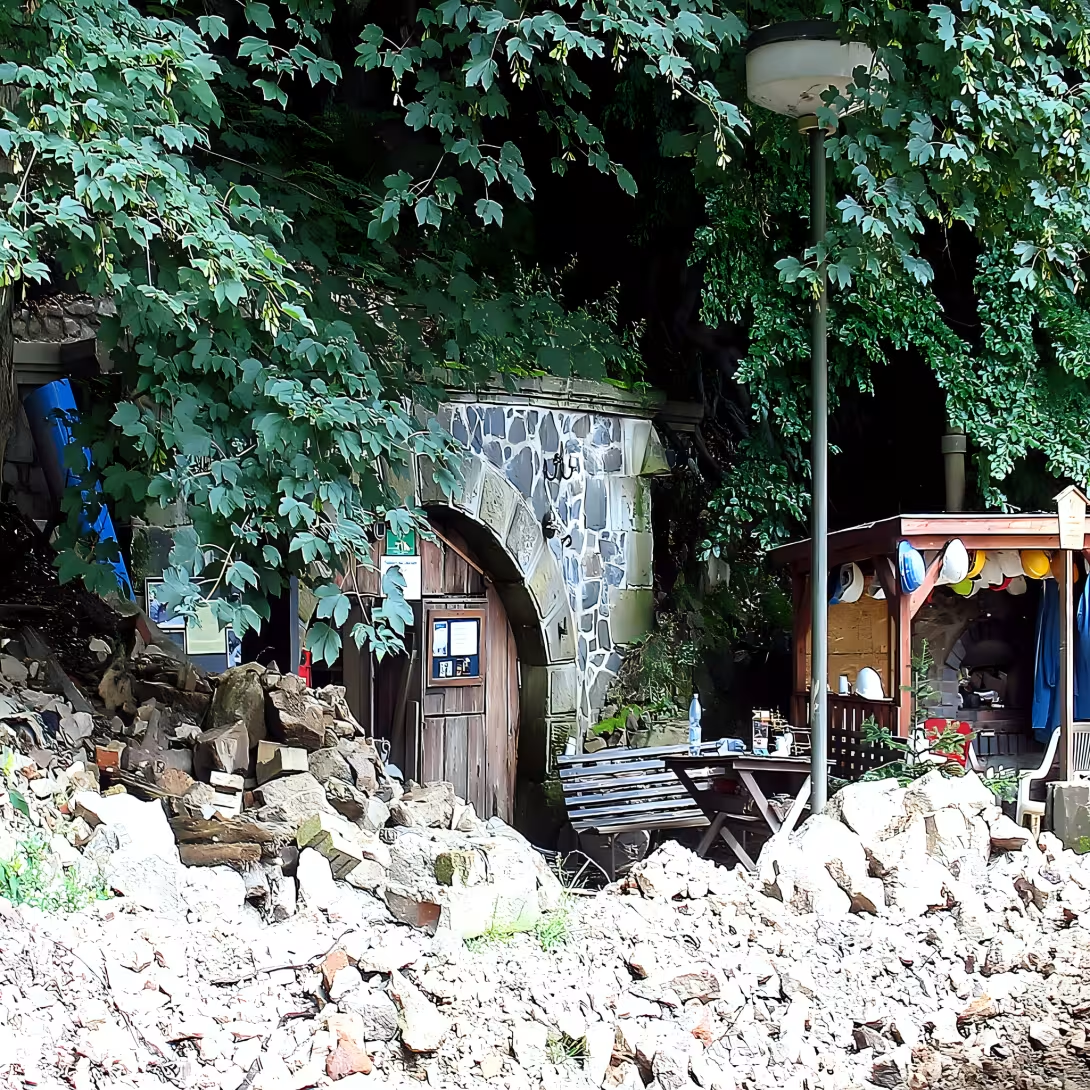
The Štola Lehnschafter is one of the largest and oldest mining sites in the Mikulov ore district, located in the Ore Mountains. It was primarily used to extract silver and other minerals. This significant historical monument reflects the region's mining traditions. Since 2014, the entire complex has been protected as a cultural monument of the Czech Republic.
The name Lehnschafter refers to an individual granted a secondary lease to mine minerals. Some sections of the adit were excavated using the ancient fire-setting method. While much of the complex is inaccessible, approximately 12 kilometers of tunnels have been cleared and prepared for visitors.
The adit was largely excavated manually using traditional tools such as picks and hammers. Historical evidence suggests that fire-setting techniques were used to break the rock. Over several centuries, twelve tunnel levels were developed, reaching a final depth of over 250 meters.
In 1543, Emperor Ferdinand I granted mining freedoms to the Lobkowicz family in the Mikulov ore district. This era was characterized by the formalization of mining rights and the rise of influential noble families in the Bohemian lands. The oldest documented year carved into the tunnel walls dates back to 1563.
The adit is part of a connected network including the Kreuz Stollen, Allerheiligen Stollen, and Liebenfrauen Stollen. It is situated near the summit of Pramenáče in the Ore Mountains.
Today, guests can tour the prepared tunnels and experience the site's unique atmosphere. The location is accessible by car or public transportation, with parking available on-site. Visitors are invited to discover the adit's many wonders, including its ancient techniques and rich industrial history.
The Štola Lehnschafter is a must-visit destination for anyone interested in mining history, geology, or discovering one of the most impressive underground complexes in Europe. With its unique blend of natural beauty and industrial heritage, this site is sure to leave visitors in awe.
Historical milestones
- 1543
- First verified mention of mining activity in the region via a charter granted by Ferdinand I.
- 1563
- Earliest dated inscription found on the tunnel walls.
- 1858
- End of mining operations in the complex.
- 2014
- Registration of the site as a cultural monument.
Architectural development
The adit was largely excavated manually using traditional mining tools such as picks and hammers. Historical evidence suggests the use of the fire-setting technique to break rock. Over centuries, twelve levels of tunnels were developed, reaching a final depth of over 250 meters.
Historical events
- 1543
- Emperor Ferdinand I granted mining freedoms to the Lobkowicz family in the Mikulov ore district.
- 1563
- The oldest documented year carved into the tunnel walls of the adit.
- 1858
- Mining activities in the complex were concluded.
- 2014
- The mining complex was officially registered as a cultural monument of the Czech Republic.
Owners
The Lobkowicz family was granted mining freedoms in the region in 1543.
Points of interest
– The Štola Lehnschafter is one of the largest and oldest mining sites in the Mikulov ore district.
– The site was primarily used to extract silver and other minerals, reflecting the region's mining traditions.
– Since 2014, the entire complex has been protected as a cultural monument of the Czech Republic.
– Some sections of the adit were excavated using the ancient fire-setting method.
– Visitors can tour the prepared tunnels and experience the site's unique atmosphere.
Guide
Show guide text
This text was created by artificial intelligence and has not been editorially reviewed. It may contain inaccuracies.
Welcome to this remarkable corner of the Mikulov ore district. As you stand here, take a moment to truly absorb the atmosphere of the place. You are standing before the entrance to the Štola Lehnschafter, a site that is much more than just a historical landmark; it is a gateway to a deep, subterranean history that has shaped this entire region for centuries. Feel the weight of the mountains around you and imagine the immense effort required to carve such a complex into the earth. This is one of the largest and oldest mining works in the area, a place where the raw power of nature met the relentless determination of human industry.
To understand why this site is so significant, we must travel back in time, hundreds of years into the past. The story of the Štola Lehnschafter is inextricably linked to the very foundations of the region's prosperity. Our journey begins in the mid-16th century. The first verified mention of mining activity in this area dates back to 1543, when a formal charter was granted by Ferdinand I. This was a pivotal moment. Under the authority of Ferdinand I, the extraction of precious minerals was no longer just a local endeavor but a recognized and regulated industry. This charter provided the legal and economic framework that allowed mining to flourish, turning the Mikulov ore district into a vital hub of activity.
As you look toward the entrance and consider the ruggedness of the site, try to visualize the scale of the operation that once existed here. While we often think of history in terms of grand palaces or sprawling cities, the history of the Štola Lehnschafter is written in stone and earth. This was a place of intense, physical labor. The primary goal here was the extraction of silver and other valuable ores, minerals that were the lifeblood of the economy during the Renaissance and beyond.
If you were able to step inside and examine the tunnel walls closely, you would be looking at a living archive. One of the most fascinating aspects of this site is the physical evidence left behind by those who worked here. In 1563, the earliest dated inscription was carved into the very walls of the tunnel. Imagine the person who stood exactly where you are now, or perhaps even deeper within the darkness, holding a tool and etching those marks into the rock. Those inscriptions serve as a direct, tactile connection to the people of the 16th century—a way for them to say, "I was here," across the vast expanse of time.
The history of this site is also closely tied to the influential families who shaped the destiny of the region. The Lobkowicz family, among others, played a significant role in the context of this area, and their influence can be felt in the way these mining traditions were maintained and developed over the generations. The management of such a massive complex required not just physical strength, but also significant organizational and political power. The transition from the early days of Ferdinand I to the later centuries was marked by the shifting hands of those who controlled the wealth extracted from these depths.
As we move through the timeline of the Štola Lehnschafter, we see a long period of continuous activity that eventually reached its conclusion in the 19th century. For over three hundred years, the sounds of mining—the striking of tools, the movement of ore, the voices of the workers—echoed through these mountains. However, by 1858, the era of active mining in this complex finally came to an end. The machines fell silent, the tunnels were closed, and the site transitioned from a place of industry to a place of quiet history.
But the story did not end with the cessation of mining. Instead, the site began a new chapter as a guardian of regional heritage. The importance of the Štola Lehnschafter was officially recognized in 2014, when the entire mining complex was registered as a cultural monument of the Czech Republic. This designation ensures that the legacy of the Mikulov ore district is preserved for future generations, protecting the site not just as a collection of tunnels, but as a monument to the human spirit and the industrial traditions of the Ore Mountains.
There is something deeply mysterious about a place like this. Think about the sheer volume of silver and ore that was pulled from these depths, fueling economies and influencing the politics of Europe. Think about the miners who spent their lives in the shadows of the earth, driven by the pursuit of these precious minerals. The Štola Lehnschafter stands as a silent witness to their toil, their skill, and their lives. It is a place where the wealth of the earth met the ambition of man, leaving behind a legacy that is etched into the very fabric of the landscape.
As you continue your visit, I invite you to keep these stories in mind. Whether you are looking at the entrance or simply taking in the surrounding scenery of Mikulov, remember that beneath your feet lies a complex history of discovery, labor, and preservation. The Štola Lehnschafter is a testament to the enduring connection between the people of this region and the land they inhabit. Thank you for joining me on this brief journey through time. Please, continue to explore, observe the details around you, and let the history of the Ore Mountains unfold before you.
Tips for visitors
The best time to visit the Lehnschafter adit is during the spring or autumn months when the weather in the Ore Mountains is mild and the surrounding vegetation is vibrant, enhancing the visual appeal of the mining complex. Summer can be busy, while winter might limit access due to weather conditions, so planning for shoulder seasons often provides a more comfortable experience for exploring the historical site.
Transportation to the Mikulov ore district is best done by car, as the area is located in a mountainous region where public transport may be limited. If you are driving, look for local parking areas near the entrance to the mining complex, though specific designated lots may vary, so it is advisable to check local signage upon arrival. For those using public transport, verify current bus or train connections to Mikulov in a travel search engine, as schedules can change.
When visiting, bring sturdy footwear suitable for uneven terrain, as the adit and surrounding paths may be rugged. Layered clothing is recommended, as temperatures can drop in the mountains, and a light rain jacket is wise given the unpredictable weather. Since the site is a historical mining work, comfortable walking shoes are essential for navigating the area safely.
For photography, the best spots are along the visible sections of the adit entrance and the surrounding landscape near the summit of Pramenáče. Early morning or late afternoon light provides the most dramatic shadows and highlights on the stone structures and the natural environment. Be mindful of any restricted areas and respect the historical integrity of the site while capturing images.
Within a 30-minute radius, you can explore other parts of the connected mining complex, including the Kreuz Stollen, Allerheiligen Stollen, and Liebenfrauen Stollen. These nearby adits offer additional insights into the mining history of the region and are ideal for extending your visit. Families with children should note that while the area is educational, some paths may be challenging for very young kids, so supervision is key. The historical context of silver extraction can be an engaging topic for older children.
Businesses nearby
Do you run a restaurant, accommodation, shop, museum, rental, wellness or other visitor service near this monument? Show yourself directly to the people heading to it — this is how they will see you in the app and on the web:
Nearby
The adit is part of a connected mining complex including the Kreuz Stollen, Allerheiligen Stollen, and Liebenfrauen Stollen. It is located near the summit of Pramenáče in the Ore Mountains.
Accommodation nearby
Trips and activities nearby
Guided tours, tickets and activities nearby from GetYourGuide
Affiliate link: if you buy from the partner, we may receive a commission. The price for you does not change.
Search tours and activities →Themed route
1. Pramenáče (Summit): Start your journey at this summit in the Ore Mountains. It offers a scenic view of the landscape surrounding the mining complex.
2. Kreuz Stollen (Mining adit): Explore this part of the connected mining network. It provides insight into the historical industrial heritage of the area.
3. Allerheiligen Stollen (Mining adit): Visit this significant tunnel within the complex. It is a key component of the local mining history.
4. Liebenfrauen Stollen (Mining adit): Discover this integral part of the connected underground system. It showcases the scale of the historical mining works.
5. Štola Lehnschafter (Mining adit): The main destination of the route. This historic adit is the centerpiece of the entire mining complex.
Seasonal recommendations
Spring
As you visit Štola Lehnschafter, spring brings a gentle warmth and vibrant colors to the surroundings. The natural beauty of Mikulov's landscape comes alive with blooming flowers and lush greenery. Take advantage of the pleasant weather by arriving early in the morning or late in the afternoon to avoid crowds.
Summer
During the summer months, Štola Lehnschafter is bustling with visitors. Be prepared for larger crowds and plan your visit accordingly. The warm sunshine and long days make it an ideal time to explore the historic site. Wear comfortable shoes and clothing suitable for the season, and don't forget to bring sunscreen.
Autumn
As autumn sets in, Štola Lehnschafter takes on a cozy atmosphere. The foliage turns golden, and the air is crisp with a hint of woodsmoke. Visit during the week or early morning/late afternoon to avoid peak tourist hours. Dress warmly and enjoy the scenic views while taking in the tranquility of the season.
Winter
In winter, Štola Lehnschafter transforms into a serene winter wonderland. The cold weather brings a peaceful atmosphere, making it an ideal time for contemplation and reflection. Arrive early to beat the crowds, and dress warmly with layers and comfortable footwear. Take in the breathtaking views of Mikulov's snow-covered landscape while sipping hot beverages to keep you cozy.
Visualizations and artistic views

The visualisations are generated by artificial intelligence and serve as inspiration.
Photos from the area
Real photos taken near the monument


Zdroj a licence jsou uvedeny u každého snímku.
Tips from visitors
No tips yet. Be the first!
Log in and add your tip.
Sources and literature
Fotografie: Marie Čcheidzeová / CC BY-SA 4.0, rozlišení zvýšeno umělou inteligencí — Wikimedia Commons. The author and licence also appear when you hover over the image.
Faktickým podkladem tohoto textu byl článek na Wikipedii, jehož autory jsou přispěvatelé Wikipedie. Článek je dostupný pod licencí CC BY-SA 4.0.
Location on the map
Příběhy a pověsti
Legendy, pověsti a příběhy spjaté s touto památkou

Fotografie návštěvníků
Zatím žádné fotografie. Buďte první, kdo přidá fotografii z návštěvy!
Přihlaste se a přidejte svou fotografii nebo hodnoťte.
Za ověřenou návštěvu v aplikaci získáte víc bodů — poznáme podle GPS, že jste na místě.
Reviews and comments