






kostel svatého Ondřeje (Blatnice pod Svatým Antonínkem) Church
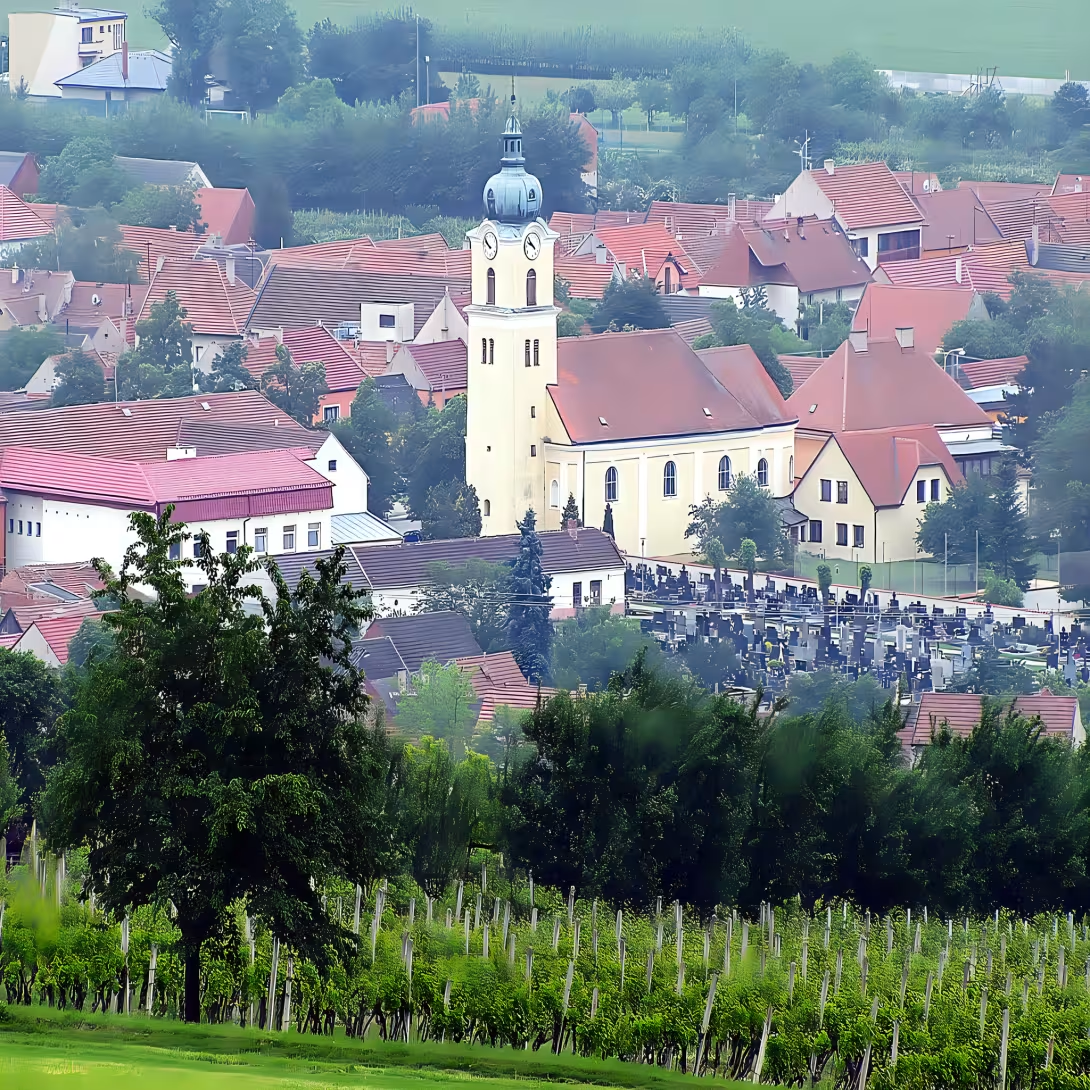
The Church of Saint Andrew in Blatnice pod Svatým Antonínkem is a remarkable example of Baroque architecture in the Jihomoravský kraj region of the Czech Republic. Built between 1714 and 1717, this Roman Catholic parish church replaced an earlier Gothic structure, retaining only its tower. As a protected cultural monument, it stands out for its architectural style and historical significance, often participating in events like 'Night of Churches'.
The origins of the Church of Saint Andrew date back to an initial Gothic church mentioned as early as 1346. Over time, due to wars, fires, and raids, this original structure fell into disrepair and was eventually replaced by the current Baroque edifice. The construction of the new church in the early 18th century coincided with a period when Baroque architecture flourished across Europe, particularly under Habsburg rule in Bohemia, reflecting significant cultural and religious developments.
Architecturally, the Church of Saint Andrew features a single-nave design with a semi-circular apse. The interior boasts a vaulted ceiling adorned with intersecting arches, while the exterior includes a lisenated façade punctuated by three arched windows. A distinctive hipped roof covers the nave, and an octagonal bell tower with clock faces rises to the east, capped by a spire-like roof. Additional architectural elements include a cylindrical annex housing a circular staircase attached to the southern side of the tower, as well as a sacristy and square vestibule added to the south.
Throughout its history, the church has undergone several significant changes. Following a fire in 1829, it was repaired and a sacristy was constructed. In 1888, artist Jož Uprka embellished the interior with paintings. The late 1950s saw further restoration efforts, including raising the bell tower. A comprehensive reconstruction took place in 2011 to preserve its historical integrity.
The church's organ has also seen notable developments. Originally installed in 1893 by Brauner from Uničov, it was replaced in 1964 with a new instrument crafted by Rieger-Kloss. In 2012, the organ underwent repairs funded by parishioner donations, demonstrating ongoing community involvement and support.
Today, the Church of Saint Andrew remains an active place of worship and a significant cultural landmark. Its rich history and architectural beauty make it a worthwhile visit for those interested in Baroque architecture and Czech heritage. Visitors are invited to explore this historic monument, appreciating its enduring legacy and the stories embedded within its walls.
Then and now
Drag the slider to compare how the landmark may have looked when it was built with the view today.
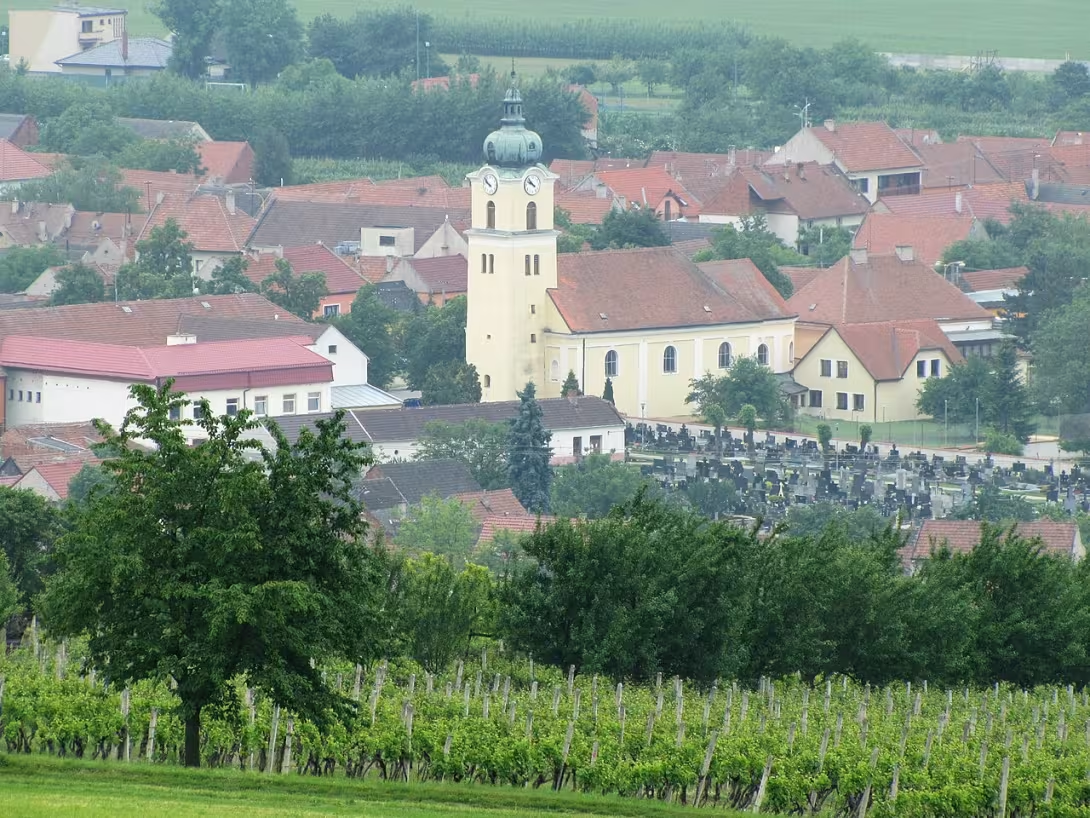

The historical appearance on the left is an AI-generated visualisation and serves as inspiration only.
Historical milestones
- 1717
- Construction of the Baroque church completed.
- 1829
- Church repaired and sacristy added after a fire.
- 1888
- Interior decorated with paintings by Jož Uprka.
- 2011
- Comprehensive reconstruction of the church.
Architectural development
The current Baroque church replaced an earlier Gothic structure, retaining only its tower. Architect Anton Ospela is credited with its design. Following a fire in 1829, repairs were made and a sacristy was added. In the late 1950s, further restoration included raising the bell tower. A comprehensive reconstruction took place in 2011.
Historical events
The original Gothic church, mentioned as early as 1346, was replaced by the current Baroque structure completed between 1714 and 1717.
In 1829, a fire led to repairs and the addition of a sacristy.
In 1888, the interior was decorated with paintings by artist Jož Uprka.
Points of interest
- The Church of Saint Andrew retains the tower from its predecessor Gothic church, showcasing a rare architectural blend where Baroque and remnants of Gothic styles coexist.
- Despite being rebuilt in the 18th century, the church's original bell tower was raised during restoration efforts in the late 1950s, reflecting ongoing adaptations to preserve its historical elements.
- The interior of the Church of Saint Andrew was enriched with paintings by Jož Uprka in 1888, adding a layer of artistic history that complements its architectural significance.
- In 2011, the church underwent comprehensive reconstruction funded by both local and broader community efforts, highlighting the strong cultural ties and commitment to preserving this heritage site.
- The organ within the Church of Saint Andrew has seen several transformations since its installation in 1893, with significant repairs in 2012 supported entirely by parishioner donations, illustrating deep-rooted community involvement.
Guide
This guide is narrated by a synthetic voice generated by artificial intelligence.
Show guide text
This text was created by artificial intelligence and has not been editorially reviewed. It may contain inaccuracies.
The Church of Saint Andrew is a Roman Catholic parish church in the Moravian Slovak village of Blatnice pod Svatým Antonínkem in the Hodonín district. It belongs to the deanery of Veselí nad Moravou in the Olomouc archdiocese. It acquired its present Baroque form between 1714 and 1717 and is a cultural monument of the Czech Republic.
A church had stood in the village much earlier. The first one was built approximately in the eleventh to twelfth century, but it is documented in writing only from the year 1346. Wars, fires and bandit raids gradually destroyed it so severely that it fell into decay. That is why it was demolished and a new Baroque building was erected in its place, and its appearance has been preserved to this day. Only the tower remained from the original Gothic church. The architect of the new church was allegedly Anton Ospela.
The church's fate was further marked by a fire in 1829. During the subsequent repairs, the sacristy was also completed. In 1888, the painter Joža Uprka decorated the church with paintings. At the end of the nineteen fifties, the church underwent another repair and the tower received an extension. In 2011, a complete reconstruction followed.
It is a single-nave longitudinal structure with a semicircular choir. The nave has a rectangular ground plan and is vaulted with a barrel vault with ridge segments. On the outside it is covered with a gabled roof. Pilaster strips divide the façade and three windows with semicircular arches pierce it. On the eastern side stands a prismatic tower with a clock, topped with a bell-shaped roof. Attached to the southern side of the tower is a cylindrical annex with a circular staircase. From the south, the sacristy and a square vestibule adjoin the nave. The main entrance leads through the façade under the tower.
The church also has an interesting history of organs. The first instrument was built here in 1893 by the organ-building firm Brauner from Uničov and served until 1964. Then it was replaced by the organ from the Krnov firm Rieger-Kloss, whose console faces the choir gallery. In 2012 they were repaired. The repair cost eighty thousand crowns and was paid for by the parishioners from their donations.
Tips for visitors
The best time to visit the Church of Saint Andrew in Blatnice pod Svatým Antonínkem is during late spring or early autumn. During these seasons, the weather is typically mild and pleasant, making it ideal for exploring the church's intricate Baroque architecture without the discomfort of summer heat or winter cold. Additionally, visiting outside peak tourist season can offer a more serene experience with fewer crowds, allowing you to appreciate the church’s beauty in peace.
For those preferring public transit, Blatnice pod Svatým Antonínkem has connections that facilitate access to the church. Always verify current transportation options through a reliable travel or transport search tool before your visit.
When planning your visit, consider bringing comfortable walking shoes and weather-appropriate clothing, as you may want to explore both inside and outside the church. A small backpack with water, snacks, and perhaps a camera can enhance your experience. If you're interested in photography, bring a lens that allows for detailed shots of architectural features. Remember to respect any guidelines regarding photography within the church.
For photography enthusiasts, some of the best spots include capturing the facade of the church during golden hour when the light is soft and warm, highlighting its Baroque details. Inside, look for opportunities to photograph stained glass windows or intricate ceiling designs. Natural lighting can vary throughout the day, so consider visiting at different times to see how the interior changes with the light.
In terms of nearby attractions within a 30-minute drive, visitors might explore other historical sites in the Jihomoravský kraj region. While specific places are not detailed here, this area is known for its rich history and cultural heritage, offering various opportunities to delve into local traditions and landscapes.
Frequently asked questions
Can the monument be visited?
Religious buildings are usually open mainly during services; at other times a visit is normally arranged with the parish or the operator. We have not verified specific times.
Where is the monument?
Location: Blatnice pod Svatým Antonínkem, Jihomoravský kraj. The map on this page shows the exact spot.
Why is the monument protected?
It is listed in the Central List of Cultural Monuments of the Czech Republic as a cultural monument (register no. 37627/7-2164).
Businesses nearby
Do you run a restaurant, accommodation, shop, museum, rental, wellness or other visitor service near this monument? Show yourself directly to the people heading to it — this is how they will see you in the app and on the web:
Accommodation nearby
Themed route
Tematická výletní trasa: Kostel svatého Ondřeje a okolí Blatnice pod Svatým Antonínkem
1. Kostel svatého Ondřeje (Blatnice pod Svatým Antonínkem) - Kostel Start your journey at the Church of Saint Andrew, which is not only a religious center for the community but also an architectural gem with a rich history. This Baroque church boasts unique interior frescoes and holds significant importance for the local community.
2. Kaple svatého Antonína (Blatnice pod Svatým Antonínkem) - Kaple A short walk from the church is the Chapel of Saint Anthony, known for its peaceful atmosphere and historical reliefs. It's a place for contemplation and to appreciate the rich spiritual tradition of the village.
3. Památník válečných padlých (Blatnice pod Svatým Antonínkem) - Památník Along the path to the church is the War Memorial, serving as a reminder of historical events and the sacrifices of war. It's a tranquil spot for reflecting on the importance of peace.
4. Křížová cesta (Blatnice pod Svatým Antonínkem) - Křížová cesta A few steps from the Chapel of Saint Anthony is the Way of the Cross, leading visitors through stations that recall the life and teachings of Christ. It's an ideal place for a peaceful walk and personal reflection.
This tour offers insights into both the spiritual and historical aspects of Blatnice pod Svatým Antonínkem, with each point allowing you to delve deeper into its rich culture and traditions.
Seasonal recommendations
Spring: The arrival of spring brings a gentle awakening to the Church of St. Andrew, with its lush surroundings at Blatnice pod Svatým Antonínkem coming alive in vibrant colors. The soft light filtering through budding trees creates an ethereal atmosphere around the church, enhancing its historical charm. Visitors should take advantage of this serene setting by arriving early in the morning to avoid crowds and enjoy a peaceful exploration. Light layers are recommended as temperatures can be mild but unpredictable during this season.
Summer: Summer is the peak tourist season at the Church of St. Andrew, with long daylight hours offering ample time for sightseeing. The area around Blatnice pod Svatým Antonínkem is lush and green, providing a picturesque backdrop to the church's architectural beauty. Visitors are advised to arrive early in the morning or later in the afternoon to avoid large crowds and enjoy cooler temperatures. Comfortable walking shoes and light clothing are recommended due to warm weather.
Autumn: Autumn transforms the Church of St. Andrew into a stunning canvas with its fiery foliage, creating a breathtaking contrast against the historic architecture. The crisp air and softer light add an enchanting quality to the church's surroundings at Blatnice pod Svatým Antonínkem. This is an ideal time for photography enthusiasts looking to capture the vibrant colors of fall.
Winter: Winter cloaks the Church of St. Andrew in a serene blanket of snow, offering a magical atmosphere that enhances its historical allure. The landscape around Blatnice pod Svatým Antonínkem becomes quiet and peaceful during this time, providing a unique experience for visitors seeking tranquility. Warm clothing, including hats and gloves, is essential, and early visits are recommended as winter daylight hours are limited.
Visualizations and artistic views


The visualisations are generated by artificial intelligence and serve as inspiration.
Photos from the area
Real photos taken near the monument

Zdroj a licence jsou uvedeny u každého snímku.
Tips from visitors
No tips yet. Be the first!
Log in and add your tip.
Sources and literature
Photos: Radek Linner / CC BY 3.0, rozlišení zvýšeno umělou inteligencí — Wikimedia Commons. The author and licence also appear when you hover over the image.
Faktickým podkladem tohoto textu byl článek na Wikipedii, jehož autory jsou přispěvatelé Wikipedie. Článek je dostupný pod licencí CC BY-SA 4.0.
Location on the map
More monuments – Blatnice pod Svatým Antonínkem
Show all in the municipality

Příběhy a pověsti
Legendy, pověsti a příběhy spjaté s touto památkou
Fotografie návštěvníků
Zatím žádné fotografie. Buďte první, kdo přidá fotografii z návštěvy!
Log in a přidejte svou fotografii nebo hodnoťte.
Za ověřenou návštěvu v aplikaci získáte víc bodů — poznáme podle GPS, že jste na místě.
Reviews and comments