



Kostel svatého Petra a Pavla (Konecchlumí) Church
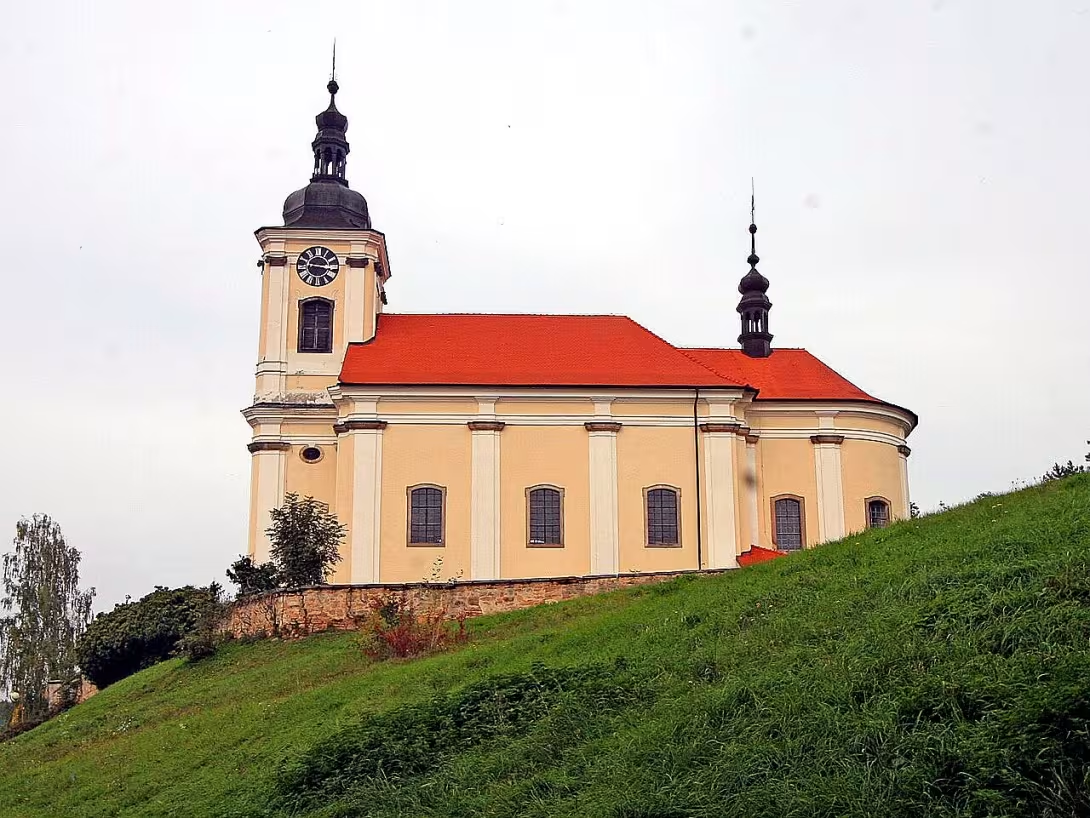
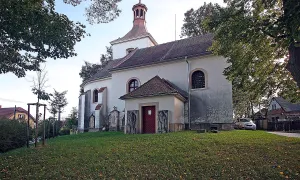
The Church of Saints Peter and Paul in Konecchlumí is a prominent Roman Catholic filial church, visible from afar. First mentioned as a small Gothic chapel in 1355, it was transformed into its current Baroque style between 1728-1729 under architect Donát Morazzi. Financed by František Norbert Trauttmansdorff, the church has been protected as a cultural monument since then. Its distinctive architectural elements include a pyramidal tower with a dome, making it an essential piece of Konecchlumí's heritage.
The origins trace back to 1355 when Jan z Verdeka a ze Žlunic was its patron. After the Hussite Wars, the chapel became Utraquist but reverted to Catholicism following the Battle of White Mountain in 1621. The current Baroque structure emerged between 1728-1729, designed by Donát Morazzi and financed by František Norbert Trauttmansdorff. This period saw a flourishing of Baroque art and architecture across Europe, influenced significantly by the Catholic Church's Counter-Reformation efforts.
Architecturally, the church features a single-nave structure with a pyramidal tower topped by a dome. The transformation from a Gothic chapel to this Baroque edifice reflects broader European trends during the early 18th century when Bohemia was part of the Habsburg Monarchy. In 1744, organ pipes crafted by Vrchlabí builder Ambrož Stanislav Tauchmann were installed. In 2001, fourteen panel paintings depicting the Stations of the Cross, created by Vladimír Komárk, were added to the interior.
Throughout its history, the church has seen various owners and administrators. Initially under Jan z Verdeka a ze Žlunic's patronage, it transitioned through Utraquist control before reverting to Catholicism post-1621. The significant financial backing from František Norbert Trauttmansdorff was crucial for constructing its current Baroque form.
Key events include its mention as a Gothic chapel in 1355, the installation of organs by Ambrož Stanislav Tauchmann in 1744, and the addition of Stations of the Cross paintings in 2001. These milestones highlight the church's evolving role within the community and ongoing preservation efforts.
Today, the Church of Saints Peter and Paul remains a vital cultural monument, with services held on the last Saturday of each month at 18:00. It has benefited from significant restoration under the Program záchrany architektonického dědictví between 1995-2014, which saw an investment of 4,550,000 Kč in its preservation. The church's rich history and architectural beauty make it a worthwhile visit for those interested in Bohemia’s cultural heritage.
The Church of Saints Peter and Paul is not only a testament to the region's historical and religious evolution but also a beacon of Baroque artistry. Its enduring presence invites visitors to explore its storied past, appreciate its architectural splendor, and experience the spiritual ambiance it continues to offer.
Then and now
Drag the slider to compare how the landmark may have looked when it was built with the view today.
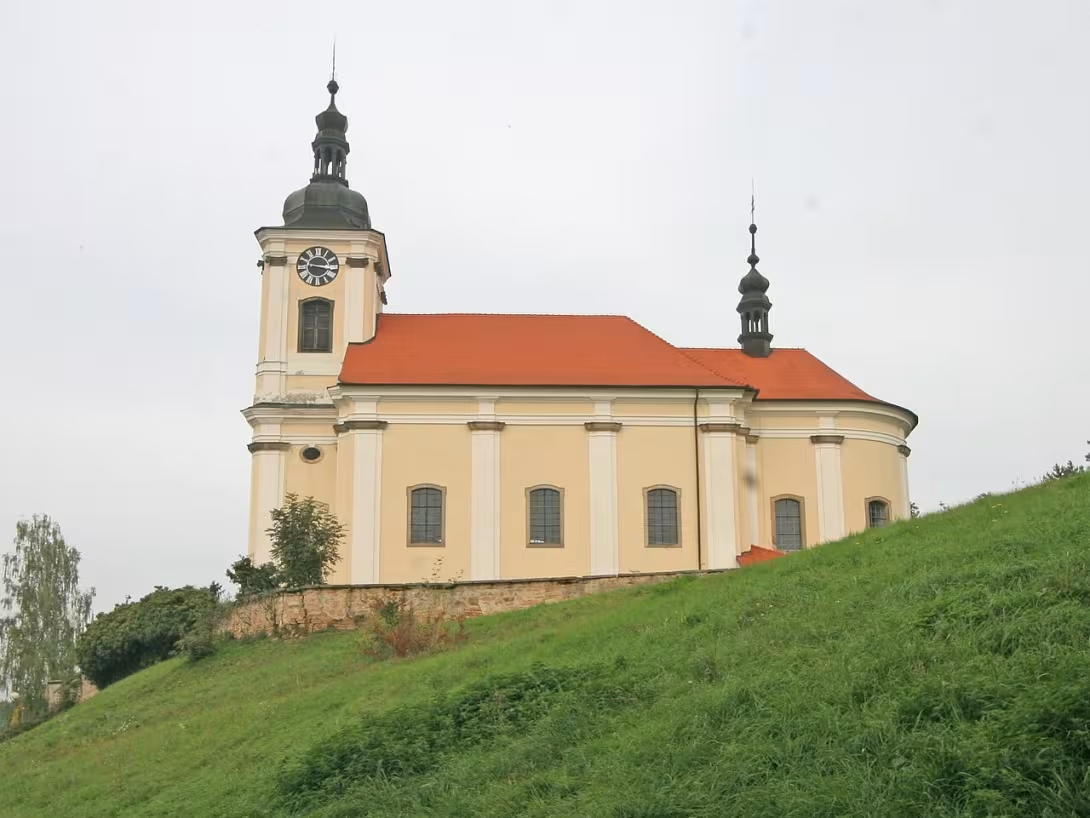
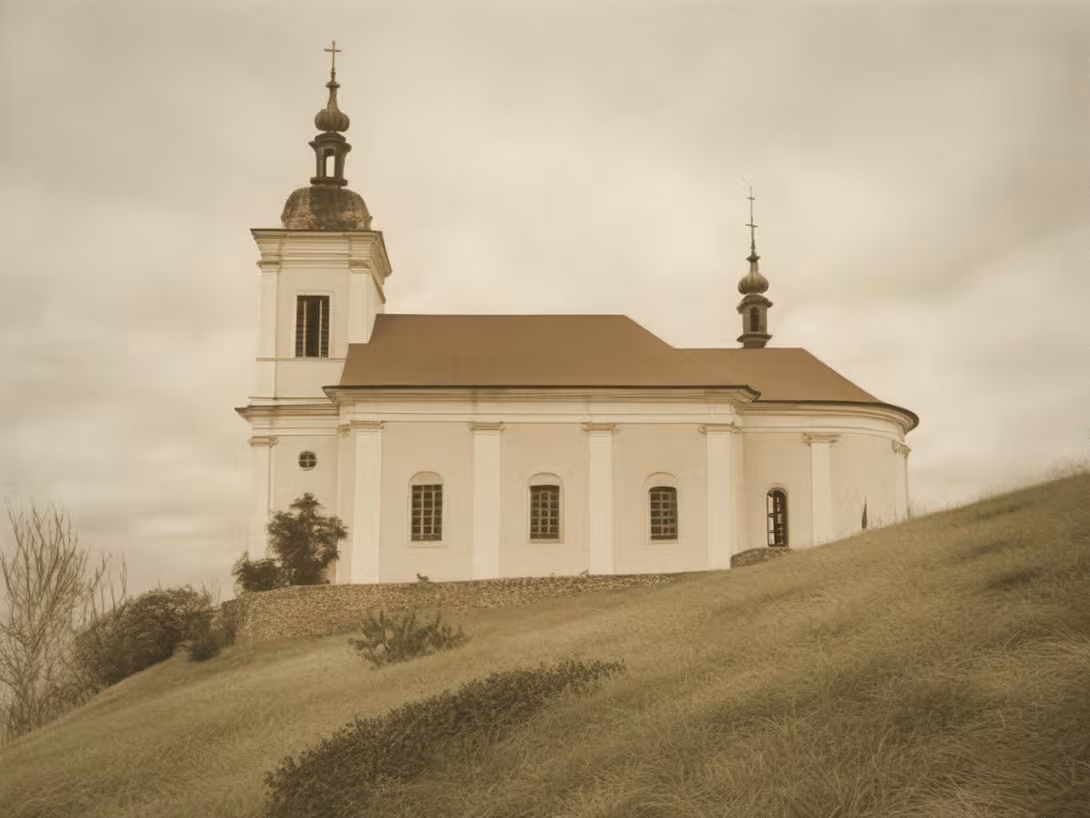
The historical appearance on the left is an AI-generated visualisation and serves as inspiration only.
Historical milestones
- 1355
- Original Gothic chapel mentioned.
- 1728
- Construction of current Baroque church began.
- 1744
- Installation of organs by Ambrož Stanislav Tauchmann.
Architectural development
The church's architectural journey began with a small Gothic chapel in 1355. Following the Hussite Wars, it became Utraquist and later reverted to Catholicism after the Battle of White Mountain in 1621. The current Baroque structure was built between 1728-1729 by Donát Morazzi, financed by František Norbert Trauttmansdorff. In 2001, fourteen panel paintings depicting the Stations of the Cross were installed.
Historical events
1355: Original Gothic chapel mentioned, patron Jan z Verdeka a ze Žlunic.
1621: After the Battle of White Mountain, it reverted to Catholicism.
1744: Installation of organs by Vrchlabí organ builder Ambrož Stanislav Tauchmann.
Points of interest
- The Church of Saints Peter and Paul features a unique architectural element: a pyramidal tower capped with a dome, which is not commonly found in other Baroque churches in the region. - Despite its current Roman Catholic affiliation, the church was once Utraquist after the Hussite Wars, reflecting the religious turmoil and shifts that characterized Bohemia's history during the 15th century. - The organ pipes installed by Ambrož Stanislav Tauchmann in 1744 are a rare example of his craftsmanship still present in its original location, highlighting the church’s connection to regional artisans. - In 2001, the addition of Vladimír Komárk's Stations of the Cross paintings modernized the interior while maintaining historical continuity, showcasing how contemporary art can be integrated into historic settings. - The church was part of a broader cultural preservation effort under the Program záchrany architektonického dědictví from 1995 to 2014, which invested 4,550,000 Kč in its restoration, emphasizing its significance as a heritage site within the community.
Guide
This guide is narrated by a synthetic voice generated by artificial intelligence.
Show guide text
This text was created by artificial intelligence and has not been editorially reviewed. It may contain inaccuracies.
The Church of Saints Peter and Paul rises on an elevated location east above the village of Konecchlumí and is a far-visible landmark of the entire region. It is a Roman Catholic subsidiary church and is protected as a cultural monument of the Czech Republic.
Its history dates back to the 14th century. Already in 1355, a small Gothic church was mentioned on this site. Its patron was then Jan z Verdeka and ze Žlunic. The small church probably had side altars and a rectory belonged to it. After the Hussite Wars, it passed into the hands of the Utraquists. It became Catholic again only after the Battle of White Mountain and the rectory was probably abolished at that time.
Today's church was built in the years 1728 to 1729. The construction was paid for by František Norbert Trauttmansdorff and was led by the builder Donát Morazzi. It is a single-nave building in a purely Baroque style. The most striking feature is a prismatic tower topped with a dome.
Inside the church are the organ pipes from 1744. They were built by the Vrchlabí organ builder Ambrož Stanislav Tauchmann.
The church went through difficult periods as well. During the First World War, its bells were requisitioned for military purposes. At the end of the 20th century, systematic restoration began. Between 1995 and 2014, four million five hundred and fifty thousand crowns were spent on repairs from the Program for the Protection of Architectural Heritage.
A newer part of the decoration is the Way of the Cross. In 2001, fourteen panel paintings by painter Vladimír Komárek were added to the church.
Tips for visitors
The best time to visit the Church of Saints Peter and Paul in Konecchlumí is during late spring or early autumn when the weather is mild, making it pleasant for walking around the area. These seasons also offer beautiful natural lighting for photography, enhancing the church's Gothic architecture with softer shadows and vibrant colors from surrounding foliage.
Public transportation options may not directly serve this location, so it is advisable to plan your trip with a car or check local transport services for any available routes that could bring you closer to the site.
When visiting, consider bringing comfortable walking shoes as exploring the church and its surroundings might involve some walking on uneven paths. A camera or smartphone is recommended for capturing the stunning architecture and serene landscapes. Additionally, carrying a light jacket can be useful due to variable weather conditions, especially in cooler months.
For photography enthusiasts, early morning or late afternoon offers the best natural lighting to capture the church's intricate details without harsh shadows. The eastern facade of the church provides an excellent spot for photos with soft morning light, while the western side is ideal during sunset hours for dramatic backlit images.
Within a 30-minute drive from Konecchlumí, visitors can explore other historical sites and natural attractions in the Královéhradecký kraj region. Although specific locations are not mentioned here, nearby areas often feature charming villages, castles, or nature trails that complement a visit to this historic church.
Families with children will find the Church of Saints Peter and Paul an interesting destination due to its historical significance and architectural beauty. To keep young visitors engaged, consider bringing along a small guidebook about Gothic architecture or local history. Exploring the surrounding countryside can also provide a fun outdoor activity for kids.
Frequently asked questions
Can the monument be visited?
Religious buildings are usually open mainly during services; at other times a visit is normally arranged with the parish or the operator. We have not verified specific times.
Where is the monument?
Location: Konecchlumí, Královéhradecký kraj. The map on this page shows the exact spot.
Why is the monument protected?
It is listed in the Central List of Cultural Monuments of the Czech Republic as a cultural monument (register no. 14112/6-1208).
Businesses nearby
Do you run a restaurant, accommodation, shop, museum, rental, wellness or other visitor service near this monument? Show yourself directly to the people heading to it — this is how they will see you in the app and on the web:
Accommodation nearby
Themed route
Thematic Vlog Tour: Konecchlumí and Its Surroundings
1. Kostel svatého Petra a Pavla (Church of Saints Peter and Paul) - Type: Church - Why Visit: This stunning church, located in the heart of Konecchlumí, is a prime example of Baroque architecture with its intricate facade and rich history. It serves as both a spiritual center for the community and a testament to the region's architectural heritage.
2. Konecchlumí Village Square - Type: Public Space - Why Visit: Just a short walk from the church, the village square is an ideal spot to immerse yourself in local life. It offers picturesque views of traditional Czech architecture and provides a peaceful setting for relaxation or people-watching.
3. Local Historical Museum (if available) - Type: Museum - Why Visit: Explore the rich history of Konecchlumí through exhibits that showcase artifacts, photographs, and stories from the area's past. This museum offers insights into the cultural evolution of this charming village.
4. Konecchlumí Community Center - Type: Cultural Venue - Why Visit: Often hosting local events, concerts, or exhibitions, the community center is a vibrant hub for cultural activities in Konecchlumí. It's a great place to engage with locals and experience contemporary Czech culture.
5. Konecchlumí Walking Trails - Type: Nature Trail - Why Visit: For those who enjoy nature, the walking trails around Konecchlumí offer serene paths through lush landscapes. These trails provide a perfect opportunity to unwind and appreciate the natural beauty of the Královéhradecký kraj region.
This tour provides a comprehensive exploration of Konecchlumí's cultural and historical offerings while allowing visitors to enjoy its charming surroundings.
Seasonal recommendations
Spring: Visiting the Church of Saints Peter and Paul in Konecchlumí during spring offers a unique experience as nature awakens around this historical site. The surrounding landscape is adorned with blooming flowers, creating a picturesque setting that enhances the church's architectural beauty. Gentle sunlight filters through the foliage, casting soft shadows and illuminating the intricate details of the church’s façade. Visitors are encouraged to wear comfortable layers, as temperatures can vary throughout the day. Early mornings or late afternoons are ideal times for a visit to avoid larger crowds, allowing you to fully appreciate the serene atmosphere.
Summer: Summer is an excellent time to explore Konecchlumí's Church of Saints Peter and Paul due to its extended daylight hours and pleasant weather. The lush greenery surrounding the church provides a vibrant backdrop that complements the historical structure beautifully. During this season, visitors can enjoy outdoor activities in the nearby countryside while taking breaks at the church. However, it's advisable to arrive early in the morning or later in the afternoon to avoid peak tourist times when the site tends to be busier. Comfortable walking shoes and light clothing are recommended for a pleasant visit.
Autumn: Autumn brings a magical transformation to the Church of Saints Peter and Paul, with its vibrant display of fall foliage creating a stunning contrast against the historic architecture. The warm hues of reds, oranges, and yellows surrounding the church provide an enchanting atmosphere perfect for photography enthusiasts. As temperatures begin to drop, visitors should dress in layers and consider bringing a light jacket or sweater. This season is less crowded than summer, offering a more tranquil experience while still providing ample daylight hours for exploration.
Winter: Visiting the Church of Saints Peter and Paul during winter offers a unique charm as snow blankets the surrounding landscape, creating a serene and picturesque setting. The church's silhouette against a crisp white backdrop provides a striking visual appeal, while the quietness of the season allows for a more intimate experience with this historical site. Arriving early can help avoid any potential delays due to inclement weather conditions, ensuring a smooth visit.
Visualizations and artistic views


The visualisations are generated by artificial intelligence and serve as inspiration.
Photos from the area
Real photos taken near the monument


Zdroj a licence jsou uvedeny u každého snímku.
Atmosphere of the place
This atmospheric visualisation of the place and period was generated by artificial intelligence. It is not real footage of the location.
Tips from visitors
No tips yet. Be the first!
Log in and add your tip.
Sources and literature
Photos: Petr1888 / CC BY-SA 3.0 — Wikimedia Commons. The author and licence also appear when you hover over the image.
Faktickým podkladem tohoto textu byl článek na Wikipedii, jehož autory jsou přispěvatelé Wikipedie. Článek je dostupný pod licencí CC BY-SA 4.0.
Location on the map

Příběhy a pověsti
Legendy, pověsti a příběhy spjaté s touto památkou
Fotografie návštěvníků
Zatím žádné fotografie. Buďte první, kdo přidá fotografii z návštěvy!
Log in a přidejte svou fotografii nebo hodnoťte.
Za ověřenou návštěvu v aplikaci získáte víc bodů — poznáme podle GPS, že jste na místě.
Reviews and comments