



kostel svatého Prokopa (Jarošov nad Nežárkou) Church
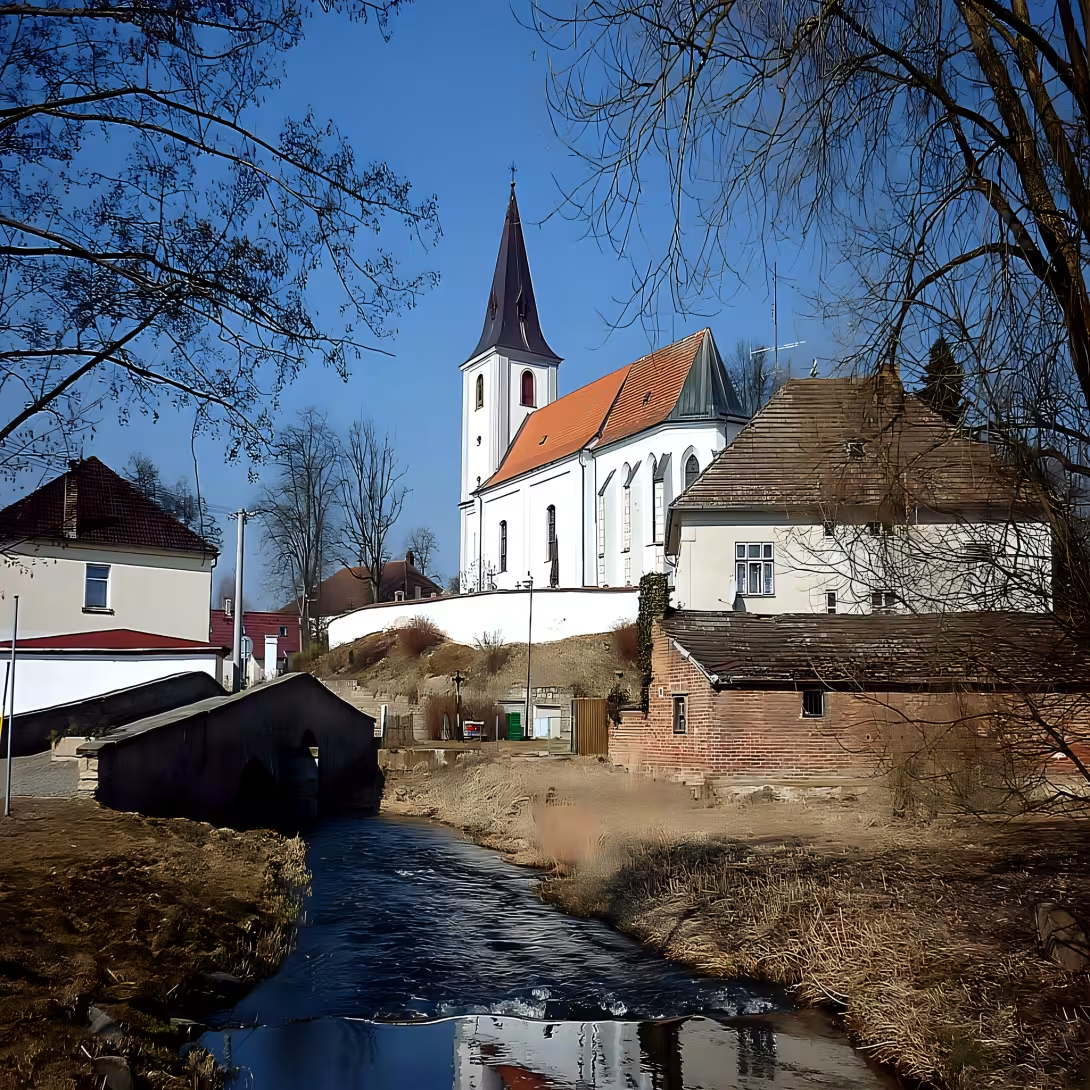
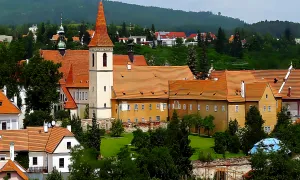
The church of St. Prokop in Jarošov nad Neženka in the district of Jindřichův Hradec is an architectural and spiritual memory of the medieval history of the region. Its foundation dates back to the 2nd half of the 14th century and already in 1384 the church first appeared in written records. It's based on a Gothic building tradition that it still holds on to today.
The construction has received appropriate maintenance and modifications over the centuries. In 1550, the first registered construction work took place. There were other changes in the 18th century - a tower was added to the church in 1720, which gave the construction a new look and practical function. During the fire in 1751, however, the temple ship burned down. The following years brought recovery - during the years 1754 to 1755 the ship was rebuilt and equipped with two fields of rolled vaults that cover it today. In 1833 a circle was set up in the interior.
Architecturally, the most valuable part of the church belongs to his priesthood with a five-sided conclusion, which comes from the time of foundation and thus represents the oldest layer of construction. He's got headrest attached to him. The main altar was created in 1877, but its decoration comes from deeper history - the painting on the altar was painted already in the 1990s by the famous painter Jan Jiří Heinsch. In the priesthood there is a late Gothic statue of the Madonna of the Assumpta of the 3rd quarter of the 15th century, supplemented by a stone gothic penitentiary.
The interior is decorated with numerous sculptures of different styles and epoch. The pillars of the temple ship include Rococo statues of Saint Ivan, Tekla, Jáchyma and Anna. In the niche there is a Baroque statue of the patron saint of the church, St. Prokop. At the entrance to the church, the visitor may notice a stone Gothic treasury, which bears witness to the medieval care of the parish for his temple.
The church is today an interesting complex with adjacent cemetery and parish. The various layers of its development - from Gothic foundations to Baroque and rococo art to early modern art - makes it an ideal place for those who are interested in how architecture and art have changed and developed in the quiet Moravian villages. As part of the parish Nová Beelnice also provides insight into the life of the Catholic community in South Moravia, which has kept it and protected it for more than 600 years.
Then and now
Drag the slider to compare how the landmark may have looked when it was built with the view today.
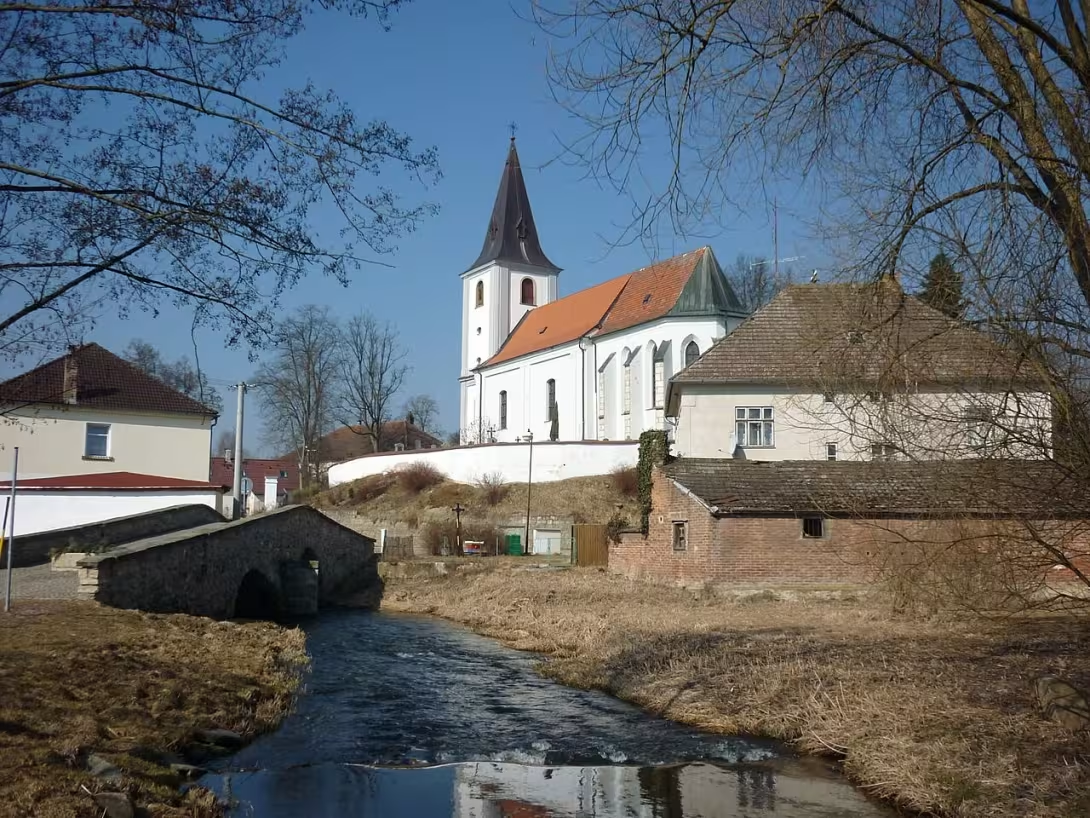

The historical appearance on the left is an AI-generated visualisation and serves as inspiration only.
Historical milestones
- 1384
- First written mention of St. Prokop's Church.
- 1550
- First construction work of the church.
- 1720
- Adding the tower to the church.
- 1751
- The church fire that led to his baroque restoration.
- 1833
- Establishment of a circle in the interior of the church.
- 1877
- Replacing the main altar and installing the picture by Jan Jiří Heinsch.
Architectural development
The church was founded in the second half of the 14th century in a Gothic style. In the 16th century there was the first construction work followed by the addition of the tower in 1720. After the fire in 1751, the temple ship was rebuilt baroque and encapsulated with a vaulted vault with two fields. In the 19th century a circle was established and the main altar was replaced. The original Gothic elements, such as the priesthood and the penitentiary, are preserved.
Historical events
- 1384
- The first written mention of the church confirming its existence at the time.
- 1751
- A church fire that led to extensive baroque modifications and restoration of the temple ship.
- 1877
- The exchange of the main altar, which was supplemented by a painting from the 1990s by the painter Jan Jiří Heinsch.
Points of interest
- The church of St. Prokop is founded in the second half of the 14th century and first appears in written records in 1384.
- A priest with a five-sided conclusion comes from the time of the foundation and is thus the oldest part of the church.
- In 1720, a tower was added to the church, which gave him a new look.
- Between 1754 and 1755, the temple ship was restored after the fire of 1751 and equipped with a vaulted vault.
- On the main altar is a painting painted in the 1990s by the famous painter Jan Jiří Heinsch.
Guide
This guide is narrated by a synthetic voice generated by artificial intelligence.
Show guide text
This text was created by artificial intelligence and has not been editorially reviewed. It may contain inaccuracies.
The Church of Saint Prokop in Jarošov nad Nežárkou in the Jindřichohradecko region, together with the adjoining cemetery and rectory, is a cultural monument. It belongs as a subsidiary church under the Roman Catholic parish of Nová Včelnice.
The church was founded in the second half of the fourteenth century and built in the Gothic style. The first written mention of it dates from thirteen eighty-four. The first structural modifications took place in fifteen fifty. In seventeen twenty, a tower was added to the church. In seventeen fifty-one, the church nave caught fire. It was restored in the years seventeen fifty-four through seventeen fifty-five, and since then it has been covered by a barrel vault with two fields. In eighteen thirty-three, a gallery was installed in the church.
From the time of its foundation, the presbytery with a pentagonal apse has been preserved, to which buttresses are attached from the outside. The main altar dates from eighteen seventy-seven, but the painting on it is much older. It was painted by Jan Jiří Heinsch in the nineteen nineties of the seventeenth century. In the presbytery there is also a late Gothic statue of the Madonna of the Assumpta type from the third quarter of the fifteenth century and a stone Gothic sanctuary.
At the pillars of the church nave are Baroque statuettes of Saint Ivan, Saint Tekla, Saint Joachim, and Saint Anne. In a niche is placed a Baroque statue of the patron saint of the church, Saint Prokop. At the entrance to the church, a stone Gothic alms box has been preserved.
Tips for visitors
Best time to visit
Church of St. Prokopa is the most beautiful in sunny weather in the morning, when sunlight falls favourably on gothic windows and emphasizes detailed sculptures. The ideal period for visiting is spring or autumn, when nature in the surroundings is blooming or coloured into autumn shades. In summer it is advisable to visit the church early in the morning or evening to avoid heat and crowds of tourists. In winter, the church offers a quiet atmosphere and an opportunity to explore its inner space without interference.
It is recommended to park on a local playground or at a local school where there are plenty of vacancies. If you arrive by public transport, the stops are close to the village, but the current connection should be checked in the traffic search engine. From the stop the church is only a short walk along local roads.
What to take with you
When visiting the church, wear comfortable shoes because the interior and surroundings offer several stairs and uneven terrain. It is also appropriate to carry a small umbrella or light raincoat, as the weather in this area can change quickly. If you are planning to take pictures, do not forget your camera or mobile phone with a high-quality camera. In winter, bring warm clothes because it may be cold in the church.
Photography - best places and light
Best places for photography are mainly the entry portal with gothic arches and window rotations that capture light very efficiently. The ideal time for photography is morning or evening, when light is softer and creates pleasant shadows. The inner space of the church is rich in detailed sculpture decoration, especially on the altar and around the main altar. The outside of the church is interesting especially from the south side, where you can see polygonal presbytery and its Gothic architecture.
What to visit in the vicinity (within 30 minutes)
Close to the church of St. Prokop is worth visiting the ruins of the castle Helfenburg, located about 3 kilometers from the village. This chateau offers picturesque views and the opportunity to walk through historical ruins. Another interesting thing is the village of Nová Beelnice with the parish church of St. James, which is about 5 kilometres away.
Tips for families with children
For families with children, a visit to the church of St. Prokop is particularly interesting due to its historic atmosphere and the possibility to explore Gothic architecture. Children can look at detailed sculptures and hear stories related to the church. It is possible to play in local fields or in forests that are suitable for short walks. In the nearby New Beelnice there is also the possibility to visit the parish church of St. James, where children can observe its architecture and historical elements.
Frequently asked questions
Can the monument be visited?
Religious buildings are usually open mainly during services; at other times a visit is normally arranged with the parish or the operator. We have not verified specific times.
Where is the monument?
Location: Jarošov nad Nežárkou, Jihočeský kraj. The map on this page shows the exact spot.
Why is the monument protected?
It is listed in the Central List of Cultural Monuments of the Czech Republic as a cultural monument (register no. 14048/3-1946).
For kids
Imagine going back to a time when the Czech countries were filled with horrors and war attacks. The city of Jarošov nad Nežárkou was a small village where people lived in seclusion and peace.
The church of St. Prokop, which stands today in the middle of the village, was once the largest building in the village. It was a place where people gathered for prayers and festive occasions. Whenever something significant was happening, people would gather in front of the church and wait for the bell to ring.
Businesses nearby
Do you run a restaurant, accommodation, shop, museum, rental, wellness or other visitor service near this monument? Show yourself directly to the people heading to it — this is how they will see you in the app and on the web:
Events nearby
Zdroj akcí: otevřená data měst a obcí ČR (Národní katalog otevřených dat) a kalendář akcí Národního památkového ústavu.
Nearby
In the vicinity of the church there is a natural landscape with the predominance of Polish forests and fields. Within 5 km are significant monuments such as Helfenburk Chateau (ruins) and the village of Nová Beelnice with the parish church of St. James. Near is the nature reserve of Montenegro with rich flora and fauna.
Accommodation nearby
Trips and activities nearby
Guided tours, tickets and activities nearby from GetYourGuide
Affiliate link: if you buy from the partner, we may receive a commission. The price for you does not change.
Search tours and activities →Themed route
Thematic cruise route around the church of St. Prokop (Jarošov nad Nežárkou)
1. St. Prokop Church (Jarošov nad Nežárkou) - Church Start your trip at the church of St. Prokop, which is not only the spiritual centre of the village Jarošov nad Nežárkou, but also architectural pearls with rich history. Its Gothic structure and inner beauty are worth exploring by every visitor.
2. Castle Helfenburg - Ruins About 5 km from the church is the ruins of Helfenburg Chateau, which will take you back to the past and offer a view of the vast landscape. It is an ideal place for those who love history and love visiting old walls.
3. St. James's Parish Church (New Bees) - Church You will learn about another 5 km about the parish church of St. James in Nové Beelnice, which is famous for its architectural beauty and historical significance. His interior and artwork are an excellent example of the wealth of regional spiritual life.
4. Natural Reserve Montenegro - Nature At the end of the route, relax in the nature reserve of Montenegro, which offers beautiful walks between rich flora and fauna. This place is ideal for nature lovers and those who seek peace in the greenery.
This route offers a meaningful view of the cultural and natural wealth of the region of South Bohemia.
Seasonal recommendations
Spring The church of St. Prokop in Jarošov nad Neženka awakens to life in the spring months in magical light scattered sunlight, which penetrates through the stained glass and creates on the stone walls a game of color reflections. The surrounding area of the church is turned into a green paradise - meadows with primordial flowers (horses, anemones) are spread around and trees begin to thicken with leaves that shade ancient walls. The atmosphere is calm, but full of expectations, because spring is a time when visitors return after winter to enjoy silent prayers or tours of the interior without summer crowds. It is practically appropriate to visit the church early in the morning or in the afternoon when the sun shines directly into the boat and creates a magical atmosphere. Clothes should be layered - spring weather is variable, it may be cold in the morning, while the temperature rises rapidly after noon. Comfortable shoes are also recommended, as the surroundings are suitable for short walks around the surrounding fields and forests, where local fauna can be discovered (e.g. birds nesting near the church).
Summer In the summer months, the church of St. Prokop is transformed into a living center of rural life, where its surroundings attract not only believers but also tourists seeking escape from the urban rush. The warm sunlight falls directly on the stone wall, which in the morning radiates heat, while the shade beneath the trees at the church offers refreshment. The surrounding area is green and flowering, but it also attracts insects, therefore it is advisable to have a repellent while walking. The atmosphere is lively, but not chaotic - in the main summer season (July, August) it is recommended to come before 9:00 a.m. to avoid crowds that gather especially at the main entrance. Clothes should be light, but covering the shoulders (due to respect for the sanctuary), and it is recommended to take water with you, as it may be stuffy inside the church in the summer heat. Evening visits after sunset are ideal for those who want to experience the church in peace and with romantic lighting, when the stained glass is projected into the interior as colored spots.
Autumn Autumn brings a golden and orange palette to Jarošov over Neženka, which is reflected in the woods and fields around the church of St. Prokop. The sun shines low above the horizon, and its light penetrates the church through the stained glass, forming on the stone floors warm, honey reflections. The atmosphere is quiet, almost meditative, as tourists return home and the rest of the visitors are mainly local citizens or those looking for peace. In September and October the weather is stable but cold, therefore it is advisable to visit the church in the morning when the air is clean and the sun still warms the walls. Clothes should be warm, but not too mass - layering is again crucial as autumn temperatures fluctuate. Around the church offers the possibility of short trips to nature, for example to nearby ponds, where birds gather on a campaign at this time. In November, especially in advent time, the church can become a place of quiet reflection where candles are lit and an intimate, Christmas-tuned atmosphere is created.
Winter Winter Jarošov nad Nežárkou is magically quiet and covered with white felt carpet, which provides the church of St. Prokop with a mysterious, almore fabulous atmosphere. Snow dampens sounds and creates a quiet environment in which the church appears to be a hiding place from the freezing outside world. The sun shines short and low, but its rays, penetrating through the stained glass, illuminate the interior of the church as if they were encircling it with a gold veil. Winter visit is ideal for those looking for peace and contemplation - in December and January the church is often almost empty, except for local believers. Clothes should be warm, waterproof and comfortable - in addition to winter clothing (hats, gloves) solid shoes are recommended, as the path to the church may be frozen. A warm drink (e.g. hot tea) in a nearby pub or cafe can make the winter visit even more pleasant. On the night when the church is lit only by candlesticks, it turns into a mysterious place that attracts short but intense tours.
Visualizations and artistic views


The visualisations are generated by artificial intelligence and serve as inspiration.
Photos from the area
Real photos taken near the monument


Zdroj a licence jsou uvedeny u každého snímku.
Tips from visitors
No tips yet. Be the first!
Log in and add your tip.
Sources and literature
Photos: Fojsinek / CC BY-SA 3.0, rozlišení zvýšeno umělou inteligencí — Wikimedia Commons. The author and licence also appear when you hover over the image.
Faktickým podkladem tohoto textu byl článek na Wikipedii, jehož autory jsou přispěvatelé Wikipedie. Článek je dostupný pod licencí CC BY-SA 4.0.
Location on the map



Příběhy a pověsti
Legendy, pověsti a příběhy spjaté s touto památkou
Fotografie návštěvníků
Zatím žádné fotografie. Buďte první, kdo přidá fotografii z návštěvy!
Log in a přidejte svou fotografii nebo hodnoťte.
Za ověřenou návštěvu v aplikaci získáte víc bodů — poznáme podle GPS, že jste na místě.
Reviews and comments