






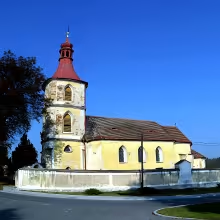
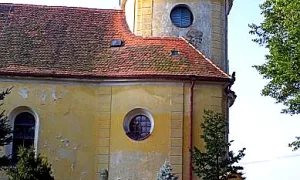
The Church of Saint Procopius in Všehrdy is a remarkable example of architectural evolution from its Gothic origins to Baroque transformation. Situated at the village's highest point on the western side, this cultural monument is protected by the Czech Republic for its historical and artistic significance. Originally built in the 14th century, it underwent significant changes during the early 18th century under architect Jan Blažej Santini-Aichel.
The earliest documented mention of the Church dates back to 1250, marking its long-standing presence in Bohemia's religious landscape. By the 14th century, it was recognized as a parish church, reflecting its community importance. The Hussite Wars brought destruction, leading to periods where the church functioned under different administrative jurisdictions. Notable repairs were made between 1580-1589 by Brikcí z Cinperka, who added a new bell funded by local residents. By the late 17th century, it was associated with nearby parishes in Kozojedy and later Kralovice.
The church's architectural journey reached a pivotal moment between 1730-1732 when it underwent Baroque reconstruction commissioned by Abbot Eugen Tyttl of Plasy. Although Santini’s direct involvement is not documented, his influence is evident through stylistic analysis and parallels with his work at the nearby Plasy Monastery. The transformation incorporated elements typical of Baroque Gothic style, including a central tower and redesigned nave. Ondřej Kondel z Plas served as the builder during this period.
Architecturally, the church features an exterior characterized by interlocking regular polygons, a hallmark of Santini’s designs. The main portal bears the emblem of Abbot Eugen Tyttl, dated 1732, highlighting his role in its restoration. Internally, the church emphasizes centralization and light manipulation, with spaces varying from windowless areas to brightly illuminated zones. The nave's barrel vaulting is segmented by three-bay projections, resting on baroque-profiled consoles.
Throughout its history, the Church of Saint Procopius has seen various administrative changes but remains a significant cultural site. Its transformation during the Baroque period reflects broader European trends in architecture and religious expression, marking it as an important piece of Bohemian heritage.
Today, the church stands as a protected monument, inviting visitors to explore its rich history and architectural beauty. Its unique blend of Gothic origins and Baroque enhancements offers a fascinating glimpse into the past, making it a worthwhile destination for those interested in historical architecture and cultural heritage.
Historical milestones
- 1250
- Nejstarší zmínka o kostele.
- 1400
- Vznik kostela v gotickém stylu.
- 1580
- Počátek oprav Brikcí z Cinperka.
- 1730
- Barokní rekonstrukce pod vedením Eugena Tyttl.
- 1732
- Dokončení barokního přestavby s emblemem Eugena Tyttl.
Architectural development
Originally a Gothic church from the 14th century, it underwent significant Baroque transformation between 1730-1732. The redesign incorporated elements of Baroque Gothic style, with contributions from architect Jan Blažej Santini-Aichel and builder Ondřej Kondel z Plas. This phase introduced new architectural features such as a central tower and redesigned nave.
Historical events
- 1250
- First documented mention of the Church of Saint Procopius.
- 1730-1732
- Baroque reconstruction led by Jan Blažej Santini-Aichel and commissioned by Eugen Tyttl.
Points of interest
- Despite its Gothic origins, the Church of Saint Procopius is renowned for its Baroque transformation, a rare architectural evolution that reflects broader European trends in religious expression during the 18th century.
- The church's association with Jan Blažej Santini-Aichel remains intriguing; while his direct involvement isn't documented, stylistic elements suggest he had a significant influence on its design, paralleling his work at Plasy Monastery.
Guide
Show guide text
Welcome to the Church of Saint Procopius in Všehrdy—a remarkable testament to architectural evolution and cultural heritage nestled on the western edge of this picturesque village. As you stand here, take a moment to absorb the serene beauty that surrounds you. The church stands proudly at the highest point, commanding attention with its historical significance as a protected monument in the Czech Republic.
Our journey through time begins in 1250 when the first mention of this sacred site is recorded. Over the centuries, it evolved from its initial construction into an exemplar of Gothic architecture by the 14th century—a period marked by grandeur and spiritual depth. However, the church's story doesn't end there. Fast forward to around 1400, and you'll find that these Gothic foundations laid the groundwork for what was to come.
In the late 16th century, specifically in 1580, Brikcí z Cinperka initiated a series of repairs, setting the stage for further transformation. But it's the Baroque era that truly defines this church’s character today. By 1730, under the visionary guidance of Eugen Tyttl and inspired by Jan Blažej Santini-Aichel, the church underwent an extensive Baroque reconstruction—a rare architectural evolution reflecting broader European religious trends in the 18th century.
As you gaze upon the structure now, notice how its Gothic origins meld seamlessly with Baroque elements. The transformation is a narrative of change and adaptation, evident in every archway and façade detail. Santini-Aichel's influence adds an intriguing layer to this story, his innovative spirit breathing new life into the church’s design.
Key figures like Eugen Tyttl not only shaped its physical form but also left their mark on its spiritual legacy. Their contributions are etched into history, with Tyttl's emblem from 1732 serving as a lasting reminder of their dedication and vision. The church thus stands as a chronicle of architectural prowess and religious devotion.
One fascinating aspect that continues to captivate historians is the seamless integration of Gothic foundations with Baroque elegance—a rarity in Europe’s ecclesiastical architecture. This blend not only showcases artistic ingenuity but also reflects the cultural shifts during Santini-Aichel's time, making it a unique piece of Bohemian heritage.
As you conclude your visit here at this historic site, I invite you to linger for a moment longer, perhaps exploring the surrounding village or reflecting on the stories that echo through these walls. Thank you for joining me today in uncovering the layers of history and beauty embodied by the Church of Saint Procopius. Safe travels as you continue your journey into the heart of Všehrdy’s past.
Businesses nearby
Do you run a restaurant, accommodation, shop, museum, rental, wellness or other visitor service near this monument? Show yourself directly to the people heading to it — this is how they will see you in the app and on the web:
Accommodation nearby
Trips and activities nearby
Guided tours, tickets and activities nearby from GetYourGuide
Search tours and activities →Themed route
Tematická výletní trasa: Kostel svatého Prokopa (Všehrdy) a okolí
1. Kostel svatého Prokopa (Všehrdy) *Typ:* Historický kostel *Proč stojí za návštěvu:* Tento barokní kostel je nejzajímavější památkou v obci Všehrdy. Jeho architektura a historie odrážejí bohaté kulturní dědictví regionu Plzeňského kraje. Navštívte jeho interiér, kde se můžete dozvědět více o minulosti oblasti a užít si klidné chvilky v jeho sakrálním prostředí.
2. Kaple svatého Jiljí (Všehrdy) *Typ:* Kaple *Proč stojí za návštěvu:* Tato kaple, nacházející se nedaleko kostela svatého Prokopa, je další historickou památkou v obci. Její jednoduchý design a klidná atmosféra nabízejí ideální přestávku pro ty, kteří chtějí pochopit náboženské tradice místní komunity.
3. Pohlednice na Všehrdy *Typ:* Místní památka *Proč stojí za návštěvu:* Tato malá, ale významná památka je ideálním místem pro fotografování a pochopení historického kontextu obce. Její umístění nabízí krásné pohledy na okolní krajinu, což ji činí oblíbeným místem pro turisty i místní.
4. Náves Všehrd *Typ:* Místní náměstí *Proč stojí za návštěvu:* Náves je srdcem obce a nabízí možnost prozkoumat místní kulturu a každodenní život. Je to místo, kde se setkávají historie a současnost, a ideální pro ty, kteří chtějí získat pocit o životech obyvatel Všehrd.
Tato trasa nabízí kompaktní pohled na kulturní a historické aspekty obce Všehrdy kolem kostela svatého Prokopa, což ji činí ideální pro krátký ale plnější výlet.
Seasonal recommendations
Spring: The arrival of spring brings a gentle transformation to the Church of St. Procopius in Všehrdy, with its historic architecture bathed in soft natural light that accentuates intricate details. As nature awakens around the church, visitors can enjoy blooming gardens and vibrant greenery, creating an enchanting atmosphere perfect for leisurely exploration. Spring is a delightful time to visit as crowds are typically smaller than during peak summer months, allowing for a more intimate experience. It's advisable to wear layers, as temperatures can fluctuate between mild days and cooler evenings.
Summer: Summer at the Church of St. Procopius offers long daylight hours that illuminate its historic façade beautifully, making it an ideal time for photography enthusiasts. The surrounding landscape is lush and vibrant, with gardens in full bloom enhancing the picturesque setting. However, this season also attracts more visitors, especially during weekends and holidays, so planning a visit earlier in the day can help avoid crowds. Comfortable walking shoes and light clothing are recommended to navigate the grounds comfortably under the summer sun.
Autumn: Autumn transforms Všehrdy into a tapestry of warm colors as leaves change from green to shades of orange, red, and gold, creating a stunning backdrop for the Church of St. Procopius. The cooler temperatures make it an ideal time for walking tours around the church grounds without the summer heat. This season is less crowded than summer, offering a peaceful environment to appreciate the church's historical beauty. Wearing layers is advisable as days can be mild but evenings may turn chilly.
Winter: Winter envelops the Church of St. Procopius in a serene blanket of snow and frost, giving it an ethereal appearance that enhances its historic charm. The quietness of this season provides a unique opportunity to explore the church with minimal distractions from crowds. However, shorter daylight hours mean visits should be planned earlier in the day. It's crucial to dress warmly in layers and wear sturdy footwear for walking on potentially icy paths. Be mindful of reduced opening times during the colder months.
Visualizations and artistic views

Vizualizace jsou generovány umělou inteligencí a slouží jako inspirace.
Tips from visitors
No tips yet. Be the first!
Log in and add your tip.


Reviews and comments