






Kostel svatého Šimona a Judy (Štětí) Church
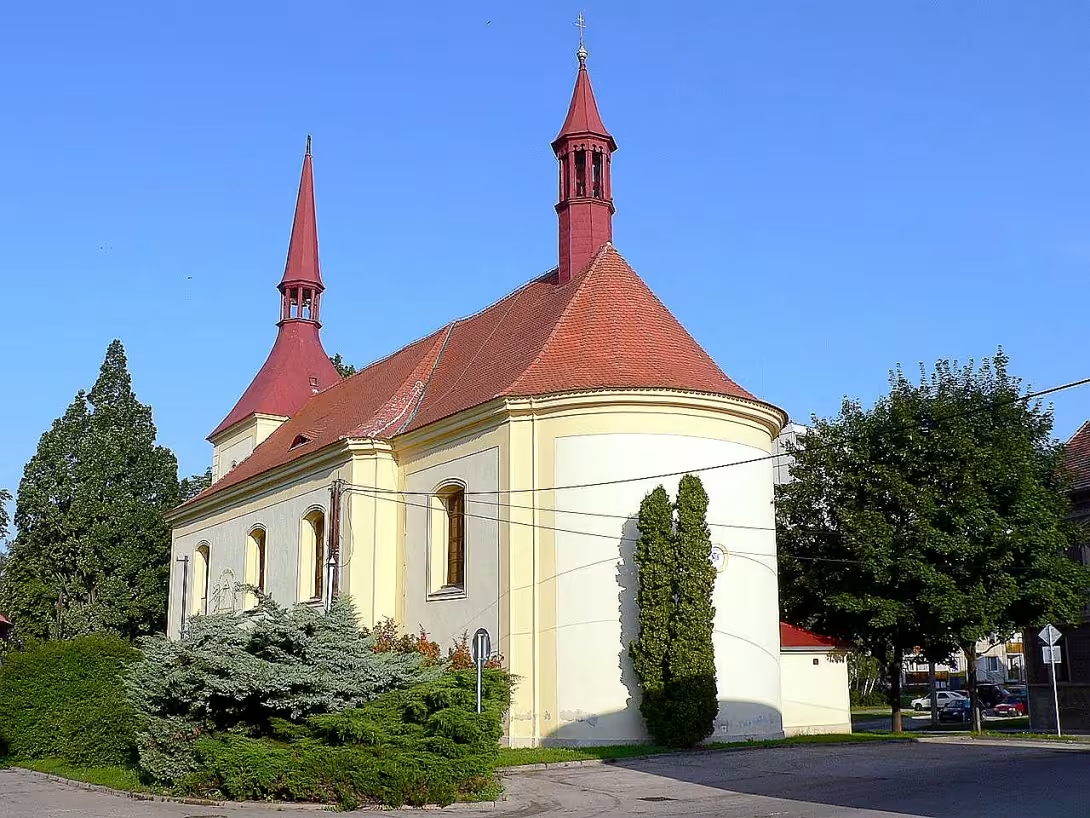
The church of St. Simon and Judy in Štětí is a Roman Catholic parish temple which has been protected as a cultural monument since 1964. Historical mention of the church dates back to 1300, when its first mention appears in the oldest settlements in the area. However, the oldest evidentiary documents come from the year 1352, when the church is recorded in the visitation protocol of the Czech parishes.
The original form of the construction is unknown. The church, which was erected on an artificial hill, was at risk from water and other natural disasters. Allegedly burned down in the first half of the 15th century and was rebuilt in 1452 from wooden beams. In the past, he had a cemetery. In the early 1930s, in 1620, the church was badly damaged by Protestant troops passing through the city. The restoration began in 1626 under the patronage of Count Wilhelm Slavata, who was the owner of the mill estate. The new church was built smaller than the original building; its foundations were later discovered during repairs after the floods in 2002.
The worst disaster was the year of 1784, when large floods nearly destroyed the entire building. From the church only the tower of the bell tower remained the remaining one. The foundation stone of the new church was laid as early as July 22 of that year. The feast of sanctification was led by Princess Maria Ludmila Czernin of Lobkowicz. The new temple, built in Baroque style, was completed in 1785 and its appearance has been preserved until today. In 1930 the church was restored by architect Jaroslav Major; The roof was repaired again in 1999-2000.
Architecturally, it is a longitudinal structure with an removed presbytery closed by a round finish. A higher quadrilateral tower rises in the front axis. The presbytery is encapsulated with a plaque vault, while the ship has a flat ceiling. On the ceiling of the ship are painted frescoes depicting the humming angels, the Holy Trinity and the group of saints. The crown of the presbytery is dominated by the fresco of the Holy Sacrament. These frescoes are the work of Josef Kramolín and were created at the same time as the construction. They create an illusory environment using perspective and color. There are two smaller fresco altars in the flagship ahead of the triumphant arch.
The interior equipment comes from parts of the disturbed Prague temples. The main altar is a rococo marble piece from the second half of the 18th century, originally originating from the church of St. Wenceslas in Malostranská Square. It was created by Prague marble Lauermann. The altar is dedicated to Saint Simon and to Judah, Tadeas, and decorated with statues of angels with candlesticks and rocadian wings. On the left epistoidal altar there is a picture of the preaching of St. John the Baptist signed by August the Boogeyman of Bela under Bezděz.
The biggest test was 2002, when the biggest flood since 1845 flooded the church to a height of 1.60 meters. On August 15th, the water got through the doors and windows. The catastrophic damage hit the floor (which fell up to 4 meters below the bark), the bench, the organ and all the interior paintings. After the permission of the lithomeric bishop Josef Koukl, a collection was launched for reconstruction in all Bohemia and Moravia and in German dioceses. The parishioners prayed in the church of St. Peter and Paul in Skoubuzi until their temple was restored.
Then and now
Drag the slider to compare how the landmark may have looked when it was built with the view today.
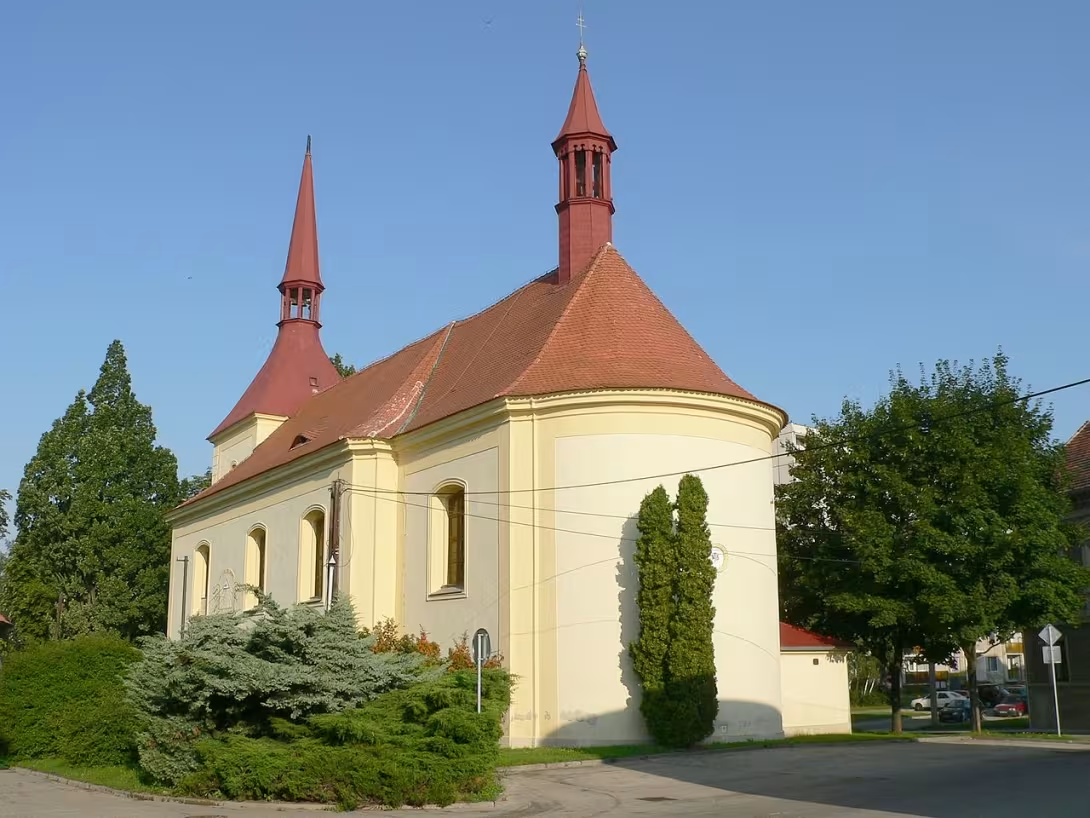
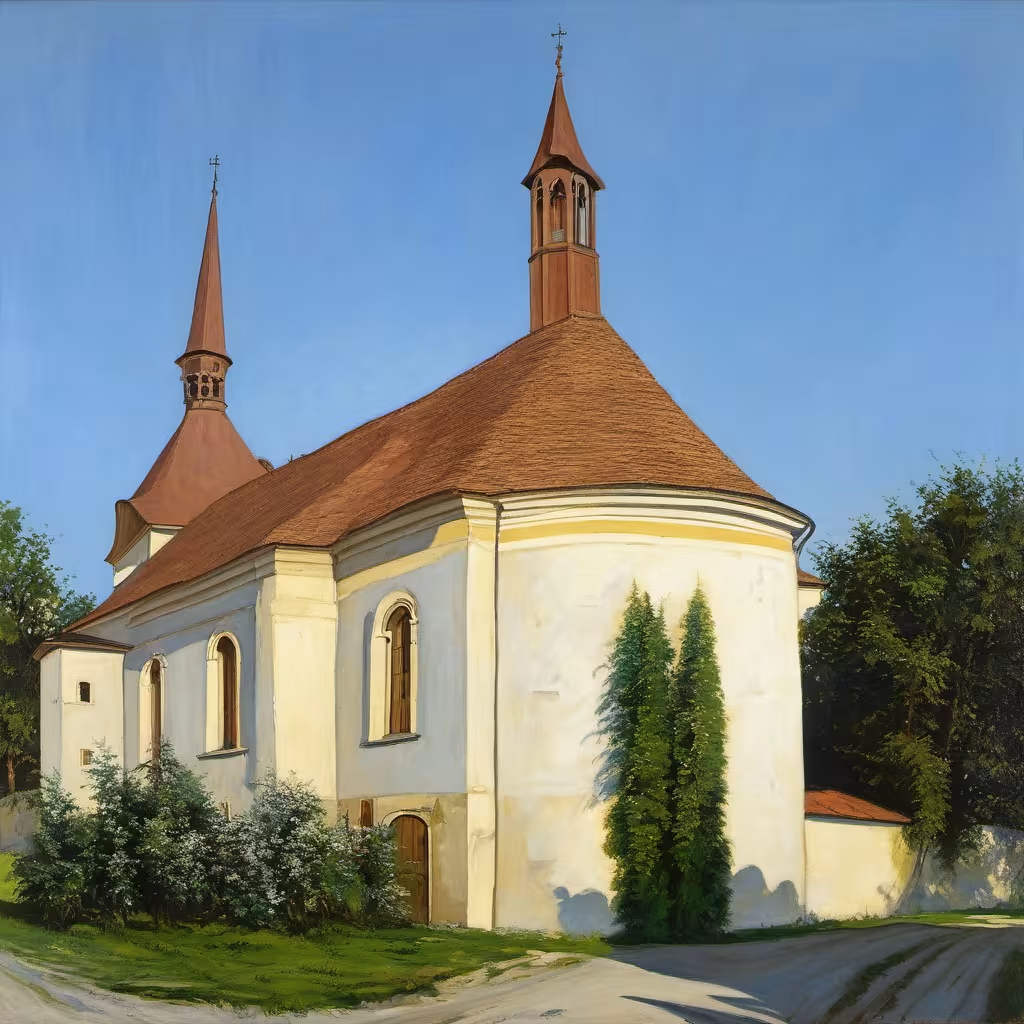
The historical appearance on the left is an AI-generated visualisation and serves as inspiration only.
Historical milestones
- 1300
- The first mention of the author Friedrich Bernau about the existence of the church, but without written proof.
- 1352
- The first written mention of the church in the rounds protocol.
- 1626
- The beginning of repairs after damage during the Thirty Years' War under the patronage of Count Wilhelm Slavata.
- 1785
- The completion of the new Baroque church after the flood of 1784.
- 1964
- Registration of church and parish as cultural monuments.
- 2002
- The destruction of the church of floods, subsequent extensive reconstruction.
Architectural development
The original church from the 14th century was wooden and probably burned down in the 15th century. After the flood in 1784 a new Baroque church was built, which was preserved until now. In 1930, the architect Jaroslav Major was restored and the roofs were subsequently repaired in 1999-2000. The frescos in the interior are from the time of the church (1785) and are the work of Josef Kramolín.
Historical events
- 1352
- The first written mention of the church in the Visitation Protocol of the Czech Parishes.
- 1784
- The destruction of the church of the flood, only the tower of the bell tower; subsequent reconstruction in Baroque style.
- 2002
- The destruction of the flood that destroyed the floor, the bench, the organ, the painting and other equipment.
Owners
parish
municipality
Points of interest
- The church of St. Simon and Judy in Štětí is the first documented in writing in 1352 in the Visitation Protocol of the Czech Parishes, although the historical mention of it dates back to 1300.
- The original wooden church from 1452 was built on an artificial hill to protect itself from floods and other natural disasters.
- During the Thirty Years' War in 1620, the church was seriously damaged by Protestant troops, and its restoration started in 1626 by Count William Slavata.
- In 1784 the church nearly destroyed a large flood, leaving only the tower of the bell tower from the original building.
- The frescoes on the ceiling of the ship and in the presbytery, depicting the angels, the Holy Trinity and the saints, are the work of Josef Kramolín and were created at the same time as the church was built in 1785.
Guide
This guide is narrated by a synthetic voice generated by artificial intelligence.
Show guide text
This text was created by artificial intelligence and has not been editorially reviewed. It may contain inaccuracies.
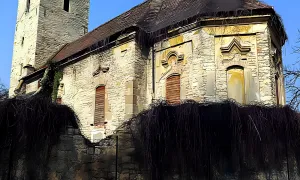
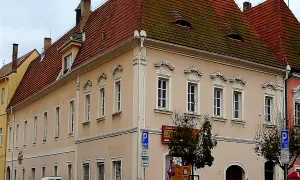
Welcome to St. Simon and Judy Church in Štětí. You are standing in front of one of the oldest and most impressive sacral structures in this region, whose history goes deep into the Middle Ages. In front of you is a late Baroque church with a distinctive quadruple tower in the facade - a building that carried not only faith but also the struggle with elements that have tried it for centuries. Take a look at its longitudinal silhouette with the presbytery removed and the rounded conclusion, which gives the whole harmony and also refers to the tradition that has been rooted here since the 14th century.
Let us return to the time when the first written mention of this church appeared in 1352 in the Visitation Protocol of the Czech Parishes. Although earlier, around 1300, the writer Friedrich Bernau spoke of his existence, the written evidence came only later. But the church was never just a static witness of time - it was an active participant in history. After a 30-year war that left traces of it, Count William Slavata restored it. But the biggest test was the flood of 1784, which completely destroyed it. Only after a new Baroque church was built in the following year did he have a face that you see. His interior was decorated in 1785 by the master painter Josef Kramolín with frescoes, which still capture the angels, the Holy Trinity and other religious motifs that turned the ceiling into a celestial scene.
Now pay attention to the facade. You see the silhouette of the tower, which dominates the surrounding landscape and reminds you of the important role this church played not only as a spiritual centre but also as an orientation point for the entire Štětí. Imagine that the original wooden church from 1452 stood on an artificial hill - the builders knew that floods were permanent associates. This artificial design, protecting the church from water, was one of the first manifestations of human wisdom in the fight against nature.
But the church also carried the fate of the people who formed it. Among them was not only the already mentioned Josef Kramolín, whose frescoes still retain their strength, but also the architect Jaroslav Major, who was involved in his restoration in 1930 and 1999-2000 after another devastation, this time after the flood of 2002. Each of these revival was like a new beginning - as if the church, even if wounded, was always coming back from the wreckage so that it could continue to serve the believers as a monument to the past.
Now, note something interesting: this church is the first written document from 1352, even though its existence has been mentioned before. This means that its roots go even deeper into the past than it might seem. And it is this constant presence, this constant struggle for conservation, that makes this place something more than a stone building. It's a living document of history that now, at this moment, tells you its story.
In front of you stands not only the church, but also a witness of centuries of faith, resilience and art. If you have a moment, take a walk around it - you may find it interesting to see the evidence of the past projected here to date. And when you say goodbye, remember: every stone of this church has a story, and you are a part of it. Thank you for coming to hear it.
Tips for visitors
{'text': 'Best time to visit the church of St. Simon and Judy is in the morning or in the afternoon. In these times there is a pleasant light in the interior and fewer visitors. The Baroque architecture and detailed decoration of the interior thus perform better, especially in the natural light that falls through the windows. In addition, religious services or concerts are often held in these times, which can enrich the visit.'
{'text': 'The church is accessible by car and public transport. In the church area it is possible to find a parking lot which is usually large enough for several vehicles. If you arrive by bus or train, the stops are close to the city Štětí. The current connection and time schedules are always good to check in the traffic search engine before the journey.'}
{'text': 'When visiting, take comfortable clothes and shoes, because the church and its surroundings can offer several meters of walking on uneven terrain. It is also important to take a small towel or handkerchief because some parts of the interior may be exposed to moisture. If you are planning to take pictures, do not forget the battery and memory card, because detailed interior and exterior decoration is worth catching.'}
{'text': 'The best places for photography are the facade of the church with its distinctive quadruple tower, interior with Baroque frescos and altar, and also the surrounding church, where there is a small parish garden. It is recommended to photograph in natural light, preferably morning or afternoon, when light is not too strong and creates softer shadows. In the interior it is advisable to avoid flashing lightning to avoid damage to sensitive surfaces.'}
{'text': 'In the vicinity of the church is worth visiting Faro in Štětí, located directly on the church premises. Another interesting thing is the Mělnická estate, which is approximately 15 kilometres away. For nature lovers there is an ideal trip to Czech Switzerland National Park, located about twenty kilometers from Štětí. These locations offer rich cultural and natural experiences.'}
{'text': 'For families with children, a visit to St. Simon and Judy's church is a great opportunity to explore history and architecture. Children can be intrigued by interior decoration, such as frescoes and statues, as well as the possibility to explore the surrounding rectory. In the Czech Switzerland National Park it is possible to look at picturesque natural scenery and in the Mělnický estate children can become acquainted with historical buildings and their functions. It is also recommended to visit local museums or exhibitions that often offer interactive programs for children.'}
Frequently asked questions
Is Kostel svatého Šimona a Judy (Štětí) open to the public?
Yes, the church is open to the public all year round. Opening hours: Monday - Sunday 9: 00- 17: 00.
How do I get to the place by car / public transport?
Urban transportation or on foot. The bus stop is near the church. You can also use the parking lot by the river Elbe and walk to the church.
How much is the entrance fee and is it paid on the spot?
Payment is only possible in cash.
Is the tour suitable for children and seniors?
Yes, it is advisable to visit the church with children or seniors. It is accessible by stairs and has plenty of room for movement.
How long does the tour take?
You can take a tour in 15-30 minutes, but you can also just walk around the church and photograph the surroundings.
What are the opening times and booking is required?
The church is open throughout the year from Monday to Sunday 9: 00- 17: 00. Reservation is not required, but in the case of a larger group of people it is recommended to contact the church administrator in advance.
What's interesting in the immediate vicinity?
In the immediate vicinity of the church you will find the River Elbe and the city Štětí. You can also visit the nearby parking lot near the river where you can stop for lunch or coffee.
For kids
Imagine going back to the past. You see people all around you in long dresses and hats beating down a stone alley. They are residents of Štětí from the late 13th century, the people who built the church of St. Simon and Judy.
The church was in place of older buildings, but it was small and was not one of the largest in the area. The new church was a great work of its builders. They built it from a rock that they had right there in the rock. It was a big job that lasted a long time.
Businesses nearby
Do you run a restaurant, accommodation, shop, museum, rental, wellness or other visitor service near this monument? Show yourself directly to the people heading to it — this is how they will see you in the app and on the web:
Nearby
river Elbe
city of Štětí
Accommodation nearby
Themed route
The proposed cruise route includes the main destination and surrounding attractions in logical order:
1. Kostel svatého Šimona a Judy (Štětí) (church) This main objective consists of a dominant city and offers a view of sacral architecture with a rich history. The site attracts its peaceful atmosphere and its important position in the region.
2. Fara in Štětí (cultural monument) This monument is located right in the church area. Her visit perfectly complements the tour of the main destination and brings the historical background of the local parish closer.
3. The Mělnický estate (historical estate) This target lies at an approximate distance of 15 kilometres from Štětí. Visitors will be impressed by their deep history and ties to the traditional wine region.
4. National Park Czech Switzerland (nature reservation) This vast nature reserve is located about 20 kilometres away. It offers unique natural scenery and possibilities for walking in untouched landscape.
Seasonal recommendations
Spring In the spring months when nature awakens to life, the church of Saint Simon and Judy takes on a charming atmosphere associated with changing weather. The light of the sun, which is beginning to extend, illuminates the interior of the church with fine, golden shades, while the outdoor area is surrounded by blooming trees and greenery, which gives the whole place a fresh and peaceful touch. The time after rain is suitable, when the air smells fresh and the church towers are reflected in drops on rocks. Virtually best to visit it in the first half of spring, when visits are still sparse and temperatures are pleasant. Light but warm clothing is recommended, because the morning cold can alternate with heat after noon. The ideal time is early in the morning when the light is soft and the church is not yet crowded with tourists.
Summer In the summer months, the church of St. Simon and Judy attracts visitors with its historical core and pleasant outdoor seating in its vicinity. The sun rays that hit the stone wall create a game of shadows and light that emphasizes architectural details. The surrounding area is lively, the trees are green and the air is full of birds' sounds. However, in the main summer season it is necessary to count on a higher interest, so it is advisable to come early in the morning or late in the afternoon to avoid crowds. Light, breathable clothes and sun protection are recommended because the noon sun can be intense. It is also convenient to visit the church during short rain showers, when the surroundings turn into picturesque scenery.
Autumn Autumn brings a unique atmosphere around the church of St. Simon and Judy, where tree leaves turn into fiery shades and the air is full of the smell of fallen leaves. Light is softer, often foggy, which gives the church a more mysterious and nostalgic nature. In advent time, when the first candles start to light up, the interior of the church becomes even warmer and cosy. Virtually, it is best to visit it in September or early October when visits are still relatively quiet. It is recommended that warmer clothes, because morning and evening temperatures can be cold, and comfortable shoes for walking around the surrounding roads. The ideal time is the afternoon when the light is pleasant and the church is lit with natural light.
Winter In the winter months, the church of St. Simon and Judy is transformed into a picturesque winter scenery, when snow sheets and frost supply its silhouette with a mysterious and peaceful look. The interior is often lit with artificial light, which creates a warm and cozy atmosphere, while the outdoor area is covered with white carpet. In Advent Time, the church becomes even more charming thanks to candles and Christmas decorations. It is practically necessary to count on shorter opening times and cold weather, therefore it is advisable to visit it in the morning when the light is sufficient. It is recommended to warm but comfortable clothes that allow movement, and firm shoes against slippery snow. The ideal time is shortly after Christmas when the visits are still quiet and the church is decorated with Christmas decorations.
Visualizations and artistic views


The visualisations are generated by artificial intelligence and serve as inspiration.
Photos from the area
Real photos taken near the monument


Zdroj a licence jsou uvedeny u každého snímku.
Atmosphere of the place
This atmospheric visualisation of the place and period was generated by artificial intelligence. It is not real footage of the location.
Tips from visitors
No tips yet. Be the first!
Log in and add your tip.
Sources and literature
Fotografie: neuveden / Attribution — Wikimedia Commons. The author and licence also appear when you hover over the image.
Faktickým podkladem tohoto textu byl článek na Wikipedii, jehož autory jsou přispěvatelé Wikipedie. Článek je dostupný pod licencí CC BY-SA 4.0.
Location on the map
Příběhy a pověsti
Legendy, pověsti a příběhy spjaté s touto památkou
Fotografie návštěvníků
Zatím žádné fotografie. Buďte první, kdo přidá fotografii z návštěvy!
Přihlaste se a přidejte svou fotografii nebo hodnoťte.
Za ověřenou návštěvu v aplikaci získáte víc bodů — poznáme podle GPS, že jste na místě.
Reviews and comments