






kostel svatého Václava (Čachrov) Church
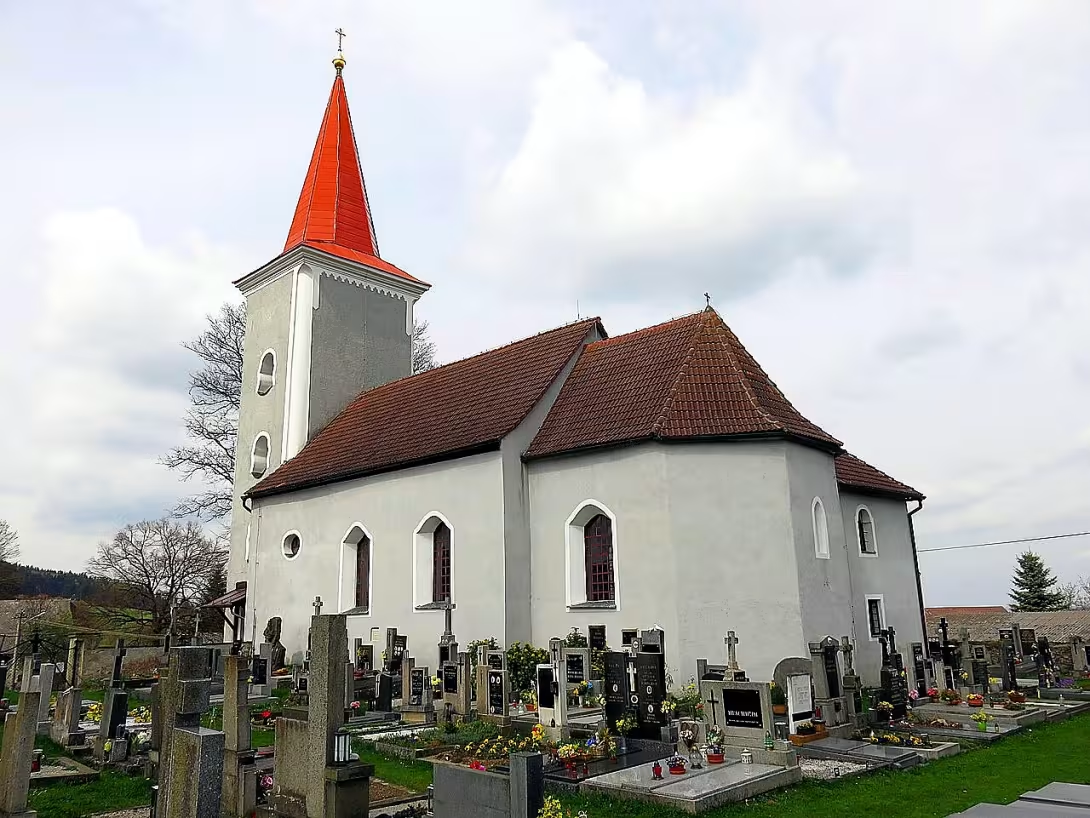
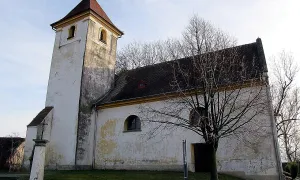
The Church of Saint Wenceslas in Čachrov is a Roman Catholic parish church located in the village of Čachrov within the Klatovy District of the Plzeň Region. Founded in the 14th century, it exemplifies Gothic architecture and has been recognized as a cultural monument since 1964. Its historical significance is enhanced by its strategic location on an ancient route between Klatovy and Železnorudsko, serving as a waypoint to Passau.
The origins of Čachrov date back to the 13th century when it emerged as a strategically positioned settlement along a key trade route connecting Klatovy with Železnorudsko. The Church of Saint Wenceslas was founded before 1352 and reflects the Gothic architectural style prevalent during its time. This period in Bohemia, part of the Holy Roman Empire under the Luxembourg dynasty, witnessed significant developments in Gothic architecture characterized by pointed arches and ribbed vaults.
Architecturally, the church is a single-nave structure with a three-bay presbytery. The nave features cross-ribbed vaulting, while the presbytery boasts a star-shaped rib vault. Historical sources suggest that the nave's vaulting was likely reconstructed in the first half of the 16th century, although some believe it may have been done in the latter half of the 15th century. In the 18th century, Baroque modifications were made to the church, including the probable addition of a sacristy. A tower was added to the western facade in 1804, and an oratory above the sacristy was constructed in 1833.
The area surrounding the Church of Saint Wenceslas includes an older section of a cemetery with a well located in its southeast corner. The site is enclosed by a wall primarily made from quarry stone, featuring two gates and an embankment wall with steps that border a terrace.
Today, the church remains accessible to visitors who are drawn to its historical and architectural significance. As a cultural monument since 1964, it stands as a testament to the rich Gothic heritage of the region. The Church of Saint Wenceslas in Čachrov offers a glimpse into the past with its well-preserved structure and storied history, making it a worthwhile destination for those interested in exploring Bohemia's architectural legacy.
Then and now
Drag the slider to compare how the landmark may have looked when it was built with the view today.
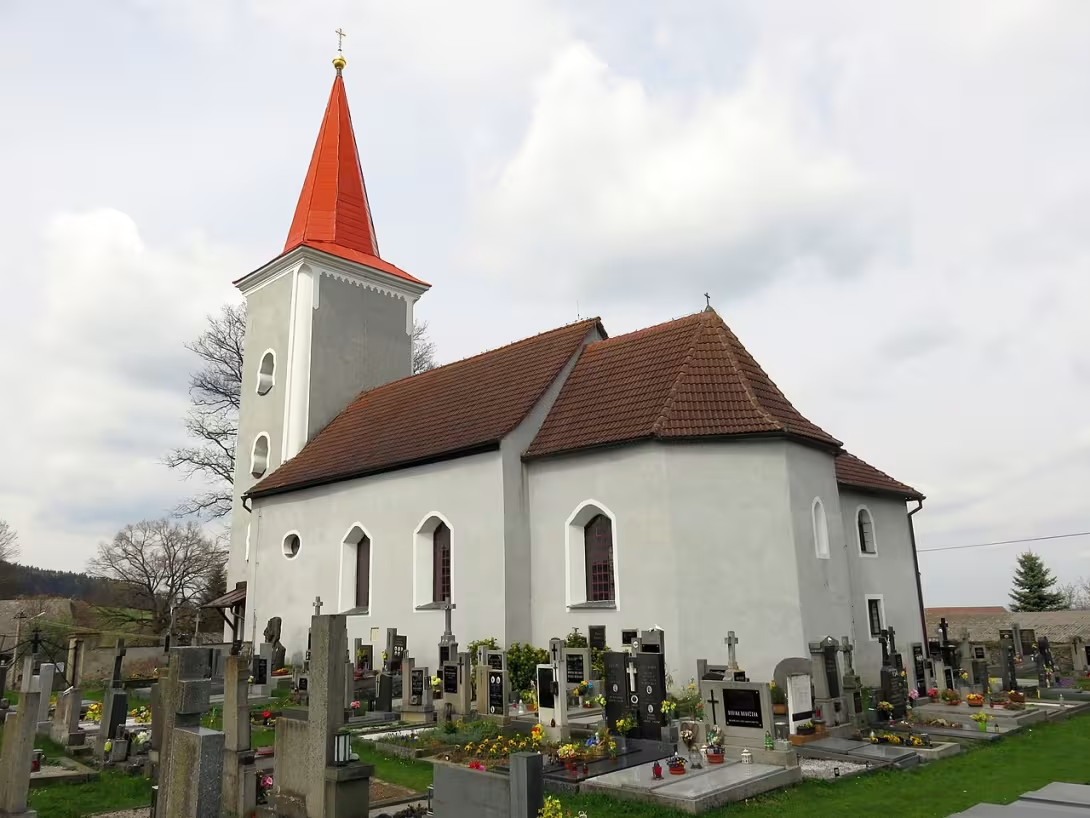
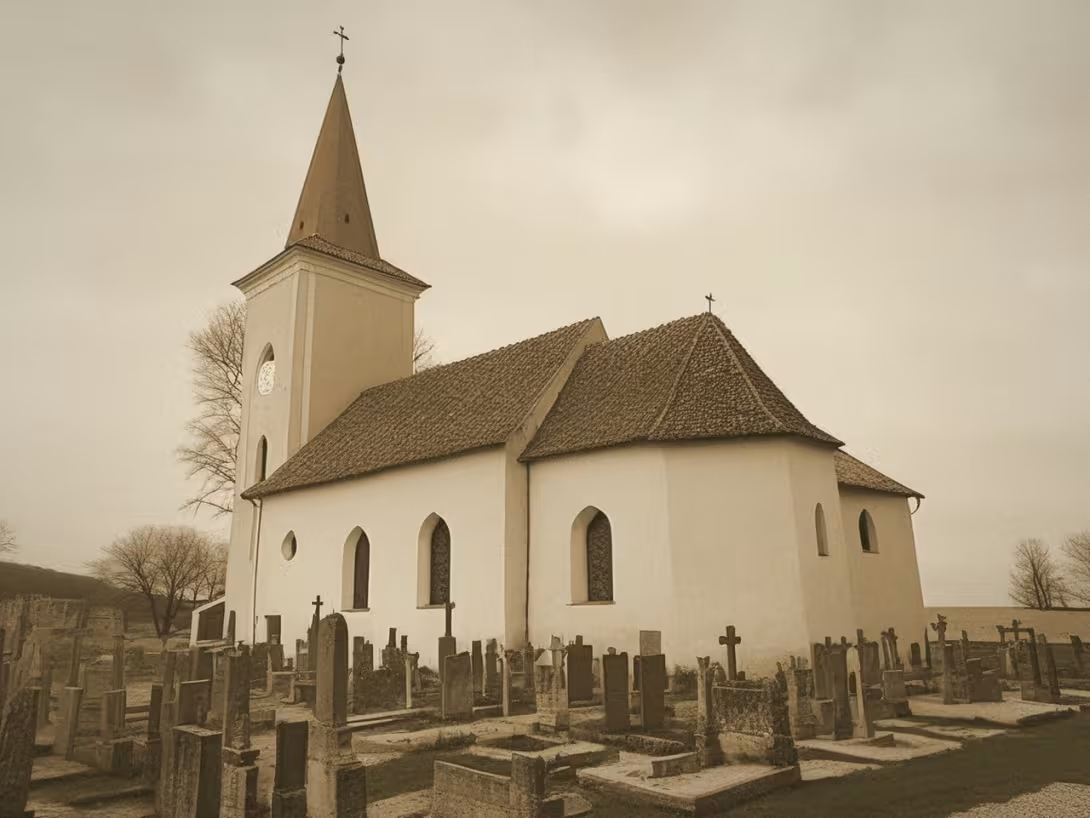
The historical appearance on the left is an AI-generated visualisation and serves as inspiration only.
Historical milestones
- 13th century
- Cachrov developed as a strategically located settlement.
- c. 1350
- Foundation of the Church of Saint Wenceslas before 1352.
- 15th century, first half or second half
- Probable reconstruction of the vault in the church courtyard.
- 18th century
- Baroque modifications to the church, possible addition of a sacristy.
- 1804
- Addition of a tower to the west facade of the church.
- 1833
- Construction of an oratory above the sacristy.
Architectural development
The Church of Saint Wenceslas features a single-nave structure with a three-bay presbytery. The nave is vaulted with cross-ribbed vaulting, while the presbytery has a star-shaped rib vault. A tower was added to the western facade in 1804. Notable architectural changes include the probable reconstruction of the nave's vaulting in the first half of the 16th century and the addition of an oratory above the sacristy in 1833.
Historical events
The church was founded before the year 1352.
Baroque modifications occurred in the 18th century.
Points of interest
- The Church of Saint Wenceslas was likely reconstructed in the first half of the 16th century; however, there is a belief among some historians that this renovation might have taken place in the latter half of the 15th century.
- In 1833, an oratory was constructed above the sacristy, adding to the church's architectural complexity and serving as a unique feature not commonly found in other Gothic churches from the same period.
- The church has undergone several modifications over the centuries, including Baroque changes in the 18th century, which introduced stylistic elements that contrast with its original Gothic design.
- An intriguing aspect of the site is the older section of the cemetery surrounding the church, featuring a well located in its southeast corner, hinting at historical burial practices and community life centered around this sacred space.
- The enclosure wall of the churchyard is primarily made from quarry stone, showcasing traditional building techniques and materials that have withstood the test of time, reflecting the enduring craftsmanship of medieval masons.
Guide
This guide is narrated by a synthetic voice generated by artificial intelligence.
Show guide text
This text was created by artificial intelligence and has not been editorially reviewed. It may contain inaccuracies.
The town of Čachrov in the Klatovy district probably came into being in the 13th century. It had an advantageous location on a path between Klatovy and Železnorudsko and was also one of the stopping points on the way to Passau. Its Roman Catholic parish church of Saint Václav is the center of the Čachrov parish and has been a cultural monument since 1964.
The church was founded in the 14th century in the Gothic style, even before 1352. From this first construction phase, the vault in the presbytery, that is, in the space around the main altar, has survived to this day. The triumphal arch and the eastern window of the presbytery also survived. The nave was later heightened and revaulted. This probably happened in the first half of the 16th century, but according to some theories, the new vault was created as early as the second half of the 15th century.
In the 18th century, the church underwent Baroque modifications and the sacristies probably also came into being at that time. In 1804, a tower was added to the western facade. The oratory above the presbytery dates from 1833.
The church is single-aisled and its presbytery is finished in a polygonal shape. It is covered by a radiating ribbed vault. A broken triumphal arch connects it with the nave, and on its left side stands a pulpit. The windows on either side of the central window are bricked up. On the north wall of the presbytery is a sacristy with a square ground plan and a flat ceiling, above which is an oratory on the upper floor.
The nave is vaulted with a cross ribbed vault. On its north side too is a sacristy, smaller and only single-storied, also with a square ground plan. On the western side of the nave is a gallery with an organ, and the western facade is closed off by a prismatic tower.
Tips for visitors
The best time to visit the Church of Saint Wenceslas in Čachrov is during late spring or early autumn when the weather is pleasant, allowing for comfortable exploration of both the church and its surroundings. During these seasons, the village's natural beauty is at its peak, with lush greenery enhancing the Gothic architecture of the church. Additionally, visiting outside of summer can help avoid larger crowds often seen in tourist hotspots during peak holiday periods.
Alternatively, public transportation is accessible, with buses serving routes that bring you close to Čachrov.
When planning your visit, consider bringing comfortable walking shoes as the site includes an embankment wall with steps leading down to a terrace, which can be explored on foot. A camera is also advisable for capturing the picturesque views of the church and its cemetery surroundings, especially during golden hour when the light is soft and enhances the Gothic architecture beautifully.
For photography enthusiasts, the southeast corner of the older section of the cemetery offers excellent lighting conditions, particularly in the early morning or late afternoon. The well in this area can serve as an interesting focal point for photos. Additionally, capturing the church against the backdrop of the embankment wall and steps provides a striking contrast between man-made structures and natural elements.
Families with children will find the Church of Saint Wenceslas and its surroundings suitable for a day out. The enclosed cemetery area offers space to explore, while the nearby quarry stone wall and gates provide intriguing historical details that can spark curiosity in young minds. For those interested in further exploration within a 30-minute drive, consider visiting the village center of Čachrov, where local shops and cafes offer a glimpse into regional life.
Frequently asked questions
Can the monument be visited?
Religious buildings are usually open mainly during services; at other times a visit is normally arranged with the parish or the operator. We have not verified specific times.
Where is the monument?
Location: Čachrov, Plzeňský kraj. The map on this page shows the exact spot.
Why is the monument protected?
It is listed in the Central List of Cultural Monuments of the Czech Republic as a cultural monument (register no. 17257/4-2804).
Businesses nearby
Do you run a restaurant, accommodation, shop, museum, rental, wellness or other visitor service near this monument? Show yourself directly to the people heading to it — this is how they will see you in the app and on the web:
Events nearby
Zdroj akcí: otevřená data měst a obcí ČR (Národní katalog otevřených dat) a kalendář akcí Národního památkového ústavu.
Nearby
The area around the Church of Saint Wineslas includes an older section of a cemetery with a well in its southeast corner, and a wall primarily made from quarry stone enclosing two gates. An embankment wall with steps borders a terrace.
Accommodation nearby
Themed route
Route: Church of Saint Wenceslas and Surroundings
1. Church of Saint Wenceslas (main destination) - worth visiting for its unique architecture and history. The church is a landmark in the village of Čachrov, and its construction is associated with the legend of Saint Wenceslas. 2. Old Cemetery - worth visiting for its historical value and unique architectural elements. The cemetery is older than the church and contains a series of interesting gravestones and monuments. 3. Defensive Wall with Gates - worth visiting for its architectural significance as an example of medieval fortification. The defensive wall encloses the cemetery and features two gates. 4. Square by the Church - worth visiting for its peaceful and idyllic setting. The square is surrounded by historic buildings and offers a beautiful view of the church.
Seasonal recommendations
Jaro
Specific: In the spring season, St. Wenceslas Church is surrounded by green nature, blooming trees, and flowers. The atmosphere is calm and quiet, as if the church were waking up from its winter slumber.
Practical Tips: The best time to visit St. Wenceslas Church in the spring season is during the morning hours when it's still relatively peaceful, allowing you to explore the church without crowds. We recommend bringing a camera to capture the beautiful spring scenes.
Léto
Specific: In the summer season, St. Wenceslas Church is surrounded by green nature and blooming flowers. The atmosphere is warm and sunny, as if the church were nestled in the heart of nature.
Practical Tips: The best time to visit St. Wenceslas Church in the summer season is early in the morning to avoid tourist crowds. We recommend bringing sunglasses and a water bottle to prevent overheating.
Podzim
Specific: In the autumn season, St. Wenceslas Church is surrounded by fall colors as tree leaves change to yellow, orange, and red. The atmosphere is calm and quiet, as if the church were preparing for its winter sleep.
Practical Tips: The best time to visit St. Wenceslas Church in the autumn season is in the late afternoon when the sunlight is soft and the church is bathed in warm light. We recommend bringing a camera to capture the beautiful autumn scenes.
Zima
Specific: In the winter season, St. Wenceslas Church is surrounded by snow and a frosty atmosphere. The atmosphere is calm and quiet, as if the church were asleep.
Practical Tips: The best time to visit St. Wenceslas Church in the winter season is during the winter holidays when it's open only for limited hours. We recommend bringing warm clothing and boots to avoid the cold and getting wet.
Visualizations and artistic views


The visualisations are generated by artificial intelligence and serve as inspiration.
Photos from the area
Real photos taken near the monument


Zdroj a licence jsou uvedeny u každého snímku.
Tips from visitors
No tips yet. Be the first!
Log in and add your tip.
Sources and literature
Photos: Adam Hauner / CC BY-SA 4.0 — Wikimedia Commons. The author and licence also appear when you hover over the image.
Faktickým podkladem tohoto textu byl článek na Wikipedii, jehož autory jsou přispěvatelé Wikipedie. Článek je dostupný pod licencí CC BY-SA 4.0.
Location on the map

Příběhy a pověsti
Legendy, pověsti a příběhy spjaté s touto památkou
Fotografie návštěvníků
Zatím žádné fotografie. Buďte první, kdo přidá fotografii z návštěvy!
Log in a přidejte svou fotografii nebo hodnoťte.
Za ověřenou návštěvu v aplikaci získáte víc bodů — poznáme podle GPS, že jste na místě.
Reviews and comments