






kostel svatého Václava (Dráchov) Church
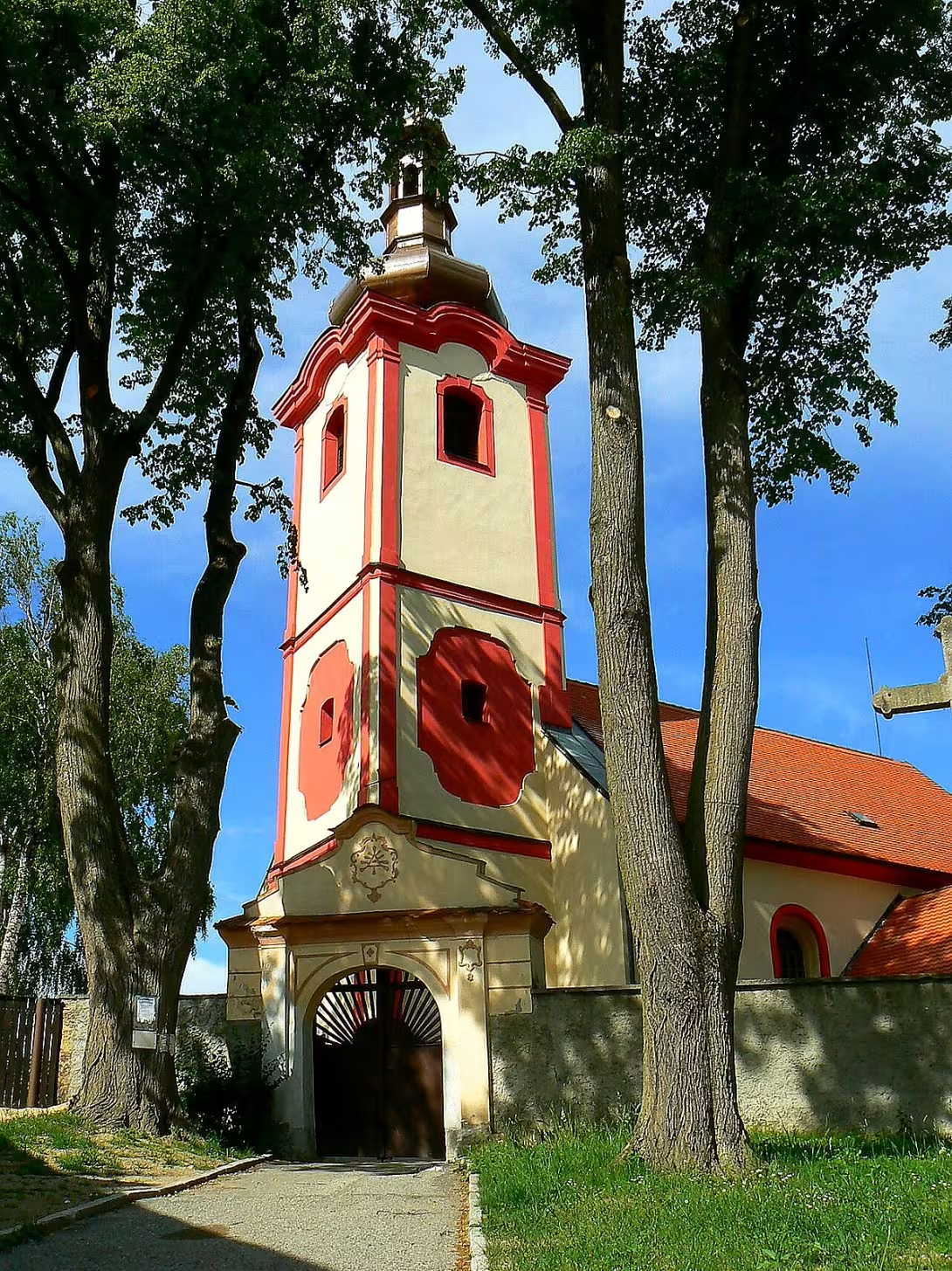
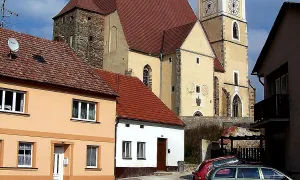
The Church of Saint Wenceslas in Dráchov is a notable historical monument that showcases both Gothic and Renaissance architecture. Situated in the village of Dráchov within the Tábor District of Jihočeský kraj, this Roman Catholic parish church is recognized as a cultural monument of the Czech Republic. Its importance extends beyond its religious role to include its rich history and artistic heritage dating back to the 14th century.
The origins of the Church of Saint Wenceslas trace to the 14th century when it was initially built in the late Gothic style. The first written mention of a parish church in Dráchov dates from 1353, highlighting its early significance within the community. As Bohemia underwent cultural and political changes during this period, the Gothic architectural style flourished across Europe, influencing many religious structures, including this church.
Throughout its history, the Church of Saint Wenceslas experienced significant modifications reflecting broader artistic movements. In the 16th century, it was adapted to incorporate Renaissance elements, indicative of changing aesthetic preferences at the time. This era saw both the interior and exterior evolve, blending Gothic foundations with new stylistic influences.
A notable architectural addition occurred in 1751 when a stone tower replaced an earlier wooden belfry. This enhancement not only strengthened the structure but also contributed to its distinctive profile. The church features a single nave with a five-sided, vaulted chancel and an attached sacristy on its northern side. Its facades are smooth except for the tower, which is adorned with pilasters and cornices, adding architectural elegance.
Inside, the Church of Saint Wenceslas houses several remarkable artistic elements that underscore its historical value. Fragments of 14th-century Gothic wall paintings remain visible, offering a glimpse into the church's early decorative schemes. Additionally, stone tombstones from the 16th and 17th centuries are preserved within its walls. The main altar is graced by an 1856 painting of Saint Wenceslas by Antonín Lhota, further enriching the church's artistic legacy.
The church also boasts a collection of bells with historical significance. The oldest and largest bell, dating from 1413, features an image of Saint Wenceslas, reflecting both its religious importance and historical craftsmanship. A smaller bell, named after the four evangelists and dated to 1494, complements this collection alongside a mid-sized bell dedicated to the Virgin Mary, which dates back to 1510.
Today, the Church of Saint Wenceslas remains an accessible site for visitors interested in exploring its architectural beauty and historical depth. Its status as a cultural monument ensures it is well-preserved, allowing contemporary audiences to appreciate its significance within Czech history. The church's combination of Gothic and Renaissance elements, along with its rich collection of art and artifacts, makes it a compelling destination for those seeking to understand the region's religious and cultural heritage.
Visiting the Church of Saint Wenceslas offers an opportunity to connect with the past through its enduring architecture and historical narratives. Its preservation as a cultural monument ensures that future generations can continue to explore and appreciate this remarkable site. Whether drawn by its architectural beauty, artistic treasures, or historical significance, a visit to Dráchov promises a rewarding experience for anyone interested in Czech history and culture.
Then and now
Drag the slider to compare how the landmark may have looked when it was built with the view today.
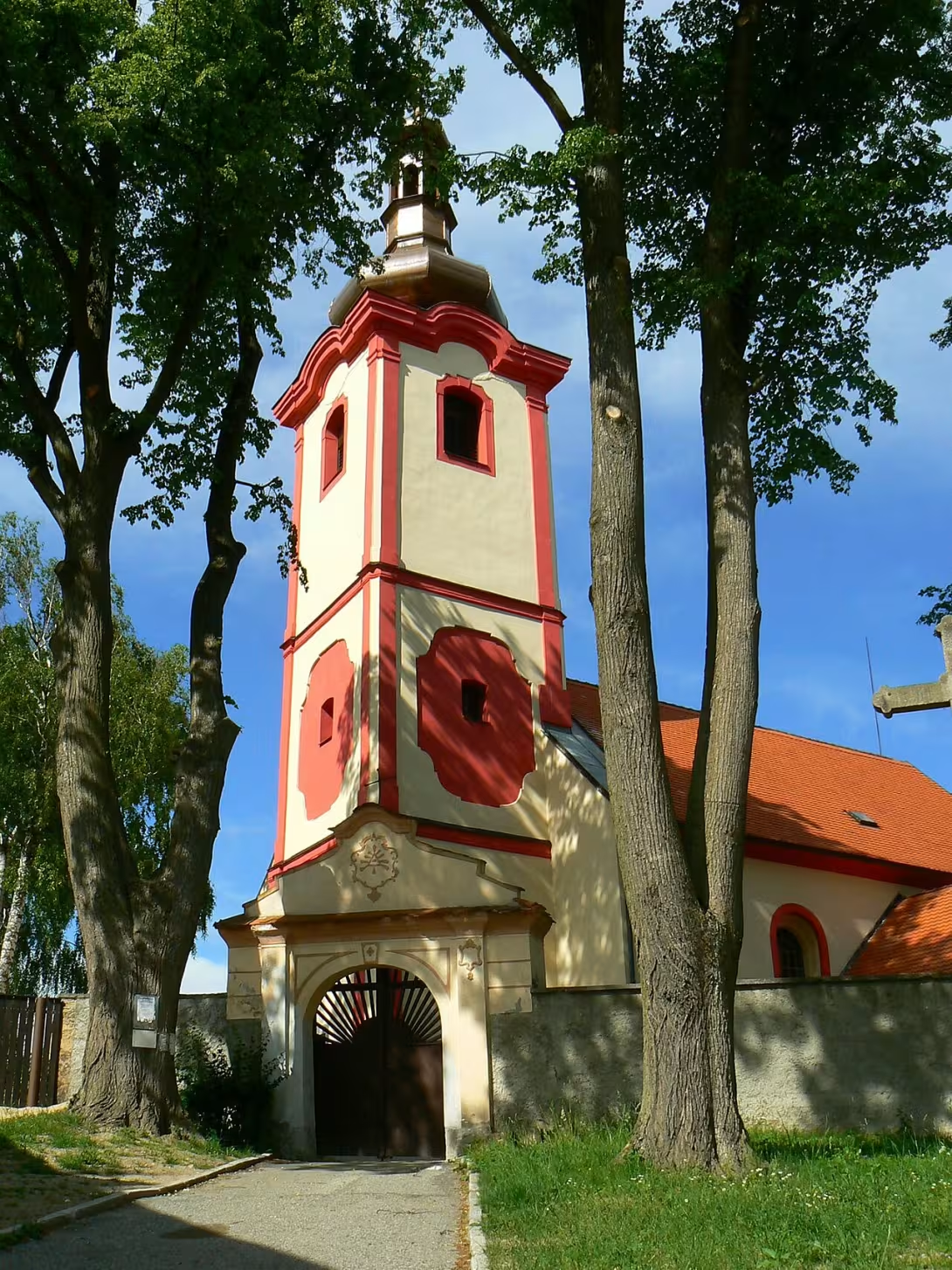
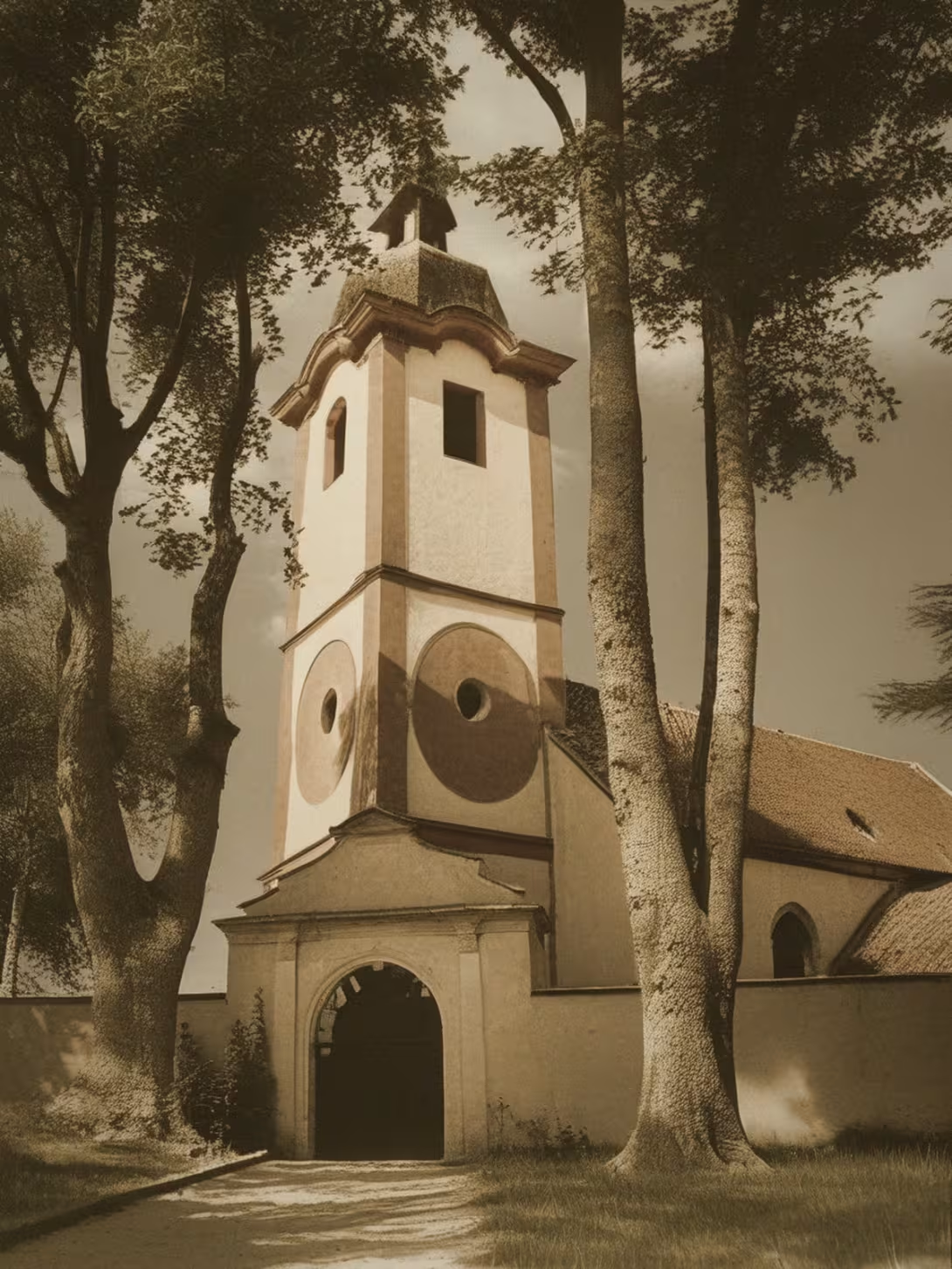
The historical appearance on the left is an AI-generated visualisation and serves as inspiration only.
Historical milestones
- 1353
- First written mention of a parish church in Dráchov.
- 16th century
- The church was modified in Renaissance style.
- 1751
- A stone tower was added, replacing an earlier wooden belfry.
Architectural development
Originally a late Gothic structure from the 14th century, the Church of Saint Wenceslas underwent significant modifications in the 16th century to adopt Renaissance elements. A stone tower was added in 1751, enhancing its architectural profile. The church's facades are smooth except for the tower, which is adorned with pilasters and cornices.
Historical events
The first written mention of a parish church in Dráchov dates back to 1353.
In the 16th century, the church was modified in Renaissance style.
A stone tower was added in 1751, replacing an earlier wooden belfry.
Guide
This guide is narrated by a synthetic voice generated by artificial intelligence.
Show guide text
This text was created by artificial intelligence and has not been editorially reviewed. It may contain inaccuracies.
The Church of Saint Václav in Dráchov is the parish church of the local Roman Catholic parish and is among the cultural monuments of the Czech Republic. The protection does not apply only to the building itself, but to the entire complex including the perimeter wall with a gate. The exception is the morgue building, which is not protected.
The first written mention of the parish church in Dráchov dates from the year 1353. In the sixteenth century, the church underwent Renaissance modifications. The brick tower was added only in the year 1751. Until then, there stood a wooden bell tower.
The church has a single nave. The choir is closed in a pentagonal shape and vaulted with a ribbed vault. A sacristy adjoins its northern side. Inside, fragments of Gothic wall paintings from the middle of the fourteenth century have been preserved, dating roughly from the time when the first mention of the church appears. There are also stone tombstones from the sixteenth and seventeenth centuries. Above the main altar in the choir is a painting of Saint Václav, which was painted by Antonín Lhota in the year 1856.
The bells are also remarkable. The oldest and at the same time the largest dates from the year 1413 and bears a depiction of Saint Václav. The middle bell is dedicated to the Virgin Mary and dates from the year 1510. The smallest bell from the year 1494 is named after the four evangelists.
Frequently asked questions
Can the monument be visited?
Religious buildings are usually open mainly during services; at other times a visit is normally arranged with the parish or the operator. We have not verified specific times.
Where is the monument?
Location: Dráchov, Jihočeský kraj. The map on this page shows the exact spot.
Why is the monument protected?
It is listed in the Central List of Cultural Monuments of the Czech Republic as a cultural monument (register no. 37249/3-4781).
Businesses nearby
Do you run a restaurant, accommodation, shop, museum, rental, wellness or other visitor service near this monument? Show yourself directly to the people heading to it — this is how they will see you in the app and on the web:
Accommodation nearby
Themed route
Trasa: Kostel svatého Václava a okolí
1. Kostel svatého Václava (hlavní cíl) - Unikátní románský kostel s pozoruhodnými freskami a nádherným zvonicím stojí za návštěvu pro svou jedinečnou architekturu a umělecké hodnoty.
2. Hrádek (cca 1 km od kostela) - Toto místo nabízí výhled na obec Dráchov a okolní krajinu.
3. Kaple svatého Jana Nepomuckého (cca 1,5 km od kostela) - Toto místo stojí za návštěvu pro svou jednoduchou, ale působivou architekturu a klidnou atmosféru.
4. Obecní úřad a park (cca 0,5 km od kostela) - Toto místo stojí za návštěvu pro možnost seznámit se s místní kulturou a občany.
Seasonal recommendations
Jaro: In the spring season, St. Wenceslas Church in Drahoš is surrounded by greenery and flowers, creating a pleasant atmosphere. You can explore the church and its surroundings at your leisure as there are no large crowds. The best time to visit the church is in the morning or late afternoon when the sunlight is gentle and not glaring.
Summer: During the main summer season, St. Wenceslas Church in Drahoš is very popular, so it's a good idea to arrive early to avoid large crowds. The lighting of the church is pleasant and nature is in full bloom. The best time to visit the church is in the morning or early afternoon to avoid heat and crowds.
Autumn: In autumn, St. Wenceslas Church in Drahoš is surrounded by beautiful colors of nature. The atmosphere is calm and pleasant, so you can visit the church at your leisure. The best time to visit the church is in the morning or late afternoon when the sunlight is gentle and not glaring.
Winter: In winter, St. The atmosphere is calm and quiet, allowing you to visit the church at your leisure. We recommend wearing warm clothing and bringing a flashlight to avoid darkness.
Visualizations and artistic views


The visualisations are generated by artificial intelligence and serve as inspiration.
Photos from the area
Real photos taken near the monument


Zdroj a licence jsou uvedeny u každého snímku.
Atmosphere of the place
This atmospheric visualisation of the place and period was generated by artificial intelligence. It is not real footage of the location.
Tips from visitors
No tips yet. Be the first!
Log in and add your tip.
Sources and literature
Photos: Czeva / Public domain — Wikimedia Commons. The author and licence also appear when you hover over the image.
Faktickým podkladem tohoto textu byl článek na Wikipedii, jehož autory jsou přispěvatelé Wikipedie. Článek je dostupný pod licencí CC BY-SA 4.0.
Location on the map



Příběhy a pověsti
Legendy, pověsti a příběhy spjaté s touto památkou
Fotografie návštěvníků
Zatím žádné fotografie. Buďte první, kdo přidá fotografii z návštěvy!
Log in a přidejte svou fotografii nebo hodnoťte.
Za ověřenou návštěvu v aplikaci získáte víc bodů — poznáme podle GPS, že jste na místě.
Reviews and comments