






Kostel svatého Václava na Smíchově Church
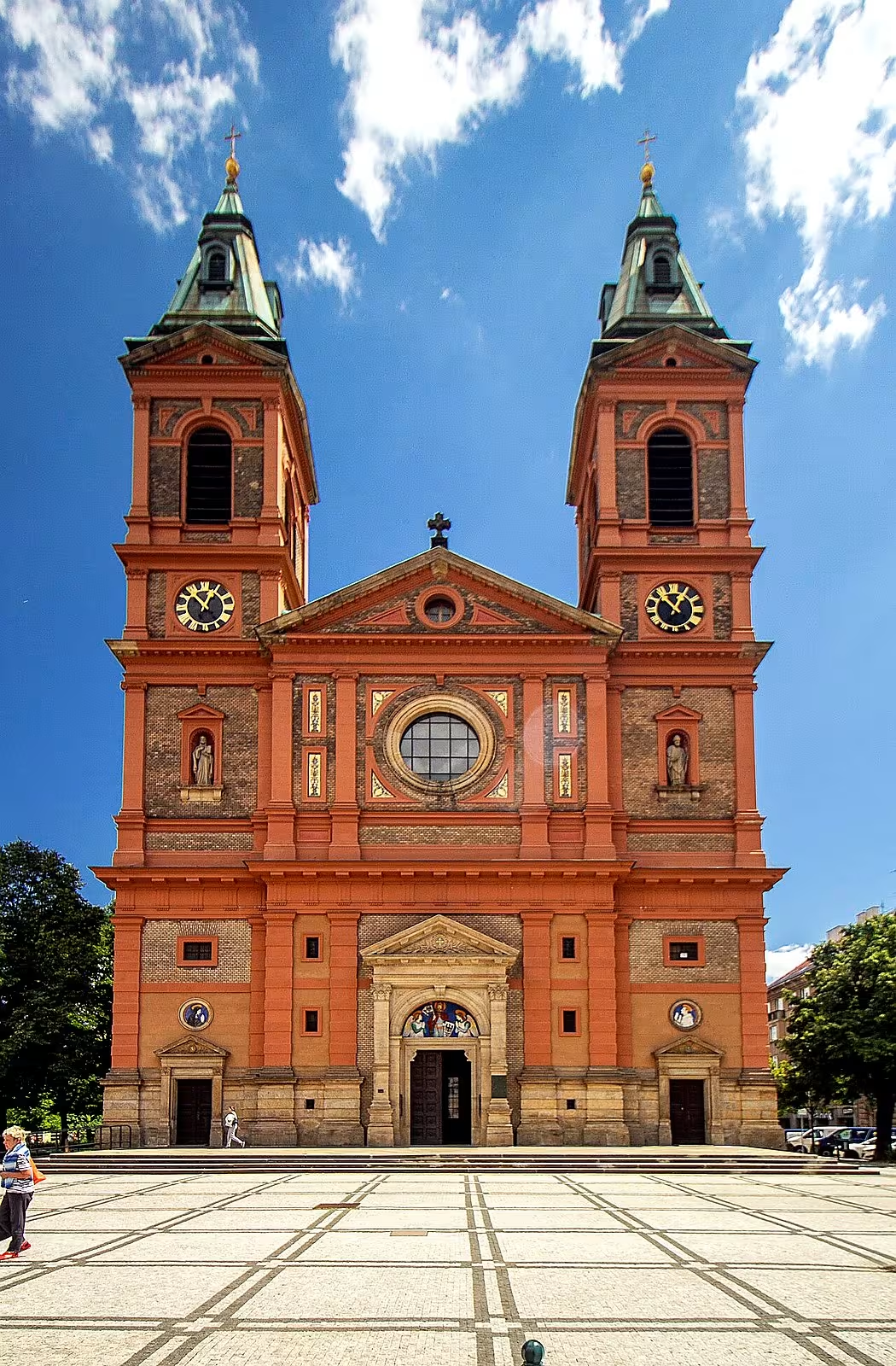
The Church of Saint Wenceslas in Smíchov is a prominent Roman Catholic parish church located at Náměstí 14. října in Prague, Czech Republic. Designed by architect Antonín Viktor Barvitius and completed between 1881 and 1885, this neo-Renaissance basilica features two 50-meter towers dedicated to Saint Wenceslas, the patron saint of Bohemia. The church stands as a significant example of Czech neo-Renaissance architecture with its richly decorated interior reflecting early Christian basilican style.
The decision to build a new church on Smíchov was made in 1866 due to rapid urban development that rendered the original parish church insufficient for the growing population. Funding for this ambitious project came from a generous donation of 30,000 zlatých by Emperor Ferdinand V and his wife Maria Anna. Construction began after acquiring land previously occupied by Buquoyský letohrádek, with the foundation stone laid on September 18, 1881. By September 26, 1885, the church was solemnly consecrated in a ceremony attended by Archbishop František Schönborn and other dignitaries.
Architecturally, the Church of Saint Wenceslas is an exemplary model of Czech neo-Renaissance style, realized through Antonín Viktor Barvitius's plans. The building features two 50-meter towers with spires and a west facade adorned with colorful Italian majolica reliefs created in Florence by Ludvík Šimek. These include a lunette relief of Saint Wenceslas flanked by angels, as well as circular depictions of Anežka Česká and Hroznata z Ovence above the side entrances. The interior boasts polychrome and gilded plasterwork typical of the neo-Renaissance period, with contributions from artists such as Ludvík Šimek and Stanislav Sucharda.
Throughout its history, the church has been a site for significant events. In 1891, Emperor Franz Joseph I visited during a jubilee exhibition in Prague. The relics of Saint Wenceslas were displayed here for the first time on September 27, 2015, marking an important moment in the church's history.
Today, the Church of Saint Wenceslas remains a vital part of Smíchov’s cultural and spiritual landscape. Its architectural grandeur and historical significance make it a must-visit destination for those interested in Czech heritage and neo-Renaissance artistry. Visitors are invited to explore this remarkable monument, where history and beauty converge in the heart of Prague.
Then and now
Drag the slider to compare how the landmark may have looked when it was built with the view today.
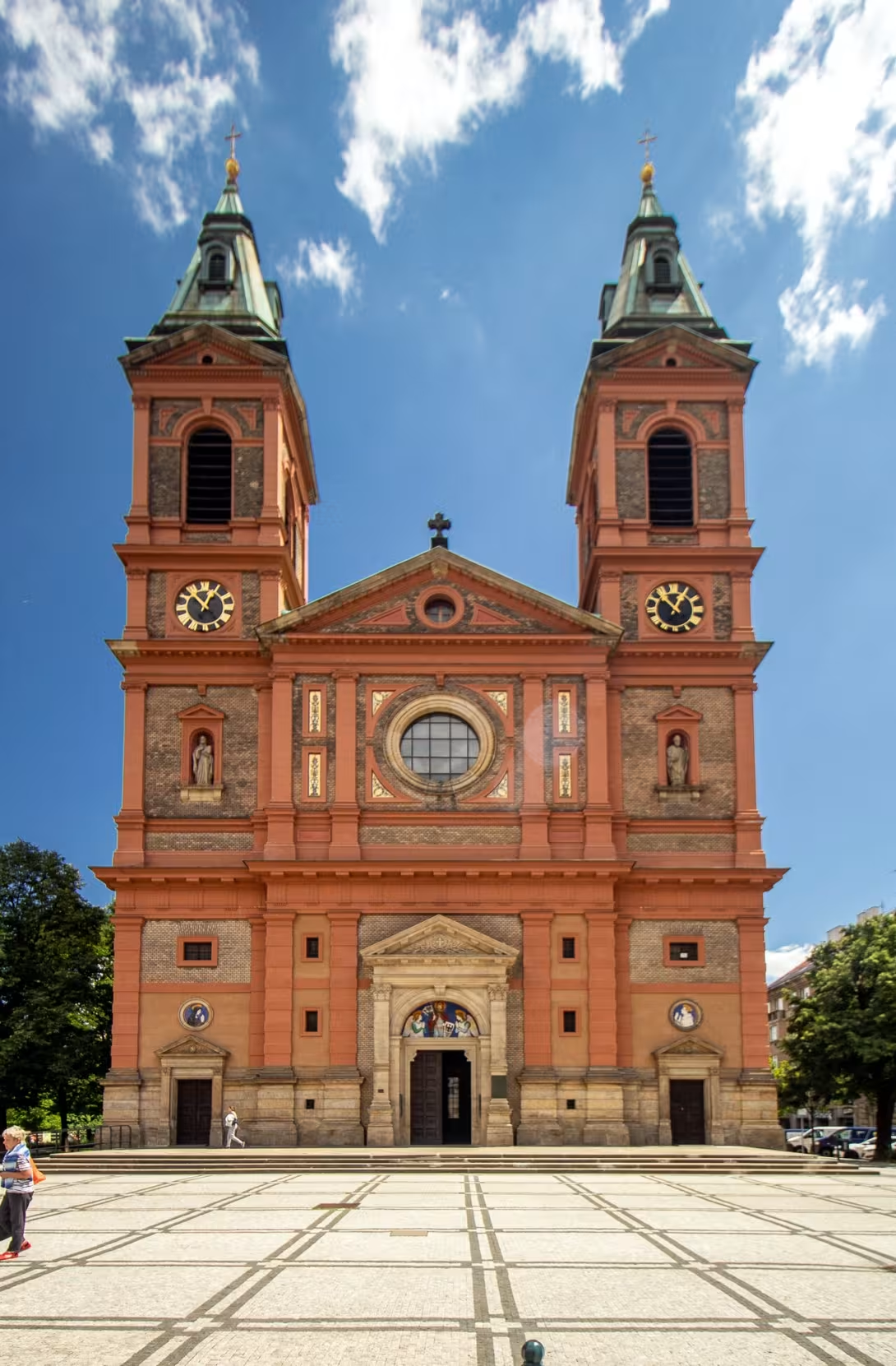
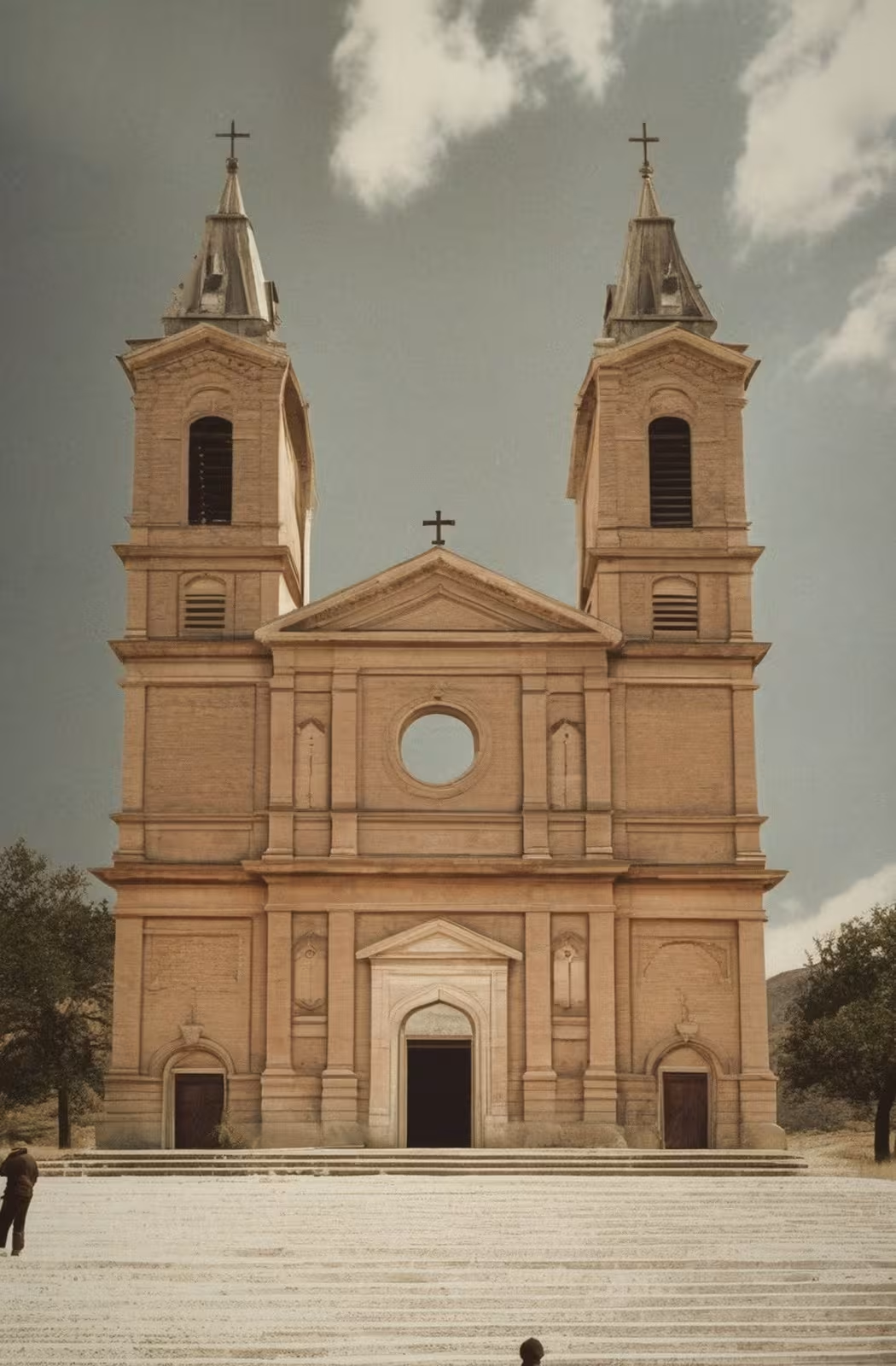
The historical appearance on the left is an AI-generated visualisation and serves as inspiration only.
Historical milestones
- 1881
- The foundation stone was laid.
- 1885
- The church was solemnly consecrated.
Architectural development
Construction of the Church of Saint Wenceslas began after acquiring land previously occupied by Buquoyský letohrádek. The church's neo-Renaissance style was realized through the architectural plans of Antonín Viktor Barvitius, with significant contributions from artists like Ludvík Šimek and Stanislav Sucharda for its sculptural decoration. The interior features polychrome and gilded plasterwork typical of the neo-Renaissance period.
Historical events
The foundation stone was laid on September 18, 1881, marking the beginning of construction.
On September 26, 1885, the church was solemnly consecrated by Archbishop František Schönborn and other dignitaries.
In 1891, Emperor Franz Joseph I visited the church during a jubilee exhibition in Prague.
The relics of Saint Wenceslas were displayed here for the first time on September 27, 2015.
Points of interest
- The Church of Saint Wenceslas was built on land that once housed the Buquoyský letohrádek, a summer residence, marking an interesting transition from leisure to sacred use.
- A unique feature of the church's west facade is its colorful Italian majolica reliefs created in Florence by Ludvík Šimek, showcasing international artistic collaboration during its construction.
- In 1891, Emperor Franz Joseph I visited the Church of Saint Wenceslas during a jubilee exhibition in Prague, highlighting its significance as a venue for imperial events.
- The church's two 50-meter towers are dedicated to Saint Wenceslas, reflecting his enduring importance as the patron saint of Bohemia and adding symbolic height to the structure.
- On September 27, 2015, the relics of Saint Wenceslas were displayed in the church for the first time, marking a pivotal moment that connected its historical roots with contemporary religious practices.
Guide
This guide is narrated by a synthetic voice generated by artificial intelligence.
Show guide text
This text was created by artificial intelligence and has not been editorially reviewed. It may contain inaccuracies.
Welcome to the Church of Saint Wenceslas in Smíchov, a remarkable neo-Renaissance basilica that stands proudly at Náměstí 14. října in Prague. As you stand here, take a moment to absorb the grandeur before you: two majestic 50-meter towers reach towards the sky, their presence commanding yet inviting. The church's façade radiates with an air of solemn beauty, beckoning you to explore its rich history and architectural splendor.
The story of this church begins in the late 19th century, a time when Prague was experiencing significant cultural and architectural development. It was between 1881 and 1885 that architect Antonín Viktor Barvitius brought his vision to life here on this site. The foundation stone was laid in 1881, marking the start of what would become one of Prague's most iconic religious structures. By 1885, the church was solemnly consecrated, ready to serve as a spiritual haven for its community.
As you wander around, take note of the architectural details that define this basilica. The west façade is particularly striking with its colorful Italian majolica reliefs, a testament to Barvitius's attention to detail and his ability to blend various artistic influences. These reliefs were crafted in Florence by Ludvík Šimek, adding an international flair to the church’s design.
This site holds deep historical significance, intertwined with notable figures such as Ferdinand V., Empress Maria Anna, František hrabě Schönborn, and Emperor Franz Joseph I. Each of these individuals played a role in shaping not only this church but also the cultural landscape of Prague during their time.
An interesting tidbit about this location is its transformation from secular to sacred. The land on which you now stand once housed the Buquoyský letohrádek, a summer residence. This transition marks an intriguing chapter in the history of Smíchov, reflecting broader changes within the community and society at large.
As we conclude our tour, I invite you to linger a little longer, perhaps exploring the surrounding area or simply soaking in the atmosphere that this church exudes. Whether you're drawn by its architectural beauty, historical depth, or spiritual significance, there's always more to discover here. Thank you for joining me on this journey through time and artistry at the Church of Saint Wenceslas. Safe travels as you continue your exploration of Prague!
Tips for visitors
The best time to visit the Church of Saint Wenceslas in Smíchov is during late spring or early fall when the weather is pleasant, allowing for a comfortable exploration of both the church and its surroundings. These seasons offer mild temperatures ideal for walking around the area and appreciating the architecture without the summer crowds or winter chill. Additionally, visiting on weekdays can provide a quieter experience compared to weekends.
It is advisable to use public transportation for convenience.
When visiting the Church of Saint Wenceslas, consider bringing comfortable walking shoes as you may want to explore nearby historical sites and urban areas around Smíchov. A camera is recommended for capturing the stunning architecture and details of the church. Additionally, carrying a water bottle and some snacks can enhance your visit, especially if you plan to spend several hours exploring.
For photography enthusiasts, the best spots to capture the Church of Saint Wenceslas are from the front entrance or across Náměstí 14. října during golden hour when the light is soft and warm, highlighting the church's neo-Romanesque features. Inside, photographing the intricate details of the interior can be rewarding, especially in natural lighting conditions.
Nearby attractions within a 30-minute walk or short public transport ride include the former Buquoyský letohrádek (Buquoy Summer Palace), which offers historical insights and beautiful gardens. Families with children will also enjoy exploring Smíchov's urban landscape, where they can find various parks and recreational areas suitable for leisurely strolls or picnics.
Frequently asked questions
Can the monument be visited?
Religious buildings are usually open mainly during services; at other times a visit is normally arranged with the parish or the operator. We have not verified specific times.
Where is the monument?
Location: náměstí 14. října, Smíchov, Praha, Hlavní město Praha. The map on this page shows the exact spot.
Why is the monument protected?
It is listed in the Central List of Cultural Monuments of the Czech Republic as a cultural monument (register no. 40326/1-1378).
Businesses nearby
Do you run a restaurant, accommodation, shop, museum, rental, wellness or other visitor service near this monument? Show yourself directly to the people heading to it — this is how they will see you in the app and on the web:
Events nearby

Zdroj akcí: otevřená data měst a obcí ČR (Národní katalog otevřených dat) a kalendář akcí Národního památkového ústavu.
Nearby
Located in Smíchov, a district of Prague, the church is surrounded by urban development and historical sites such as the former Buquoyský letohrádek.
Accommodation nearby
Trips and activities nearby
Guided tours, tickets and activities nearby from GetYourGuide
Affiliate link: if you buy from the partner, we may receive a commission. The price for you does not change.
Search tours and activities →Themed route
Thematic Walking Tour: Smíchov's Historical Gems
1. Kostel svatého Václava na Smíchově (Church of St. Wenceslas) - Type: Church - Why Visit: This stunning Baroque church, located in the heart of Smíchov, is a masterpiece designed by Kilian Ignaz Dientzenhofer and completed by his son, Maximilian. Its richly decorated interior and impressive architecture make it a must-see for anyone interested in religious art and history.
2. Former Buquoyský Letohrádek (Buquoy Summer Palace) - Type: Historical Site - Why Visit: Just a short walk from the church, this former summer palace is an exquisite example of Baroque architecture. Although it no longer stands as originally built, its history and influence on the area's development are significant. The site offers insights into the grandeur of past aristocratic life in Prague.
3. Smíchovské Nádraží (Smíchov Train Station) - Type: Historical Building - Why Visit: Known for its Art Nouveau architecture, Smíchov Train Station is a hidden gem that showcases the elegance of early 20th-century design. Its intricate details and historical significance as one of Prague's oldest railway stations make it an intriguing stop on any urban exploration.
This tour offers a glimpse into Smíchov’s rich architectural heritage, highlighting its religious, aristocratic, and industrial past through these iconic sites.
Seasonal recommendations
Spring: Visiting the Church of St. Wenceslas on Smíchov during spring offers a refreshing experience as nature reawakens. The surrounding gardens and pathways around the church are adorned with blooming flowers, creating an idyllic atmosphere that enhances the historical charm of the site. The soft, natural light filtering through budding trees provides a gentle illumination for photography enthusiasts. As the weather transitions from chilly to milder temperatures, visitors should opt for layered clothing to accommodate changing conditions throughout the day. Spring tends to attract fewer crowds than summer, making it an ideal time to explore the church at your own pace.
Summer: Summer is the peak season for visiting the Church of St. Wenceslas on Smíchov, with long daylight hours and warm weather inviting locals and tourists alike to enjoy the outdoors. The lush greenery surrounding the church provides a vibrant backdrop that complements its architectural beauty. However, this popularity means larger crowds, so it's advisable to arrive early in the morning or later in the afternoon to avoid the midday rush. Lightweight clothing is recommended due to the heat, and carrying water and sunscreen can ensure a comfortable visit.
Autumn: Autumn brings a picturesque transformation to the Church of St. Wenceslas on Smíchov as the surrounding foliage turns into a palette of reds, oranges, and yellows. The crisp air and softer light create an enchanting atmosphere that is perfect for photography or leisurely strolls around the church grounds. As temperatures begin to cool, visitors should dress in warm layers to stay comfortable during their visit. While autumn is generally less crowded than summer, it's still a popular time for locals enjoying the changing seasons.
Winter: Winter offers a unique charm at the Church of St. Wenceslas on Smíchov with its serene snow-covered surroundings and cozy atmosphere. The church is often illuminated by festive lights during this season, adding to its enchanting appeal. While fewer people visit compared to summer, those who do are treated to a tranquil experience with fewer crowds, allowing for more intimate exploration of this historic site.
Visualizations and artistic views


The visualisations are generated by artificial intelligence and serve as inspiration.
Photos from the area
Real photos taken near the monument


Zdroj a licence jsou uvedeny u každého snímku.
Tips from visitors
No tips yet. Be the first!
Log in and add your tip.
Sources and literature
Photos: VitVit / CC BY-SA 4.0 — Wikimedia Commons. The author and licence also appear when you hover over the image.
Faktickým podkladem tohoto textu byl článek na Wikipedii, jehož autory jsou přispěvatelé Wikipedie. Článek je dostupný pod licencí CC BY-SA 4.0.
Location on the map

Příběhy a pověsti
Legendy, pověsti a příběhy spjaté s touto památkou
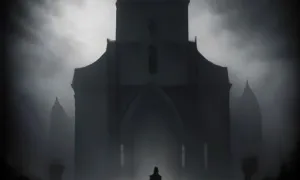
Příběh: Kostel svatého Václava na Smíchově
Bylo to v pondělí ráno, kdy Martin J. Říha se postavil u vchodu kostela svatého Václava na Smíchově a podíval se dolů do hlubokých schodů vedoucích k náměstí…
Číst příběh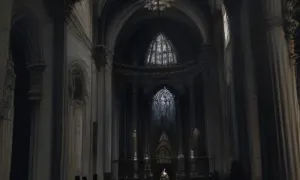
Pověst: Kostel svatého Václava na Smíchově
Traduje se, že když roku 1945 přinesli do kostela svatého Václava na Smíchově Palladium země české, nebyla to pro chrám pouhou náhodnou návštěvou vzácné reli…
Číst příběhFotografie návštěvníků
Zatím žádné fotografie. Buďte první, kdo přidá fotografii z návštěvy!
Log in a přidejte svou fotografii nebo hodnoťte.
Za ověřenou návštěvu v aplikaci získáte víc bodů — poznáme podle GPS, že jste na místě.
Reviews and comments