






Kostel svatého Václava (Planá nad Lužnicí) Church
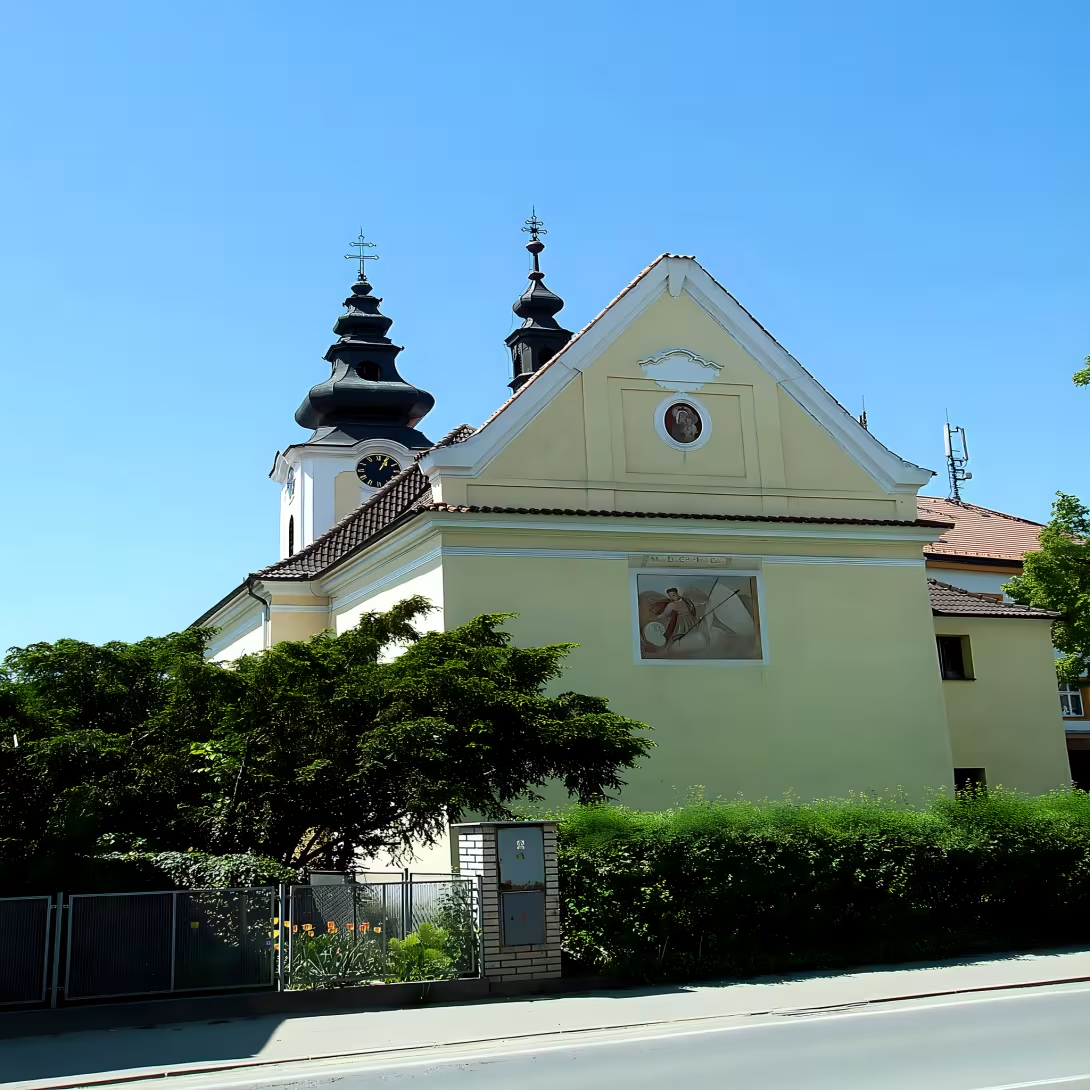
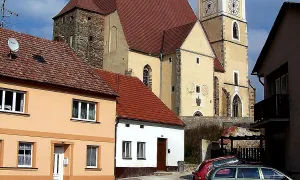
The Church of Saint Wenceslas in Planá nad Lužnicí is a significant cultural monument and Roman Catholic parish church in the Jihočeský kraj region of the Czech Republic. First documented in 1357, it showcases Gothic origins with later Baroque influences. Its historical importance is highlighted by its continuous use and adaptation over centuries, making it an attractive site for those interested in religious architecture and cultural history.
Originating in the mid-14th century when Bohemia was part of the Holy Roman Empire, a period marked by significant cultural and architectural development across Europe, the church's initial construction around 1357 reflects the Gothic style prevalent at that time. This early phase established it as an integral part of the local community's spiritual life.
Architecturally, the Church began as a Gothic structure with a single nave, flat ceiling, and vaulted presbytery. In 1666, Baroque renovations introduced new stylistic elements while preserving its original framework. Further modifications at the end of the 18th century shaped its current form. The church features simple facades typical of the period's architectural trends, including a notable high relief of Saint Wenceslas by Jan Vítězslav Dušek above the northern entrance.
The interior is enriched with artworks from different periods. A new Baroque painting on the main altar, created in 1900 by Josef Mathauser, adds artistic value. Paintings on side altars dedicated to Mary and Saint Joseph, crafted in 1862 by Josef Václav Mysliveček, contribute to its historical and cultural significance.
Throughout its history, the Church of Saint Wenceslas has remained a focal point for the local community as a parish church under the Roman Catholic faith. Its continuous use and adaptation over centuries highlight its enduring importance in the region's religious and cultural landscape.
Today, the Church is accessible to visitors who wish to explore its rich history and architectural beauty. The combination of Gothic origins and Baroque renovations offers a unique glimpse into evolving styles that have shaped this monument. Its curation as a cultural heritage site ensures preservation for future generations.
Visiting the Church of Saint Wenceslas provides an opportunity to appreciate not only its historical significance but also its role in the ongoing spiritual life of Planá nad Lužnicí. The church stands as a testament to the region's architectural evolution and cultural resilience, inviting visitors to explore its storied past and serene presence.
Then and now
Drag the slider to compare how the landmark may have looked when it was built with the view today.
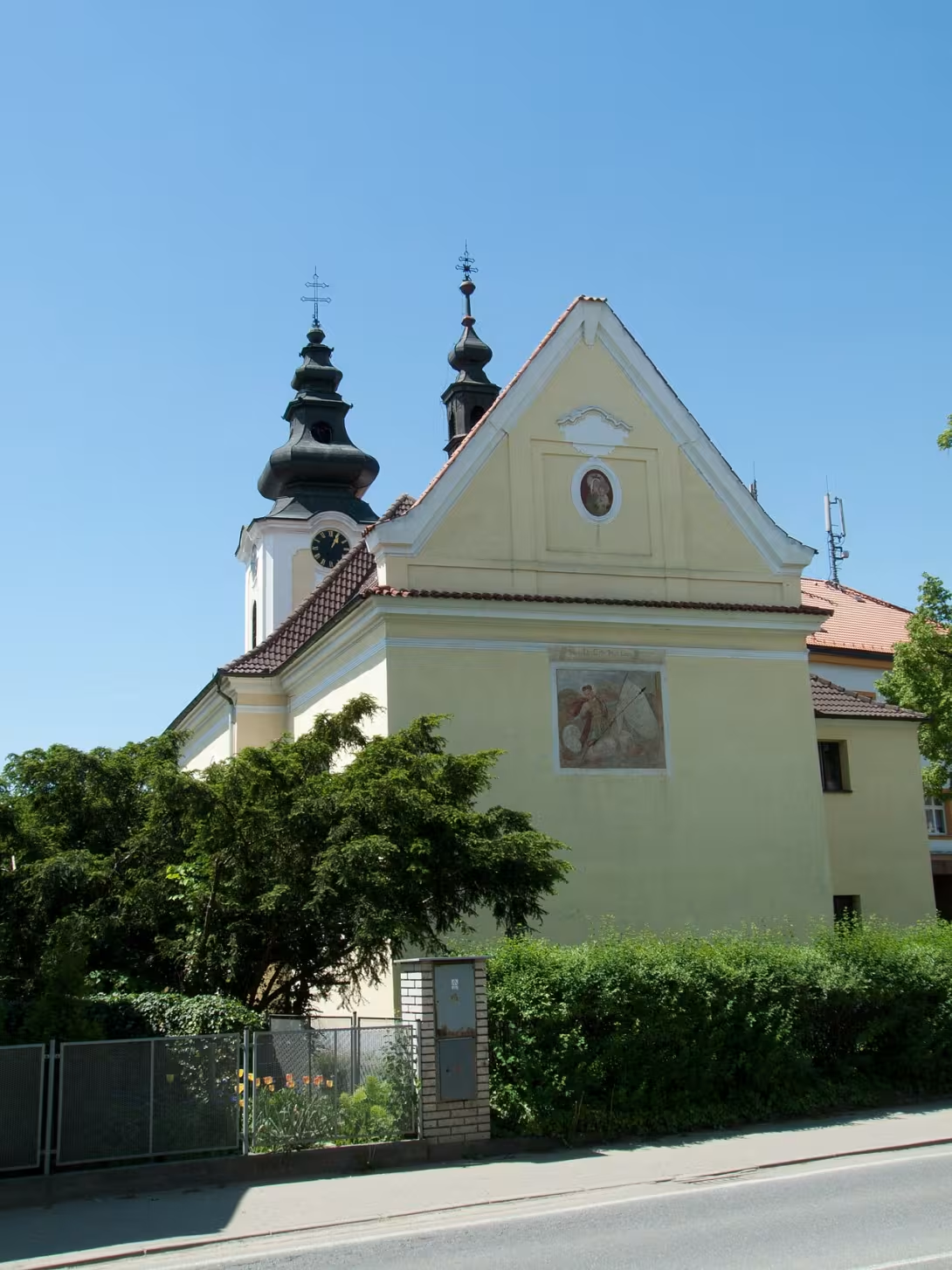

The historical appearance on the left is an AI-generated visualisation and serves as inspiration only.
Historical milestones
- 1357
- First documented mention of the church.
- 1666
- Baroque renovations were carried out.
- 1796
- The church underwent further modifications.
Architectural development
The Church of Saint Wenceslas began as a Gothic structure and was later transformed into Baroque style in 1666. By the end of the 18th century, it underwent another significant renovation. The church features a single nave with a flat ceiling and a vaulted presbytery.
Historical events
1357: First documented mention of the church, originally built in Gothic style.
1666: The church underwent Baroque renovations.
1796: Further modifications were made to the structure.
Guide
This guide is narrated by a synthetic voice generated by artificial intelligence.
Show guide text
This text was created by artificial intelligence and has not been editorially reviewed. It may contain inaccuracies.
The Church of Saint Wenceslaus is the parish church of the Roman Catholic parish of Planá nad Lužnicí and is among the cultural monuments of the Czech Republic.
The first written mention of the church dates back to 1357. It was originally built in the Gothic style. In 1666 it was rebuilt in the Baroque style and in 1796 it underwent another reconstruction.
The church has a single nave with a flat ceiling. The presbytery, or the sanctuary, on the other hand, is vaulted. On the neo-Baroque main altar is a painting that Josef Mathauser painted in 1900. The side altars date from the mid-eighteenth century and are dedicated to the Virgin Mary and Saint Joseph. The paintings on them were created in 1862 by Josef Václav Mysliveček. On the altar dedicated to the Sacred Heart of Jesus stands a statue of Christ by Čeněk Vosmík.
Above the northern entrance is a high relief of Saint Wenceslaus from 1939. Its author is the Tábor sculptor Jan Vítězslav Dušek.
Frequently asked questions
Can the monument be visited?
Religious buildings are usually open mainly during services; at other times a visit is normally arranged with the parish or the operator. We have not verified specific times.
Where is the monument?
Location: Planá nad Lužnicí, Jihočeský kraj. The map on this page shows the exact spot.
Why is the monument protected?
It is listed in the Central List of Cultural Monuments of the Czech Republic as a cultural monument (register no. 35200/3-4956).
Businesses nearby
Do you run a restaurant, accommodation, shop, museum, rental, wellness or other visitor service near this monument? Show yourself directly to the people heading to it — this is how they will see you in the app and on the web:
Accommodation nearby
Themed route
Tematická výletní trasa: Kostel svatého Václava (Planá nad Lužnicí)
1. Kostel svatého Václava
Typ: Historický kostel
Proč stojí za návštěvu: Tento barokní kostel je nejvýznamnější památkou v Plané nad Lužnicí. Jeho bohatě zdobená interiér a krásné fresky přitahují milovníky historie a umění. Kromě toho nabízí návštěvníkům možnost prozkoumat výšku kostela, z níž se otevře pohled na okolní krajinu.
2. Náměstí
Typ: Městské náměstí
Proč stojí za návštěvu: Náměstí v Plané nad Lužnicí je centrem místního života a historie. Zde se nachází řada starobylých domů, které svými architektonickými rysy připomínají minulost obce. Náměstí je ideálním místem pro relaxaci a prohlédnutí si místních zajímavostí.
3. Muzeum Planá nad Lužnicí
Typ: Místní muzeum
Proč stojí za návštěvu: Muzeum nabízí cenné informace o historii a kultuře obce Planá nad Lužnicí. Exponáty zde představují místní tradice, průmysl i život v minulých dobách. Je to skvělý způsob, jak lépe pochopit historické a kulturní kontexty oblasti.
4. Památník na náměstí
Typ: Historický památník
Proč stojí za návštěvu: Památník je věnován válečným obětem a je symbolem místní historie. Jeho umístění na náměstí mu dodává zvláštní význam, což ho činí důležitou památkou pro místní i návštěvníky.
Tato trasa nabízí komplexní pohled na historii a kulturu Plané nad Lužnicí, od hlavního kostela přes centrální náměstí až po muzeum a památník.
Seasonal recommendations
Spring: Visiting the Church of St. Wenceslas during spring offers a unique experience as nature begins to awaken around Planá nad Lužnicí, with blooming flowers and fresh greenery enhancing the church's historic charm. The gentle sunlight creates soft lighting that beautifully illuminates the intricate details of the architecture. This season is ideal for those who appreciate serene settings without large crowds, making it a perfect time for contemplative exploration. Visitors are advised to wear comfortable layers as temperatures can vary throughout the day and bring along an umbrella in case of spring showers.
Summer: The summer months transform the Church of St. Wenceslas into a vibrant backdrop with lush landscapes and warm sunshine that accentuates its architectural beauty. This is the peak tourist season, so expect larger crowds, especially during midday. To fully enjoy your visit, consider arriving early in the morning to avoid the heat and throngs of visitors. Lightweight clothing and sun protection are recommended, as well as staying hydrated throughout your exploration.
Autumn: Autumn at the Church of St. Wenceslas is marked by a stunning display of fall foliage, with vibrant colors creating a picturesque setting that complements the historical ambiance of the church. The cooler temperatures make for comfortable walking tours around the area, and the reduced number of tourists compared to summer allows for a more peaceful visit. Visitors should wear warm layers as evenings can become quite chilly, and carrying a light jacket is advisable.
Winter: Winter offers a magical atmosphere at the Church of St. Wenceslas, with snow-covered landscapes providing a serene and picturesque setting that enhances its historic appeal. Visitors should dress warmly in layers and wear sturdy footwear for walking on potentially icy paths. This season is ideal for those seeking tranquility away from peak tourist times, allowing for a more intimate experience of this historic site.
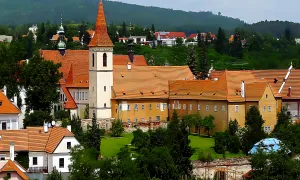
Visualizations and artistic views


The visualisations are generated by artificial intelligence and serve as inspiration.
Photos from the area
Real photos taken near the monument


Zdroj a licence jsou uvedeny u každého snímku.
Tips from visitors
No tips yet. Be the first!
Log in and add your tip.
Sources and literature
Photos: Jitka Erbenová (cheva) / CC BY-SA 3.0, rozlišení zvýšeno umělou inteligencí — Wikimedia Commons. The author and licence also appear when you hover over the image.
Faktickým podkladem tohoto textu byl článek na Wikipedii, jehož autory jsou přispěvatelé Wikipedie. Článek je dostupný pod licencí CC BY-SA 4.0.
Location on the map


Příběhy a pověsti
Legendy, pověsti a příběhy spjaté s touto památkou
Fotografie návštěvníků
Zatím žádné fotografie. Buďte první, kdo přidá fotografii z návštěvy!
Log in a přidejte svou fotografii nebo hodnoťte.
Za ověřenou návštěvu v aplikaci získáte víc bodů — poznáme podle GPS, že jste na místě.
Reviews and comments