






Kostel svatého Václava (Rozdělov) Church
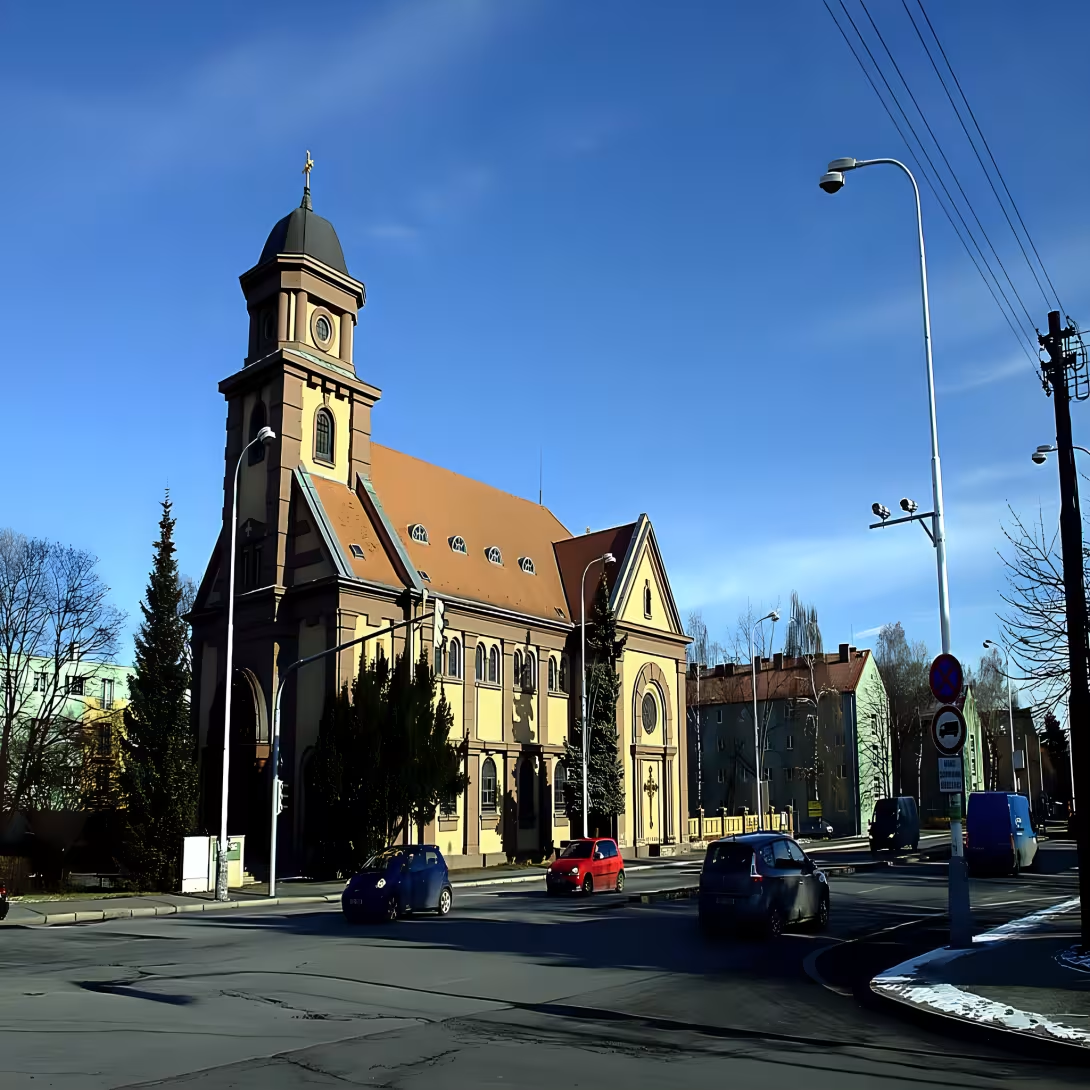
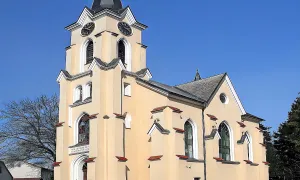
St. Wenceslas Church in Rozdělov is a Roman Catholic parish temple from 1925-1927. It is performed in the style of Czech art blanket with distinctive byzantizing elements. It stands in part Kladno-Rozdělov at the crossroads of the streets of Victory and Vasíčkova. Together with the rectory, it is the dominant part of the village.
Rozdělov founded the St and the Broom benedictini as part of the Kladno estate. In the second half of the 19th century, thanks to the industrialization of Kladensk and the mining in the nearby mine Max near Libušín quickly developed and became the residence of miners. The need for a new temple was created after the abolition of the local school chapel in 1924. The Association for the Construction of a Catholic Church in Rozdělov near Kladno was founded under the leadership of Jan Nosek. The Archbishop František Kordač provided financial support for the project.
Prague architect František Havlena developed the project of a single sacral building, the construction was carried out by Kladenský builder Josef Picek. Architecture combines elements of Czech art blanket with Byzantizating features. Because of the limited resources of the Archbishop's Treasury, concessions were made during construction. Instead of natural stone, artificial material was used. The original extensive plan, including the developed sculpture and park design, was not fully implemented.
The main altar with frame architectural structure is dominated in the interior, with deep wooden relief. The entrance portal is decorated with a statue of Louis Vocelka with a picture from the life of St. Wenceslas. The original design was prepared by sculptor Stino Paukert, but its price was too high for the builder, therefore Vocelka was involved.
Construction took place between 1925 and 1927. The base stone was laid on 27 September 1925 on the site of the donated benedictine. Before finishing, August 14, 1927, the canon František Hrubek sanctified new bells. The church itself was consecrated by Archbishop František Kordač on September 25, 1927.
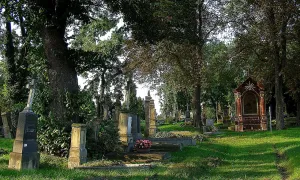
Near the monument lies the cemetery founded in 1914 and the chapel of St. Nicholas from 1802. St. Wenceslas Church is an important witness to the architecture of the first republic and the dynamic development of the region. The construction is worth visiting for interested people in modern sacral art and the history of Kladensk.
Then and now
Drag the slider to compare how the landmark may have looked when it was built with the view today.
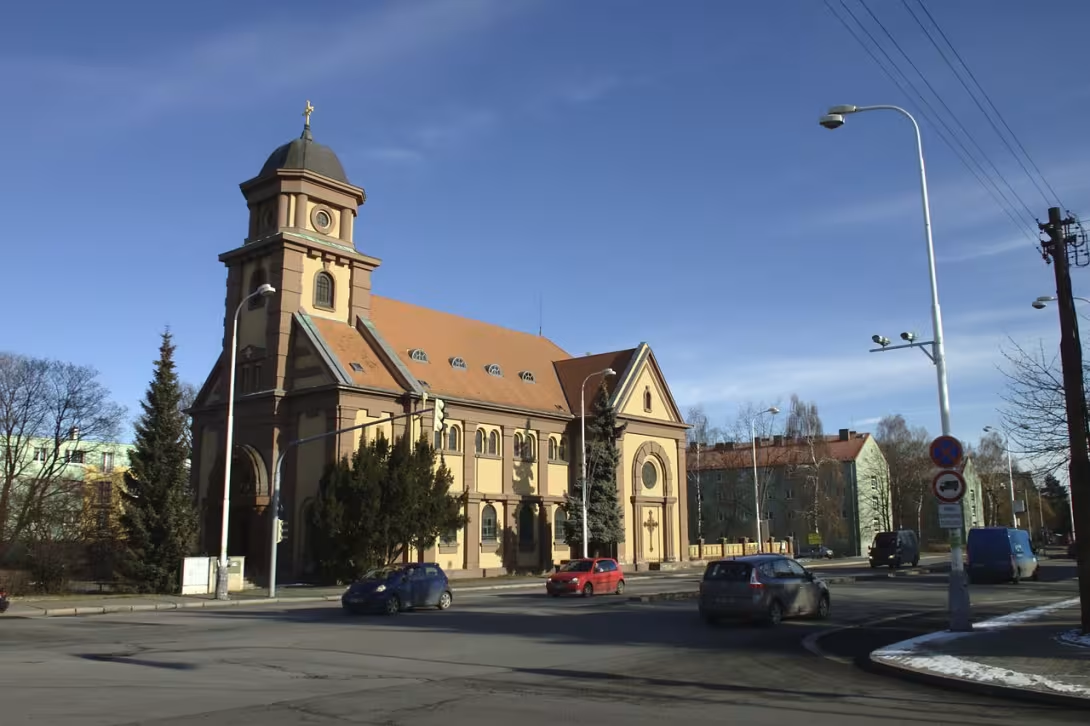
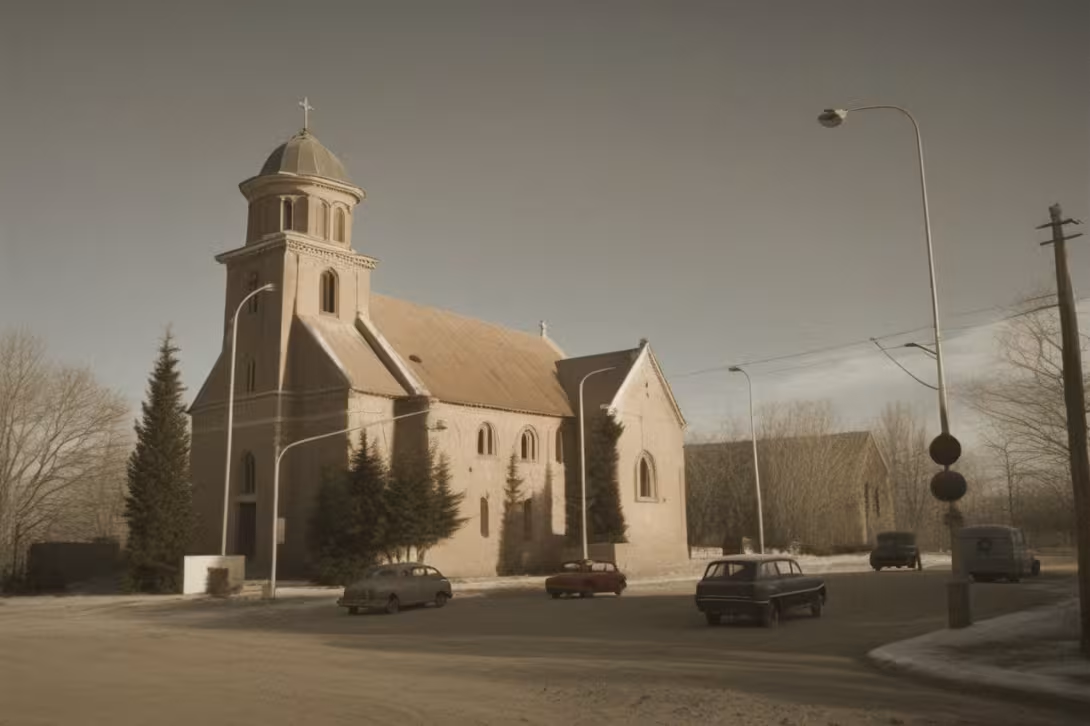
The historical appearance on the left is an AI-generated visualisation and serves as inspiration only.
Historical milestones
- 1802
- The creation of the chapel of St. Nicholas
- 1914
- Establishment of a local cemetery
- 1924
- Cancellation local school chapel
- 1925
- Laying of the church base stone
- 1927
- The consecration of new church bells
- 1927
- The church is consecrated by Archbishop František Kordac
Architectural development
One-boat sacral building in the style of Czech art blanket with Byzantizating elements. Due to a limited budget, concessions were made in the quality of materials, such as replacement of artificial stone. The entrance portal is decorated with a statue of Louis Vocelka.
Historical events
1925: laying of the foundation stone, 1927: sanctification of the bells and consecration of the temple
Owners
Roman Catholic Church
Points of interest
- The church is performed in the style of Czech art blanket with strong byzantizing elements. - Due to limited financial resources, artificial material was used instead of natural stone. - The statue at the entrance portal is the work of Louis Vocelka, who replaced the original designer Stin Paukert for a high price. - The base stone was laid on the land that had given benedictini. - The need for a new temple was created after the local school chapel was abolished in 1924.
Guide
This guide is narrated by a synthetic voice generated by artificial intelligence.
Show guide text
This text was created by artificial intelligence and has not been editorially reviewed. It may contain inaccuracies.
Welcome to Rozdělov, a small but historically rich place in Central Bohemia. Underneath your feet is a mild landscape, and one of the most remarkable monuments of the area is proud to be in front of you - the Roman Catholic parish church of St. Wenceslas. You're standing in front of him, and you can't help but notice his distinctive architecture rising up as a monumental legacy of the past.
This church was built between 1925 and 1927. We owe its existence to the Prague architect František Havlen, whose visionary work has been translated into a unique design combining Czech art dék and Byzantizating elements. The project was implemented by Kladen builder Josef Picek, who turned the design into a reality. Throughout the construction it was supported by Archbishop František Kordac, whose financial interventions and spiritual guidance were invaluable.
Let's move closer to the church. Look up at the facade and notice how artificial material represents the natural stone - the result of limited funds of that time. This detail not only points to economic challenges, but also highlights the determination and creativity of those who tried to create this church.
An interesting feature is the statue at the entrance portal, which could be noticed by those who came later. It is the work of Louis Vocelka, who replaced the original designer Stin Paukert. This change was due to the high price of the original plan and points to practical decisions that often took place during construction.
Now pay attention to the key figures associated with this monument. František Kordač not only provided financial support but also festively consecrated the church in 1927. His presence here was a symbolic moment for the local population. Other personalities are Jan Nosek, Jaroslav Kopřiva and of course Ludvík Vocelka, whose statue stands as a permanent monument to its contribution.
The interesting thing is that the church was created thanks to donated land from the benedictines. This act of charity is a reminder of a strong community and shared values at that time.
Now that you have seen the church of St. Wenceslas, it may be a good time to explore the surrounding areas. Rozdělov offers many other attractions and historical stories. Whether you choose to explore a local cemetery founded in 1914 or go through the surrounding streets, each step is linked to the rich history of this place.
Thank you for your visit and we hope you enjoyed your stay. Don't forget to note other attractions you want to explore, and don't be afraid to visit other historical monuments nearby. When you return to Rozdělova, we'll be waiting for another visit. Goodbye!
Tips for visitors
The best time to visit is during a bright day when natural light best highlights architectural details of art blanket. We recommend a visit in the morning for the best lighting conditions in the interior.
Transport to the place is possible both by car and by public transport; Please check the current connection in the search engine. Parking in the area is usually available.
We recommend taking drinking water and any change for any fees if required. It is always good to have change on your hands for any needs on site.
For photography are the best inner spaces of the church, which thanks to their style offer unique motifs. Focus mainly on Byzantizing elements.
In the area you can walk briefly to a cemetery founded in 1914 or to the chapel of St. Nicholas from 1802. For families with children, this walk is an ideal opportunity for a quiet stay in the historical environment.
Frequently asked questions
Is Kostel svatého Václava (Rozdělov) open to the public?
Yes, the church is open to the public. The tour is suitable for all people interested in history and architecture.
How do I get to the place by car / public transport?
St. Wenceslas Church in RozdělovA is available by car and public transport. Check the current connection in the search engine or map service.
How much is the entrance fee and is it paid on the spot?
Admission is paid on site, the current price list can be found on the official site of the sights.
Is the tour suitable for children and seniors?
Yes, a church tour is suitable for all age groups. Special inspection programmes are available for families with children.
How long does the tour take?
The church tour takes about an hour and a half. But you can see more time if you want to get to know history and architecture better.
What are the opening times and booking is required?
The church opening hours depend on the season and events. Check the current opening times on the official site of the sights or in advance by calling.
What's interesting in the immediate vicinity?
In the immediate vicinity of the church there are other historical monuments such as Rozdělov Fortress and the local museum.
For kids
Today we want to see the old church of St. Wenceslas in Rozdělov. It was built 101 years ago when the world wasn't as modern as it is today. The church stood in the middle of the village and was the center of all activity.
At that time, there were people around Rozdělova who had been feeding on agriculture and trade. The village was small and quiet, but people kept meeting on church grounds to pray or celebrate holidays.
Businesses nearby
Do you run a restaurant, accommodation, shop, museum, rental, wellness or other visitor service near this monument? Show yourself directly to the people heading to it — this is how they will see you in the app and on the web:
Nearby
Near is a cemetery founded in 1914 and a chapel of St. Nicholas from 1802.
Accommodation nearby
Trips and activities nearby
Guided tours, tickets and activities nearby from GetYourGuide
Affiliate link: if you buy from the partner, we may receive a commission. The price for you does not change.
Search tours and activities →Themed route
1. St. Nicholas Chapel - Historical building from 1802, which represents an interesting first point of the route. 2. Cemetery (Cemetery) - Space founded in 1914, which offers visitors a quiet environment. 3. Church of St. Wenceslas (Church) - The main destination of the trip, which dominates the local sacral architecture.
Seasonal recommendations
Spring in Rozdělov brings an awakening landscape that contrasts beautifully with the stone massiveness of St. Wenceslas's Church. In this period the surrounding meadows and forests are covered with lush greenery and flowers, creating an idyllic background for photography and a peaceful walk. Light is usually softer and scattered, often accompanied by variable weather that gives the atmosphere a romantic touch. In practice, spring is an ideal time for visiting, because the main summer rush has not yet occurred and crowds are minimal. Clothes should be laminated, with emphasis on waterproof jacket, as spring rains are frequent. It is best to leave in the morning when the air is fresh and the temperature does not allow long standing in the shade.
Summer offers the longest days and brightest lighting, which fully brings out architectural details and sculpture decoration of the monument. Nature around is in full bloom, but hot days can be challenging for visitors, especially if you are going for a longer tour or a trip to the surroundings. The atmosphere is more lively, often families with children and groups of tourists are coming here, which may mean more activity. For a comfortable experience, I recommend arriving early in the morning, ideally before ten o'clock, to avoid the heat of lunch and the biggest groups. Clothes should be light, breathable and of natural materials, protection from the sun is necessary and enough drinking regime. In the summer months, the monument is usually accessible longer, which also allows an afternoon visit after the heat has disappeared.
Autumn is the season that brings the richest color into the landscape around Rozdělova. Leaves on trees turn into fire shades of red, orange and yellow, creating a dramatic and photogenic contrast with the grey stones of the church. Light can be lower and warmer, often penetrating between trees and creating long shadows. The atmosphere is calmer and more thoughtful, ideal for lovers of history and a quieter environment. Practical advice mainly concerns clothing that must be heat-insulating, as temperatures fall and wounds become cold. I recommend the visit in the afternoon, when the sun shines low and illuminates the façade from a soft angle. The crowds are minimal in this period, so you can enjoy the memory in complete peace.
Winter brings the church of St. Wenceslas a majestic and slow character, often decorated with snow, which highlights its silhouettes against the grey sky. Nature falls asleep, the trees are bare and the landscape is minimalist and quiet. The light is short and pale, which creates a specific, slightly melancholy atmosphere that underlines the spiritual character of the place. Practically winter is the most demanding season in terms of weather, therefore warm winter clothes are necessary, including gloves and hats. The opening hours are often shortened during the winter season, so it is necessary to check the current information in advance. The best time for a visit is the late morning when the temperature is highest and the light is still sufficient for a tour. In Advent time the surroundings may be quieter, but the monument itself remains a quiet haven in the middle of the winter landscape.
Visualizations and artistic views


The visualisations are generated by artificial intelligence and serve as inspiration.
Photos from the area
Real photos taken near the monument


Zdroj a licence jsou uvedeny u každého snímku.
Tips from visitors
No tips yet. Be the first!
Log in and add your tip.
Sources and literature
Fotografie: I would appreciate being notified if you use my work outside Wikimedia. More of my work can be found in my personal gall / CC BY 3.0, rozlišení zvýšeno umělou inteligencí — Wikimedia Commons. The author and licence also appear when you hover over the image.
Faktickým podkladem tohoto textu byl článek na Wikipedii, jehož autory jsou přispěvatelé Wikipedie. Článek je dostupný pod licencí CC BY-SA 4.0.
Location on the map
Příběhy a pověsti
Legendy, pověsti a příběhy spjaté s touto památkou
Fotografie návštěvníků
Zatím žádné fotografie. Buďte první, kdo přidá fotografii z návštěvy!
Přihlaste se a přidejte svou fotografii nebo hodnoťte.
Za ověřenou návštěvu v aplikaci získáte víc bodů — poznáme podle GPS, že jste na místě.
Reviews and comments