



Kostel svatého Václava (Žinkovy) Church
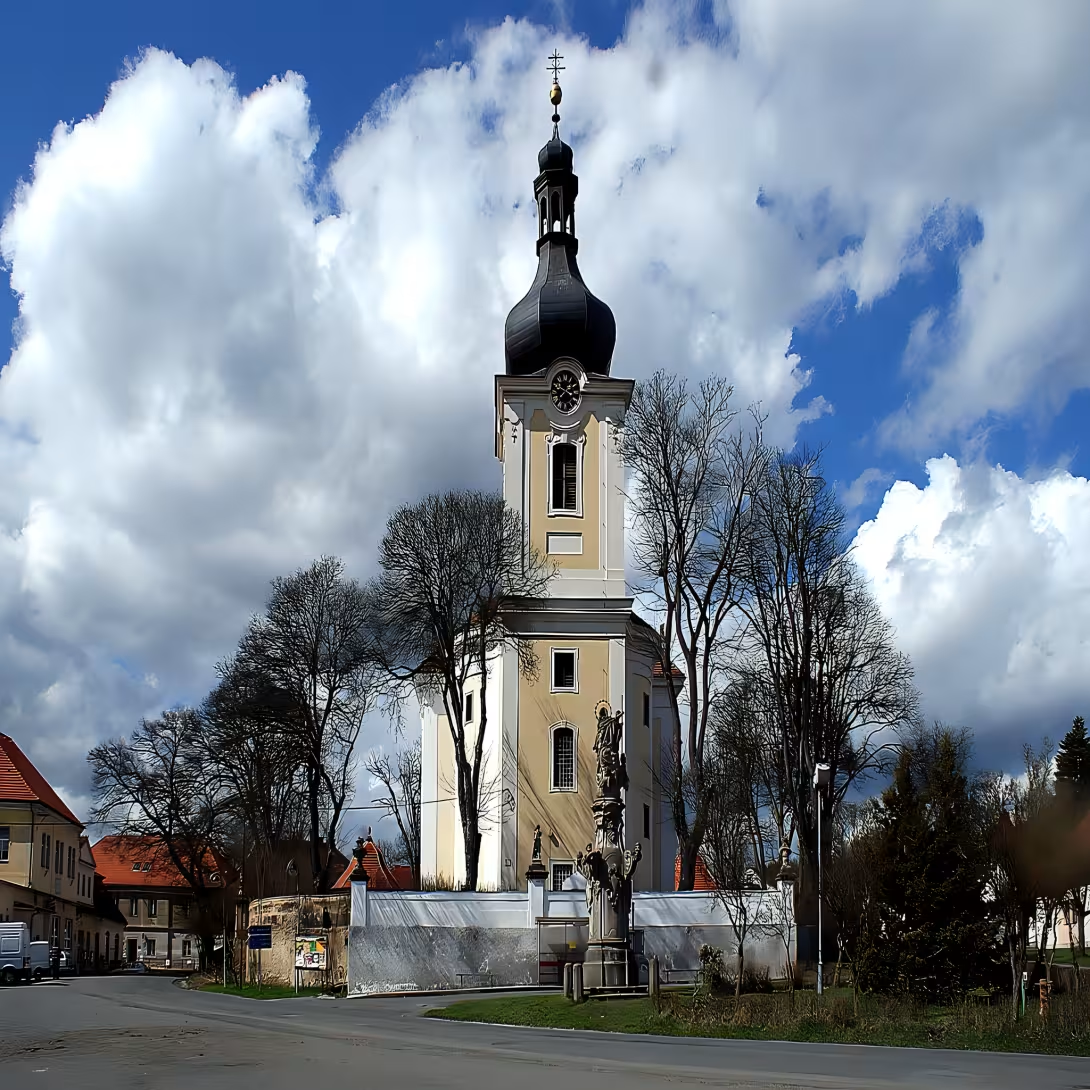
The Church of Saint Wenceslas in Žinkovy is a Baroque Roman Catholic church located at the village's heart within Plzeňský kraj. Recognized as a cultural monument since 1963, it stands out for its architectural and historical significance. The current structure was built after a devastating fire in 1734 that destroyed an earlier Gothic church. It features intricate Baroque design elements, including sculptures by renowned artist Lazar Widmann.
The origins of the Church of Saint Wenceslas trace back to at least 1352 when the first mention of a parish church in Žinkovy was recorded. Initially constructed in the Gothic style, this early structure succeeded an even older church on the same site, as suggested by archaeological findings. By 1396, patrons such as Bavor ze Žinkov and Jindřich, opat kláštera v Pomuku, were associated with the church. Despite surviving the tumultuous Hussite Wars without damage, it was not spared from later disasters. In 1684, a significant fire destroyed parts of the church, including its roof and bells. The community responded by restoring one bell in 1695 and adding two more in subsequent years. However, another catastrophic fire in 1734 led to the complete destruction of the Gothic structure.
The reconstruction that followed was an opportunity for transformation into a Baroque masterpiece. By 1746, the church had been rebuilt with contributions from architect František Ignác Prée and sculptor Lazar Widmann. The new design featured a single-nave building oriented southeast-northwest, characterized by its central 18-meter-high square space flanked by right-angled side projections housing chapels. A presbytery extended from the northeast corner, topped with a 12-meter-tall tower crowned by a belfry. Notably, the church's western facade bore a relief depicting the martyrdom of Saint Wenceslas above its stone entrance portal.
The artistic and architectural elements within the Church of Saint Wenceslas are noteworthy. The interior is adorned in Baroque style, largely dating from the time of reconstruction. It houses five altars, with the main altar dedicated to Saint Wenceslas featuring a painting by František Horčička installed on September 26, 1820. Above this image hangs a depiction of the Holy Trinity by Klatovy's František Scherer from 1833. The main altar is complemented by wooden sculptures of Saints Hubert and Ignatius positioned to its left and right, respectively. Four side altars honor Saint Family, Saint Vincent Ferrer, Saint John Nepomuk, and Archangel Michael, with Lazar Widmann credited for the sculptural works. A glass reliquary containing the remains of Saint Theodor, acquired in 1708 from Roman catacombs by Marie Terezie z Vrtby, is also housed here. Additional artistic contributions include paintings on the altars of Saints John Nepomuk and Archangel Michael by František Julius Luxe.
Throughout its history, the Church of Saint Wenceslas has seen various owners and benefactors who played crucial roles in its development. The reconstruction after the 1734 fire was financed by Marie Terezie z Vrtby, née ze Steinau. Her patronage ensured that the church not only recovered but also flourished as a Baroque architectural gem.
Today, the Church of Saint Wenceslas remains an important cultural and historical site in Žinkovy. Its designation as a protected monument underscores its significance within the region's heritage. Visitors are drawn to this remarkable example of Baroque architecture and artistry, which offers insights into the religious and cultural history of Bohemia during the Baroque period. The church continues to be accessible for those interested in exploring its rich past and appreciating its enduring beauty.
The Church of Saint Wenceslas stands as a testament to resilience and artistic achievement, inviting visitors to delve into its storied past while enjoying its architectural splendor. It is a must-see destination for anyone interested in the cultural heritage of Žinkovy and the broader Bohemian region.
Then and now
Drag the slider to compare how the landmark may have looked when it was built with the view today.
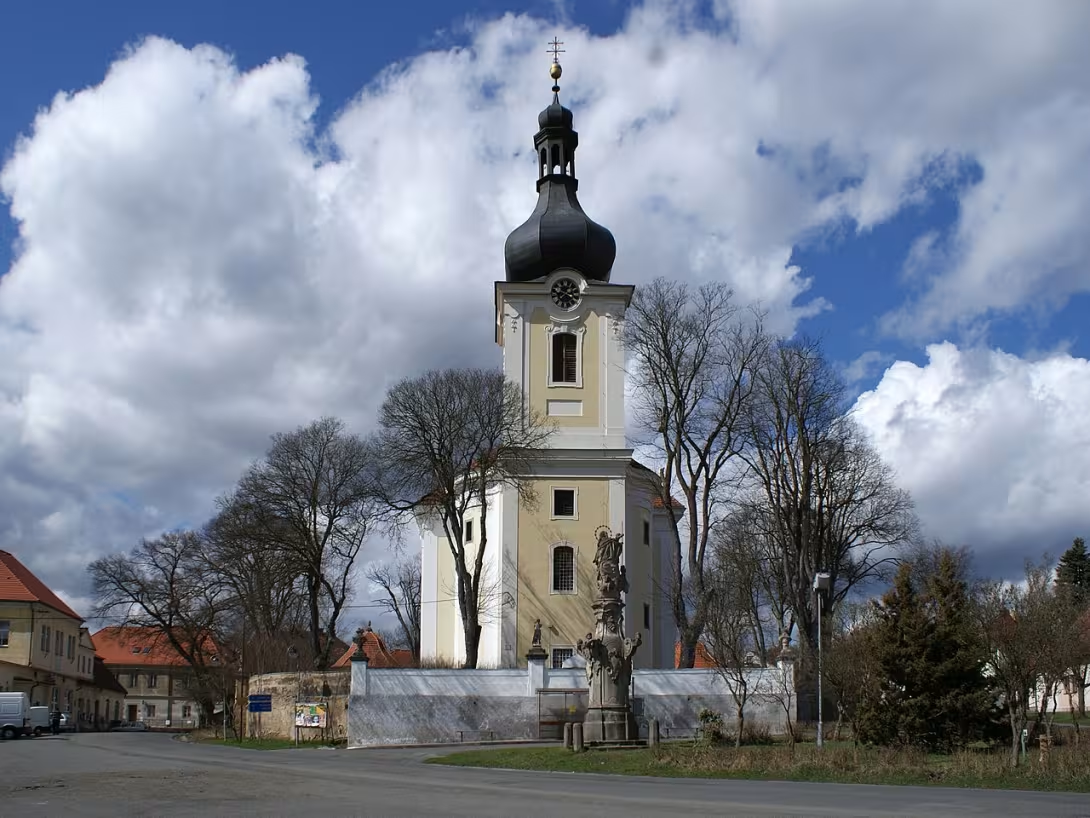
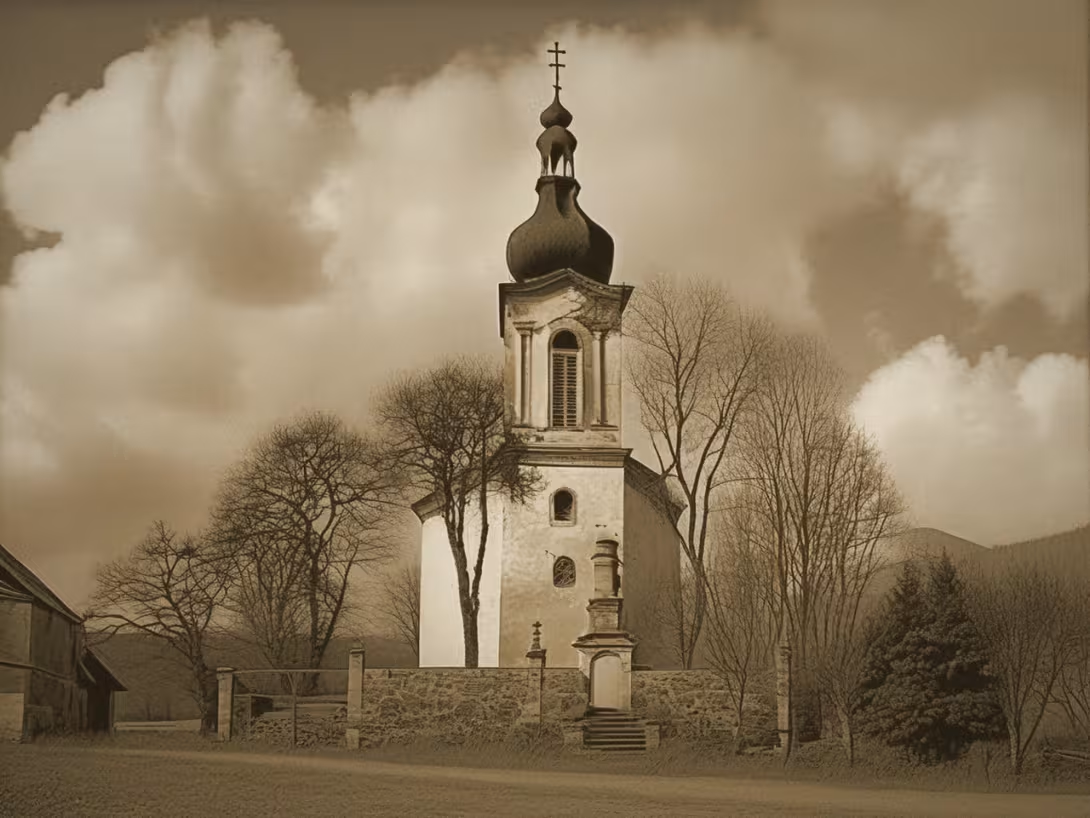
The historical appearance on the left is an AI-generated visualisation and serves as inspiration only.
Historical milestones
- 1963
- The church and its surrounding area were designated as a cultural monument.
Architectural development
Originally built in Gothic style, the church underwent major reconstruction following fires in 1684 and 1734. The current baroque structure was completed with contributions from architect František Ignác Prée and sculptor Lazar Widmann. Further renovations occurred in the 19th century, focusing on roof repairs.
Historical events
The original church mentioned in records from 1352 was replaced by the current baroque structure after a fire in 1734.
In 1684, another significant fire destroyed parts of the church, including its roof and bells.
Points of interest
- The Church of Saint Wenceslas was originally constructed in the Gothic style before being rebuilt into a Baroque masterpiece after a fire in 1734. This transformation highlights how architectural styles can evolve dramatically due to historical events.
- Archaeological findings suggest that there was an even older church on the site prior to the first recorded parish church in 1352, indicating a long-standing religious significance of this location in Žinkovy.
- Despite surviving the Hussite Wars without damage, the church faced multiple disasters, including fires in 1684 and 1734. These events underscore the resilience of the community in preserving their place of worship through restoration efforts over centuries.
- The glass reliquary containing the remains of Saint Theodor was acquired from Roman catacombs by Marie Terezie z Vrtby in 1708, adding a unique historical artifact to the church's collection and connecting it with broader European religious heritage.
- Renowned artist Lazar Widmann contributed sculptures to the church, including those for the main altar and four side altars. His work is an example of how individual artists have played crucial roles in shaping the artistic legacy of historical monuments like this one.
Guide
This guide is narrated by a synthetic voice generated by artificial intelligence.
Show guide text
This text was created by artificial intelligence and has not been editorially reviewed. It may contain inaccuracies.
The Church of Saint Václav stands in the center of the small town of Žinkovy in the Plzen Region. It is a Baroque Roman Catholic church and since 1963 it has been, together with the entire complex, a cultural monument. The complex includes a surrounding wall, chapels, and sculptures.
The village of Žinkovy is first mentioned in the year 1176, and the parish church in 1352. At that time it was a Gothic building, but archaeological finds suggest that an even older church stood on the same spot. By 1396, the patrons of the church were Bavor of Žinkovy and Henry, abbot of the monastery in Pomuk. The Hussite Wars the church survived without damage. However, in a great fire of Žinkovy on July 15, 1684, it lost its roof and bells. It received a new bell in 1695, and two more were added in 1720 and 1724.
In 1734 another fire swept through Žinkovy and completely destroyed the church. Just a year later it was replaced by an impressive Baroque new building. It was paid for by Countess Marie Terezie of Vrtby, born Steinau. The builder was probably the significant Baroque architect František Ignác Prée. The Plzen sculptor and woodcarver Lazar Widmann created rich sculptural decoration and also built the surrounding wall with chapels. In 1746 the church received an organ from organ maker Ondřej Niederle.
The church has a single nave. Through its center runs a square space eighteen meters high, to which side projections with chapels and a rectangular presbytery adjoin. The ground plan thus forms an inconspicuous cross. Above the presbytery rises a bell tower twelve meters high with a cupola. Above the stone entrance portal is a relief of the murder of Saint Václav. The gate in the surrounding wall and the space behind it are decorated with Widmann's sculptures from 1768.
The Baroque furnishings mostly date from the time of construction. The church has five altars. The painting of Saint Václav on the main altar was painted by František Horčička and was placed in the church in 1820. Above it hangs a painting of the Holy Trinity by the painter František Scherer from Klatovy from 1833. The side altars belong to the Holy Family, Saint Vincent Ferrer, Saint John of Nepomuk, and the Archangel Michael. On the altar of Saint John of Nepomuk lies in a glass coffin the remains of Saint Theodore from the Roman catacombs. The Countess of Vrtby obtained them in 1708 as a gift from Pope Clement Eleven. Fine examples of Baroque art are also the pulpit and the marble baptismal font.
Tips for visitors
The best time to visit the Church of Saint Wenceslas in Žinkovy is during late spring or early autumn when the weather is mild, making it ideal for exploring both the church and its surroundings. These seasons offer pleasant temperatures that are perfect for walking around the village and appreciating the baroque architecture without the discomfort of summer heat or winter cold. Additionally, visiting outside peak tourist season means fewer crowds, allowing a more intimate experience with this cultural monument.
Alternatively, public transport services are accessible, though it's recommended to check current routes and schedules online before your visit to ensure a smooth journey. The village’s central location makes it easy to reach on foot from nearby stops.
When visiting the Church of Saint Wenceslas, it is advisable to bring comfortable walking shoes as you may want to explore the surrounding area or walk through the village. A camera is also recommended for capturing the stunning baroque architecture and serene atmosphere. Since lighting can vary throughout the day, consider bringing a small flashlight if planning to stay until dusk.
For photography enthusiasts, some of the best spots include the church's facade and interior, where natural light beautifully illuminates the intricate details during the morning or late afternoon hours. The soft, diffused light at these times enhances textures and colors, making for stunning photographs. Additionally, capturing the church from various angles within the village can provide unique perspectives.
Nearby attractions within a 30-minute drive include other historical sites in the Plzeňský kraj region that offer insights into local history and culture. These destinations are perfect for extending your visit beyond Žinkovy, allowing you to experience more of what this picturesque area has to offer.
Frequently asked questions
Can the monument be visited?
Religious buildings are usually open mainly during services; at other times a visit is normally arranged with the parish or the operator. We have not verified specific times.
Where is the monument?
Location: Žinkovy, Plzeňský kraj. The map on this page shows the exact spot.
Why is the monument protected?
It is listed in the Central List of Cultural Monuments of the Czech Republic as a cultural monument (register no. 18184/4-535).
Businesses nearby
Do you run a restaurant, accommodation, shop, museum, rental, wellness or other visitor service near this monument? Show yourself directly to the people heading to it — this is how they will see you in the app and on the web:
Accommodation nearby
Themed route
Tematická výletní trasa: Kostel svatého Václava (Žinkovy) a okolí
1. Kostel svatého Václava (Žinkovy)
Typ: Historická památka, náboženský objekt
Proč stojí za návštěvu: Tento barokní kostel je centrem kulturní a duchovní historie obce Žinkovy. Jeho architektura a interiér nabízejí pohled na bohatou minulost regionu, což jej činí nezbytným pro každého cestujícího zájemce o historii a architekturu.
2. Obecní úřad Žinkovy
Typ: Místní správní budova
Proč stojí za návštěvu: Obecní úřad je nejen administrativním centrem obce, ale také místem, kde se dají objevit různé informace o historii a aktuálním životě Žinkov. Je to ideální místo pro pochopení současného fungování malé české obce.
3. Školní zařízení v Žinkovech
Typ: Vzdělávací instituce
Proč stojí za návštěvu: Navštívit školu umožňuje poznat, jak probíhá dnešní výchova mladé generace v malé obci. Je to příležitost prozkoumat moderní pedagogické metody a zařízení, které slouží místní komunitě.
4. Místní kostelový zvon
Typ: Historická památka
Proč stojí za návštěvu: Kostelový zvon je důležitým symbolem obce, který připomíná historické události a tradice. Jeho výroba a používání jsou spojeny s místními zvyklostmi a kulturou, což jej činí zajímavým pro každého cestujícího.
5. Základní sportovní zařízení
Typ: Místní rekreační místo
Proč stojí za návštěvu: Toto místo slouží jako centrum pro místní sport a společenské akce. Je to ideální příležitost vidět, jak se obyvatelé Žinkov angažují ve volném čase a jak podporují komunitní ducha prostřednictvím sportu a společenských akcí.
Tato trasa nabízí návštěvníkům pohled na kulturní, historické i současné aspekty života v Žinkovech.
Seasonal recommendations
Spring: Visiting the Church of Saint Wenceslas (Žinkovy) during spring offers a unique experience as nature begins to awaken around this historic site. The lush greenery and blooming flowers create an enchanting atmosphere, making it ideal for photography enthusiasts who wish to capture the church amidst vibrant natural beauty. Spring days are generally mild, but weather can be unpredictable with occasional rain showers, so visitors should pack layers including a light waterproof jacket. This season often sees moderate crowds as people enjoy outdoor activities after winter, and arriving early in the morning can help avoid larger groups.
Summer: The summer months bring long daylight hours to the Church of Saint Wenceslas (Žinkovy), allowing ample time for exploration and appreciation of its architectural details. The warm weather is perfect for strolling around the church grounds, with lush greenery providing a picturesque backdrop. However, this season also attracts more visitors due to its popularity among tourists and locals alike. To enjoy a quieter experience, it's advisable to visit early in the morning or later in the afternoon when the sun is less intense. Comfortable walking shoes and light clothing are recommended, along with plenty of water to stay hydrated.
Autumn: Autumn transforms the Church of Saint Waveslas (Žinkovy) into a stunning canvas of reds, oranges, and yellows as the leaves change color. This season offers a serene atmosphere with fewer visitors compared to summer, making it an excellent time for those seeking tranquility. The cooler temperatures are pleasant for walking around the church grounds, but it's wise to bring a light jacket or sweater in case of chilly evenings. As the days shorten, planning your visit earlier in the day ensures enough daylight to fully enjoy the sights and sounds of this historic site.
Winter: Winter at the Church of Saint Wenceslas (Žinkovy) presents a magical experience with snow-covered landscapes that enhance its historical charm. The shorter days mean fewer visitors, allowing for a more intimate exploration of the church's interior and exterior features. However, winter weather can be harsh, so dressing warmly in layers is essential, along with wearing waterproof boots to navigate potentially icy paths.
Visualizations and artistic views


The visualisations are generated by artificial intelligence and serve as inspiration.
Photos from the area
Real photos taken near the monument


Zdroj a licence jsou uvedeny u každého snímku.
Tips from visitors
No tips yet. Be the first!
Log in and add your tip.
Sources and literature
Photos: feťour / Public domain, rozlišení zvýšeno umělou inteligencí — Wikimedia Commons. The author and licence also appear when you hover over the image.
Faktickým podkladem tohoto textu byl článek na Wikipedii, jehož autory jsou přispěvatelé Wikipedie. Článek je dostupný pod licencí CC BY-SA 4.0.
Location on the map
More monuments – Žinkovy
Show all in the municipality



Příběhy a pověsti
Legendy, pověsti a příběhy spjaté s touto památkou
Fotografie návštěvníků
Zatím žádné fotografie. Buďte první, kdo přidá fotografii z návštěvy!
Log in a přidejte svou fotografii nebo hodnoťte.
Za ověřenou návštěvu v aplikaci získáte víc bodů — poznáme podle GPS, že jste na místě.
Reviews and comments