



Potštejn Castle
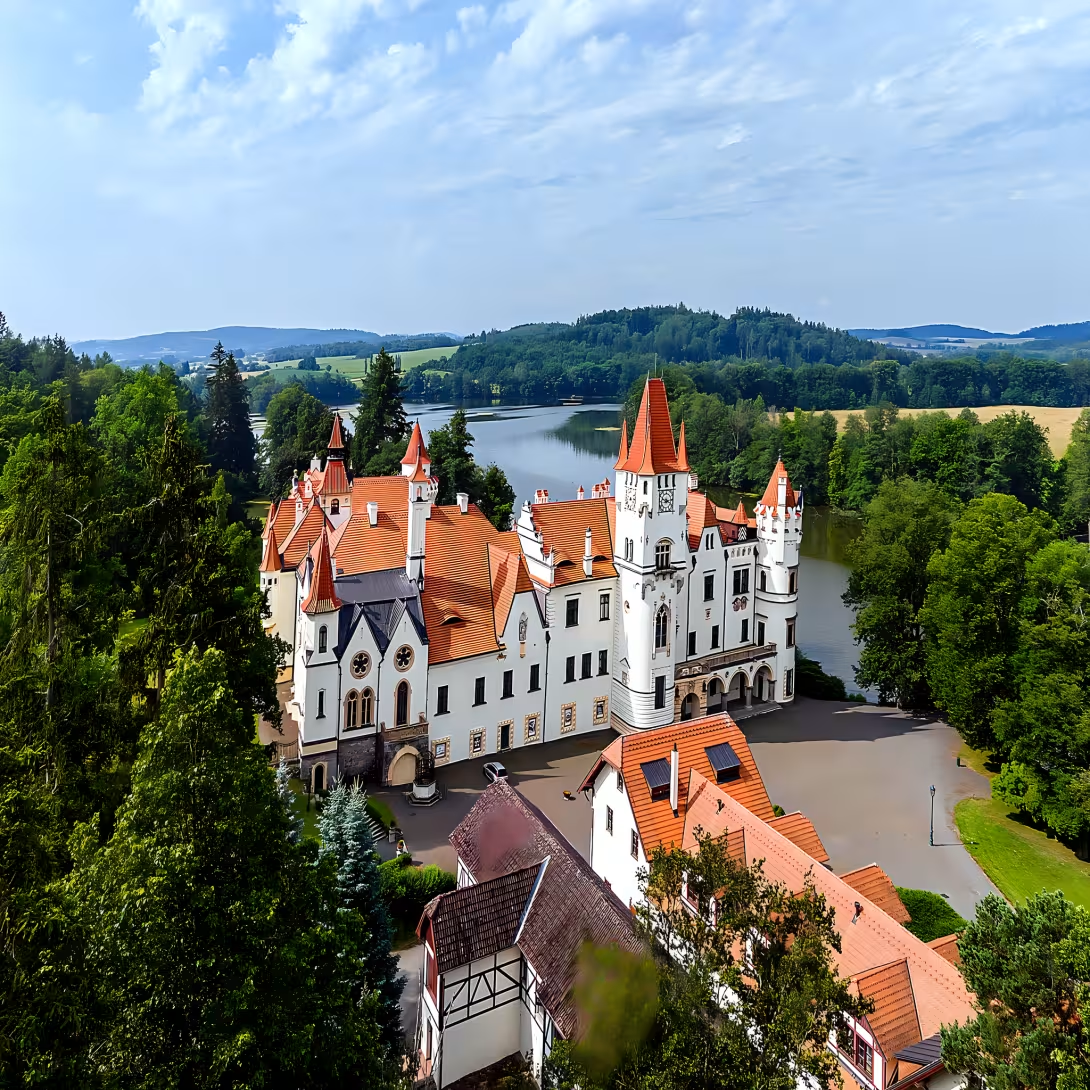
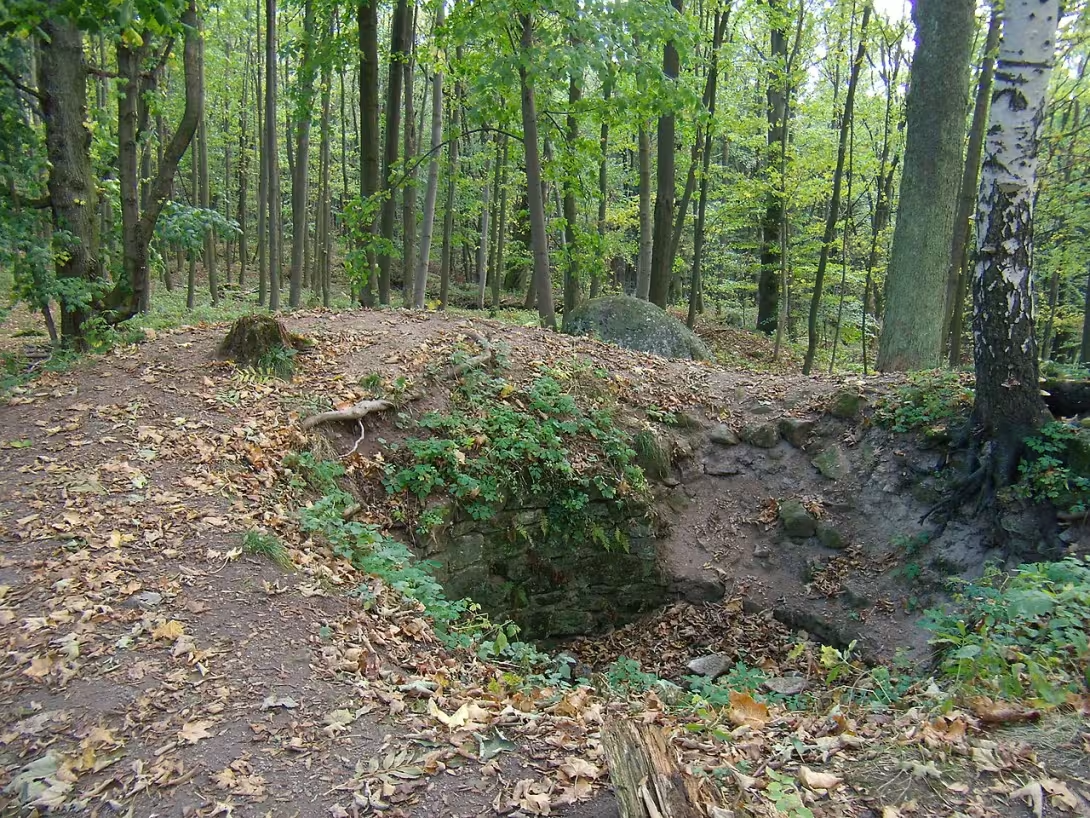
Potštejn is a ruin of the medieval castle near the town Žinkovy in the district of Pilsen-south. This monument of the 13th century stands on the island above the Swan pond at an altitude of about 530 metres.
The first written mention of the castle dates back to 1259. At the time of its creation, the Czech countries were part of the Luxembourg monarchy. In Europe, the feudal system dominated, and cities began to grow.
The castle area had a rectangular shape and with the exception of a short section in the north it was surrounded by a moat. The eastern part formed a foothold with a fortified wall. Behind the next moat west of the foothills was the castle core, headed by a round bergfrit. Along the western side of the core was built a sunken palace, while in the south there was a smaller palace wing.
The first documented owner of the castle was Půta z Potštejna from the Drslavice family, who worked as a purcrabi in Domažlice. The last owner, still known as the castle, was Bavor z Potštejna mentioned in 1414, although he was no longer resident in the castle. After Bavarian's death in 1437, the castle probably uninhabited inherited the Probe of Klen. In 1525, the object is already mentioned as desolate in documents.
Since 1963, the ruin has been protected as a cultural monument. The building is freely accessible by a yellow marked tourist route, which leads from the Zinkov Castle to the fork of the New Pond on Road II / 191.
Potštejn presents a valuable testimony to medieval architecture in the Pilsen region. Visiting this ruin offers the opportunity to know the history of local nobles in natural terrain.
Then and now
Drag the slider to compare how the landmark may have looked when it was built with the view today.
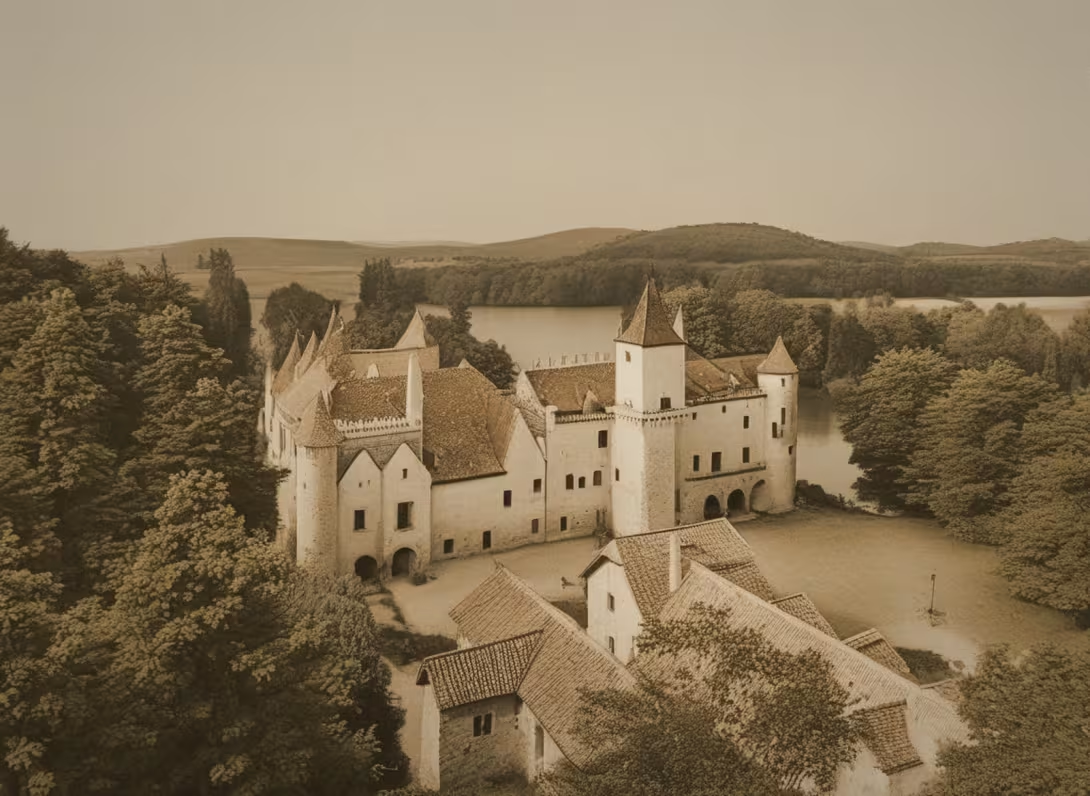
The historical appearance on the left is an AI-generated visualisation and serves as inspiration only.
Historical milestones
- 13th Century
- The creation of a medieval castle
- 1259
- First written mention of the castle
- 1414
- Bavor z Potštejna is mentioned as the owner of the castle
- 1437
- The nail from Klen inherits probably an uninhabited castle
- 1525
- The castle is mentioned in documents as desolate
- 1963
- The ruin is protected as a cultural monument
Architectural development
Potštejn had a rectangular area with a moat and a wall. In the east there was a foothold, while in the west there was a castle core with round bergfrit. The sunken palace stood along the west side of the core and the smaller palace wing was located along the south side.
Historical events
- 1259
- First written mention of the castle.
- 1414
- Bavor z Potštejna is the last owner to write by castle.
- 1437
- After the death of Bavarian of Potštejna he inherited the Probe of the Klen Castle.
- 1525
- The castle is mentioned as desolate.
Owners
The first known owner of the castle was Půta z Potštejna (1259). The last owner who wrote according to the castle but no longer lived on it was Bavor z Potštejna (1414). After his death in 1437, he inherited the Nail from Klen. In 1525, the castle is mentioned as desolate.
Points of interest
- The first written mention of the castle dates back to 1259. - The 13th century monument stands on the island above the Swan pond at an altitude of about 530 metres. - The castle core at the head of the round bergfrit had a covered palace built along the west side. - The first documented owner of the castle was Půta z Potštejna from the Drslavice family. - Since 1963, the ruin has been protected as a cultural monument.
Guide
Show guide text
This text was created by artificial intelligence and has not been editorially reviewed. It may contain inaccuracies.
Welcome to the ruins of Castle Potštejn. Now that you've put on your headphones and stood before these silent witnesses of ancient times, allow me to show you the history of this fascinating place. Take a deep breath and feel the air over the city Žinkovy. Right now you are at an altitude of approximately five hundred and thirty meters, on a strategically located sharpness, which provided the castle with natural protection and incredible insight over the surrounding countryside. If you look down, you will see the Swan pond, whose level reflects the sky and the castle ruins above you in quiet days. It is a place where nature and history intersect in complete harmony and where even today, after centuries, you feel special peace and respect for the past.
Let us now move together in time deep into the Middle Ages, into the 13th century when Potštejn was created here. Imagine the time of the knights, the castle lords and the constant building of the fortifications, which were to serve as a safe harbor and a symbol of power. The first written mention of this castle dates back to 1259, giving us a clear idea of how long this place has been guarding the area. At that time the castle was in full bloom and served as an administrative and defence centre. The first documented owner who left his mark in these walls was Půta z Potštejna. It was he and his followers who formed the basic identity of this place and breathed life into it at a time when medieval Europe was full of changes and constant conflicts.
Now, please pay attention to the architecture itself that you see before you. Although today the castle exists only as a ruin, it is still possible to read in its outlines the original plan of the builders. Note that the castle area had a basic rectangular shape. This geometric simplicity was practical and effective at the time. Most of the area was carefully fortified by a deep moat, which was designed to prevent enemies from easy access to the walls. If you look at the north side, you'll find that the moat is missing in the short section, which was probably a strategic choice or a result of later landscaping.
Now let's move on to the very heart of the castle, to its core. Look at the remains of the building that once dominated the entire complex. The dominance of the castle core was the round bergfrit. Bergfrit was the safest place in this type of castle, the last defense bastion the inhabitants could have resorted to in the event of an attack. Imagine how the guards were watching the horizon from the top and watching anyone approaching the castle from a distance. Along the western side of the castle core was built an understacked palace. This was where the normal life of the castle court took place, where important things were involved and where the owners of the castle rested. The basement of the palace bears witness to the ambitions of builders and to the effort to create a space that was not only safe but also functional for the needs of the food storage and storage.
When we think about the people who lived here, we can't ignore the key personalities associated with Potštejn. In addition to the above mentioned Půty from Potštejna, Bavor z Potštejna, which is mentioned in 1414 as the owner of the castle, appears in the anals. Imagine Bavarian walking through these quests and planning to manage his estate. The history of the castle, however, is full of breakthroughs. In 1437, the castle is inherited by the Klen Probe. However, it is very likely that at that time the castle was no longer fully inhabited and was slowly beginning to lose its original meaning. It is fascinating to think about how the castle's role changed from time to time, from the proud seat of the nobles to a place that gradually forgot generations.
And here we come to the most mysterious part of the Potštejn story. In 1525, the castle is mentioned as desolate in documents. This is the moment when the living organism, full of voices, the smells of the kitchen and the metal ringing of the weapons, became a quiet space that began to slowly take over nature. Why did they leave the castle? Whether it was economic reasons, a change of strategic importance in the landscape, or a personal tragedy of owners, remains a question that any visitor can ask himself. This stage of the wasteland lasted centuries, during which the castle slowly collapsed and became part of the landscape, until finally in 1963 the ruin was officially protected as a cultural monument. It is this recognition that has ensured that the castle has not completely collapsed and that we can stand here today and remember its glory.
Stop for a moment in silence. Feel the atmosphere of this place. Imagine the contrast between the noisy medieval castle and today's room that exists here. It's a strange feeling to know that you're standing in a place that was once the center of power, and today it's a place for contemplation and walking. Look again at the outlines of the castle core and the ruins of the palace. Though the roofs and windows are missing, the wall itself tells the story of courage, ambition, and the inevitable of time.
I now invite you to take a slow look around the premises. Go through the space where there once was a moat, and try to imagine how hard it was to overcome these obstacles. Walk around the foundations of the sunken palace and perceive the stability of the stone that has survived for hundreds of years. Let yourself be guided by your intuition and examine every corner of this ruin. Potštejn is not just a bunch of stones, it's an open history book waiting for you to read it with your eyes and thinking.
Thank you for joining me on this short journey in time. I hope this trip to the medieval world near Zinkov near Pilsen has brought you new knowledge and inspiration. Before you leave, take a last look at the Swan pond and say goodbye to the silence of Castle Potštejna. I wish you a pleasant rest of the day and many other beautiful experiences while exploring our historical monuments. Goodbye.
Tips for visitors
For the best experience we recommend a visit in late afternoon hours, when sunlight best highlights the structure of ruins and creates interesting shadows. The monument can be reached on foot on the yellow tourist route, which leads from the castle in Žinkovech. Plan your transport to the area by car or public transport; Please check the current connection in the search engine.
During the tour, wear comfortable shoes suitable for field and between ruins. For families with children, walking around the Swan pond and exploring the historical area is a great way to spend time outdoors in nature.
If you take pictures, you can get the best views from places that offer a view of the ruins in combination with the surrounding pond. The most suitable light for scanning historical buildings is during the golden watch, i.e. shortly before sunset.
After visiting the castle Potštejn, you can take advantage of the proximity of other historical monuments and visit the Zinkovsky castle, which is located in close proximity.
Frequently asked questions
Can the monument be visited?
This is a ruin. Such sites are often freely accessible, but some can only be visited with a guide or are closed for safety reasons. We have not verified the current situation – take care and respect any restrictions.
Where is the monument?
Location: Žinkovy, Plzeňský kraj. The map on this page shows the exact spot.
Why is the monument protected?
It is listed in the Central List of Cultural Monuments of the Czech Republic as a cultural monument (register no. 1000147502).
Businesses nearby
Do you run a restaurant, accommodation, shop, museum, rental, wellness or other visitor service near this monument? Show yourself directly to the people heading to it — this is how they will see you in the app and on the web:
Nearby
The ruin of the castle lies above the Swan pond and is accessible by a yellow marked tourist route from the Zinkov castle. There are other historical monuments such as Zinkovsky Castle in the area.
Accommodation nearby
Themed route
Thematic cruise route: Potštejn and surroundings
1. Zinkovsky Castle - * Type: * Historical monuments - * Why is it worth visiting: * Zinkovsky Castle is a beautiful representation of Baroque architecture with a rich history. Its ground plan and interiors will welcome you to the past, where storybook figures from Czech chronicles could appear.
Potštejn - * Type: * The ruin of the castle - * Why is it worth visiting: * This historic ruin will take you to the era of medieval walls and defense systems. The views from nearby rocks to the Swan pond are unforgettable, which makes this goal ideal for historical and natural lovers.
3. Route from Zinkov Castle to Potštejn - * Type: * Tourist route - * Why is it worth visiting: * Yellow marked tourist route offers a beautiful view of the landscape and an opportunity to explore the local flora and fauna. The route is ideal for a relaxing walk that will lead you directly to the main destination - the ruins of castle Potštejn.
This route offers a combination of historical monuments and beautiful views of the surrounding countryside, making it an ideal choice for weekly weekend trips.
Seasonal recommendations
Spring - After a winter's sleep, the Potštejn wakes up green and first flowers. Sun rays penetrate between broken stones and create fine shadows that underline the historic atmosphere. The traffic is still low in this period, so you can walk through the area in peace. We recommend to wear a light jacket and solid shoes because the soil can still be wet and slippery. The best time is early morning when the light is most dispersed and the temperature is pleasant.
Summer - In the summer months, the Potštejn is surrounded by a lush leaf crown, which provides a pleasant shade during the hot afternoon. The sunlight then dramatically illuminates the stone remains, creating a contrast game of light and shadow. In the main summer season, however, more visitors are gathered on the site, especially in the afternoon. We recommend arriving early in the morning or late in the afternoon when the crowds are smaller. Dress in breathable clothes, remember your hat and plenty of fluids, because temperatures can be high.
Autumn - When leaves change colors, the ruins gain a golden and red touch that underlines its ancient character. Weak sunlight and more frequent fog create a mysterious atmosphere, ideal for photography. In autumn weeks the attendance is medium, but the rains may be more frequent. It's convenient to put on layered clothes and a waterproof jacket so you don't get surprised by a sudden shower. The best time is the late morning when the sun still lights up the scene enough, but the temperatures are getting colder.
Winter - In winter, Potštejn will be wrapped in a quiet snow that will highlight the structure of ruins and give the place a mystical look. Light falls at an angle in shorter days, creating long shadows and dramatic contrasts. Don't forget to wear warm clothes, hat, gloves and tight shoes with anti-slip soles because the stones are often frozen and slippery. An ideal afternoon visit is when the sun still hits the top of the castle and provides the best lighting.
Visualizations and artistic views


The visualisations are generated by artificial intelligence and serve as inspiration.
Photos from the area
Real photos taken near the monument

Zdroj a licence jsou uvedeny u každého snímku.
Tips from visitors
No tips yet. Be the first!
Log in and add your tip.
Sources and literature
Photos: Krabat77 / CC BY-SA 3.0, rozlišení zvýšeno umělou inteligencí — Wikimedia Commons. The author and licence also appear when you hover over the image.
Faktickým podkladem tohoto textu byl článek na Wikipedii, jehož autory jsou přispěvatelé Wikipedie. Článek je dostupný pod licencí CC BY-SA 4.0.
Location on the map


Příběhy a pověsti
Legendy, pověsti a příběhy spjaté s touto památkou

Fotografie návštěvníků
Zatím žádné fotografie. Buďte první, kdo přidá fotografii z návštěvy!
Log in a přidejte svou fotografii nebo hodnoťte.
Za ověřenou návštěvu v aplikaci získáte víc bodů — poznáme podle GPS, že jste na místě.
Reviews and comments