



Kostel svatého Vavřince (Korolupy) Church
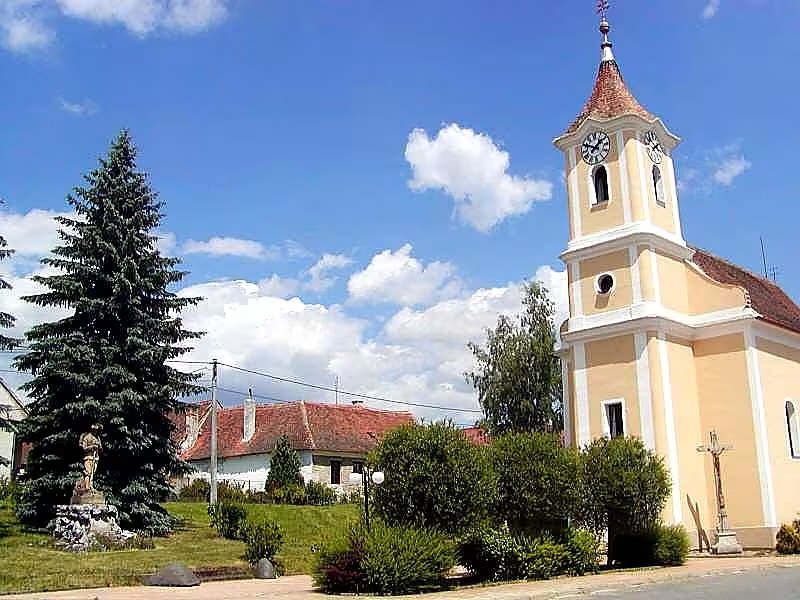
Some temples are raised like luxury palaces, others are born out of prayer and patience. The church of St. Lawrence in Corolops is certainly one of the others. The inhabitants of Korolup have been gathering for centuries in God's torment and praying on Sunday. For years, their community belonged to the abit parish, which meant that they didn't have their own clergyman. In 1786 the village management began to beg the bishop unsuccessfully for the right to establish its own parish. Only after 11 years, in 1797, could the building of the chapel start. It was festively completed on 2nd August 1798 and dedicated to St. Lawrence. But the first Mass was not until July 24, 1800. The cemetery with a decorative Baroque gate behind the village towards the Highlands was consecrated by the vicar in 1806.
The temple expanded with the growing needs of the parish. In 1853 the chapel was extended by sacristy, in 1860 followed by further building modifications. The repairs were also recorded by the historian Alois Hrudička in Topography of the Diocese of Brno for the year 1896. In 1861, the parish numbered 386 Catholics, of which fifty children were compulsory. Since 1938 it fell under the Bishop of Brno, Dean Vranov.
The temple's face determined the gifts of believers and benefactors. In 1857 he donated to the parish Augustine Beer, son of the Corolupa miller and himself Dean of the Austrian Waidhofen an der Ybbs, six thousand gold in securities. The Donation and Parish Collections gradually developed rich liturgical equipment - tabernacle with altar, paintings of St. Lawrence, gilded chandeliers, silver chalices and monstrators, silver lamps and tin candlesticks. The highlight of these efforts was the ceremonial consecration of the side altar on Sunday, 15 November 1896, which was created by the nojemite gilder Wenzel Heubl along with the statue of the Virgin Mary of Lurdes. The procession of school youth, firemen, clergy and leaders of the village passed from the parish to the church to the ceremonial mass of the Holy One.
Next to the temple building was created in 1857 parish building No. 58 - one-storey house with four living rooms. Today, the church of St. Lawrence in Korolopa remains a witness to the long journey of the faith of the mountain village, which turned from humble God's torment to a dignified temple with its cemetery and rich liturgical design.
Then and now
Drag the slider to compare how the landmark may have looked when it was built with the view today.
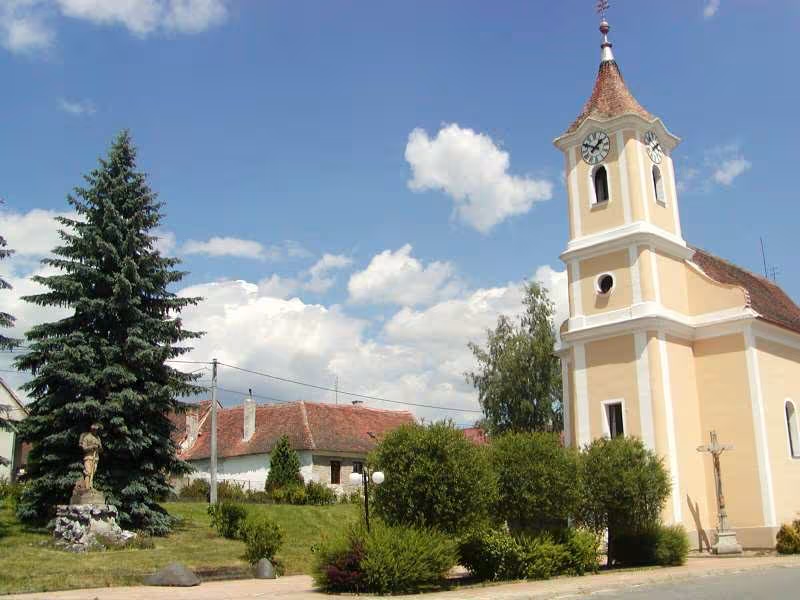
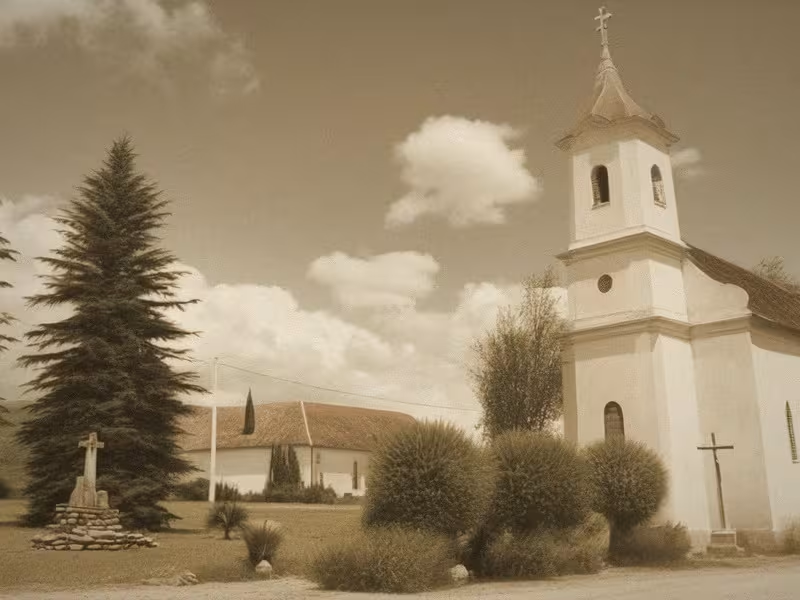
The historical appearance on the left is an AI-generated visualisation and serves as inspiration only.
Historical milestones
- 1798
- The founding year of the chapel of St. Lawrence, consecrated on 2 August 1798.
- 1800
- The performance of the first Holy Mass in a newly built chapel.
- 1806
- The ordination of a cemetery gate with a baroque stucco.
- 1853
- Enlargement of the sacristy chapel.
- 1896
- Ceremonial consecration of the side altar and statue of the Virgin Mary of Lurdes.
Architectural development
The chapel was built as a simple late Baroque building in the place of God's torment. In 1853 the sacristy was added, in the 19th century there were further modifications, such as the exchange and gilding of altars and the addition of the interior by artistic objects. The cemetery gate from 1806 is decorated with Baroque stucco. The church is built of bricks and stone, covered with shingles. Both external and internal modifications reflect the typical features of the late Baroque with elements of Classicism.
Historical events
- 1786
- The village Korolupy has been unsuccessfully requesting the establishment of its own parish, so far it is under the Bítov parish.
- 1798
- The completion and consecration of the chapel of St.
Owners
Roman Catholic Church (parish Korolupy) - since the church was founded
Points of interest
- The church of St. Lawrence was built after long years of pleading, as Korolupy belonged to the abite parish and did not have its own priests.
- The building of the chapel was only started in 1797 after eleven years of unsuccessful requests, completed and consecrated on 2 August 1798.
- The first mass was held here on 24 July 1800, two years after the completion.
The cemetery with the Baroque Gate was consecrated in 1806.
- The parish in 1861 was 386 Catholics, 50 of which were compulsory children.
Guide
This guide is narrated by a synthetic voice generated by artificial intelligence.
Show guide text
This text was created by artificial intelligence and has not been editorially reviewed. It may contain inaccuracies.
The parish church of Saint Lawrence stands in the centre of Korolupy and is among the cultural monuments of the Czech Republic. On its site previously stood a roadside shrine where the local inhabitants prayed every Sunday.
Korolupy had always belonged to the Bítov parish. From 1786 onwards the village repeatedly requested its own parish. Construction of the chapel could begin in 1797 and on August 2nd, 1798 it was completed and consecrated to Saint Lawrence. The first mass was celebrated in it only on July 24th, 1800. In 1806 the priest blessed the cemetery behind the village in the direction of Vysočany, to which leads a decorated Baroque gate. The chapel then received a sacristy in 1853 and further alterations followed in 1860 and 1896. In 1861 the Korolupy parish had 386 Catholics. In 1938 it fell under the Brno diocese and the Vranov deanery and consisted only of Korolupy itself.
A major role was played by a native son, Augustin Beer, son of the Korolupy miller. He became a dean and city priest in Waidhofen an der Ybbs and in 1857 donated six thousand guilders in securities to the village. The village undertook to build a rectory and school from the donation and to maintain the rectory and church permanently. Besides fields and meadows it had to deliver wheat, rye, oats, straw and firewood to it every year. The donation also provided an altar with a tabernacle, an image of Saint Lawrence and other paintings. In 1859 four panel paintings were added from the dissolved Augustinian monastery in Vratěnín. One of them was embroidered with silver.
Another donor gave the church six wooden gilded chandeliers. In 1897 priest Martin Sperka purchased from collections a positive organ, a small organ with four stops.
On Sunday, November 15th, 1896 the side altar with a statue of Our Lady of Lourdes was ceremonially blessed. It was made and gilded by Wenzel Heubl, a gilder from Znojmo, and donated by the Korolupy couple Martin and Katharina Blei. From the rectory to the church went a procession of schoolchildren and teachers, girls dressed in white, volunteer firefighters, clergy and representatives of the village. The mass was celebrated by the priest from Lubnice and the altar was blessed by priest Sperka assisted by priests from Bítov and Lubnice. At the end the pupils sang under the direction of headmaster Ernest Körner.
The village built the rectory in 1857 as a two storey building with four living rooms. However, the furniture that the village had promised did not suit the clergy, so they had to buy new furniture at their own expense.
Frequently asked questions
Can the monument be visited?
Religious buildings are usually open mainly during services; at other times a visit is normally arranged with the parish or the operator. We have not verified specific times.
Where is the monument?
Location: Korolupy, Jihomoravský kraj. The map on this page shows the exact spot.
Why is the monument protected?
It is listed in the Central List of Cultural Monuments of the Czech Republic as a cultural monument (register no. 14576/7-6479).
For kids
Imagine going back 236 years until this church of St. Lawrence was still young and full of life in Corolupa. There lived a people who tried to live by the Bible and stick to Christian values.
There were peasants here who took care of fields and forests, merchants who imported goods from other cities and women who went to workshops and sewn clothes for families. It was a time when people didn't know about new technologies and lived by traditions and customs.
Businesses nearby
Do you run a restaurant, accommodation, shop, museum, rental, wellness or other visitor service near this monument? Show yourself directly to the people heading to it — this is how they will see you in the app and on the web:
Accommodation nearby
Themed route
1. Bítov Chateau, Baroque mansion: Offers rich history and extensive gardens. Located about 5 km from Korolup. 2. Church of St. Lawrence, Church: The main destination of the trip in the village Korolupy. 3. Vratenín monastery, abolished Augustinian monastery: A historic place about 10 km away, which is connected to Corolupian paintings.
Seasonal recommendations
Spring The church of St. Lawrence in Korolupy is awakened to life with the arrival of spring, when the sun's rays illuminate its stone walls with golden light and blooming apple trees in the surroundings create a soft, pastel atmosphere. The green lighting of the inner church is also specific, which in the morning penetrates the windows and creates a slightly blue touch on the altar. Nature is awakening to life - meadows flourish, air smells of wet ground, and birds sing in trees. For a visit is the ideal time in the morning when the church is still calm and you can enjoy a quiet moment between historical walls. Light clothes with raincoats are recommended, as spring weather is variable - the sun alternates with sudden rain. If you plan to visit in the main spring season, avoid Saturdays when churches are often visited by families.
Summer In the summer months the church of St. Vavrnice comes to life with sunlight, which reflects white plaster and creates contrast with dark stone elements. The atmosphere is warm and tempting, as the surrounding forests and fields are green and full of life, while the church has pleasant shielding from high ceilings. The lighting is also specific in the evening, when the sun sets behind the tower and creates golden shadows on the facade. In the main summer season, however, you need to count on a higher attendance rate, so go as early as possible in the morning, ideally before 9:00 to enjoy your peace of mind. Suitable for light but protective clothing - hat or shawl against the sun and comfortable shoes for walking around. If you go to visit in late afternoon, you can enjoy pleasant shielding under trees and cooler air.
Autumn The autumn visit to the church of St. Lawrence offers a unique atmosphere where golden and red leaves on trees create picturesque contrasts with stone architecture. A soft, scattered light, which penetrates glass windows and creates fine light and shadow games on the altar. Nature is changing - the fields are already harvested, the air smells of burnt leaves and the birds are preparing for departure. In November, when St. Catherine's Day approaches, the church can be visited by locals, so it is better to leave on Monday or Tuesday. Dress in warmer layers - autumn weather is cold but not necessarily rainy, so a light sweater or jacket is enough. The walk around is pleasant, as forests and fields offer picturesque views.
Winter The winter visit to the church of St. Lawrence is particularly quiet and mysterious, as the snow cover on the roof and surrounding area creates a peaceful, white landscape. A soft, scattered light is also specific, which penetrates glass windows and creates fine, silver shadows on the altar. Nature is calm and quiet - forests are covered with snow, air smells of needles and birds are less active. In advent time the church can be visited more, so it is better to go on Monday or Tuesday. Dress in warm layers - it gets cold in winter, so it is advisable to wear a warm jacket, gloves and hat. The walk around is pleasant as the snow landscape creates a unique, peaceful atmosphere.
Visualizations and artistic views


The visualisations are generated by artificial intelligence and serve as inspiration.
Atmosphere of the place
This atmospheric visualisation of the place and period was generated by artificial intelligence. It is not real footage of the location.
Tips from visitors
No tips yet. Be the first!
Log in and add your tip.
Sources and literature
Photos: Lenka Lyalikoff / CC BY-SA 3.0 — Wikimedia Commons. The author and licence also appear when you hover over the image.
Faktickým podkladem tohoto textu byl článek na Wikipedii, jehož autory jsou přispěvatelé Wikipedie. Článek je dostupný pod licencí CC BY-SA 4.0.
Location on the map



Příběhy a pověsti
Legendy, pověsti a příběhy spjaté s touto památkou
Fotografie návštěvníků
Zatím žádné fotografie. Buďte první, kdo přidá fotografii z návštěvy!
Log in a přidejte svou fotografii nebo hodnoťte.
Za ověřenou návštěvu v aplikaci získáte víc bodů — poznáme podle GPS, že jste na místě.
Reviews and comments