



kostel svatého Vavřince (Kostelec) Church
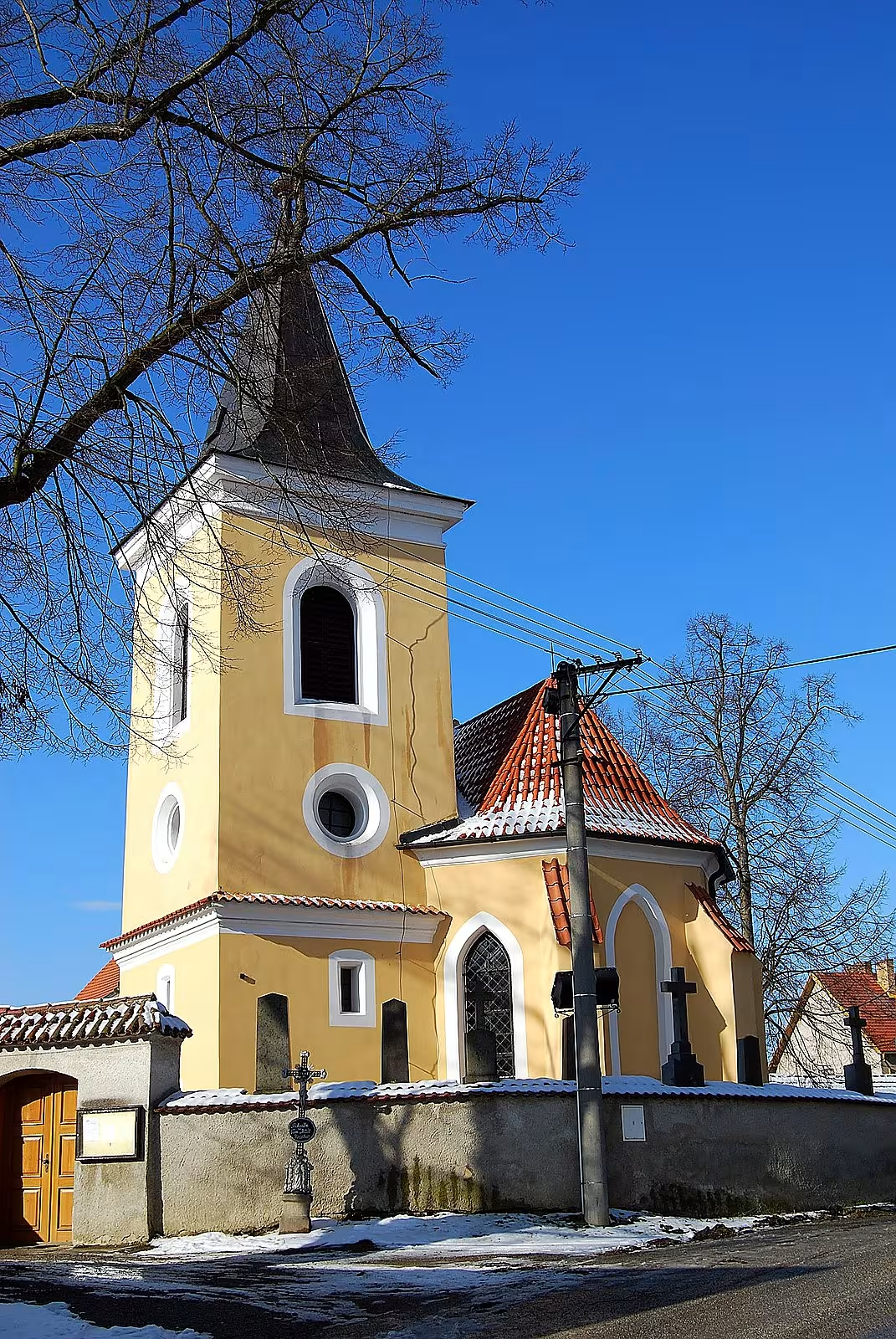
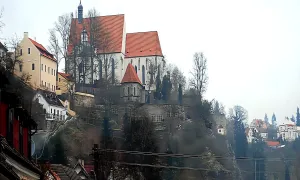
In the part of Hluboká nad Vltavou called Kostelec there is a church of St. Vavřinec, which forms a significant dominant part of its landscape. The name of the village itself refers precisely to the existence of this church. Faithful historical sources suggest that the church belonged to the archidiaconate of Bechynski, with the village itself falling under the estate of Lomnický. Spiritual and legal authority over the church was held by the rulers of Greece and Jaroslavic.
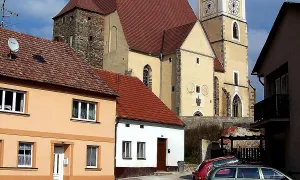
The church was built in an early Gothic style around 1300. It is a single-boat construction with a triangular presbytery, which has been reinforced by the supports in the end. From this oldest Gothic time, a decorated portal leading to the ship has been preserved, which until today testifies to the craftsmanship of medieval builders. The construction gradually developed. In the second half of the 16th century, a tower was set up, with which a boat with a snail staircase was connected. During the 18th century, the church underwent a major reconstruction in the Baroque style which gave it a more consonant appearance with an aesthetic mood of its time. The current appearance of the tower dates back to 1862, when the skeleton recovers its appearance.
The church is surrounded by a cemetery surrounded by walls and represents an important place for a fond memory. Its crypt consists of members of the influential family of the royal huntsman Ponešicki of Ponešice. Here was preserved a set of their Renaissance tombstones, at least one of which, the tombstone of Jan Ponešický from 1580, remains legible. The members of the nobility family of Budkovsky of Budkov, the owners of the fort and court in Nemčice in Líšnice, are also buried here.
The fate of the church bells tells the story of the 20th century. Originally, the church had three bells; The bell tower stood near the church until 1867. This original equipment preserved a bell from 1565 with significant dimensions - a diameter of 90 centimetres and a height of 75 centimetres. In 1936, he got this new heart to the bells. The other two bells were seized during the First World War. After that, new bells were taken, but they shared a sad fate and were confiscated during World War II.
Today the church has been protected as a cultural monument since 3 May 1958. The architectural layer of its evolution from Gothic through Renaissance and Baroque to New Testament, together with rich iconography of buried personalities, makes it a perfect place to study the history of Central Europe.
Then and now
Drag the slider to compare how the landmark may have looked when it was built with the view today.
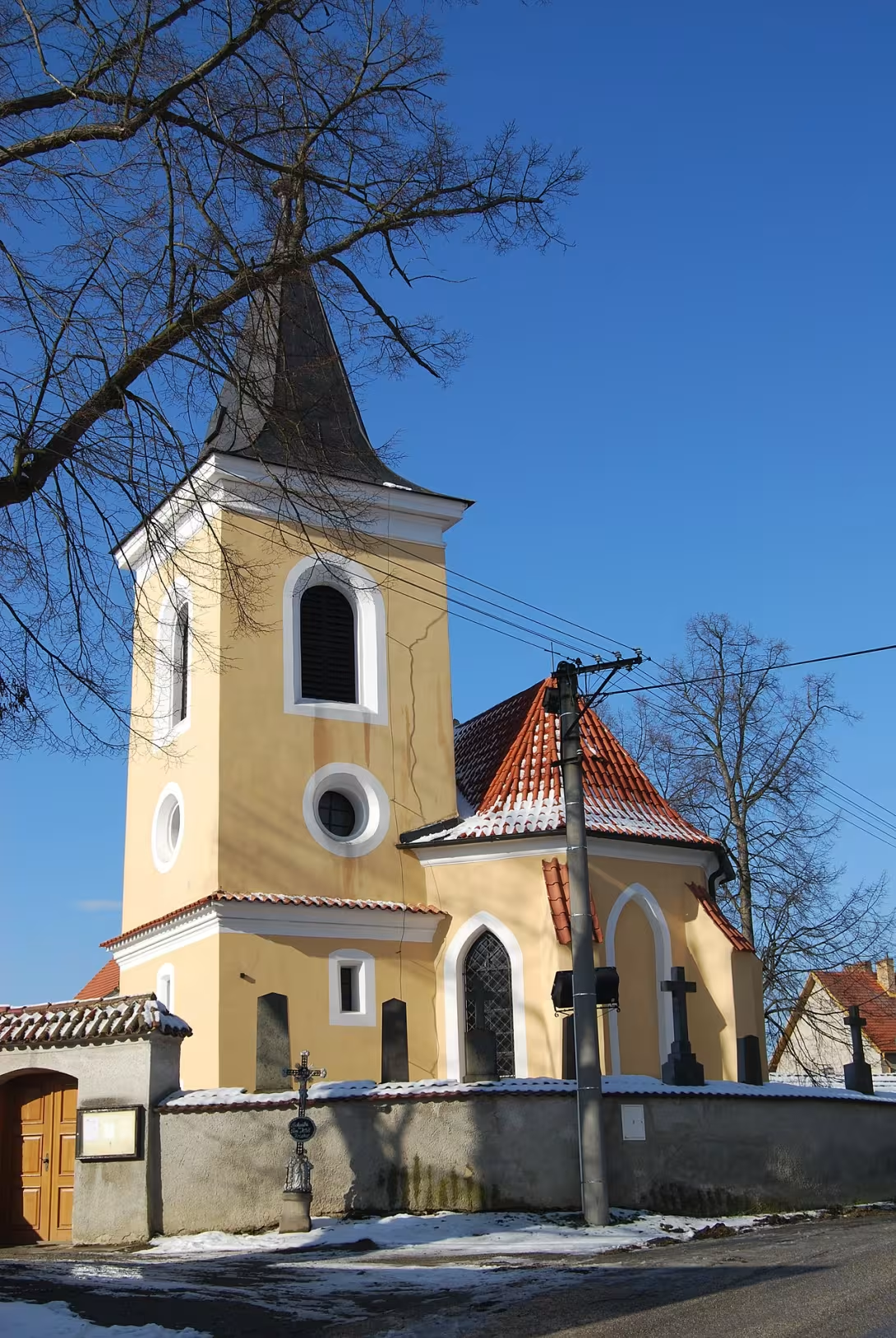
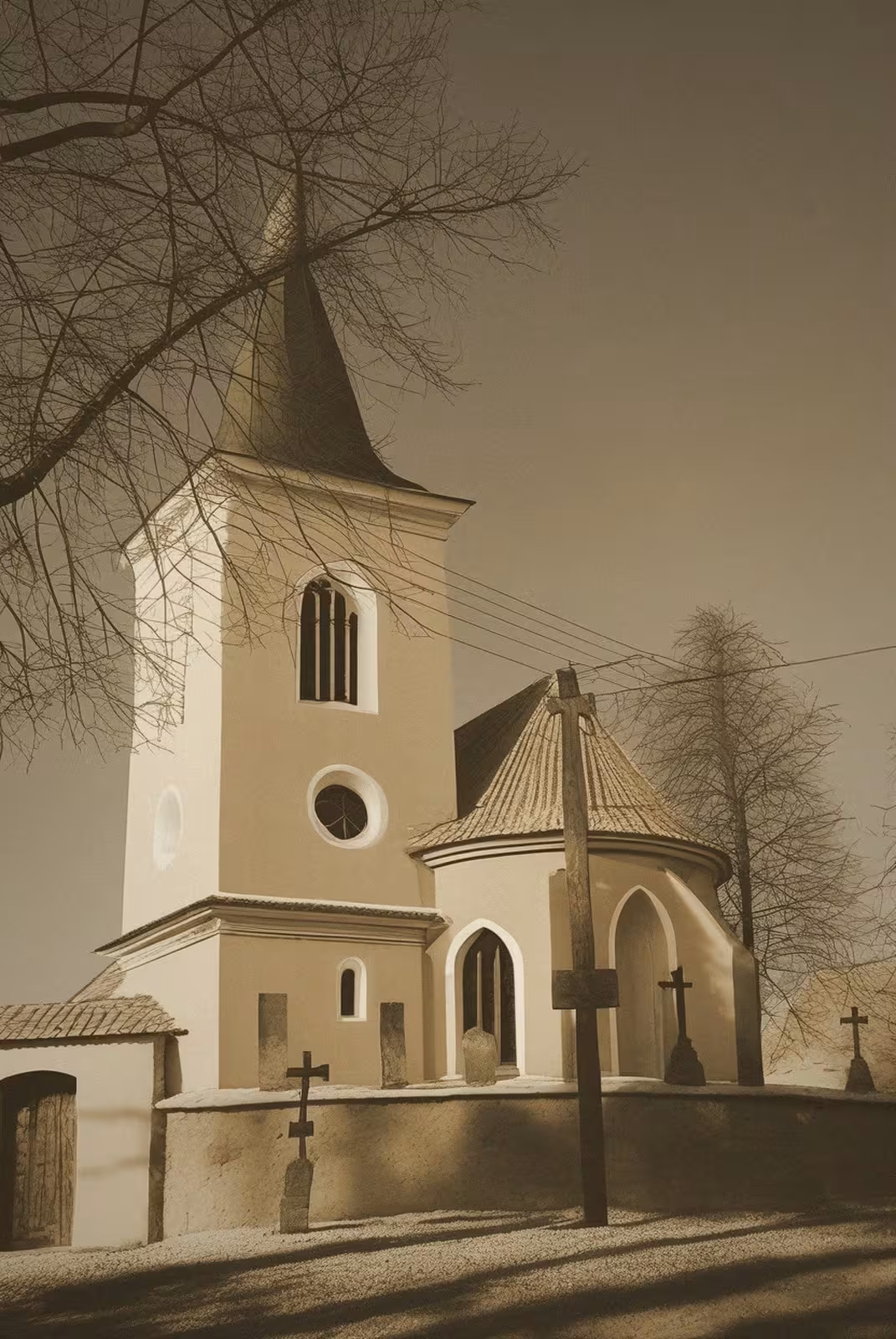
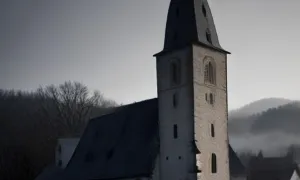
The historical appearance on the left is an AI-generated visualisation and serves as inspiration only.
Historical milestones
- 1300
- Status of the original early Gothic ship with presbytery.
- 1565
- It's a 1565 preserved bell.
- 1862
- Complete the current form of the tower.
- 1958
- Writing the church into a list of cultural monuments.
Architectural development
The original early Gothic ship with a tripod ended by a presbyterer and a back-up at the end comes from the turn of the 13th and 14th century. In the second half of the 16th century, a prism tower was built with a boat port and a snail staircase. In the 18th century there was a Baroque reconstruction that gave the church a contemporary appearance. From the original Gothic phase, only a sharp portal to the ship was preserved.
Historical events
- 1300 (approximately)
- The foundation of the original early Gothic building of the church of St. Lawrence.
- 1565
- The sound of a bell that has been preserved to the present day.
- 1862
- The completion of the present form of the church tower.
- 1958
- Writing the church into a list of cultural monuments.
Owners
The church originally belonged to the estate of Lomnický and was in the jurisdiction of the flags of the Greeks and Jaroslavice. Since the 14th century he has been part of the archidiaconate of Bechynski.
Points of interest
- The church of St. Lawrence in Kostelec was founded in the early Gothic style around 1300 and is a one-ship building with a triangular presbytery.
- A Gothic decorated portal from the 13th century has been preserved, which proves the high craftsmanship of medieval builders.
- In the 16th century, a tower was built with a boat port and a snail staircase.
- In the 18th century the church underwent a Baroque reconstruction which significantly influenced its present appearance.
- In the crypt of the church are buried members of the family of Ponešicki from Ponešice, including the tombstone of Jan Ponešický from 1580.
Guide
This guide is narrated by a synthetic voice generated by artificial intelligence.
Show guide text
This text was created by artificial intelligence and has not been editorially reviewed. It may contain inaccuracies.
The Church of Saint Lawrence is a striking landmark of Kostelec, now part of the town of Hluboká nad Vltavou. The name of the village itself suggests that it was named after this very church. The building is surrounded by a cemetery, which is enclosed by a wall.
According to historian Jarolím Mářík, the church, like all other churches in the Hluboká region, belonged to the Bechyň archdeaconry. The village was part of the Lomnický estate, but the church fell under the authority of the lords from Řeky and Jaroslavice.
Originally, it is an early Gothic single-nave church, built around the year 1300. The nave is followed by a three-sided presbytery, whose end is supported by buttresses. From the Gothic period, a pointed portal to the nave has been preserved. The church was later rebuilt many times. The tower was added in the second half of the sixteenth century and a spiral staircase from an extension of the nave leads into it. In the eighteenth century, the church underwent a Baroque renovation. The current appearance of the tower dates from 1862.
The church is also the final resting place of two families. Members of the Poněšický family from Poněšice, who served as royal huntsmen, are buried in the crypt. Renaissance tombstones of the Poněšický family have been preserved in the church. The inscription on the tombstone of Jan Poněšický from 1580 has remained legible. Members of the aristocratic Budkovský family from Budkov, who owned a stronghold and farmstead in Němčice in the cadastral territory of Líšnice, are also buried here.
The fate of the bells is interesting. The church originally had three bells and a bell tower stood next to the church until 1867. Only one bell has survived, cast in 1565. It measures ninety centimeters in diameter and seventy-five centimeters in height and was given a new clapper in 1936. The remaining two bells were confiscated during the First World War. After the war, the church acquired two new ones, but they did not last either, as they were confiscated during the Second World War.
Since May 3, 1958, the Church of Saint Lawrence has been protected as a cultural monument.
Tips for visitors
The best time to visit the church of St. Lawrence is during the morning hours when the sunlight is mild and the church interior radiates a calm atmosphere. In the summer months it is ideal to avoid the noon hours when the church can be hot and the presence of a large number of visitors. On the contrary, in winter the visit is pleasant in the quieter morning hours, as the outdoor light complements the inner lighting of the church and creates picturesque contrasts.
Transport is ensured both by car and by public transport. The current connection and availability of buses can be found in the traffic search engine.
Take comfortable clothes and shoes when visiting the church, as there are often stairs or uneven terrain in the interior. It is also important to take a small towel or towel with you, because some parts of the church may be wet or unclean. If you are planning a longer stay, also bring water and a light snack, as it is not always easy to find suitable eating options in the surroundings.
Photography in the church is allowed, but it is recommended to search places with natural light such as window openings or the entrance part of the church. The best time for photography is early morning or late afternoon when light creates beautiful shadows and illuminates detailed architectural elements. In the interior avoid flashing of lightning to avoid damage to sensitive surfaces.
In the vicinity of the church of St. Vavrnice, the castle Hluká and its extensive gardens, which are only a few minutes away by car, are worth visiting. Another interesting feature is the natural beauty of the river Vltava and surrounding forests, which offer opportunities for walks and picnics.
For families with children, a visit to the church of St. Lawrence is particularly interesting because of its historic atmosphere and the possibility of exploring history. Children can see ancient frescoes and statues that fascinate them with their appearance. Children can then run around and discover natural beauties such as forests and the Vltava River.
Frequently asked questions
Can the monument be visited?
Religious buildings are usually open mainly during services; at other times a visit is normally arranged with the parish or the operator. We have not verified specific times.
Where is the monument?
Location: Kostelec, Jihočeský kraj. The map on this page shows the exact spot.
Why is the monument protected?
It is listed in the Central List of Cultural Monuments of the Czech Republic as a cultural monument (register no. 46975/3-210).
For kids
Imagine going back to a time when the Church of St. Lawrence in Kostelec was young and beautiful, as if it were in play. The village Kostelec was part of the Lomnický estate and the church was under the authority of the flags of the Greeks and Jaroslavice.
How did it look here? There were people here who lived for a living in agriculture and livestock farming. They were villagers who loved their homes and families. The church was their sanctuary where worship and religious activities took place.
Businesses nearby
Do you run a restaurant, accommodation, shop, museum, rental, wellness or other visitor service near this monument? Show yourself directly to the people heading to it — this is how they will see you in the app and on the web:
Events nearby
Zdroj akcí: otevřená data měst a obcí ČR (Národní katalog otevřených dat) a kalendář akcí Národního památkového ústavu.
Nearby
In the vicinity of the church is located Hluká nad Vltavou, which is known primarily thanks to Hluká Chateau and its extensive gardens. Natural beauty such as Vltava and surrounding forests are also nearby.
Accommodation nearby
Trips and activities nearby
Guided tours, tickets and activities nearby from GetYourGuide
Affiliate link: if you buy from the partner, we may receive a commission. The price for you does not change.
Search tours and activities →Themed route
Thematic cruise route from the village Kostelec
1. Church of St. Lawrence (Kostelec) - * Type: * Religious monument - * Why is it worth visiting: * This church is an important historical and architectural monument that attracts attention to its original Gothic style. It is an ideal place for those interested in the history of the Czech church and want to enjoy a quiet moment in a picturesque environment.
2. Castle Deep over Vltava - * Type: * Historical chateau - * Why is it worth a visit: * Known for its impressive architectural solutions and extensive gardens, it is one of the most famous cultural heritage of the South Bohemia region. Here you can see the exhibitions and enjoy beautiful views of the surrounding countryside.
3. Vltava - * Type: * River - * Why is it worth a visit: * Walking along the banks of the Vltava offers an opportunity to relax and enjoy natural beauty. It's an ideal place for a picnic or just for a moment of peace while you look at the smooth flow of the river.
4. Ambient forests - * Type: * Natural area - * Why is it worth a visit: * These forests offer the opportunity to explore nature, be above ground and enjoy quiet moments. They are ideal for short walks or picnics away from urban noise.
This route offers a combination of cultural and natural experiences, making it the perfect choice for a day trip.
Seasonal recommendations
Spring: In the spring period, the church of St. Lawrence in Kostelec is transformed into an extraordinary place with wonderful lighting, when the sun's rays penetrate through the stained windows and color the interior. At this time the nature of the surrounding valley is in full bloom, which gives the visit a romantic atmosphere. It is recommended to visit the church in the morning or in the middle of the day when there are fewer people and can enjoy a quiet moment. Enough sun protection, like gloves and a hat, might be useful.
Summer: For years, the church of St. Vavrnice becomes a popular destination for visitors in the main summer season. The lighting is full of life when the sun illuminates the interior and makes the stained glass appear even more colorful. The atmosphere is revived, with many people enjoying the church's outdoor spaces. For the most comfortable experience we recommend arriving in the early hours of the morning to avoid crowds and enjoy a peaceful visit. Don't forget light clothes and protective silicon.
Autumn: In autumn, the church of St. Vavřenka gains an atmosphere full of melancholy and calm, which is particularly evident at the time of afternoon shadows. Leaves falling into the surrounding forests provide a colourful view of the church which turns into an exciting landscape. This period is ideal for visiting in quiet hours when fewer people visit the memory. Get dressed as warm as possible and prepare for colder weather.
Winter: The winter visit to the church of St. Lawrence offers a unique atmosphere, where the sunlight penetrating through the stained glass creates a warm and peaceful space. Due to cold weather, the opening time is shorter, which means you should leave early in the morning or on the middle of the day when the church will be less visited. It is important to come up with warm clothes and protective pants to enjoy a visit without discomfort.
Visualizations and artistic views


The visualisations are generated by artificial intelligence and serve as inspiration.
Photos from the area
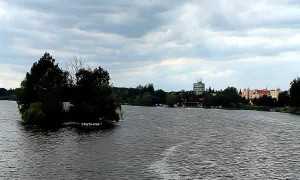
Real photos taken near the monument


Zdroj a licence jsou uvedeny u každého snímku.
Atmosphere of the place
This atmospheric visualisation of the place and period was generated by artificial intelligence. It is not real footage of the location.
Tips from visitors
No tips yet. Be the first!
Log in and add your tip.
Sources and literature
Photos: Richenza / CC BY-SA 3.0 — Wikimedia Commons. The author and licence also appear when you hover over the image.
Faktickým podkladem tohoto textu byl článek na Wikipedii, jehož autory jsou přispěvatelé Wikipedie. Článek je dostupný pod licencí CC BY-SA 4.0.
Location on the map

Příběhy a pověsti
Legendy, pověsti a příběhy spjaté s touto památkou
Fotografie návštěvníků
Zatím žádné fotografie. Buďte první, kdo přidá fotografii z návštěvy!
Log in a přidejte svou fotografii nebo hodnoťte.
Za ověřenou návštěvu v aplikaci získáte víc bodů — poznáme podle GPS, že jste na místě.
Reviews and comments