



kostel svatého Vavřince (Krasonice) Church
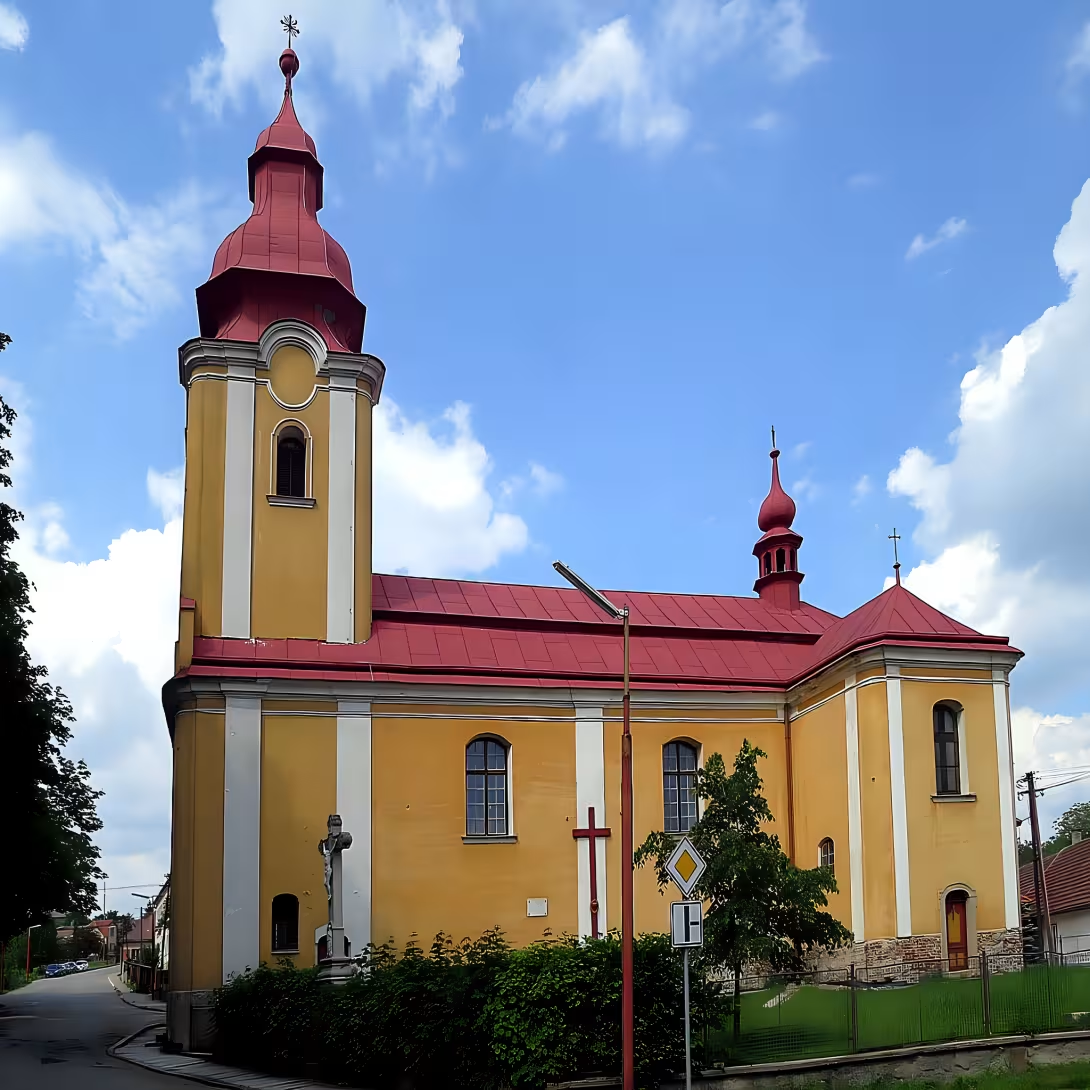
In the centre of the village Krasonice there is a parish church of St. Vavřinec, a late Baroque building with a rectangular conclusion and a characteristic quadruple tower with rounded corners at the front. The building is covered with a Mansard roof, and the tower carries the original helmet. The church is protected as a cultural monument of the Czech Republic and its rich history links the Gothic medieval beginnings with the gradual adjustments of the Baroque and newer renewal interventions.
The church is first mentioned in writing in 1311, when it already had a fixed place in the life of the local community. A significant break came in 1622, when the church was reconsecrated after a period when it did not belong to the Catholic Church. After returning to the administration of the Roman Catholic Church, the presence of the Roman Catholic Church was necessary - a parish building was built in 1634, which subsequently underwent a Baroque reconstruction in 1764. The temple itself was also gradually changing. Originally, the Gothic building was rebuilt into a contemporary Baroque form, with the most extensive modifications taking place in 1771, when it gained today's appearance.
In 1811 the cemetery was abolished around the church. With its demise, historically valuable sculptures - St. Florian, St. Shebestian, St. Roch and St. Vendelin - were transferred to a new cemetery. Between 1894 and 1901 the church underwent a complex reconstruction. In 1908 a new main altar of marble was installed, supplemented by a picture by Jan Florian. The interior complements two side altars - one dedicated to the Virgin Mary, the other to God's grave.
The bell choir consists of three bells of different age. The oldest dates back to 1525, another from 1614 and 1762, which is evidenced by the gradual development of the building and its long-term importance to the local community. The parish building adjacent to the church is also protected as a cultural monument.
The last significant reconstruction took place in 2009, when the church was renovated and its interiors were enforced, thus taking the present form.
Then and now
Drag the slider to compare how the landmark may have looked when it was built with the view today.
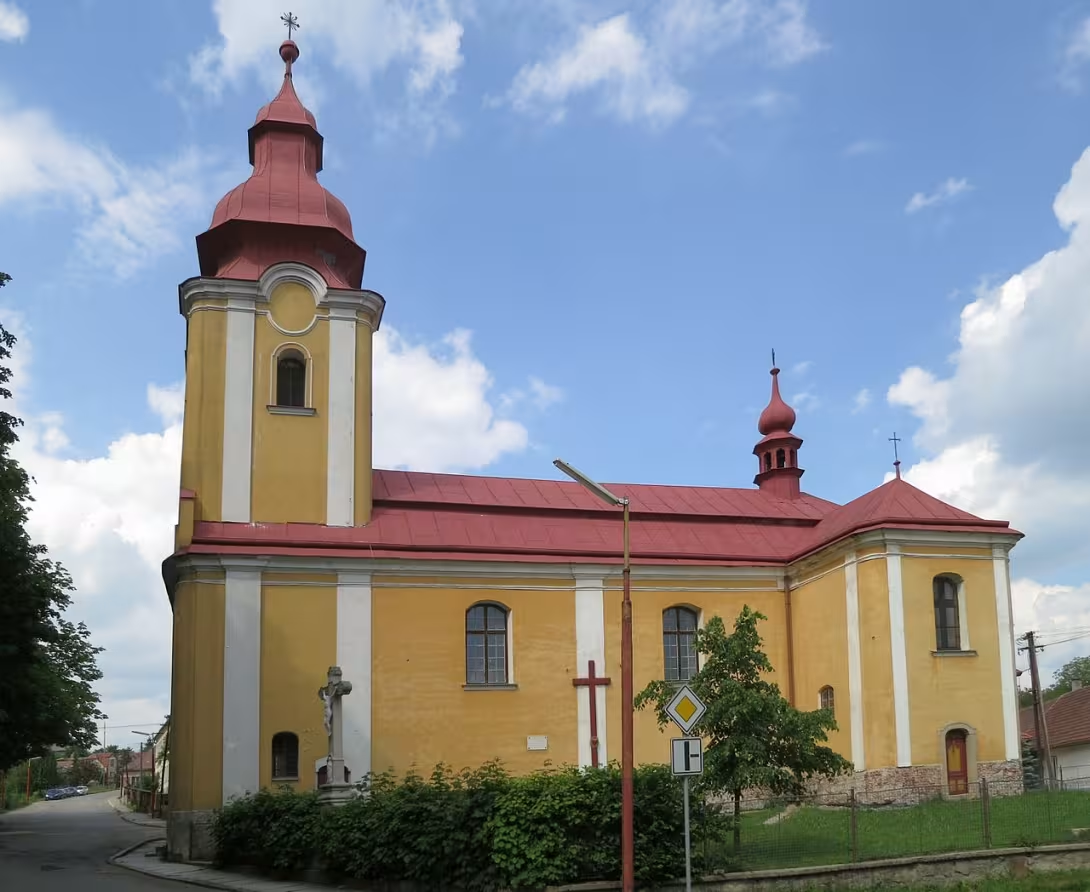
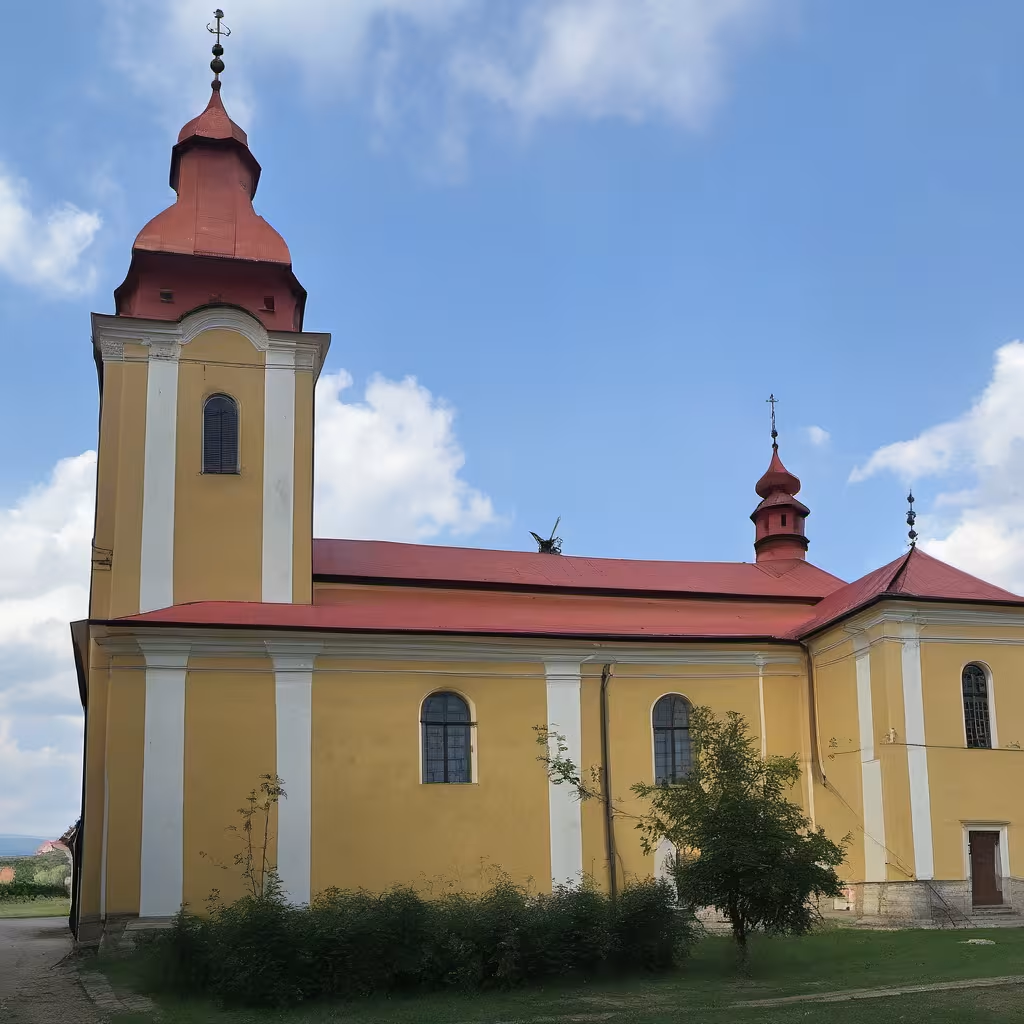
The historical appearance on the left is an AI-generated visualisation and serves as inspiration only.
Historical milestones
- 1311
- First written mention of the church
- 1622
- New initiation of the church after a time outside the Catholic Church
- 1771
- Conversion of the church into today's Baroque form
- 1811
- Cancellation of the cemetery around the church
- 1908
- Installation of a new marble main altar
- 2009
- Reconstruction and painting of interiors
Architectural development
The original Gothic building was gradually rebuilt, and in 1771 it gained its late Baroque character. The architecture includes a single boat with a mansard roof and a tower with a helmet. Further reconstruction of the building took place between 1894 and 1901.
Historical events
1311: First written mention of the church. 1622: New initiation of the church. 1771: Rebuilding to today's Baroque form. 1811: Cancellation of the cemetery around the church.
Points of interest
- The church of St. Lawrence is a late Baroque building with a rectangular conclusion and a characteristic four-sided tower with rounded corners at the front. - The church is protected as a cultural monument of the Czech Republic. For the first time, the church was mentioned in writing in 1311. - The most extensive modifications to the church took place in 1771 when it gained today's appearance. - The bell choir consists of three bells of different age: the oldest comes from 1525, and another from 1614 and 1762.
Guide
This guide is narrated by a synthetic voice generated by artificial intelligence.
Show guide text
This text was created by artificial intelligence and has not been editorially reviewed. It may contain inaccuracies.
The Church of Saint Lawrence stands in the center of the Krasonice village on the Vysočina plateau. It is the parish church of the local Roman Catholic parish and is protected as a cultural monument.
Its history dates back to the Middle Ages. It is first mentioned in the year 1311. For a certain period, the church did not belong to the Catholic Church. When it returned to it, it was re-consecrated in 1622. After the return to the Catholic Church, a parish house also came into being. It was built in 1634 and in 1764 it was rebuilt in the Baroque style. The parish house building is also a cultural monument today.
The church was originally Gothic and later underwent reconstruction. The greatest changes came in 1771, when it acquired its present Baroque appearance. It is a late Baroque single-nave building with a rectangular chancel. In front of the façade stands a four-sided tower with rounded corners, which is topped with a helmet. The church is covered with a mansard roof.
A cemetery once stretched around the church. In 1811 it was abolished. At that time, the statues of Saint Florian, Saint Sebastian, Saint Roch and Saint Wendelin were moved from the original cemetery to the new one.
Between 1894 and 1901 the church underwent reconstruction. In 1908 a new marble high altar was installed in it. Above the altar is a painting by Jan Florian. The church also has two side altars. One is dedicated to the Virgin Mary, the other forms a Holy Sepulcher.
The church has three bells. The oldest dates from 1525, the other two from 1614 and 1762. The most recent reconstruction took place in 2009, when the interiors were repainted.
Tips for visitors
The best time to visit is the late afternoon, when the sun gently illuminates the Baroque facade of the church. For photographers are the most interesting views of the single-storey construction and its right-angled conclusion, especially during the golden hour, which highlights the details of architecture.
You can easily reach the monument by car and public transport.
We recommend to bring comfortable shoes suitable for rural terrain. As it is a sacral space, it is advisable to carry with you a garment corresponding to the reverence of the place.
For families with children, the surrounding area of the church is ideal for a peaceful walk in the nature of Highlands. Since there are no other specific monuments in the immediate surroundings, we recommend focusing on the architecture of this historical temple itself.
Frequently asked questions
Can the monument be visited?
Religious buildings are usually open mainly during services; at other times a visit is normally arranged with the parish or the operator. We have not verified specific times.
Where is the monument?
Location: Krasonice, Kraj Vysočina. The map on this page shows the exact spot.
Why is the monument protected?
It is listed in the Central List of Cultural Monuments of the Czech Republic as a cultural monument (register no. 33054/7-4964).
For kids
Imagine going back to a time when the world was completely different. Cities were smaller, people lived in agricultural villages and churches were the only buildings that stood out over other houses.
And that's the building you're in front of right now. It's the church of St. Lawrence in the village of Krasonice. Many people think the church looks like an old chateau or a hiding place for a dragon. And they're totally fine! The church has a really long and interesting history.
Businesses nearby
Do you run a restaurant, accommodation, shop, museum, rental, wellness or other visitor service near this monument? Show yourself directly to the people heading to it — this is how they will see you in the app and on the web:
Nearby
ITEX Show interactive overview of the surroundings - restaurants, accommodation, rentals and other places within a 15 km radius.
Data: OpenStreetMap contributors, 15 km radius.
‡ Historical monuments
- sv Jan Nepomucký (13.0 km)
- sv. Virgin Maria (13.3 km)
- Immaculata (13.3 km)
- sv Archangel Gabriel (13.3 km)
- monument pally (13.4 km)
- sv. Jan Křtitel (13.4 km)
- sv. Vendelín (13.5 km)
- sv. Mary Magdaléna (13.7 km)
Restaurant and catering
- Hossovka pod Greenkou (6.5 km - Bítány 9)
- Restaurant at St. Víta (10.8 km)
- Slunicko (11.2 km)
- Tahoda U Valés (11.3 km - 123)
- RESTAURATION U STADIONU (13.4 km)
- U Paint (13.8 km - Göthova 111 / I)
- U Maruška (13.9 km)
- Zach Restaurant (14.0 km - Zecharias Square from Hradec 33)
Accommodation
- Hotel White Lamb (10.8 km)
- Vidlák (10.9 km)
- HOTEL U STADIONU (13.4 km)
- Homolk Mill (13.5 km)
- Hotel Dyje (13.5 km)
- Hotel "U Koníčka" (13.6 km)
- Steidler (14.0 km)
- Danushe (14.0 km)
› Rental and sports
- biotop Jemnice (10.2 km)
- Hockey Storm (11.1 km - 202)
- ČD Bike (13.3 km)
- Cyklo- sport Petr Kunkal (13.8 km - Crožovnický 70 / I)
- Boat rental (14.2 km)
- Gyzna (14.4 km)
- Lane Center and Climbing Wall (14.5 km)
- Work Out (15.0 km)
© Tourism and nature
- Bítánky (station) (6.5 km)
- Pod Krumvaldem (8.2 km)
- Mouček hill (rozc.) (9.5 km)
- Pilka (bus) (9.6 km)
- Divisions (10.1 km)
- Dyjice (11.1 km)
- Information about Jemnici (11.5 km)
- Oslednice (rozhl.)
Accommodation nearby
Trips and activities nearby
Guided tours, tickets and activities nearby from GetYourGuide
Affiliate link: if you buy from the partner, we may receive a commission. The price for you does not change.
Search tours and activities →Themed route
Thematic cruise route from Krasonic
1. Church of St. Lawrence (Krasonice) * Type: * Church * Why is it worth a visit: * This Baroque church is an architectural work that attracts attention to its history and beautiful interior decoration. It is an ideal place to understand the cultural heritage of the village Krasonice.
2. Parish House (Krasonice) * Type: * Historical object * Why is it worth a visit: * Located near the church and served as a center of parochial life. Its history is closely linked to the spiritual and everyday life of the Krasonic people.
3. Saint Anne's Chapel (Krasonice) * Type: * Chapel * Why is it worth a visit: * This chapel is a place of quiet fatigue and prayer that offers a unique view of the surrounding landscape. It is an ideal place for those who want to enjoy the calm and beauty of the rural environment.
4. Nav (Krasonice) * Type: * Urban area * Why is it worth visiting: * The central part of the village where there are various historical houses and traditional local businesses. It's a place to walk and discover everyday life in Charming.
5. Public transport stop (Krasonice) * Type: * Transport equipment * Why is it worth visiting: * Interesting for those who want to understand local mobility and the way of life in smaller municipalities. It is also a place where different generations and social layers meet.
This route offers visitors the opportunity to explore the history and everyday life in Krasonice, with emphasis on cultural and social aspects of the village.
Seasonal recommendations
Spring: In the spring season, the church of St. Vavríce in Krasonice becomes a haven of peace when the surrounding meadows bloom and the forests become green. The sunny days bring a warm light that creates a unique atmosphere to visit this historic place. Visitors are advised to come early in the morning or late in the afternoon to enjoy peace without special crowds and to enjoy the spring flowering landscape. It is advisable to wear clothes according to temperature because the weather can be variable.
Summer: Summer brings long sunny days and high attendance of the church of St. Lawrence. In the main summer season this place is a popular destination for tourists looking for an escape to history and nature. Visitors can enjoy a quiet moment in the green corral of the church, but it is advisable to come earlier in the afternoon to avoid the biggest crowds. A warm summer requires light and light clothes as well as plenty of drinking water.
Autumn: In autumn, the surrounding area of the church of St. Vavránek grows beautiful colors. Tree leaves turn into a golden and red palette, adding a romantic and peaceful feeling to the atmosphere. The weather is usually warm and sunny, but visitors should be prepared for cool winds and the possibility of rain. In addition, it is recommended to visit the church early in the afternoon to enjoy bright sunlight while avoiding possible crowds.
Winter: Winter visit to the church of St. Lawrence offers unique views when the surrounding area is covered with snow and trees lose their leaves. The atmosphere is calm and quiet, which creates ideal conditions to grasp the beauty of the historic place. Hot clothes and protection against the whirlwind are essential for a comfortable stay in the countryside during a cold period.
Visualizations and artistic views


The visualisations are generated by artificial intelligence and serve as inspiration.
Photos from the area
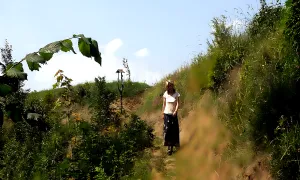
Real photos taken near the monument


Zdroj a licence jsou uvedeny u každého snímku.
View from the area
This animation was generated by artificial intelligence from a real photograph of the surroundings. The motion and details are not real footage of the location.
Tips from visitors
No tips yet. Be the first!
Log in and add your tip.
Sources and literature
Photos: Jiří Sedláček / CC BY-SA 3.0, rozlišení zvýšeno umělou inteligencí — Wikimedia Commons. The author and licence also appear when you hover over the image.
Faktickým podkladem tohoto textu byl článek na Wikipedii, jehož autory jsou přispěvatelé Wikipedie. Článek je dostupný pod licencí CC BY-SA 4.0.
Location on the map


Příběhy a pověsti
Legendy, pověsti a příběhy spjaté s touto památkou
Fotografie návštěvníků
Zatím žádné fotografie. Buďte první, kdo přidá fotografii z návštěvy!
Log in a přidejte svou fotografii nebo hodnoťte.
Za ověřenou návštěvu v aplikaci získáte víc bodů — poznáme podle GPS, že jste na místě.
Reviews and comments