






Kostel svatého Vojtěcha (Vejprnice) Church
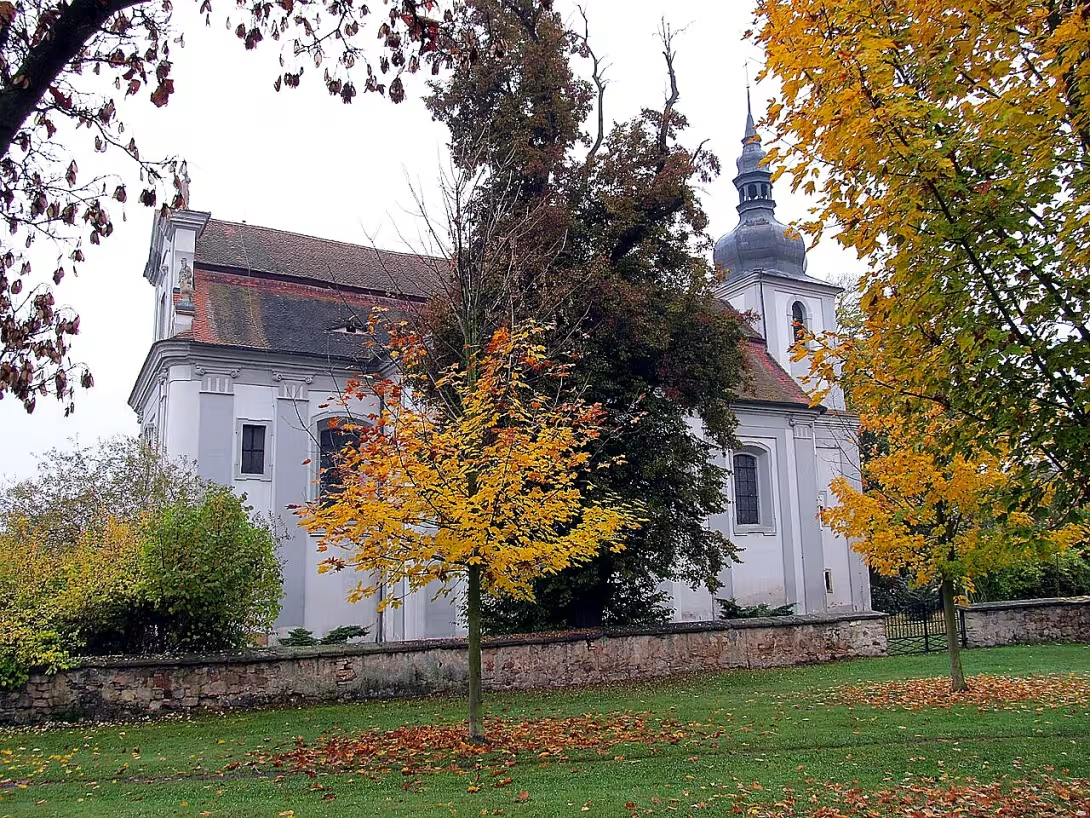
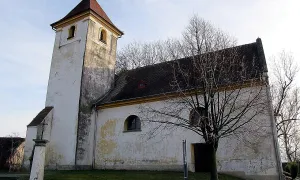
The Church of Saint Adalbert in Vejprnice is a baroque church located at the heart of this village within Plzeňský kraj. Constructed in 1722 under the commission of František Václav hrabě z Wrtby, it stands as a cultural monument notable for its western-facing main altar—a rarity among rural churches. The architecture features a bulbous tower topped with a gilded cross and weather vane, reflecting baroque grandeur.
Inside, the church boasts richly decorated altars, frescoes, and wooden carvings that enhance its spiritual ambiance. Its historical context is rooted in early 18th-century Bohemia, part of the Habsburg Monarchy during the Baroque period's flourish across Europe. This era was marked by the Catholic Church's embrace of grandeur and drama as part of the Counter-Reformation.
The church replaced earlier structures on the site, including a Gothic church from 1355 that served as a collection point for tithes from the local parish. Over time, another wooden church in marshy areas decayed and was relocated to where a former sheepfold stood, now the site of a new school.
Architecturally, the Church of Saint Adalbert showcases baroque elements commissioned by František Václav hrabě z Wrtby. The design is attributed to either František Maxmilián Kaňka or his apprentice Ignác Prée. Its bulbous tower with a gilded cross and weather vane, crafted by Martin Pachl who served as the local parish priest, exemplifies baroque aesthetics.
Inside, the church features three altars adorned with frescoes and wooden carvings, including sculptures of members of the Holy Family flanking the main altar. The presbytery is separated from the nave by grilles, behind which stands a marble baptismal font and a pulpit topped with two angels holding tablets of the Ten Commandments.
Throughout its history, the church has seen various changes in ownership and administration. František Václav hrabě z Wrtby played a pivotal role in commissioning its construction in 1722. The installation of a lightning rod on the tower by Martin Pachl added to its historical significance. Additionally, two chapels stand near the church: one dedicated to the Holy Sepulchre and another originally serving as an ossuary but later converted into a chapel for Our Lady of Lourdes in 1893.
The church's main altar is uniquely positioned to face west, which is atypical for rural churches. The bell tower houses three bells, with the largest named after Saint Adalbert and another dedicated to Mary. These elements contribute to the church's distinctiveness within its regional context.
Today, the Church of Saint Adalbert remains a significant cultural monument in Vejprnice. Its baroque architecture and rich interior decorations continue to attract visitors interested in historical and religious heritage. The church is accessible to those who wish to explore its artistic and spiritual offerings, making it a worthwhile destination for anyone visiting Plzeňský kraj.
The Church of Saint Adalbert stands as a testament to the architectural and cultural history of Vejprnice. Its unique features and historical significance make it an inviting site for visitors seeking to immerse themselves in the rich tapestry of Czech heritage.
Then and now
Drag the slider to compare how the landmark may have looked when it was built with the view today.
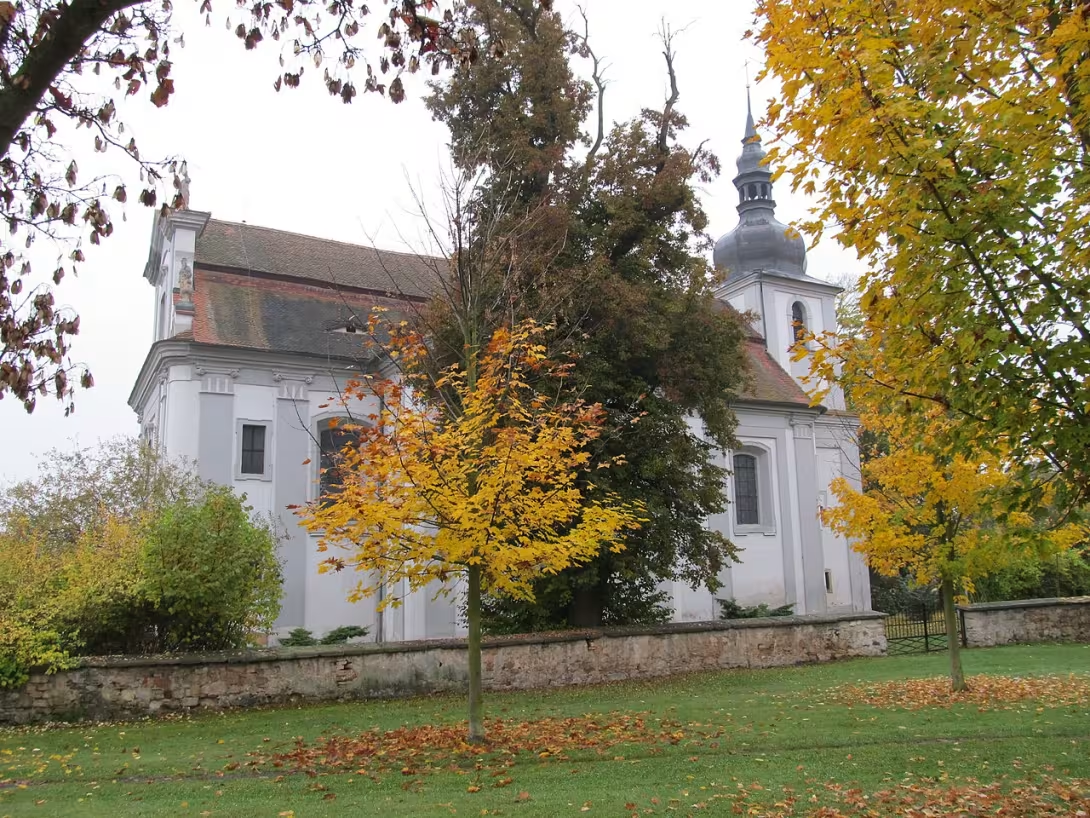
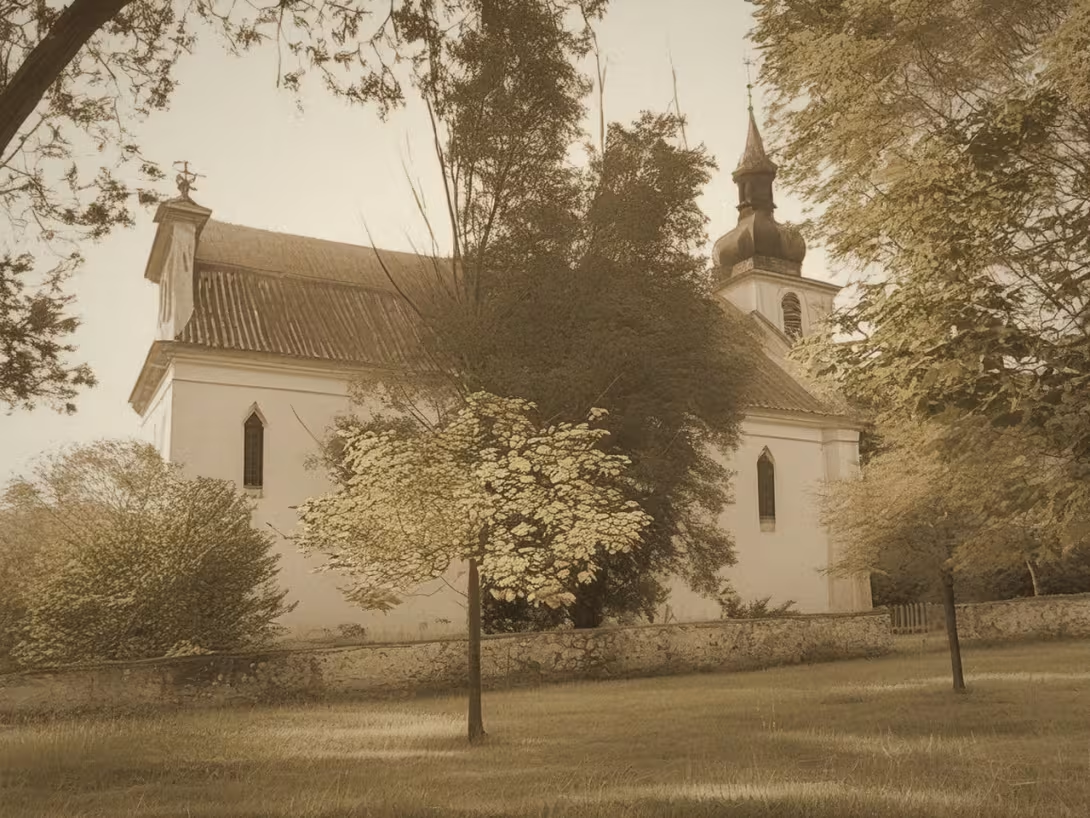
The historical appearance on the left is an AI-generated visualisation and serves as inspiration only.
Historical milestones
- 1355
- Gothic church built as a tithe collection point.
- 1722
- Construction of the Baroque Church of Saint Adalbert.
- 1893
- Chapel conversion to Our Lady of Lourdes chapel.
Architectural development
Originally built in 1722 under the commission of František Václav hrabě z Wrtby, the Church of Saint Adalbert showcases baroque architectural elements. The church features a bulbous tower with a gilded cross and weather vane, indicative of its period style. Inside, it is adorned with frescoes, wooden carvings, and altars that reflect the rich artistic traditions of the time.
Historical events
In 1722, František Václav hrabě z Wrtby commissioned the construction of the current baroque structure.
The church's tower was equipped with a lightning rod by Martin Pachl, who served as the local parish priest.
Points of interest
- The Church of Saint Adalbert's main altar faces west, which is unusual for rural churches typically oriented eastward; this unique orientation may have been influenced by the specific architectural vision or religious symbolism desired by its patron.
- Originally, a Gothic church stood on the site from 1355, serving as a tithe collection point. Its replacement by the baroque structure reflects broader historical shifts in architectural styles and ecclesiastical functions during early 18th-century Bohemia.
- The church's bell tower houses three bells, with one named after Saint Adalbert himself, emphasizing his significance to the community and the church’s dedication to him; another bell is dedicated to Mary, highlighting the dual patronage that characterizes many Catholic churches.
- Martin Pachl, who was not only a local parish priest but also contributed to the church's design by crafting its bulbous tower with a gilded cross and weather vane, showcases an interesting blend of religious leadership and artistic involvement during this period.
- Near the Church of Saint Adalbert stands a chapel originally built as an ossuary; it was later converted in 1893 into a chapel dedicated to Our Lady of Lourdes, reflecting changing devotional practices and community needs over time.
Guide
This guide is narrated by a synthetic voice generated by artificial intelligence.
Show guide text
This text was created by artificial intelligence and has not been editorially reviewed. It may contain inaccuracies.
Welcome to the Church of Saint Adalbert in Vejprnice, a captivating baroque gem nestled at the heart of this charming village. As you stand here, take a moment to absorb the serene atmosphere surrounding you. The church's elegant silhouette is accentuated by its bulbous tower, crowned with a gilded cross and weather vane that glimmers under the sun—a testament to the grandeur typical of baroque design.
Let us delve into the rich tapestry of history woven through this sacred site. Our journey begins in 1355 when a Gothic church was erected here as a tithe collection point, serving as a spiritual beacon for the community. Fast forward to 1722, and we witness the birth of the current baroque structure under the guidance of architects František Maxmilián Kaňka and Ignác Prée. Their vision transformed this place into an architectural marvel that continues to inspire awe.
As you gaze at the church's facade, notice its unique western-facing main altar—an uncommon feature for rural churches typically oriented eastward. This intriguing aspect may reflect a specific architectural or religious intention by its patron, František Václav hrabě z Wrtby, who played a pivotal role in its history.
Step inside and immerse yourself in the ambiance of this sacred space. While the interior details remain to your imagination, consider how each element might tell a story of devotion and artistry from centuries past. In 1893, part of the church was converted into the Our Lady of Lourdes chapel, adding another layer to its historical narrative.
Now, let's ponder one of the site’s intriguing mysteries: why does this rural church defy convention with its westward-facing altar? Perhaps it symbolizes a unique spiritual journey or echoes the personal aspirations of those who contributed to its creation. This architectural choice invites us to reflect on the broader themes of faith and community that have shaped Vejprnice over the centuries.
As we conclude our visit, I invite you to linger for a moment longer, taking in the tranquility and historical resonance of this place. Whether you wander through nearby paths or simply sit and contemplate, there's always more to discover about the Church of Saint Adalbert and its enduring legacy.
Thank you for joining me on this journey. May your exploration be filled with wonder and discovery as you continue to explore Vejprnice and beyond. Safe travels!
Tips for visitors
The best time to visit the Church of Saint Adalbert in Vejprnice is during late spring or early fall when the weather is pleasant, and the village is less crowded. This period offers a serene atmosphere that enhances your experience while exploring the baroque architecture and cultural significance of this monument. Additionally, visiting on weekdays can provide an even quieter setting for reflection and appreciation.
Parking and transportation to Vejprnice are convenient, with options available both by car and public transport. If driving, there is parking nearby where you can leave your vehicle safely. For those preferring public transport, it's advisable to check the latest routes and schedules via a travel app or website before your visit to ensure smooth access to the church.
When visiting, consider bringing comfortable walking shoes as exploring the village and its surroundings may involve some walking. A camera is recommended to capture the stunning architecture of the church, especially during golden hour when the light beautifully illuminates the western-facing main altar. Don't forget a hat or sunscreen if you're planning an afternoon visit.
For photography enthusiasts, the best spots around the Church of Saint Adalbert are at the entrance and from the west side where the natural lighting accentuates the baroque details of the building. Early morning light offers soft shadows that highlight the intricate designs, while late afternoon light provides a warm glow perfect for capturing the church’s grandeur.
Nearby attractions within 30 minutes include other historical sites in the Plzeň region. Exploring these can provide additional context and enrich your understanding of the area's cultural heritage. While specific names are not mentioned here, checking local guides or maps can help identify suitable places to visit after exploring Vejprnice.
For families with children, visiting the Church of Saint Adalbert can be both educational and enjoyable. The village itself offers a quaint setting for a family walk. Consider bringing along some snacks and water to keep everyone comfortable during your exploration. Engaging children in learning about the church's history or having them sketch the architecture might also make the visit more interactive and memorable.
Businesses nearby
Do you run a restaurant, accommodation, shop, museum, rental, wellness or other visitor service near this monument? Show yourself directly to the people heading to it — this is how they will see you in the app and on the web:
Accommodation nearby
Trips and activities nearby
Guided tours, tickets and activities nearby from GetYourGuide
Affiliate link: if you buy from the partner, we may receive a commission. The price for you does not change.
Search tours and activities →Themed route
Thematic Walking Tour: Vejprnice and the Church of Saint Wenceslas
1. Church of Saint Wenceslas (Vejprnice) - Church Begin your journey at the heart of Vejprnice with the iconic Church of Saint Wenceslas, a stunning example of Baroque architecture that dates back to the 18th century. This church is not only a spiritual center but also a historical monument, featuring intricate frescoes and an impressive organ. Its serene atmosphere makes it a perfect starting point for exploring Vejprnice's rich cultural heritage.
2. Vejprnice Village Square - Public Space A short walk from the church will lead you to the charming Vejprnice Village Square. This quaint square is surrounded by traditional Bohemian houses and serves as a central gathering place for locals. It offers a glimpse into village life with its vibrant atmosphere, especially during local festivals or markets. The square provides an ideal spot for relaxation and reflection after exploring the church.
3. Vejprnice Cemetery - Historical Site Continue your exploration by visiting the Vejprnice Cemetery, located just outside the village center. This cemetery is a testament to the village's history, with graves dating back several centuries. It offers an opportunity to appreciate the artistry of historic tombstones and reflect on the lives of those who have shaped Vejprnice over the years. The peaceful surroundings make it a contemplative spot for visitors.
4. Vejprnice Local Museum (Hypothetical) - Cultural Site If available, visit the Vejprnice Local Museum to delve deeper into the village's past. Although not explicitly mentioned in the provided context, local museums often house artifacts and exhibits that narrate the region’s history, traditions, and cultural evolution. This stop enriches your understanding of Vejprnice beyond its architectural beauty.
5. Vejprnice Community Center - Cultural Venue Conclude your tour at the Vejprnice Community Center, a hub for local events and gatherings. Here, you can engage with residents or participate in cultural activities such as workshops or performances that showcase traditional Bohemian crafts and music. This venue highlights the vibrant community spirit of Vejprnice and offers a perfect end to your thematic journey through this picturesque village.
This walking tour provides a comprehensive experience of Vejprnice's historical, cultural, and communal aspects, all centered around its most significant landmark, the Church of Saint Wenceslas.
Seasonal recommendations
Spring: Visiting the Church of Saint Vojtěch during spring offers a refreshing experience as nature awakens around Vejprnice. The surrounding landscape is adorned with blooming flowers and lush greenery, creating a vibrant atmosphere that enhances the historical charm of the church. Soft morning light filters through stained glass windows, casting colorful patterns inside, which adds to the serene ambiance. This season often sees moderate crowds, making it an ideal time for those seeking tranquility without overwhelming numbers. Visitors are advised to wear comfortable walking shoes and layers, as temperatures can vary from cool mornings to warmer afternoons.
Summer: Summer is a popular time to explore the Church of Saint Vojtěch due to its warm weather and extended daylight hours, which allow visitors to fully appreciate both the church's architecture and the surrounding natural beauty. The lush greenery around Vejprnice provides a picturesque backdrop for photographs, while the longer days offer more time to explore. However, this is also peak tourist season, so it’s wise to arrive early in the morning to avoid larger crowds. Light clothing and sun protection are recommended, as well as carrying water to stay hydrated during your visit.
Autumn: Autumn brings a magical transformation to Vejprnice with its warm hues of red, orange, and yellow enveloping the landscape around the Church of Saint Vojtěch. The cooler temperatures make for comfortable exploration, and the church itself takes on a cozy atmosphere as it is illuminated by soft, golden light filtering through its windows. This season typically sees fewer visitors compared to summer, offering a more peaceful experience. Wearing layers is advisable due to fluctuating temperatures, and bringing along a jacket can be helpful during cooler evenings.
Winter: The Church of Saint Vojtěch in winter is a serene retreat with snow often blanketing the surrounding landscape, adding an enchanting touch to its historical architecture. The shorter days mean that visits are best planned earlier in the day when natural light enhances the church's interior beauty. Winter can be quieter in terms of tourism, providing a more intimate experience. Visitors should dress warmly, as temperatures can drop significantly, and check opening hours in advance since they may vary during this season. Bringing gloves and a hat is also recommended to stay comfortable while exploring.
Visualizations and artistic views


The visualisations are generated by artificial intelligence and serve as inspiration.
Photos from the area
Real photos taken near the monument


Zdroj a licence jsou uvedeny u každého snímku.
Tips from visitors
No tips yet. Be the first!
Log in and add your tip.
Sources and literature
Fotografie: Krabat77 / CC BY-SA 3.0 — Wikimedia Commons. The author and licence also appear when you hover over the image.
Faktickým podkladem tohoto textu byl článek na Wikipedii, jehož autory jsou přispěvatelé Wikipedie. Článek je dostupný pod licencí CC BY-SA 4.0.
Location on the map
More monuments – Vejprnice
Show all in the municipality

Příběhy a pověsti
Legendy, pověsti a příběhy spjaté s touto památkou

Fotografie návštěvníků
Zatím žádné fotografie. Buďte první, kdo přidá fotografii z návštěvy!
Přihlaste se a přidejte svou fotografii nebo hodnoťte.
Za ověřenou návštěvu v aplikaci získáte víc bodů — poznáme podle GPS, že jste na místě.
Reviews and comments