






Kostel svatých Jana a Pavla (Krteň) Church
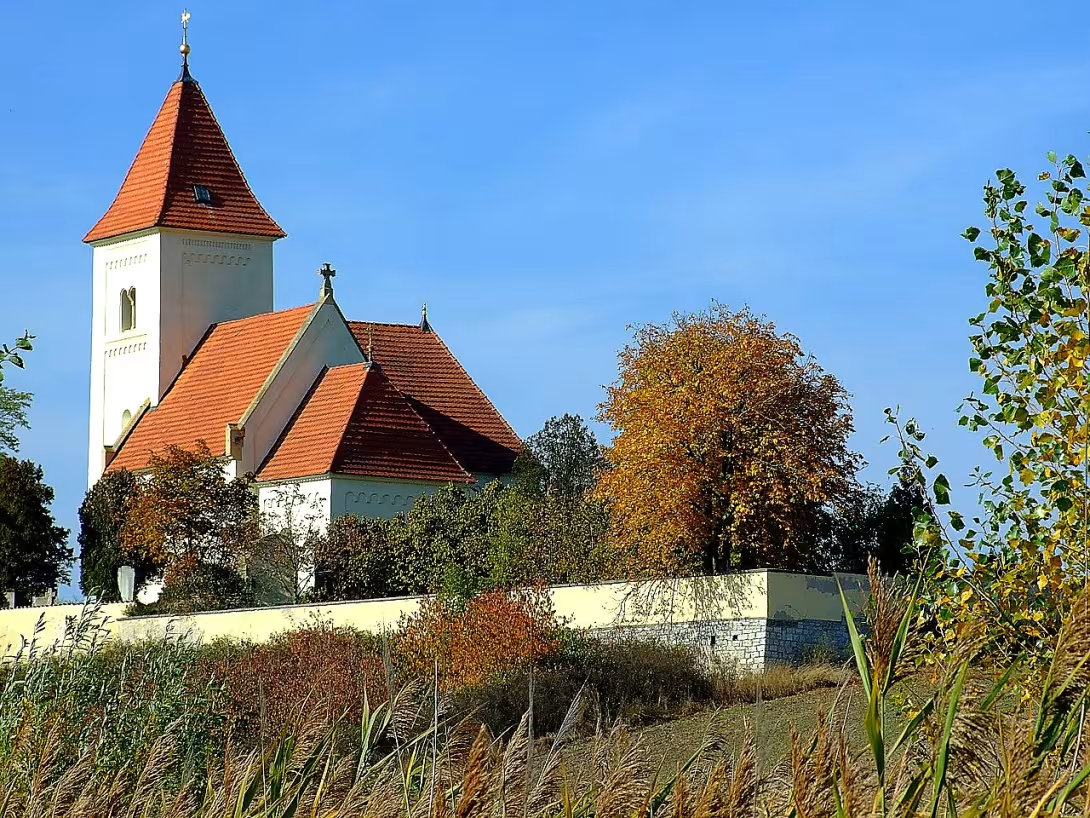
The Church of Saints John and Paul in Krteň is a remarkable historical monument located near Prague's western boundary, within the Třebonice cadastral area. Originally built around 1250 as a Romanesque chapel for a noble estate, it served as a private sanctuary. Over time, it underwent significant architectural changes, including the addition of a pentagonal presbytery and side chapels.
Despite its surrounding village disappearing during the Thirty Years' War, the church has been preserved as a cultural monument. Its 1890 restoration by Arnošt Živný introduced neoromanesque elements, ensuring its survival.
The chapel's origins date back to the mid-13th century when it was constructed in Romanesque style for a noble estate. It experienced several modifications over time: a pentagonal presbytery with supporting pillars was added in the 14th century, and a side chapel in 1575. Around 1600, the nave received new vaulting, followed by a sacristy in 1699 and a tower above the western entrance in 1732. The church continued to serve as a spiritual center for surrounding villages even after its original community vanished during the Thirty Years' War.
Architecturally, the Church of Saints John and Paul presents a blend of styles due to its extensive history. Its exterior is entirely whitewashed, featuring neoromanesque lisenas and an arcading frieze. The windows have semicircular heads, while the western tower with grouped windows dominates the façade. The eastern part retains its Gothic character with a pentagonal termination and robust pillars. A high shared roof with steep roofing conceals fragments of the original Gothic gable visible from below.
Internally, the church preserves elements from different periods. The bell tower, main nave, and presbytery retain their medieval origins, featuring a groin vault without ribs. A newer wooden beam ceiling covers the main nave, beneath which an emporium is located. The eastern wall of the chancel displays remnants of 13th-century frescoes uncovered in 1890, depicting scenes such as Joseph's dream and Christ's baptism.
The church's layout includes a rectangular main nave leading to a square Gothic presbytery on the east. A northern side aisle extends from an elevated original chapel, with an adjoining sacristy featuring barrel vaulting. The western section is capped by a square tower housing a vestibule, while a spiral staircase in the northwest corner provides access to the emporium.
The interior furnishings primarily date from the late 19th century and are unified in neoromanesque style. These include the main altar, pulpit, and historical benches that replaced earlier baroque furniture. Eighteenth-century gravestones within the church attest to its use of former entrances. The emporium houses an organ.
A notable legend associated with this site involves Queen Eliška Pomořanská in 1371. After hearing news of King Karel IV's recovery, she donated to the church as a gesture of gratitude and had it rededicated to Saints John and Paul, whose feast day coincided with the event on June 26.
Today, the Church of Saints John and Paul stands on an island above Dalejský potok in the now-nonexistent village of Krteň. Historically part of royal holdings, the village later became property of the Prague chapter during the Hussite Wars. The church remains a significant spiritual center, surrounded by a cemetery.
Visitors to this historical monument can appreciate its architectural evolution and rich history. Despite its modest size, the Church of Saints John and Paul offers insights into Bohemian cultural heritage and medieval architecture. Its preservation as a cultural monument underscores its enduring significance, making it a worthwhile destination for those interested in exploring the layers of history embedded within its walls.
Then and now
Drag the slider to compare how the landmark may have looked when it was built with the view today.
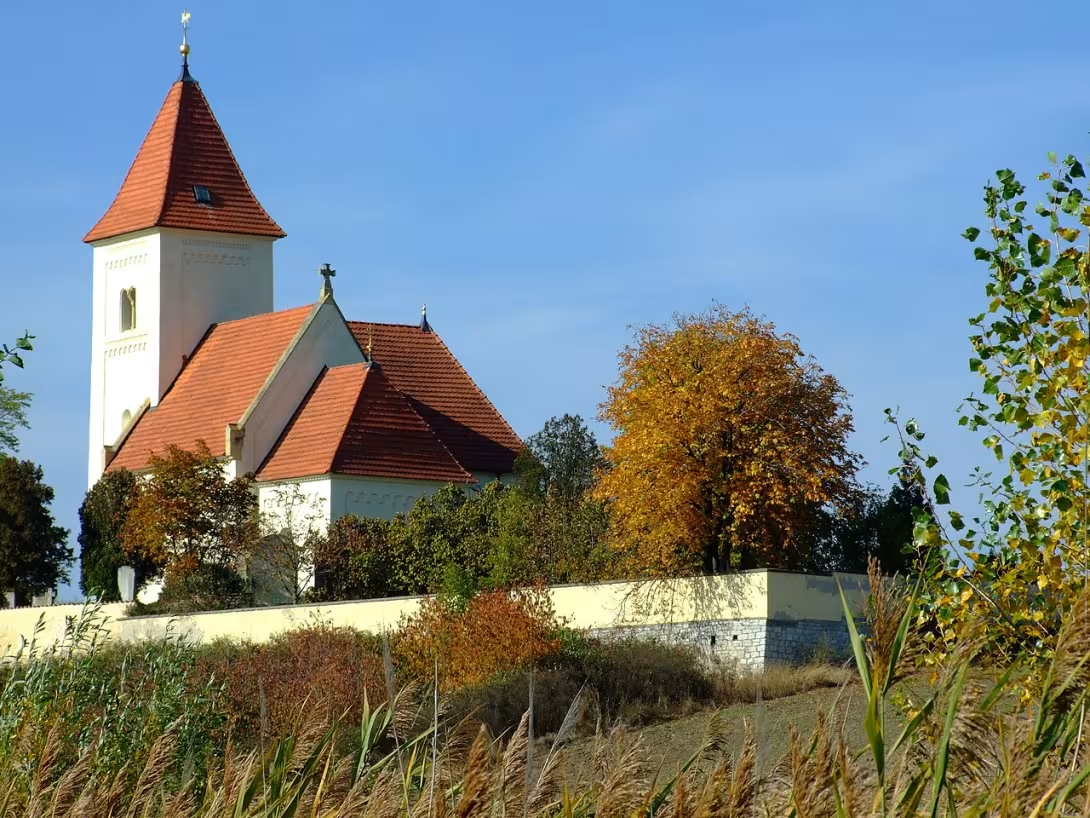
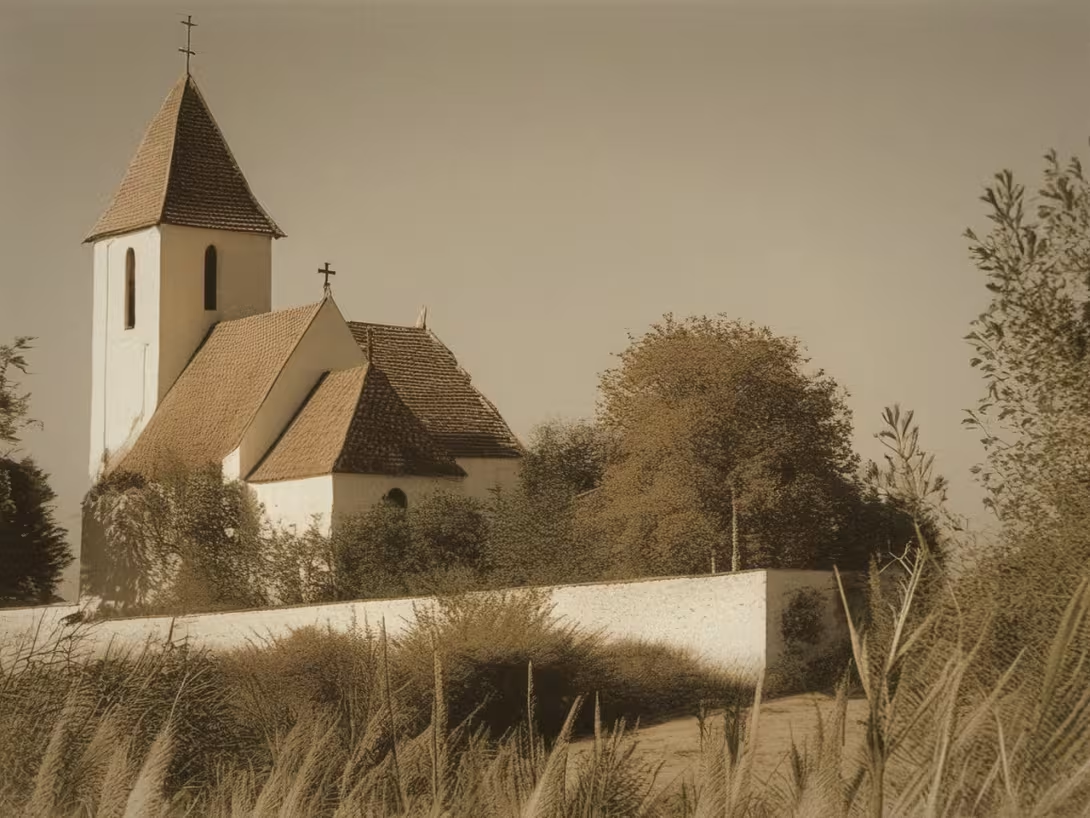
The historical appearance on the left is an AI-generated visualisation and serves as inspiration only.
Historical milestones
- 1371
- Queen Eliška Pomořanská financially supported the church after hearing of King Karel IV's recovery.
Architectural development
The Church of Saints John and Paul began as a Romanesque chapel around 1250, with significant modifications in the 14th century including a pentagonal presbytery. Over time, it received additional structures like side chapels and a sacristy. The church underwent a major restoration in 1890 by Arnošt Živný, who introduced neoromanesque elements such as increased tower height and new roofing.
Historical events
- 1250
- Construction of the original Romanesque chapel.
- 1575
- Addition of a side chapel to the church structure.
- 1890
- Extensive restoration led by architect Arnošt Živný in neoromanesque style.
Points of interest
- The Church of Saints John and Paul is unique for its blend of architectural styles, including Romanesque, Gothic, and neoromanesque elements, reflecting its long history and multiple renovations.
- Despite the disappearance of its original village during the Thirty Years' War, the church continued to serve as a spiritual center for surrounding communities, showcasing its resilience and enduring significance in the region.
- A fascinating legend involves Queen Eliška Pomořanská, who, upon hearing news of King Karel IV's recovery in 1371, donated to the church. This act of gratitude led to the church being rededicated, highlighting its historical connection to royal figures.
- The discovery of 13th-century frescoes during a restoration in 1890 adds an intriguing layer to the church's history, revealing artistic expressions from centuries past that depict biblical scenes such as Joseph’s dream and Christ’s baptism.
- An interesting feature is the emporium housing an organ, which not only serves a musical purpose but also reflects the church's adaptation over time to include elements typical of 19th-century ecclesiastical design.
Guide
This guide is narrated by a synthetic voice generated by artificial intelligence.
Show guide text
This text was created by artificial intelligence and has not been editorially reviewed. It may contain inaccuracies.
On a spur above the Dalejský Stream, on the western border of Prague in the cadastral area of Třebonice, stands the Church of Saints John and Paul. It is the last remnant of the vanished village of Krteň. It belonged to Czech kings and during the Hussite Wars passed into the ownership of the Prague chapter. During the Thirty Years' War the village disappeared completely. The church and cemetery, however, were preserved and continued to serve as a spiritual center for the neighboring villages. The cemetery surrounds the church to this day. The building is protected as a cultural monument.
The church was built around 1250 in Romanesque style as a proprietary chapel for the manor court. In the 14th century it received a Gothic five-sided chancel with buttresses. In 1575 a side chapel was added and around 1600 a new vault was constructed in the nave. In 1699 a sacristy was built on and in 1732 a tower rose above the western entrance.
The church took on its essential character through a major restoration in 1890, led by architect Arnošt Živný. It was purist and neo-Romanesque and saved the building from deterioration. Živný heightened the tower, raised the chapel to the level of the side aisle and replaced the original vaults in the nave.
From the outside the church is completely rendered white because its masonry is made of various materials. It is decorated with neo-Romanesque pilasters and a small arched molding, the windows are rounded at the top. The façade is dominated by a square tower with coupled windows. The eastern part, on the other hand, has retained its Gothic character with massive pillars. Beneath a high steep roof there survives a fragment of the original Gothic gable.
Inside the main nave opens beneath a wooden coffered ceiling toward a gallery with an organ. The chancel has a medieval cross vault without ribs. The most precious are the frescoes on the eastern wall of the sanctuary. They date from the 13th century and were uncovered during the restoration in 1890. One can make out Joseph's Dream, the Baptism of Christ, the Presentation in the Temple and the enthroned Christ with the evangelists. The furnishings are mostly from the late 19th century, unified in a neo-Romanesque spirit. The main altar, pulpit and pews replaced older Baroque furniture. Tombstones from the 18th century are set into the walls.
A legend from 1371 is connected with the church. Queen Elisabeth of Pomerania set out on foot from Karlštejn to Prague to pray for the recovery of the ailing Charles the Fourth. It was precisely in Krteň that she received the news that the king had recovered. Out of gratitude she donated money to the church. This happened on June 26th, and so the church was newly dedicated to the patrons of this day, Saint John and Paul.
Tips for visitors
The best time to visit the Church of Saints John and Paul in Krteň is during late spring or early autumn when the weather is pleasant, allowing for a comfortable exploration of both the church's interior and its serene surroundings. These seasons offer optimal lighting conditions for photography and are less crowded than summer months, providing a more intimate experience with this historical site.
When visiting the Church of Saints John and Paul, it's advisable to bring comfortable walking shoes as you'll likely explore the surrounding area of Krteň. A camera or smartphone with a good camera is recommended to capture the architectural details and peaceful ambiance of the church. Additionally, consider bringing water and some snacks if planning an extended stay in the vicinity.
For photography enthusiasts, the best spots around the Church of Saints John and Paul are its exterior facades, which showcase Romanesque architecture beautifully lit by the morning or late afternoon sun. The surrounding greenery provides a picturesque backdrop for photographs. Inside, the play of light through stained glass windows offers unique opportunities for capturing the church's interior beauty.
Nearby attractions within a 30-minute radius include the historic center of Prague, offering a wealth of cultural and historical sites such as Charles Bridge, Prague Castle, and the Old Town Square. For those interested in nature, the nearby parks offer a peaceful retreat from the city’s hustle and bustle. These locations provide diverse experiences for visitors looking to explore beyond the church.
Families with children will find the Church of Saints John and Paul an interesting site due to its historical significance and architectural beauty. To keep younger visitors engaged, consider incorporating a small scavenger hunt focusing on architectural details or historical facts about the church. The surrounding area also offers walking paths that are suitable for families, making it a pleasant outing.
Frequently asked questions
Can the monument be visited?
Religious buildings are usually open mainly during services; at other times a visit is normally arranged with the parish or the operator. We have not verified specific times.
Where is the monument?
Location: Třebonice, Praha, Hlavní město Praha. The map on this page shows the exact spot.
Why is the monument protected?
It is listed in the Central List of Cultural Monuments of the Czech Republic as a cultural monument (register no. 41148/1-1913).
Businesses nearby
Do you run a restaurant, accommodation, shop, museum, rental, wellness or other visitor service near this monument? Show yourself directly to the people heading to it — this is how they will see you in the app and on the web:
Events nearby
Zdroj akcí: otevřená data měst a obcí ČR (Národní katalog otevřených dat) a kalendář akcí Národního památkového ústavu.
Accommodation nearby
Trips and activities nearby
Guided tours, tickets and activities nearby from GetYourGuide
Affiliate link: if you buy from the partner, we may receive a commission. The price for you does not change.
Search tours and activities →Themed route
Thematic Walking Tour: Krteň and the Church of Saints John and Paul
1. Church of Saints John and Paul (Krteň)
Type: Historical Landmark
Why Visit: This stunning Baroque church, built in 1732-1734 by architect František Maxmilián Kaňka, is a centerpiece of Krteň. Its intricate facade and richly decorated interior make it an essential stop for anyone interested in architectural history or religious heritage.
2. Local Cemetery
Type: Historical Site
Why Visit: Located near the church, this cemetery offers a serene environment to explore historical gravestones and reflect on the local community's past. It provides insight into the area’s cultural and familial history over the centuries.
3. Krteň Village Square (Náměstí)
Type: Cultural Hub
Why Visit: The village square is a charming spot that captures the essence of rural life in Krteñ. Surrounded by traditional houses, it serves as a gathering place for locals and offers an authentic glimpse into Czech village culture.
4. Local Farmsteads
Type: Agricultural Heritage Site
Why Visit: These farmsteads showcase traditional Czech agricultural practices and architecture. They provide insight into the rural lifestyle that has shaped the region, offering visitors a chance to appreciate the connection between land and community in Krteň.
This tour offers a blend of historical exploration and cultural immersion, perfect for those interested in discovering the rich heritage of Krteň and its surroundings.
Seasonal recommendations
Spring: Visiting the Church of Saints John and Paul during spring offers a unique experience as nature awakens around Krteň, Prague. The landscape is vibrant with blooming flowers, creating an enchanting atmosphere that complements the historic architecture. Morning light beautifully illuminates the church's façade, making it an ideal time for photography enthusiasts. Visitors should be prepared for occasional showers and bring a light jacket or umbrella to stay comfortable while exploring. As spring attracts many nature lovers, arriving early can help avoid larger crowds.
Summer: Summer is a popular season to visit the Church of Saints John and Paul due to its pleasant weather and extended daylight hours. The lush greenery surrounding Krteň enhances the church's charm, providing picturesque settings for visitors. During this time, the area may experience increased foot traffic, especially in the afternoons when families and tourists are out exploring. To make the most of your visit, consider arriving early to enjoy a quieter experience before the crowds gather. Comfortable walking shoes and light clothing are recommended due to warmer temperatures.
Autumn: Autumn brings a magical transformation to Krteň with its warm hues of reds, oranges, and yellows enveloping the Church of Saints John and Paul. The softer lighting during this season casts a serene glow over the church's architecture, making it an ideal time for photography. While the weather is generally mild, visitors should be prepared for cooler temperatures in the evenings by bringing layers or a light jacket. As the tourist season winds down, there are typically fewer crowds, offering a more tranquil experience.
Winter: Winter offers a unique and serene atmosphere at the Church of Saints John and Paul, with snow often blanketing Krteň in a picturesque white layer. The church's architecture is striking against the winter landscape, especially during sunrise or sunset when the light creates dramatic shadows. Visitors should dress warmly in layers to combat the cold temperatures and consider bringing gloves and a hat for comfort. Due to shorter daylight hours, it's advisable to plan your visit earlier in the day. While the area may be quieter with fewer tourists, some services or facilities might have reduced operating hours during this season.
Visualizations and artistic views


The visualisations are generated by artificial intelligence and serve as inspiration.
Photos from the area
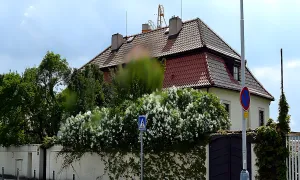
Real photos taken near the monument


Zdroj a licence jsou uvedeny u každého snímku.
Tips from visitors
No tips yet. Be the first!
Log in and add your tip.
Sources and literature
Photos: I would appreciate being notified if you use my work outside Wikimedia. More of my work can be found in my personal gall / CC BY-SA 3.0 — Wikimedia Commons. The author and licence also appear when you hover over the image.
Faktickým podkladem tohoto textu byl článek na Wikipedii, jehož autory jsou přispěvatelé Wikipedie. Článek je dostupný pod licencí CC BY-SA 4.0.
Location on the map

Příběhy a pověsti
Legendy, pověsti a příběhy spjaté s touto památkou
Příběh: Kostel svatých Jana a Pavla (Krteň)
Bylo to v pondělí ráno, kdy Prokop zjistil, že jeho život se změnil nezvratně. Hora s kostelem svatých Jana a Pavla na jejím vrcholu byla skryta ve šedé brýl…
Číst příběh
Pověst: Kostel svatých Jana a Pavla (Krteň)
Traduje se, že v pozdním létě roku 1371 projížděla krajinou za západními hradbami Prahy královský průvod. Vzduch vonět sušeným jetelem a čerstvě obranou pšen…
Číst příběhFotografie návštěvníků
Zatím žádné fotografie. Buďte první, kdo přidá fotografii z návštěvy!
Log in a přidejte svou fotografii nebo hodnoťte.
Za ověřenou návštěvu v aplikaci získáte víc bodů — poznáme podle GPS, že jste na místě.
Reviews and comments