



Kostel svatých Petra a Pavla Church
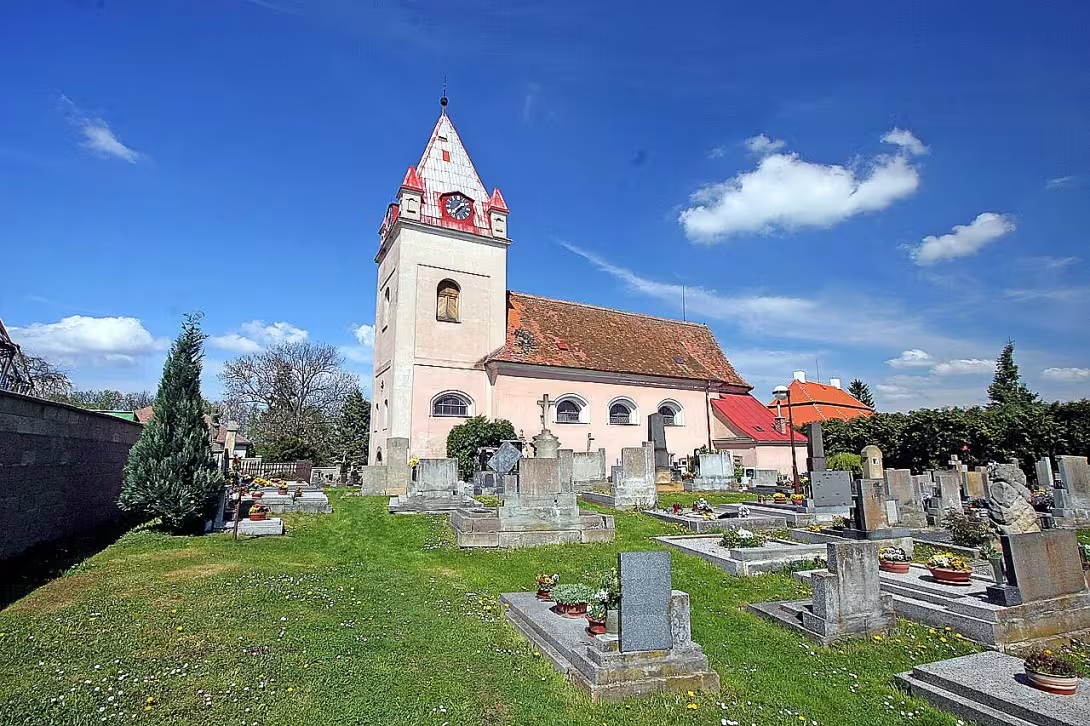
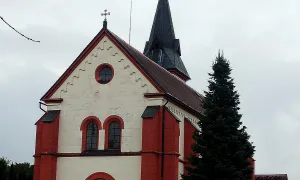
Kostel svatých Petra a Pavla is a Roman Catholic temple located in the district of Jicin and belonging to the parish Kopidlno. This monument dates back to the 14th century and is unique by its use of brick masonry, which was unusual for Gothic architecture in the Czech environment. Protected as a cultural monument of the Czech Republic since 1958, the church is situated in the cemetery area near the former Supreme Court.
The history of the church dates back to the end of the 12th century when there was a Romanesque wooden church. The current building was built around 1340 as a smaller single-boat temple with a flat-shell boat and polygonal presbytery. The original Gothic core was built from bricks, which is quite unusual in the Czech environment of the time. Bricks approximately 10 × 12 × 26 cm are placed in regular Gothic binding, and their darker appearance is the result of burning technology. This church is connected to the construction of the Nymburk, which suggests influences from the Upper Polabi area and centers such as Nymburk and Hradec Kralove.
The architecture of the church went through several building stages. Between 1701- 1704 the temple was significantly extended, the prism tower and the side chapel were added. The Baroque reconstruction changed both the silhouette of the building and its interior, where it was encapsulated by a flat vault and gothic windows partially walled. In 1728 another chapel arrived. The recovery in 1984- 1987 revealed the original Gothic windows and returned the roofing roof of the beaver, which changed the understanding of the original building.
Kostel svatých Petra a Pavla is important not only architecturally but also historically. Its use of brick masonry represents important evidence of the construction traditions of Polabi and their influence on Czech Gothic. The northern portal with archaic profiling is an interesting example of the transfer of older forms of classical Gothic into the rural environment. The Gothic stained glass in the presbytery, in particular the views of the Crucifixion and the quadrilateral rose, are rare reminders of the Middle Ages at the rural church.
Today, the church of St. Peter and Paul is not only a monument to architecture, but also a place with a rich history. Its preserved elements from the 14th century together with Baroque modifications represent a fascinating blend of different periods and styles. For the visitor, it is not only an opportunity to look at the historical building, but also to make a quiet moment in the picturesque environment of the cemetery.
Kostel svatých Petra a Pavla in the Galleries is therefore not only an important cultural heritage, but also a reminder of the historical development of the region. His visit offers a view of the rich past and allows you to enjoy quiet moments in a beautiful rural environment.
Historical milestones
- 1340
- The creation of a contemporary Gothic building.
- 1701
- The beginning of a significant Baroque reconstruction, extension of the ship and construction of the tower.
- 1728
- Adjust another side chapel.
- 1958
- Protection as a cultural monument of the Czech Republic.
Architectural development
The original Gothic single-boat church of bricks was significantly extended in the years 1701-1704 and supplemented with a tower and chapel. In the 18th century another chapel and later a historic hall arrived. In 1984- 1987 a renewal took place, in which original gothic windows were exposed and the beaver cover was returned.
Historical events
1958: Announcement of the building by cultural monument of the Czech Republic.
Points of interest
- Kostel svatých Petra a Pavla comes from the 14th century and is unique by its use of brick masonry, which was unusual for Gothic architecture in the Czech environment. - The church is connected to the construction of the Nymburk, which suggests influences from the Upper Polabi area and centers such as Nymburk and Hradec Kralove. - The northern portal with archaic profiling is an interesting example of the transfer of older forms of classical goth into the rural environment. - Gothic stained windows in presbytery, especially views of Crucifixion and quadrilateral roses, are rare reminders of the Middle Ages on the rural church. - Kostel svatých Petra a Pavla is protected as a cultural monument of the Czech Republic since 1958.
Guide
Show guide text
This text was created by artificial intelligence and has not been editorially reviewed. It may contain inaccuracies.
Welcome to a unique historical place, which is witnessed by the rich layers of Czech history and architecture - the church of St. Peter and Paul in the Galleries. If you look at this impressive construction site right now, you can see its unique appearance with a prism tower that is proudly standing over the surrounding area. This temple is a real example of how history and art can harmonically exist together.
Let us immerse ourselves in its origin and historical context. Kostel svatých Petra a Pavla has roots dating back to the 14th century when it was founded as a Gothic building. It is a fascinating fact that at that time the use of brick masonry for Gothic architecture in the Czech environment was very unusual. This detail opens us up to the innovative approach of builders and their ability to overcome traditional borders.
Architecturally, this building is a real treasure that deserves attention. When viewing the facade or inner space, you will notice the use of brick masonry, which gives the church its unique character and distinguishes it from many other Gothic temples. Over the years he passed a significant Baroque reconstruction in the early 18th century, which provided him with the current silhouette and prism tower.
Although specific historical figures associated with this monument remain unknown, it is clear that their contribution was crucial for this place. The church also has an interesting connection with the construction smelters from Nymburk, which suggests influences from the upper Polabi area and centers such as Nymburk and Hradec Kralove. This connection opens us up to the wider cultural and building context in which this temple evolved.
What is interesting is the fact that the church of St. Peter and Paul crosses the boundaries of purely religious importance. Its history and architecture turn it into a living memory of the past, which tells us many aspects of the life of our ancestors - from their spiritual desires to engineering skills.
Now that you've been a little immersed in the history and architecture of this place, we'll invite you to further explore. Take a closer look at the individual elements of the church, listen to the singing of the shadows of the past and let the soul of its beauty be introduced. Whether you choose to go through the temple or explore the surrounding environment, each step offers new knowledge and impressions.
Thank you for your visit to St. Peter and Paul's Church in the Galleries. We hope that this guide inspired you to a deeper understanding of its history and architecture. Whether you choose to explore Czech cultural monuments or choose some other way, we wish you a comfortable and full discovery of the moment. God!
Tips for visitors
The best time to visit the church of St. Peter and Paul in the Galleries is in the spring or autumn season when the weather is pleasant and sunny. This time of year offers ideal conditions for exploring historical architecture without excessive heat or humidity.
For accurate information about available routes and connections, find the current options in online search engines or local websites. The location is also well accessible for pedestrians who want to travel the surrounding countryside.
When visiting the church, it is recommended to take with you a protective umbrella and water, especially if you plan to take an extended walk around the cemetery. Thanks to the historical environment it is also advisable to carry a camera or a mobile phone for photography.
The best times of the church are in the morning or in the evening, when the light is lighter and shadow play on the wall creates interesting effects. Remember also to explore the interior of the church, which offers beautiful details of Gothic architecture.
In the vicinity of the church there is a former Supremacy Court and a former rectory, which are interesting places for further exploration. These historic buildings can provide insight into the past area and add a visit to the church.
For families with children, visiting the church together with the nearby cemetery is an interesting experience where children can learn about history and architecture. Local parks or forest trails nearby are also suitable for short walks with children.
Frequently asked questions
Can the monument be visited?
Religious buildings are usually open mainly during services; at other times a visit is normally arranged with the parish or the operator. We have not verified specific times.
Where is the monument?
Location: Královéhradecký kraj. The map on this page shows the exact spot.
Why is the monument protected?
It is listed in the Central List of Cultural Monuments of the Czech Republic as a cultural monument (register no. 1000128338).
Businesses nearby
Do you run a restaurant, accommodation, shop, museum, rental, wellness or other visitor service near this monument? Show yourself directly to the people heading to it — this is how they will see you in the app and on the web:
Nearby
The church is situated in the grounds of the cemetery in close proximity to the former Supreme Court and the former rectory.
Accommodation nearby
Themed route
1. Former Supreme Court, historical building: See the architecture of the former seat of local nobility. 2. Former rectory, historical building: Discover the place that historically served as the seat of the spiritual administrator. 3. The cemetery area, the monument zone: Take a walk between historical tombstones in a quiet environment. 4. Kostel svatých Petra a Pavla, sacral monument: The main objective of the tour, which represents the spiritual center of the place.
Seasonal recommendations
In spring, the church surrounds the awakening nature and fresh green, which contrasts beautifully with the facade. The light is fine in this period and suitable for observing the details of the construction. We recommend wearing layers of clothing because the weather is variable. Visiting is medium, so it is ideal to choose the morning hours.
Summer months bring sharp sun and rich colors that highlight the monumental nature of the monument. The atmosphere is full of energy, but in the church you will find pleasant cold. For the high season, expect large crowds. Come as early as possible in the morning to avoid heat and queues, and don't forget light, breathtaking clothes.
Autumn season is characterized by golden leaves and frequent fog, which give the church a mysterious and calm mood. The lighting is warm, which creates a cozy atmosphere for contemplation. People flow less at this time, allowing them to explore the interior in peace. Wet clothes and a visit in the afternoon are suitable.
In winter, the monument is very strenuous and majestic, especially if snow covers it. In the interior there is silence and in advent time there is a special, anticipating atmosphere. It is necessary to wear warm and waterproof clothes. Watch out for shorter opening times and we recommend planning a visit ahead.
Visualizations and artistic views


The visualisations are generated by artificial intelligence and serve as inspiration.
Photos from the area
Real photos taken near the monument


Zdroj a licence jsou uvedeny u každého snímku.
Tips from visitors
No tips yet. Be the first!
Log in and add your tip.
Sources and literature
Photos: Petr1888 / CC BY-SA 3.0 — Wikimedia Commons. The author and licence also appear when you hover over the image.
Faktickým podkladem tohoto textu byl článek na Wikipedii, jehož autory jsou přispěvatelé Wikipedie. Článek je dostupný pod licencí CC BY-SA 4.0.
Location on the map

Příběhy a pověsti
Legendy, pověsti a příběhy spjaté s touto památkou
Fotografie návštěvníků
Zatím žádné fotografie. Buďte první, kdo přidá fotografii z návštěvy!
Log in a přidejte svou fotografii nebo hodnoťte.
Za ověřenou návštěvu v aplikaci získáte víc bodů — poznáme podle GPS, že jste na místě.
Reviews and comments