






kostel svatých Petra a Pavla (Bělčice) Church
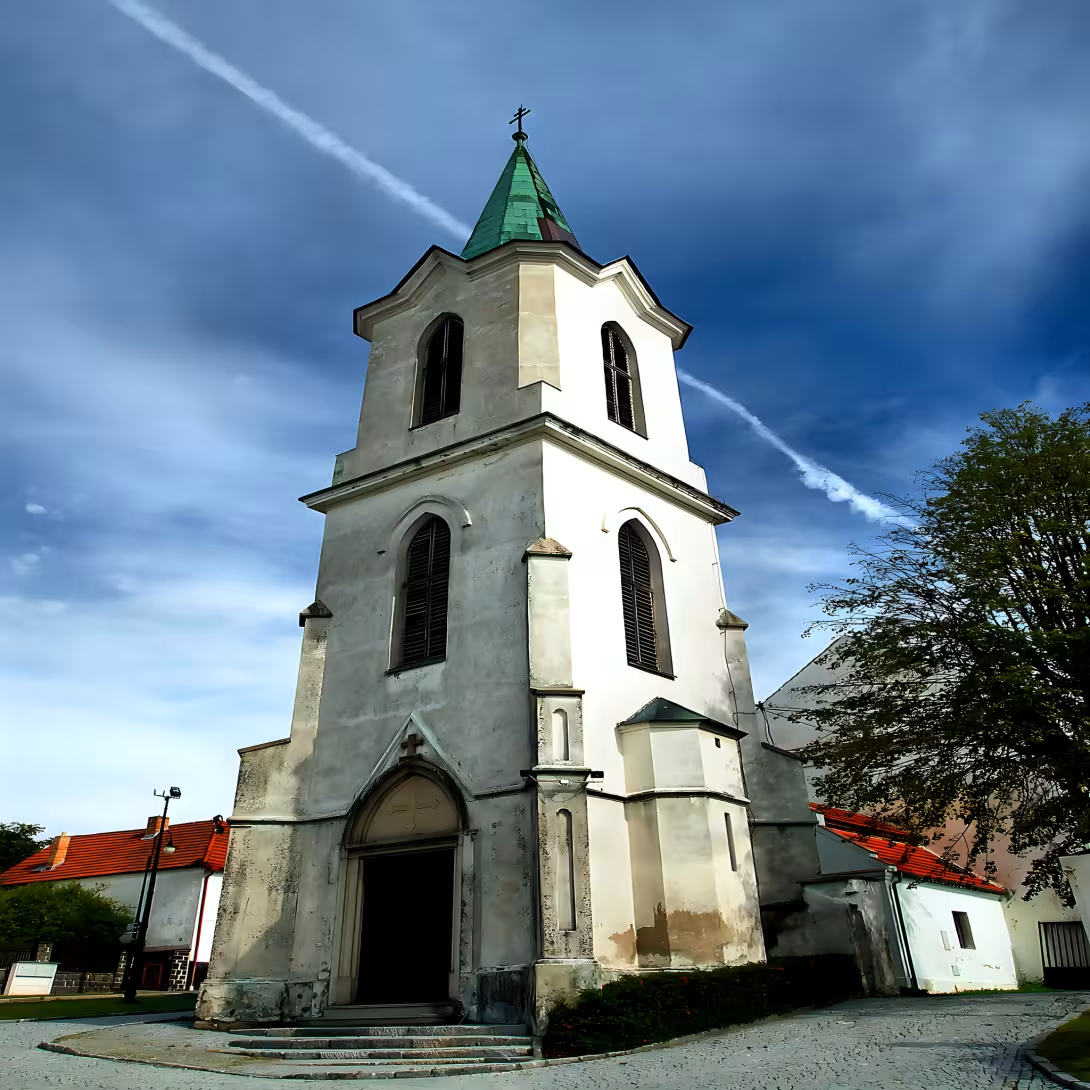
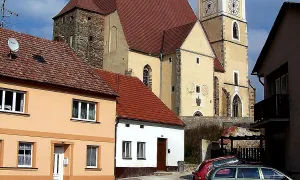
The Church of Saint Peter and Paul in the village Bělčice (district Strakonice, Jihočeský kraj) is a late Romanesque monument from the second quarter of the 13th century. Its importance lies in the gradual architectural development from the Middle Ages to the period of history. The building serves as a parish temple and combines Romanesque, Gothic, Renaissance and Baroque elements.
The construction was built in the second quarter of the 13th century, around 1240. The then intense colonization of Czech countries and the establishment of new settlements were related to the transition of architecture from Romanesque to Gothic style.
The architecture of the building has passed several stages. The original late Romanesque church was supplemented in the first half of the 14th century by a gothic five-hip ending with a presbytery with headrest. In 1515, the temple ship was encapsulated by a larder, called a diamond vault with four fields supported by a slender pillar. In 1776, windows in the ship were enlarged and bark was established. The dominant feature of the complex is the pseudo-gothic prism bell tower, built in 1863 west of the church.
The fate of the building affected various reconstructions and events. After the fire of the wooden bell tower, a new tower was built on the north side of the church in 1694, but it was torn down in 1863.
The interior of the church contains valuable equipment, especially rococo elements from the middle of the 18th century. Significant artifacts include a fragment of late Gothic stone baptisers and tombstones from 1566 and 1570. There is also a picture of St. Mary Magdalena from 1839, the author of which is Antonín Machka.
The Church of St. Peter and Paul still serves the local Catholic community as a parish temple. Thanks to layered architecture and historical objects this monument allows you to understand the development of construction in the region. Her visit offers an opportunity to explore the authentic elements of several epoch.
Then and now
Drag the slider to compare how the landmark may have looked when it was built with the view today.
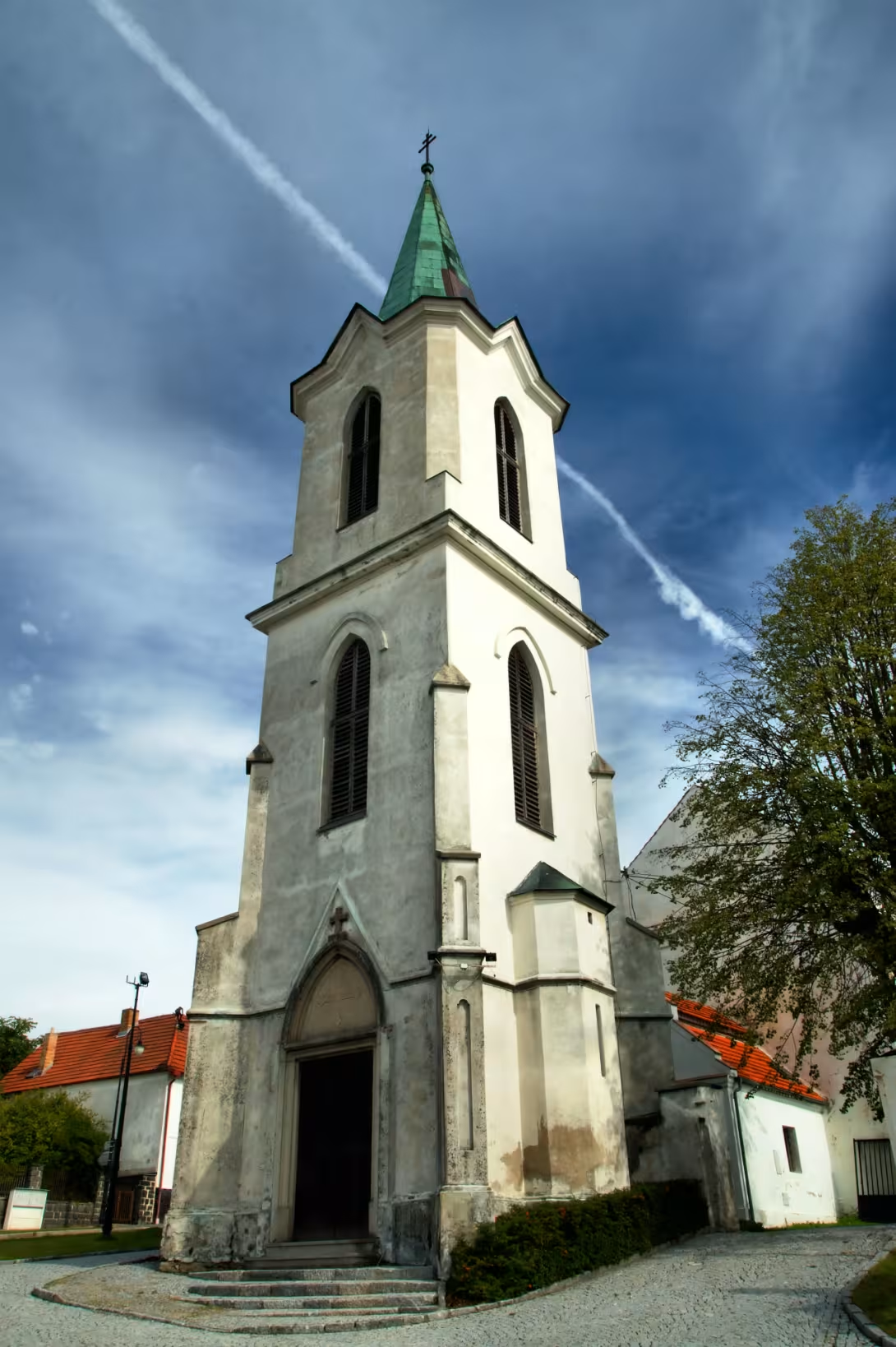
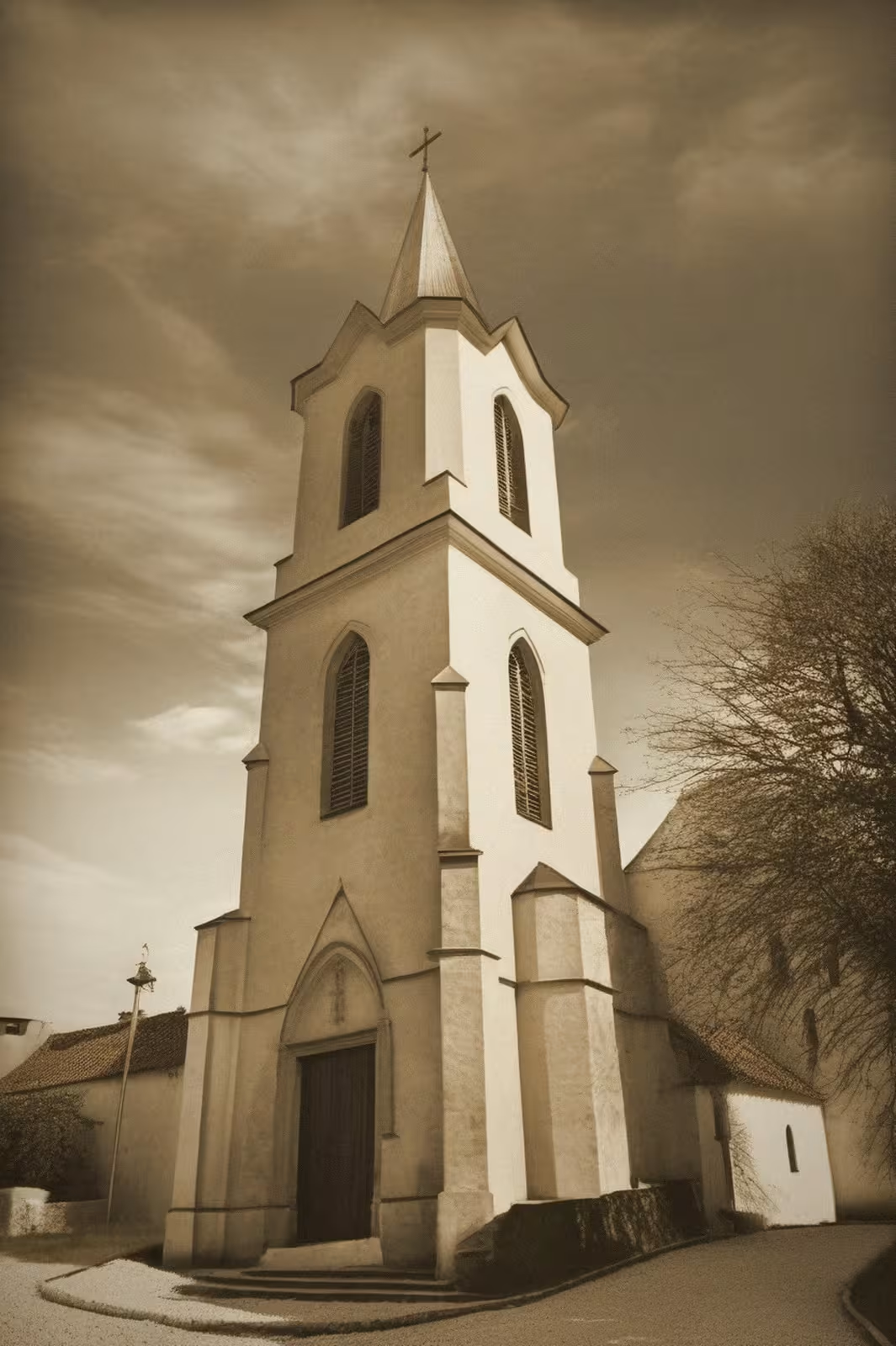
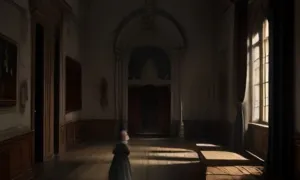
The historical appearance on the left is an AI-generated visualisation and serves as inspiration only.
Historical milestones
- 1240
- Status of the late Romanesque church
- 1515
- The curse of the temple ship with a diamond vault
- 1863
- Position of pseudo-gothic prism bell tower
Architectural development
The original late Romanesque building was supplemented by a Gothic presbytery in the 14th century. In 1515 the ship was encircled by a vaults vault and in the 19th century a neo-gothic bell tower was built. The interior shows elements of rococo style from the middle of the 18th century.
Historical events
In the second quarter of the 13th century a late Romanesque church was established. In the first half of the 14th century, a Gothic presbytery with headrest was built. In 1515, the temple ships were sealed with a diamond vault. In 1863 a neo-gothic bell tower was built.
Points of interest
- The church of St. Peter and Paul was founded in the second quarter of the 13th century, around 1240.
- The architecture of the building went through several stages: the original late Romanesque church was supplemented by Gothic elements in the first half of the 14th century and encapsulated by the vaults in 1515.
In 1776, the windows in the church ship were enlarged and the bark was set up.
- The pseudo-gothic prism bell tower was built in 1863 west of the church.
- The interior contains valuable equipment such as rococo elements from the middle of the 18th century and the painting of St. Mary Magdalena from 1839 by author Antonín Machk.
Guide
This guide is narrated by a synthetic voice generated by artificial intelligence.
Show guide text
This text was created by artificial intelligence and has not been editorially reviewed. It may contain inaccuracies.
Welcome to Belčice. You are standing in front of one of the most important and oldest building units in this region, in front of the Church of Saint Peter and Paul. Before you take the next step and step inside it, stop for a moment and perceive the atmosphere of this place. This building is not just a simple building of stone and mortar, it is a living chronicler of history that has been standing here for almost eight centuries. Look at his face and try to imagine all those generations of people who have gathered here over the centuries, sought spiritual support, celebrated the greatest joys of their lives, or sought comfort in difficult times. The overall character of this object is the result of its constant, gradual development, which left a trail of every past epoch.
To understand what we are seeing right now, we need to go back deep into the past, to the beginnings of this place. The story of this church begins in the second quarter of the 13th century. Around 1240, the first building in the late Romanesque style was built here. Imagine the world at that time, the world of deep faith and buildings that were meant to symbolize stability and eternity with their mass and strength. Even though we see many other elements today, it is this Romanesque foundation that forms an invisible skeleton of the entire building. It's a foundation that later everything else was built on.
Now, however, our attention must move to the architectural layers that form a fascinating mosaic of different styles. The church was never a static thing; He evolved together with the people who inhabited and modified him according to the time. In the first half of the 14th century, Gothic elements were inserted into the original Romanesque core, namely the Gothic Presbytery, which added to the construction a new elegance and vertical direction. This move meant a shift from Roman cumbersome to gothic pursuit of light and height. Another major breakthrough in construction history occurred in 1515. This year, the main temple ship was sealed with a beautiful diamond vault. This Renaissance element brought to space a sense of geometric perfection and new aesthetics, which at that time began to change the face of the whole of Europe.
Now, if you look towards the tower, notice its specific form. The current prism bell tower dates back to 1863 and was built in pseudo-gothic style. It is fascinating proof that even in the nineteenth century, people felt a strong bond to historical roots and a desire to mimic the grandeur of the ancients. This bell tower thus gives the whole object its current, balanced appearance.
When you decide to enter, prepare to meet other, very different worlds. The interior of the church is like an art textbook where different styles move alongside each other. Here you will see valuable baroque and rococo elements that have brought ease, movement and rich decoration into the space. These styles sought to reach out to human senses and create emotions, creating an interesting contrast to the original, sharp architecture. And yet, in the midst of this beautiful world, you will encounter something very old and firm - a late Gothic stone baptizer. It is a fascinating moment when the medieval roughness of stone meets the fineness of rococo details in one space.
This building is not only about stone and artistic directions, but it is also linked to specific people. Although the names of many builders who have worked here for centuries have remained unknown in history, in the history of this place there are also specific personalities who have left their mark. One of them is Antonín Machka. The history of this place is so complex because of the fact that the anonymous work of masters is linked to the fate of individuals who have been committed to it over the years.
The interesting thing that may interest you in your search is the incredible ability of this building to adapt. The Church of Saint Peter and Paul is not just a set of different styles, but it is a story about how human thought and aesthetic perception changed from 1240 to the nineteenth century. Every other reconstruction was not just a repair, but a new story that was added to the original one. It's like when you're going through an old book where each chapter was written in different letters, but the story remains one and the same.
Now I suggest you step in slowly and get carried away with this journey over time. Take a look at every detail, stop by the baptism, raise your eyes to the Renaissance vault, and see how light and shadows change in this sacred space. Get carried away by the atmosphere created here by the combination of medieval fortress and baroque richness. Thank you for choosing to share this historical story with us. We wish you a beautiful and peaceful tour of this important place.
Tips for visitors
The best time to visit the church of St. Peter and Paul in Belčice is during the summer period, especially from May to October. At this time there are pleasant weather and ideal conditions for exploring historical details of the building in peace. In addition, you can relax in the green meadow around the church.
Parking can be found near the church, but we recommend checking the actual availability of the car parks online or at arrival. Public transport is also a good way to get here; you can find specific connections and times in the current route search engine.
When visiting the church, bring your protective sunglasses to protect you from the sun, and comfortable shoes to walk on green meadows. Also remember the water or drink, especially in the summer months.
For photography is the best time of the afternoon when the sun illuminates the church from the side and captures its architectural details. The best places for photos are especially the west side of the building or meadow behind it.
In the vicinity of Belčic there is a historical castle Velešín, which can be visited within short walks. It is an ideal place for families with children to play and enjoy the natural environment.
Frequently asked questions
Is kostel svatých Petra a Pavla (Bělčice) open to the public?
Yes, the church is open to the public. The tour is suitable for all visitors.
How do I get to the place by car / public transport?
The church is available by car and public transport. Check the current connection in the search engine.
How much is the entrance fee and is it paid on the spot?
Admission is paid on site, the current price list can be found on the official site of the sights.
Is the tour suitable for children and seniors?
Yes, the church is accessible to all visitors regardless of age or ability.
How long does the tour take?
The tour takes approximately 30-60 minutes, depending on the level of interest and attention of visitors.
What are the opening times and booking is required?
The opening hours of the church vary according to the period of the year. The current information can be found on the official site of the sights. Reservation is not necessary.
What's interesting in the immediate vicinity?
Other historical monuments such as Belčická's claims or the local museum can be visited in the immediate surroundings.
For kids
Good morning, young adventurers! I'd like to invite you to an adventure in the past. Love each other, because today we are going to discover the secrets of St. Peter and Paul's church in Belčice.
This place is really old. It was 776 years ago, just like your grandfather had a six-year-old son. So when you look at this church, you can say, "This place is older than my grandmother!"
Businesses nearby
Do you run a restaurant, accommodation, shop, museum, rental, wellness or other visitor service near this monument? Show yourself directly to the people heading to it — this is how they will see you in the app and on the web:
Events nearby


Zdroj akcí: otevřená data měst a obcí ČR (Národní katalog otevřených dat) a kalendář akcí Národního památkového ústavu.
Nearby
ITEX Show interactive overview of the surroundings - restaurants, accommodation, rentals and other places within a 15 km radius.
Data: OpenStreetMap contributors, 15 km radius.
‡ Historical monuments
- Holy Barbora (0.3 km)
- Screaming (5.4 km)
- sv. Donate from ArezzaxZ3ZX (8.4 km)
- Saint Jan Nepomucký (8.4 km)
- Municipal Museum Blatná (8.6 km)
- Castle Blatna (8.8 km)
- remains of Swedish mostu (10.4 km)
- Battle of Murder (10.7 km)
Restaurant and catering
- Urban brewery (8.0 km)
- Castle Restaurant (8.2 km)
- U Grandpa Jehuda from Lokšan (8.2 km)
- Restaurant On statku (8.4 km)
- Kebab-Us Rytmus (8.7 km - Peace Square 202)
- Hossovka U Butterla (10.9 km - Kazejovice 172)
- Restaurant Slavie (11.1 km - Square 12)
- Chateau management (11.1 km - Ing. Lízla 2)
Accommodation
- Equitana (7.3 km)
- Hotel Vlčáva (8.1 km)
- Pension Slunce (8.4 km)
- Na Pansk3ZX (8.4 km)
- Coach Inn U Swan Mice (8.6 km - 7)
- Beránek (8.6 km)
- Penzion Mlýn Kostrá (9.6 km)
- Camping and guesthouse Pliskovice (10.4 km - 27)
› Rental and sports
- KarBikesport (8.5 km)
- Joyride (8.6 km)
- Sportcentrum Vitality, s.r.o. (8.7 km)
© Tourism and nature
- Simin Mill (6.3 km)
- Martinice (7.2 km)
- Pod str
- Štírbina (8.8 km)
- Hradec (9.7 km)
- Tremšín, kaple (10.0 km)
- Historical bridge Vlčáva (10.4 km)
- Chynin (13.3 km)
Accommodation nearby
Themed route
1. Church courtyard, outdoor area - Take a walk in the immediate vicinity of the building and enjoy the peace in the area of the monument. 2. Church of St. Peter and Paul, sacral monument - Explore the interior of the temple and its spiritual atmosphere. 3. Church tower, architectural element - Admire the dominant part of the building that forms the characteristic point of the whole place.
Seasonal recommendations
In spring, the church's surroundings awaken to life and the fresh green surrounding the building creates fresh sets. The morning sun gently illuminates the facade and gives the place a sense of renewal. We recommend wearing layered clothes because the wounds are still cold, while the afternoon can be pleasantly warm. In this period, the visit is very quiet, which is ideal for people looking for silence and giddy nature.
Summer months bring the longest days and intense sunlight that highlights the details of sacral architecture. The atmosphere is alive and the landscape around Belčice is in full bloom. Due to the higher number of people in the main summer season, it is best to arrive early in the morning to avoid the greatest heat and sudden groups of visitors. Don't forget light clothes and plenty of fluids.
Autumn season is characterized by golden shades of leaves and morning fog, which give the monument a mysterious and peaceful atmosphere. Sundown lighting is particularly soft at this time and very suitable for photography. It is advisable to prepare stronger shoes for wet terrain and warmer clothing. The perfect time for a tour is clear afternoon hours.
In winter, the church is very steep and quiet in the landscape, especially if everything is covered with frost. A short day requires careful planning to take place in daylight. It is necessary to dress very warm and prepare for colder conditions. In Advent time, the most peaceful in the surroundings, which allows us to perceive history in complete isolation from everyday hustle and bustle.
Visualizations and artistic views


The visualisations are generated by artificial intelligence and serve as inspiration.
Photos from the area
Real photos taken near the monument


Zdroj a licence jsou uvedeny u každého snímku.
Tips from visitors
No tips yet. Be the first!
Log in and add your tip.
Sources and literature
Fotografie: ZdendaK / CC BY-SA 3.0, rozlišení zvýšeno umělou inteligencí — Wikimedia Commons. The author and licence also appear when you hover over the image.
Faktickým podkladem tohoto textu byl článek na Wikipedii, jehož autory jsou přispěvatelé Wikipedie. Článek je dostupný pod licencí CC BY-SA 4.0.
Location on the map

Příběhy a pověsti
Legendy, pověsti a příběhy spjaté s touto památkou
Fotografie návštěvníků
Zatím žádné fotografie. Buďte první, kdo přidá fotografii z návštěvy!
Přihlaste se a přidejte svou fotografii nebo hodnoťte.
Za ověřenou návštěvu v aplikaci získáte víc bodů — poznáme podle GPS, že jste na místě.
Reviews and comments