



Kostel svatých Šimona a Judy (Praha) Church
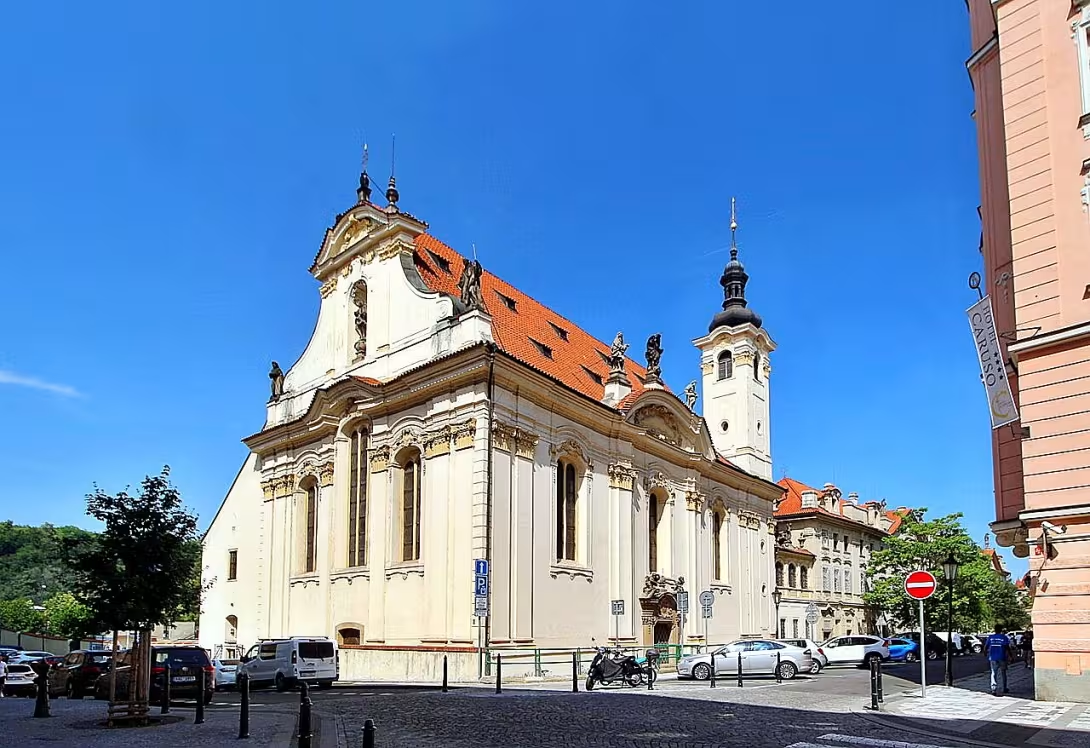
The Church of Sts. Simon and Jude in Prague's Old Town is a remarkable historical monument with origins dating back to 1354 when it was established as part of a hospital complex. Located next to the Brutalist Hotel InterContinental on U Milosrdných Street, this Baroque church has undergone significant transformations over the centuries, reflecting architectural and cultural shifts in Prague.
The church's history began alongside a hospital sanctified by Bishop Arnošt of Pardubice. By 1615–1620, it evolved into a hall construction with galleries and chapels, adorned with Late Gothic windows. This period marked the creation of a structure blending Gothic and Renaissance styles, consecrated on July 14, 1620, by members of the Protestant sect Bohemian Brethren. Following the Battle of White Mountain, Emperor Ferdinand II gifted the church and its adjoining St. Francis Hospital to the Brothers Hospitallers of Saint John of God, who have maintained ownership ever since.
Architecturally, significant Baroque modifications occurred between 1720 and 1721, transforming it into its current form. The interior boasts a single-nave design with a barrel vault and semicircular closure, featuring high-Baroque elements such as altars, statues, trompe l'oeil murals, and marquetry. Notably, the church houses a pipe organ by Andreas Wambetsser of north Bohemia, attracting renowned musicians like Joseph Haydn and Wolfgang Amadeus Mozart.
Ownership and administration have seen dramatic changes over time. Initially part of the Czech Brethren's holdings, it became integral to the Brothers Hospitallers' complex. In 1950, during communist rule, the order was expelled, leading to nationalization. Since then, the city of Prague has managed the site, leasing it for use as a concert hall.
Key events include its deconsecration around 1950 and subsequent use as a warehouse until the fall of communism. Post-Velvet Revolution efforts from 1989–1993 restored the church, including installing floor heating to enhance year-round comfort. Although never reconsecrated, the Prague Symphony Orchestra now maintains it in exchange for its use as a concert venue.
Today, the Church of Sts. Simon and Jude stands as a vibrant cultural hub, hosting chamber, choral, and organ concerts throughout the year. Its rich history and architectural beauty make it a must-visit site for those exploring Prague's Old Town. Visitors are invited to experience this unique blend of historical significance and musical heritage, ensuring its continued relevance in the city's cultural landscape.
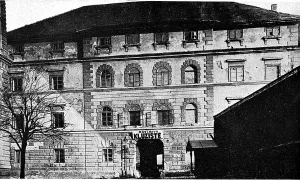
Then and now
Drag the slider to compare how the landmark may have looked when it was built with the view today.
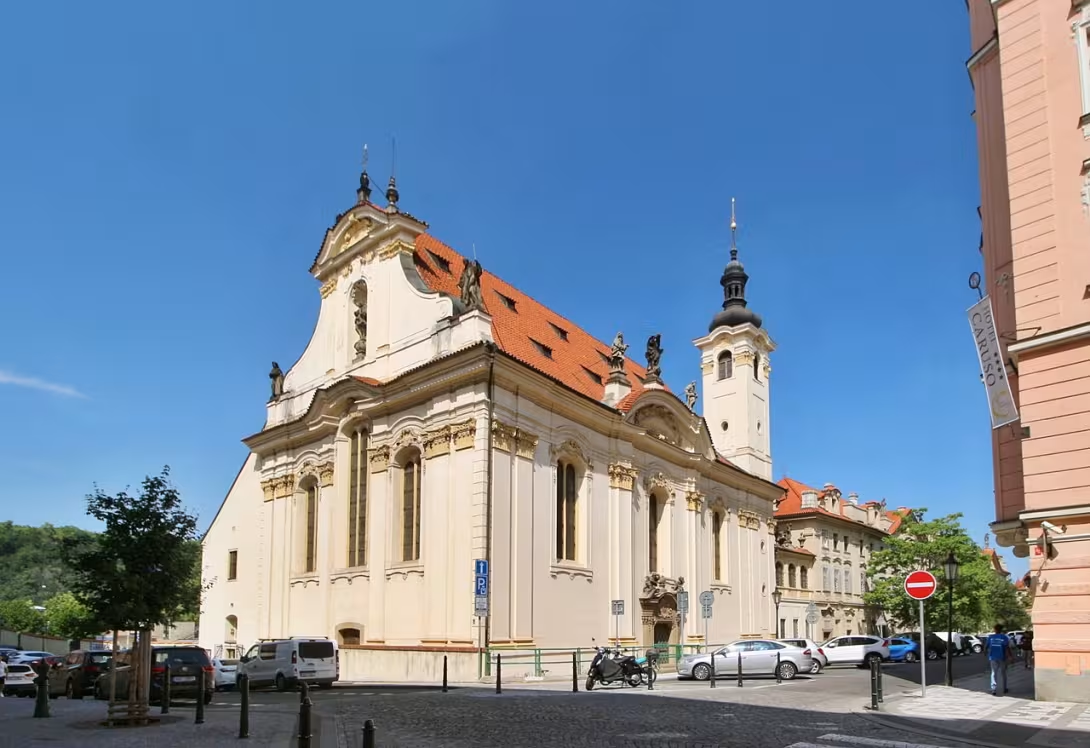

The historical appearance on the left is an AI-generated visualisation and serves as inspiration only.
Historical milestones
- 1354
- Founding of the church as part of a hospital complex.
- 1615–1620
- Renovation to include galleries and chapels in late Gothic style.
- 1620
- Dedication by members of the Protestant sect, Czech Brethren.
- 1720–1721
- Baroque renovation into its current form.
- 1950
- Nationalization and use as a warehouse after deconsecration.
Architectural development
The church underwent significant baroque modifications to its façades between 1720 and 1721. Originally a Gothic-Renaissance structure, it was rebuilt in a historical style with technical challenges such as a vault collapse during construction. The interior features include a single-nave design with a barrel vault and a semicircular closure.
Historical events
1617: The original Gothic structure's vault collapsed during construction.
1620: The church was solemnly consecrated on June 14th.
1950: The Brothers Hospitallers were expelled by communist authorities, and the hospital was nationalized.
Owners
Originally owned by the Czech Brethren, it became part of the Brothers Hospitallers' complex. In 1950, the communist authorities expelled the order, leading to nationalization. Since then, the church has been managed by the City of Prague, which rents it for use as a concert hall.
Points of interest
- The Church of Sts. Simon and Jude was originally part of a hospital complex established in 1354 by Bishop Arnošt of Pardubice, highlighting its early role as a place of healing alongside religious worship.
- In the early 17th century, it became a significant site for the Protestant sect Bohemian Brethren, who consecrated it on July 14, 1620, showcasing its importance in religious diversity during that era.
- The church's pipe organ was crafted by Andreas Wambetsser of north Bohemia and has attracted legendary musicians like Joseph Haydn and Wolfgang Amadeus Mozart, emphasizing its historical significance as a center for musical excellence.
- After the communist regime expelled the Brothers Hospitallers in 1950, the church was repurposed as a warehouse until the fall of communism, reflecting the dramatic shifts in ownership and use during political upheavals.
- Despite never being reconsecrated after its restoration post-Velvet Revolution, the Church of Sts. Simon and Jude now serves as a concert venue for the Prague Symphony Orchestra, illustrating its transformation into a vital cultural hub.
Guide
This guide is narrated by a synthetic voice generated by artificial intelligence.
Show guide text
This text was created by artificial intelligence and has not been editorially reviewed. It may contain inaccuracies.
Welcome to the Church of Saints Simon and Jude in Prague's historic Old Town. As you stand here, enveloped by the charm of this storied neighborhood, take a moment to absorb your surroundings. Before you is a serene baroque structure that whispers tales from centuries past.
The history of this church begins in 1354 when it was established as part of a hospital complex by Bishop Arnošt of Pardubice. Originally serving both religious and healing purposes, the site reflects its dual role through time. By the early 17th century, it had become significant for the Protestant sect known as the Bohemian Brethren.
As you gaze upon the church today, notice how it has evolved from its initial Gothic-Renaissance design, constructed between 1615 and 1620 with galleries and chapels, to its present baroque form achieved during a transformation in 1720-1721. The architecture invites you to explore its graceful lines and elegant proportions.
This place is not just about architecture; it's also steeped in cultural history. Legends whisper of concerts held here after the church was deconsecrated in 1950, featuring renowned figures such as Joseph Haydn and Wolfgang Amadeus Mozart. Imagine the echoes of their music filling this sacred space.
A fascinating tidbit about this site is its origin within a hospital complex dating back to the 14th century. This highlights its longstanding role not only as a place of worship but also as a sanctuary for healing.
As you continue your journey, consider exploring more of Prague's rich tapestry of history and culture. The Church of Saints Simon and Jude offers just one glimpse into the vibrant stories that this city holds. Thank you for joining us today, and may your exploration be filled with wonder and discovery.
Frequently asked questions
Can the monument be visited?
Religious buildings are usually open mainly during services; at other times a visit is normally arranged with the parish or the operator. We have not verified specific times.
Where is the monument?
Location: Praha, Hlavní město Praha. The map on this page shows the exact spot.
Why is the monument protected?
It is listed in the Central List of Cultural Monuments of the Czech Republic as a cultural monument. It is protected as part of a larger listed ensemble.
Businesses nearby
Do you run a restaurant, accommodation, shop, museum, rental, wellness or other visitor service near this monument? Show yourself directly to the people heading to it — this is how they will see you in the app and on the web:
Events nearby

Zdroj akcí: otevřená data měst a obcí ČR (Národní katalog otevřených dat) a kalendář akcí Národního památkového ústavu.
Nearby
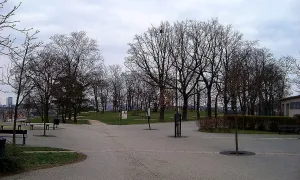
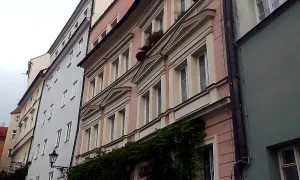
Located in Prague's Old Town, the church is surrounded by historic buildings and cultural landmarks. The area is rich with architectural heritage and offers a glimpse into the city's vibrant past.
Accommodation nearby
Trips and activities nearby
Guided tours, tickets and activities nearby from GetYourGuide
Affiliate link: if you buy from the partner, we may receive a commission. The price for you does not change.
Search tours and activities →Themed route
Thematic Walking Tour: Prague's Old Town and the Church of Saints Simon and Jude
1. Church of Saints Simon and Jude (Kostel svatých Šimona a Judy) - Type: Historic Church - Why Visit: Located in the heart of Prague’s Old Town, this church is renowned for its stunning Baroque architecture and intricate frescoes by Jan Hiebl. It offers visitors an intimate look into the religious and artistic heritage of 18th-century Prague.
2. Old Town Square (Staroměstské náměstí) - Type: Historic Square - Why Visit: Just a short walk from the Church of Saints Simon and Jude, this iconic square is the cultural heart of Prague's Old Town. It features the famous Astronomical Clock, historic buildings like the City Hall, and vibrant market stalls that offer a glimpse into the daily life of medieval Prague.
3. Old New Synagogue (Staronová synagoga) - Type: Historic Synagogue - Why Visit: Situated near Old Town Square, this synagogue is one of Europe's oldest active synagogues and offers insights into Jewish history in Prague. Its unique architecture and rich history make it a must-visit for those interested in the diverse cultural tapestry of the city.
4. Jewish Quarter (Josefov) - Type: Historic District - Why Visit: Adjacent to Old Town Square, this area is home to several significant Jewish sites, including synagogues and museums that tell the story of Prague's Jewish community. A walk through Josefov provides a deep understanding of the historical coexistence and cultural contributions of Jews in Prague.
This tour offers an immersive experience into Prague’s rich history, art, and culture, all within walking distance from each other in the Old Town area.
Seasonal recommendations
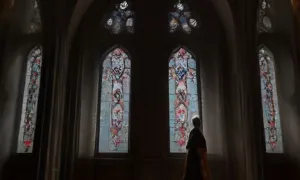
Spring: The arrival of spring brings a refreshing atmosphere to the Church of Saints Simon and Jude, with blooming flora surrounding the historic site enhancing its charm. Natural light floods through the stained glass windows, casting vibrant hues that illuminate the church's intricate interior. This season is ideal for capturing the beauty of Prague awakening from winter slumber, though it can attract more visitors as locals and tourists alike enjoy the pleasant weather. To fully appreciate the serene ambiance without the crowds, consider visiting in the morning or during weekdays when fewer people are likely to be around.
Summer: Summer at the Church of Saints Simon and Jude is marked by long daylight hours that allow for extended exploration of its architectural splendor. The warm weather invites visitors to linger outside, enjoying the lively atmosphere of Prague's streets while soaking up the sun. However, this season also brings larger crowds, especially during peak tourist times in July and August. To avoid the busiest periods, plan your visit early in the morning or later in the afternoon when it’s cooler. Wearing comfortable walking shoes and light layers is advisable to keep cool as you explore.
Autumn: The church takes on a mystical quality in autumn, with golden leaves creating a picturesque backdrop that complements its historic architecture. This season offers a quieter experience compared to summer, with fewer tourists and a chance to appreciate the site's beauty without distraction. As daylight hours shorten, visiting earlier in the day is recommended to make the most of natural lighting inside the church. Layered clothing will keep you comfortable as temperatures begin to drop.
Winter: Winter transforms the Church of Saints Simon and Jude into a serene haven amidst Prague’s bustling cityscape. The stark beauty of bare trees against the snow-covered landscape provides a unique setting, while shorter days mean earlier closure times for the site. Despite colder weather, the church remains a peaceful retreat with fewer visitors compared to other seasons. Dress warmly in layers and consider bringing gloves or a scarf to fully enjoy your visit without discomfort from the chill.
Visualizations and artistic views


The visualisations are generated by artificial intelligence and serve as inspiration.
Photos from the area
Real photos taken near the monument

Zdroj a licence jsou uvedeny u každého snímku.
Tips from visitors
No tips yet. Be the first!
Log in and add your tip.
Sources and literature
Photos: VitVit / CC BY-SA 4.0 — Wikimedia Commons. The author and licence also appear when you hover over the image.
Faktickým podkladem tohoto textu byl článek na Wikipedii, jehož autory jsou přispěvatelé Wikipedie. Článek je dostupný pod licencí CC BY-SA 4.0.
Location on the map

Příběhy a pověsti
Legendy, pověsti a příběhy spjaté s touto památkou
Fotografie návštěvníků
Zatím žádné fotografie. Buďte první, kdo přidá fotografii z návštěvy!
Log in a přidejte svou fotografii nebo hodnoťte.
Za ověřenou návštěvu v aplikaci získáte víc bodů — poznáme podle GPS, že jste na místě.
Reviews and comments